1

Finding the Furry Cat!
 Let us Sing
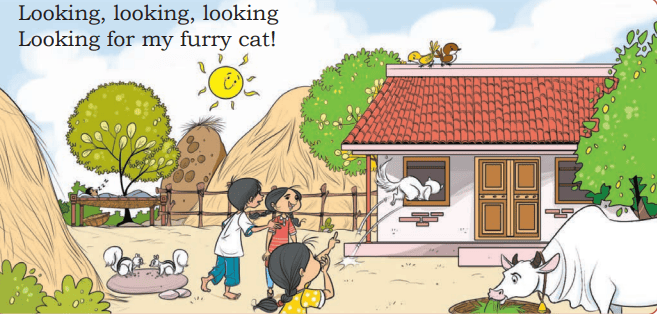
Looking, looking, looking
Looking for my furry cat!
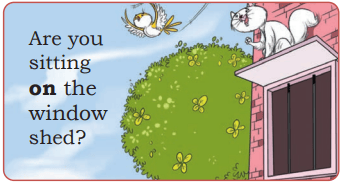
Are you sitting
on the window
shed?
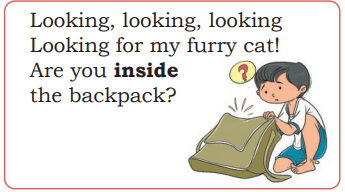
Looking, looking, looking
Looking for my furry cat!
Are you inside
the backpack?
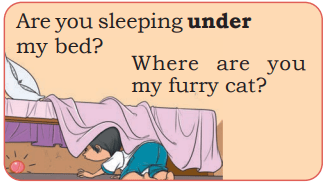
Where are you my furry cat?
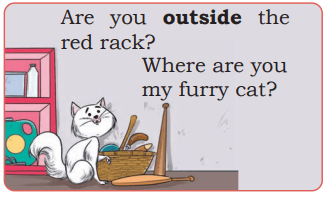
Are you outside the red rack?
Where are you
my furry cat?
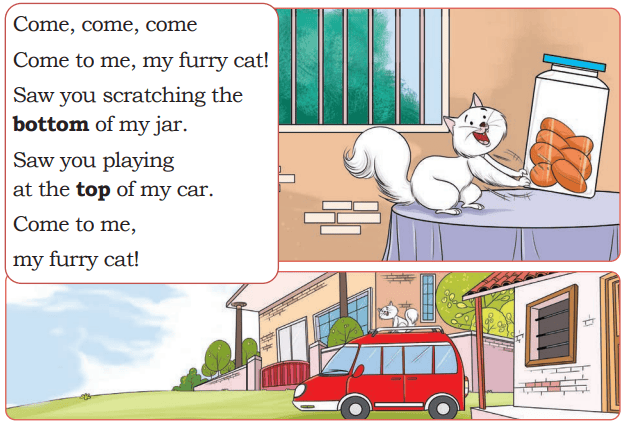
Come, come, come
Come to me, my furry cat!
Saw you scratching the bottom of my jar.
Saw you playing at the top of my car.
Come to me, my furry cat!
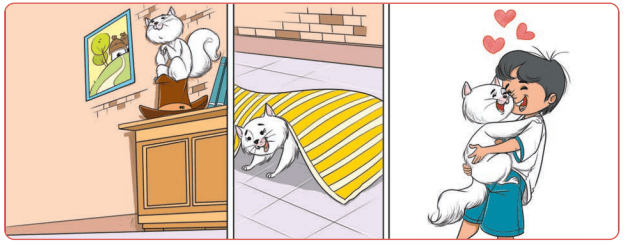
Come, come, come
Come to me my furry cat!
Saw you hopping above the hat.
Saw you hiding below the mat
Here comes my furry cat!
Read aloud the poem. Ask children to recite and enact it. Children can look at the pictures and tell what all they see and discuss the things which are above, below, on, under, and so on with the class. Encourage them to talk about the animals that they see around them, like cats, dogs, cows, etc.
Look at the pictures of the poem and encircle the correct word.
A. The red ball is above/ under /on the bed.
B.The cat is inside/outside/on the car.
C. The man is lyingunder/inside/on the tree.
D. The cow is inside/top of/outside the house.
 Think and Answer
A. Where do you put your shoes? Inside/Outside the room.
B. Where do you throw the garbage? Inside/Outside the dustbin.
 Let us Play — Find the Things
Children can divide themselves into 2 teams. One team will hide a few things like white chalk, red ball and other items and ask the other team to find them. Children can give verbal instructions to find the things using positional words like inside/outside, far/near, above/below, etc.
For example:
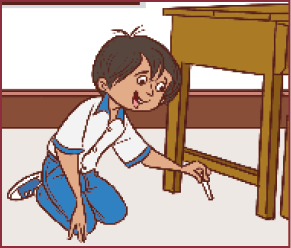
● Look for a white thing which is hidden near the board and under the table.
● Look for a red thing which is outside the classroom and under the tree.
Let us Play — Throw the Ball!
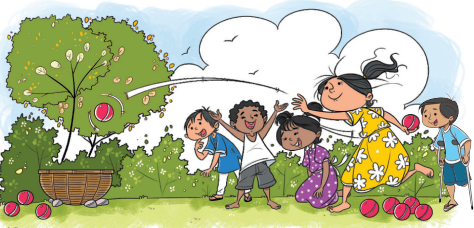
Each child aims and throws the ball inside the basket. When the ball goes inside, other children will say IN and when it goes outside the basket, they say OUT.
 Let us Do
 the things which are inside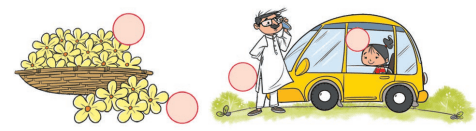
Activity should be conducted in a manner so that all the children are engaged, irrespective of their differential abilities. For example, a ghungroo can be attached to the ball, and surface of the basket can be made different from the surface outside in order to get specific sound when the ball is in or out of the basket.
the things which are outside.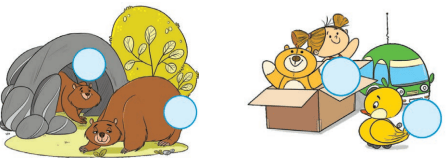
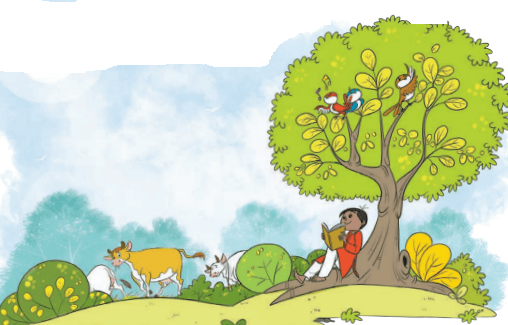
C. Look at the picture and tick the correct words.
i. A boy is sitting on/under the tree.
ii. Birds are on/under the tree.

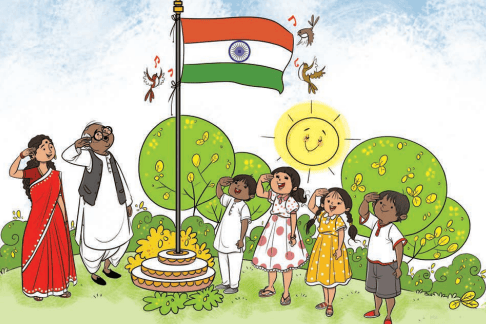
tiranga. How many colours are there?
Tick the correct option.
i. Which colour is at the top of the tiranga?
white/saffron/green
ii. Which colour is below the white colour on the tiranga?
pink/saffron/green
iii. Which colour is above the green colour on the tiranga?
white/saffron/yellow
iv. Where is the ashoka chakra on the tiranga?
on a corner/in the middle/on a side
Discuss with children when, where and why do we hoist the National Flag. Let the children express their feelings about the National celebrations. Ask children to make their owntiranga and sing the National Anthem in standing position facing the tiranga.
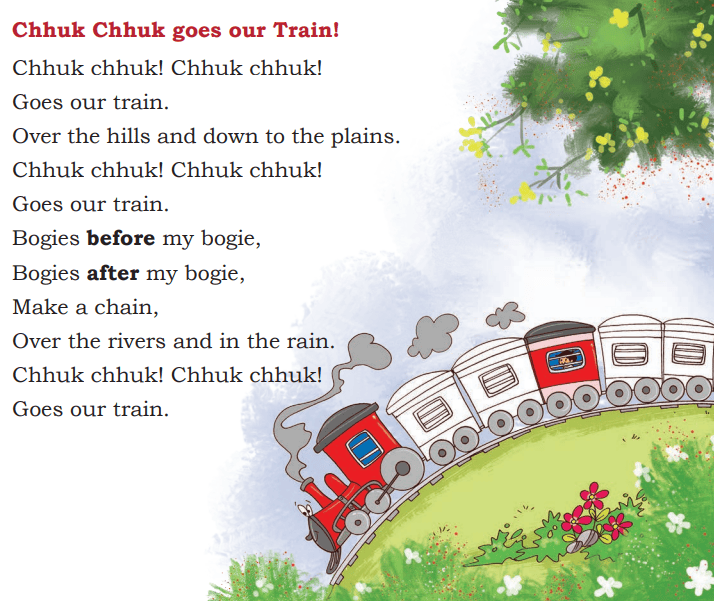
Chhuk Chhuk goes
our Train!
Chhuk chhuk! Chhuk chhuk!
Goes our train.
Over the hills and down to the plains.
Chhuk chhuk! Chhuk chhuk!
Goes our train.
Bogies before my bogie,
Bogies after my bogie,
Make a chain,
Over the rivers and in the rain.
Chhuk chhuk! Chhuk chhuk!
Goes our train.
A. How many bogies are there after engine?
B. How many bogies are there before the red bogie?
C. Fill the orange colour in the bogies after the red bogie.
D. Fill the blue colour in the bogies before the red bogie.
Ask children to share experiences of their train journey. Children who have never travelled by train may ask questions about the journey. Let there be a discussion on ‘what a train is’. Ask them to draw a train on the paper or they can make a train by using waste materials like used boxes or cans.
Let us Play
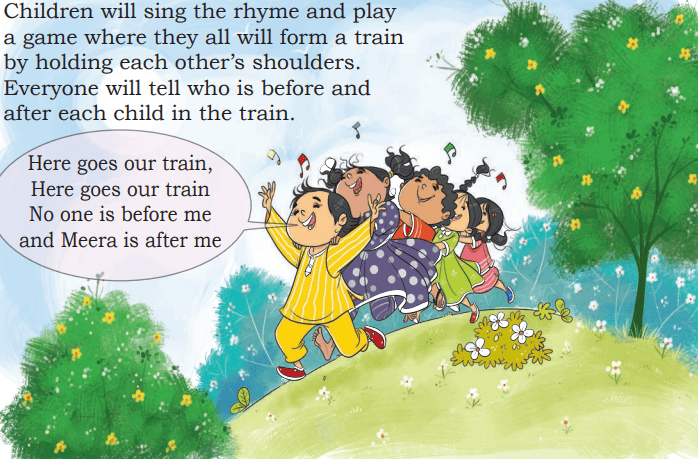
Here goes our train, Here goes our train
No one is before me and Meera is after me
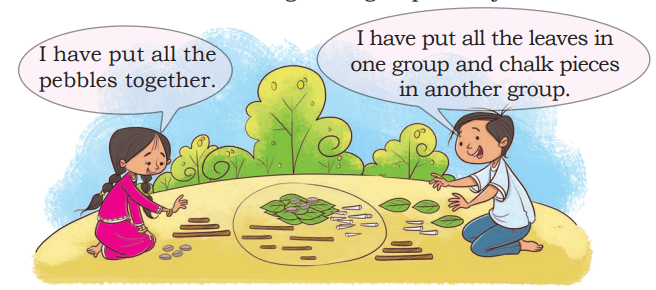
Let the children do similar activities of sorting the objects like seeds, leaves, beads, etc.
Let us Do
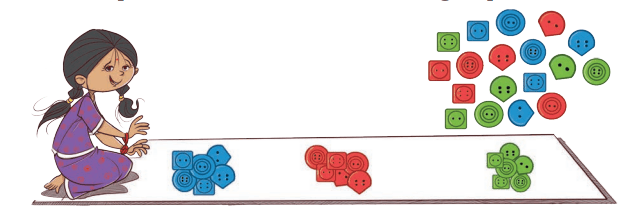
Why did Suwali make such groups?
Help Suwali to sort these buttons in other ways by
drawing them.
 Project Work
Ask children to arrange the cupboard of the classroom. Ask them to put objects using positional vocabulary like put two objects in the bottom rack, one object in the top rack, etc.