4

Making 10
Dotty Bug and her Designs
Have you seen a ladybug?
She has dots on her body.
Have you ever noticed the number of dots?
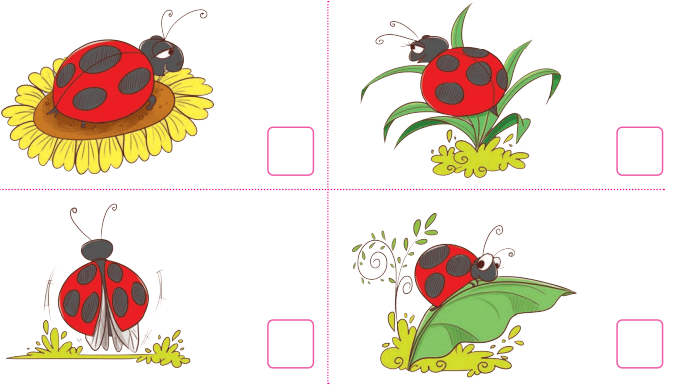
A. Write the number of dots on each bug.
B. Make some dot designs with objects like tamarind seeds, pebbles, buttons, bindis, etc., and identify the number of dots in each arrangement.
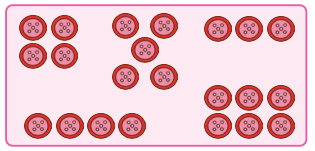
C. Identify and write the numbers formed by the arrangement of the red bindis
 Let us Play
The child with more number of coloured boxes will win.
D. Play with your friend. Roll the dice and colour a box with the same number of dots as on the dice. Take turns with your friend and roll again.
Choose the colour and fill it in the below boxes.
My colour 
Friend’s colour
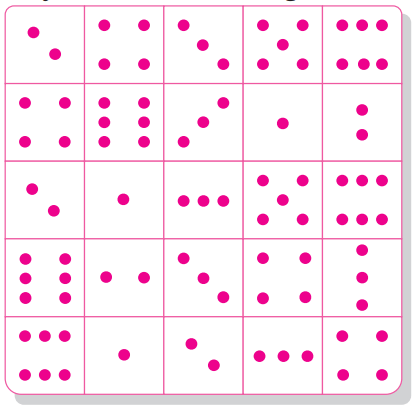
Use the dot and colour flash cards to help children gain instant recognition of numbers without counting. This is called subitization. Make more cards with dot patterns of numbers 1 to 9 in different designs and sizes as required.
Vanishing Buttons
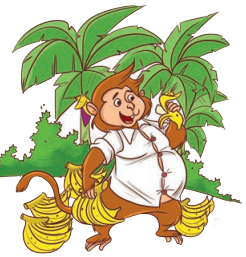
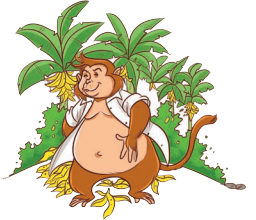
Gola monkey wears his favourite shirt with four buttons. He went to the garden and ate too many bananas as he was fond of them. What do you think happened then?
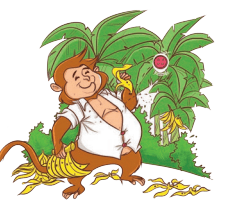
One of the buttons popped out and rolled away. But he cannot dream of giving up bananas and he keeps on losing all the buttons one by o
 Buttons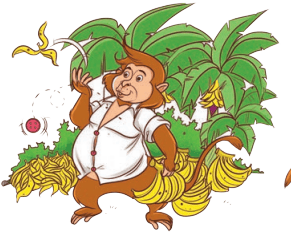

Button
 Buttons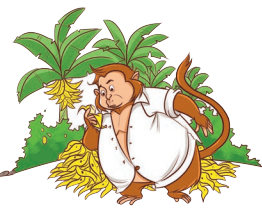
One

Buttons
Zero
 Buttons
Discuss the number of buttons left on the shirt at the end. Ask children to name objects, things around them whose number is zero. Let children understand that zero is also a number like one, two and other numbers. Discuss with children about the benefits of balanced diet and ill-effects of overeating.
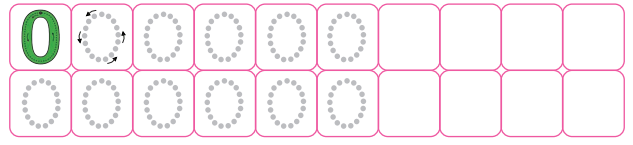
 Write ‘0’
 Think and Tell
A. How many suns do you see in the night?
B. How many moons do you see at noon?
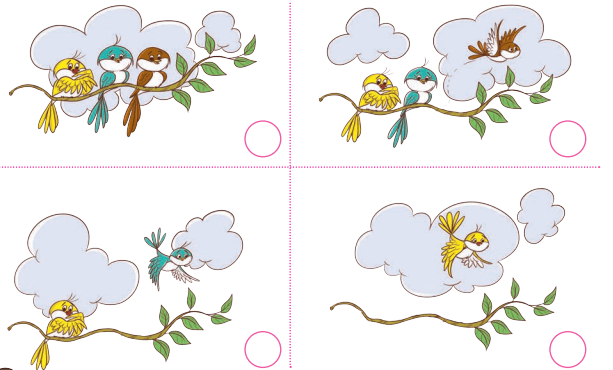
Use concrete objects to demonstrate the idea of zero by reducing one object each time. Discuss the situations where something is absent and its number is called as ‘zero’ like there are 0 buses in the classroom. Also encourage children to count backwards from 5 to 0 initially and later from 9 to 0.
Tenth Birthday
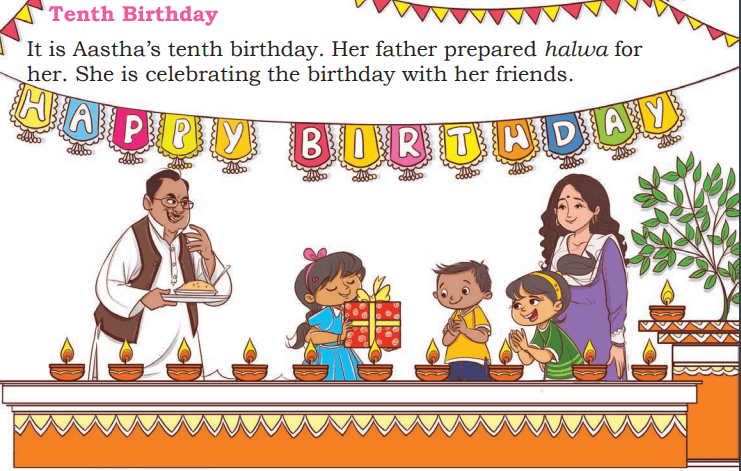
It is Aastha’s tenth birthday. Her father prepared halwa for her. She is celebrating the birthday with her friends.
I am 9 years old and after 1 more year,
I will be 10 years old.
So, 9 and 1 more makes 10.
She has lighted  diyas on her birthday.
Count and write the number of objects.
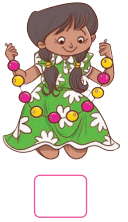 Beads
Beads
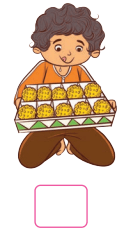 Laddoos
 Crayons
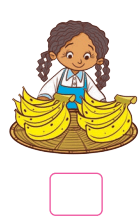 Bananas
 Leaves
Let us Do
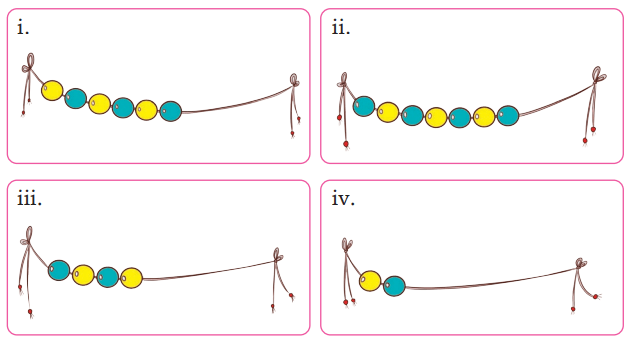
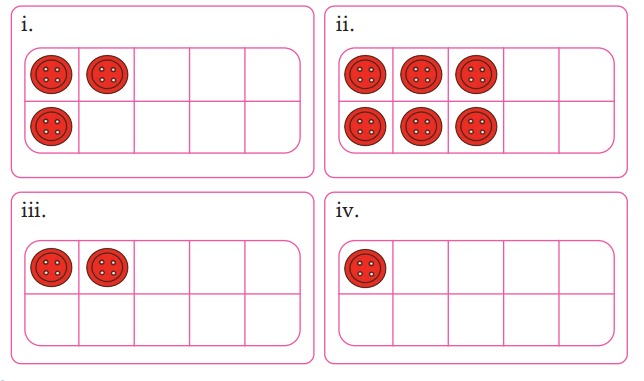
The Handy Five and Ten
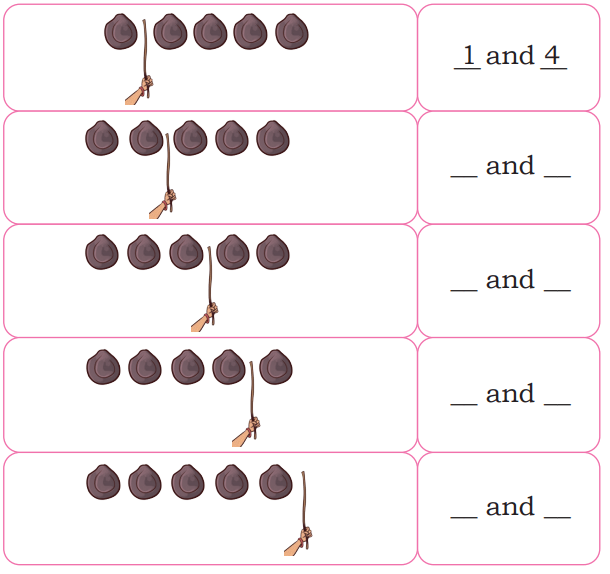
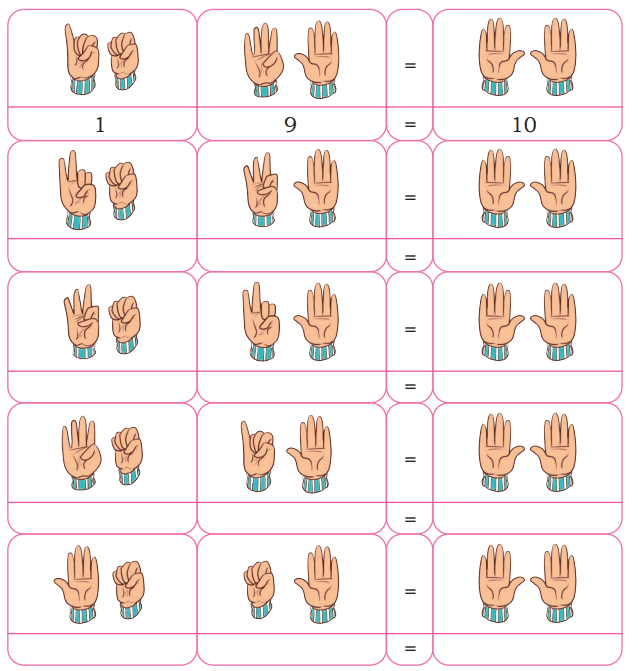
Follow the pattern and write the number pairs separated by the stick.
Let us Play
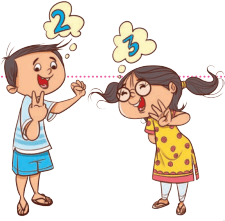
Show 3 fingers. Your friend has to show some fingers to make it 5.
Number Pairs of 10
Let us play the finger game with our both hands. A child will show some fingers. The other child has to show the other fingers that are folded.
Follow the pattern and write the number pairs in the given table.
Let us Play a Card Game
Number Cards (Sets of 0 to 10)
Counting up to 20
Simran lives in Nagpur. She is helping her father in packing oranges. A box can hold 10 oranges. Let us count the number of oranges.
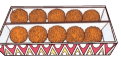 |
10 |
10 Ten |
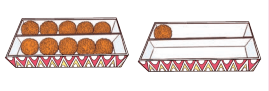 |
10 and 1 is |
11 Eleven |
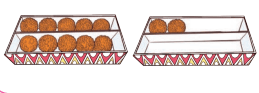 |
10 and 2 is |
12 Twelve |
Have a discussion to help children to understand and remember the number partitions of 5 and 10. For example, if the teacher says 2, the child should respond 3, when doing partitions of 5. Similarly, if the teacher says 4, the child should respond 6, when doing partitions of 10. This is the time when children start counting beyond 10. Draw attention towards the fact that there is always a number one more than the previous number.
|
|
10 and 3 is |
13 Thirteen |
|
|
10 and 4 is |
14 Fourteen |
|
|
10 and 5 is |
15 Fifteen |
|
|
10 and 6 is |
16 Sixteen |
|
|
10 and 7 is |
17 Seventeen |
|
|
10 and 8 is |
18 Eighteen |
|
|
10 and 9 is |
19 Nineteen |
|
|
10 and 10 is |
20 Twenty |

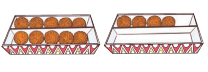
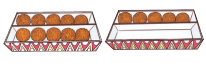
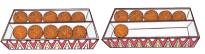
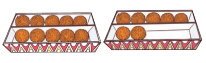
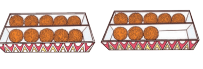
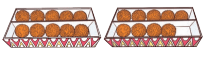
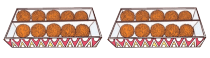
Help the children to count concrete objects up to 20 using groups of ten and units. Give them a handful of seeds or buttons not more than 20. Ask them to guess the number first, then group and count. How close was the guess? Let children reason out the basis for their guesses.
Count and Write
A. Count and write the answers.
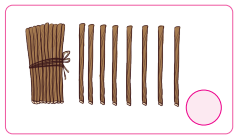
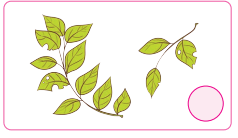
B. Colour the tens frames to show the number.
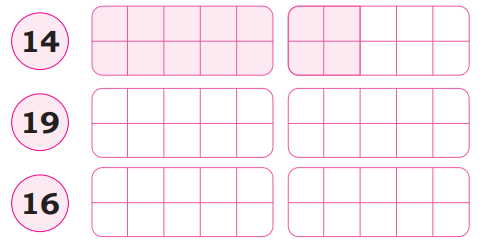
C. Write down the numbers in sequence.
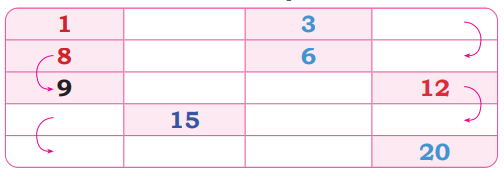
D. Encircle a group of ten in the pictures and match with the number.
|
|
|
|
|
|
|
|
|
|
|
|


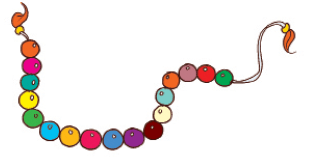

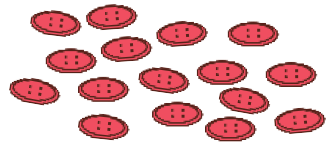



E. A group of friends while playing built some towers.
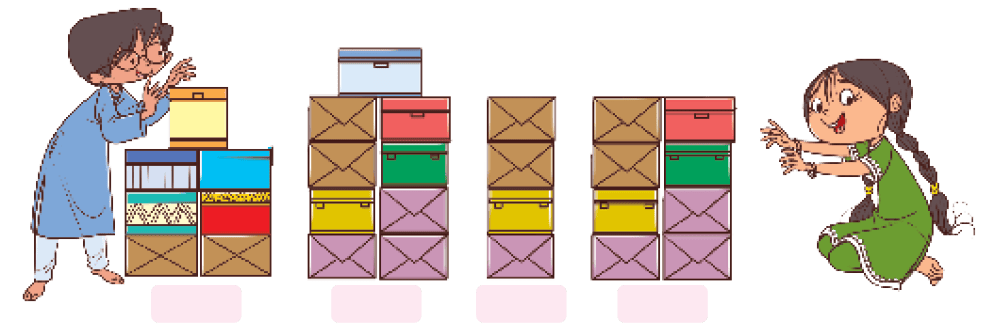
i. Tick  the tallest tower.
ii. Which tower used the most number of blocks? Write the number of blocks used in it.
iii. Which tower used the least number of blocks? Write the number of blocks used in it.
Let us Do
i. 8, 12, 6
ii. 14, 11, 19
B. Circle the biggest number.i. 16, 19, 11
ii. 11, 17, 9
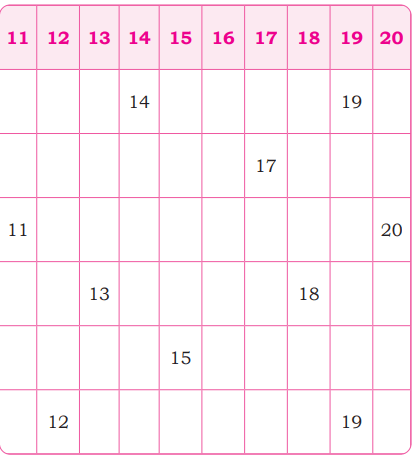
C. Find the numbers hidden under the paw.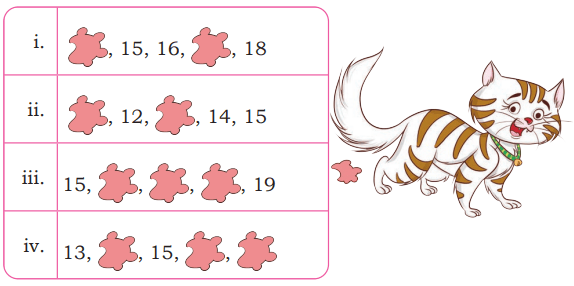
D. Write the numbers from the biggest to the smallest.
11, 3, 16, 20, 13, 9

Let children find out their ways to decide which number is bigger. Ask them why have they decided so. The children must understand that 15 is bigger than 11 because it is 4 more than 11 and similarly for other numbers up to 20.
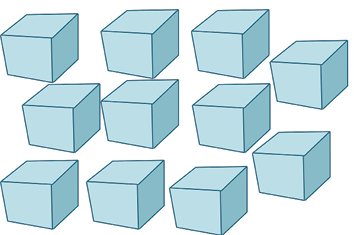
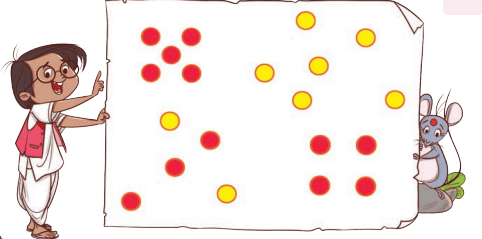
i. Number of blocks

ii. Number of white dots
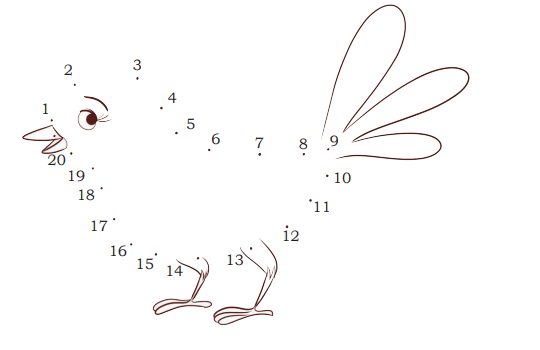
F. Join the numbers from 1 to 20.
 Project Work
A. Find out the things from your surroundings that are in the group of 10. For example, bindi cards having bindis in the groups of 10.
B. Ask children to make their own number cards 10 to 20. They can use old cardboards, waste materials, etc.
Encourage children to recognise the group of 10, while counting the objects beyond 10.