5

How Many?
Going out with Grandfather!
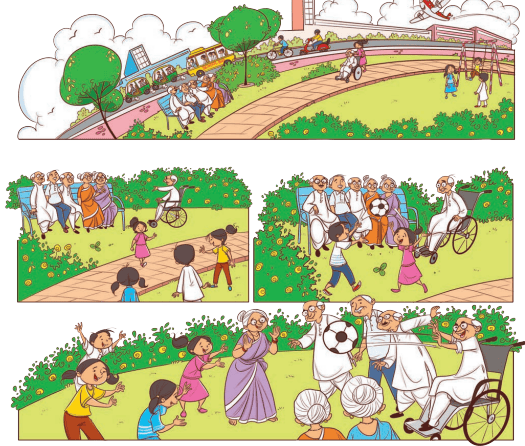
Let children look at the picture and share what activities they do in the park. They may also discuss the number of people joining in the park, for example, how many children are playing in the first picture and how many joined them. Let children discuss or share the importance of spending time with grandparents and discuss ways of showing respect to them.
Tell How many Altogether? Fill in the Blanks.





Provide children enough opportunity to do addition with lots of concrete objects. Encourage children to find the total number of objects by combining two groups (aggregation) and also by adding more objects to an existing group of objects (augmentation). Practice work should be done with the children on both types of addition problems.
Add and Draw

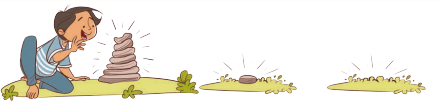
 Let us Count
A. How many brothers and sisters do your parents have altogether?
B. How many family members do you and your friend have altogether?
C. How many fingers do you have in both your hands and feet?
D. How many numbers can you count on your fingers?
Encourage children to understand and say the addition sentences aloud. For example, 4 children and 2 children altogether make 6 children and connect the word ‘make’ with the symbol of addition (+) and ‘altogether’ with the symbol of equal to (=). Children should be provided opportunities to work with concrete material in developing the vocabulary like ‘total’, ‘sum’, ‘altogether’, etc., before progressing towards symbolic representation or addition of numbers.
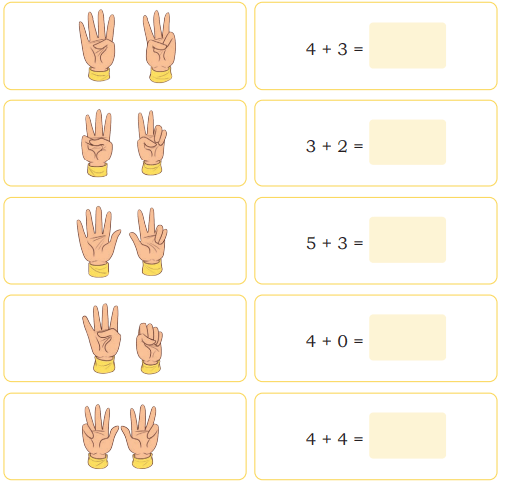
Count and write the total number of fingers.
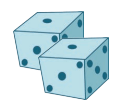
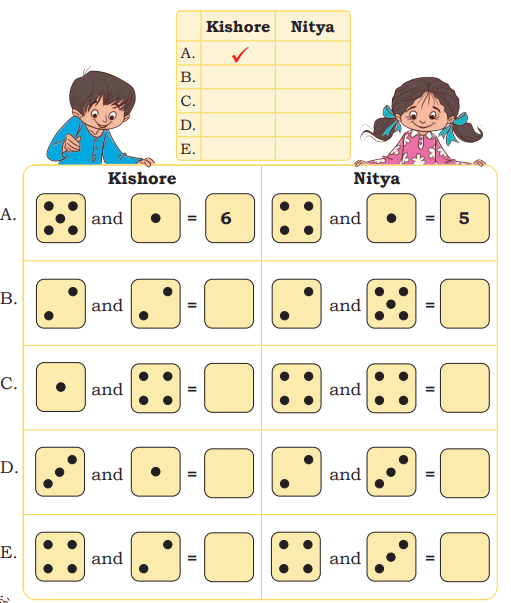
 Let us Play— Addition with Dice!
Let us Do
Kishore and Nitya also played the same game and here are their dots on the dice. Find out how many times Kishore won and how many times Nitya won by putting the ( ) on their score board.
Beads and String
Colour the beads in the string as per the numbers given below and find the total number of coloured beads.
A. 3 + 4 =

B. 4 + 2 =

C.5 + 4 =

D. 2 + 7 =

E. 7 + 3 =

Encourage children to play with beads’ strings. Focus on the process of addition and discuss the strategies they are using.
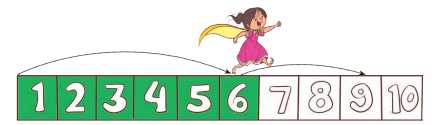
Hop and Find the Sum
4 + 2 =
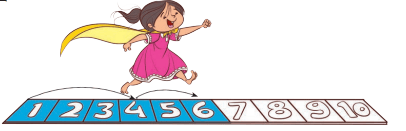
3 + 2 =
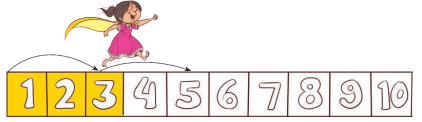
5 + 3 =
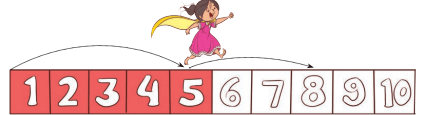
6 + 3 =
Add in Your Own Way
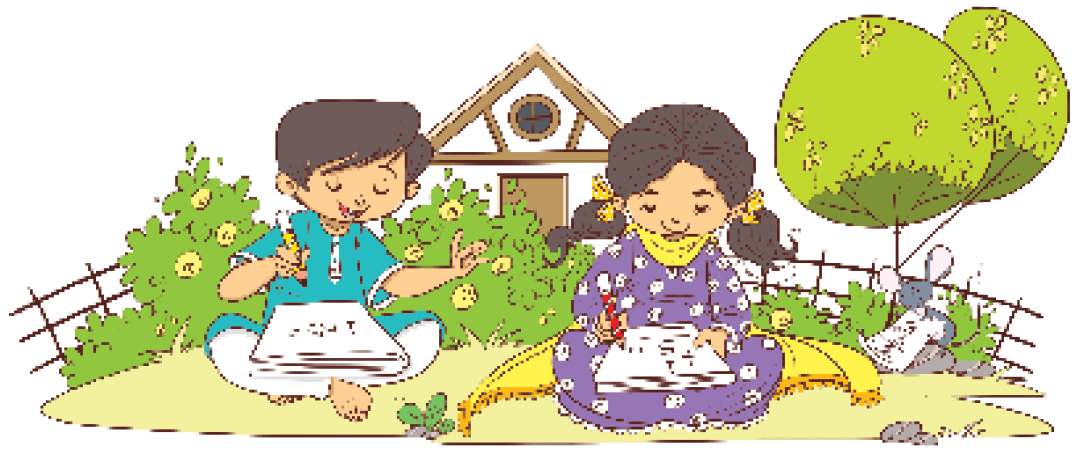
Abdul and Rihana are adding numbers in two different ways. Help them to find the sum.
2 + 3 =
5 + 1=
3 + 3=
9 + 1=
2 + 3 =
5 + 1 =
3 + 3 =
9 + 1 =
Let us Do
 Project Work
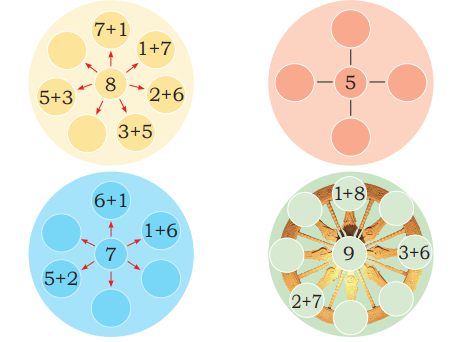
Take ten cards 0 to 9. + = 9
Arrange the cards in such a manner that their sum must be 9. + + = 9
There are many ways to do it. In how many ways can you do it? + = 9
Addition Story
A. Raghav  has 4 shells
  and Sarita
  has 5 shells
  . How many shells they have altogether?
B. Ranjeet has 3 marbles  and Meenakshi has 6 marbles
  . How many marbles they have in total?
C. There are 3 coconuts  in one bag. There are 4 coconuts
  in another bag. How many coconuts are there in all?
Let us see what we have in our bags.
Do it with your friend and write down the answers below.
A. I have ____ books in my bag and my friend has ____ books. We both have _________ books in all.
B. I have ____ pencils and my friend has ____ pencils. We have _______ pencils altogether.
C. I have ____ notebooks and my friend has ____ notebooks. We have _______ notebooks in total.
 Think and Do
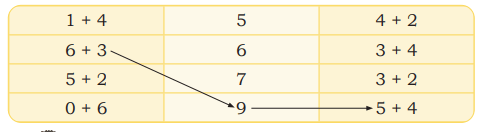
Write the numbers 1, 2 and 3 in the given table in a way as shown by the dotted lines so that each way adds up to 6.
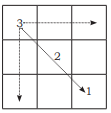
This activity can be conducted in pairs. Encourage children to create their own problems and questions. Also discuss in class about the world’s oldest Sun Temple, Konark, Odisha refer to the image (Page 56) of wheel in Konark Sun Chariot.
Five Little Children
Five little children
Raise your hand
Here comes your stand
One steps out, with a roar
Now, we are four!
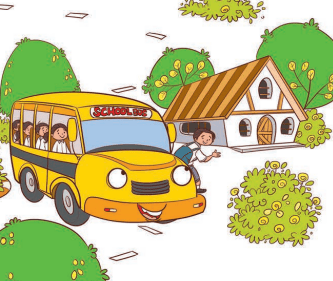
Four little children
Raise your hand
Here comes your stand
One steps out, near a tree
Now, we are three!
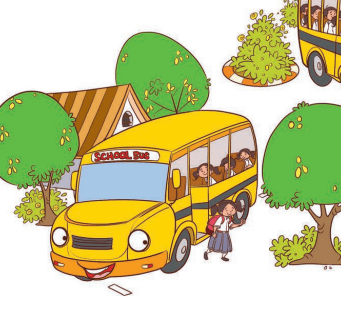
Three little children
Raise your hand
Here comes your stand
One steps out,
with shining shoe
Now, we are two!
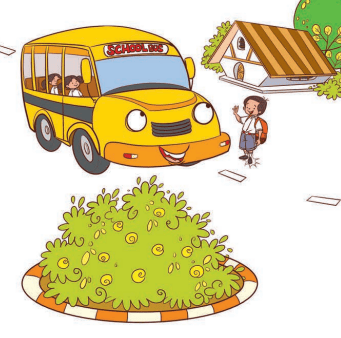
Raise your hand
Here comes your stand
One steps out,
looking at the sun
Now, remains one!
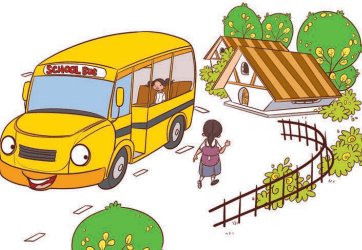
One little child
Raise your hand
Here comes your stand
Last steps out,
having much fun
Now, there are none!
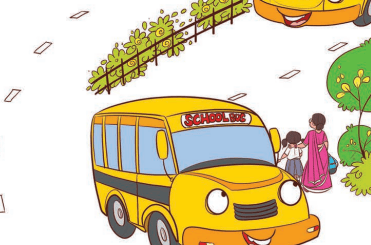
Let us Talk
B.How many children get down from the bus on the first stand?
C.How many children are left in the bus after the first stop?
D.How many children are left after the second stand? Answer the same for third, fourth and fifth stand.
E. How many children are left in the bus at the end?
Project Work
Find out the number of people at your home. How many are going to school, for work and how many stay at home.
Let us Do
How Many Left?
A. Fill in the blanks.i
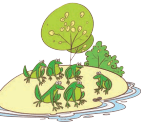
6 frogs
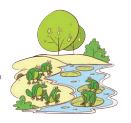
2 jumped away
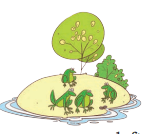
______ left 6 − 2 =______
ii .

______7 balloons
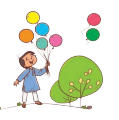
______ flew away
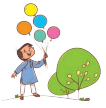
5 left 7 − 2 = ______
iii
.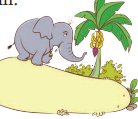
9 bananas
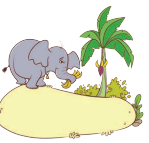
6 took away
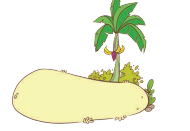
____ left 9 − 6 = ______
i.
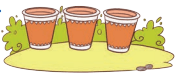
____ pots
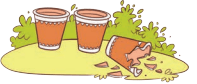
____ pot broke

____ left 3 − ______ = ______
ii.
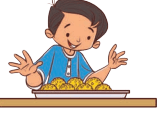
7 ladoos
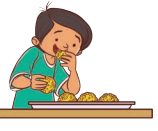
4 eaten
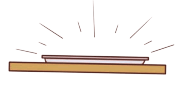
____ left 7 − 4 = ______
iii.
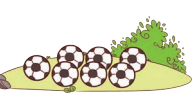
7 balls
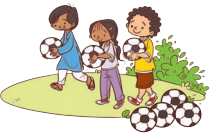
______ took away
______ left 7 − ______ = ______
C. Answer the following questions.
i. Manisha has 9 bananas
  She ate 3 bananas. How many bananas are left?
ii. There are 8 butterflies  on the flowers. 5 butterflies flew away. How many butterflies are left?
Let us Do
Make your own ten dots card and hide a few dots from your friends. Ask them how many dots are hidden.
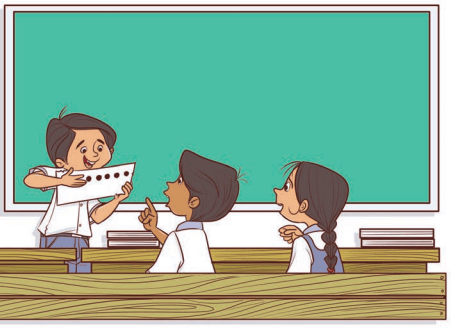
How many dots are hidden and how many dots are visible?




Project Work
Hop backwards on the number strip.

A. Jump 3 steps back from 9.
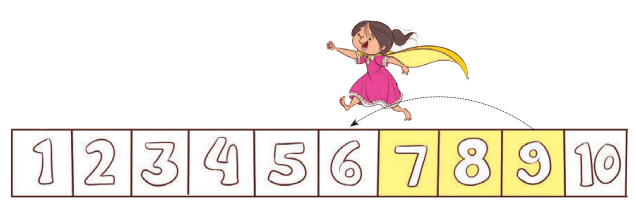
9 − 3 = 6
B. Jump 4 steps back from 7.
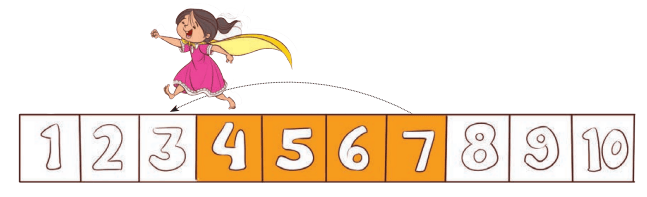
7 − 4 = 
Do the subtraction in your own way.
A. 8 − 2 =
B. 7 − 3 =
C. 9 − 5 =
D. 6 − 3 =
E. 5 − 1 =
F. 4 − 2 =