UNIT 3
Food
Chapter 6

Fun with Pictures
Let us speak
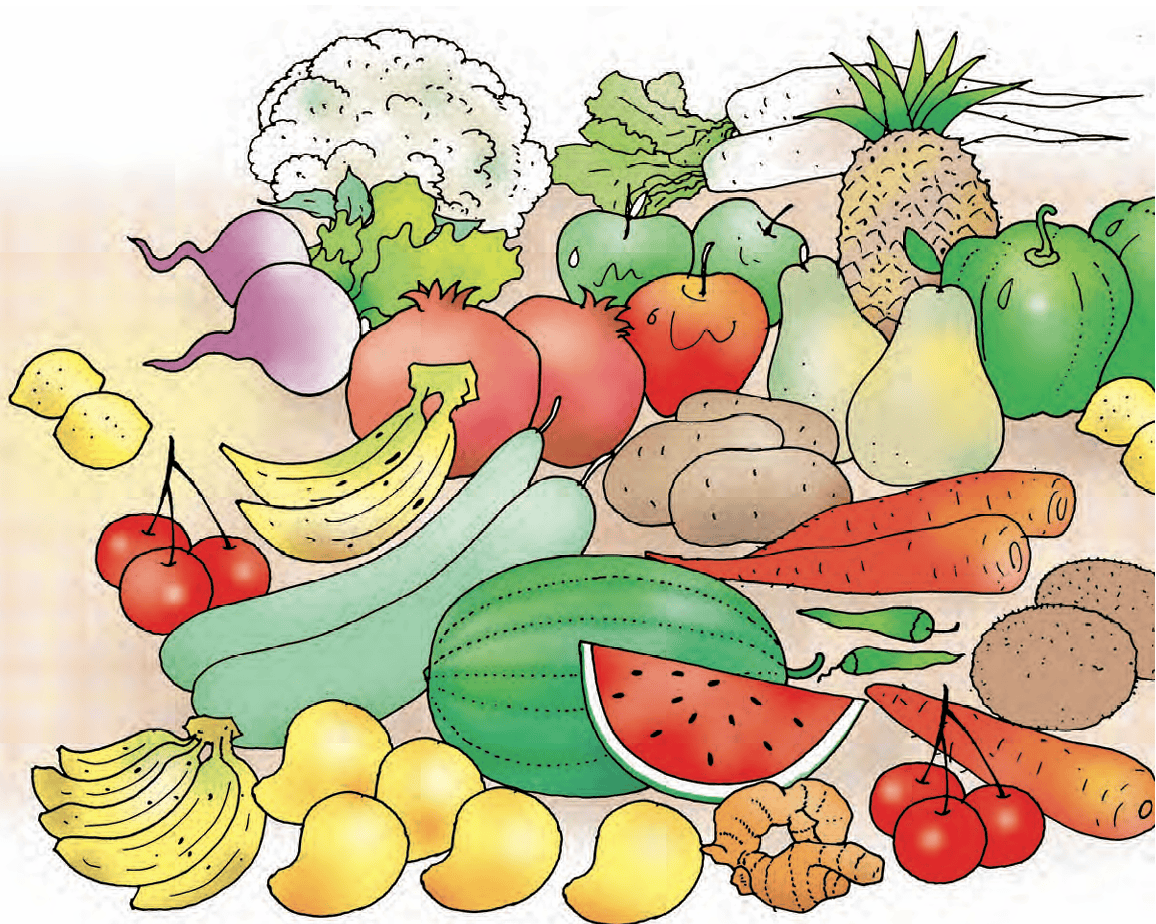
Let us speak
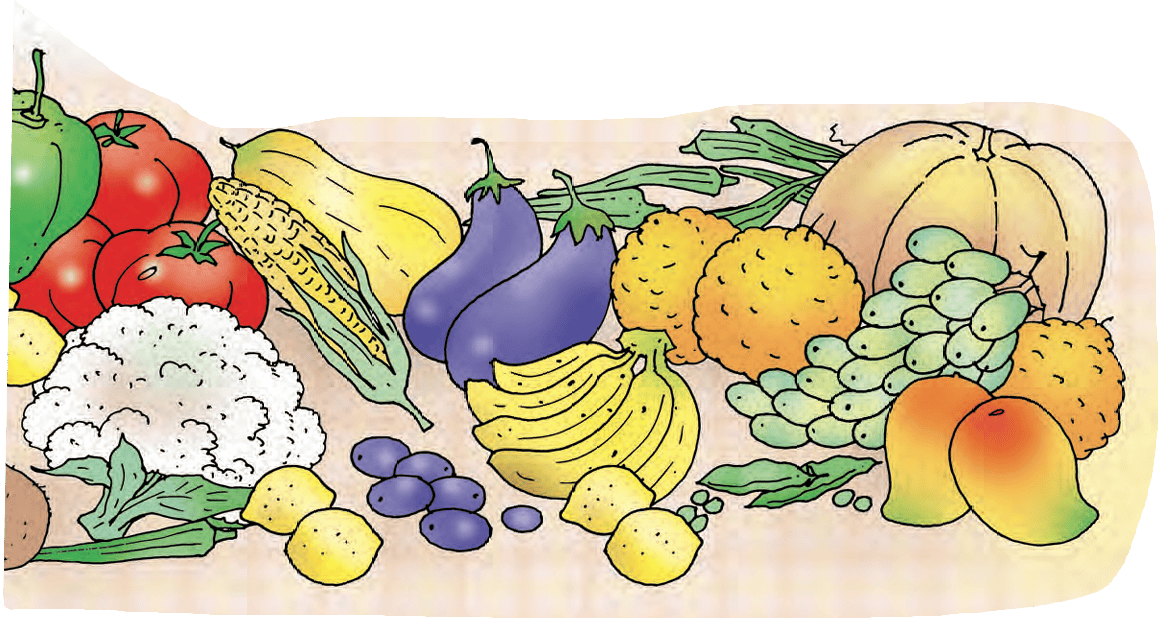
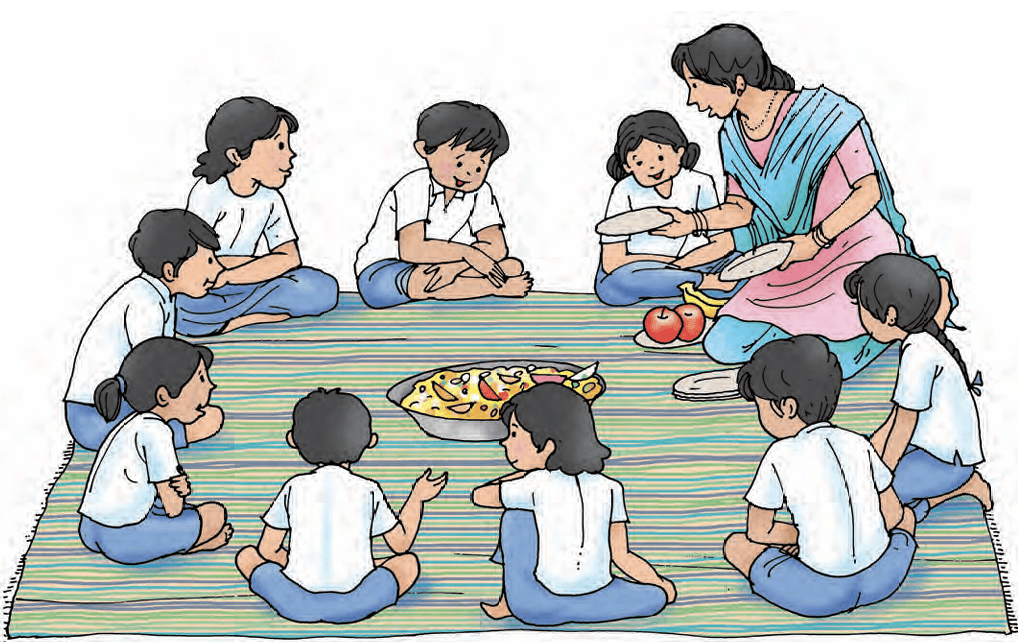
(b) Say the names of the fruits and vegetables that you see.
(c) How many fruits are there in the picture?
(d) Can you name the fruits that are red in colour?
(e) How many vegetables are there in the picture?
(f) Can you name the green vegetables?
(g) Which fruits and vegetables do you like the most?
(h) Why do we eat fruits and vegetables?
Note to the teacher
- Encourage children to answer all the questions, even if they say in their home language. Help them find English names for fruits and vegetables. Names identified by children can be written on the board.
Let us sing
Fruits for all
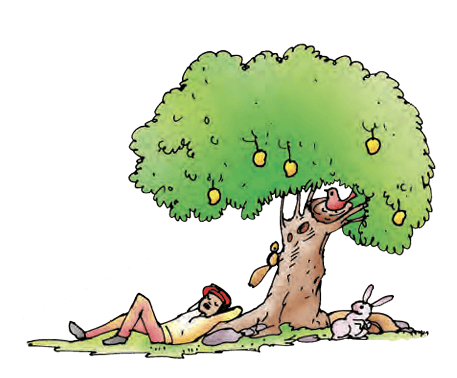
One for the traveller who rests under the tree.
One for the bird who nests on the tree.
One for the squirrel who runs up the tree.
One for the rabbit who lives under the tree.
One for you to share with me.
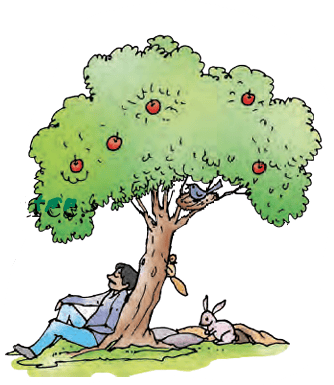
 Five red apples hanging on the tree,
One for the traveller who rests under the tree.
One for the bird who nests on the tree.
One for the squirrel who runs up the tree.
One less for the rabbit who lives under the tree.
One for you to share with me.
Note to the teacher
- Sing this song with different types of local fruits. Help every child answer the questions. Numbers up to give can be used for adding.
Let us speak
(b) What do you share with your brother, sister or friends?
(c) Circle the words: ‘for’ and ‘on’ in the poem.
Let us do
Let us read
A Visit to the Market
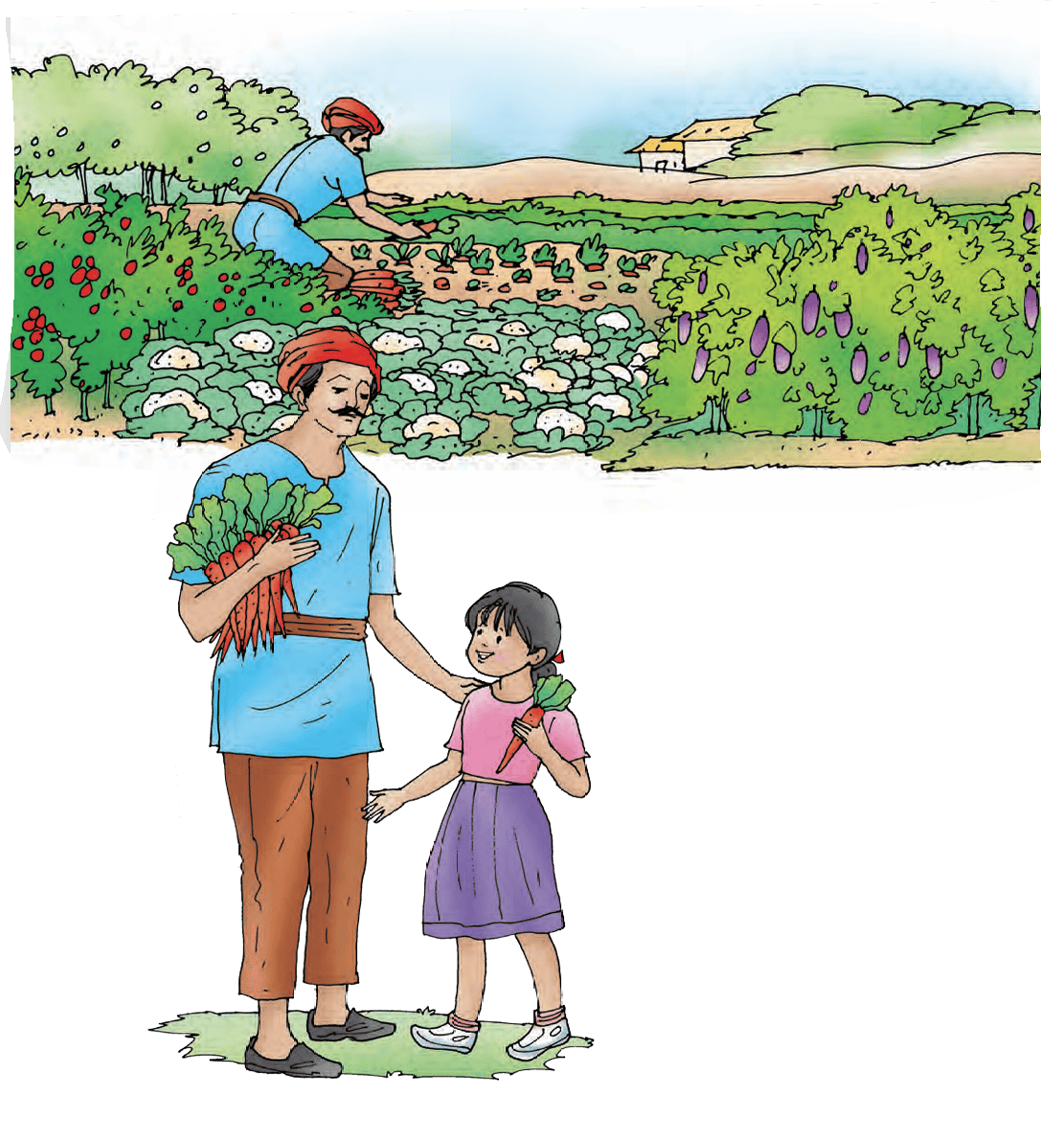
Mini’s father is a farmer.
He grows vegetables in his
farm.
He sells them in the market.
Every Saturday, Mini goes
with him to the market.
Her father sells his
vegetables.
He takes her around the
market.
He grows vegetables in his
farm.
He sells them in the market.
Every Saturday, Mini goes
with him to the market.
Her father sells his
vegetables.
He takes her around the
market.
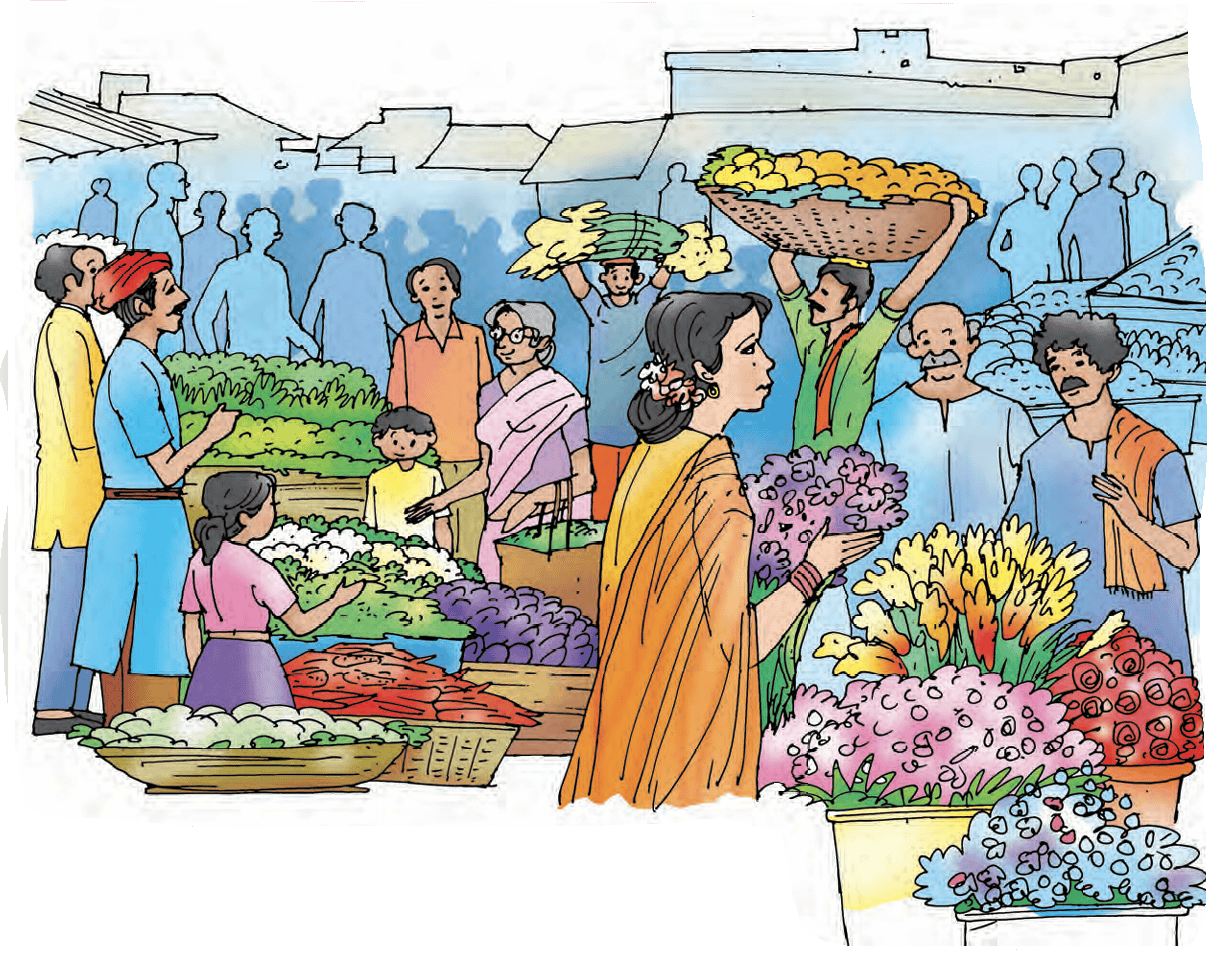 There are many people in the market.
 They are buying vegetables and fruits.
They are buying flowers and toys too!
Mini: Yes. sometimes mother makes a string of jasmine flowers.
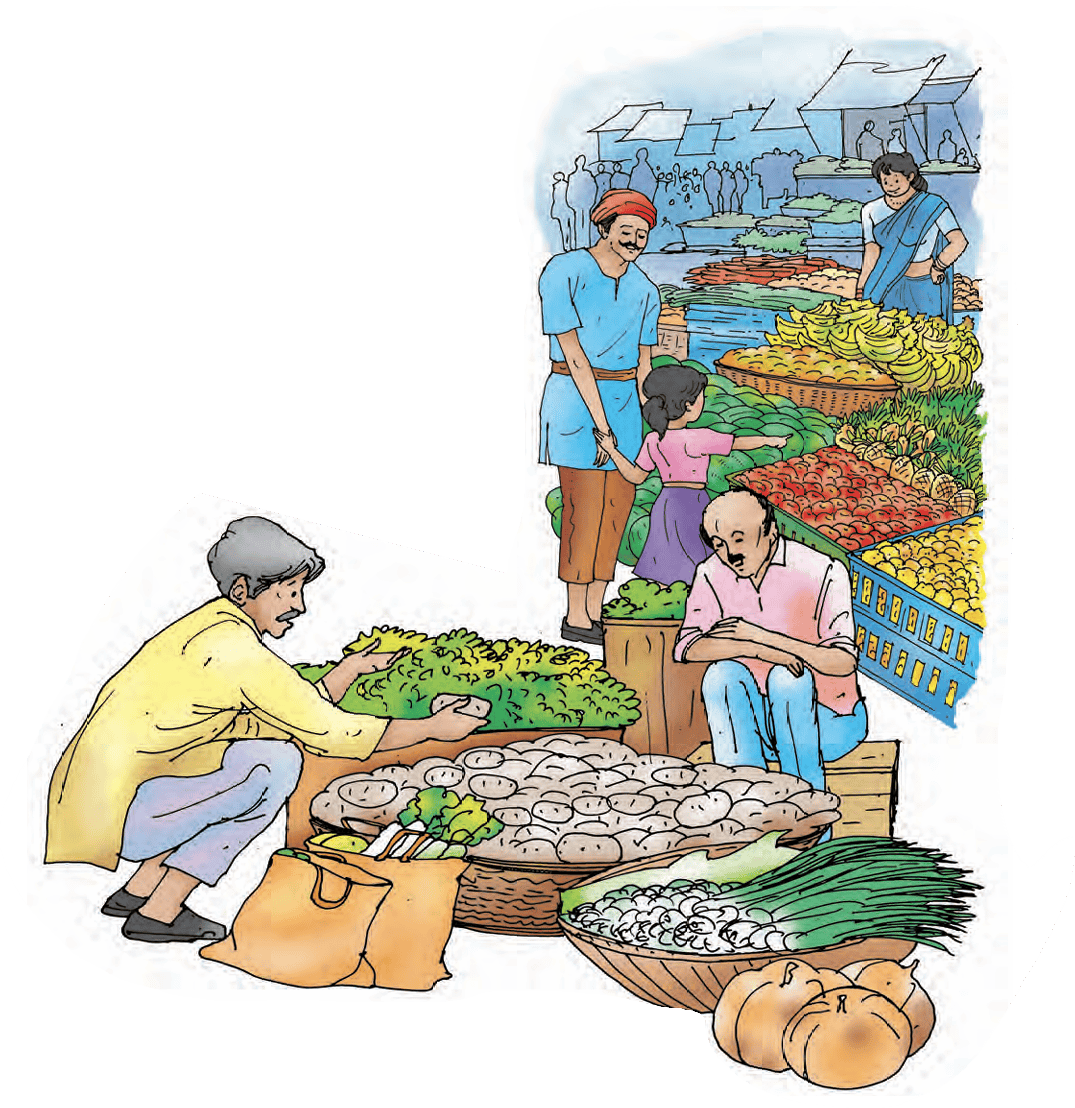
Father: Look at the fruits here.
Mini: I can see apples but what are those large fruits behind the apples?
Father: Those are pineapples.
Mini: What are these fruits kept on the right of the apples?
Father: They are oranges.
Mini: What is the name of the big green fruit kept on the left of the apples?
Father: Oh! That is watermelon.
Sight words
| his | he | them | her | around | there |
| those | behind | with | these |
Note to the teacher
- You may facilitate children to take up the roles of Mini or the father and conduct role play.
- Help children identify various flowers available around them in the local language and English.
Let us speak
(b) Do you go to the market?
(c) With whom do you go?
(d) What do you like best about the market?
Let us read
 |
 |
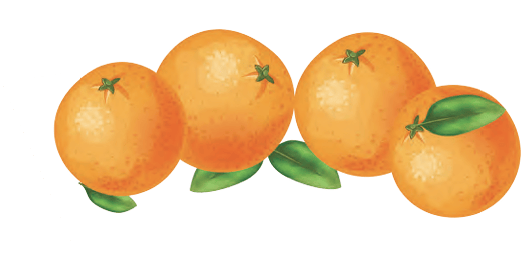 |
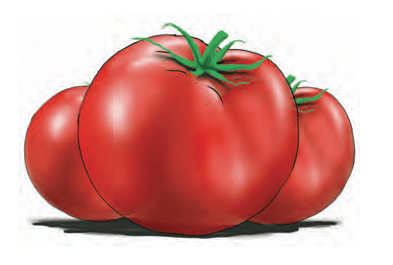
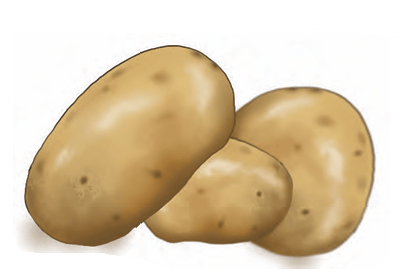
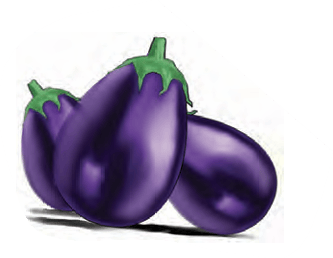
| tomatoes | potatoes | oranges |
 |
 |
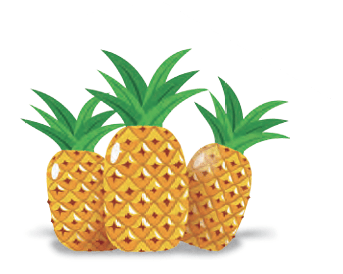 |
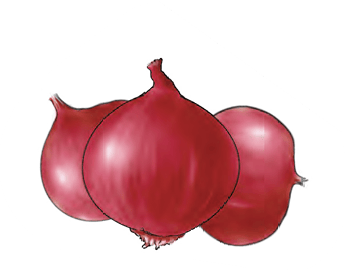
| onions | brinjals | pineapples |
 |
 |
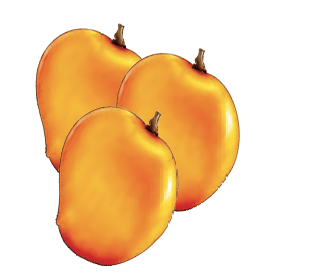 |
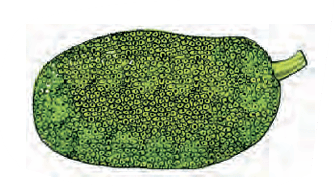
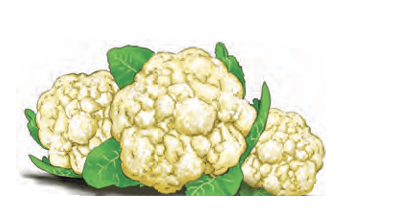
| jackfruit | cauliflowers | mangoes |
 |
 |
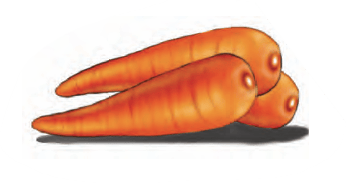 |
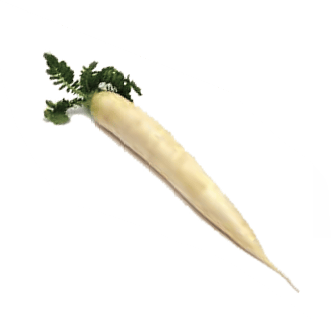
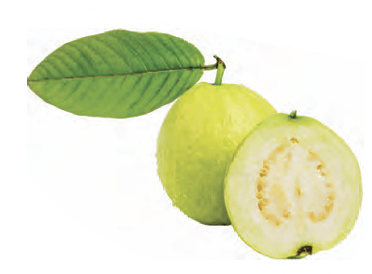
| radish | guava | carrots |
 |
 |
|
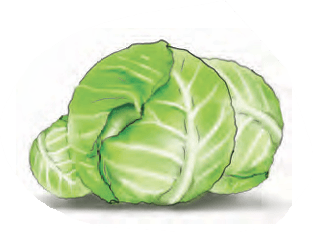
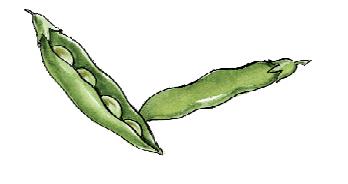
| cabbages | peas |
Note to the teacher
- Encourage all children to speak, help them in naming the fruits and vegetables in English.
| Today, my | 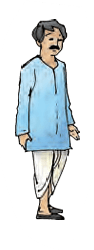 |
took me to the | 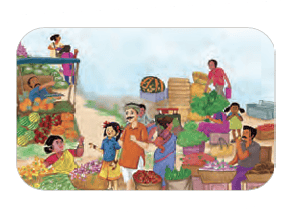 |
| I saw many | 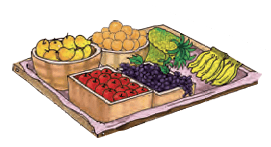 and and |
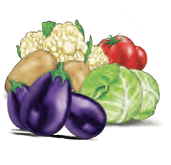 |
there. |
| I liked the | 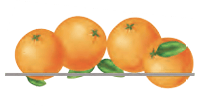 |
||
| My | |
bought me an | 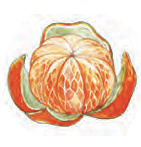 |
| We bought | |
and | |
| We had a good dinner. | |||
Note to the teacher
- Support children’s attempts to read the above sentences.
- Discuss with children that we should not waste food.
Let us draw
Let us write
| yellow mango | red apple | yellow banana |
| green guava | purple brinjal | brown potato |
| orange carrot | white radish |
______________________________________
______________________________________
______________________________________
______________________________________
______________________________________
______________________________________
______________________________________
______________________________________
______________________________________
______________________________________
| Are these onions? Yes, they are. These are onions. |
|
|
Are these tomatoes? No, they are not. These are brinjals. |
| Are these potatoes? _______, they are not. These are _______. | |
|
Are these carrots? _______, they are. These are ________. |
| Are these roses? ________, they are not. These are _________. | 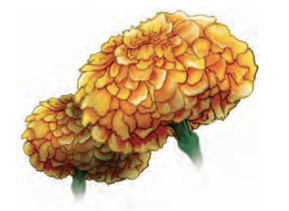 |
|
Are these pumpkins? ________, they are not. These are __________. |
| Are these mangoes? ________, they are not. These are __________. | |
|
Are these cauliflower? _________, they are. They are __________. |
| Is this a cabbage?
___________, it is. This is a __________. |
|
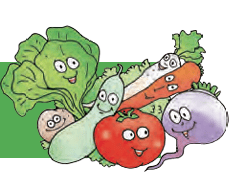
Vegetables are good for health.
We should eat them everyday.
Note to the teacher
- Help the children read the questions first. Later, they may write the words.