
10
Fun at the Fair
Rupal loves going to the fair. She visits the local fair with her friends. Her mother gave her ₹ 50. She spent most of it on her favourite rides.
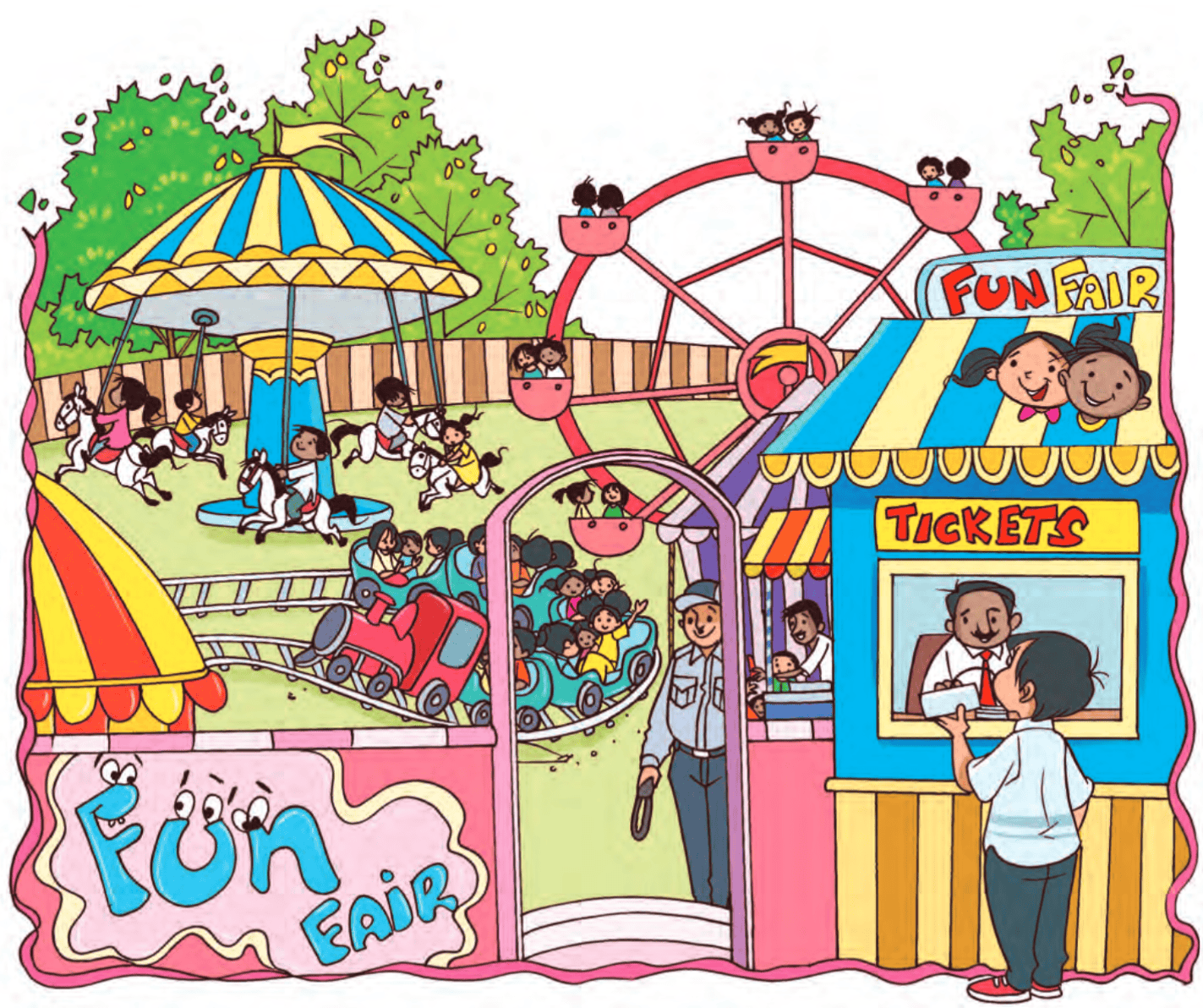
Talk about the things that children enjoy in fairs, whom do they go with, what do they buy and how much money do they spend there.
How Much Rupal Spent?
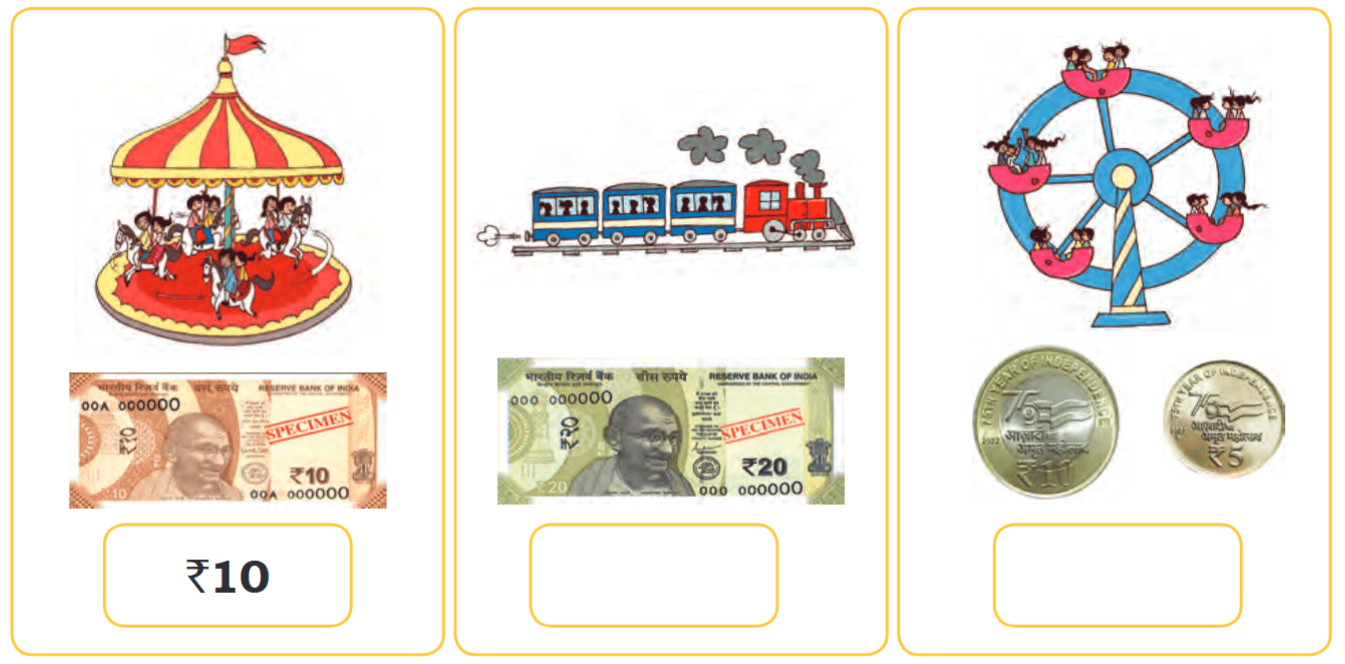
Total money spent on rides =
- =Money given by Rupal’s mother |
Money spent |
Money left with Rupal |
A friend of Rupal has ₹ 8 left out of ₹ 50. She wanted to know how much money she spent. Let us see her way of finding it.
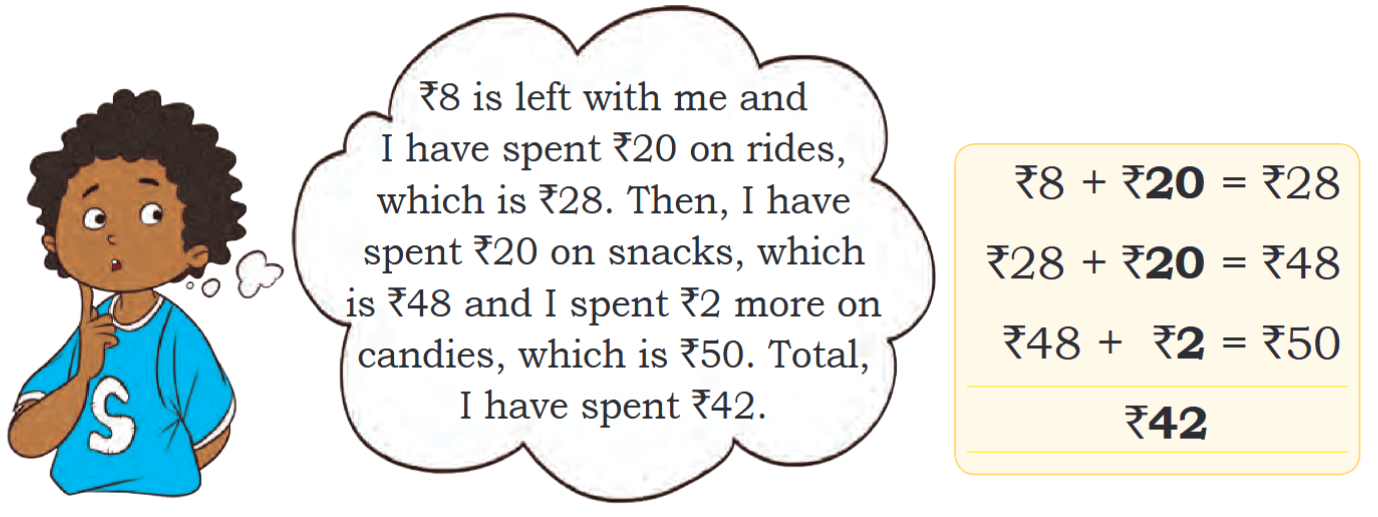
₹ 8 is left with me and I have spent ₹ 20 on rides, which is ₹ 28. Then, I have spent ₹ 20 on snacks, which is ₹ 48 and I spent ₹ 2 more on candies, which is ₹ 50. Total, I have spent ₹ 42.
₹ 8 + ₹ 20 = ₹ 28
₹ 28 + ₹ 20 = ₹ 48
₹ 48 + ₹ 2 = ₹ 50
₹ 42
If you had ₹ 3 left when your father gave you ₹ 40 for the fair, how many rupees did you spend? Find out.
Let us Do
A. How much money will be needed to buy?
| Ride | Number of tickets | Money |
|---|---|---|
₹ 20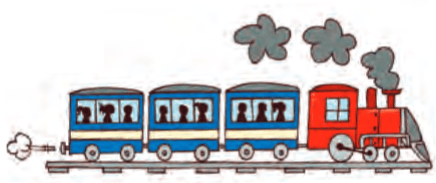 |
2 | ₹ |
₹ 10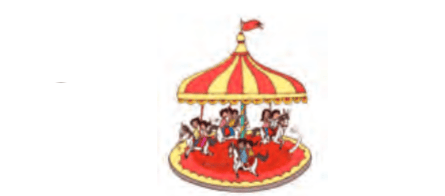 |
₹ 30 | |
₹ 15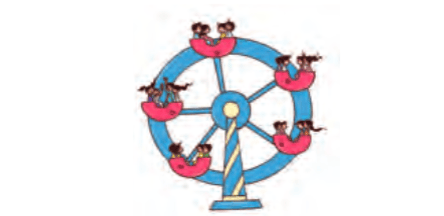 |
2 | ₹ |
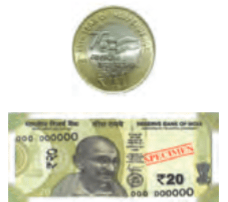
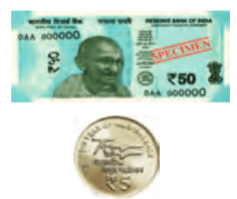
B. We saw different notes and coins used by Rupal and her friends. Let us look at the other commonly used Indian currency.
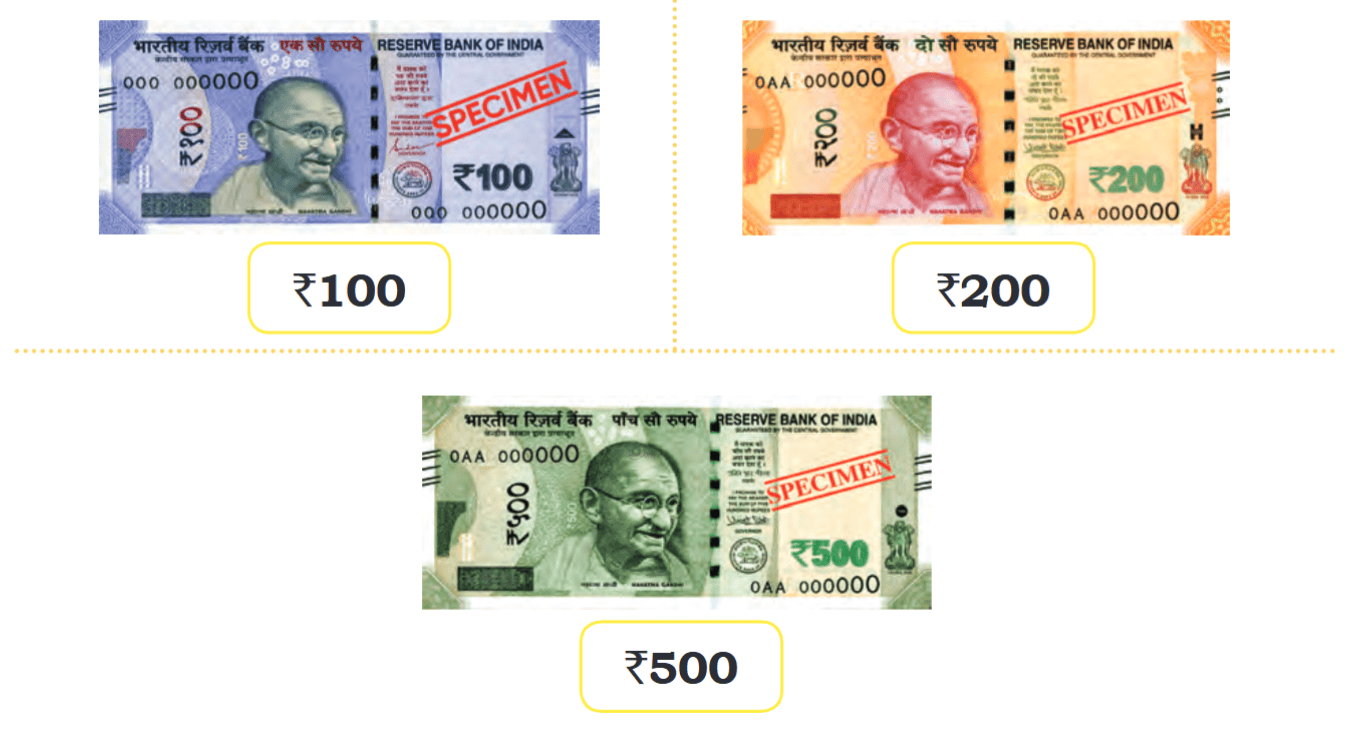
₹ 100 ₹ 200 and ₹ 500
C. Count the number of times ₹ 500 is written on a ₹ 500 note.
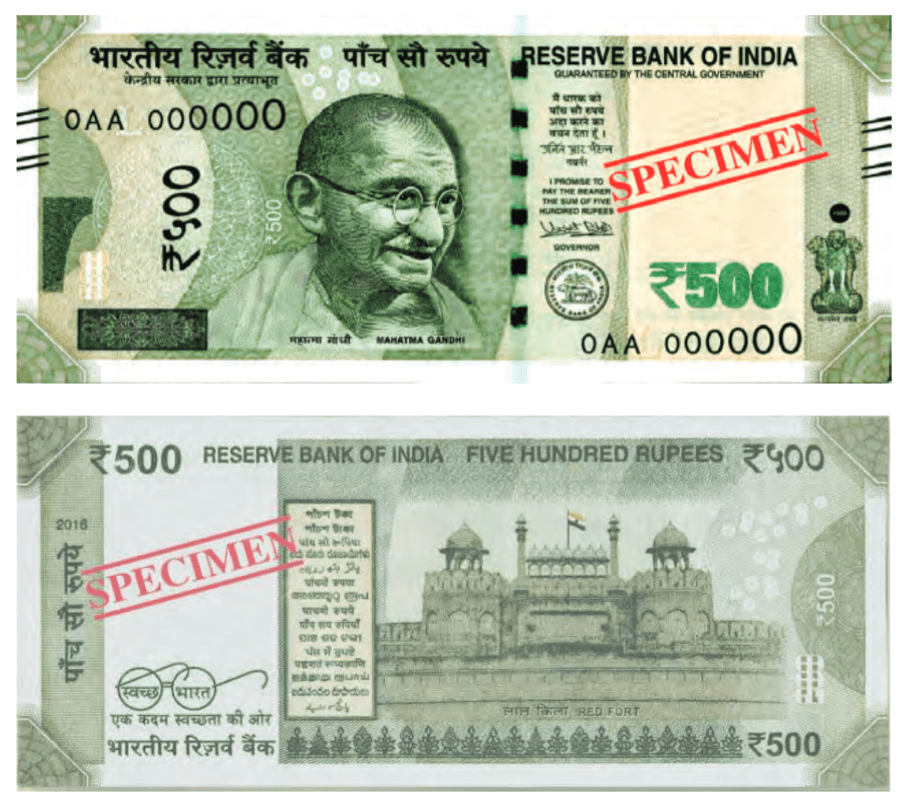
- i. Five hundred rupees is written in words times.
- ii. 500 is written in number times.
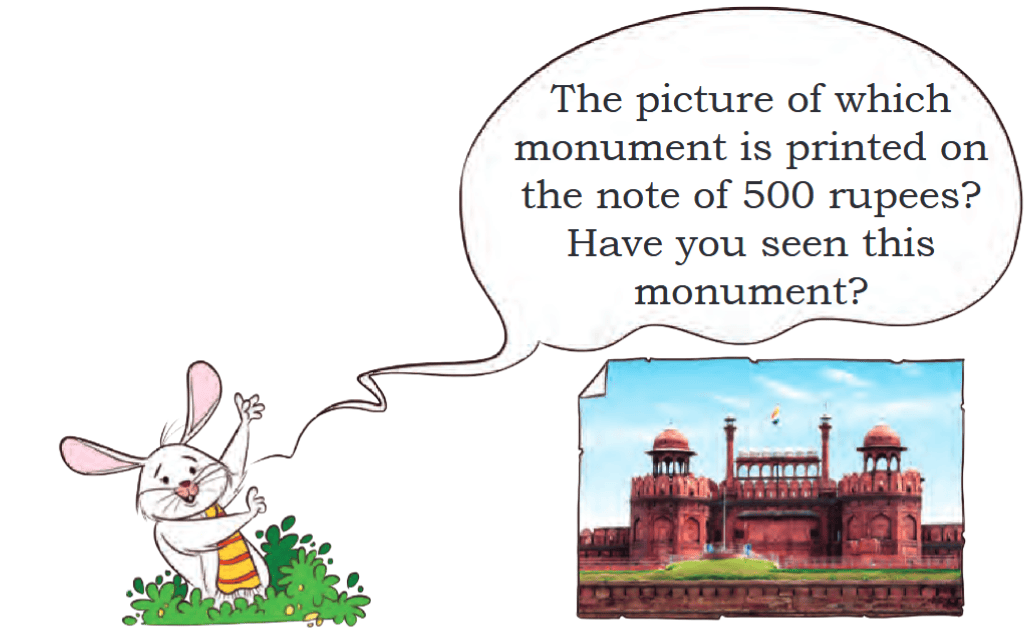
The picture of which monument is printed on the note of 500 rupees? Have you seen this monument?
Ask the children to observe other currency notes and discuss their features. Discuss with them the specifications, such as the lines on the border of the currency notes, and their number on each note for specially abled people.
Tejal’s grandmother showed her some old coins that she had not seen before. Let us have a look at these coins also.
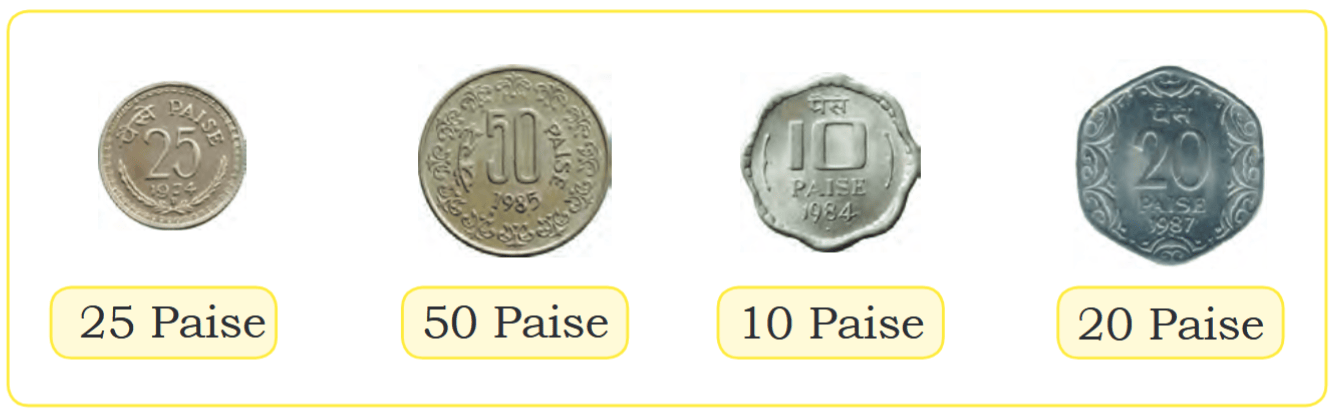
25 Paise 50 Paise 10 Paise 20 Paise
Her grandmother used to pay 2 coins of 50 paise for 1 Rupee.
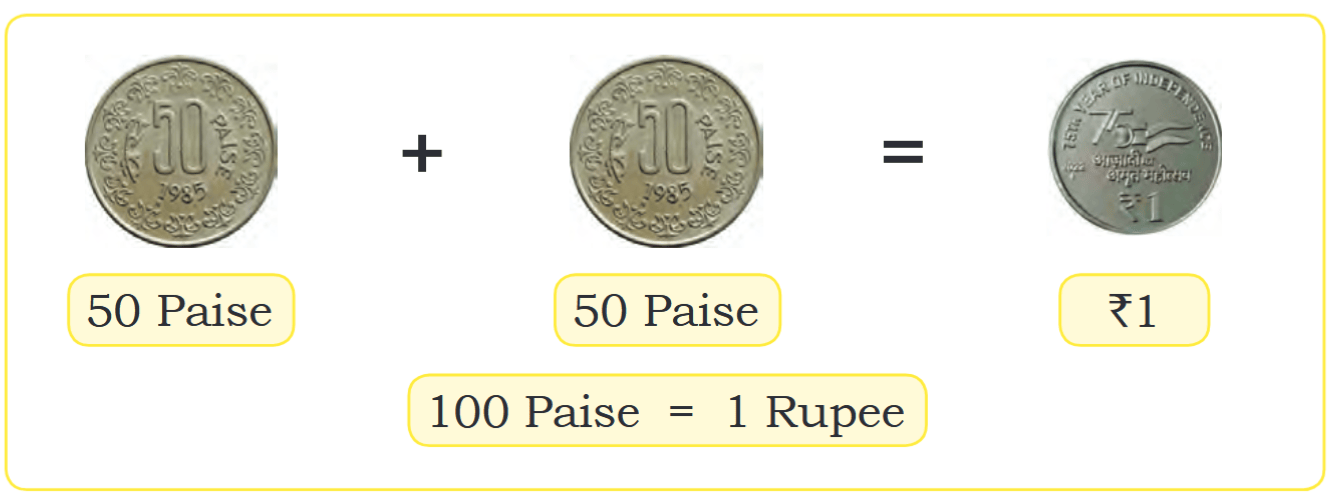
50 Paise + 50 Paise = ₹ 1
100 Paise = 1 Rupee
A. How many 25 paise will make ₹ 1? Draw the coins in the box below.
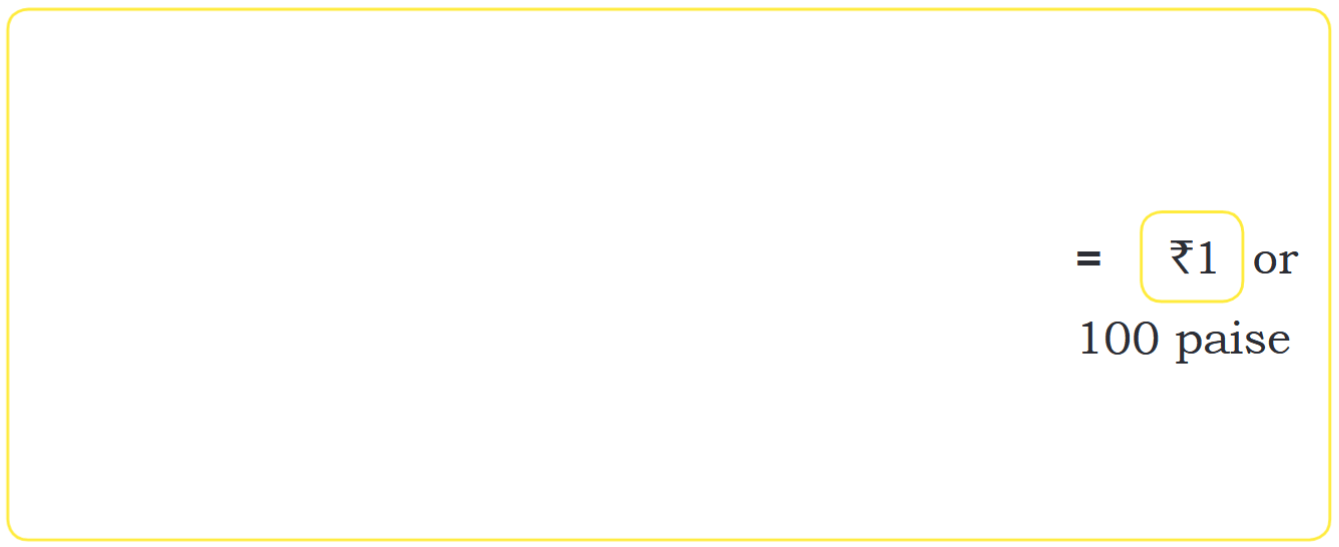
= ₹ 1 or 100 paise
B. How many 20 paise will make ₹ 1?
Pop the Balloon
Matru comes across a ‘Pop the balloon’ game. He will get 3 chances for ₹ 10. Let us see how much money Matru wins.
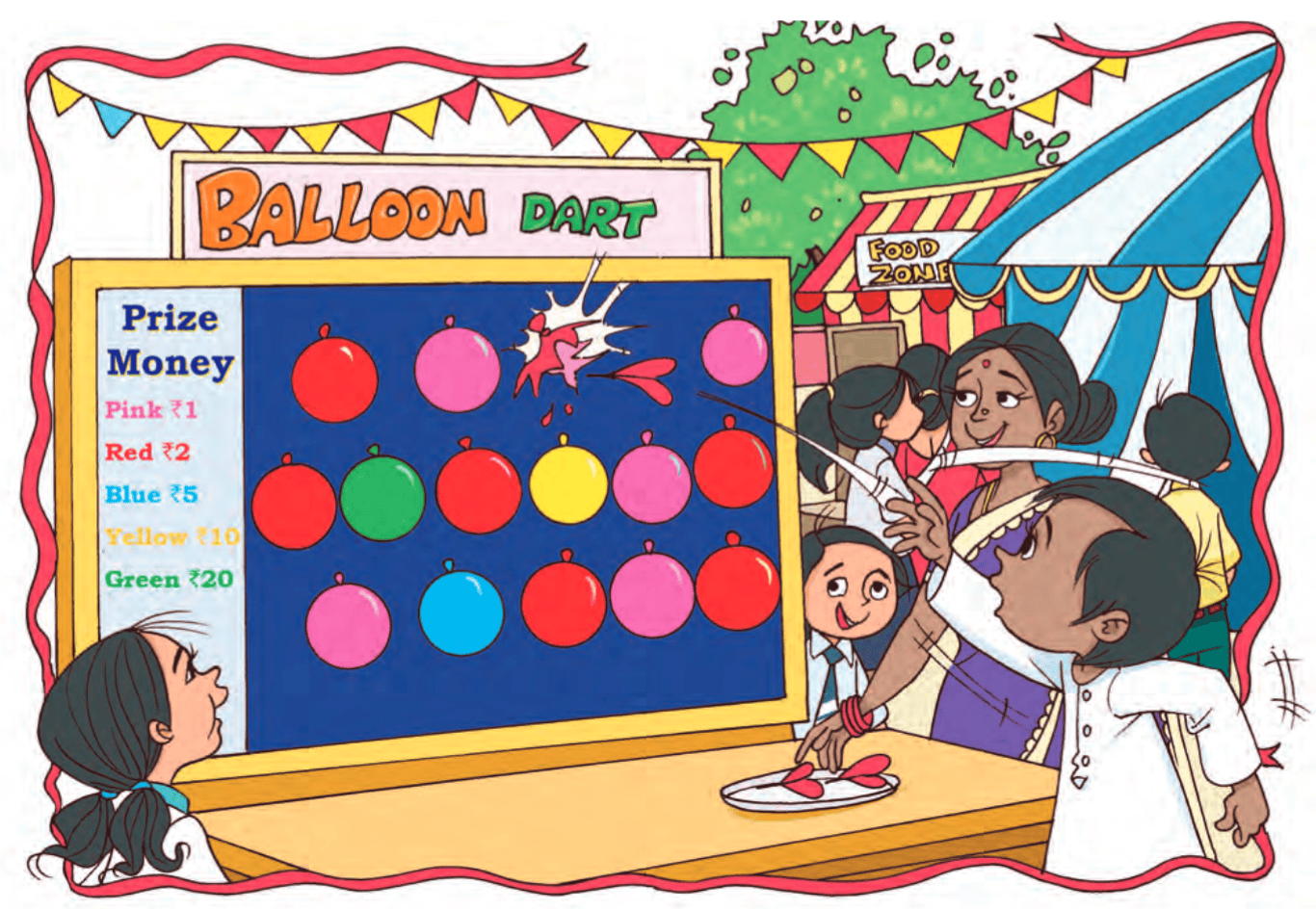
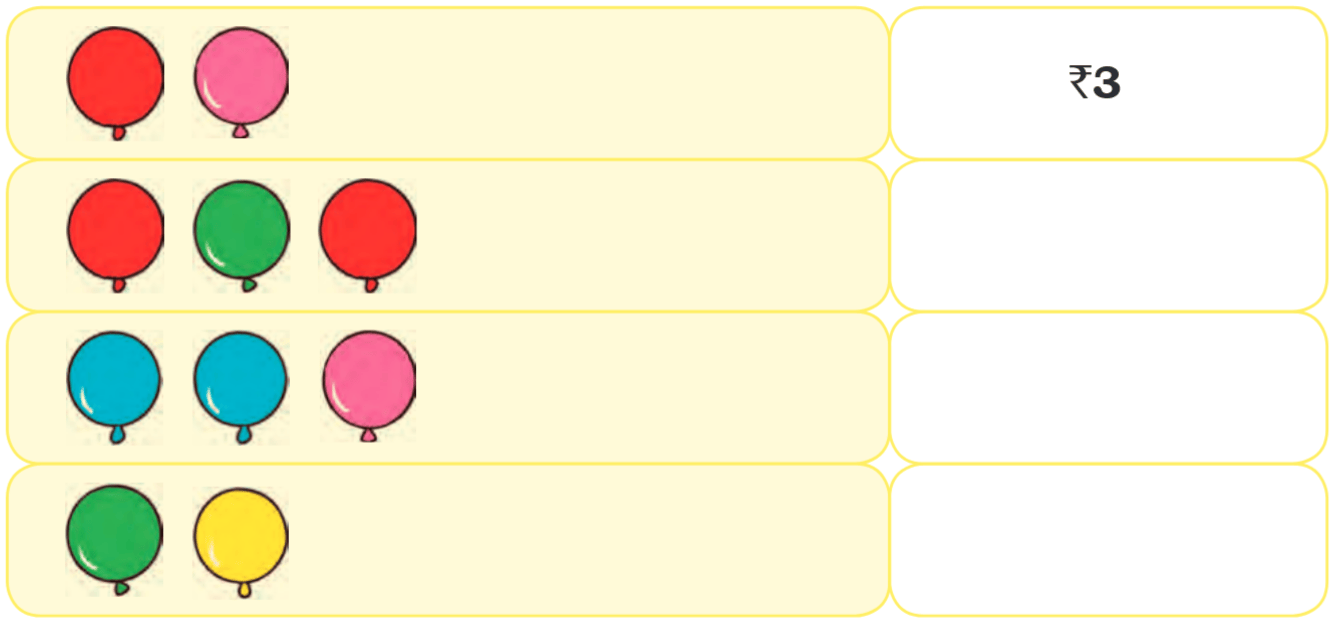
A. How much money will Matru get if he popped the following balloons?
B. Draw and colour the balloons, which he has to pop if he wants to get the following amount.
| ₹ 17 | |
| ₹ 22 | |
| ₹ 31 |
C. Which three differently coloured balloons would you target to make the highest amount of money? Draw and colour them.
Total amount won =
D. If Matru had four chances, by popping which differently coloured balloons can he make the most money? Draw and colour them.
Total amount won =
Let us Do
Let us look at how ₹ 66 can be paid in different ways.
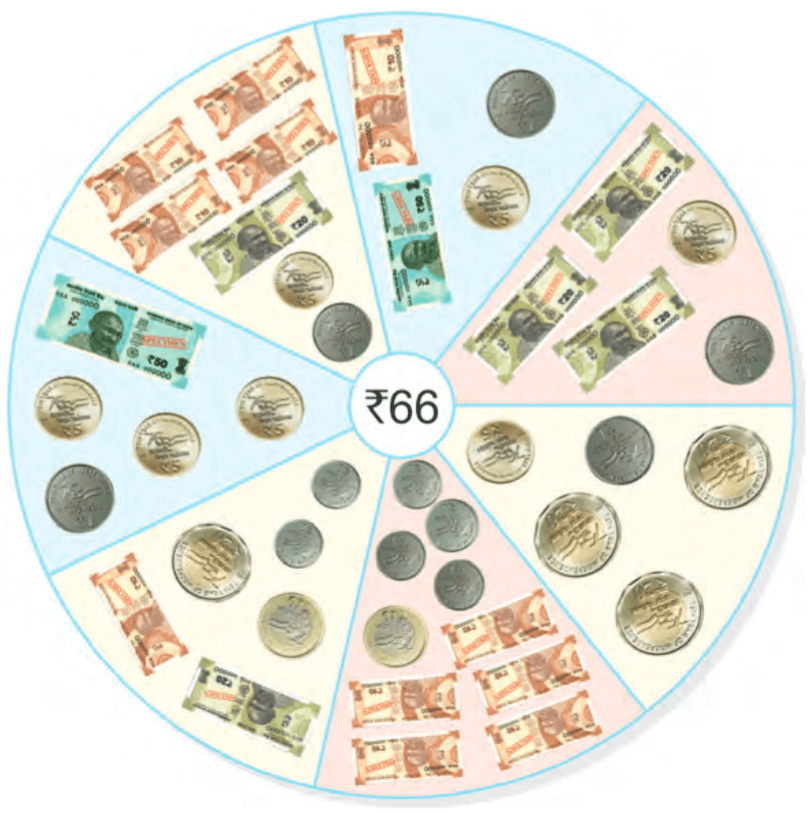
Make different combinations to make the given amount.
| Amount | ₹ 1 | ₹ 2 | ₹ 5 | ₹ 10 | ₹ 20 | ₹ 50 |
|---|---|---|---|---|---|---|
| ₹ 54 | — | 2 | — | 3 | 1 | — |
| ₹ 85 | ||||||
Let us Buy
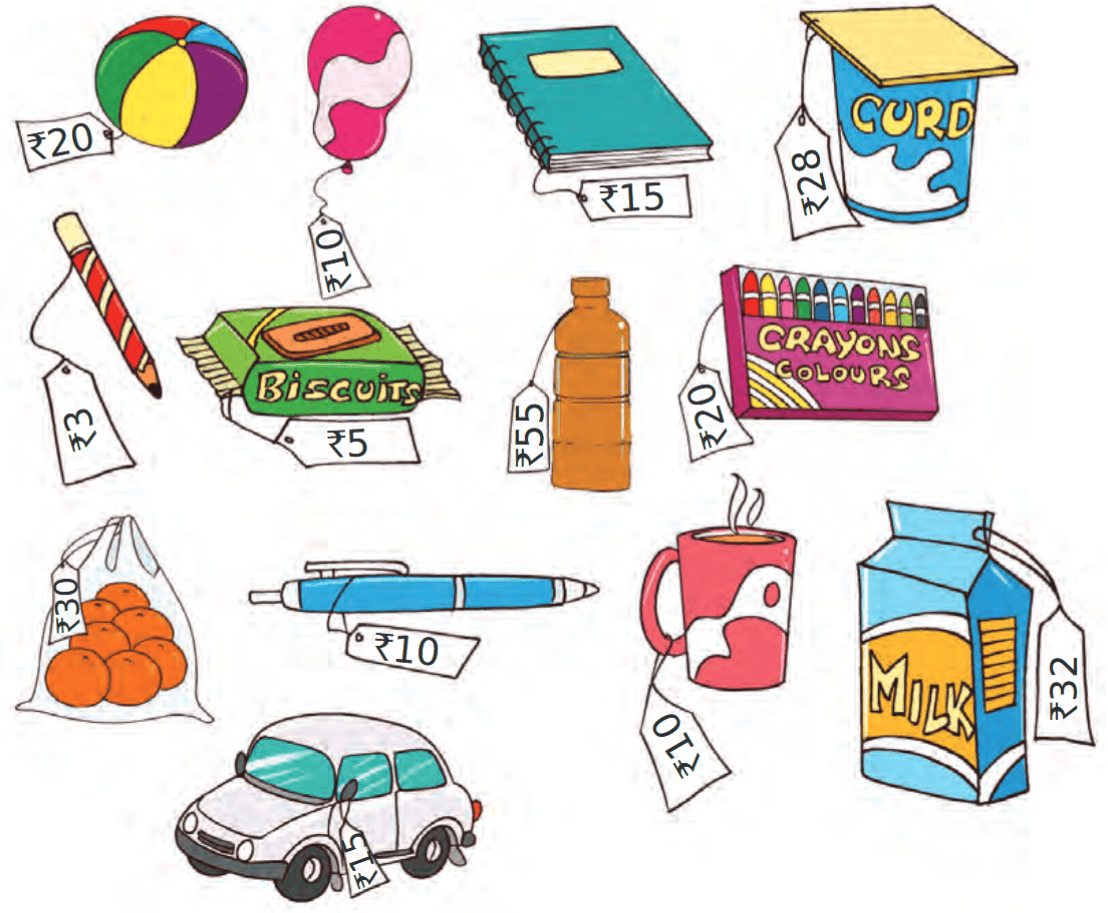
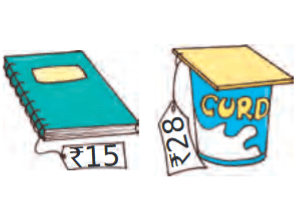
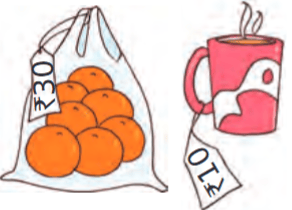
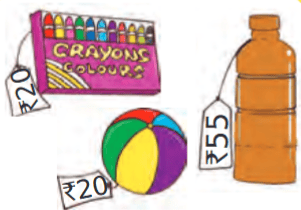
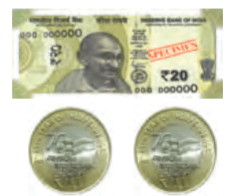
Ball ₹ 20, Balloon ₹ 10, Book ₹ 15, Curd ₹ 28, Pencil ₹ 3, Biscuits ₹ 5, Bottle ₹ 55, Color ₹ 20, Oranges ₹ 30, Pen ₹ 10, Cup ₹ 10, Milk ₹ 32, Car ₹ 15"
| Items | Money needed to buy these items | Money you have | Money left/More money needed |
|---|---|---|---|
 |
₹ |  |
₹ |
 |
₹ |  |
₹ |
 |
₹ |  |
₹ |
Let us Do
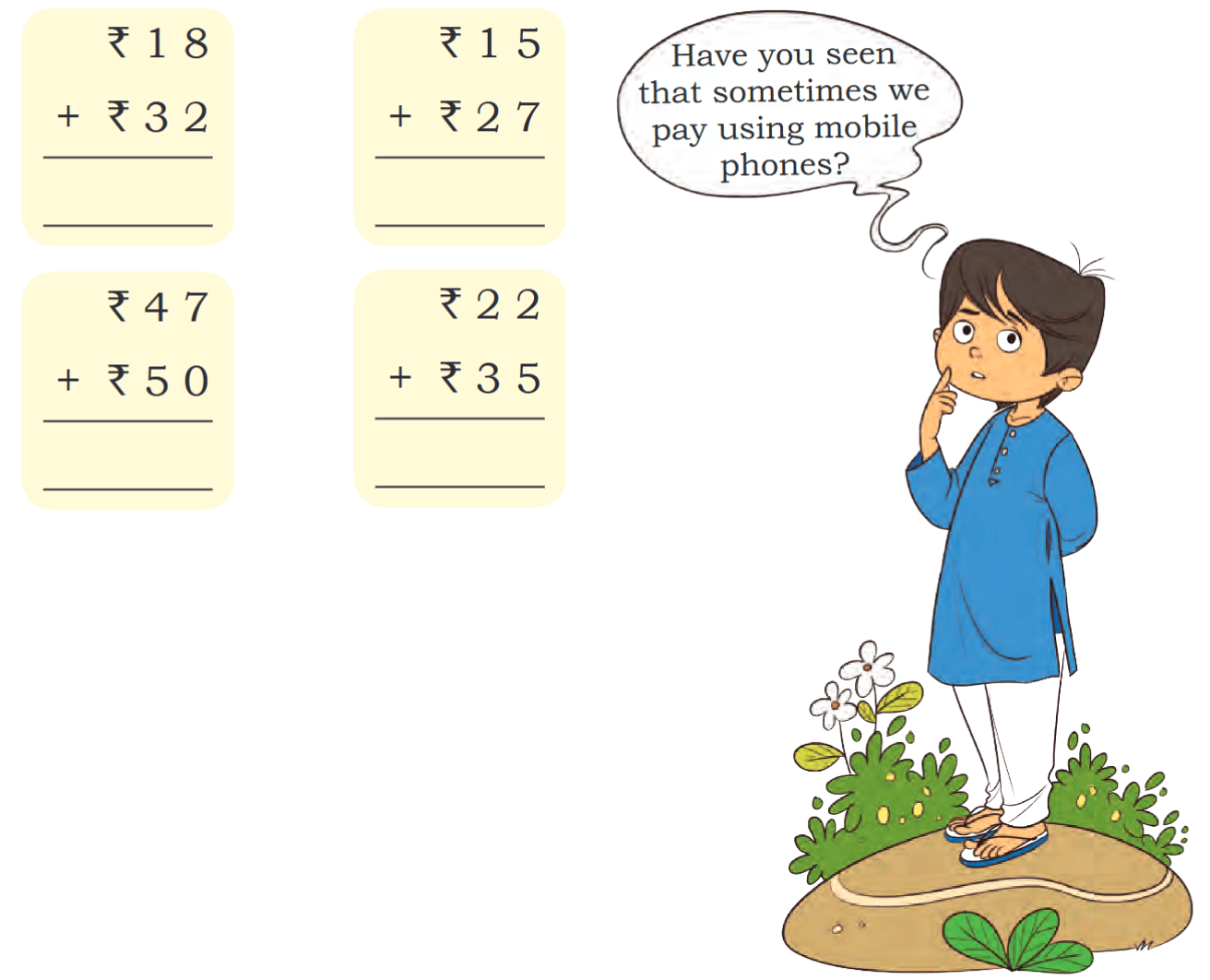
Have you seen that sometimes we pay using mobile phones?
₹ 18 + ₹ 32 =
₹ 15 + ₹ 27 =
₹ 15 + ₹ 27 =
₹ 22 + ₹ 35 =
A. Jayant spent ₹ 25 on pens and ₹ 40 on notebooks. How much money did he spend in total?
B. Meera has ₹ 43 with her. Kanika has ₹ 14 more than Meera. How much money does Kanika have?
C. A packet of bread costs ₹ 30 and a chocolate costs ₹ 60. How much money does Vivek need to buy these items?
D. Ajay has ₹ 58 with him. He spent ₹ 48 in the market. How much money is left with him now?
Project Work
Whenever you go to the market or shop with your parents, make a list of the things that you buy and the total money you spend.
Create more such contexts and ask questions whether children will add or subtract. Inculcate the value of saving money in the children through a discussion.