UNIT 1
Fun with Friends
Chapter 1
My Bicycle
Let us recite
I have a red bicycle.
I pedal and I ride.
Trin… trin… trin… goes the bell.
Makes my friends move aside.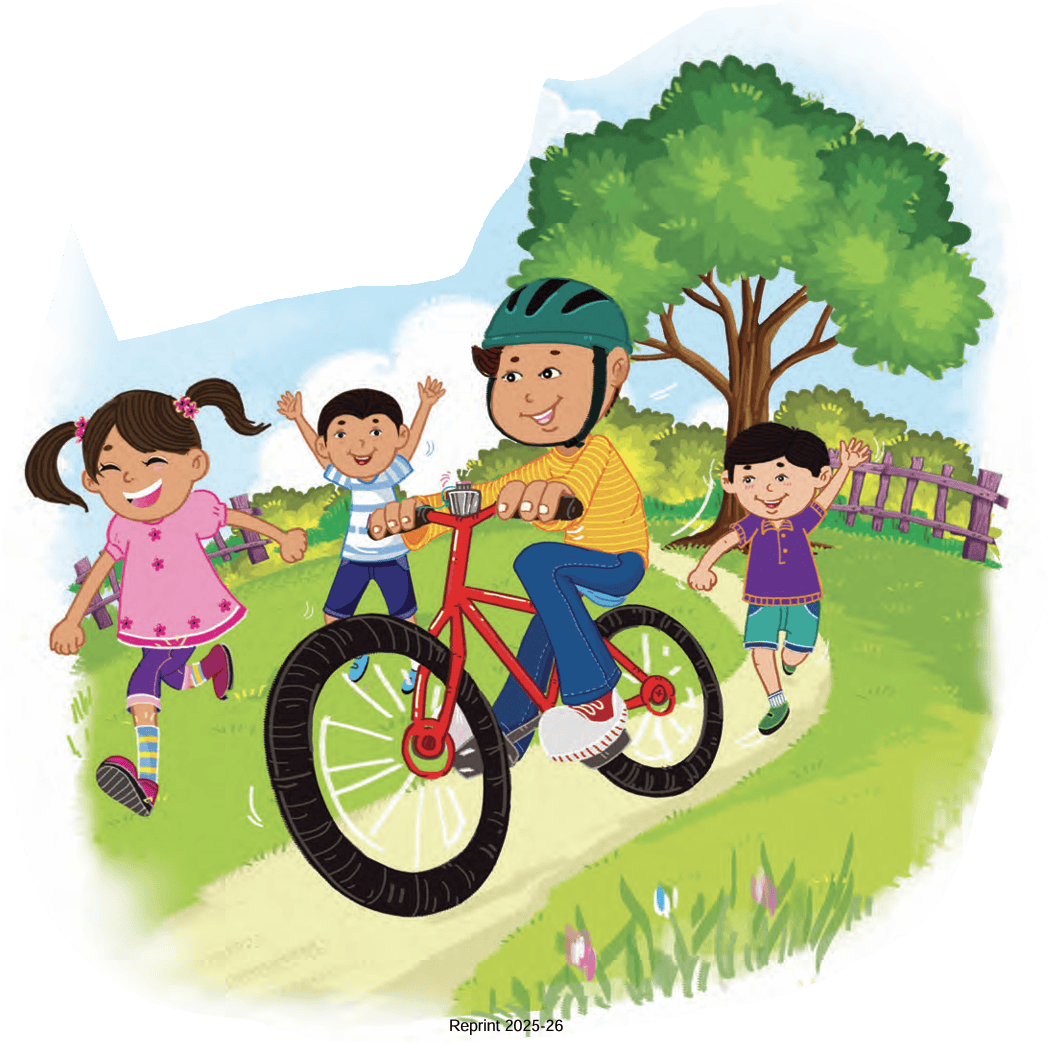
The seat is blue in colour,
The tyres and pedals are black.
Sometimes fast, sometimes slow,
But my bicycle is always on track.
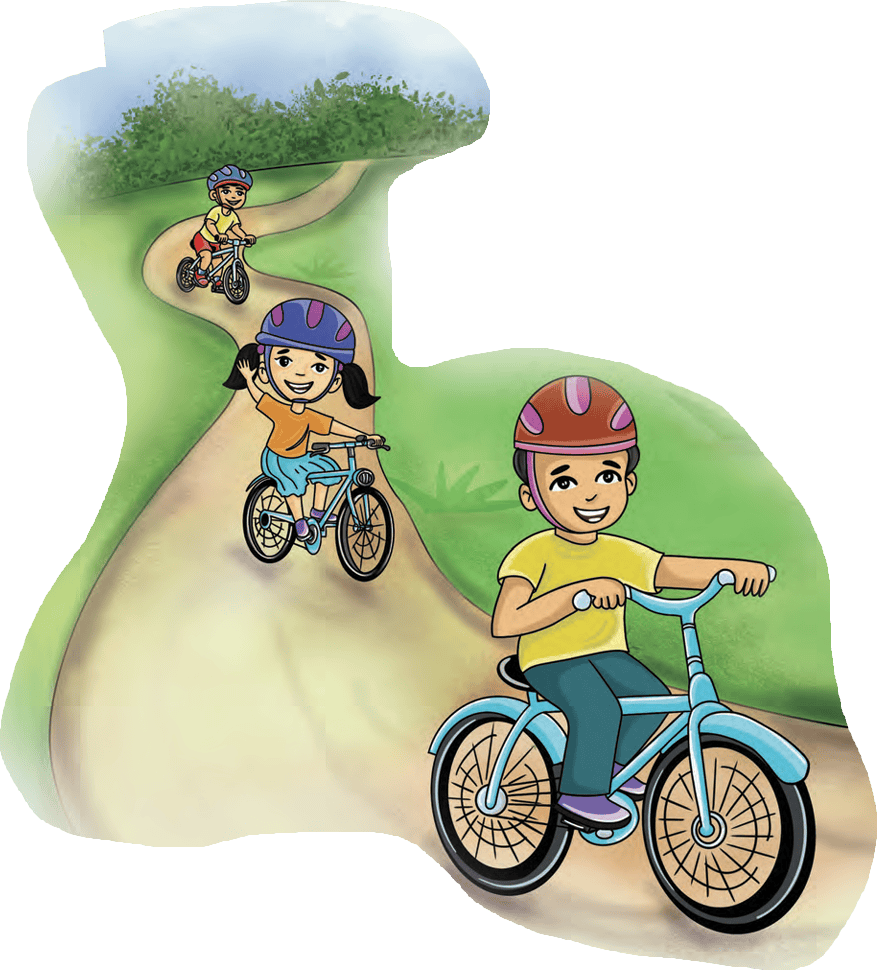 To keep my bicycle moving,
All I need is some air.
I put on my little helmet,
And go happily everywhere.
I pedal and I ride.
Trin… trin… trin… goes the bell.
Makes my friends move aside.
The tyres and pedals are black.
Sometimes fast, sometimes slow,
But my bicycle is always on track.
To keep my bicycle moving,All I need is some air.
I put on my little helmet,
And go happily everywhere.
New words
| pedal | aside | sometimes | track | helmet | everywhere |
Sight words
| I | and | is | in | my |
Note to the teacher
- Ask the children to describe a bicycle they have seen.
- You may initiate a conversation about safety measures such as wearing a helmet, putting on a seat belt, etc.
Let us speak
A. Share with the class
1. Have you seen a bicycle?
2. Where have you seen it?
3. What colour is it?
4. Who generally rides it?
5. Have you seen a tricycle?
6. Have you seen a wheelchair?
 What would you do with your magic bicycle?
2. Where have you seen it?
3. What colour is it?
4. Who generally rides it?
5. Have you seen a tricycle?
6. Have you seen a wheelchair?
Note to the teacher
- Interact with children to elicit responses in English.
- Some children may not have seen a tricycle. Have a picture ready to show them.
- Sensitise children to the fact that senior citizens, the injured and the disabled need to use a wheelchair.
- End on a positive note that wheels aid in movement.
Let us listen
A. Listen to the sounds that your teacher has recorded on the mobile. Can you identify the sounds of different bells? Note to the teacher
- You may download or record the sounds of various kinds of bells such as, the ringing of the school bell, bicycle bell, temple bell, etc.
- Pause after each sound to give children some time to reflect.
Let us speak
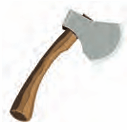
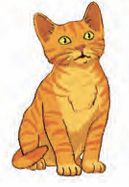
Read the words below each picture| 1 | 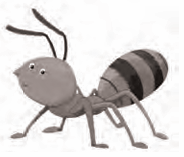 |
 |
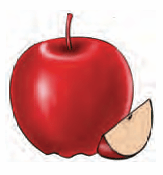 |
| an ant | an axe | an apple | |
| 2 | 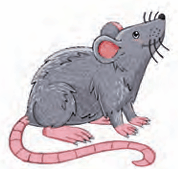 |
 |
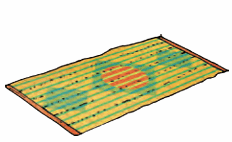 |
| a rat | a cat | a mat | |
| 3 | 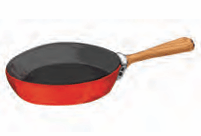 |
 |
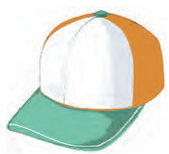 |
| a pan | a man | a cap |
Note to the teacher
- This introduces young learners to the vowel sound ‘a’ as in ‘pan’.
- Help them notice that the word ‘an’ occurs before the words beginning with ‘a’ in the above table.
Let us write
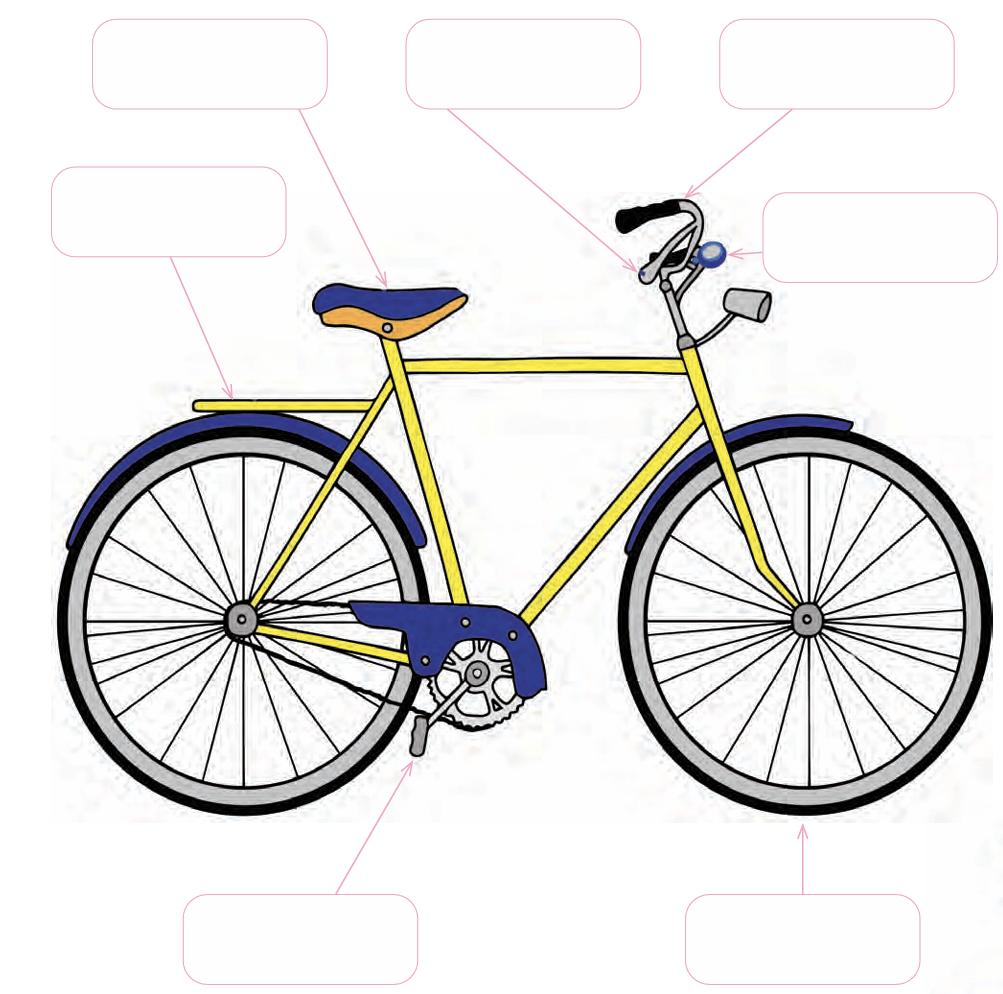
A. Write the names of the parts of the bicycle in the given boxes. You may use the help box for selecting names.| seat | pedal | wheel | bell | handle | carrier | brake |
Let us think
A. Imagine that you have a magic bicycle. Draw it in the box.
What would you do with your magic bicycle?
Note to the teacher
- You may give children time to reflect about the idea. Initiate the talk in the class by asking few questions like — Where would you go? What would you do there? What would you see there? Help them visualise and speak their thoughts. The places may be imaginary or real.
Let us write
A. Complete the following sentences.
1. The child in the poem has a ______bicycle.
2. The sound of the _______ makes people move aside.
3. The ______ and _______ are black.
B. Put a  for the correct sentences and a
  for the incorrect sentences.
2. The sound of the _______ makes people move aside.
3. The ______ and _______ are black.
for the correct sentences and a for the incorrect sentences.
| 1. The child has a blue bicycle. |  |
| 2. The bell goes trin... trin... trin. | |
| 3. The child’s bicycle is always fast. | |
| 4. The child needs some water to keep the bicycle moving. | |
| 5. The child puts on a little helmet while riding the bicycle. | |