Chapter 2
PLANTS IN ART
We see many plants around us.
By the end of this chapter, you will
understand the importance of plants
through stories and explore their
beauty through nature walks
in gardens, parks, fields, farms or any
wild patches in your surroundings.
You will be able to recollect some
stories related to nature and share all
these through your artwork. You will
also observe a variety of lines, shapes,
colours and patterns in nature and
connect these with designs found
in clothes.
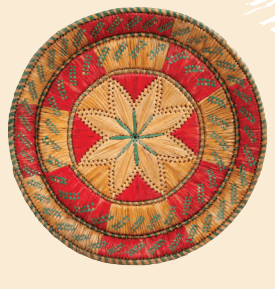
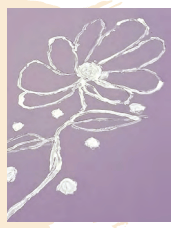
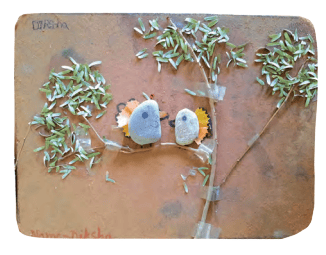
You can collect and experiment with
natural materials like sticks, seeds, pebbles,
dried leaves and flowers, and other objects
that you find. You can also create your own
imaginary pictures. You can make your
own designs for dresses, greeting cards,
page borders and stencils through drawing,
colouring, and craft work.
Activity 1 - Nature Walk and Drawing
Step outside your
classroom and visit the
school garden, park, field,
farm or any wild patch of
land that is safe and has
many plants.
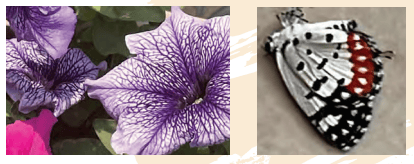
Gently touch and
look closely at the leaves,
flowers, stems, barks,
insects, butterflies,
branches, fruits, seeds
and roots. What kinds of
lines, shapes, colours and
patterns do you see?
How do you feel touching
them?
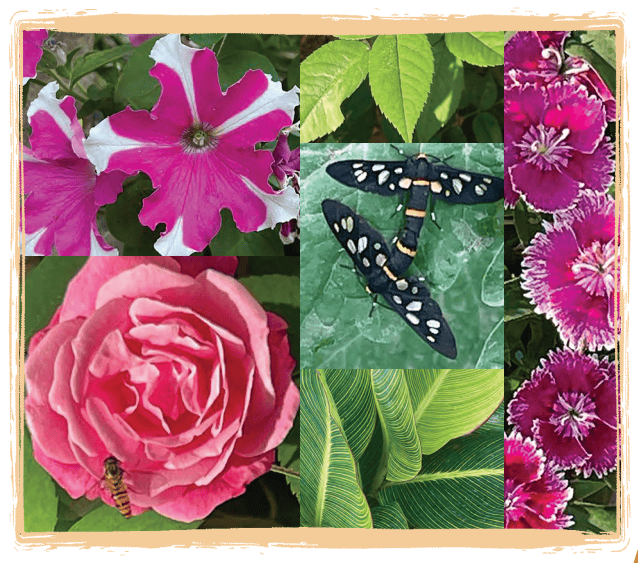
Carry your drawing book
or paper and a pencil.
Activity 2 - Draw from Nature
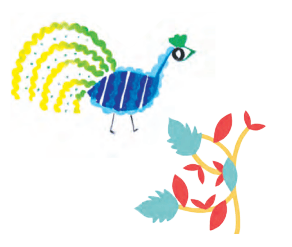
Draw and colour the outlines of three or four leaves, flowers or birds of different shapes.
Continue: Make your own natural colours.
Take small portions of a fruit, vegetable, root, flower or leaves from your surroundings. Crush them, and pound them with a little water and see what colours you get!
Activity 3 - Juicy Colours!
Colour can be taken out from leaves, fruits and flowers.
What colour is your tongue when you eat a—
Beetroot 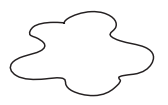 Jamun Mango
Jamun Mango Colour inside the above shapes.
You can draw and paint a picture in the box above using natural colours.
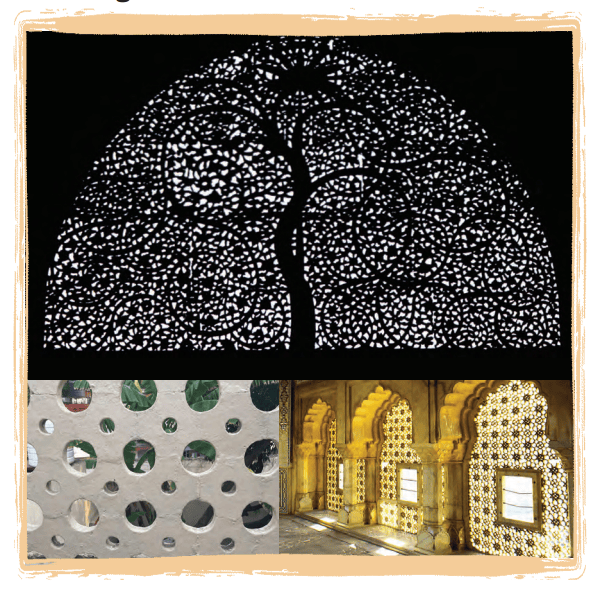
Activity 4 - Jali (Grill) in Buildings
A grill is also called a jali. Sometimes, patterns taken from nature or geometrical shapes are carved in these jalis.
What kinds of window grills have you seen in the buildings around you?

Have you observed designs in windows or door grills?
Visit a building or a monument that has a carved jali. Draw the patterns of jalis you see there
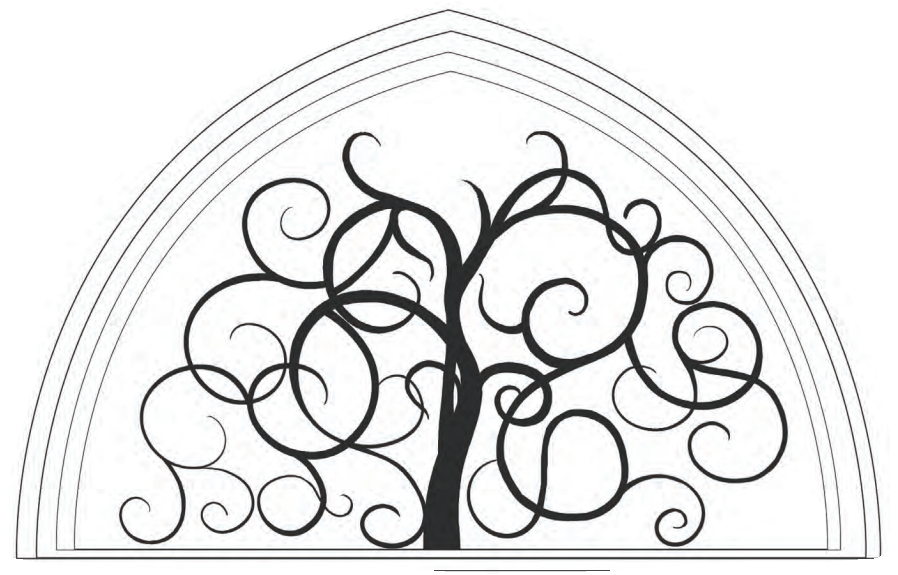
Using a pencil, fill in the empty spaces with your own jali pattern.
Activity 5 - Make Your Own Jali
Be very careful while using scissors in this activity. Take help from your teacher or parent.
Help and support your friend who is having difficulties in cutting or folding while making the jali.
Step 1
Take an old newspaper and make many alternating folds. 
Step 2
Draw two or three different leaf shapes. 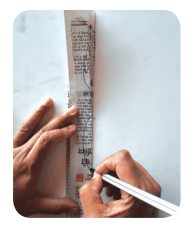
Step 3
Keeping all folds
aligned, cut out
the shapes. 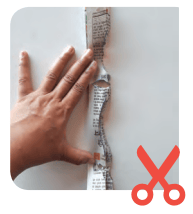
Step 4
Open the folds and see your jali. Colour it!. 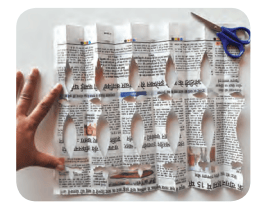
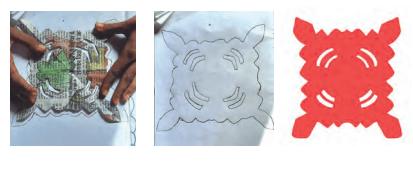
Now, use your own jali as a stencil and
create a design on paper. Colour it! See the
sample given here.
Activity 6 - Stories in Pictures
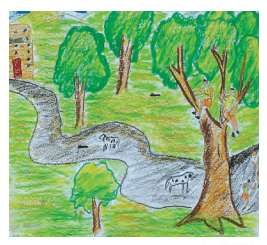
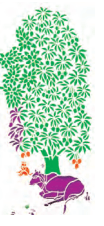
Do you know any story about plants or trees?
Draw and colour a picture telling the story.
Teacher's Note :
All children can be asked to tell a story about plants, trees, animals, etc.
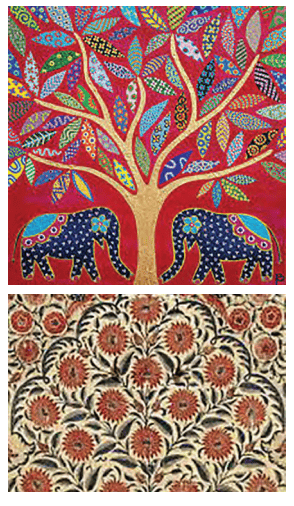
Find some plant designs in
clothes, textiles, pictures
and other things you find
at home. Draw them here.
Activity 7 - Draw with Plant Motifs
Pick your materials: plain paper, chart paper, waste rags, old newspaper or colour papers, thread, natural materials like, seeds, flowers, leaves, petals that have fallen on the ground, and glue.Avoid plucking fresh flowers and leaves from plants
Discuss your ideas and choice of materials with your teacher and peer. You can make a greeting card or page border. Draw your ideas here.