Chapter 7
Feel the Rhythm ta ka ta ki Ta
Rhythm is very important in music.
Observe the ticking
of a clock, water
dripping from a tap or
the chirping of a bird.
• What else makes a steady
beat around you?
• What are the sounds that
don’t have a steady beat?
The leaves rustling on
a tree, the whistle of a
pressure cooker, and the
honking of cars in traffic
are all sounds that don’t
have a steady beat.
ThreeDo you like a steady beat or an irregular beat? What are some other examples of each that you can think of?
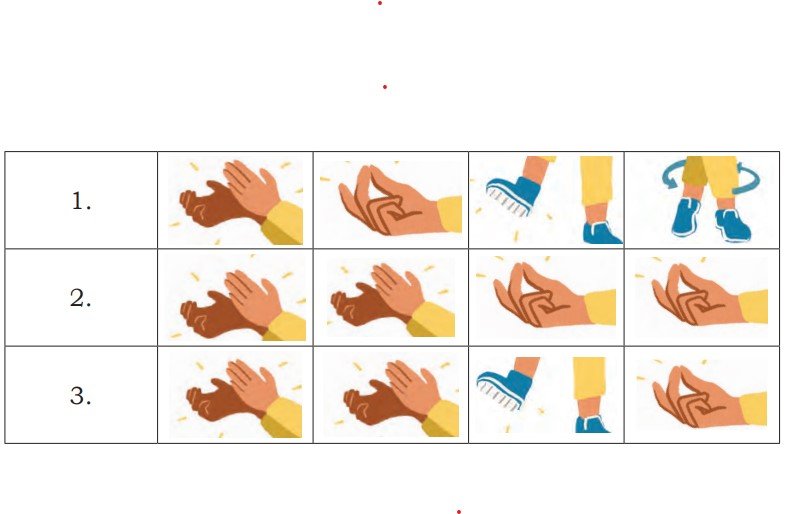
Activity 1 - One Two Three Four!
The images of clap, click, stamp and stomp given
below are in a pattern. Try them.
Create more such four beat rhythms and enjoy.
Activity 2 - Call and Response Mapping
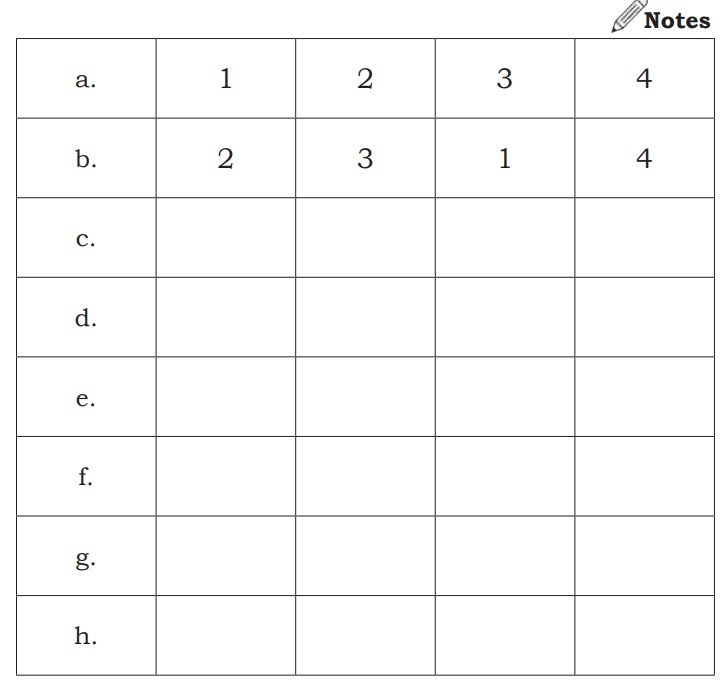
We can make rhythms using our body—
• Clapping
• Snapping
• Stomping
• Making sounds with
the mouth
Let’s assign numbers to these—
Clap – 1
Snap – 2
Stomp – 3
Making a sound with the mouth – 4
Create your own rhythm patterns using your body!Now, continue creating such rhythms.
Activity 3 - Let’s Listen and Learn
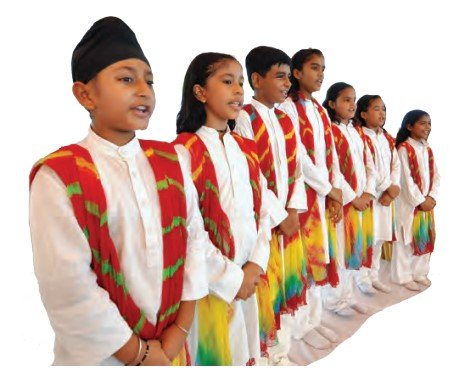
Let’s learn a very popular song
sung in many parts of the world .
Hum Honge Kamyab
Hum Honge Kamyab,
Hum Honge Kamyab,
Hum Honge Kamyab Ek Din.
Ho Ho Mann Mein Hai Vishwas,
Pura Hai Vishwas,
Hum Honge Kamyab Ek Din.
English
We shall overcome,
We shall overcome,
We shall overcome some day.
Oh, deep in my heart,
I do believe,
That we shall overcome some day.
Kannada
Navu Gedde Geltivi,
Navu Gedde Geltivi,
Navu Gedde Geltivi Ondu Dina.
Oho Manadali Vishwasa,
Purti Vishwasa,
Navu Gedde Geltivi Ondu Dina.
Activity 4 - Learn the Rhythm with Musical Instruments
Keep the rhythm of a song of
your choice.
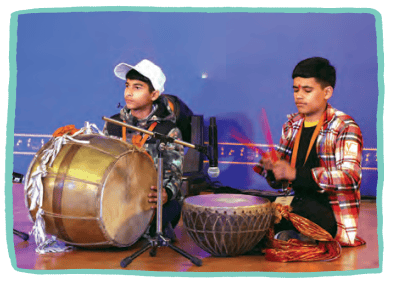
Can you keep the rhythm with
dandia sticks, clapper, manjeera,
dafli, maracas or a rattle?
You will enjoy playing these musical
instruments in a proper rhythm.

The concept of taala
finds its earliest
mention in the
Samaveda. The taala
systems of North and
South India were
not distinct till the
16th century.
Activity 5 - Learn the Rhythm with your Body
Start counting by clapping or stamping your
feet (one at a time). Use different types of claps
for keeping the rhythm — claps on your left, on
your right, up above or in silence.
For example, 1, 2, 3, clap, 5, 6, 7, clap –
1, 2, 3, clap on the right, 5, 6, 7, clap on
the left – 1, 2, 3, clap above your head
5, 6, 7, silence.
So you realise this clapping method helps us
in keeping the rhythm. After a 5–10 minute
exercise, let us add some tabla bol to this.
dha ge na ti (repeat) with claps and
counting. Then continue na ka dhi na
with claps and counting.
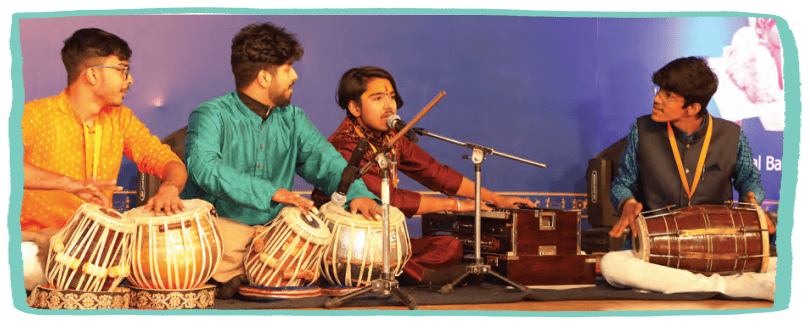
The taala with the bol ‘dha Ge Na ti na ka
dhi na’ is called keherva.
In a similar fashion, aadi tala can be taken
up which consists of 8 akshara kaala (8 beats).
ta ka dhi mi — ta ka jha Nu
This is the taala being played with this song.
Let’s enjoy — clap, sing, and move.
Activity 6 - Learn the Notes (Swara) in Music
Indian classical music, as well as a
number of other forms of music around
the world, have seven notes.
Sa, Re, Ga, Ma, Pa, Dha, Ni …
Sing ‘Sa’ after the above notes but
at a higher pitch. These seven notes
together are called saptak.
Let us sing the seven notes several
times, going upwards and then
downwards.
The Natya Shastra is an
ancient text from India
written by Bharata Muni.
It talks about music,
dance, and drama. Did
you know that in the
Natya Shastra, each
swara (musical note) is
connected to a different
emotion? This means
that the music you play
or sing can make you
feel different things
depending on which
notes are used!
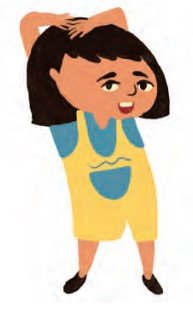
Activity 7 - Let’s Sing: Head Shoulders Knees and Toes
Let’s do a fun activity.
As you sing, touch your
head, shoulders, knees
and toes.
This will help you with
your coordination skills
and will introduce you to
the Punjabi language too!
Laya refers to rhythm
or tempo in music. It is
steady, like your heartbeat.
But just as your heartbeat
becomes faster when you
run, and slower when you
are asleep, the laya can
be different for different
compositions too.
Lyrics
Sir, Mode, Gode, Paer, Gode, Paer.
Sir, Mode, Gode, Paer, Gode, Paer.
Nale Ankh, Nale Kaan, Nale Muh, Nale Nak.
Sir, Mode, Gode, Paer, Gode, Paer.
Language: Punjabi
English Translation
Heads, shoulders, knees and toes, let’s go.
Heads, shoulders, knees and toes, knees and toes.
And eyes and ears and a mouth and a nose.
Heads, shoulders, knees and toes, knees and toes

Now you know how to sing this song and
do this activity in two languages. Can
you try it in another language you know?
Try to sing the above song in different
speeds (faster and slower tempo).
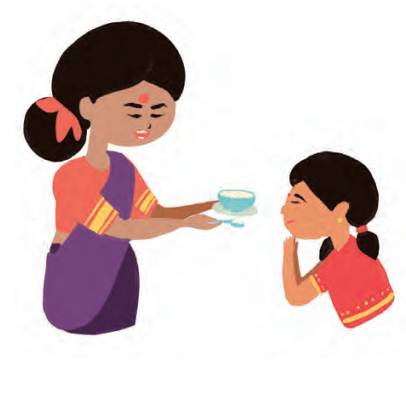
Activity 8 - A Birthday Song
Birthdays are important for
everyone. Let us learn this
birthday song.
Lyrics
Janma Dinam Idam Ayi Priya Sakhe
Shantano Tu Te Sarvada Mudam
Prarthayamahe Bhava Shatayushi
Ishvarah Sada Tvam Cha Rakshatu
Punya Karmana Keerthimarjaya
Jeevanam Tava Bhavatu Saarthakam
Meaning
Dear friend, Happy Birthday! May
happiness and many good things come
your way. We pray for your good health.
May you live long! May God protect you!
May you be known for your good deeds.
Have a purposeful life!
Composer: Swami Tejomayananda
Language: Sanskrit
Can you sing your favourite song and try to keep the rhythm by clapping?
Teacher’s Note
Celebrate a
child’s birthday
in the class
with a song,
a dance, and
making a card
for good wishes.
This activity
will naturally
incorporate
the arts.
Activity 9 - An Interesting Story
According to the ancient
Sanskrit text, Naradiya
Shiksha, musical notes
were created from the cries
and sounds of different
birds and animals.
Let us learn them in
this song
Lyrics
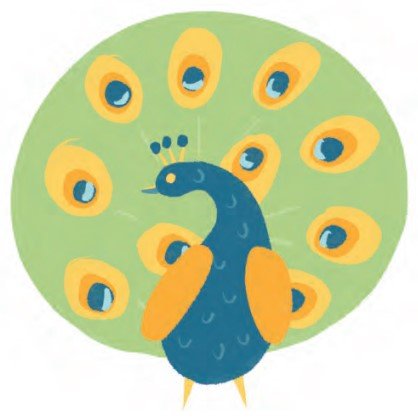
Sa is for peacock so colourful
Ri is for bull that’s really strong
Ga is for goat that runs around
Ma is for heron white and tall
Pa is for cuckoo cute and sweet
Dha is for horse that runs so far
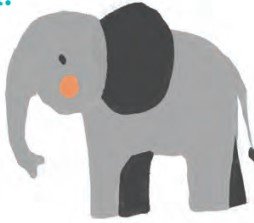
Ni is for elephant that’s so huge
That will bring us back to Sa …
I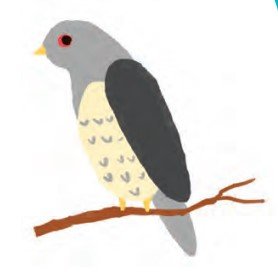
Sa Ri Ga Ma Pa Dha Ni Sa Pa Sa.
Sa Ni Dha Pa Ma Ga Ri Sa Pa Sa.
Activity 10 - Animals and Sounds
Copy the sounds of the
animals and birds that
make high pitched and
low pitched sounds.
Make a list of the names
of the animals and birds
whose sounds you hear
around you. Try these
sounds with your parents
and friends.

Activity 11 - Building Blocks of Music
Notes are the building blocks of music,
like we use bricks to build a house.
Do you remember the seven notes that
we had learnt earlier? Let us listen to
them and sing them together once more.
Now let us learn some more sargams or
alankars. The word Alankar also means
decoration. So you see that the notes are
like ornaments in music.
SS RR GG MM | PP DhDh | NN ṠṠ || ṠṠ NN DhDh PP | MM GG | RR SS || SRG, RGM, GMP, MPDh, PDhN, DhNṠ Ṡ NDh, NDhP, DhPM, PMG, MGR, GRS
How many lines from these
exercises were you able to sing?
If you are unable to sing all the
lines, it’s okay! Keep practising.
Activity 12 - The Music in Notes (Alankar and Sargam) Sing and Repeat
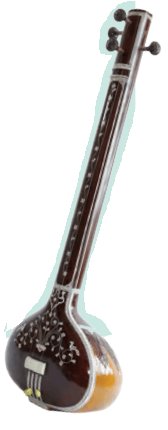
We use the word ‘pitch’ to
explain how high or low a
note is. To understand how
to sing in pitch, we use an
instrument known as a
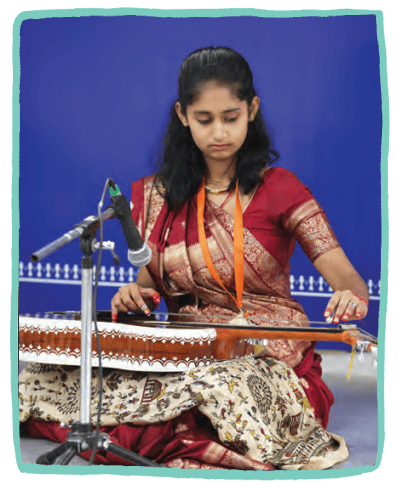
tambura or tanpura. The
tambura is a long necked
stringed instrument,
but you also have
electronic tamburas,
and even tambura
apps! When practising
Indian music, it is
very helpful to have
a tambura to match
your pitch.
Notes
i) Sa Ga, Sa Ga,
Sa Ga Ma Ga Re Sa
Re Ga Re Ga,
Re Ga Pa Ma Ga Re
Sa Sa Sa
Clap and sing.
You may sing with
these words:
Aao, Aao
Khushiyaan Manao
Gao Gao,
Sab Mil ke Gao
ii) Let us sing another
sargam or alankar
Sa Sa Sa Re
Re Re Re Ga
Ga Ga Ga Ma
Ma Ma Ma Pa
Fill in the blanks and sing.

SargamiNi Ni Ni Ṡa
(There is a dot on
top of this ‘Ṡa’ which
means you have to sing
on a high pitch.)
 Tanpura
Activity 13 - Learn about Taala
So you learnt that taala is a pattern of rhythm. We use taala to keep the beat in music. Each taala has a fixed number of beats that is repeated and is known as a taala cycle. You recited Adi taala and keharva.
Let’s revise them.
Now let us recite another taala which is of six beats.
dha dhi na/ dha ti na
The name of this taala is dadra.
Activity 14 - Listen to this Song and Try to Keep Taala with it
Shyamale Meenakshi
Lyrics
Shyamale Meenakshi
Sundareshvara Sakshi
Shankari Guruguha
Samudbhave Shiveva
Paamara Mochani
Pankaja Lochani
Padmaasana Vani Hari
Lakshmi Vinute Shaambhavi
Shyamale Meenakshi
About the Song
This is a song about Goddess Meenakshi.
She is the wife of Shiva and mother of
Shanmukha.
Composer: Muthuswami Dikshitar
Language: Sanskrit
Ragam: Shankarabharanam
Talam: Adi
Some Musical Terms
In music, we use the following common terms—