
Chapter 9
MUSICAL INSTRUMENTS
Activity 1 - Know your Instruments
These are some of the instruments used in
Indian classical and folk music. You can
listen to their sounds by scanning the QR
code (on the top right corner of this page).
Harmonium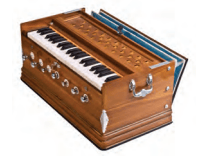
Bansuri
Sitar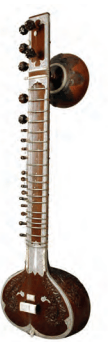
Sarod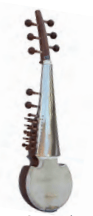
Sarangi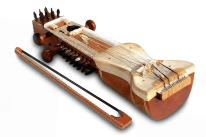
Tabla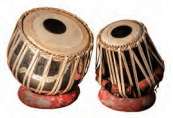
Mridangam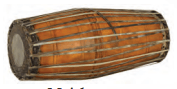
Santoor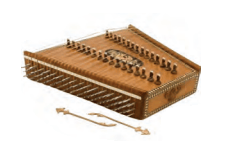
Pakhawaj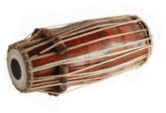
Shehnai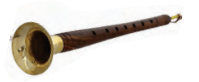
Manjeera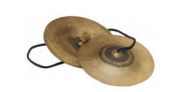
Teacher’s Note
Invite local musicians who can come and play different instruments for the class.
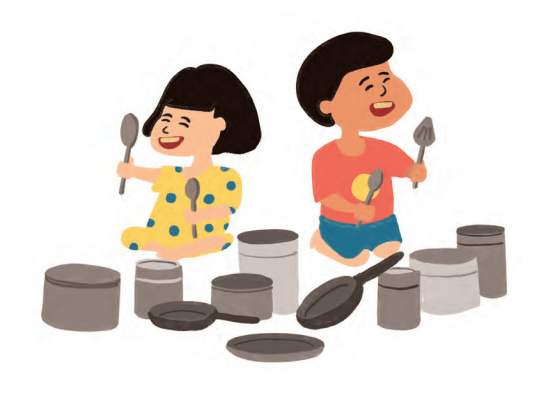
Activity 2 - Make a Kitchen Orchestra
When a group of musicians play various
musical instruments together and make
music together, it is called an orchestra.
Can you make a kitchen orchestra in
your home?
What kinds of kitchen items can be used in
a kitchen orchestra?
Can you play your kitchen orchestra with
Undra Mojea Mama, the Konkani song that
you have learnt earlier, or any other song
you know?
Activity 3 - Make a Shaker!

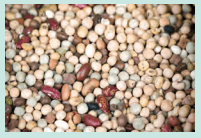
The shaker will make
different sounds based on
what filling you add and
the amount of filling you
put into the bottle. You
can take different types
of food grains, pebbles,
marble or seeds.
Try it yourself.
Which grains make the
loudest noise?
Do the shakers make
more noise when you add
more grains?
Shakers are percussive musical instruments used for creating rhythm.
They are called shakers because sound is created by shaking the instrument.
To make your own shaker you will need—
• One small, recycled bottle.
• A handful of dry pulses or grains, beads, pebbles.
• Paint.
Assembling your shaker—
• Keep one bottle completely dry inside and outside.
• Fill the bottle with dry dal, uncooked rice, or anything you like. Remember, different items will make different sounds.
• Close the bottle tightly.
• Decorate the outside of the bottle.
Paint it with your favourite colours, and put glitter and stickers on it.
• Leave the bottle to dry.
• Your shaker is ready for use.
Activity 4 - Sounds of Musical Instruments
We will learn to play musical instruments later
but first let us hear the sounds of a few more
musical instruments. Dafli, Damru, Dhol, Dholak, Tabla, Edaikka, Chende — These are instruments
whose bodies are made of wood or copper
but whose faces are sometimes on top, and
sometimes on the right and left sides.
They are played with
hands, sticks, etc.
Tavil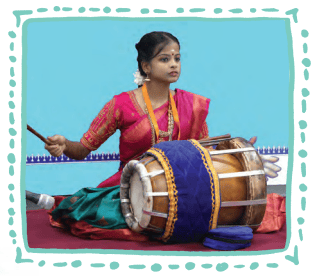
Ghumat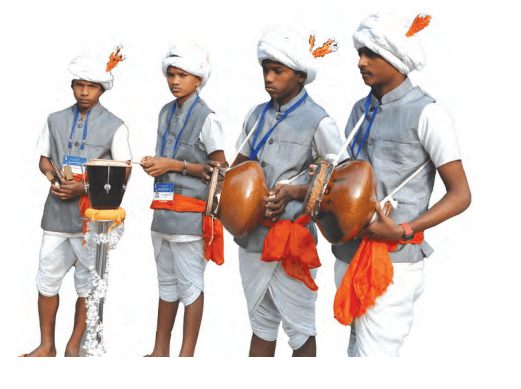
Activity 5 -
You must have seen many types of drums being played in festivals around you. Let us hear their sounds and also see their pictures.
Nkhuangh Drum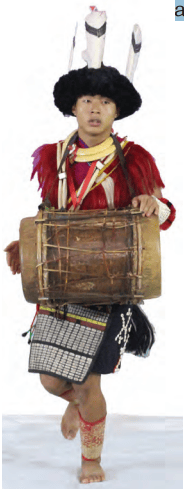
Dafli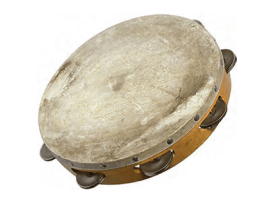
Nagada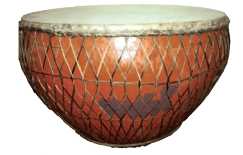
Dolu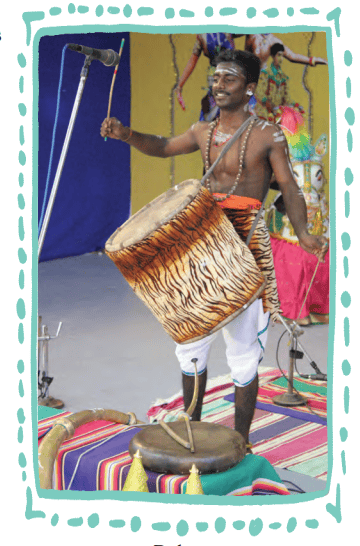
Bansuri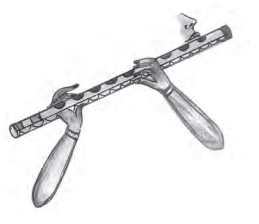
Nagaswaram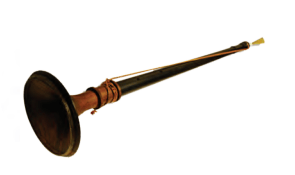
Shehnai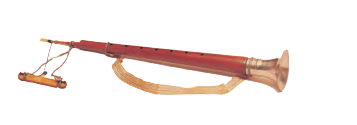
Ransingha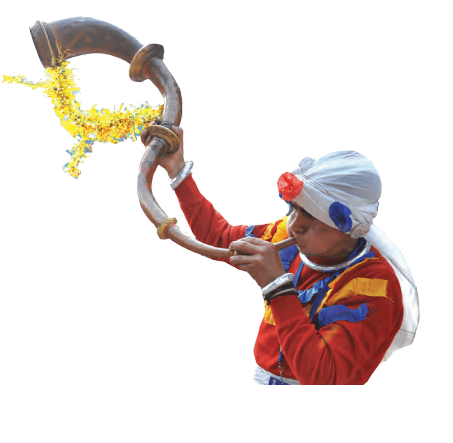
Collect pictures of some musical
instruments and paste them here—
Activity 6 - Listen and Learn about Patterns in Music
Find patterns in music
where the melody or the
rhythm is repeated.
Teacher’s Note
Let the children sing
these notes in humming
style, aakaar and alankar
or sargam style. Always
let them keep the rhythm
with claps or any musical
instrument.
We can also explain to
students that we have to
control breathing while
singing.
Practice these exercises and follow the
patterns given below—
S R G M P Dh N Ṡ
Ṡ N Dh P M G R S
SR RG GM MP PDh DhN NṠ
ṠN NDh DhP PM MG GR RS
SRG RGM GMP MPDh PDhN DhNṠ
ṠNDh NDhP DhPM PMG MGR GRS
SRGM RGMP GMPDh MPDhN PDhNṠ
ṠNDhP NDhPM DhPMG PMGR MGRS