
CHAPTER-17
LET’S CREATE
Activity 10 : Role Play
BASIC - Conversation between police and a thief, patient and doctor, convincing your mother to give you money to buy chocolate, planning a birthday surprise for a friend
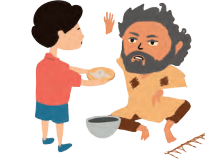
ADVANCED -Situations based on concepts: helping, sharing, honesty, respect
ADVANCED -Situations based on concepts: helping, sharing, honesty, respect
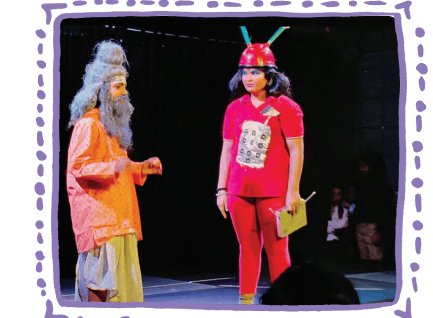
With basic understanding of the concepts of creativity, imagination and communication, which are the fundamentals of theatre, we are ready to start acting!
Discussion and Feedback • Did you like acting like another character? • Which situation was difficult to play and why? • Was it easier with speech or without speech? • What is the one new thing you learnt about yourself? Circle Time Note ....................................................................................
Discussion and Feedback • Did you like acting like another character? • Which situation was difficult to play and why? • Was it easier with speech or without speech? • What is the one new thing you learnt about yourself? Circle Time Note ....................................................................................
SCENE 6 : stories in action
Activity 11 : Group Role Plays
BASIC -Familiar stories can be derived from various lessons in other textbooks, e.g., language books, history books, etc.
ADVANCED- Themes can be derived from epics, legends, Tenali Rama, Panchatantra or other literature. Example— The clever crow, Ekalavya, the cat’s judgement, Arjuna’s focus during training, Shravana Kumara or Ganesha’s devotion to Shiva and Parvati.
BASIC -Familiar stories can be derived from various lessons in other textbooks, e.g., language books, history books, etc.
ADVANCED- Themes can be derived from epics, legends, Tenali Rama, Panchatantra or other literature. Example— The clever crow, Ekalavya, the cat’s judgement, Arjuna’s focus during training, Shravana Kumara or Ganesha’s devotion to Shiva and Parvati.
Discussion and Feedback • Which part of the activity did you enjoy the most? Why? • How many stories from our history and folk traditions did you already know? • What are the other stories you would like to enact? • What is the one new thing you learnt about yourself? Circle Time Note ..........................................
Discussion and Feedback • Which part of the activity did you enjoy the most? Why? • How many stories from our history and folk traditions did you already know? • What are the other stories you would like to enact? • What is the one new thing you learnt about yourself? Circle Time Note ..........................................