
CHAPTER-18
LOOK AROUND
ACT 4
There is a lot for an actor to learn by looking around and observing. We have worked on the creativity within our minds so far. Now, we shall look for creativity and inspiration around us.

You Will Learn - Clarity in thought, creativity, speech confidence, storytelling, questioning, observation, local theatre, tradition .
You Will Learn - Clarity in thought, creativity, speech confidence, storytelling, questioning, observation, local theatre, tradition .
sCENE 7—crafting narrative
Activity 12 : Observation and Story telling
BASIC -A simple descriptive narration about a person. This is followed by narrating a story with that person as the central character (this could be an imaginary story).
ADVANCED- An enactment of that person with the characteristics that were made note of (with emotions, actions, gestures and voice interactions)
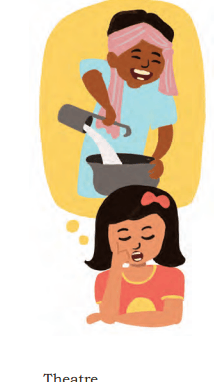
Discussion and Feedback • Which part of the activity did you enjoy the most? Why? • Do you find your observations to be useful? • Were you able to relate to the person you were observing easily? • What is one new thing you have learnt about yourself? Circle Time Note ......................................................
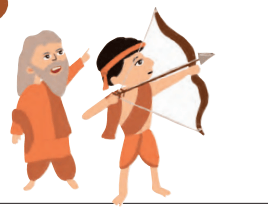
Who are they? What are they doing? .............................................
Observe the picture and create a simple story about what is happening. Share it in the class.........................
Activity 13 : Picture Story Telling
Requirements — Visually stimulating pictures. They may be pictures prepared by students in their visual art classes.
Instructions — Look at the picture your teacher is showing. Observe all the details in the picture. You have to create and narrate a story, based on your observations, using actions and expressions.
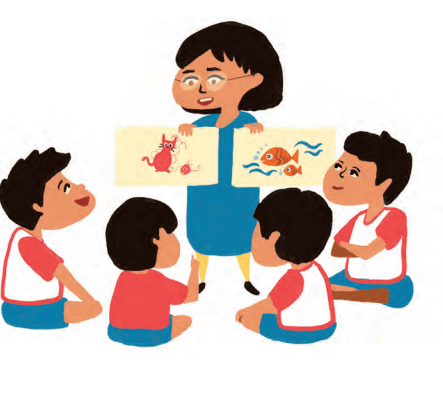
Create a Picture Story
BASIC - Use a simple picture of a single object or animal (a tree, a pot, a cat, etc.) and tell a story about it.
ADVANCED -Connect two pictures and build a new story (from the existing pictures used in class). For example, as in the above picture, connect the story of a cat with the fish.
Discussion and
Feedback
• Which part of
the activity did
you enjoy the
most? Why?
• Can you use this
activity anywhere
else?
• What is the one new
thing you learnt
about yourself?
Circle Time Note
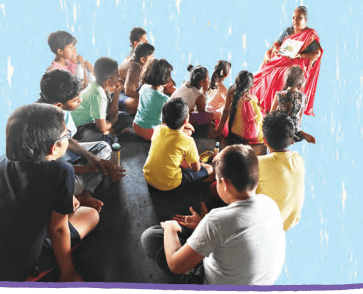
SCENE 8—community creativity
Activity : 14
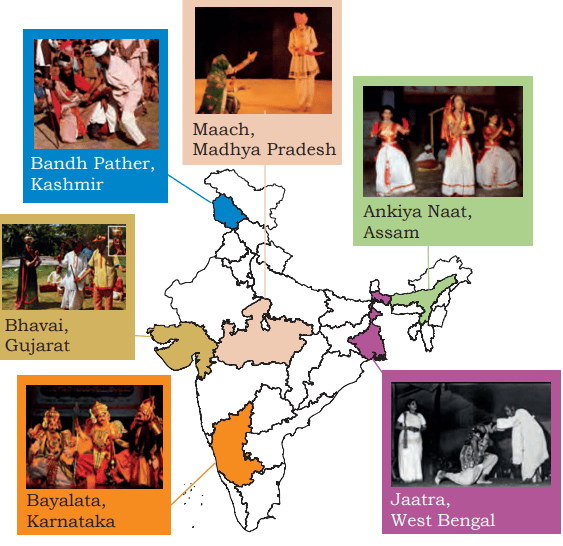
Identify two theatre forms performed
in and around your district. You can
ask your family or friends to help
you. Paste a picture of it below and
write three lines about each form
Name of your State and District ..........................................................................................
Name of your State and District ..........................................................................................