So Many Kinds of Plants
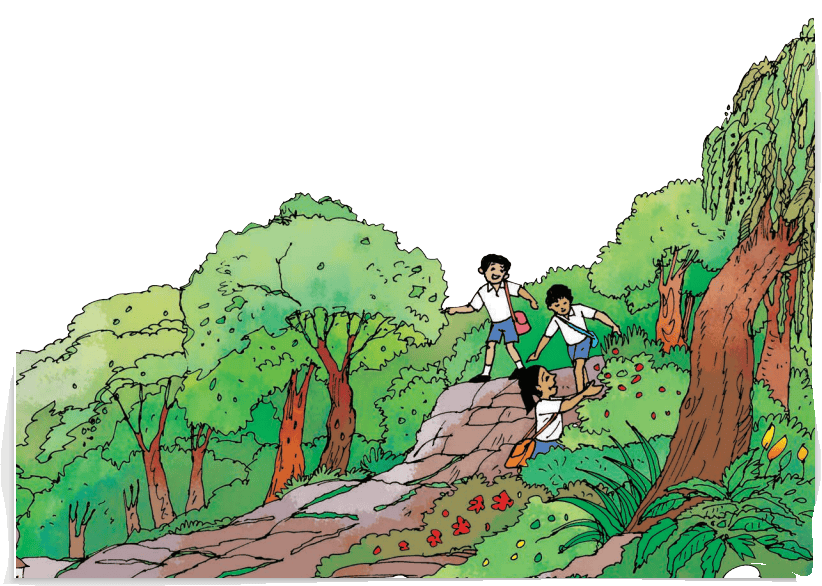
Gopu, Simmi and Raj walk to school every day. On
the way they see beautiful flowers, mountains and
streams.
One day, Gopu exclaimed, “Isn’t nature just
amazing? There are so many kinds of plants, birds
and insects ... I wonder if they all have stories
to tell!”
Simmi agreed, “Yes, the plants come in so many
sizes and shapes: very tiny, small, large, bushy …”
Raj added, “Thin and curvy, straight and tall ...!”
Gopu said, “Some leaves are rough and some
smooth. I love to touch and smell them.”
Simmi said, “Look, this jamun tree has nice thick
and shiny leaves! Isn’t it your special tree, Raj?”
Raj agreed, “Yes, it is! You remember its tiny
white flowers? And remember the little green fruits,
which in a few days turned red and then purple?
We enjoyed plucking the ripe purple fruits from
the tree!”
Simmi smiled, “It’s such fun to walk under the
cool shade of these trees.”
Trees have a big trunk of wood and many
branches that spread out with leaves on them.
Trees have roots that go deep down into the soil.
Trees
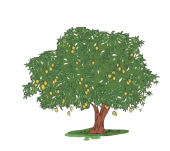
Mango
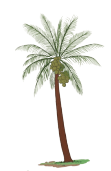
Coconut
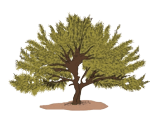
Khejri
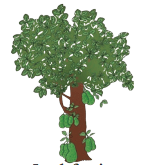
Jackfruit
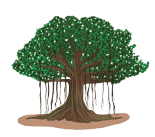
Banyan

Amaltas
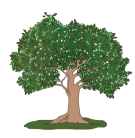
Peepal
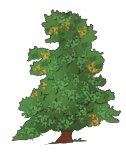
Chinar
 WRITE
WRITE
Write the names of trees that you can recognise. Try to
remember where you have seen these trees. Which of these
trees have you seen near your home or on your way to
school?
Shrubs
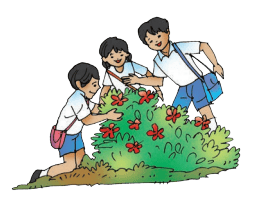
“All plants don’t grow tall like trees.
Look at this plant with pretty red
flowers. It doesn’t have a big trunk
like a tree,” said Gopu.
“Instead, it has many brown,
woody stems,” added Raj.
“These bushy-looking plants are called shrubs.
Our tulsi plant at home is a shrub,” informed Simmi.
Shrubs are medium-sized plants with several
woody stems and branches growing close to the
ground.
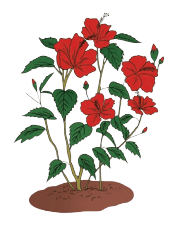
Hibiscus
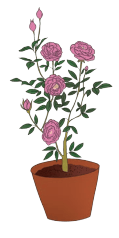
Rose
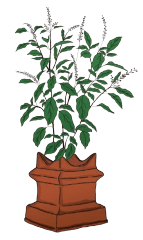
Holy Basil (tulsi)
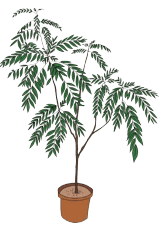
Curry leaf
 DO YOU KNOW
 The pulses (dal) we eat — toor (pigeon peas), masoor (red
lentils), moong (green gram) and urad (black gram) — are
all seeds of shrubs.
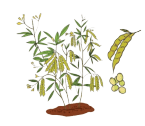 Toor
Toor
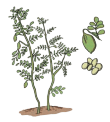 Masoor
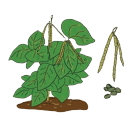 Moong
Moong
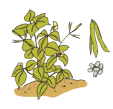 Urad
Urad
WRITE
• Write the names of some shrubs. Have you seen
any of the shrubs shown in the pictures above?
• Do you know what they are called in your mother
tongue?
Herbs and Grasses
“We have mint and tomato plants at home. Their
stems are soft and green”, said Raj.
“My grandmother told me that
plants with tender stems that
do not become woody are called
herbs”, added Gopu.
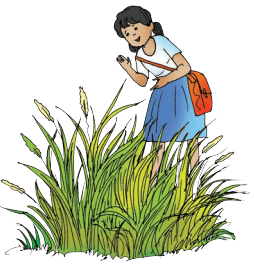
Simmi pointed to the grass,
“Look at all these different
grasses. They too have soft,
green stems. Their leaves are
long, thin and flat.”
“You’re right Simmi! Do you think grasses are
types of herbs too?” enquired Gopu.
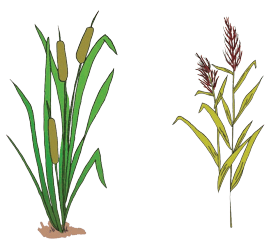
Herbs are smaller plants with soft stems that do
not become woody. Grasses are types of herbs.
The leaves of grasses are thin and flat and their
stems are hollow. Watch for different kinds of
grasses around you. How many kinds do you
notice?
Herbs
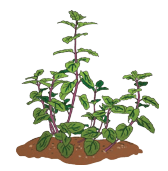
Mint
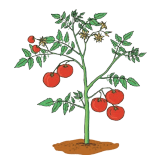
Tomato
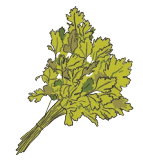
Coriander
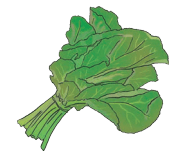
Mustard
Wild Grasses
DO YOU KNOW
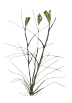
The grains you eat — paddy (rice), wheat, bajra, jowar, ragi,
etc., are seeds of large grasses!
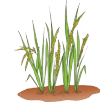 Paddy
Paddy
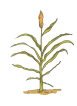 Wheat
Wheat
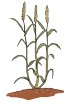 Bajra
Bajra
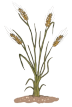 Ragi
Ragi
 Jowar
Jowar
Sugarcane and bamboo are
tall grasses. Bamboo is a
special kind of grass, which
stays alive longer than just
a year.
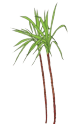 Sugarcane
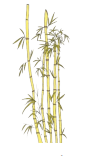 Bamboo
WRITE
Write the names of some herbs that you have seen and
where you have seen them.
Climbers and Creepers
“Look! There is a vine winding up this tall tree!”
exclaimed Raj.
Gopu agreed, “Wow yes! My friend George has
a money plant in his house. I was surprised to see
how it spreads upwards. It looks like it is slowly
climbing the wall.”
Simmi explained that the money plant
has a long and thin stem. It cannot stand
up by itself. If it finds nothing to climb on,
it just creeps and spreads on the ground.
“The pumpkin plant is also like a
creeper too. I saw it spreading its branches
on the ground,” said Raj.
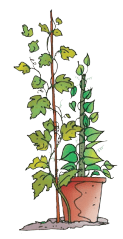
Climbers and Creepers have thin and flexible
stems. The plants that grow by climbing on
other plants for support are climbers and the
plants that grow by creeping along the ground
are creepers. Some climbers even take their food
from the plant on which they climb.
Climbers
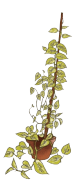
Money Plant
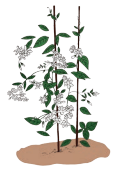
Jasmine
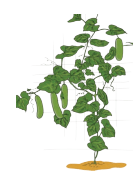
Bottle Gourd
Creepers
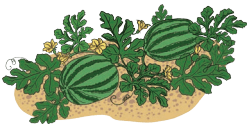
Watermelon
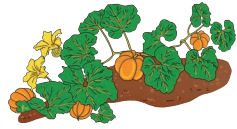
Pumpkin
Guess
• Is this a creeper or a climber?
• What do you call it in your language?
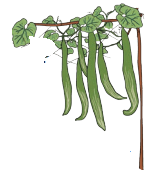
Snake Gourd
WRITE
• Write the names of some climbers or creepers that
you have seen and where you have seen them. Are
any of them in the pictures given on page 53? What
are they called in your language?
• Name these plants in your language. Say if they are
a tree, shrub, climber or creeper.
Marigold
(Banthi in Telugu)
_____________
_____________
Neem
(Bevugida in Kannada)
______________
______________
Jujube or ber
(Boroi in Manipuri)
_____________
_____________
 ACTIVITY 1
• Stand, in groups of two to four, next to any tree or
shrub that is in or near your school.
• Now look around, as far as you can see. Remember
to look down near your feet as well!
• How many kinds of trees, shrubs, herbs, grasses,
climbers or creepers can you spot?
Note to the teacher
Use the local names of various locally available plants. The
difference between creepers and climbers may be demonstrated
by showing children the real plants. Remember that some plants
can behave either like climbers or creepers depending on the
structural support available to them.
ACTIVITY 2
Make friends with a plant!
Choose one plant, preferably a shrub with a thick stem or a tree that you want to make friends with. You can do this by yourself or with a group of your classmates.
Name your plant, just like you might name a pet. Take care of the plant by watering it each day. Also protect it as your friend.
Now observe your plant friend closely. Here are a few things to observe — its leaves, flowers and fruits. Are there many, a few or no leaves, flowers and fruits? Record your observations in the table on the next page.
Time and date of observation: ___________________
Month: ____________________
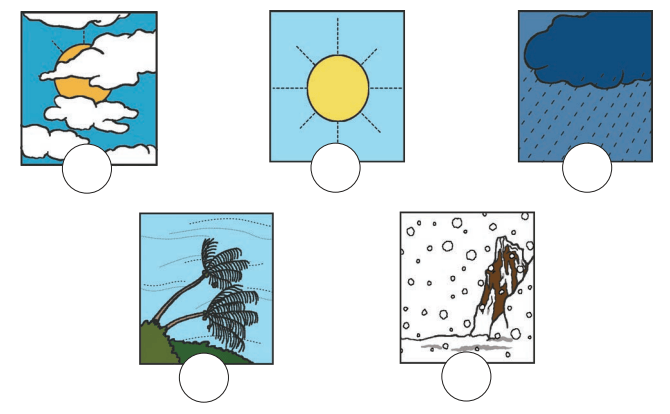
Weather on the day you are recording this information: ___________________
Visit your plant friend as often as you can and observe it carefully.
Plant
parts
|
Many, a few or none
|
Colour
|
Shape (describe or draw)
|
Any other observation
|
Leaves
|
|
|
|
|
Flowers
|
|
|
|
|
Fruits
|
|
|
|
|
ACTIVITY 3
• Do you find new leaves growing on the plant? Do the
colours of the leaves change as they grow larger?
• Do the old brown leaves fall to the ground?
• Do you find flowers appearing or notice any fruit?
• What are other observations you have?
Note down your observations.
WRITE
Write about your plant in your notebook.
Leaves of different plants have different colours,
shapes and sizes.
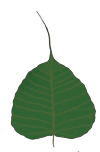
Peepal
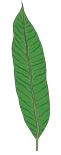
Mango
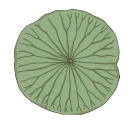
Lotus
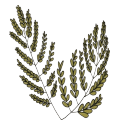
Khejri
Let us explore further.
ACTIVITY 4
• Observe the leaves in your surroundings.
• Draw, colour and label them in your notebook.
• Describe their colour, shape, size, texture and smell
to your friend in the class.
• What statements can we make about leaves after
doing this activity?
“Leaves smell different from each
other. I have noticed that tulsi,
coriander, curry leaves, mint and
lemon grass all have wonderfully
different smells,” Raj told Simmi.
Simmi told Raj, “Have you
ever rubbed a mango leaf and
smelled it? I love the smell.”
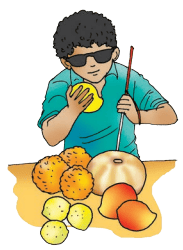
Raj added, “This conversation
reminds me of the lovely smell of
mangoes! My brother is not able
to see but he can immediately smell any fruits
nearby, like mango, pineapple, jackfruit, guava or
jamun.”
ACTIVITY 5
Blindfold yourself while your friend gradually brings a fruit
close to you. From how far can you recognise the fruit with
your eyes closed? Now repeat the same experiment with
pieces of cut fruit. Was it easier to recognise cut fruit by
the smell rather than the whole (uncut) fruit? Which fruit
could you smell from farthest away? Try this experiment
at home too.
Parts of a Plant
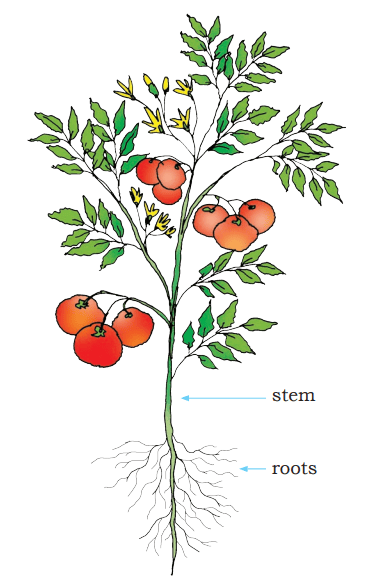
While learning about plants we used the names
of many parts of plants, like roots, stems, leaves,
flowers, fruits and seeds. Let us now look at a
picture of a tomato plant and carefully observe the
different parts.
• What are the parts of a plant?
• Mark different parts of the plant and label them.
Tomato plant
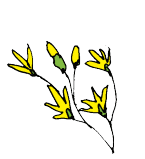
flower
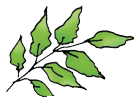
leaf
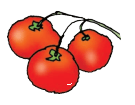
fruit

seed
ACTIVITY 5
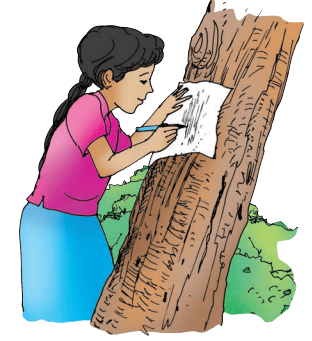
Get to know Barks
Bark is the hard outer covering of a
tree trunk. Touch and look carefully
at the bark of a tree. Do you see any
animals, insects or plants on it?
Press a sheet of paper on the bark.
Gently move a crayon or a pencil
repeatedly on it. See what you have!
Write the name (or description)
of your tree on the reverse of the
paper. Now collect all the papers
of your friends and see if you can
guess the tree just by looking at its
bark pattern.
• Did you notice any other animals, birds and insects on the plant?
• What were they doing?
Do you know
• Sugar is produced from the sugar cane stem.
• Bamboo is the tallest grass.
• Rafflesia seen in Mizoram is the biggest flower and is as big as an umbrella.
Let us reflect
A. Discuss
1. What would happen if there were no plants?
2. How does the root help a plant to grow?
3. What is the role of the stem?
B. Write
1. List the names of plants that you have seen in your school, park or near your home. Identify what types of plants they are — tree, shrub, herb, grass, climber or creeper.
2. Which particular part of the plant helped you to identify the type of the plant?
3. Describe your favourite plant. Why is it your favourite?
C. Draw
Draw different types of leaves you have seen around you.
D. Make a rangoli
Collect leaves and flowers fallen on the ground. Arrange them in patterns to make a rangoli. You may also create different animal shapes using the collected leaves.