
Chapter 5
Chapter Plants and Animals Live Together
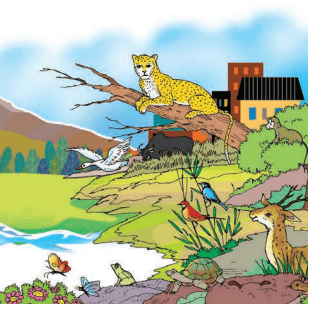
In Chapter 4, we saw lots of plants. Have you noticed
that where there are plants, there are animals too?
Look carefully and you will find that there are lots
of animals living on, around and even underneath the plants that you see!
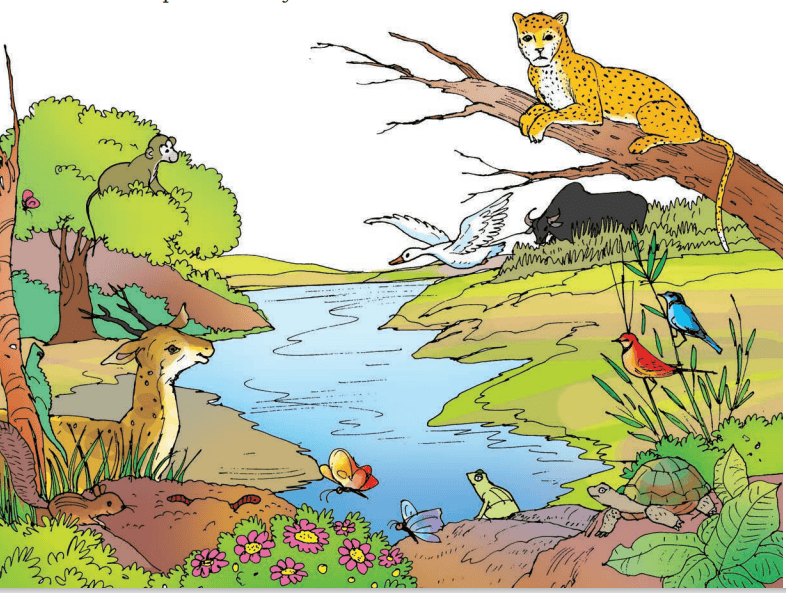
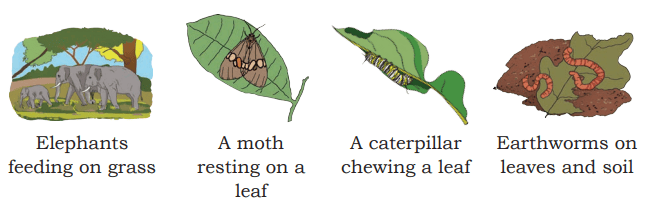
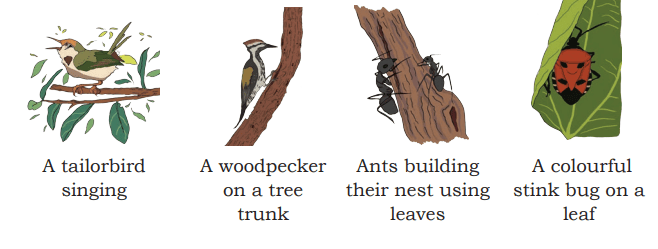
Here are some pictures of animals living
together with plants. Which of these animals do
you recognise from the pictures? Which of them
have you seen before? Which of these animals live under the ground?
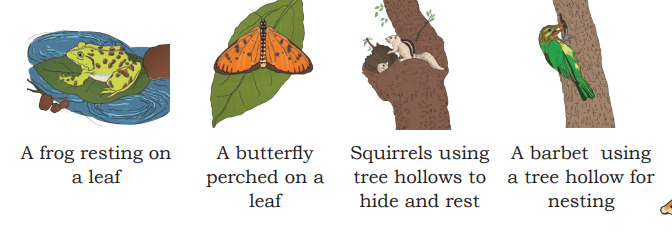
DISCUSS
Which of the animals shown on page 63, have you seen
before? Describe where and how you saw them. Use your
fingers, hands and arms to show how small or big these animals are!
Why do these animals choose to live near plants
Life in the Soil
Stand on the soil next to a plant. If you are comfortable, remove your footwear.
What colour is the soil under your feet
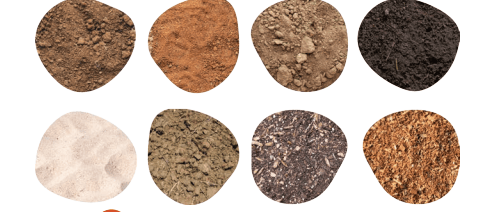
ACTIVITY 1
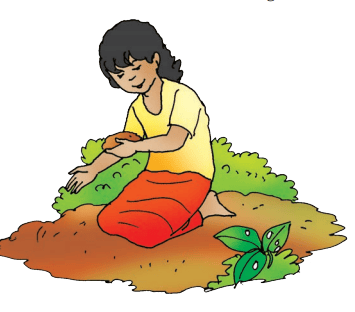
Pick up a little soil near your plant friend with your hands .
• How does it look and feel?
• Is it dry, damp, rough, smooth, hard or grainy?
• Did you find any leaves or insects in the soil?
• Now smell this soil and remember it.
My soil felt Rough ............. Smooth ............. Hard Grainy ..............
My soil had Nothing ............. Leaves ............. Small stones Insects............
Repeat the above activity a day after it rains. Remember to pick up the soil from the same place. Did you find any differences in the look, feel and smell of the soil? Pick up a little soil from another place, far away from any plants. Is it different from the soil that you collected earlier?In what ways?
Examine the soil more carefully. What small things do you notice in it?
Soil is the topmost layer of the Earth’s surface.
Soil is made from rocks that have broken up into
tiny pieces, as well as old leaves, roots, stems and living and dead animals like insects.
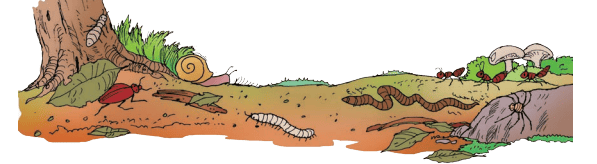 Soil has many insects and other creatures living
in it! Some you can see, and some are too small to
see. On the top layer of soil and moving around
between the grass and leaves you might find insects
like ants, termites, small beetles and grasshoppers
Soil has many insects and other creatures living
in it! Some you can see, and some are too small to
see. On the top layer of soil and moving around
between the grass and leaves you might find insects
like ants, termites, small beetles and grasshoppersWhen it rains and the soil is wet, other creatures
like earthworms and millipedes may appear too.
You may also find more grasses and other plants growing in the soil
DISCUSS
In the monsoons, you may find many more plants and
animals around. Where did these new plants and animals
come from? Why could you not see them earlier?
ACTIVITY 2
Stand near your plant friend and look around. How many
different animals can you spot? Describe them in words
and fill in the table. You may use the given pictures if needed.
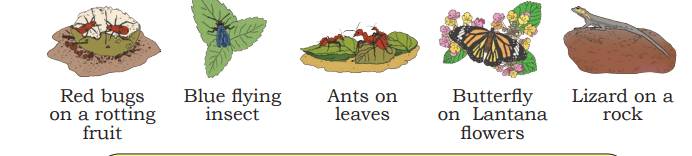
Note to the teacher Some insects wait for the rains to emerge from the soil. Seeds of
plants may remain in the soil for long periods and sprout when it
rains or they are watered .
DO YOU KNOW-Animals, birds and insects use different parts of plants for
food, shelter and resting.
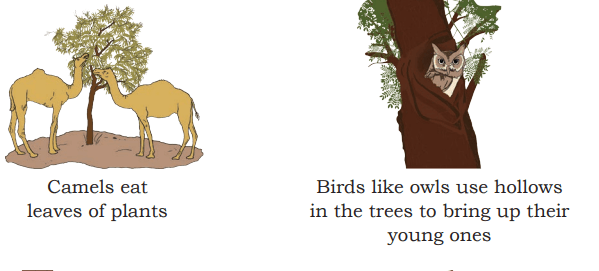
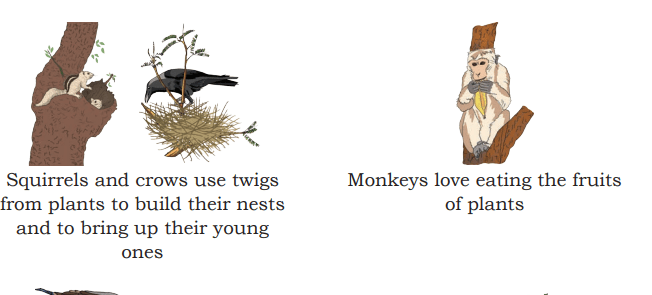
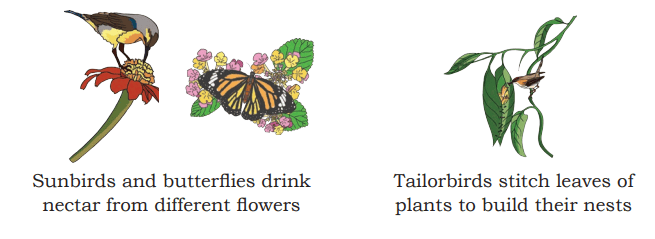
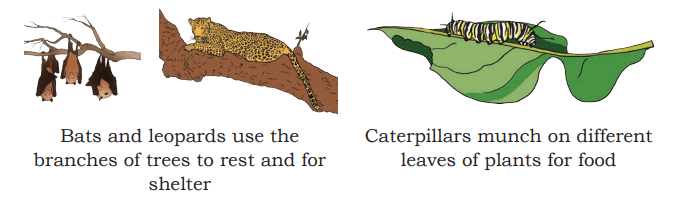
How many of these animals have you seen? Watch out
for them!
ACTIVITY 3
Sounds of Birds
• Close your eyes and try to listen to the sounds of birds.
Do you hear any bird sounds?
Can you see which birds are making these sounds?
• Cup your ears with your hands as shown in the picture and point your face towards the direction of the bird sound. Can you hear the sound more clearly?
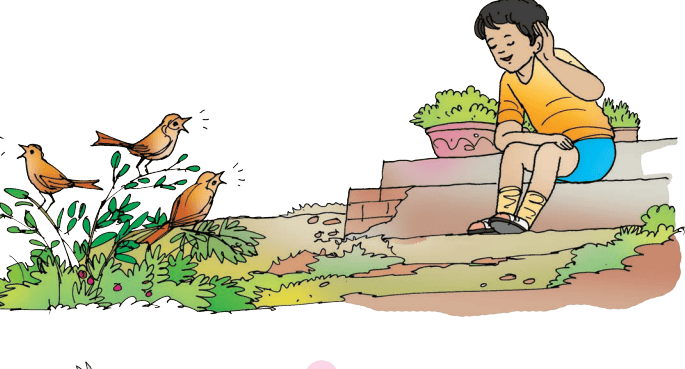
Different birds, different sounds
• Recall the bird sounds you have listened to. Try to
produce the sounds that different birds make.
• Now try to write down in the following table the sound
of any birds you have heard.
• If you do not hear any sounds of birds, what do you
think is the reason?
• Do you hear more bird sounds --
In the early morning?
In the afternoon?
In the evening?
Let us reflect
A. Discuss
1. What was the colour and texture of the two soil
specimens that you collected during the previous
activity? In which month did you pick them up?
Did they smell different and can you describe the
smells ?
2. During which month did fresh new leaves appear
on the plant that you were observing?
3. Which animals, birds and insects did you notice
around plants ?
4. Recall and write about how animals, birds and
insects rely on plants. Which one was your
favourite example?
5. What is soil made up of?
B. Write
C. Draw
Remember you wrote about your plant friend. Now
try and draw your plant friend. Use different coloured
small dots in your drawing to show the places where you spotted animals, birds or insects.
D. Put in order
One day Suma found a caterpillar on a tagar plant.
She found it interesting. She observed it for about 10
minutes. It was eating tender leaves continuously. Her
mother came close to her. She guided her to observe
the caterpillar each day. Suma became more curious.
Consult an elder person and organise the following
changes in order.
 -----------Now it was a butterfly.
 ......................The caterpillar formed a cocoon.
.....................The caterpillar formed a cocoon.............................It flew away gently...............................One day it stopped eating.......................It came out of the cocoon.