
Unit 3
Gifts of Nature
About the unit
Note to the teacher
This unit is about ‘Gifts of Nature’. The key concepts covered in these chapters are described below.
Chapter 7: Water — A Precious Gift highlights how rainfall provides us with the precious gift of water, which is then stored in different ways. We ensure the cleanliness of this water and distribute it to households. Each household stores water for daily use, employing it in numerous ways. However, challenges arise regarding both the quality and quantity of water. To address these issues, we implement various measures aimed at conserving water resources.
Chapter 8: Food We Eat helps us understand the vital role of food in maintaining our health. We consume a diverse range of foods obtained from various sources. Each food item provides essential nutrients that benefit our bodies in unique ways. Our various cultures possess valuable knowledge about the nutritional value of different foods and offer guidance on making healthy dietary choices.
Chapter 9: Staying Healthy and Happy
emphasises the importance of maintaining
cleanliness and good health. We acquire essential
principles of hygiene and cleanliness, ensuring
tidiness in our homes and surroundings. Regular
exercise becomes a part of our routine, promoting
both physical fitness and emotional well-being. By
understanding and following the established rules
and regulations of our environment, we protect
ourselves from potential harm
- Plan a ‘Food Mela’ in
the class; try to display
a variety of food items,
e.g., grains, spices, fruits,
vegetables, etc.
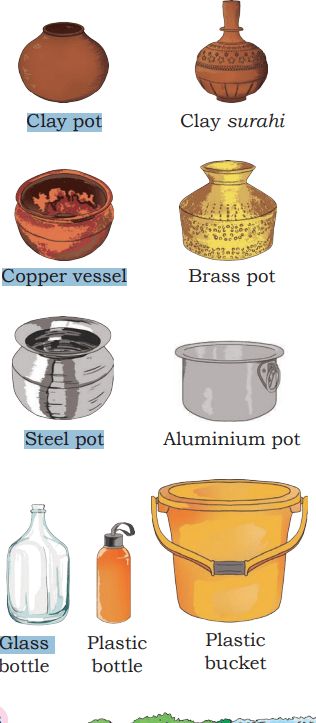
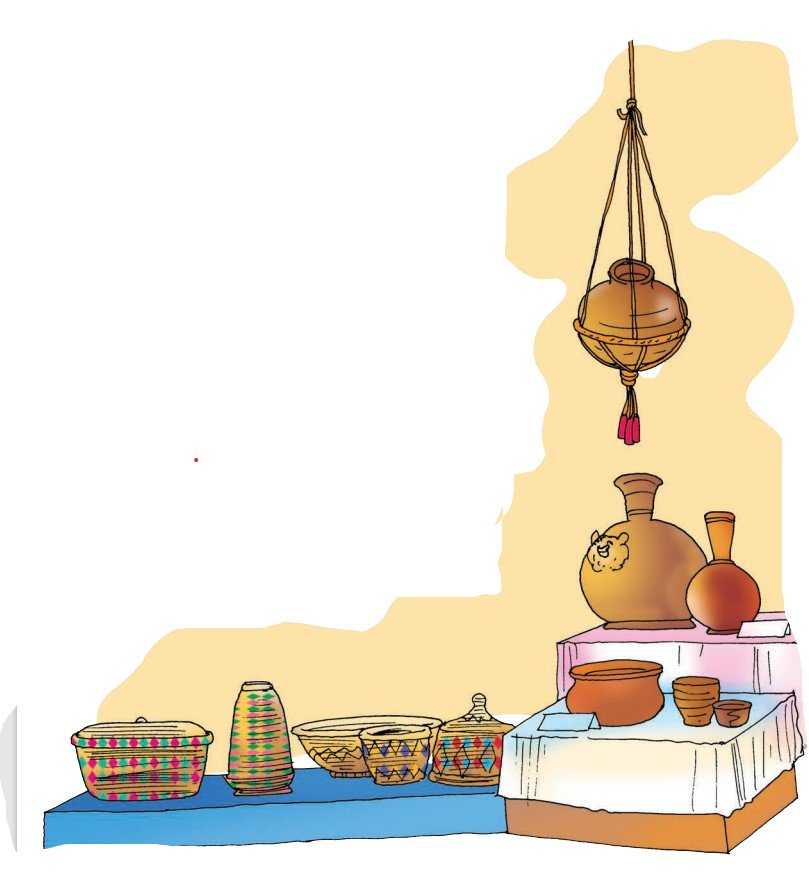
- Organise an exhibition on a variety of containers and vessels used to store water; you can display pictures too.
- Keep handy authentic
and age–appropriate
short videos and films,
storybooks and poems
related to food, water,
cleanliness and healthy
habits.
- Visits or Visitors: Plan a visit to different sources of water in your neighbourhood with safety. Invite a yoga instructor to demonstrate yogasanas for good health; invite a health practitioner to talk to the children about maintaining cleanliness and hygiene; invite parents and community members to share and talk about their traditional cuisines during the food mela .
Chapter 7
Water – A Precious Gift
Rain, rain, come again!
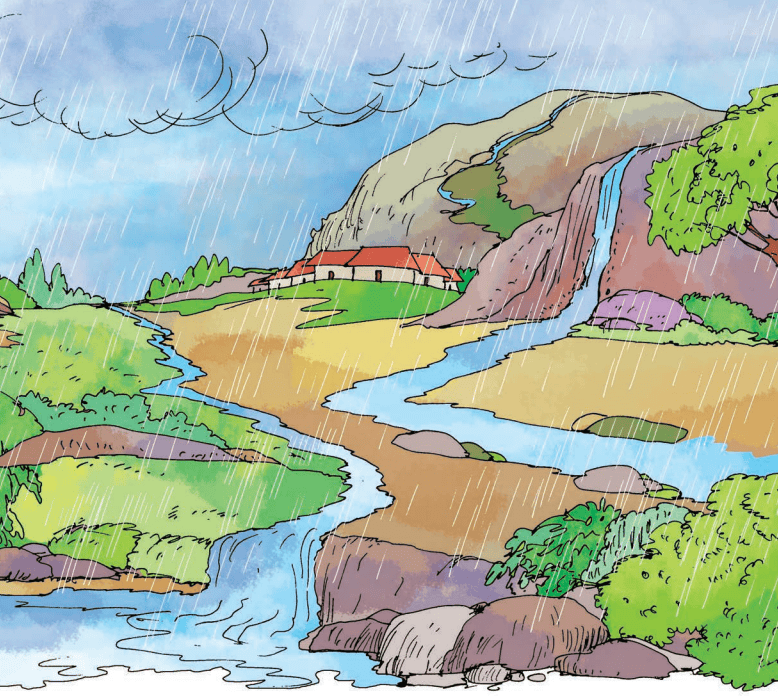
What comes down,
But never goes up?
write
I think it will rain today because …
(write at least 2 clues)
Here comes the rain!
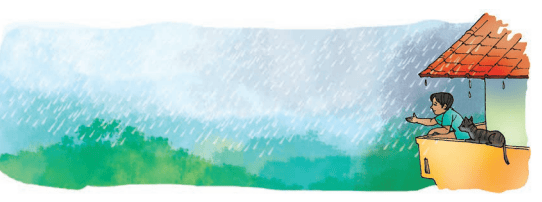
ACTIVITY 1
- Ask yourself as many questions as you can about the rain.
- Is it a heavy rain or a light one?
- Are the raindrops big or small?
- Do they come down fast or slow?
- Is the rain so heavy that you do not see the water
- drops, but only lines or sheets of water?
- Is the rain falling straight down? Is it slanting or
- changing its direction? Guess why.
- Collect the rainwater in a vessel. Does it look clean or dirty?
DRAW
- Draw a picture of the rain that you observed .
- Do you think it will rain again today? Or tomorrow?
Why do you think so ?
- Did it rain only in your area or in other nearby places as well? Make a guess, then ask and find out .
- Find some songs about the rain or make up one, in your language or any other. Sing some songs about the rain.
- Did the rain make you happy? Did it make everyone
happy?
What happened to the rainwater ?
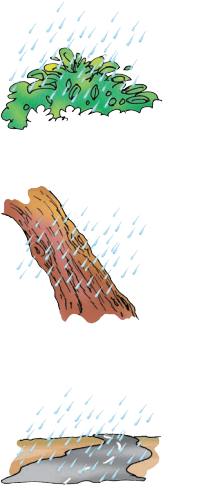
- Is there a stream, river, pond or lake near your village or city? Find out its name and some information about it. Visit it and draw its picture. Draw any trees, birds or animals that you see around it.
- Find a poem about a river and sing it in the class.
Water is a precious gift!
Note to the Teacher
The water cycle will be introduced only in Class 4. For now, let
children notice that water remaining on hard surfaces gets dried
up in the sun. Rainwater that sinks in the soil is most important,
as it recharges our sources of water and helps plants grow .
DISCUSS
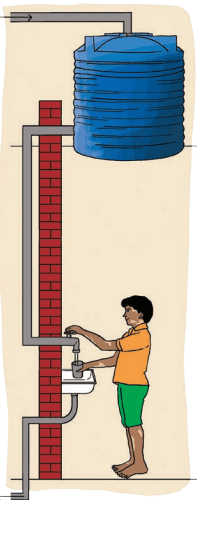
Where do you get water from?
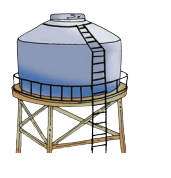
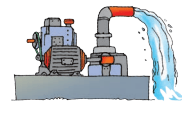
- Do you get water delivered in a tanker? If yes,
find out where the tankers bring water from. Does
your water come from a well, river or lake near your
village or city
- Do you know anyone who faces difficulty in getting water every day?
Water in Our Daily Lives
write
- List all the activities you can think of for which we need water .
- How many mugs of water do you need to brush your
teeth? How much water do you use to take a shower?
- How did they get water? Did they use water in the same way as you do?
- How did they store water?
- Write a short story about what you found out .
AVTIVITY 3
Put up an exhibition
- Identify different vessels used
to keep water in your home.
- Ask the elders in your family
what types of vessels they
stored water in.
- Were they different from what
we use now?
- Did the vessels have different
names?
- On a separate sheet of paper draw a picture of any vessel that you find interesting and write its name in your language.
- Put up an exhibition of these pictures in your classroom with the help of your teacher.
- Walk around and observe the drawings by your classmates
- How many different kinds of vessels have been drawn?
- Did you find any patterns on
the vessels?
Stop for a moment and think!
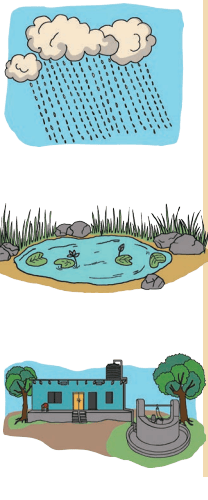
- Water comes down to earth as rain.
- It slowly fills up our many sources— streams, rivers, ponds, lakes, wells, groundwater, etc.
- From these sources we bring water to our homes in many ways.
- We store it in many ways.
- We use it in many ways.
- What happens to
water after we use it .
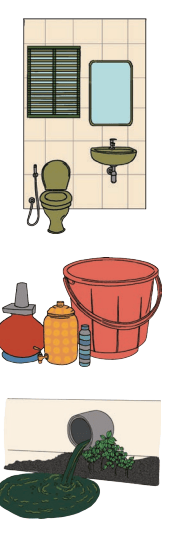
Water helps us in keeping things clean. This is very
important for our health. But after we use it, the
water becomes dirty. We cannot use dirty water for
drinking or cooking. But we can reuse the waste
water for watering our plants or for flushing toilets. Let us strive to reduce our use of water and
reuse water whenever possible.
We should not add too much soap and other
such chemicals in water. Let us take care of this
precious gift from the sky!
Every drop counts
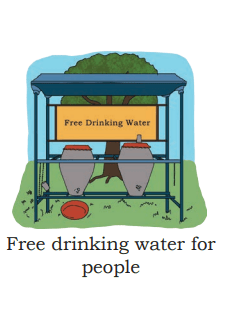
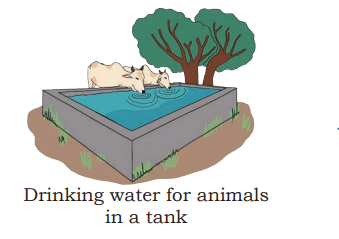
Don’t you think everyone must get clean drinking
water anywhere, anytime?
Take action
ACTIVITY 4
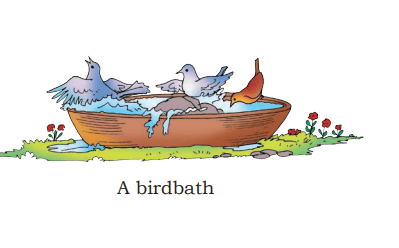
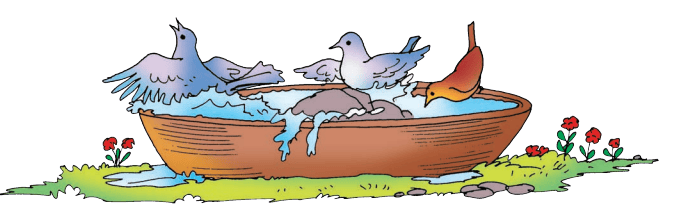
Prepare a birdbath — offer water to birds in the hot summer
months .
- Take a shallow and wide container
(an old big bowl or a base of an old
pot or a bucket, less than 10 cm
deep).
- Keep some stones in it for birds to perch. You may make the sides sloping by adding some smaller pebbles. Smaller pebbles also help insects to use this water .
- Add fresh water and keep the bowl
in your yard, balcony or terrace.
- Change the water frequently.
- Clean the birdbath with a scrubber twice a week. Do not use this scrubber for kitchen utensils; reserve it for the garden .
A. Write
B. Draw
C Discuss
Water is very precious. We should be cautious about how we use it. We should not waste even a drop of water. Discuss among yourselves and list the activities in your house or outside, due to which water gets polluted or wasted. How can we avoid wastage of water? Think of three solutions with your group and write them in your notebook