
Chapter 09
Staying Healthy and Happy
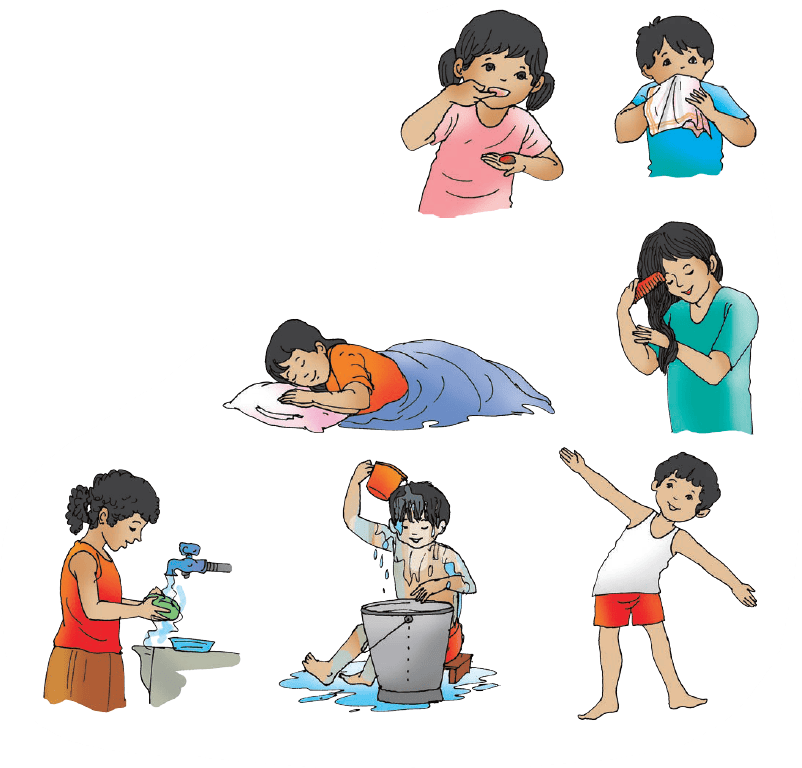
Clean and bright
Ask yourself these questions.
• Did I brush my teeth today?
• Did I take a shower?
• Did I comb my hair?
• Did I wash my hands with soap?
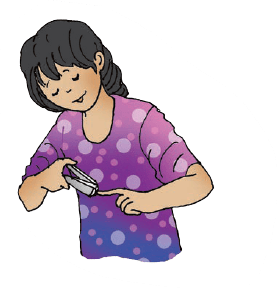
• Are my nails trimmed and clean?
Daily routine
Write down the activities that you do every day, from the time you wake up, till you go to sleep. Your list should include the activities below. Remember that you do some of these things more than once in the day:
• Take a shower
• Wash your hands with soap
• Brush your teeth
• Drink 6 – 8 glasses of water
• Eat food
• Sleep well for at least 8 hours total
• Play outside
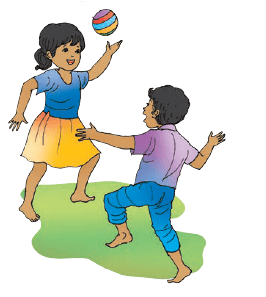
Check your list for these activities
• Do you brush your teeth twice in the day — once after waking up and once before going to bed?
• Do you rinse your mouth every time after eating food?
• Do you wash your hands with soap after using the toilet and after coming home from outdoors?
• If your answer to any of these questions is “No”, think and discuss how you can make it a habit. Is there anything that makes it difficult for you to follow these routines?
How do we brush our Teeth?
Moyna’s Dadu (grandfather) uses twigs from a neem or babool tree to clean his teeth. “Dadu! How come you don’t use a toothbrush like us?” asked Moyna.
Dadu laughed and said, “Well, every day I get a fresh twig from the trees nearby. I chew it to make a brush and remove food particles stuck between my teeth. It gives my gums a good massage too. You should try it sometime!” Moyna found the neem twig to be too bitter, but the babool twig tasted better. “I might start using babool twigs, Dadu!” exclaimed Moyna.
Find Out
Ask your grandparents or any elderly person in your neighbourhood — What did they use to wash their hair, body and clothes and clean their teeth when they were young? Can these things be found now?
Do you Know ?
The modern idea of brushing teeth came from the Indian hygiene tradition of datun — using twigs of certain plants including neem, karanj, babool, etc., to clean our teeth.
Activity 1 : Making a home-cleaner using orange and lemon peels
We use many cleaning agents at home to remove dirt and germs from surfaces like kitchen slabs, furniture and bathrooms. Find out what home-cleaners are used in your home. You can also make your own eco-friendly cleaner!
Here is what you need:
• Peels of 8 –12 oranges or lemons, enough to fill a half-litre transparent container.
• Ten whole cloves (laung) or 2–3 bay leaves (tejpatta) (optional)
• Two cups of white vinegar, enough to cover the peels or spices.
Now put all these ingredients in a half litre transparent container and close the lid. Keep the container in a sunny area for about two weeks, occasionally shaking the mixture. Strain the liquid after two weeks and your all purpose cleaner is ready! You can mix a cup of the liquid in one bucket of water to clean floors and bathrooms.
Note to the Teacher
You can discuss that routines may vary based on where we live and access to resources like water. We have some traditional methods for cleaning. This includes natural cleaning alternatives such as, Reetha or Shikakai for the hair and some safe and effective recipes for household cleaning.
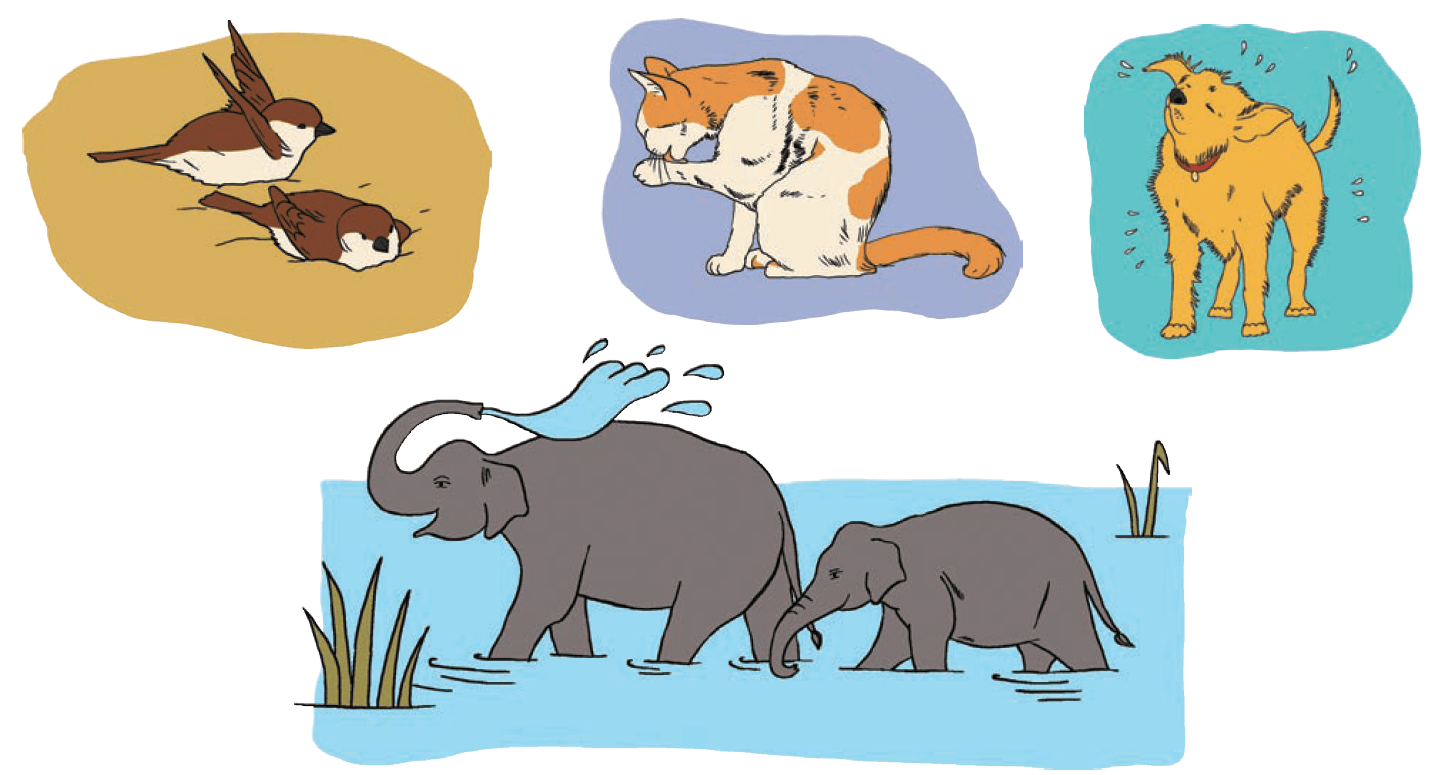
Animals like to keep themselves clean too!
Have you ever seen monkeys sitting and grooming each other? This is a way in which they keep their bodies free from insects. You may have also seen birds using their beaks to clean their feathers. Next time do observe different ways in which animals and insects around you might be cleaning themselves.
Playing outdoors and indoors too
Have you noticed that, after running fast to catch your friends in a game, you are breathing faster and deeper? Maybe your cheeks are a little red and you are feeling a little warm and start sweating. This is because exercise makes our heart work harder and better. Exercise is good for the body. There are many ways to exercise and keep ourselves fit.
Activity 2 : Hop, skip, jump!
Try the following moves:
• Walk like a duck.
• Jump like a frog.
• Run like a cat.
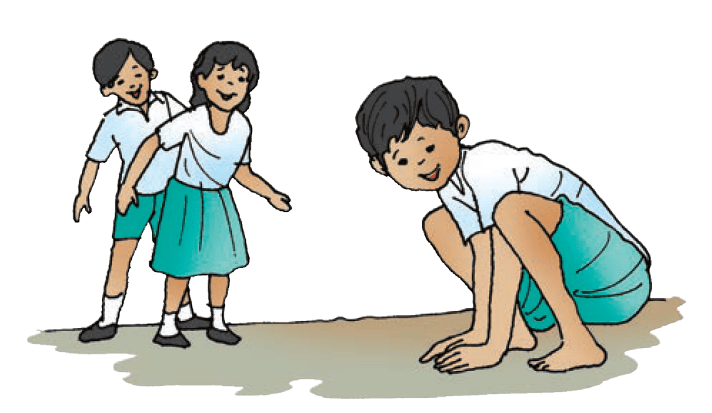
Which moves did you enjoy the most?
Take a skipping rope and count as you jump. Do this with your friends and see who can jump the maximum number of times.
Then, invite a friend to start jumping after you skip 10 times or after you say a short poem as you skip. For example:
I like roti,
I like ghee.
I want _______________________,
(name of a friend)
To jump with me!
What other games do you play with a skipping rope?
Teach and learn from your friends.
Note to the Teacher
The body requires mainly three types of exercises — strengthening the cardio-respiratory system; adding strength to the muscles and bones; and maintaining or enhancing body flexibility.
Harpreet’s grandmother cannot move much because of the pain in her knees. But she still walks around the house a little and loves to play chess with Harpreet. She says that both the mind and body should be active.
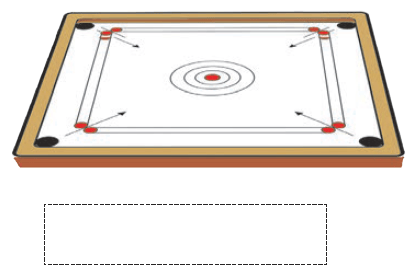
Name the Game!
What types of games do you like to play outside your home?
• Can you identify the games shown here?
• Have you played them before?
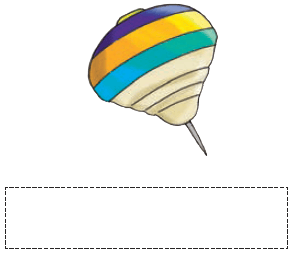
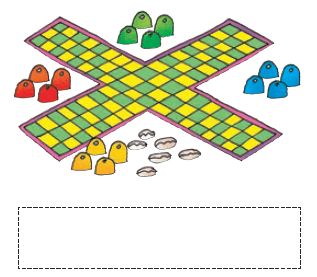
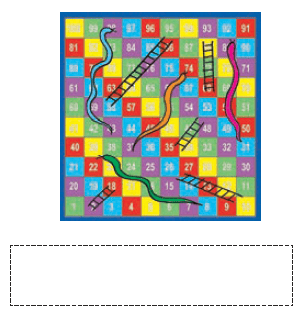
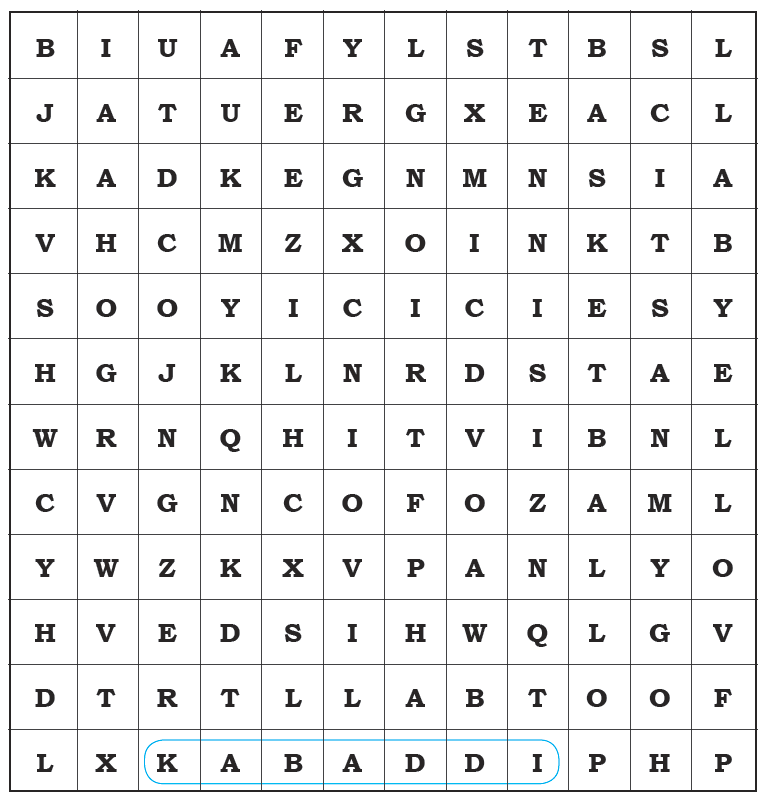
I Spy
Can you find the names of all the games hidden
here? Are any of these your favourites? One has
been done for you.
Playing safely
It is important to be safe while having fun. Which of the following places is considered a safe area to play? Why or why not?
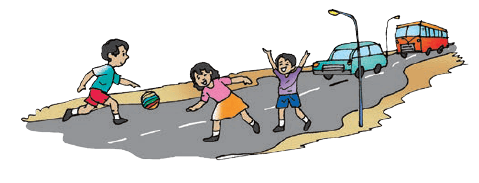
A busy road  Safe Unsafe
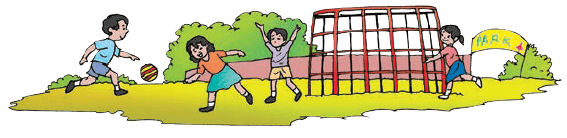
A park Safe Unsafe
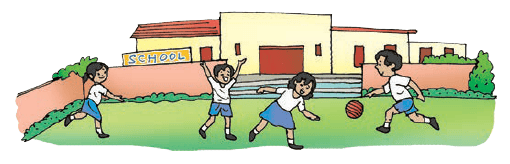
A schoolgroundSafe Unsafe
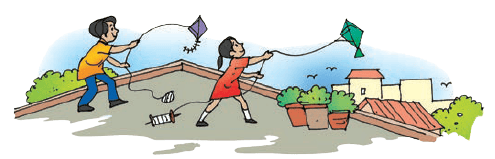
A roof without railingsSafe Unsafe
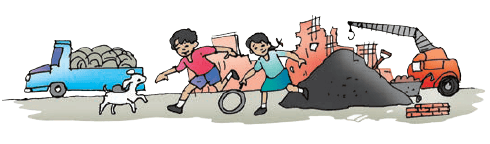
A construction siteSafe Unsafe
In public spaces, there may be strangers. Do not interact with strangers unless you are with your parents or any other adult you trust.
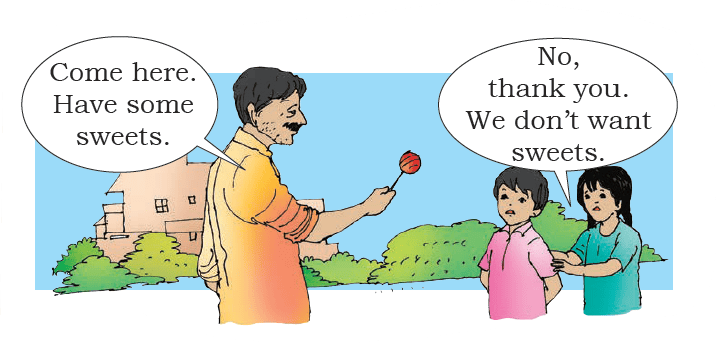

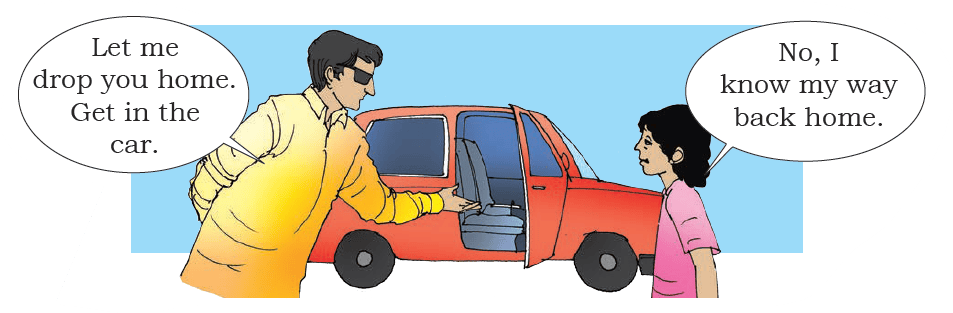
We should pay attention to our surroundings when playing.
Note to the Teacher
You may encourage children to be careful when they come across new people. Parents may use a pre-decided password if they need to send a new person to pick-up their children.
You may encourage children to be careful when they come across new people. Parents may use a pre-decided password if they need to send a new person to pick-up their children.
Let us reflect
A. Write
Make your weekly health table.
What makes you feel sleepy, hungry or tired? Feelings are the body’s way of telling us that something is amiss. We all have different needs. We should each know what is good for our body and mind. For this, track your activities for a week and observe how you feel.
Note to the Teacher
You may encourage children to find patterns and make connections between good sleep, diet and exercise and feeling good. Also discuss whether children find any of the healthy activities difficult to follow regularly. Completing the table is a form of assessment for the chapter.
You may encourage children to find patterns and make connections between good sleep, diet and exercise and feeling good. Also discuss whether children find any of the healthy activities difficult to follow regularly. Completing the table is a form of assessment for the chapter.
B. Draw
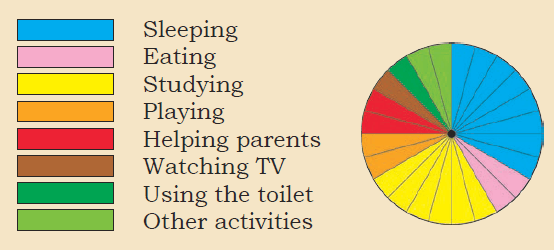
Draw a big circle in your notebook and divide it into 24 slices. Imagine that each slice is one hour of the day. Now colour these slices differently based on the number of hours you spend doing different activities in one entire day of 24 hours. For example, Moyna spends 8 hours sleeping, 2 hours eating, 6 hours in school or studying at home, 2 hours playing outside, 2 hours helping her parents at home, 1 hour watching TV or playing on the phone, 1 hour in the toilet and 2 hours on other activities. This is what Moyna’s circle looked like.
C. Discuss
Note to the Teacher
One simple way to divide a circle into 24 parts by hand (approximately, without using a protractor) is to first divide it into four quarters, then divide each quarter into 3 equal parts. At this point, there would be 12 equal sections. To make 24 sections, divide each section into two equal parts. This intuitive drawing exercise would also later connect with fractions and proportions, as well as drawing a clock and the Ashok Chakra on a flag.
One simple way to divide a circle into 24 parts by hand (approximately, without using a protractor) is to first divide it into four quarters, then divide each quarter into 3 equal parts. At this point, there would be 12 equal sections. To make 24 sections, divide each section into two equal parts. This intuitive drawing exercise would also later connect with fractions and proportions, as well as drawing a clock and the Ashok Chakra on a flag.