Let’s take a look Around us!
Khushi reached school early. Sunlight shone
through the windows and the classroom looked
bright and beautiful. Khushi wanted to capture
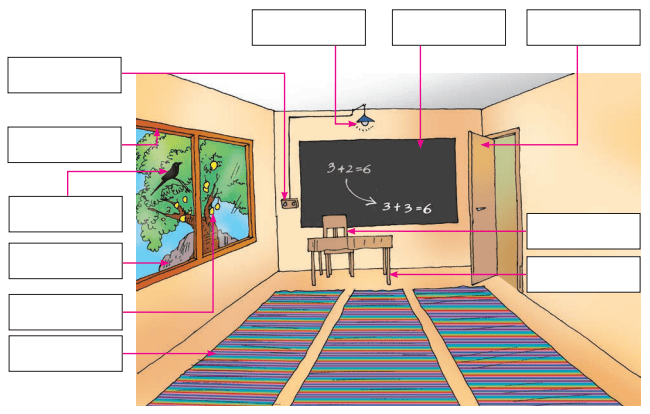
this scene in a picture. Here is what she drew.
Can you name the things that Khushi has drawn?
Write in the boxes given.
Do you see the window glass? Why or why not?
 ACTIVITY 1
Understand your Classroom
Draw a picture of your classroom in your notebook.Label
the things that you have drawn.
Khushi is curious, “Where have all these things
come from? Who has made them? What are they
all made of ?” she thought.
Let us help Khushi find out.
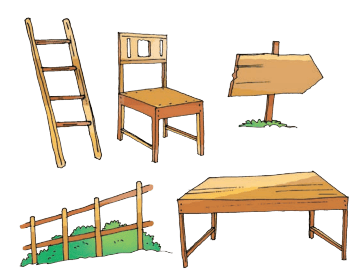
The table and chair are made of wood. Where
do we get wood from?
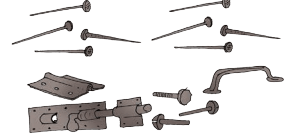
The hinges, nails and latches of the door are
made of some metals.
 DO YOU KNOW
 Metals are carefully
extracted from certain
rock and sediment
(called ‘ore’) dug up
from inside the Earth.
Note to the Teacher
Show the children some common metals around you such as
iron, copper, aluminium, gold, silver, mercury in a thermometer
or alloys such as steel, brass and bronze. Alloys are mixtures of
metals.
ACTIVITY 2
Spot the metals
Find as many things or parts of things, that are made of
metals. Which metals do you recognise around you? If you
do not know the name of the metal, ask your friends or an
elder. Make a list of these metals in your notebook.
What are other things in the classroom, such as, mats, bulbs and electric switches, made of?
See-through materials!
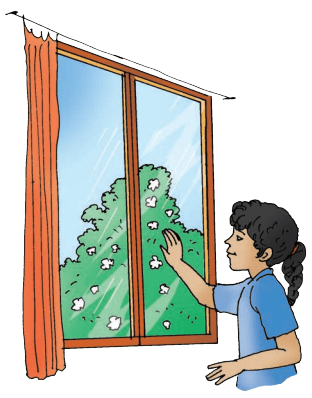
Khushi was sitting at her desk. She could see a
tree laden with beautiful flowers. She reached out
to touch them. Her hand
touched the glass pane.
At first, Khushi did not
notice the windowpanes.
They were made of glass and
she realised that she had
been able to see the flowers
and trees through the glass.
Glass is like that!
• Does your window have
a glass pane?
• Can you see through it?
• What do you see?
ACTIVITY 3
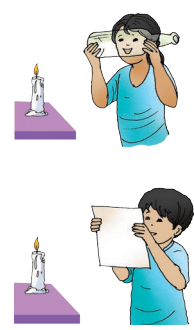
Seeing through things
Collect a few small objects of different
materials from your surroundings like
bottles, papers, cloth and utensils, etc.
Look at a light bulb or a candle flame
through them. You can see through some
objects very clearly, you can partially see
through some others, while you cannot
see through some objects at all. Order
these objects from those you can see
through very clearly, to those you cannot
see through at all.
See through clearly
|
See through partially
|
Cannot see through at all
|
|
|
|
|
|
|
|
|
|
|
|
|
|
|
|
|
|
|
Take care!
Never look at the sun continuously — through any object
or directly. It will harm your eyes.
Things that you can see through
are called transparent. Most
kinds of glass are transparent.
Name one more material that is
transparent.
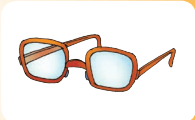
You can see through glass, but you cannot
see through wood. Materials that you cannot
see through are called opaque.
Glass is transparent but wood is opaque.
Some things are in between — that is, you
can see through them only partially. They
are called translucent. Find some materials
that are translucent.

ACTIVITY 4
Let us colour the world!
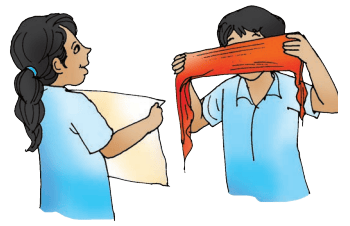
Collect two or three see
through bags, bottles
or thin cloth of different
colours. Look at a sheet of
white paper through them.
• Does the colour of
the paper appear to
change?
• Does white paper appear different when you look at
it through thin blue plastic or glass? Or, thin yellow
plastic or glass?
• Do the colours of different objects appear to change?
How did a blue object look through thin yellow
plastic?
• Have you earlier experienced looking through
coloured transparent objects? Try to recall such
experiences.
What is it made of ?
Let us return to Khushi’s classroom
 WRITE
WRITE Chain game
• In the table below, Khushi has grouped objects according to the materials that they are made of. Her list of objects is in the first column of the table. Thenames of the materials are in the second column.
• The third column of the table is for you to complete. Here write the names of some objects you have seen that are made from that material. Some objects around you may be made from materials not in this list, e.g., clay and rubber are missing in Khushi’s list. Use one of these to add an additional row in the table.
Khushi’s list
|
Name of the material
|
Objects made of this material which are in your classroom or home
|
Table, chair, door
|
Wood
|
For example, pencil
|
Door hinges, nails,
|
Metal
|
|
|
|
|
Windowpanes, light bulb
|
Glass
|
|
Electric switches
|
Plastic
|
|
|
|
|
Where do all these materials come from? Can you locate their source?
For example, Wood — Tree
Metals — ___________________
Cloth — ____________________
DO YOU KNOW
Glass is mostly made of sand!
Talk to your Grandparents
• In their childhood, were these things made of the same materials?
• Are there new materials now that they might not have seen before?
• Are there any materials that they saw in their childhood that are not in use now? Why?
Different materials may look different. Are they also
different in other ways? Would you be able to recognise
some material even with your eyes closed?
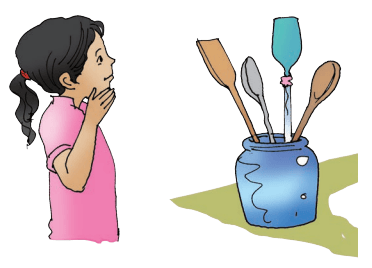
• What material is your spoon made of?
• Is it made of metal, wood or some other material? Can
you guess?
• Which of these words or phrases describes the spoon?
Feels cold to the touch
ACTIVITY 5
Knock on it and it will speak to you!
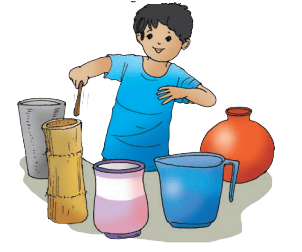
Orchestra
Take a metal spoon and at least five objects made up of
different materials—wood, metal, plastic, cloth and glass.
Gently tap the spoon on each of them. Listen to the sound
that each of them makes. Make your own words to describe
all these different sounds.
Try to capture those sounds in words, like ting-ting,
dhum-dhum, dub-dub, …
Now compose your own beats.
Ting, Ting, Thak, Thak
Ting, Thak, Ting, Thak!
Does it bend?
Khushi’s table is made of wood. What else is used to
make tables? Can we use fabric or rubber to make
a table? Why or why not?
Wood is hard and rigid while fabric is soft and
flexible. The flexibility of fabric makes it more
suitable to make clothes and curtains. Imagine if
clothes were made of wood!
WRITE
Odd Pairs
List five objects and pair them with a material that is not
suitable for it! Explain why these materials will not work to
make these objects. One example is done for you.
S. No.
|
Objects
|
Material
|
Reasons
|
1.
|
Umbrella
|
Paper
|
Paper will tear if it gets wet in the rain
|
2.
|
|
|
|
3.
|
|
|
|
4.
|
|
|
|
Does it flow?
In her ‘Odd Pairs’, Khushi playfully wrote, “Walls — can’t be made of water.”
We don’t make walls of water because they will fall. What else could happen to water walls? We need ‘solid’ things such as stones, bricks or wood to make walls. Things that do not change their shape are called ‘solid’.
Water does not keep its shape — it flows. Airflows too, but in a different way. If you pour waterinto a cup it stays there. Water is a ‘liquid’. Air does not stay in a cup, it just floats in and out. That isbecause air is a gas.
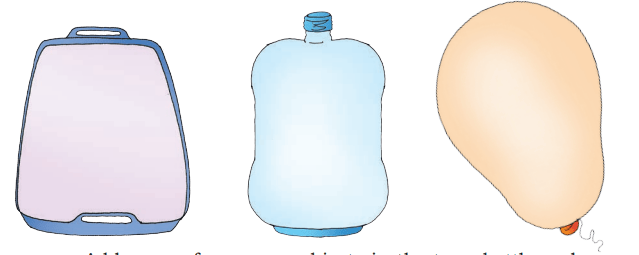
So objects can be classified as solids, liquids and gases.
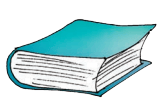
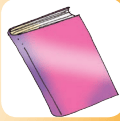
Solid
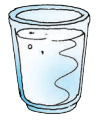
Liquid
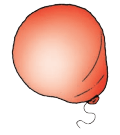
Gas
ACTIVITY 6
Let’s group them another way!
Here are the names of some objects: ink, a stone,
smoke, ice, steam, a spoon, honey, a bottle, a bag, water.
If it is a solid, write its name on the tray; if it is a
liquid, write its name in the bottle; if it is a gas, write its
name in the balloon.
Add some of your own objects in the tray, bottle and
balloon.
Some objects could be confusing, such as sand or a
sponge or clay. Identify more such objects and write names
of at least three of them.
Note to the Teacher
Materials like rubber, fibre and wax could be naturally
produced by plants and animals, but similar materials
are also made artificially. For example, bees produce
wax for their honeycomb, but very similar wax can be
made from petroleum. Petroleum is a liquid found deep
underground. Petrol, rockel, diesel, etc., are extracted
from petroleum. Petroleum-based materials, such as
petrol, plastic, rubber or paraffin wax, create ‘non-biodegradable’ waste. This concept is just touched upon
in Class 3, and details are left to later classes.
Natural — Artificial
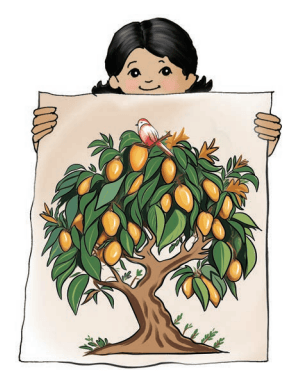
Khushi drew a picture
of a mango tree with a
mango growing on it and
a bird sitting on it. The
tree, mango and bird are
not made by humans but
occur naturally in nature.
Things that exist naturally
are called ‘natural’. Natural
things may be alive, like
plants and animals, or
not alive, like rocks, water
and air.
Things that are made by people are called
‘artificial’ like clothes, shoes, tables, etc.
List out five things in each group.
• Natural: ________________________________
• Artificial: _______________________________
In the next chapter we will further explore how
things are made.
Have you seen trees around you that bear flowers
and fruits at special times of the year? If you have
ever eaten a ripe mango or seen mangoes in the
market or watched a mango tree through the year,
try to guess— at what time of the year did Khushi
draw her picture? Could it be around January or
around June?
Let us reflect
A. Write
Things around us are made of different types of materials. Write down the names of three materials we commonly see around us.
______________________________
B. Discuss
Suppose you find a shining spoon. You don’t know ifit is made of metal or whether it is made of some other material and then painted with shiny paint. How would you find out?
C. Draw
Draw three natural and three artificial things.
D. Do it
Match the pairs
Transparent
|
A lamp shade made of paper
|
Translucent
|
A plate
|
Opaque
|
A glass used in spectacles
|