Chapter 11
Making Things
You must have seen or used a pot for storing water. You have also seen a gullak piggy bank), birdbath, cup (kulhad) and so many such things at home and
around you.
- Have you ever wondered?
- What are these things made of?
- Who has made them and how?
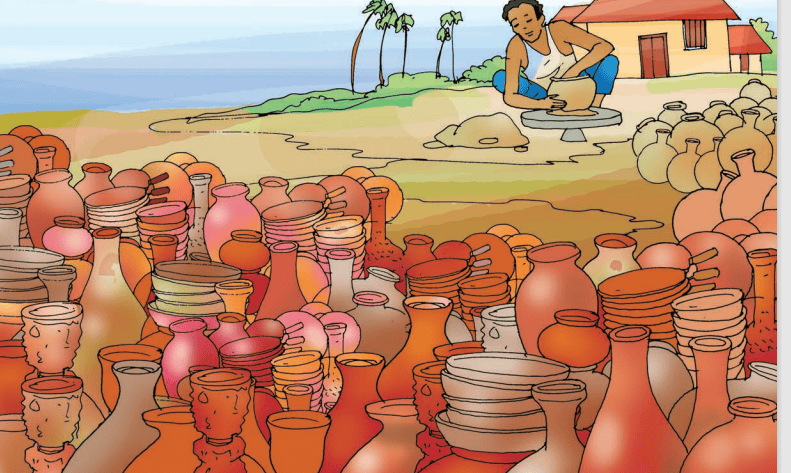
A potter’s family
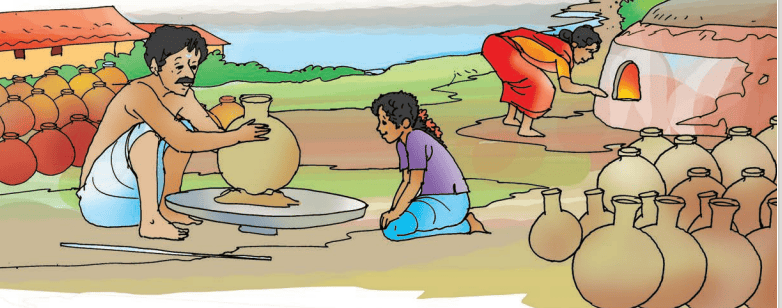
In a town by the seaside, Mini watched her
Appooppan (grandfather) making a pot. He would
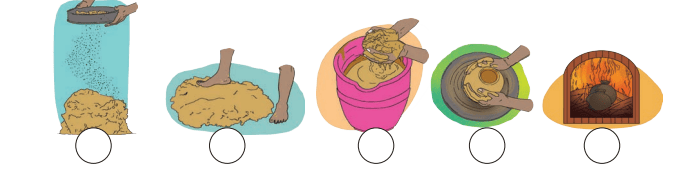
take the clay and make it wet. He would add enough
water to make the consistency he needed. Then
he pounded it well. He made sure that the clay
was neither too watery nor too dry. He kneaded
the clay like dough. Finally, he put the clay
on a stone wheel and shaped it by
spinning it.
When the pots were
dried, Ammu (mother)
moved them into a very
hot fire burning inside
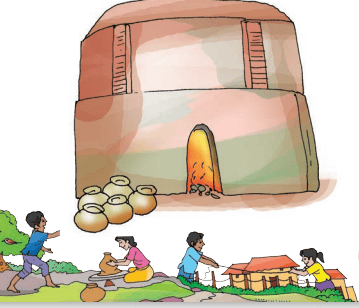
a big oven. The potter’s
oven is called a ‘kiln’. This
fire would bake the pot.
Then the pot was ready for use. Appooppan, Ammu and other family members
made some patterns on some of the pots to make
the pots look even more beautiful.
- What are pots used for?
- What other kinds of things do potters make?
- Why is the pot baked in a kiln?
ACTIVITY 1
- Visit a potter in your neighbourhood with your
parents or elders in the family.
- Observe how the potter works on the stone wheel or
the potter’s wheel.
- Have you wondered how clay takes a beautiful
shape on a spinning wheel?
- Which of the products made by a potter do you use
at home?
- Draw some of the products that you have seen at
the potter’s place in the box given below.
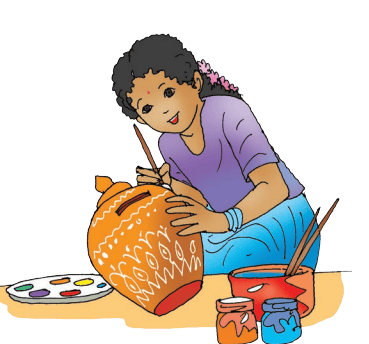
Mini was too young
to use the potter’s
wheel. But she helped
her grandfather make
patterns on the pots
and colour them. Her
favourite clay item was
her piggy bank. She
loved creating beautiful
patterns on it. She then
used it to save money.
In what ways do you help your parents and
grandparents?
activity 2
Make your own clay
(Do this activity with the help of elders)
- Collect soil from wet or muddy places.
- Remove any big pebbles or stones, sand, leaves or parts of plants from it using a net or sieve.
- Put this soil in a flat vessel filled with water.
- After a few days, throw away the water that stays on top.
- Now make dough that you can shape into a ball.
Make any two
things you like with
the clay that you have
made. Put it out in the
sun to dry.
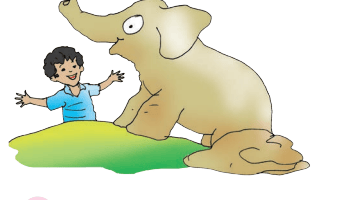
ACTIVITY 3
Arrange the images in the correct order by numbering
them from 1 to 5.
Patterns in Nature
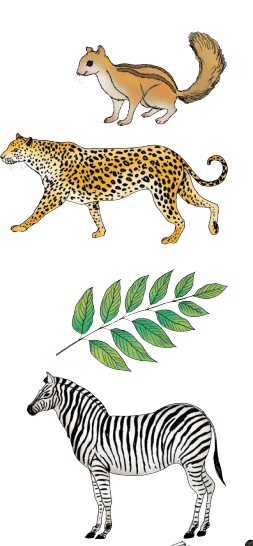
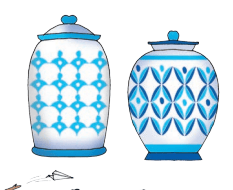
Patterns can be found
everywhere in nature, be it
spots on a leopard or stripes
on a squirrel. Many artists who
paint on pots get ideas for their
art from nature. Patterns can
be formed using shapes and
colours from nature.
You must have seen
patterns on plants and animals
around you. For example, if
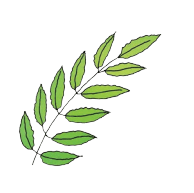
you observe the leaves on the
branches of a tree like the
neem, you will find a pattern.
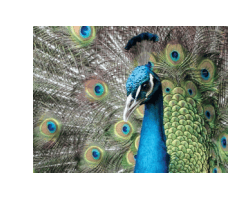
Similarly, patterns can also be
seen on some animals like the
peacock, cat, tiger, butterfly,
fish, etc.
The following are some patterns with repeating shapes and
lines.
Look around for patterns on plants.
Draw any pattern of a leaf in the given
box. Give an example of your own.
Look around for patterns on animals.
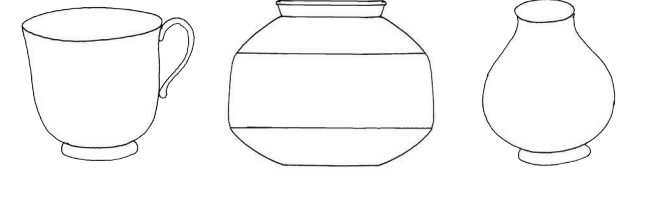
Look around for patterns on things.
Decorate the given objects with patterns.
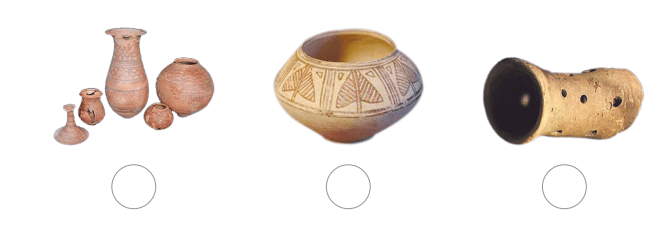
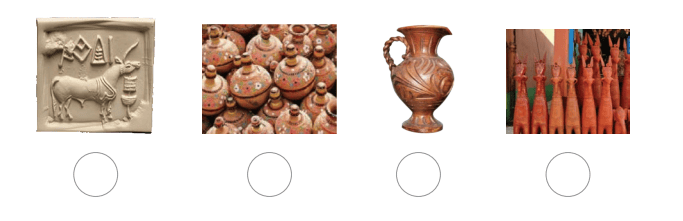
Patterns in Indian Pottery
These are some beautiful forms of pottery from
different parts of India.
Tick the ones that have patterns on them.
By now, you are familiar with pots made of clay. Let
us read about bricks .
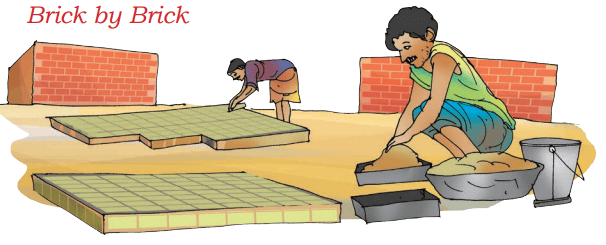
Brick by Brick
Where have you seen bricks?
Have you ever seen how bricks are made?
Bricks are also made of mud just like the pots
prepared by Appooppan.
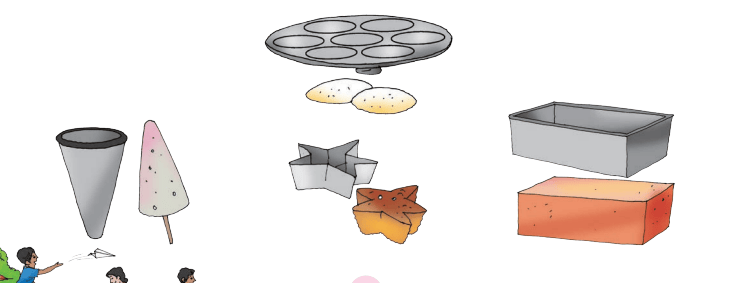
You must have seen idli, cake, dhokla or kulfi
moulds. Similarly, bricks are also prepared in
‘moulds’ to give them their shape. A brick becomes
hard after it is baked in the kiln. Bricks are used for
construction of buildings such as houses, schools,
and hospitals .
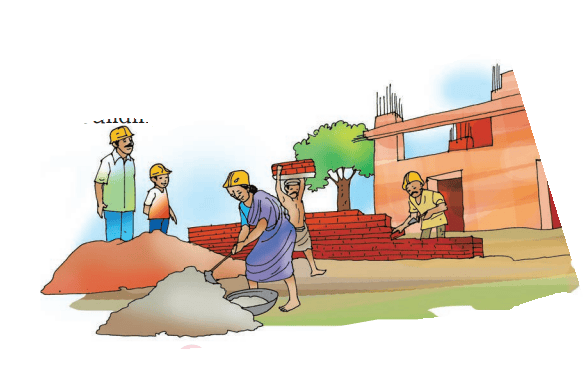
Rohan and his father live in Jaipur. Rohan loves
to see houses being built. He is amazed at how his
father and his co-workers can construct such tall
and beautiful buildings.
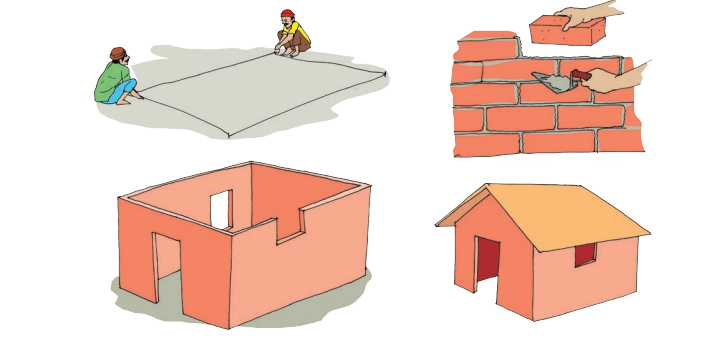
Rohan’s favourite pastime is watching brick
walls getting built. He had been watching one
particular wall being built .
With each passing day, Rohan could see that
brick by brick the wall was completed. After
a few months, Rohan saw that it had
become a big building.
- Are all houses made of bricks?
- What do you think are other materials used to build houses?
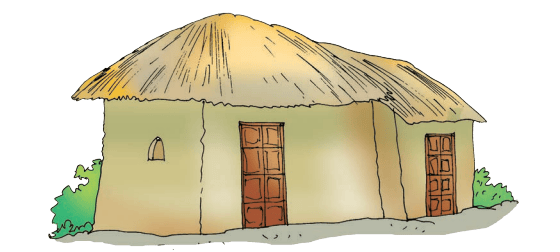
In some warm areas of our country, people make
traditional mud houses to keep them cool inside.
People use natural materials like grass and wood.
Instead of cement, many people use cow dung to
make smooth walls and floors. Cow dung keeps the
heat out and stops insects from entering the house.
WRITE
1. Why do you think mud houses are better for the
environment?
...............................................................................................
...............................................................................................
2. Look around at the houses in your neighbourhood.
What are the houses made of?
.............................................................................
...........................................................................
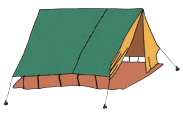
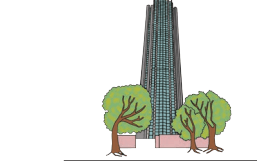
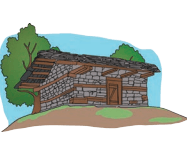
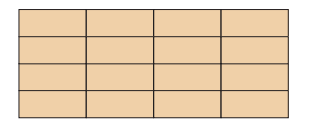
Look at the pictures below. Guess the name of each type of
house. Fill it in the given table below.
Pictures of houses
|
What is this type
of a house called?
|
What are these
houses made of?
|
|
|
|
|
|
|
|
|
|
|
|
|
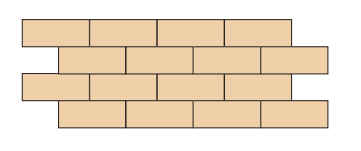
Make a Wall
Make some bricks using
a matchbox mould, small
paper boxes, clay or atta
(dough). Stack them in
these two arrangements
shown in the drawing.
- Which one is sturdier ?
- Which one falls more easily when pushed?
Safety First
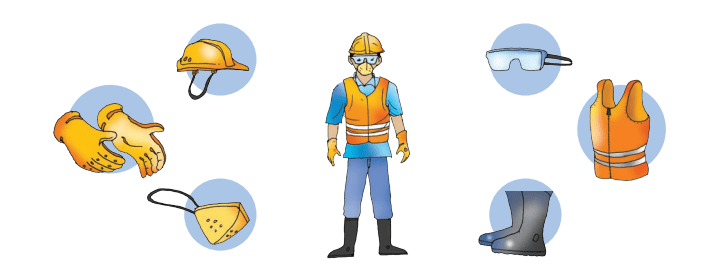
Rohan’s father follows all the important safety
rules while working. For example, he always wears
a helmet with a strap, a safety vest and sturdy
footwear.
DISCUSS
- Are there any safety rules at home?
- Do you have any safety rules at school?
Let us reflect
A. Write
1. What is the process of pot making?
2. How do artists get ideas for their arts?
3. What is a kiln?
4. What are houses made of?
5. You may also try to find videos on YouTube that
show the process of things being made. Write down
the steps in as much detail as possible.
B. Draw and colour any three different kinds of houses.
C. Discuss
1. Why do we have different kinds of houses?
2. Why do people wear helmets at construction sites?
3. What would happen if there were no patterns in nature?
D. Interview
1. Interview someone who makes crafts or toys in your
locality. Share the information in the class.
2. Find out how some commonly used objects like
pencils, erasers, pens and notebooks are made. Ask
your elders.
DO YOU KNOW
Have you seen any statues in your town or city?
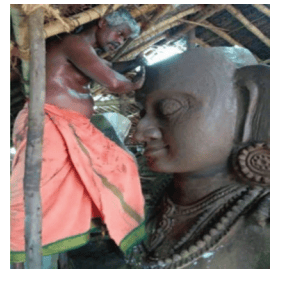
Do you know if these statues are also made of the same
clay that is used to make pots and bricks
Shirin followed the champion’s advice. She
practised harder and started eating a variety of
food items cooked at home. She understood the value of a balanced diet. After a few months, she
could run faster than before. She felt energetic and
healthy. Recently, she won a medal for her school in a running event.
DISCUSS
Why do we need to eat healthy food?
ACTIVITY 2
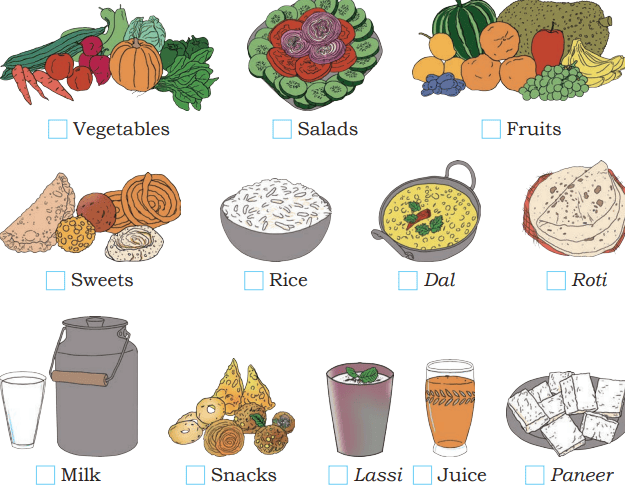
Tick the food items you eat regularly from the pictures
given below.
Which foods above do you think should be part of a balanced diet?
We eat different things
Elders in our family cook different foods during
summer and winter. When it is hot, we love to
eat kulfi or ice-cream and drink tender coconut
water. In winter, we eat warm food, soups and stew
and enjoy hot drinks. We get different fruits and
vegetables in different seasons. We get mangoes
and melons in the summer and plenty of apples in
the winter.
Make a list of fruits and vegetables available
and special food items that are prepared in the
summer and in the winter.
In different parts of our country, people eat a
variety of delicious foods. Are there some dishes
that you have heard about but have not tasted yet?
You, your friends or family members may have
travelled to different places and found different
types of foods eaten there. Someone you know may
be staying in another part of the country and eating
some food items different from what you eat. Find
out the names of these foods and discuss them with
your friends.
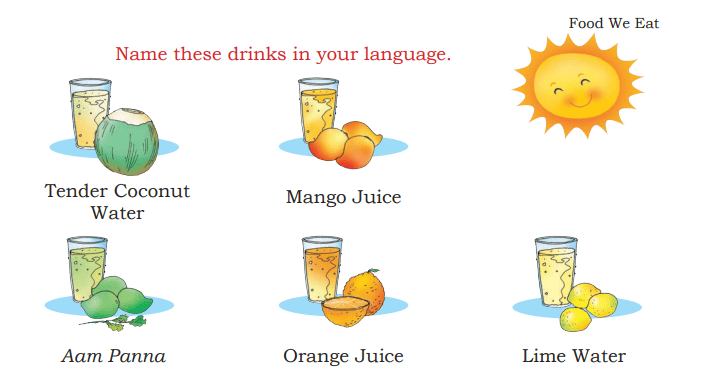
During the summer, the weather is hot. We
sweat a lot. When we sweat, we lose water from our
body. That is why, in the summer we drink more
water, buttermilk, nimbu pani (lime water), aam
panna, sugarcane juice or tender coconut water.
We also sweat when we play or do any physical
activity. We should drink water frequently.
How often do you drink water?
Our body needs a lot of water. We cannot live
without water. That is why we often say, ‘water
is life’.
Where does food come from?
- Do you know which foods are grown in the fields?
Write a few names of such crops.
- Discuss and write down in what form some of these
foods are cooked.
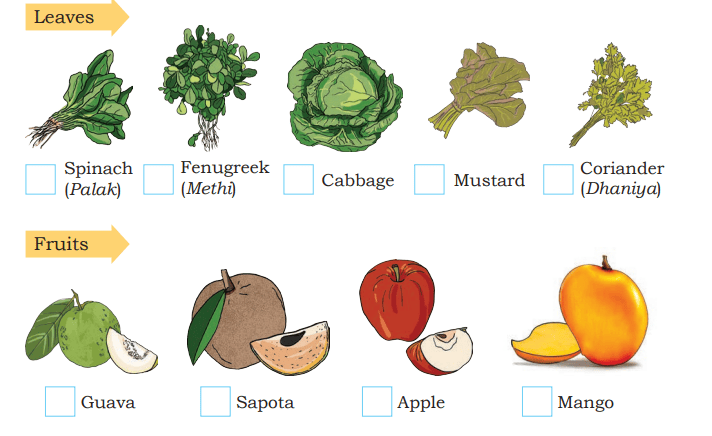
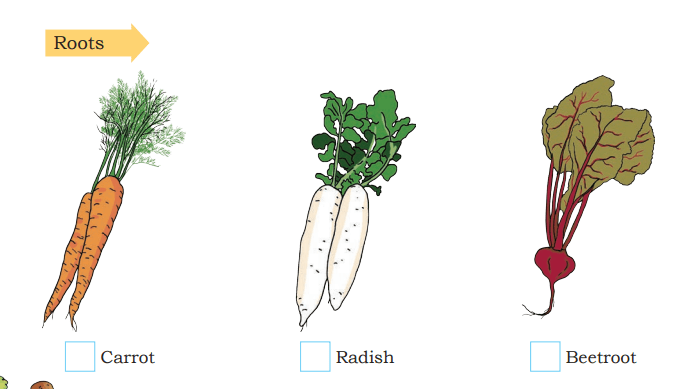
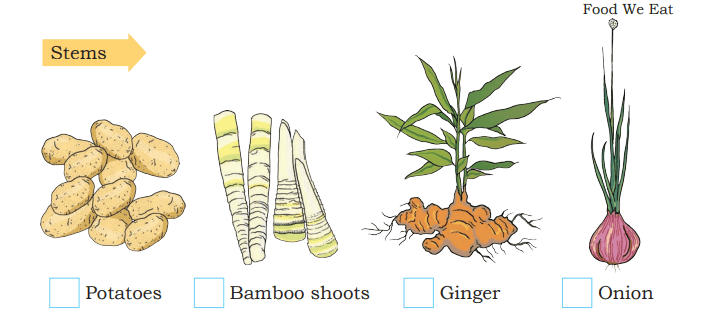
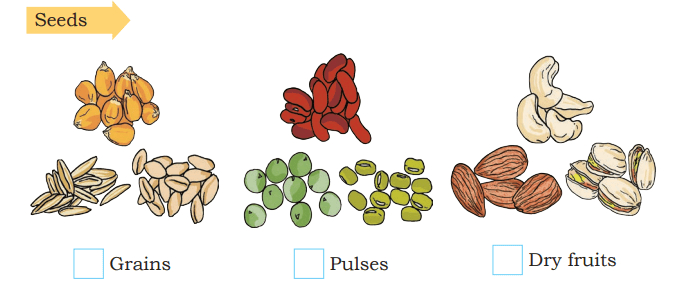
We eat different parts of plants. Some examples are
given below. Put a tick () against the items that you eat.
Some people also eat things that are taken from
animals, such as milk, curd, ghee, cheese, paneer, honey,
eggs and meat .
Puzzle time
Two of our most commonly used ingredients are neither
obtained from plants nor from animals. Name at least one
of these ingredients.
Would you share your food with your friend if your
friend does not bring lunch ?
Let us reflect
A. Discuss
1. Why do we need different kinds of food?
2. Why do we eat seasonal foods?
3. How can you tell if a food is healthy or unhealthy?
4. Why is it important to avoid wasting food? Can you
think of some ways to reduce food waste at home?
B. Write
1. List the fruits and vegetables eaten in your family.
2. Write the recipe of your favourite dish.
3. Write a name of a food item that includes both
plant and animal based ingredients. For example,
lassi includes yogurt/curd which is prepared from
milk (animal based ingredient) and sugar which is
prepared from sugarcane (a plant based ingredient) .
C. Draw
1. Draw three plates or thalis with various food items
in your notebook .
2. In these plates draw and label food items that you
eat in the morning, afternoon and at night.
D. Eating together
Bring any fruit to the class. Prepare a fruit chaat or
salad with the help of your teacher. Share it with your
friends .
E. Think
Imagine you suddenly have a guest visiting your home.
What kind of food would you serve them and why?