National Cleanliness Day
 DISCUSS
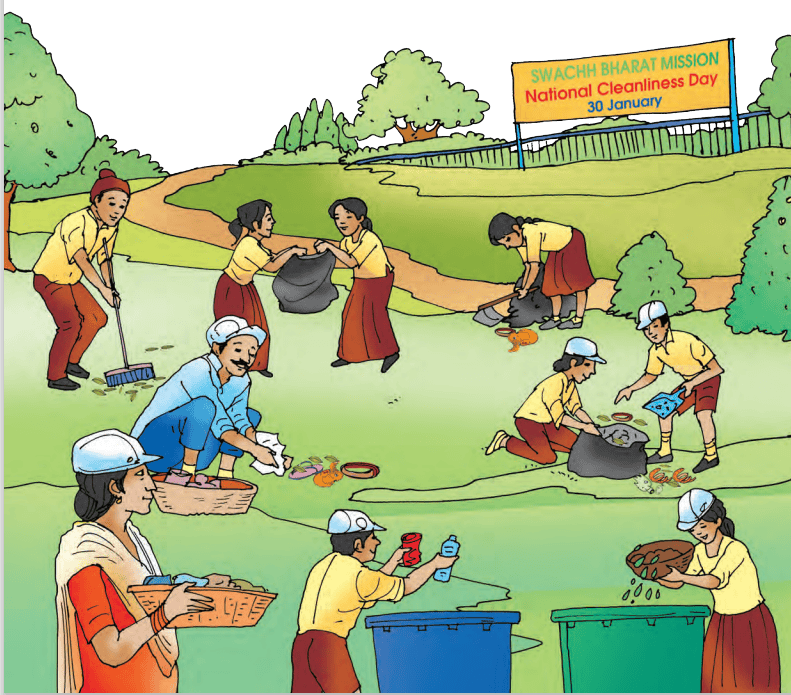
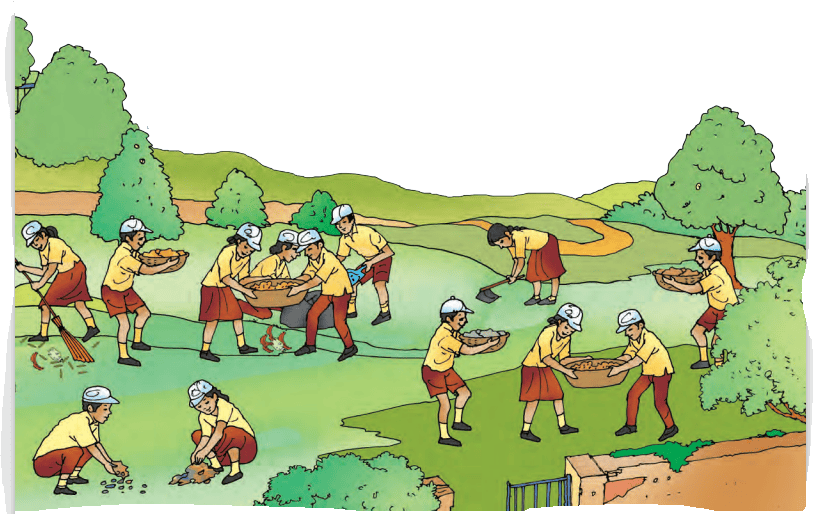
 • What are the children and the teacher doing in thepicture?
• Why are they cleaning the park?
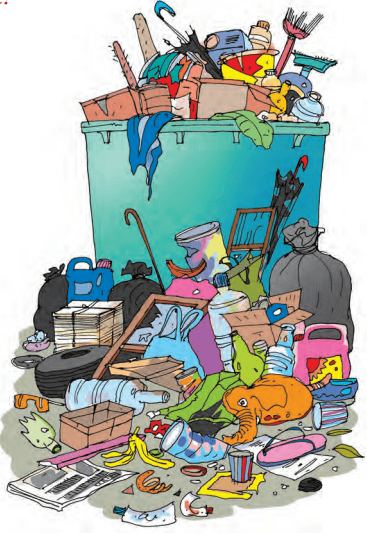
• Have you ever seen piles of waste lying around yourhome or school?
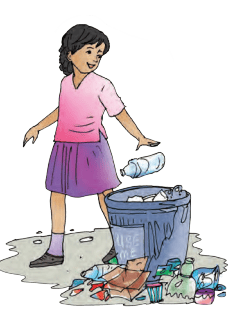
• Have you ever thought about how this waste is created?
 ACTIVITY 1
• Recall different activities that you and your elders doduring the day. How do these activities create waste? Finally, what do we do with the waste?
• Share your findings with your classmates.
Note to the Teacher
Remind children of some examples of common waste-producing
activities, e.g., packaged products, take-away food, plastic and
decorations.
How is waste created?
In our everyday
activities, we create a
lot of waste. We dispose
of old clothes, tins,
bottles, paper, peels of
vegetables and fruits,
plastic wrappers, pencil
shavings, old batteries
and so many other
things.
We try to throw
the waste away but
sometimes we see that
it ends up in garbage
piles. These are the
piles of waste that
you see around your
home, school or in the
neighbourhood.
How do you feel about it?
Do you think we can do something about it?
Managing waste
We need to learn to manage waste. Managing waste
is in our own hands. Each one of us has to learn
to manage waste. We can learn from people and
places that are managing their waste well.
Let us see what they do and how they do it!
Ways to manage waste
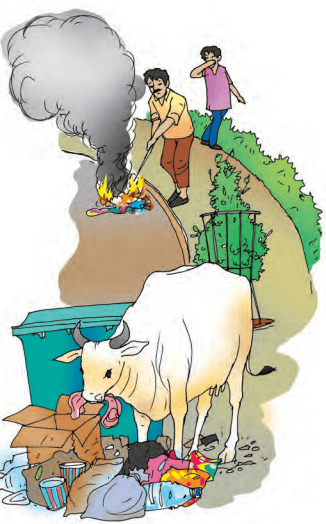
Very often, you will find trash on
the roadside, near houses and
yards. Cows and other animals
can die by eating plastic mixed
with food. Some people burn
plastic which releases harmful
gases.
People start falling ill
because of all the garbage
around them. Puddles and
wastewater can be seen flowing
through the roads. This leads
to an increase in mosquitoes.
This can cause diseases
through their bites. The
wastewater may carry germs
that cause other diseases.
But in some places, people have worked very
hard to clean their houses and surroundings. We
will learn how they do this in the following sections.
ACTIVITY 2
Observe your surroundings.
DISCUSS
• How clean are the surroundings of your school?
• Do you find waste lying in or outside your classrooms
or on the school grounds?
 DRAW
DRAW Draw or paste a picture of a locality. Identify the places
where there is garbage or wastewater or smoke by circling
them in red. Try to find out how the waste gets there.
If you belong to a place that manages its waste
well, ask the elders how it is done. Share your
findings in the class.
Now let us talk about those people who manage
waste well.
Reduce
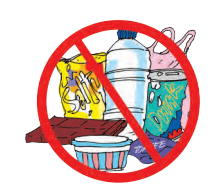
Many people avoid food and
drinks packed in wrappers or
plastic bottles and use cloth
bags in place of plastic bags to
reduce waste.
Have you ever tried doing this?
REDUCE the amount of waste you create is the first
rule they follow.
ACTIVITY 3
Be a part of the Cleanliness Drive by sharing
your old toys and books with those who need them
but cannot afford to buy them.
In what other ways can you help?
The more things we buy, the more
things we throw away and the more
waste gets created. We should try to
buy things that we need and use them
until they are not usable anymore.
We can try to create as little waste
as possible .
REDUCE
The second thing many people do is that they
REUSE things instead of throwing them away. Our
grandparents did not throw away old clothes. They
made quilts from old sarees and bags from old
clothes. Sometimes, they also give old clothes to
those who are in need of clothes.
The use of newspapers or old cloth for gift
wrapping is an eco-friendly practice that reduces
waste and conserves resources. By creatively utilising these items, we not only reduce our waste but also add a personalised touch to our gifts.
ACTIVITY 4
How can you REUSE things to reduce waste?
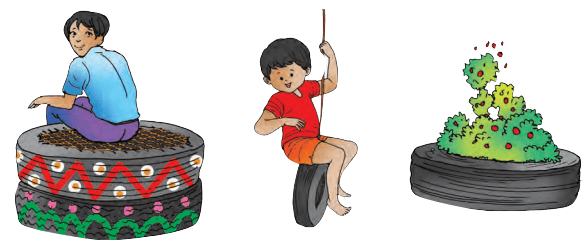
You can reuse paper that has been used on one side for rough work. Instead of buying water bottle, reuse a bottle made of a safe material like steel or copper by refilling it.
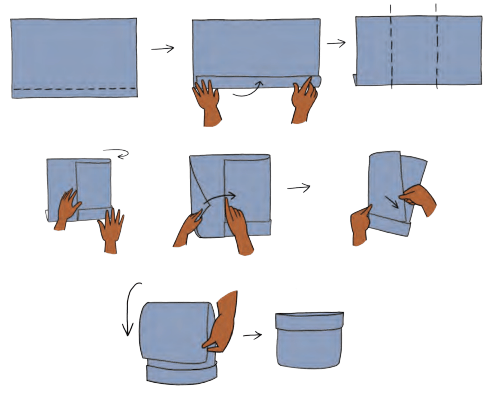
You can make toys or decorative things using old newspapers, old calendars, bottles, boxes, etc . Here is one such idea. All you need is some newspaper. No scissors! No Glue! Just paper!
Steps to make a paper bag
Note to the Teacher
You can make a number of things using newspapers and other waste material. Refer to http://arvindguptatoys.com/ for ideas.
ACTIVITY 5
Create an item using waste material that you can give as
a gift to someone.
Show your gratitude!
You can give this to the person who helps to keep the locality or home clean. Tell them that you have made this so that you can reduce waste and their workload. Do not forget to say a big ‘Thank You’ to them.
A Place of Pride
Many of the villages and cities mentioned below
had garbage littered all around them. But now
they are perhaps the cleanest areas in the country.
How did the people of these places change their
surroundings?
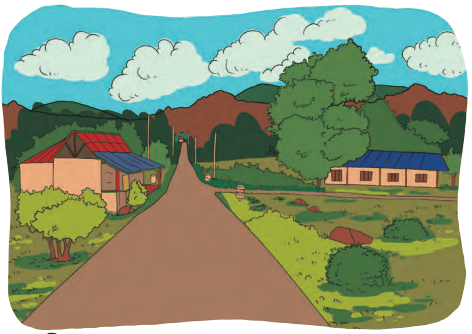
Today, let’s take a tour of a
village called Silluk in Arunachal
Pradesh. As we enter the village,
we notice clean roads. There is
no trash lying on the roadsides
or in corners or open spaces.
The streets, lined with trees, feel
as if we are walking in a garden!
This village has received an
award for managing its waste
in the best possible way. It is
called a ‘zero waste village’.
Like Silluk there are
many more villages in our
country that are a model for
waste management practices.
Chhota Narena was one of
the first villages to become
waste-free.
Several other towns and
cities, such as Indore and
Mysuru, stand out for being
clean cities.
• Ask your elders, if there is any village, town or
city that they know about, which is known for its
cleanliness. You can share the information you
learn from your elders in your class.
• Find out from your parents or teachers about the
Swachh Bharat Mission
Separate different types of waste
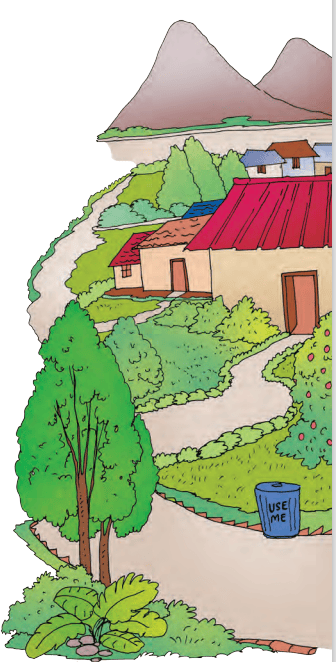
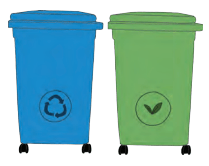
If you look around, you will notice
dustbins of two colours. These
could be placed in your school, local
market, park or at a bus stand,
railway platform or at a mela. Why
are these two kinds of dustbins
used? Let us read on to learn what we put in these
dustbins.
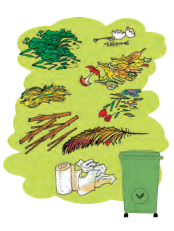
The green dustbin is used
for things like dried leaves or
branches, fruit peels, vegetable
waste or egg shells. These materials
rot easily and mix with the soil.
Waste in the green dustbin can be
added to soil where it gets converted
into compost food for plants and
for tiny animals that live in the soil.
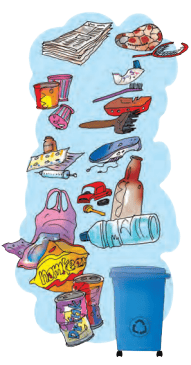
The blue dustbin is used for
things made of metal, glass, plastic
and paper. New objects can be made
from materials like metal, glass,
plastic or paper that have been
thrown away. This is called recycling.
Some villages have bins for each of
these materials separately so that it is
easier to send them to different places
for recycling. Villages and towns that separate and recycle their waste are able to keep
their surroundings clean. They manage waste
effectively.
ACTIVITY 6
Separate Your Waste
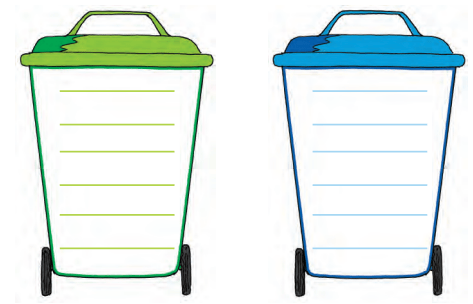
Two dustbins are drawn below. Write the names of the
waste material which will go into each of them.
Plastic bottles, leaves, onion peels, light bulbs, rotten fruit, paper, eggshells, used plastic milk packets, cloth.
Each one of us can help to keep our home, neighbourhood,
school, city and country clean.
Note to the Teacher
You can use this activity to additionally explain that sharp or
potentially harmful things like broken glass, needles, etc., should
be wrapped in cloth and paper so that sanitation workers are not
harmed while handling them..
 WRITE
WRITE • List the things that you can do to keep your homeand classroom clean?
I can keep my room tidy.
______________________________
______________________________
• Make a list of tools you have seen being used inyour school or neighbourhood for cleaning.
• Have you ever observed the tools that are used inyour home for cleaning? Make a list of these tools.
DRAW
Draw pictures of these tools in the box given below.
Keeping our surroundings clean
When you celebrate National Cleanliness Day (30 January) take a pledge to always keep yourself and your surroundings clean. Remember not to create too much waste, manage your waste and dispose off waste properly to build a cleaner and greener world. Our aim needs to be Want not, Waste not.
Let us reflect
A. Discuss
1. How is waste created?
2. How can we manage waste?
B. Write
1. To avoid use of plastic bags and bottles, look at your home and school closely. List all the items of plastic material and write how these could be replaced by other safe materials.
2. Name three things in your school and home that you would put in the green dustbin and three things that you would put in the blue dustbin.
C. Draw in your notebook
1. Make a poster to show a village or town that is managing its waste well. Give your poster a suitable title.
DRAW
D. Enact in pairs
You can be a clean town and your partner a dirty town. Engage in a short conversation talking about how you feel about being the way you are.
E. Think, Reflect and Share
1. Imagine you are having a birthday party at your home. What are some of the ways in which you can try to have a zero-waste birthday party? For this,first think about what kind of waste may be created in the birthday party and how you can avoid or reduce it.
2. Have you seen waste in nature? What do you think happens to the waste of animals, dried leaves and so on in a forest?
Notes
_____________________________________
_____________________________________
_____________________________________
_____________________________________
![img6]](/assets/ncert/2026/ceev112/OEBPS/Images/img6%5D.png)