UNIT 1
Basic Motor Movements
ABOUT THE UNIT
Welcome to the exciting world of
movement!
Do you know that we engage our larger muscle
groups to perform activities like jumping, throwing,
catching, kicking, and hitting? These are also called gross
motor skills which are crucial for day-to-day work, sports,
and physical fitness.
When we involve smaller muscles, particularly those in the
hands and fingers, for precise and delicate tasks, we are using
fine motor skills. These skills involve the use of small muscles to
write, sketch, draw, pick up small objects, grip, and pinch.
Basic motor movements involve both gross and fine motor skills.
Our journey begins with developing five basic motor movements—
throwing, catching, kicking, receiving, and striking. Our
overarching objective is to apply these movements in
many engaging activities, utilising objects of varying sizes,
weights, and textures.
Chapter 1
Introduction
Throwing and
Catching
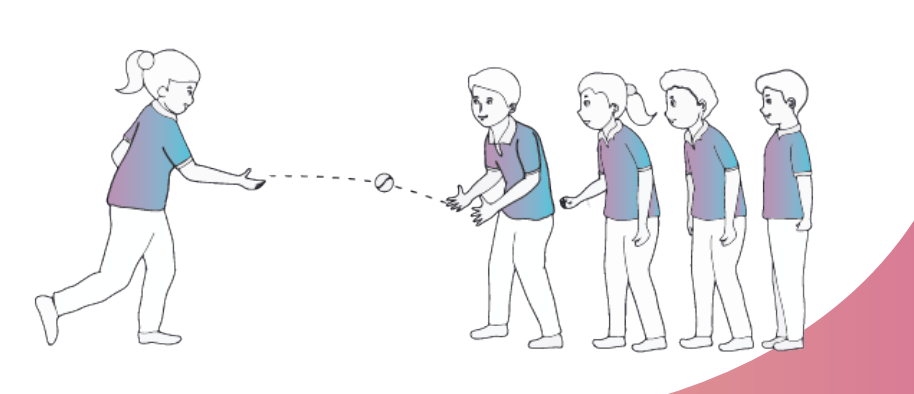
Our first motor movement, throwing, is done with
the help of arms, shoulders, and torso (upper part
of the body, except the head and arms). However,
hands are also used for releasing and catching
an object.
Let us learn how to throw and catch through some
interesting games.
Throwing
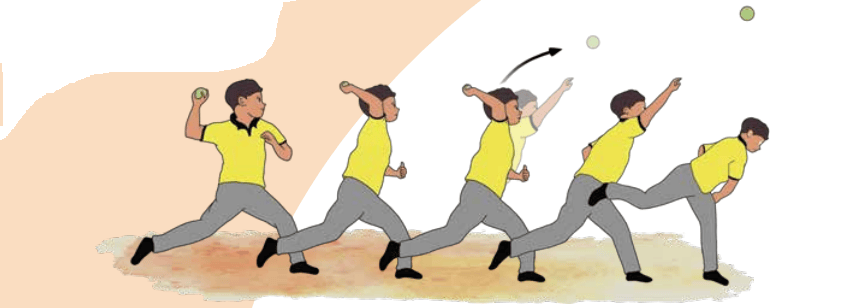
- Hold the ball firmly with spread fingers and stand with slightly bent knees.
- Swing the throwing hand behind and twist the upper body.
- Take one step forward and balance your body. Do not wobble.
- Bring the hand
forward and throw
the ball with force.
Note for the teacher
Ensure the following while children practice throwing—
- Grip: children hold the ball firmly with fingers spread out.
- Stance: the eyes of the player are fixed on the target, legs are
spread to form a stable grounding and knees are slightly bent.
- Throw: the action of twisting the upper body is smooth, taking back the throwing arm and swinging the arm forward to throw the ball.
- Follow through: the player takes one step forward after the release and balance their body.
- Use soft balls for throwing and increase the level of difficulty of activities progressively.
CATCHING
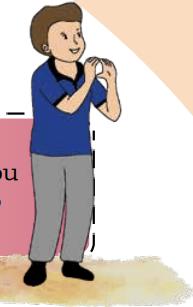
Stand with knees
slightly bent like you
are getting ready to
jump.
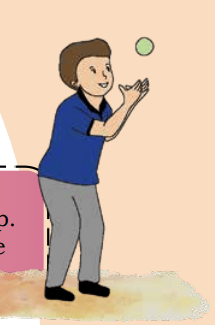
Join your palms
together to form a cup.
Keep your eyes on the
ball.
.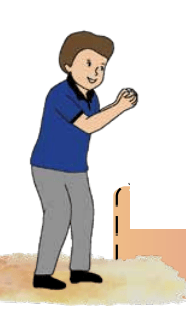
Catch the ball softly at eye level
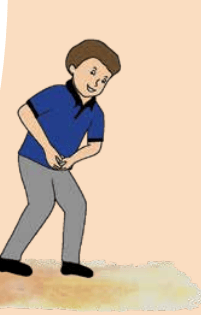
Hold the ball firmly
and pull your elbows
towards the body.
Note for the teacher
Ensure the following while children practice catching—
- Stance: legs are shoulder width apart and knees are not bent too much.
- . Catching: body is behind the line of the ball, palms are joined and pointing upwards, hands are soft and eyes are on the ball.
- . Follow through: knees are bent slightly to minimise the impact and hands are pulled back.
- Use soft balls for catching and increase the level of difficulty of activities progressively.
BM 1
Catch and
Throw
REQUIRED MATERIAL
Balls of different sizes
How to play
Throwing and catching without dropping
the ball is fun. Pair up with a classmate
and practice different types of throwing
and catching as shown below:
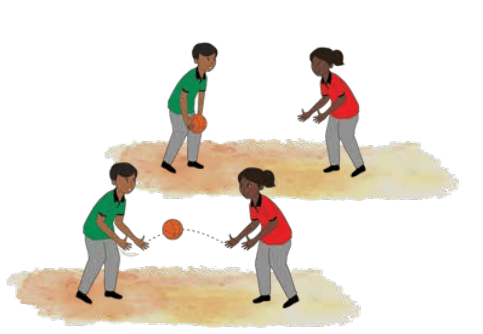
• Underarm throw using both hands.
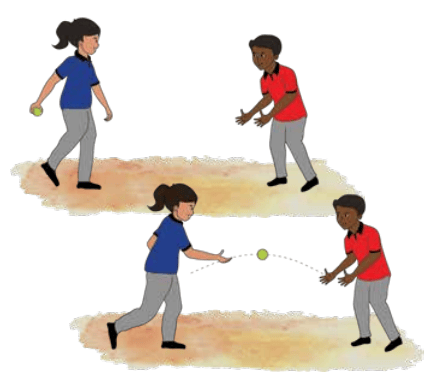
• Underarm throw using one hand.
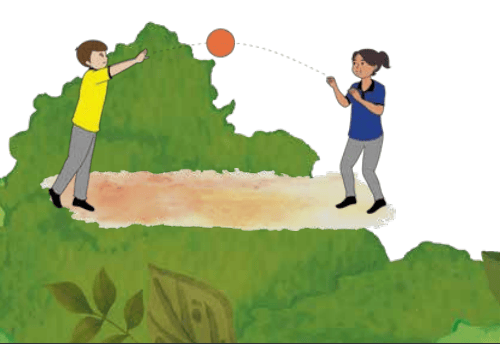
• Overhead throw using both hands.
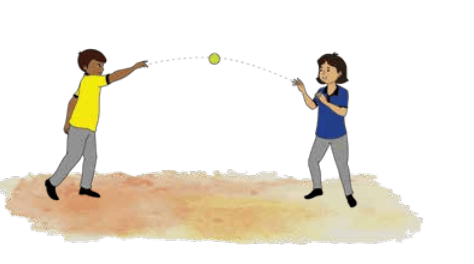
• Overhead throw
using one hand.
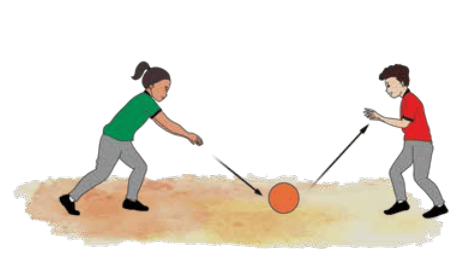
• Pass the ball with one bounce to your partner.
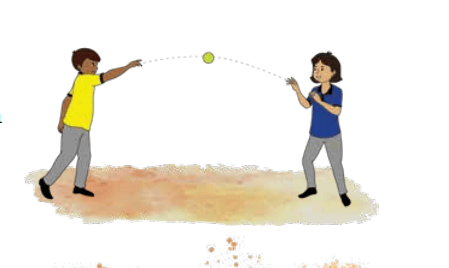
• Throw and catch
the ball with each
other as many times
as possible without
dropping.
Note for the teacher
Purpose
To develop
throwing and
catching ability
along with handeye coordination.
Purpose
To develop
throwing and
catching ability
along with hand-
eye coordination.
|
Variations
• Increase the distance
between the pairs.
• Change objects and
alternate throwing hands
between left and right.
|
Circle Time
Star and Wish
|
BM 2
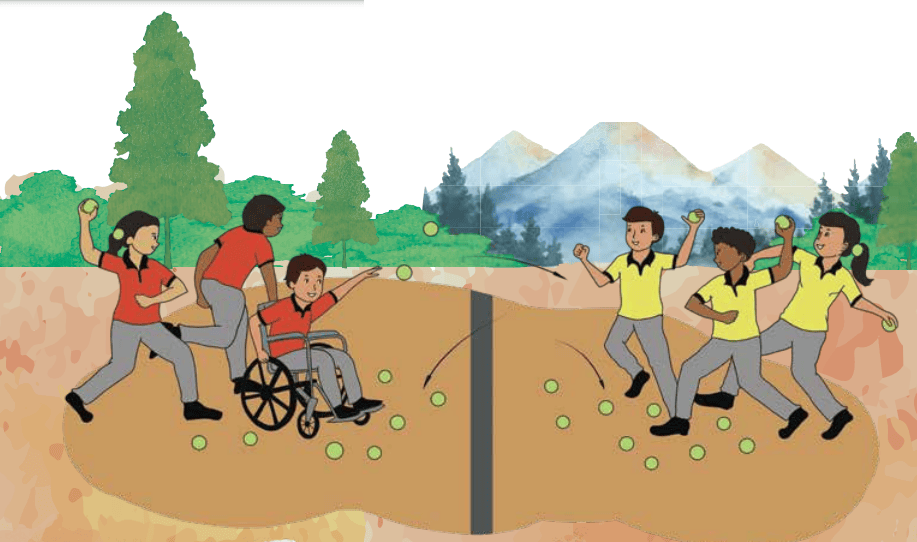
Pick Up and Throw
Required Material
Old newspaper
Marking powder
How to play
- Form two teams and draw a court having a centre line and two equal halves for the game.
- Make paper balls and scatter them equally into each part of the court.
- Start throwing balls to the opponents’ side of the court on the blow of the whistle.
- Stop when the whistle blows again.
- The team having fewer balls on its side wins.
Note for the teacher
Purpose
To develop
picking
up and
throwing
ability
and enhanced
motor skills.
|
Variations
• Switch your throwing
arm after each round.
• Alternate between
overhead and
underarm throwing.
|
Circle Time
How to identify
physical
injury,
e.g., discomfort
in movement,
bruises
and rashes,
cuts,
intense pain, etc.
|
BM 3
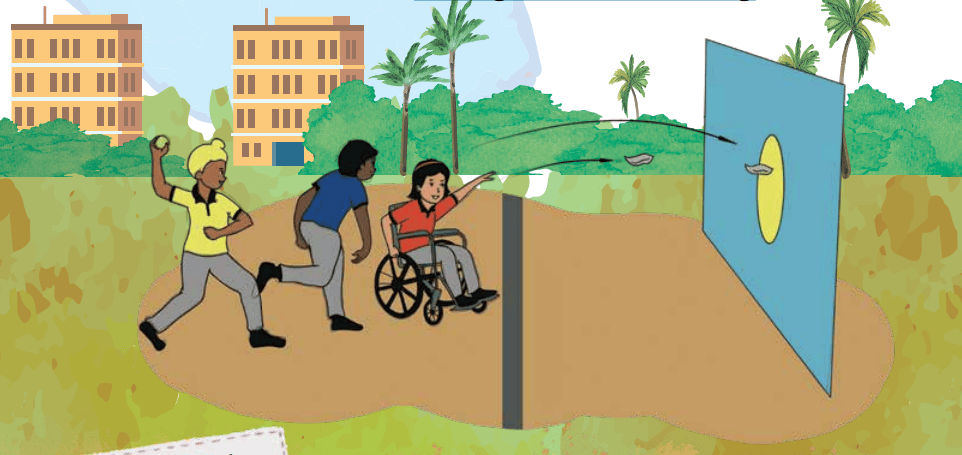
Hit the Target
Required Material
Chalk
Socks ball or soft
sponge ball
How to play
- Form teams of five members each. Take balls made of soft sponge or socks.
- Draw a circle on the wall and a throwing line some distance away from the wall.
- Each team player will try to throw the ball within the circle.
- The team with the maximum number of hits in the circle wins.
- Make sure not to cross the line drawn on the ground while throwing.
Note for the teacher
Purpose
To develop
accuracy in
hitting, balancing
and physical
fitness.
|
Variations
Increase the distance from the wall to enhance the difficulty level. Draw a circle on the ground and play the same game. |
Circle Time
Discuss how to
throw, including
good `stance, grip,
release and focus.
|
BM 4
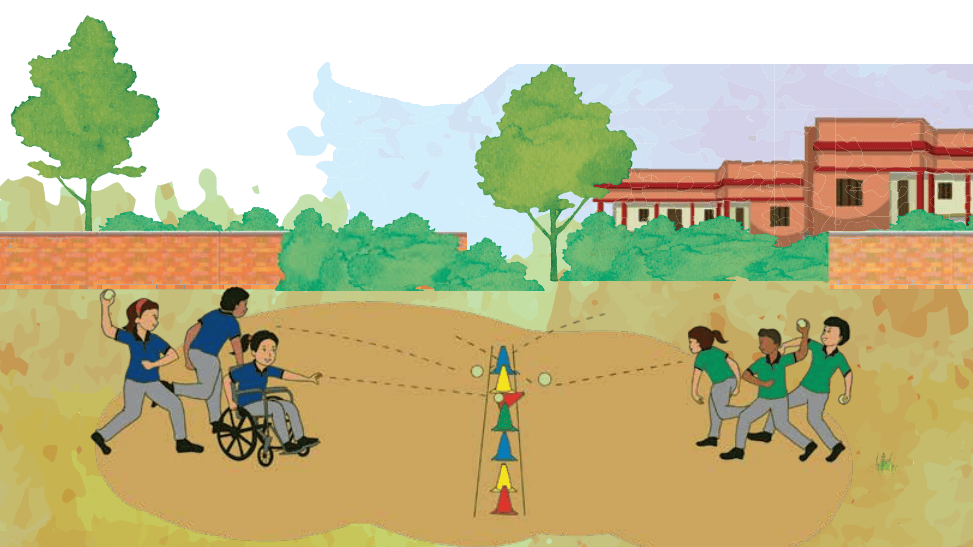
Knock the Cones
Required Material
Soft Ball
Cones or locally
available material
How to play
- Form teams depending on the number of students in the class.
- Place an odd number of cones in the centre and two opposing teams stand equidistant from it.
- Start the game on the blow of a whistle— hit the cones with soft balls.
- The team that knocks down more cones within a fixed time duration wins the game.
Note for the teacher
Purpose
To develop foot
placement,
focus and social
interaction.
|
Variations
• Use the weaker hand to
throw. • Replace cones with cricket
stumps and play the game. |
Circle Time
Share one good
and one bad
feeling about the
game.
|
BM 5
Relay Catching
Required Material
Soft Ball or
Tennis ball
How to play
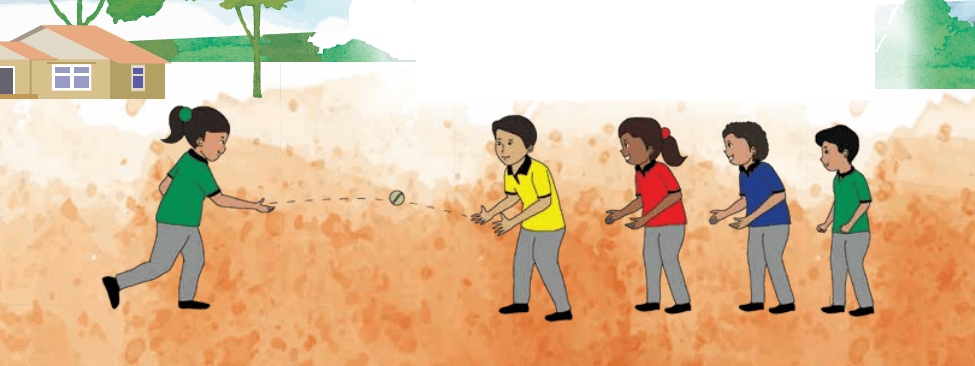
- Form multiple teams with five members each and a designated leader of each team. Members stand in a line and their leader stands at some distance facing the team.
- On the blow of the whistle, all the team leaders throw the ball to the first player in the line.
- The first player will catch the ball, return it to the leader and run to the end of the queue and halt.
- The leader throws the ball to the next player and the game continues.
- After completion of everyone’s turn, the team with the maximum number of catches wins the game.
Note for the teacher
Purpose
Fostering
cognitive aspects,
coordination,
readiness and
eagerness.
|
Variations
• Vary the distance and play. • Change leaders. Use
underarm or overhand
throw to play the game. |
Circle Time
Star and Wish
|
BM 6
Ball on the
Wall
Required Material
Handball or
Tennis ball
How to play
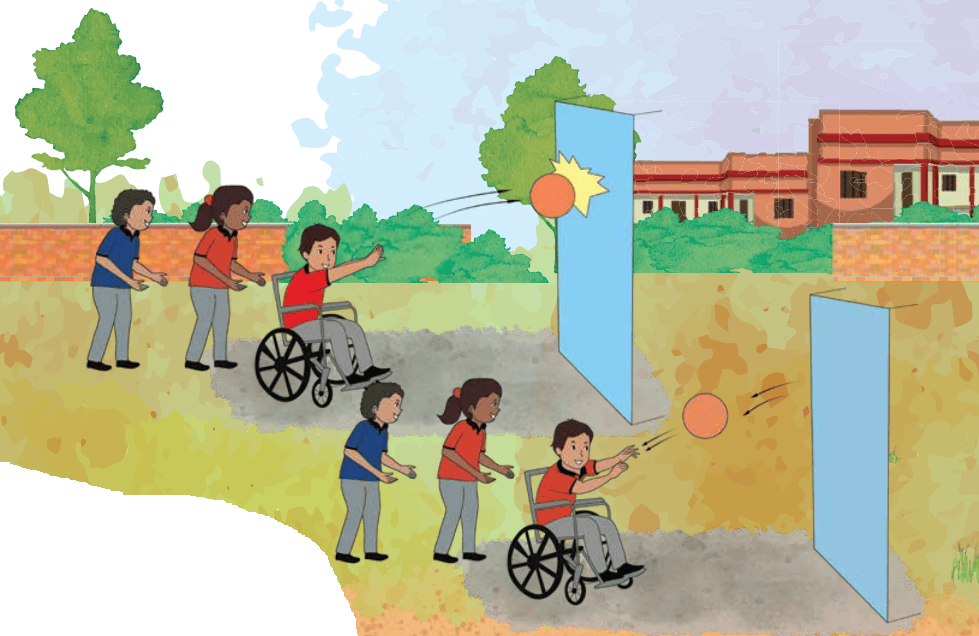
- Form two teams and stand in a queue.
- Each member of the team throws the ball on the wall and catches it on the rebound.
- The team with maximum catches wins.
Note for the teacher
Purpose
Nurturing
confidence and
progression of
coordination along
with eagerness.
|
Variations
• Increase the distance
between the wall and the
player. • Play a variation where the
next player in the queue
catches the ball. |
Circle Time
Discuss what things
one should keep in
mind while catching.
|