Chapter 3
Introduction
Strike the Ball

In cricket or hockey, we strike the ball with a bat
or stick.
In hockey, when someone strikes the ball, the
other player must receive it. Receiving the ball
correctly helps us gain control of the ball.
Let us learn how to strike and receive the ball
to score!
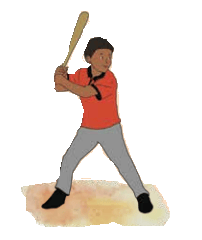
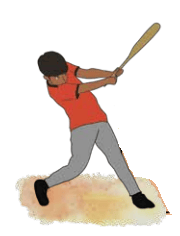
Striking the ball with a bat
- Hold the bat and stand
sidewards as shown in
the picture with knees
slightly bent.
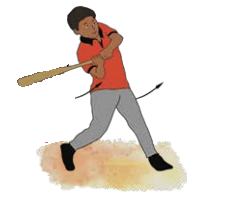
- Step forward and swing the
bat. Rotate shoulders and hips.
- With your hands fully
extended and eyes on the
ball, hit it with the bat.
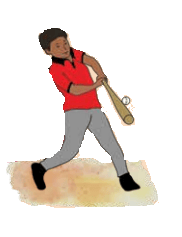
- After hitting, take the
bat in follow-through
along your body as
shown in the picture.
Note for the teacher
Ensure the following while children practice hitting skills—
- . Stance: stands sidewards, legs are shoulder width apart, knees
are slightly bent, and eyes are always on the ball.
- Grip of the bat: the dominant hand is always at the top and
non-dominant hand is placed lower on the handle towards the
end of the bat as shown in the picture above.
- Hitting: steps forward on front foot, swings and rotates hips and
shoulder during hitting, keeps eyes on the ball, extends arms fully
at the contact point and hits.
- Follow through: upper body swings along with the bat which goes around the body, and finishes over the shoulder of the non-dominant hand.
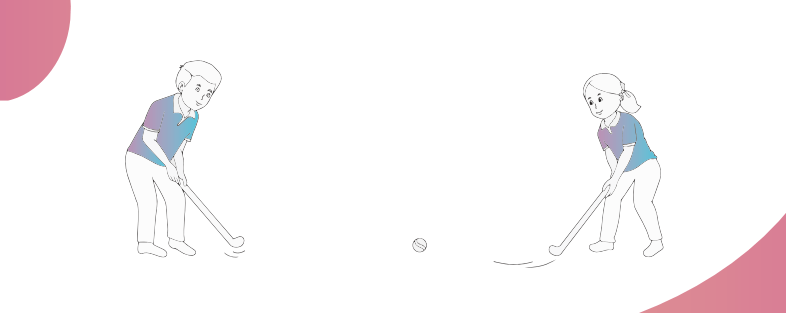
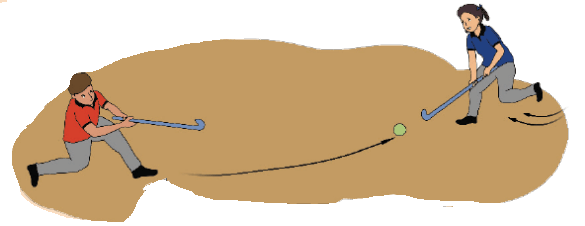
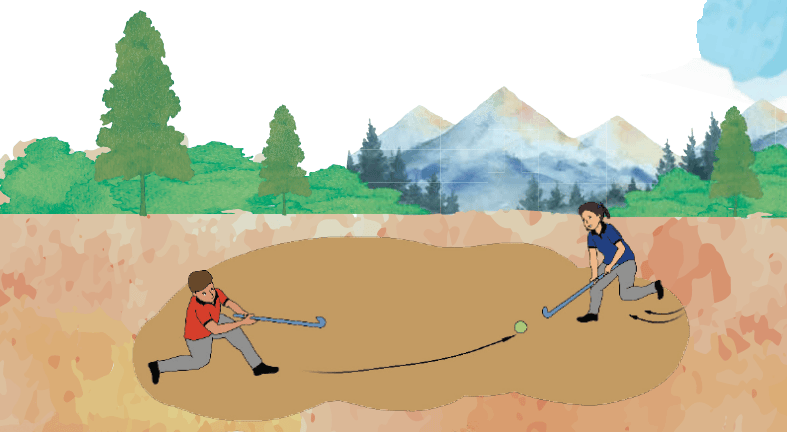
Receiving the ball with a stick
- Stand with knees slightly bent
and with the stick facing the
direction of the incoming ball.
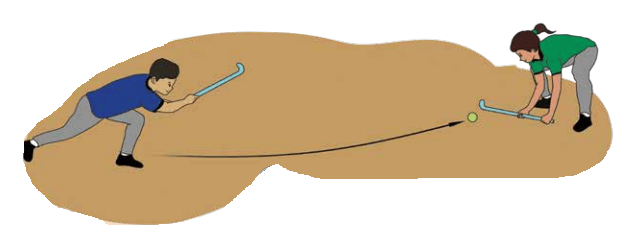
- Bend forward and hold the
stick close to the ground. Keep
the hands gentle on impact.
Note for the teacher
Ensure the following while children practice receiving with stick—
- Stance: keeps feet shoulder width apart, knees slightly bent, and body facing the ball.
- Grip: holds the stick gently with both hands.
- Anticipate: predict the path of the ball, keeps the body low and align the body accordingly.
- Receiving: receive with soft hands and yield slightly to minimise the impact.
BM 13
Strike the
Balloon
Required Material
Balloons
How to play
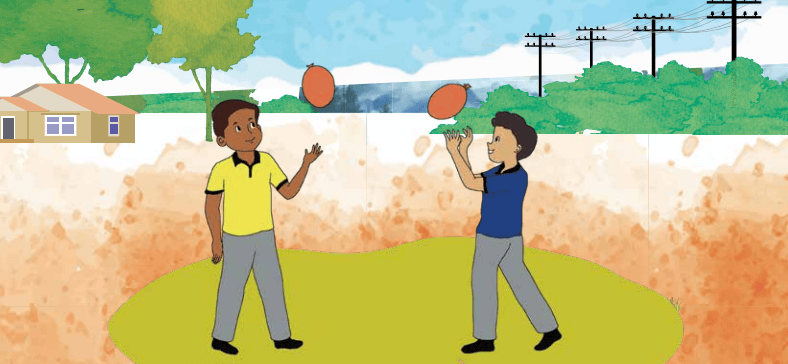
- Take a balloon and find an open space in the playing area.
- On the blow of the whistle throw the balloon in the air and try to strike the balloon with your fingertips. Do not let the balloon touch the ground.
- Now play it in teams with five balloons per team. Teams with the maximum number of balloons in the air, after a set time, wins.
Note for the teacher
Purpose
Improving handeye coordination
and timing. |
Variations
• Make pairs and rally the
balloon back and forth.
• Blow air from mouth
instead of hitting with
fingers.
|
Circle Time
Star and Wish |
|---|
BM 14
Body and
Balloon
Required Material
Balloons
How to play
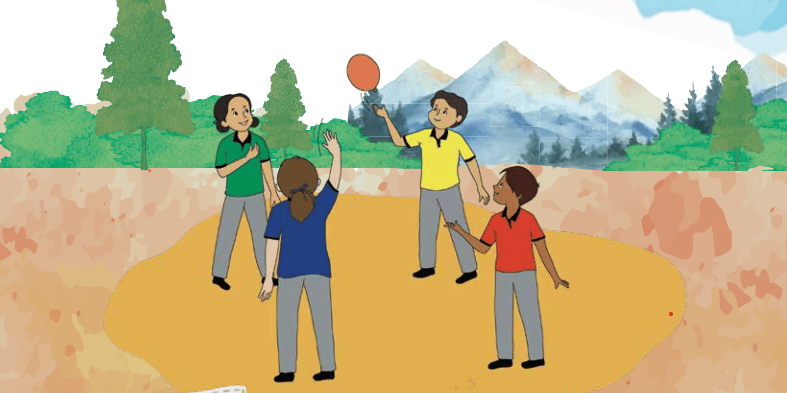
- Take a balloon from the teacher and
find a safe space in the playing area.
- On the blow of the whistle, throw the
balloon in the air and try to strike it
with your palms or fingertips. Do not let
it touch the ground.
- Hit the balloon with your head, shoulder, chest, hand or thigh as called out by teacher.
Note for the teacher
Purpose
Development
of focus and
concentration,
anticipation of
balls trajectory. |
Variations
• Form teams and play.
The team keeping the
balloon in the air the
longest wins.
|
Circle Time
Star and Wish |
|---|
BM 15
Soft Ball
Control
Required Material
Sticks
Soft ball
Cones
How to play
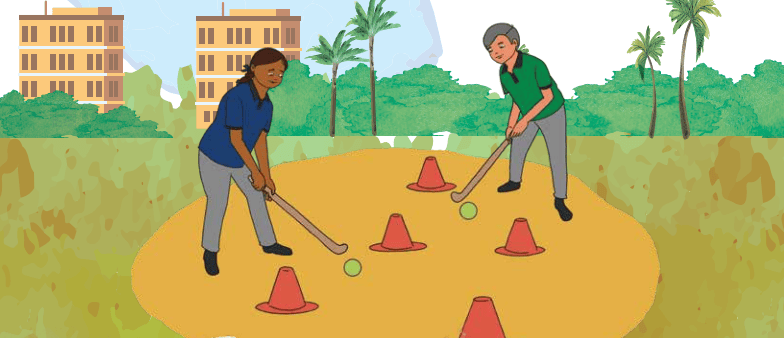
- Place the cones randomly in the playing area.
- Hold the stick with the dominating hand at the top and the other below it.
- Now, on the blow of the whistle start pushing the ball through the gaps between the cones with the help of the stick.
- As you reach the last cone, stop the soft ball, change the direction and start pushing again.
Note for the teacher
Purpose
Development of
sense for shifting
strength and
control on wrist
and fingers. |
Variations
Play with the
directions given by
the teacher such
as go straight, turn
right, turn left, etc.
|
Circle Time
Discuss the benefits of
putting the equipment
back into its place
after play. |
|---|
BM 16
Playing Pass
Required Material
Stick
Soft Ball
How to play
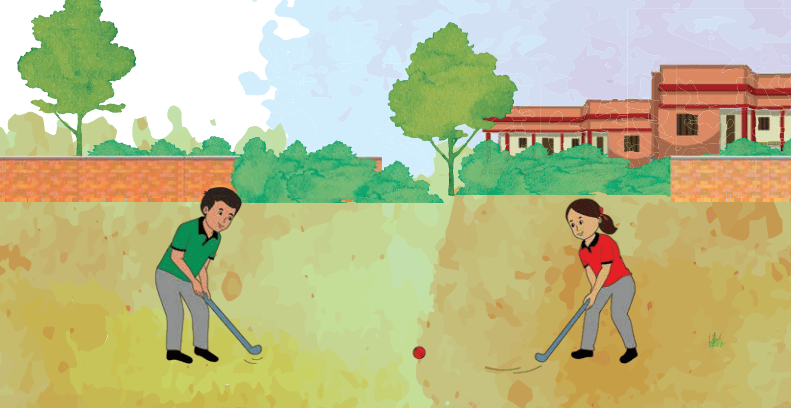
- Find a partner. Stand facing each other
at some distance.
- Now push the ball back and forth gently with the stick towards each other.
- The student who is receiving the ball will stop it first and then pass it back.
- After some practice, increase the speed and force while passing the ball.
Note for the teacher
Purpose
Development of
anticipatory path
of the moving ball,
engagement of
different body parts
in coordination with
each other and with
the stick. |
Variations
• You can use a tennis
racquet or a cricket bat
to pass the ball.
• Use balls of different
sizes.
|
Circle Time
Discuss the role of
muscles in increasing
and decreasing force. |
|---|
BM 17
Scoop in the
Square
Required Material
Stick
Marking powder
Soft balls
How to play
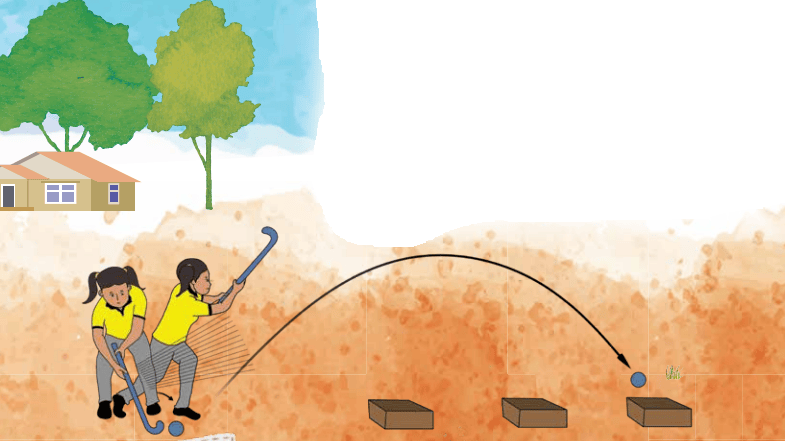
- Make squares at progressive intervals as shown in the picture.
- Divide the class into teams with equal numbers of students in each. Make each team stand in a queue.
- Every team will get a stick and a soft ball, and play as follows.
- The first player of the team scoops the soft ball so that it falls in the first square. In case it falls exactly in the first square, the second player scoops the soft ball aiming at the second square. The players will keep on scooping, aiming for the next square, until the scooped ball misses the desired square.
- The team with the maximum number of
successful scoops in the given time wins
the game.
Note for the teacher
Purpose
After single or
multiple efforts,
succeeding to
scoop the ball in
its desired place
builds confidence. |
Variations
• Use different shapes like
circle, rectangle, etc.
• Make squares next to each
other with no space in
between the squares.
|
Circle Time
Star and Wish |
|---|
BM 18
Receiving with
Stick
Required Material
Stick
Soft balls
How to play
- Select one classmate and form a pair.
- Stand some distance apart from each other.
- The player throwing the ball will make sure to throw it away from the player receiving it so that the receiver has to run while doing so.
- The receiver will receive with the stick
while in motion and send it back to the
partner. Change roles and play.
Note for the teacher
Purpose
Developing mastery
of receiving skills
strengthens
concentration,
reaction time and
positive transfers of
training. |
Variations
• Pass the ball in
random directions
to increase the
difficulty level.
|
Circle Time
Star and Wish |
|---|