UNIT-3
Yoga
ABOUT THE UNIT
Yoga helps us in developing a healthy body and
a healthy mind. Good health, positive behaviour
and mental strength are very important for our
happiness. These things can be achieved through
healthy habits of eating, regular exercise, practicing
personal hygiene, thinking positive and being kind to
others.
In this unit, we will learn about different aspects of
Yoga— how to be a sensitive person, how to care for
others, how to make our body strong and flexible
and how to have a calm mind.
Chapter 6
Yoga for Daily Life

YG 1
Being Happy
We do many things every day, like playing,
gardening, colouring and singing, that make us
happy. Tick all the activities that you enjoy.
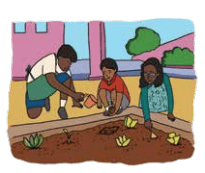
Gardening 
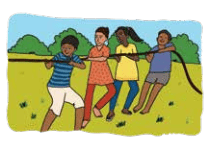
Playing with friends
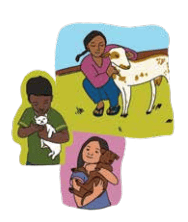
Playing with pets
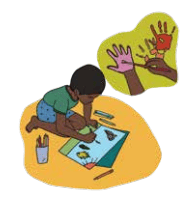
Colouring
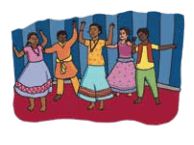
Singing and dancing
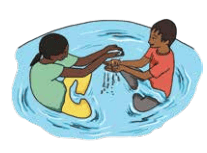
Playing with
water
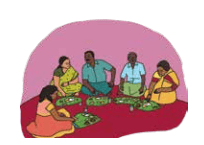
Eating together
at home
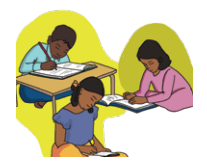
Studying
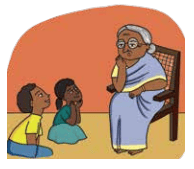
Listening to stories
1. Do you like any other activities? If yes, write them
below.
_______________________
_______________________
2. Share your experiences of happy moments with your
friends in the class.
Being Healthy
Which activities do you think help us to be strong
and healthy? Tick them.
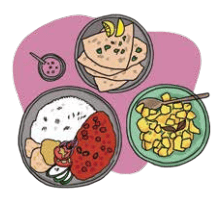
Eating nutritious
home food
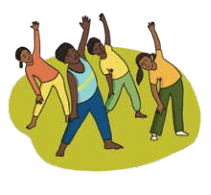
Exercising daily
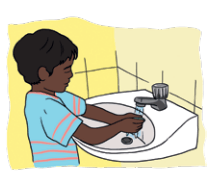
Practicing cleanliness
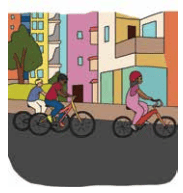
Cycling
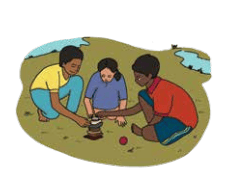
Playing games
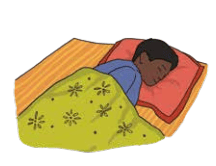
Having a sound sleep
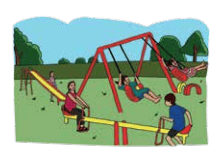
Playing in the park
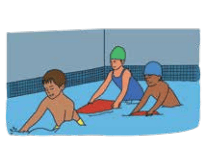
Swimming
1. Discuss in pairs about the importance of each
activity given above.
(a) How do you feel after exercising?
(b) How many hours do you play on the ground
each day?
(c) How many hours do you sleep?
2. What kind of food do you like?
(a) _____________________
(b) _____________________
Being Kind
By being kind to others we make them happy.
Look at the pictures carefully and tick the actions
you do—
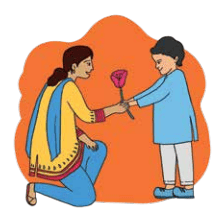
Showing gratitude
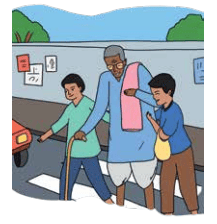
Helping elders
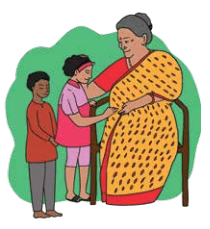
Respecting elders
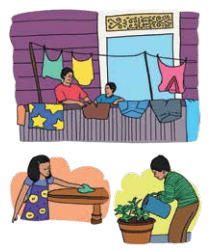
Helping in
household chores
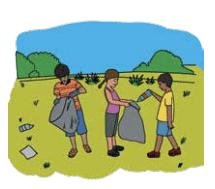
Keeping the
surroundings clean
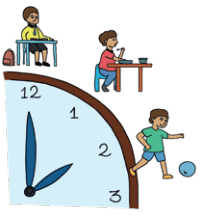
Doing things on time
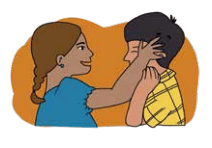
Caring and sharing
with siblings
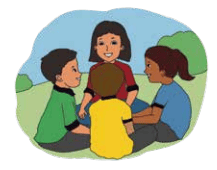
Being friendly
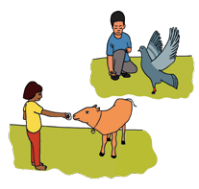
Feeding birds
and animals
1. Discuss with your friends in a small group:
(a) How do you feel when you fight with your friends?
(b) What do you do if your friend falls down and gets
hurt?
(c) What do you do when you see an old person
pulling heavy luggage?
(d) How do you feel when someone says ‘thank you’
to you?
2. How do you want your friends and others to behave
with you? Share your thoughts with the class.
Everyone wants to be happy all the time! Well, now
you have an idea of what activities keep you healthy
and make you happy.
Note for the teacher
Encourage children to share their experiences of being happy,
healthy and kind.
Ashtanga Yoga
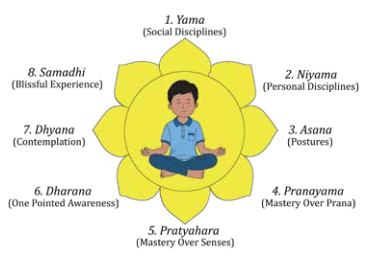
Dear Students, do you know that there is an
amazing way to make us happy, healthy and
a good person? It is called Yoga. It has eight
aspects and hence
it is called Ashtanga
Yoga.
If we practice
these eight aspects
daily, our life can
become joyful. Try
to remember the
names given in the
picture. We shall
learn more and
more about each
of these steps in future classes.
Let us start our
Yoga journey from Yama and Niyama, the first two
steps of Ashtanga Yoga.
YG 2
Yama (Good behaviour)
Yama means friendly rules, like sharing your toys
and being kind to your friends. It is about doing
the right things and being nice to everyone.
There are five Yamas— Ahimsa, Satya, Asteya,
Bramhacharya, and Aparigraha. We shall learn
one Yama in each class. In Class 3, we shall learn
about Ahimsa.
Ahimsa means not to hurt others in what we do,
what we say, or what we think. It is about being kind to all people, animals, birds, and plants.
The following story of Siddhartha gives you one
such example.
Siddhartha's kindness
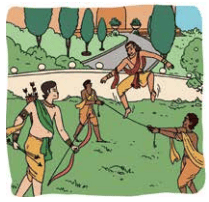
Once upon a time in
the kingdom of Kosala
Desha, there were
two princes. Prince
Siddhartha was known
for his gentle and kind
nature, while his brother,
Prince Devadatta, was
harsh and rude.

One day, while the princes were playing with their
bows and arrows, Devadatta took aim at a graceful
swan flying above them. Before Siddhartha could
react, the arrow struck the swan, causing it great
pain. Acting quickly, Siddhartha, along with some
guards, rushed to help the wounded bird. They
attended to its injuries with care.
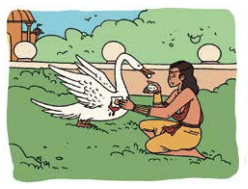
Siddhartha continued to look after the swan for
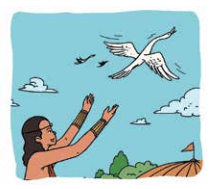
several days until it had fully recovered. Finally, he
released the healed swan, allowing it to return to
its family.
Activity
1. Discuss with your friends in small groups:
(a) Which character did you like in the story—
Prince Siddhartha or Prince Devadatta?
(b) If you were Siddhartha what would you have
done?
(c) Share with your friends a few occasions when
you helped others.
2. Tell this story at home and discuss the following
things:
(a) When someone hurts us, how do we feel?
(b) If we have hurt anyone in the past, what
should we do now?
(c) How can we be kind to people, animals, birds,
and plants around us?
We feel happy when others show kindness and
compassion to us. This is Ahimsa! Similarly, we
should also be kind and compassionate to others
including to nature, animals, birds and insects.
Hope you all enjoyed the story of Siddhartha. Now
let us understand the concept of Shaucha through
a story.
Note for the teacher
Narrate local stories about Ahimsa. Ask children if they have had
similar experiences of showing kindness towards animals, birds,
insects or plants.
YG 4
Niyama (Good Habits)
We need to do certain things everyday to form good
habits. Niyamas are our daily routine activities,
such as brushing teeth, doing homework, daily
prayers, etc. There are five Niyamas— Shaucha,
Santosha, Tapas, Svadhyaya, Ishvarapranidhana.
We shall learn one Niyama in each Class. In Class 3,
we shall learn about Shaucha.
Shaucha means keeping our body, mind and
surroundings clean. We must take a shower, brush
our teeth, wash our hands, etc. daily to keep our
body clean. We should also keep our mind clean by
not getting angry, speaking kind words and being
polite to all.
The “Laddoos in the Fair” story will help you to
understand the importance of cleanliness. Let’s
read it.
Do you Know?
Good habits are like a river making marks on the
stone. We have to practice them everyday for many
years. Once they are formed, they stay with us for
our whole lives.
Laddoos in the fair
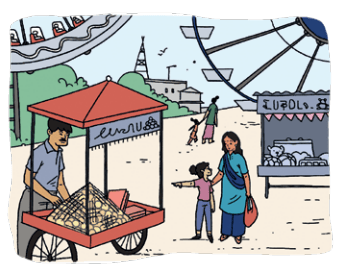
Asha was a little girl who
loved to eat. She was very
fond of sweets and
snacks. One day, her
mother took Asha to a
village fair. There were
many shops selling toys
and sweets. Asha saw her
favourite laddoos and
asked her mother to buy
one for her.
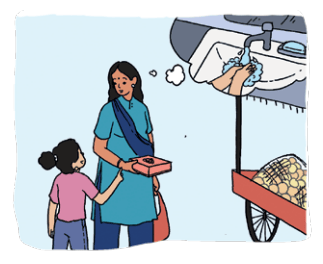
Her mother got some
laddoos and told Asha to eat
them when they go home.
“Do not forget to wash your
hands before eating because
you have touched so many
objects here in the fair”, said
her mother.
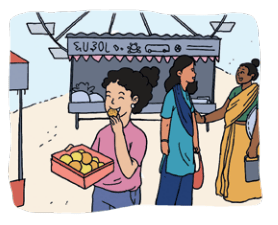
Asha could not resist eating a
laddoo; she took one laddoo and
ate it when her mother was busy
talking to her friend.
Note for the teacher
Narrate stories about Shaucha (personal hygiene and
cleanliness). Discuss the importance of cleanliness at home and
in school with an emphasis on what children can do to keep
themselves and their surroundings clean.
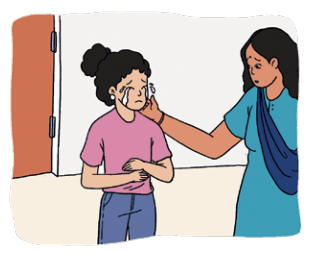
The next day, Asha
developed a stomach ache
and her mother had to
take her to a doctor and
get some medicine.
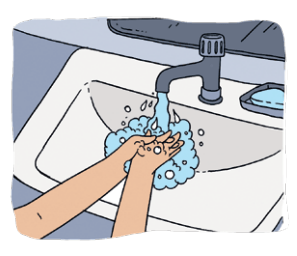
Asha remembered the
words of her mother— she
should have come home,
washed her hands and
then eaten the laddoo.
Activity
When do you wash your hands? Tick the relevant sentences
below:
1. Before and after eating food.
2. After playing in the mud.
3. After using toilet.
4. After touching one's feet.
Trace your own hand and write a slogan on it related to
cleanliness like “Clean hands are safe hands”.
Clean hands are safe hands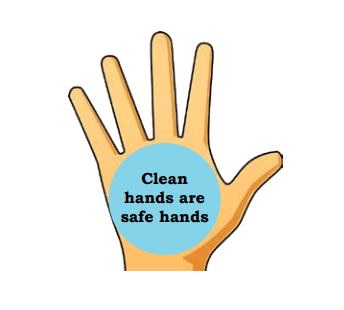
YG 5
Tick the activities that you do every day.
1. Brushing teeth in the morning and at night.
2. Taking a shower.
3. Talking to friends with kind words.
4. Washing hands before and after eating.
5. Listening to stories.
6. Not fighting with siblings.
7. Sharing things happily with others.
8. Watching the Sun rise.
9. Covering your mouth with your hands when
you cough.
10. Throwing waste in the dustbin only.
Good habits
| How to eat ? | How to sleep ? |
|---|---|
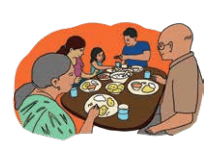 Eat together with the family. |
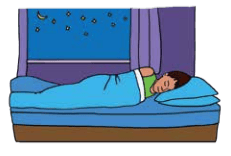 Read or listen to a good story and sleep early. |
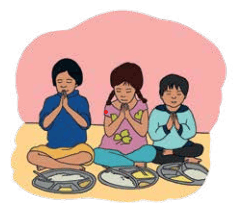 Appreciate your food and eat happily what is served in the plate. |
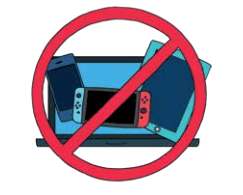 Do not watch TV or use mobile phones before sleeping. . |
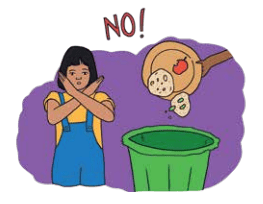 Do not waste food. |
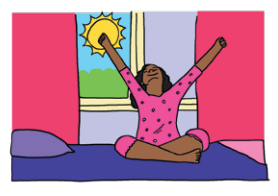 Get up early before sunrise. . |