Chapter 7
Yogic Practices
(Yoga Sadhana)

YG 6
Introduction
So far, we have learned about Yama and Niyama
which helps us to be kind and develop good habits.
Now, let us continue our Yogic journey to learn about
Asana which is the third step of Ashtanga Yoga.
Have you observed animals, birds, trees and
mountains? It is fun to mimic them. Let us try some
of the poses mentioned below.
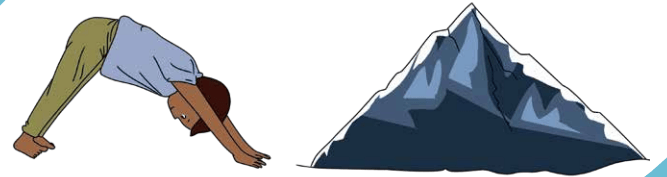
Pretend to be a mountain, and stretch your back with
your hands and legs down.
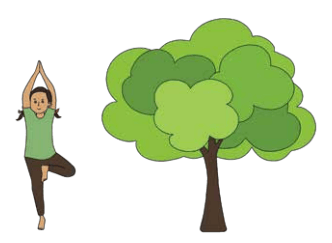 Now, let’s be tall and strong
like a tree. Stand on one leg
and raise your arms like its
branches.
Now, let’s be tall and strong
like a tree. Stand on one leg
and raise your arms like its
branches.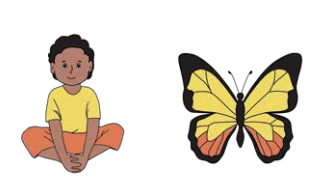 Pretend to be a butterfly and flap
your legs just like its wings.
Pretend to be a butterfly and flap
your legs just like its wings.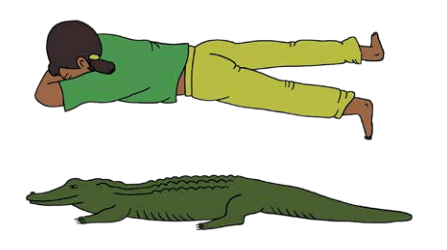 Finally, relax like a crocodile.
Did you enjoy these poses? Which one did you like
the most?
Yoga has many Asanas which are similar to what
you practiced above. These energise the body and
help us to be healthy.
YG 7
Preparatory Practices
Let us get ready to move and feel energised for our
Yoga Asana practice! First, let us have some fun.
Walk on your heels.
Notice how it feels different from regular walking.
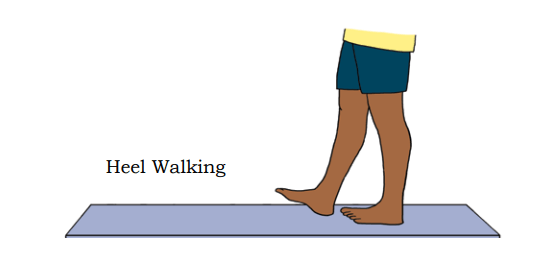 Heel Walking
Now, let us be like frogs and jump around!
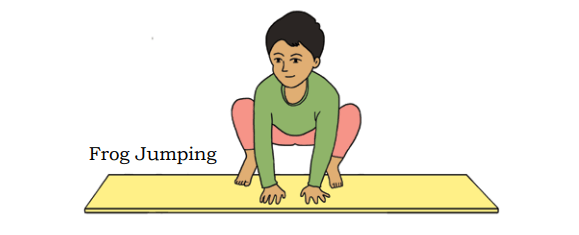 Frog Jumping
Note for the teacher
Some more loosening practices such as— toe walking, walking on
the inner side and outer side of the foot, simple jumping, forward
and backward bending, neck movements, etc. can be taught to
the children.
YG 8
Basic Postures
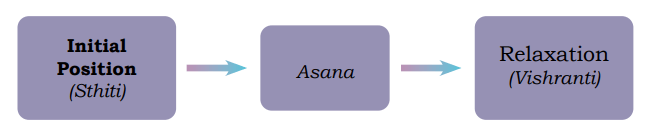
Broadly, there are four types of Asanas that are
classified on the basis of one's position, namely,
Standing, Sitting, Prone and Supine. Each type
of Asana has an initial posture (Sthiti) and a final
posture of relaxation (Vishranti).
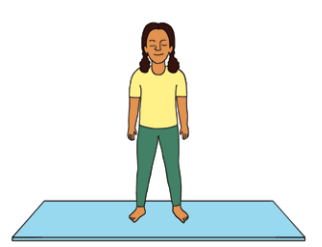
1. Standing
Sthiti — Tadasana
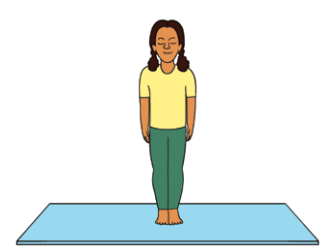
Vishranti — Shithila Tadasana
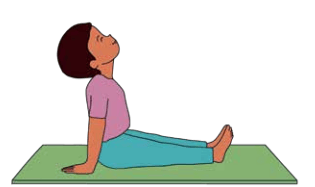
2. Sitting
Sthiti — Dandasana
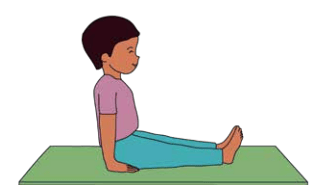
Vishranti — Shithila Dandasana
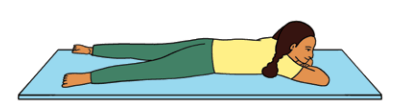
3. Prone
Sthiti — Lying down on the abdomen
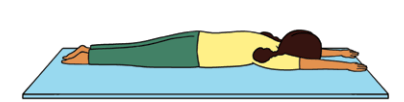
Vishranti — Makarasana
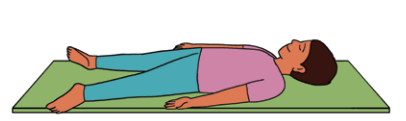
4. Supine
Sthiti — Lying down on the back
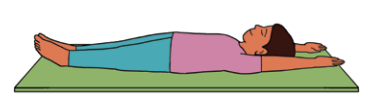
Vishranti — Shavasana
Note for the teacher
Encourage children to keep the spine erect and explain the
importance of the same. Help and ensure that all children perfect
the Sthiti and Vishranti for all four positions. In Vishranti, children
should completely relax, and no muscles should be tight.
YG 9
Asana Practice
Initial
Position
(Sthiti)
Asana
Relaxation (Vishranti)
In Class 3 we shall perform the following
asanas under the guidance of the teacher—
1. Vrikshasana
2. Sukhasana
3. Vajrasana
4. Bhujangasana
5. Pavanamuktasana
Perform each asana according to the steps provided.
1. Vrikshasana
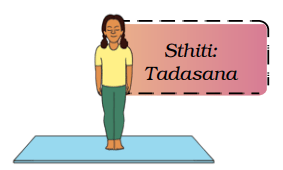
Sthiti:
Tadasana
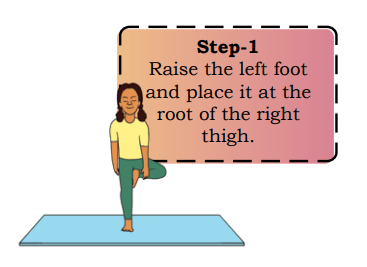
Step-1
Raise the left foot
and place it at the
root of the right
thigh.
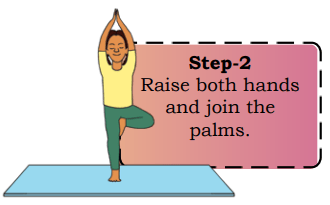
Step-2
Raise both hands
and join the
palms.
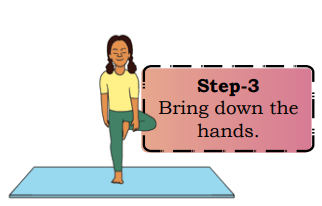
Step-3
Bring down the
hands.
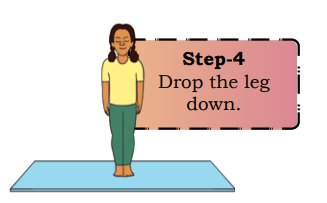
Step-4
Drop the leg
down.
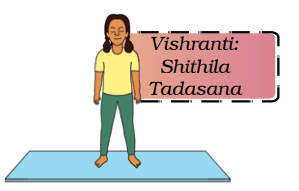
Vishranti:
Shithila
Tadasana
Repeat the asana but this time with the right foot placed at
the root of the left thigh.
Note for the teacher
As the students reach Step 2, advise them to focus on a point to
maintain balance for a few seconds.
2. Sukhasana
Sthiti:
Dandasana
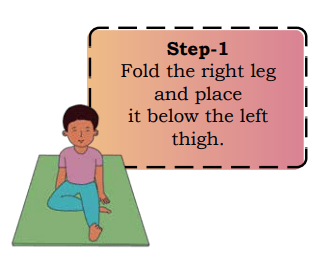
Step-1
Fold the right leg
and place
it below the left
thigh.
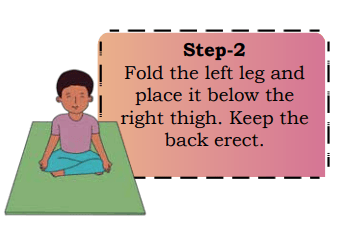
Step-2
Fold the left leg and
place it below the
right thigh. Keep the
back erect.
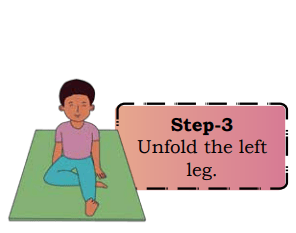
Step-3
Unfold the left
leg.
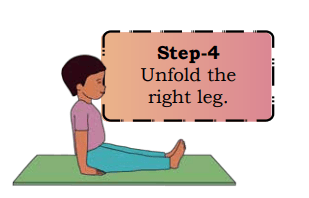
Step-4
Unfold the
right leg.
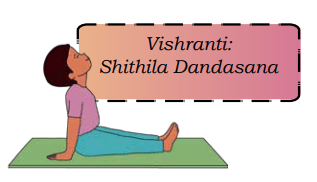
Vishranti:
Shithila Dandasana
3. Vajrasana
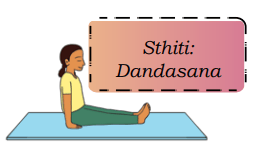
Sthiti:
Dandasana
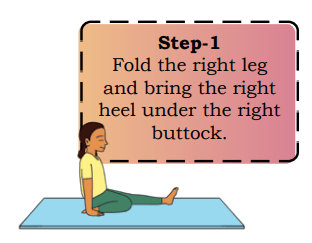
Step-1
Fold the right leg
and bring the right
heel under the right
buttock.
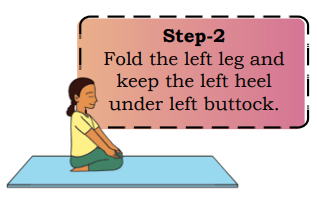
Step-2
Fold the left leg and
keep the left heel
under left buttock.
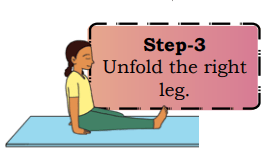
Step-3
Unfold the right
leg.
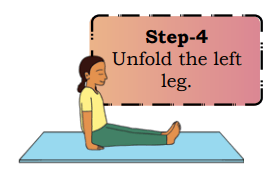
Step-4
Unfold the left
leg.
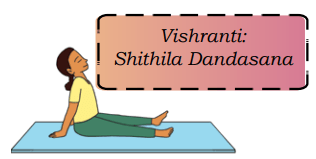
Vishranti:
Shithila Dandasana
Note for the teacher
It is important to keep the spinal cord straight. Encourage
children to keep the back straight and practice this even when
they are sitting in the classroom and also at home.
4. Bhujangasana
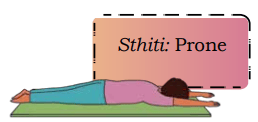
Sthiti: Prone
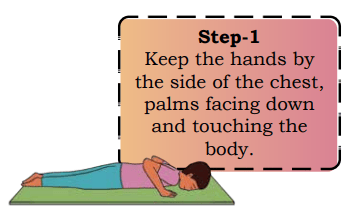
Step-1
Keep the hands by
the side of the chest,
palms facing down
and touching the
body.
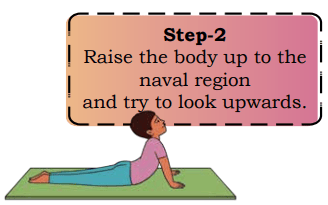
Step-2
Raise the body up to the
naval region
and try to look upwards.
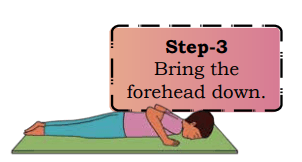
Step-3
Bring the
forehead down.
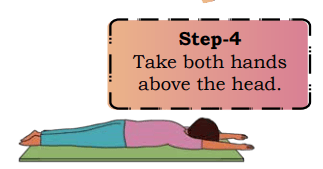
Step-4
Take both hands
above the head.
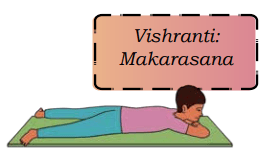
Vishranti:
Makarasana
Note for the teacher
Help children rise backwards while keeping the thighs on the
ground, ensuring the movements are slow and smooth. Elbows
should touch the body as they rise up, while keeping the heels
together and expanding the chest.
5. Pavanamuktasana
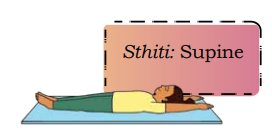
Sthiti: Supine
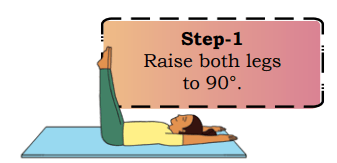
Step-1
Raise both legs
to 90°.
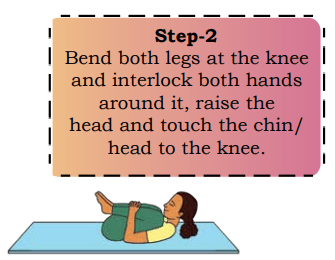
Step-2
Bend both legs at the knee
and interlock both hands
around it, raise the
head and touch the chin/
head to the knee.
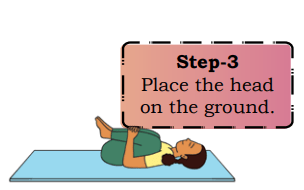
Step-3
Place the head
on the ground.
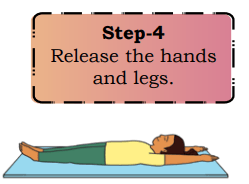
Step-4
Release the hands
and legs.
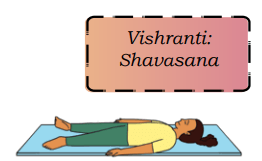
Vishranti:
Shavasana
YG 10
Breathing Practices
Breath awareness
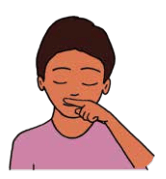
Keep the index finger below your nose. Do you
feel your breath?
Do you feel the breathing in and out?
Do you breathe from the left or the right nostril
or both?
Being aware of our breath is a preparation for
Pranayama, the fourth aspect of Ashtanga Yoga.
Breath awareness using Mudra
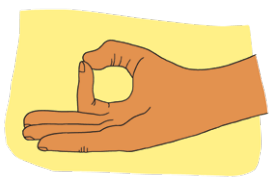
1. Touch the tip of the right
index finger to the tip of the
right thumb and place it on
your thighs as shown in
the picture. Do the same
with your left hand. This
arrangement of fingers and
palm is called Chin-Mudra.
2. Now, place the right palm on the abdomen and
retain the left hand in Chin-Mudra.
3. Observe the movement of the abdomen as it
moves up and down with every breath.
YG 11
“Om” Chanting
To activate internal systems in the body, and to
feel the calmness of the mind, we chant “Om”. It
consists of three sounds – A, U, M.
Now, let’s practice this…
Chanting of A, U, M
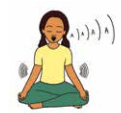
1. Inhale deeply and while exhaling chant
A-kara.
2. Observe vibrations in the lower
abdomen region.
3. Inhale deeply and while exhaling chant
U-kara.
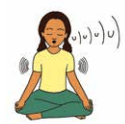
4. Observe vibrations in the chest region.
5. Again, inhale deeply and while
exhaling chant Ma-kara.
6. Observe vibrations in the head region.
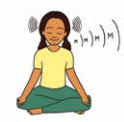
Repeat the practice for five rounds.
Did you experience the vibrations in different
regions of your body?
Note for the teacher
Encourage the children to keep the back erect, press fingers
gently for Chin-Mudra and be aware of their breathing. Discuss
the experience after the practice.
YG 3
Eye Exercises
What should we do to keep our eyes healthy?
Let us do these simple eye exercises regularly.
1. Relax your eyes with Palming.
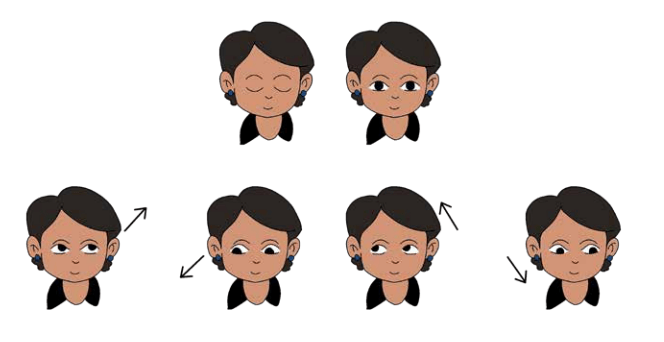
2. Movement of eyeballs from right to left.
3. Movement of eyeballs up and down.
4. Diagonal movement of eyeballs.
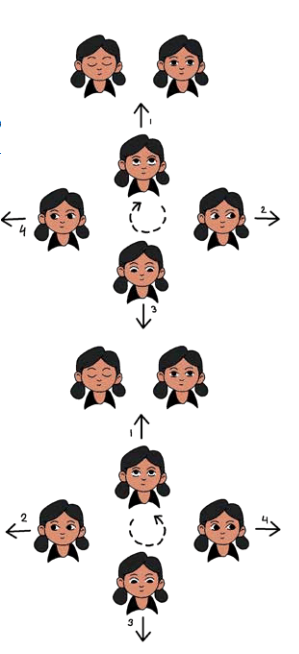
5. Rotation of eyeballs.
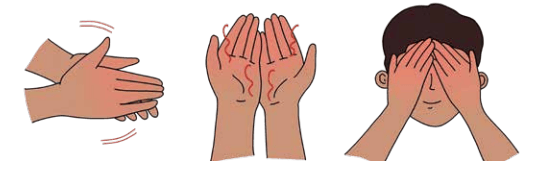
1. Relax your eyes with Palming.
Our eyes are constantly seeing things; they get
tired. We should regularly relax them.
Simple palming procedure
1. Rub both palms until they become warm.
2. Make a cup shape of the palms and place
them gently over the eyes. (Do not put
pressure on the eyeballs.)
3. Keep the eyes closed.
4. Keep the palms on eyes for 10–15 seconds,
then gently remove the hands.
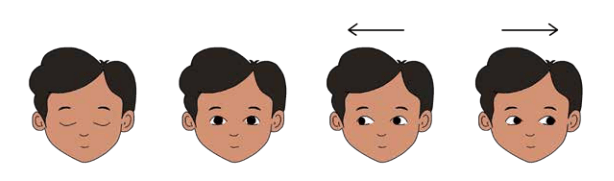
2. Movement of eyeballs from right to left.
1. Gently close your eyes for a few seconds, then
slowly open the eyes.
2. Move the eyeballs from the right corner to
the left and then from left corner to the right.
Repeat this five times.
3. Do simple palming after the practice.
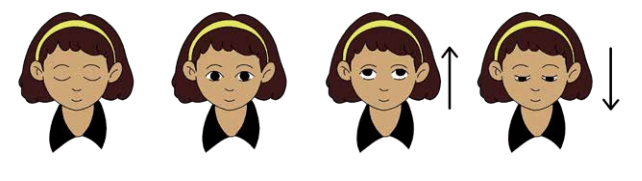
3. Movement of eyeballs up and down.
1. Gently close your eyes for a few seconds, then
slowly open the eyes.
2. Move the eyeballs fully down and then slowly
move them up. Repeat this five times .
3. Do simple palming after the practice.
4. Diagonal movement of eyeballs.
1. Gently close your eyes for a few seconds then
slowly open the eyes.
2. Move the eyeballs up on the right corner and
down on the left corner. Repeat the practice
thrice.
3. Slowly open the eyes and move the eyeballs
left up and right down. Repeat the practice
thrice.
4. Do simple palming after the practice.
5. Rotation of eyeballs
1. Gently close your eyes
for a few seconds then
slowly open the eyes.
2. Move the eyeballs fully to
the right, then take them
down, then move to the
left and then up. This
forms a circle. Slowly
move the eyeballs in a
circle five times.
3. Relax the eyes with
simple palming.
4. Now let us rotate
the eyes in the other
direction. Move the
eyeballs to the full left,
then take them down,
then move them to the
right and then up. This
completes the circle.
Slowly move the eyeballs
in the circle five times.
5. Close your eyes for a
while and then slowly open them.
6. Relax the eyes with simple palming.
Note for the teacher
Encourage the children to keep their backs erect. There should be
only eyeball movement in this exercise and no neck movement.
YG 12
Krida Yoga
Do you like to play and enjoy with your friends?
Here are some games for us to play. Through these games
we will learn about different aspects of Yoga.
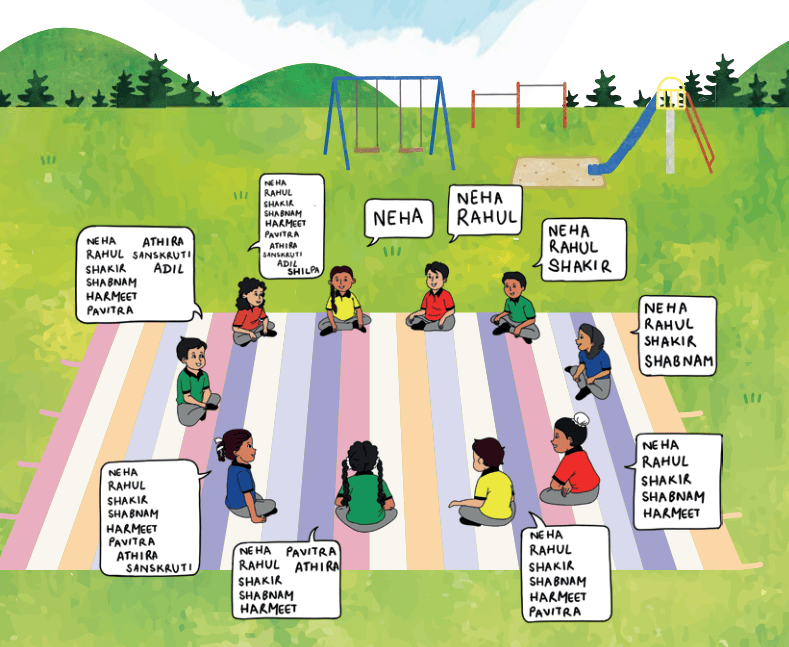
Chain of Names
How to play
- Students sit in a circle and say their name aloud along with the names of previous students to create a garland of names.
- The first student says her/his name, the next student repeats the name of the first student and adds her/his name. Each student says the names of all the previous students sitting in the circle, followed by adding her/his own name. The game goes on till everyone recalls and says all the names.
Note for the teacher
The purpose of this game is to improve memory and awareness.
Different variations of the game can be tried:
• Use the names of fruits or vegetables.
• Say the names in reverse order.
• Say the names with eyes closed.
Mind Game
How to play
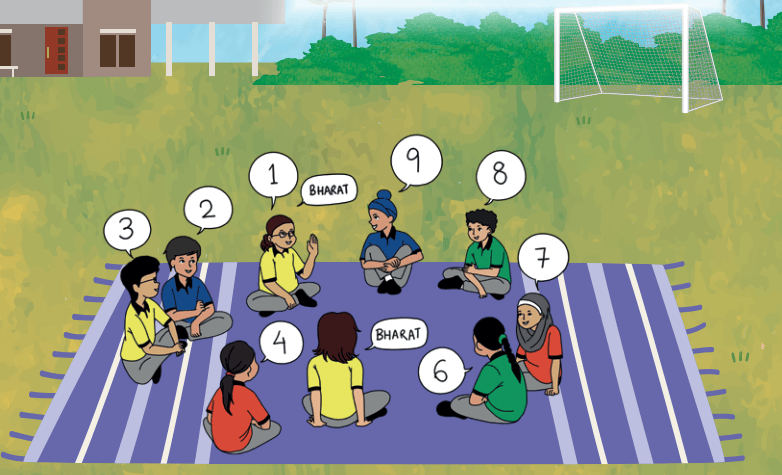
- Students sit in a circle and count the numbers aloud in a sequence. At every multiple of five each student on their turn says “Bharat” instead of a number.
- Students who do not say “Bharat” on their turn at a multiple of five are out.
- The counting continues in circle till the
children like it.
Note for the teacher
The purpose of this game is to improve concentration and
awareness.
Different variations in the game can be tried:
• Use different multiples and different names.
YG 13
Japa-Tapa
How to play
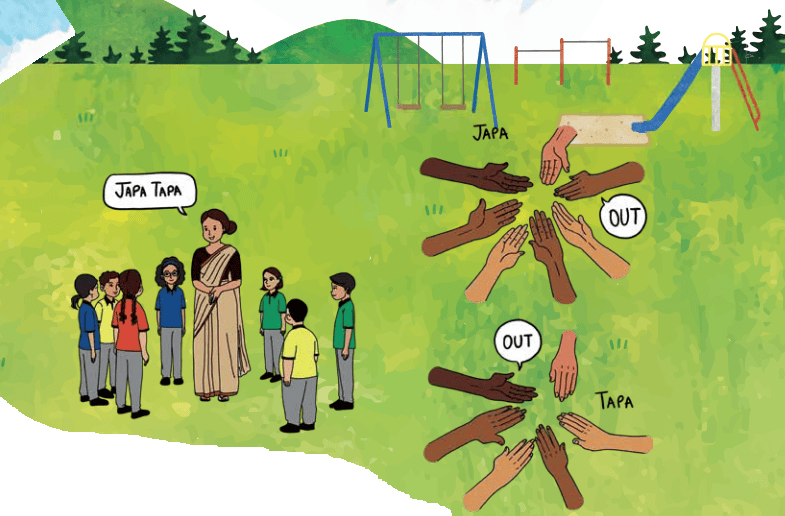
- Students sit in a circle or square and follow the teacher.
- When the teacher says “Japa” aloud all the children keep their palms up and when the teacher says “Tapa” children put their palms down.
- The teacher continues to say aloud “Japa” or “Tapa” randomly. Students who fail to follow correctly are out.
Note for the teacher
Variations
• Making a fist and releasing the fist.
• Elbow extension and flexion.
• Instead of Japa-Tapa, use Lava-Kusha, Nala-Nila, etc.
Power of Breath
How to play
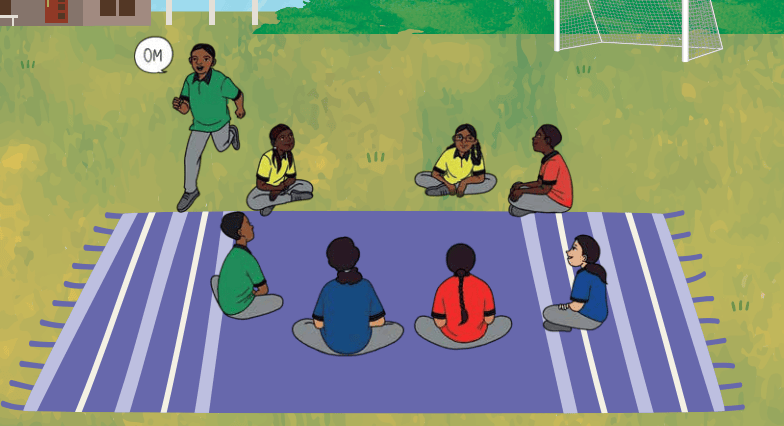
- The students sit in a circle.
- One student starts the game by taking a deep breath, and begins running around the circle chanting a long “Om”.
- The next turn is of the student sitting at the place where the first student finishes chanting “Om”. The game continues till all the students participate.
Note for the teacher
The purpose of this game is to help in voice culturing and
increase the duration of breath. Different variations of the game
can be tried with different types of sounds.
YG 14
Rishi
Patanjali
Says
How to play
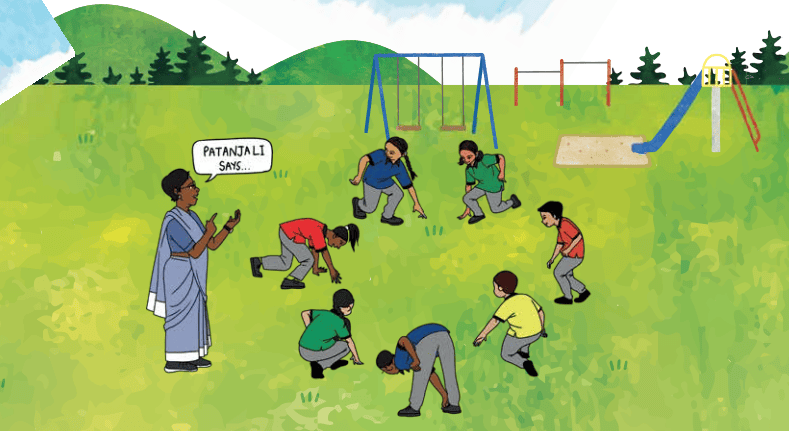
- Students stand in a circle and follow the instructions of the teacher.
- The teacher gives the instructions in the name of Patanjali. Students follow only if ‘Patanjali says’ is included in the instruction.
- Students who act on the instructions
without ‘Patanjali says’ are out.
Note for the teacher
Variations in the game are encouraged:
• Use Netaji instead of Patanjali.
• Eye exercises like opening and closing the eyes.
• Postures like Tadasana, Utkatasana, Padahastasana.
YG 15
Shabda
Grahi
How to play:
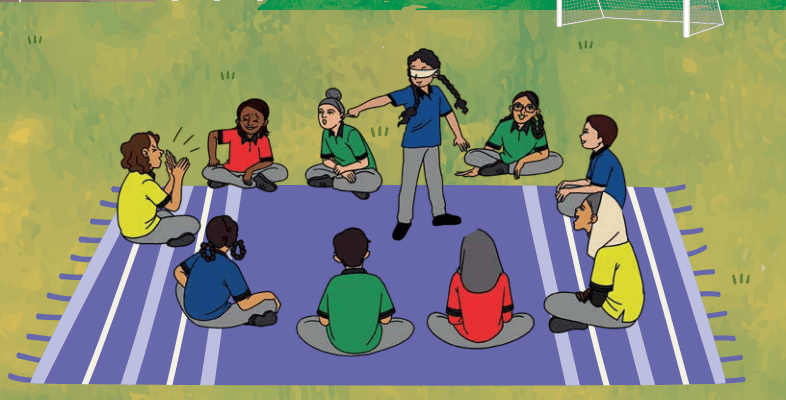
- Students form a circle. One student
whose eyes are covered by a cloth is
made to stand in the centre of the
circle.
- Any student sitting in the circle claps, and the student in the centre has to guess who has clapped.
- Each student has ten chances. The one
with the most accurate guesses wins.
Note for the teacher
Variations in the game are encouraged. The teacher can instruct
the students to make a sound instead of clapping.
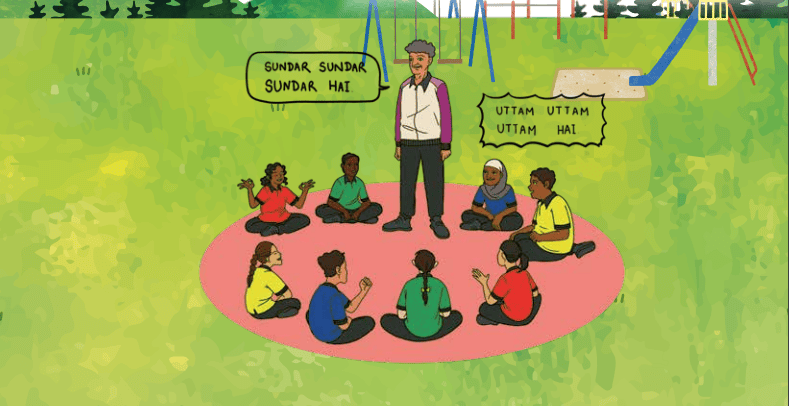
Sundar-Uttam
How to play
- Students sit in a circle around
the teacher. The teacher says
‘Sundar Sundar Sundar Hai’
and students respond as ‘Uttam
Uttam Uttam Hai’
- The teacher can repeat Sundar numerous times (1, 2, 3, 4, 5, 6, etc.) and in different tones.
- The students should match the
number and the tone. When the
tone becomes very low, the game
ends with a loud clap.
Note for the teacher
Variations in the game are encouraged.
Notes
Session Structure and
Suggestive Annual Plan
for Teachers
Session Structure and Annual Plan Information
for the teachers
NCFSE 2023 has listed Physical Education and Wellbeing as a separate curricular area and suggested
allocating a minimum of 90 hours (which is
approximately 135 periods of 40 minutes each) in the
timetable.
Khel Yoga textbook for Class 3 is designed to
sufficiently develop the competencies defined in
NCFSE 2023. The book has three units and several
chapters. The basic motor movement activities, games
and Yoga sessions can be planned in parallel for
continuous and consistent development throughout
the year.
Suggestive session structure and annual plan is
given below to conduct activities effectively. You may
customise the plan based on your needs.
Structure and Flow of Periods
- This book is divided into 3 units. Each unit has chapters and activities.
- NCF-SE 2023 has recommended 150 periods for physical education. Suggestive timetable assumes at least 5 periods of 40 minutes each per week.
- NCF-SE recommends allocating block periods (2 periods together) for Physical Education and Well-being.
- Suggestions are given below for two types of period allocation in the timetable:
- Scenario 1: Five single periods per week allocated in the timetable.
- Scenario 2: Two block periods for Motor skills and team games, and one single period for Yoga allocated in the timetable.
Scenario 1— Three different types of sessions are visualised to
effectively use the limited time in each period and achieve the desired
learning outcomes.
Type 1: Maximises game practice.
Type 2: Maximises circle time after play to provide more
time for thinking, and discussing socio-emotional
aspects.
Type 3: Maximises gamified drills to focus on one specific
skill.
A sample time allocation for a 40-minute duration is given below for
all types.
| Session Activity | Type 1 | Type 2 | Type 3 |
| Warm-up | 5 | 5 | 5 |
| Game/Activity Time | 25 | 15 | 25 |
| Cool-down | 5 | 5 | |
| Circle Time | 5 | 15 | 5 |
Scenario 2 (Highly Recommended)— A block period of 80 minutes
can effectively maximise game practice, drills and circle time. Two
types of sessions can be planned with block periods:
Type 4: Gamified Drills (mini games played between teams) can be
planned to target specific skills.
Type 5: Two games played in a single block period.
| Type 4 | |||||||
| Block Period |
Warm-up Preferably Gamified |
Game Time |
Gamified Drills/Mini Games |
Cool- down |
Circle Time |
||
| Time in Minutes |
5 | 30 | 20 | 5 | 20 | ||
| Type 5 | |||||||
| Block Period |
Warm-up Preferably Gamified |
Game Time Play 2 games |
Cool- down |
Circle Time |
|||
| Time in Minutes |
5 | 50 | 5 | 20 | |||
Warm-up and Cool-down
Warm-up and cool-down activities are essential components of
physical exercise and games. It helps to prepare our bodies for
activity, improving overall performance and decreasing the risk
of injuries by gradually raising the heart rate and loosening the
joints. Cool-down activities help to gradually lower the heart rate,
prevent muscle stiffness and promote relaxation. Proper warm-up
and cool-down routines are crucial for ensuring safe and effective
physical activities. They help in releasing stress in the body, improve
postural deformities and develop a positive attitude towards exercise.
Warm-up and cool-down exercises should be age appropriate, and
can be customised on the basis of physical activity to be done and
the fitness levels of the students. A few commonly used exercises
for warm-up and cooling down are given below. Teachers may select
the exercises from this list or use other exercises appropriate for the
students and activity to be performed.
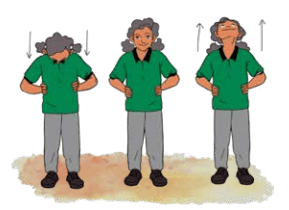
Upward downward neck stretch
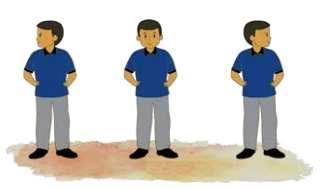
Right-left neck rotation
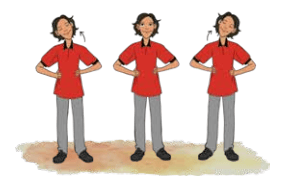
Sideward neck stretch
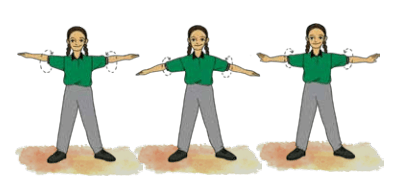
Shoulder rotation
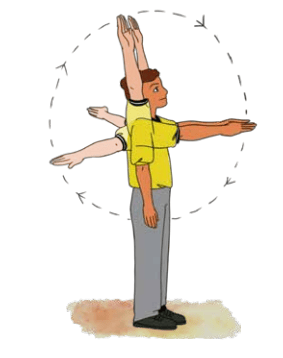
Arm rotation
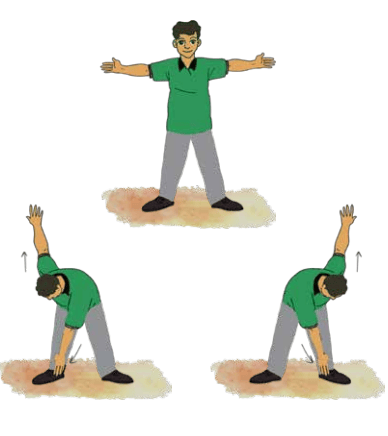
Alternate toe touch
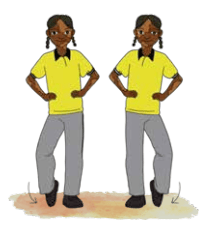
Ankle rotation
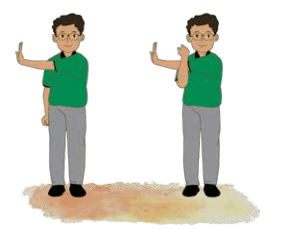
Across arm shoulder stretch
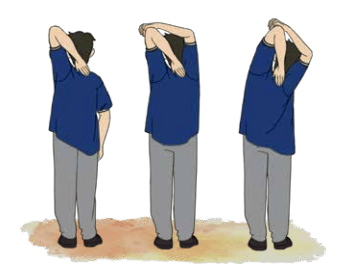
Shoulder blade stretch
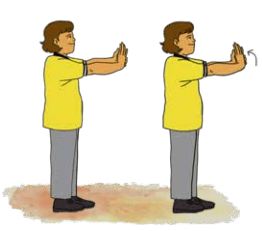
Wrist stretch extension
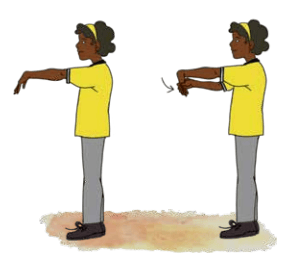
Wrist stretch flexion
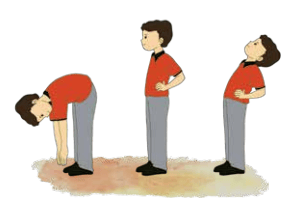
Forward and backward bend
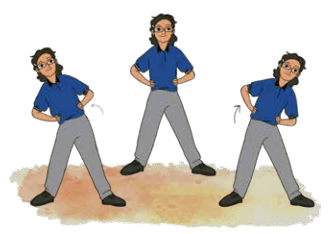
Sideward bend
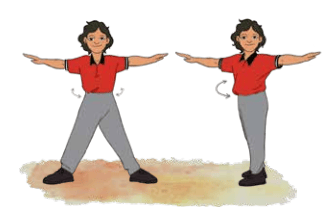
Sideward rotation
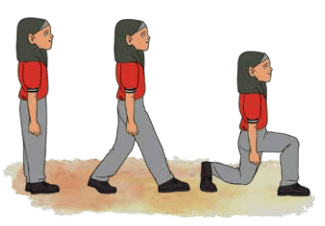
Forward leg lunges
Structure of Yoga Session
Begin each Yoga session with a prayer as given below. This prayer is
about the sacred bond between student and teacher. Both of them
pray together to illuminate their paths with divine protection and
nourishment with wisdom. They wish for peace everywhere and for
everyone.
| Opening Prayer | |
| ॐ सह नाववतु | सहनौभुनक्तु | सह वीर्यं करवावहैै | तेजस्विनावधितमस्तु मा विद्विषावाहै || ॐ शान्तिः शान्तिः शान्तिः || |
Om Saha Navavatu | Saha Nau Bhunaktu | Saha Viryam Karavavahai | Tejasvinavadhitamastu Ma Vidvishavahai || Om Shantih Shantih Shantih || |
| Meaning of the Prayer May we both (Guru and Shishya) be protected. May we both be nourished. May we practice with great vigour and energy. Let our studies be fruitful and enlightening. Let us not live with hate. |
|
After the opening prayer conduct activities as per the session plan. It
includes preparatory practices, Asana, eye exercises, and Krida Yoga.
End each Yoga session with a prayer as given below. A closing
prayer helps students assimilate knowledge and reinforce the day
with positivity and happiness.
| Closing Prayer |
|
| ॐ सर्वेे भवन्तु सुखिनः | सर्वेे संतु निरामयाः | सर्वेे भद्राणि पश्यन्तु | मा कश्चिददुखभाग्भवेत् || ॐ शान्तिः शान्तिः शान्तिः || |
Om Sarve Bhavantu Sukhinah | Sarve Santu Niramayah | Sarve Bhadrani Pashyantu | Ma Kashchid Duhkhabhag Bhavet || Om Shantih Shantih Shantih || |
| Meaning of the Prayer
May all be happy. May all be free from illnesses. May all see what is auspicious. May no one suffer. Let there be peace everywhere. |
|
General Instruction to Begin and End a Yoga
Session
- Sit in a comfortable Sukhasana posture.
- Keep the back straight, eyes closed, and have a gentle smile on the face.
- Place your hands in Chin-Mudra and become aware of your breath. Observe the breathing for a few seconds then take a deep breath in and as you exhale chant Om.
- Gently place your hands in Namaskarah-Mudra and chant the prayer.
- Observe changes after the chanting.
- Gently rub the palms, make a cup out of it, and place it on the eyes.
Suggestive Session Plan for 24 Sessions
| Month 1 | ||||
|---|---|---|---|---|
| 3rd Period | 6th Period | 9th Period | 12th Period | |
| Yoga for Daily Life |
Introduction to Yoga Being Happy (15 min) |
Ahimsa story
and Activity (15 min) |
Being Healthy (15 min) |
Ahimsa in daily life (15 min) |
| Yoga
Sadhana |
Garland of
names Memory game (15 min) |
Patanjali Says
Game for attention in action (15 min) |
Eye
Exercises (15 min) |
Shabda Grahi
Game for sound attention (15 min) |
| Month 2 | ||||
|---|---|---|---|---|
| 15th Period |
18th Period |
21st Period |
24th Period |
|
| Yoga for Daily Life |
Being Good
(15 min) |
Niyama Shaucha story (15 min) |
Shaucha related
activity (15 min) |
Cleanliness in daily life (15 min) |
| Yoga
Sadhana |
Eye Exercises (15 min) |
Play of Sound
Game for breath strengthening (15 min) |
Eye Exercises (15 min) |
Slogans
Game for sound and movement awareness |
| Month 3 | ||||
|---|---|---|---|---|
| 27th Period |
30th Period |
33rd Period |
36th Period |
|
| Yoga for
Daily Life |
Good eating habits (15 min) |
Good sleeping habits (10 min) |
Assessment |
|
| Yoga
Sadhana |
Breath awareness activity with mudra (15 min) |
Introduction to Asana with activity (15 min) |
Heel walking and Frog Jumping (10 min) |
|
| Japa-Tapa
Game for sound-action awareness (15 min) |
Chanting of
“Om” – A, U, M (10 min) |
|||
| Month 4 | ||||
|---|---|---|---|---|
| 39th Period |
42nd Period |
45th Period |
48th period |
|
| Yoga
Sadhana |
Basic
Postures
Tadasana and Shithila Tadasana (15 min) Introduce Standing Asanas Vrikshasana (15 min) |
Dandasana and Shithila Dandasana (15 min) Introduction to Sukhasana (15 min) |
Prone Sthiti and Makarasana (15 min) Introduction to Bhujangasana (15 min) |
Supine Sthiti
and Shavasana (15 min) Introduction to Pavanamu- ktasana (15 min) |
| Month 5 | ||||
|---|---|---|---|---|
| 51st Period |
54th period |
57th Period |
60th period |
|
| Yoga
Sadhana |
Asana Practice Vrikshasana (20 min) |
Asana Practice Vajrasana (20 min) |
Asana Practice Pavanamu- ktasana and Shavasana (20 min) |
Asana Practice Bhujang- asana and S havasana (20 min) |
| Chanting of “Om” – A, U, M (10 min) |
Play of Sound (15 min) |
Chanting of “Om” – A, U, M (10 min) |
Number and Clap Mind awareness game (10 min) |
|
| Month 6 | ||||
|---|---|---|---|---|
| 63rd Period |
66th Period |
69th Period |
72nd Period |
|
| Yoga for
Daily Life |
Yama and
Niyama Revision (15 min) |
Revisionof All 5 Asanas (30 mins) |
Happy assembly
(30 mins) |
Assessment |
| Yoga
Sadhana |
Revision of
Eye Exercises (15 min) |
|||
Annual Session Plan
The table given below shows the sequence of activities planned in the given 150
periods for the entire year. It is important to follow this sequence for effective
development of required competencies. Type of session and activity number is
given in the table for easy reference in the textbook.
Note: For a block period, club the activities of two consecutive periods. Periods
of Our Games and Yoga are already clubbed wherever a block period is required.
Annual
Session Plan |
||||||
| Period | Unit | Skill | Type | Activity
Name
|
Activity No. | Count |
| 1 | Unit 1 | Throwing
and
Catching
|
Type 3 | Catch and
Throw
|
BM-1 | 1 |
| 2 | Unit 1 | Picking up
and
Throwing
|
Type 2 | Pick up and
Throw
|
BM-2 | 2 |
| 3 | Unit 1 | Throwing
and
Catching
|
Type 3 | Catch and
Throw
|
BM-1 | 3 |
| 4 | Unit 1 | Picking
up and
Throwing
|
Type 2 | Pick up
and Throw
|
BM-2 | 4 |
| 5 | Unit 3 | Yoga | Yoga
Practices
|
Being
Happy
|
YG-1 | 1 |
| 6 & 7 | Unit 2 | Our
Games
|
Type 4/5 | Seven
Stones
|
OG-1 | 2 |
| 8 | Unit 1 | Catch | Type 3 | Relay
Catching
|
BM-5 | 5 |
| 9 | Unit 1 | Throw | Type 3 | Hit the
Target
|
BM-3 | 6 |
| 10 | Unit 1 | Catch | Type 3 | Relay
Catching
|
BM-5 | 7 |
| 11 | Unit 1 | Throw | Type 3 | Hit the
Target
|
BM-3 | 8 |
| 12 & 13 | Unit 2 | Our
Games
|
Type 4/5 | Golaap
Togor
|
OG-2 | 4 |
| 14 | Unit 3 | Yoga | Yoga
Practices
|
Yama | YG-2 | 3 |
| 15 | Unit 1 | Catch | Type 1 | Ball on
the Wall
|
BM-6 | 9 |
| 16 | Unit 1 | Throw | Type 2 | Pick up
and Throw
|
BM-2 | 10 |
| 17 | Unit 1 | Throw | Type 1 | Knock the
Cones
|
BM-4 | 11 |
| 18 | Unit 1 | Catch | Type 1 | Ball on
the Wall
|
BM-6 | 12 |
| 19 | Unit 1 | Throw | Type 2 | Pick up
and Throw
|
BM-2 | 13 |
| 20 | Unit 1 | Throw | Type 1 | Knock
the Cones
|
BM-4 | 14 |
| 21 & 22 | Unit 3 | Yoga | Yoga
Practices
|
Eye
Exercises
|
YG-3 | 4 |
| 23 | Unit 1 | Throw | Type 1 | Knock
the Cones
|
BM-4 | 15 |
| 24 & 25 | Unit 2 | Our
Games
|
Type 4/5 | Pakdam-
Pakdai
|
OG-3 | 6 |
| 26 | Unit 1 | Kicking | Type 3 | Pass
the Ball
|
BM-7 | 16 |
| 27 | Unit 2 | Kicking | Type 3 | Monkey in
the Middle
|
BM-11 | 17 |
| 28 | Unit 3 | Kicking | Type 3 | Pass
the Ball
|
BM-7 | 18 |
| 29 | Unit 4 | Kicking | Type 3 | Monkey in
the Middle
|
BM-11 | 19 |
| 30 & 31 | Unit 2 | Our
Games
|
Type 4/5 | Chain
(Sankali)
|
OG-4 | 8 |
| 32 | Unit 3 | Yoga | Yoga
Practices
|
Eye
Exercises
|
YG-3 | 5 |
| 33 | Unit 1 | Kicking | Type 3 | Shadow
Ball
|
BM-8 | 20 |
| 34 | Unit 1 | Kicking | Type 3 | Flick
the Ball
|
BM-9 | 21 |
| 35 | Unit 1 | Kicking | Type 3 | Shadow
Ball
|
BM-8 | 22 |
| 36 | Unit 1 | Kicking | Type 3 | Flick
the Ball
|
BM-9 | 23 |
| 37 | Unit 1 | Kicking | Type 3 | Flick in
the Box
|
BM-10 | 24 |
| 38 | Unit 1 | Kicking | Type 3 | Flick in
the Box
|
BM-10 | 25 |
| 39 | Unit 3 | Yoga | Yoga
Practices
|
Niyama | YG-4 | 6 |
| 40 & 41 | Unit 2 | Our
Games
|
Type 4/5 | Aankh
Micholi
|
OG-5 | 10 |
| 42 | Unit 1 | Kicking | Type 3 | Monkey in
the Middle
|
BM-11 | 26 |
| 43 | Unit 1 | Kicking | Type 3 | Flick in
the Box
|
BM-10 | 27 |
| 44 | Unit 1 | Kicking | Type 3 | Monkey in
the Middle
|
BM-11 | 28 |
| 45 | Unit 1 | Kicking | Type 3 | Monkey in
the Middle
|
BM-11 | 29 |
| 46 | Unit 1 | Kicking | Type 3 | Flick in
the Box
|
BM-10 | 30 |
| 47 | Unit 1 | Kicking | Type 3 | Monkey in
the Middle
|
BM-11 | 31 |
| 48 | Unit 3 | Yoga | Yoga
Practices
|
Activity | YG-5 | 7 |
| 49 & 50 | Unit 3 | Yoga | Yoga
Practices
|
Introduction
Yogic
Practices
|
YG-6 | 9 |
| 51 & 52 | Unit 2 | Our
Games
|
Type 4/5 | Bitta Kud | OG-6 | 12 |
| 53 | Unit 1 | Hitting | Type 3 | Strike
the Balloon
|
BM-13 | 32 |
| 54 | Unit 1 | Hitting | Type 1 | Body and
Balloon
|
BM-14 | 33 |
| 55 | Unit 1 | Hitting | Type 3 | Strike the
Balloon
|
BM-13 | 34 |
| 56 | Unit 1 | Hitting | Type 1 | Body and
Balloon
|
BM-14 | 35 |
| 57 & 58 | Unit 3 | Yoga | Yoga
Practices
|
Asana—
Preparatory
Practices
|
YG-7 | 11 |
| 59 & 60 | Unit 3 | Yoga | Yoga
Practices
|
Basic
Postures
|
YG-8 | 13 |
| 61 & 62 | Unit 2 | Our
Games
|
Type 4/5 | Aankh
Micholi
|
OG-5 | 14 |
| 63 | Unit 1 | Hitting | Type 2 | Soft Ball
Control
|
BM-15 | 36 |
| 64 | Unit 1 | Hitting | Type 3 | Playing
Pass
|
BM-16 | 37 |
| 65 | Unit 1 | Hitting | Type 1 | Scoop in
the Square
|
BM-17 | 38 |
| 66 | Unit 1 | Hitting | Type 2 | Soft Ball
Control
|
BM-15 | 39 |
| 67 & 68 | Unit 2 | Our
Games
|
Type 4/5 | Hopscotch | OG-7 | 16 |
| 69 | Unit 1 | Hitting | Type 3 | Playing
Pass
|
BM-16 | 40 |
| 70 | Unit 1 | Hitting | Type 1 | Scoop in
the Square
|
BM-17 | 41 |
| 71 | Unit 1 | Coordination | Type 2 | Sit and
Rise
|
BM-12 | 42 |
| 72 | Unit 3 | Yoga | Yoga
Practices
|
Asana
Practice
|
YG-9 | 14 |
| 73-81 | Half
Yearly
Assessment
|
Summative
Assessment
|
SA-1 | 9 | ||
| 82 & 83 | Unit 3 | Yoga | Yoga
Practices
|
Asana
Practice
|
YG-9 | 16 |
| 84 & 85 | Unit 2 | Our
Games
|
Type 4/5 | Hopscotch | OG-7 | 18 |
| 86 | Unit 1 | Coordination | Type 1 | Keep on
Moving
|
BM-20 | 43 |
| 87 | Unit 1 | Coordination | Type 3 | Receiving
with Stick
|
BM-18 | 44 |
| 88 | Unit 1 | Coordination | Type 1 | Keep on
Moving
|
BM-20 | 45 |
| 89 | Unit 1 | Coordination | Type 3 | Receiving
with Stick
|
BM-18 | 46 |
| 90 | Unit 3 | Yoga | Yoga
Practices
|
Asana
Practice
|
YG-9 | 17 |
| 91 & 92 | Unit 2 | Our
Games
|
Type 4/5 | Cockfighting | OG-8 | 20 |
| 93 | Unit 1 | Coordination | Type 2 | Balancing
Stick
|
BM-19 | 47 |
| 94 | Unit 1 | Personal
Goals
|
Type 3 | Hold your
Ground
|
BM-21 | 48 |
| 95 | Unit 1 | Personal
Goals
|
Type 3 | Planks | BM-22 | 49 |
| 96 & 97 | Unit 2 | Our
Games
|
Type 4/5 | Kumir
Denga
|
OG-9 | 22 |
| 98 | Unit 1 | Coordination | Type 2 | Balancing
Stick
|
BM-19 | 50 |
| 99 | Unit 1 | Immunisation | Type 2 | Vaccine
Vijayate
|
BM-27 | 51 |
| 100 | Unit 3 | Yoga | Yoga
Practices
|
Breathing
Practices
|
YG-10 | 18 |
| 101 | Unit 1 | Personal
Goals
|
Type 3 | Hold your
Ground
|
BM-21 | 52 |
| 102 | Unit 1 | Personal
Goals
|
Type 1 | Chor-
Police
|
BM-24 | 53 |
| 103 | Unit 1 | Personal
Goals
|
Type 3 | Planks | BM-22 | 54 |
| 104 | Unit 1 | Personal
Goals
|
Type 1 | Find the
House
|
BM-23 | 55 |
105 &
106
|
Unit 3 | Yoga | Yoga
Practices
|
Chanting of
“Om” – A, U, M
|
YG-11 | 20 |
107 &
108
|
Unit 2 | Our
Games
|
Type 4/5 | Kumir
Denga
|
OG-9 | 24 |
| 109 | Unit 1 | Personal
Goals
|
Type 1 | Chor-
Police
|
BM-24 | 56 |
| 110 | Unit 1 | Personal
Goals
|
Type 3 | Shuttle
Run
|
BM-25 | 57 |
| 111 | Unit 1 | Personal
Goals
|
Type 1 | Vaccine
Vijayate
|
BM-27 | 58 |
| 112 | Unit 1 | Personal
Goals
|
Type 3 | Chor-
Police
|
BM-25 | 59 |
| 113 | Unit 3 | Yoga | Yoga
Practices
|
Krida
Yoga
|
YG-12 | 21 |
114 &
115
|
Unit 2 | Our
Games
|
Type 4/5 | Hum Phoolon
Ki Sadak Par
Chalte Hain
|
OG-10 | 26 |
116 &
117
|
Unit 2 | Our
Games
|
Type 4/5 | Dodge
Ball
|
OG-11 | 28 |
118 &
119
|
Unit 2 | Our
Games
|
Type 4/5 | Spoon
Race
|
OG-12 | 30 |
| 120 | Unit 1 | Personal
Goals
|
Type 3 | Dodging Move
to Safety
|
BM-26 | 60 |
| 121 | Unit 1 | Personal
Goals
|
Type 3 | Shuttle
Run
|
BM-25 | 61 |
122 &
123
|
Unit 2 | Our
Games
|
Type 4/5 | Gadda
Maar
|
OG-13 | 32 |
| 124 | Unit 1 | Personal
Goals
|
Type 3 | Dodging Move
to Safety
|
BM-26 | 62 |
| 125 | Unit 1 | Personal
Goals
|
Type 3 | Shuttle
Run
|
BM-25 | 63 |
| 126 | Unit 3 | Yoga | Yoga
Practices
|
Japa-
Tapa
|
YG-13 | 22 |
| 127 | Unit 1 | Immunisation | Type 2 | Vaccine
Vijayate
|
BM-27 | 64 |
| 128 | Unit 3 | Yoga | Yoga
Practices
|
Rishi
Patanjali
Says
|
YG-14 | 23 |
| 129 | Unit 1 | Personal
Goals
|
Type 3 | Vaccine
Vijayate
|
BM-27 | 65 |
| 130 | Unit 2 | Our
Games
|
Type 4/5 | Tug of
War
|
OG-14 | 33 |
| 131 | Unit 3 | Yoga | Yoga
Practices
|
Shabda
Grahi
|
YG-15 | 24 |
| 132 | Unit 2 | Our
Games
|
Type 4/5 | Three-
legged
Race
|
OG-15 | 34 |
| 133 | Unit 1 | Coordination | Type 1 | Keep on
Moving
|
BM-20 | 66 |
| 134 | Unit 1 | Kicking | Type 1 | Flick in
the Box
|
BM-10 | 67 |
135 &
136
|
Unit 2 | Our
Games
|
Type 4/5 | In and
Out
|
OG-16 | 36 |
| 137 | Unit 1 | Coordination | Type 1 | Keep on
Moving
|
BM-20 | 68 |
| 138 | Unit 1 | Kicking | Type 1 | Flick in
the Box
|
BM-10 | 69 |
139 &
140
|
Unit 2 | Our
Games
|
Type 4/5 | Light and
Shade
|
OG-17 | 38 |
| 141-150 | Assessment | Yearly
Assessment
|
SA-2 | 19 | ||
| Yoga | 24 | |||||
| Our Game | 38 | |||||
Basic Motor
Movement
|
69 | |||||
| Assessment | 19 | |||||
| Total | 150 | |||||