Chapter 3

Double Century
The Story of our Numbers
Tens of thousands of years ago, people started counting. They wanted to
keep records of their things. So they made marks on the walls of caves
and on the barks of trees.
Over time, they kept records of their things by making groups of 5, 10,
20, and 60.
Thousands of years ago, the ancient Indians created a method for
writing any number, however large, using only ten symbols: 0, 1, 2, 3,
4, 5, 6, 7, 8, 9. It was one of the most ingenious and creative inventions
in human history. It made possible the invention of TVs, computers,
mobile phones, and more. This method of writing numbers is now used
everywhere in every country in the world.
A very important part of this invention was the introduction and use of
the symbol “0” to mean “nothing”. It is the number 0 that really made
this system of writing numerals work!
Over the next few months, we will learn how to write all numbers, however
large, using just these ten symbols.
Let us Do
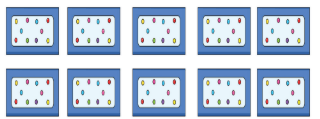
1. Look at the picture. Estimate and write the number of each of the following objects.
a. Oranges : ................
b. Bangles : ................
c. Laddoos : ................
d. Barfi : ................
e. Bindis : ................
f. Bananas : ................
Let us Play
Fill the missing numbers on the board.
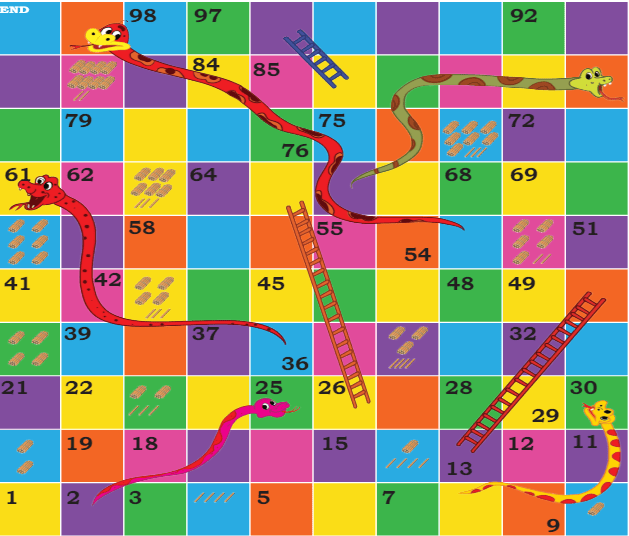
Answer the following on the basis of the Snakes and Ladders board:
1. Which number will you reach if you take the ladder from 13?
...................
2. If you are on the snake at number 25, which number
will you reach? ...................
3. You are standing on 96. Which number on the die will
take you to the snake's mouth? ...................
4. Show the number written on the tail of the longest snake using
bundles and loose sticks. ...................
Let us Think
I am a talking Pot.Tell me any number, and I will tell you the next.
I said 42, Pot said 43
I said 39, Pot said ........
I said 63, Pot said ........
I said ......, Pot said 90
I said ......, Pot said........
I said 99, Pot said 100
What is 100?


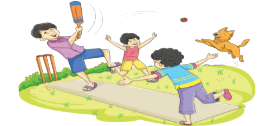
Oh, he scored a century.
That is a 100 runs
10 Packets of 10 bindis each
makes 100.
Teacher’s Note:
Encourage children to represent numbers with
matchsticks in the form of bundles and loose sticks.

These beads are also 100 in number.
Let us Do
1. Fill in the blanks.



Bholu made 100 by jumping on 65 and jumped 35 more.
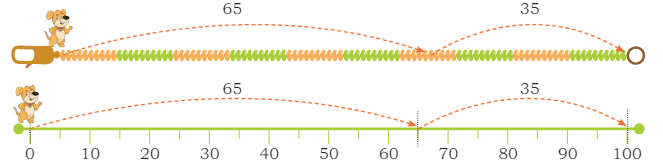
Make 100 by different jumps on this number line.

2. Use matchstick bundles and a ginladi to make 100 in different ways. Fill the table below.
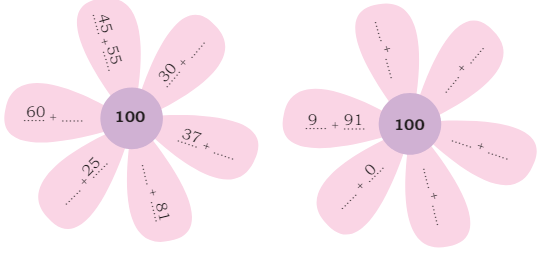
3. Write numbers in the blank spaces inside the flower petals so
that the numbers in each petal add up to 100.
Let us Explore
How many are 100?
1. Open a full box of matchsticks.
- Estimate the number of matchsticks in the box: ...........
- Count the number of matchsticks in the box: ..............
- How close was your estimate?
- How many boxes of matchsticks will get the total close to
- 100 matchsticks? ............. boxes.
2. Take a handful of seeds like kidney beans, chickpeas, etc.
- Estimate the number of seeds you have in your hand:
- ..............
- Count the number of seeds in your hand: .............
- How many handfuls of seeds will get the total close to 100
- seeds? ............. handfuls.

Let’s observe the table and learn to write numbers beyond 100. Fill
in the blank spaces.










Fill the blank spaces on the number line given at the edge
of the page.


Let us Do
1. Let’s continue making numbers above 100 using matchstick bundles and loose sticks.
In the table given below, identify the bundles and loose sticks and write the corresponding numbers.



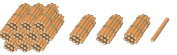



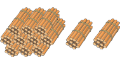
Extend this table in your notebook till 150. Do you observe
something common in all the numbers?
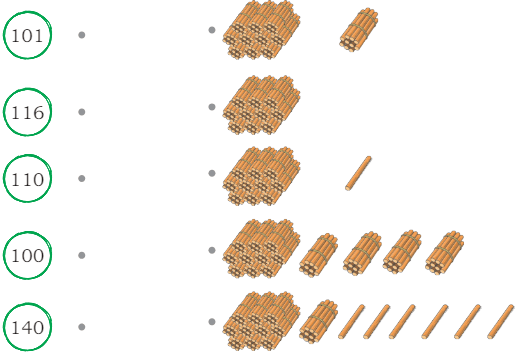
Match the numbers with the correct bundles and loose sticks.
Oh! Talking Pot is back. It will say one
more than whatever you say.
Fill the blank spaces on the number line.

Show the following numbers on the number line below.
1. Place an arrow on 125.
2. Make a tree on 112.
3. Make a smiley on 149.
4. Put a cross on 137

Let us Play
Clap , Snap and Pat
I can create
numbers by clap,
snap and pat. Guess
the numbers
I make.
One clap represents 100 One snap represents 10 One pat represents 1
Two claps represent 200 Two snaps represent 20 Two pats represent 2
Play this game in two teams. One team will
show a number using clap, snap and pat
and the other team will guess it.
Example: Clap – Snap Snap – Pat Pat Pat means 123
(One hundred and twenty three)
Let’s now count beyond 150.









Extend this table till 200 in your notebook. How much is 200?
Let us Do at Home
Fill a small container like a small bowl with seeds
such as kidney beans, chickpeas, etc.
Look closely at the container to estimate how many
seeds are in it. Your Estimate: ......... seeds
Now count and see how close your estimation is to
the actual number of seeds. Counted ......... seeds.
Guess how many times you need to fill the
container to get close to 200 seeds? Your guess:
......... times.
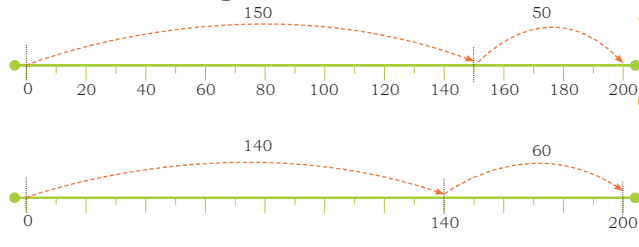
I can show
200 on the
number line too.
150 + 50 = 200
140 + 60 = 200
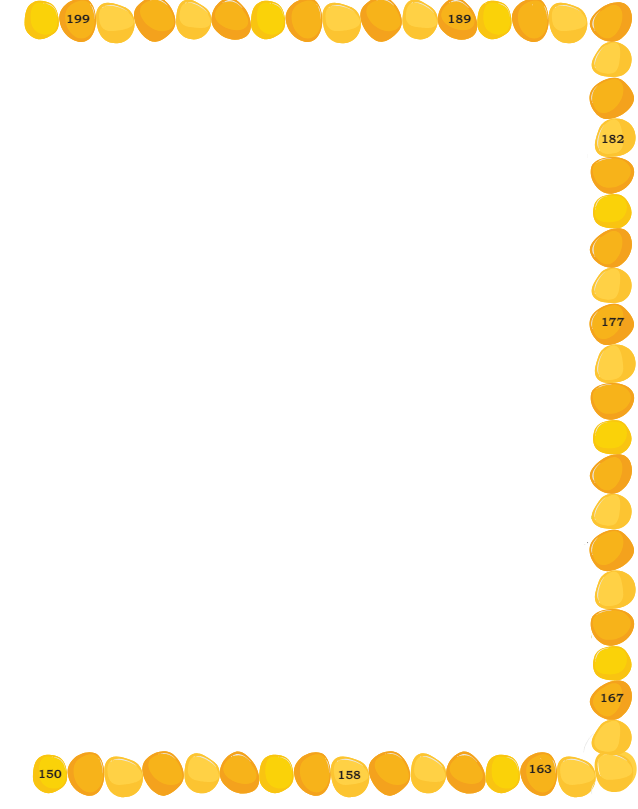
Write the numbers in order on the stones.
Let us Do
Jumping Game
1. Draw jumps of 5 on the number line and write the
numbers on the number line in the given spaces.

2. Continue jumps of 20 and write the missing numbers on the
given number line.

3. Fill in the table
4. Show at least two different ways of making the following numbers.
a. Use matchstick bundles to make 125.
b. Make 145 using a ginladi.
c. Make 170 on a number line.
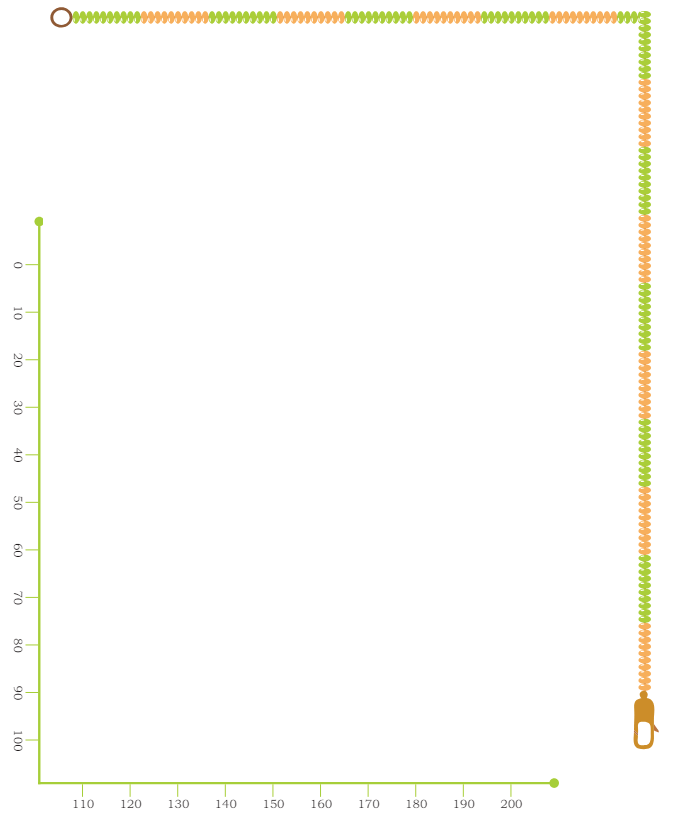
5. Fill in the empty boxes appropriately.

6. Mark the following numbers on the number line.
a. 109, 112, 124, 134, 146

b. 155, 163, 178, 189, 198

c. 125, 142, 153, 174, 199
