
Chapter 12
Give and Take
Kishan runs a big plant nursery where he puts different varieties of plants. Villagers often come and take saplings from him to grow in their houses.
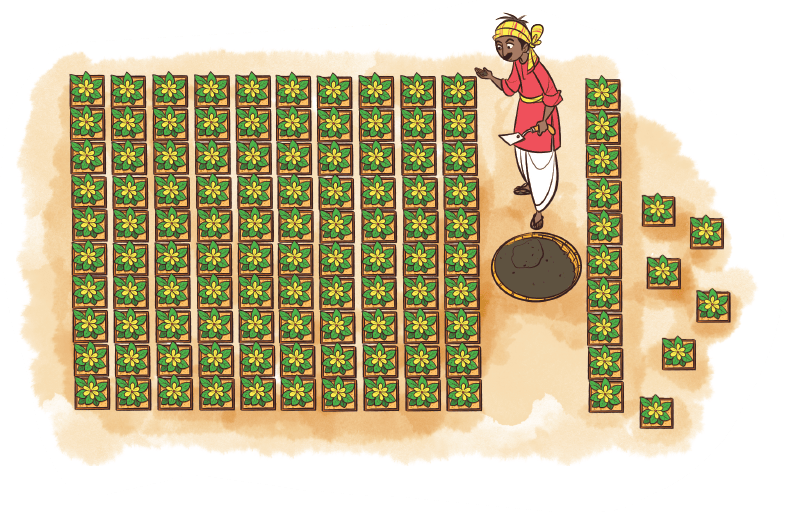
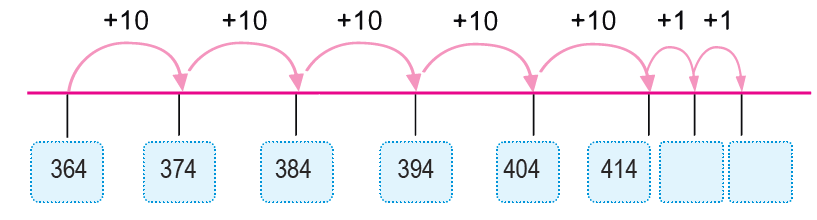
1. Kishan had 364 saplings of different herbs and flowers. Then he went to his friend’s village and brought 52 saplings from there. How many saplings does he have now?
Let us draw a box diagram for the problem.
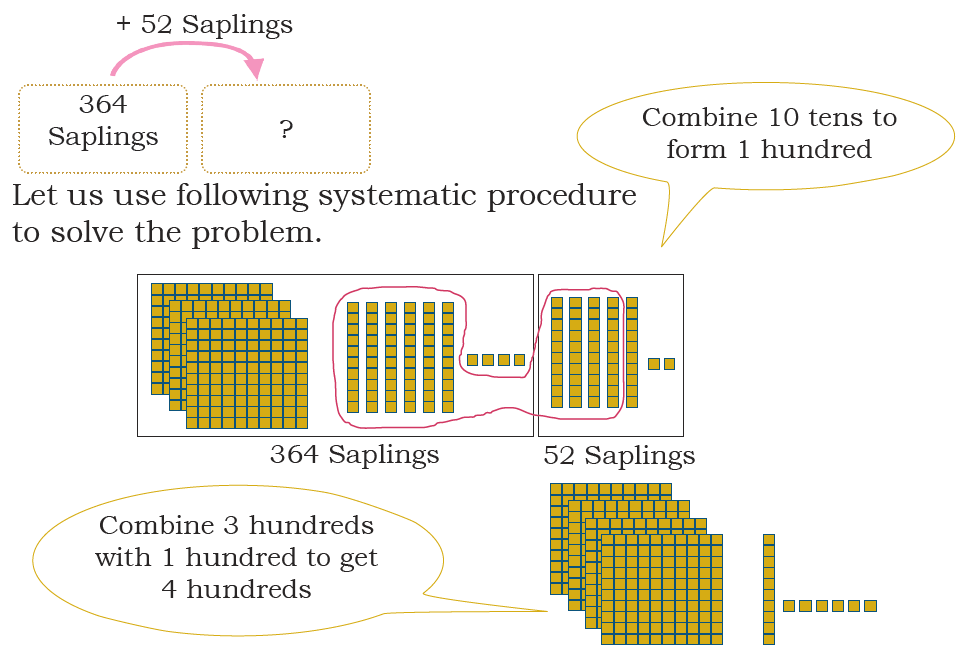
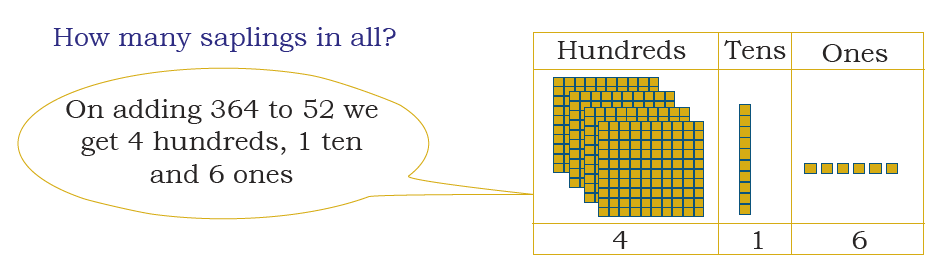
You can also use a number line to solve it.
2. Kishan has got an order to deliver 230 saplings to a school. He has packed 75 saplings in an open box.
How many more saplings does he need to pack? We have to subtract 75 from 230.
We write the given problem as a box diagram:

Let us use hundreds , tens and ones to solve the problem.
We have to subtract 75 from 230.
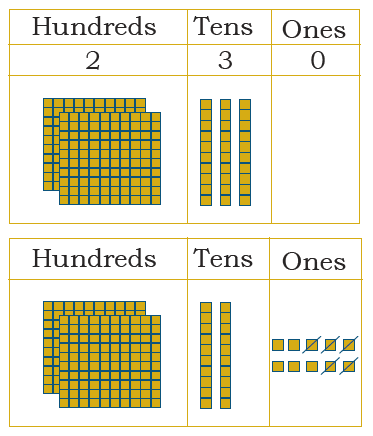
To take away 5 ones, we change 1 ten into 10 ones.
We can now take away 5 ones from 10 ones.
Subtracting 5 ones from 10 ones, we are left with 5 ones.
Now we have to take away 70. Remember opening a hundreds block gives us 10 blocks of 10s.
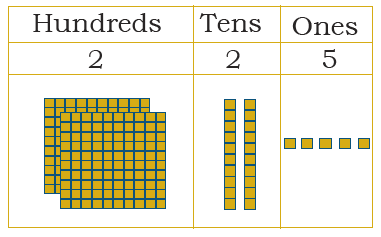
Take away 70.
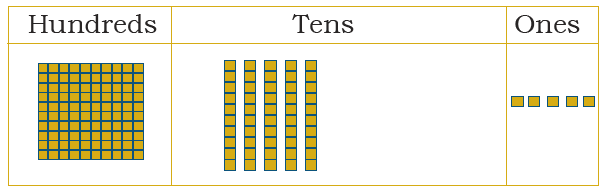
We are left with this.
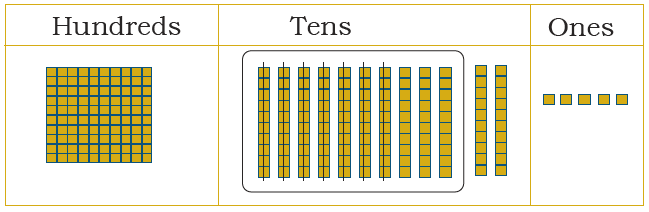
Kishan has .......... saplings now.
Let us Do
Draw box diagrams, as shown above to solve the following problems. Then use HTO blocks or a number line to solve the problems.
1. Kishan has 456 saplings in August. He distributed 63 saplings. How many saplings are left with him?
2. Kishan has a collection of 309 saplings. He gets 80 more saplings of flowering plants. How many saplings does he have now?
3. Kishan has 270 saplings of herbs and his friend has 36 saplings of herbs. How many more saplings does Kishan have than his friend?
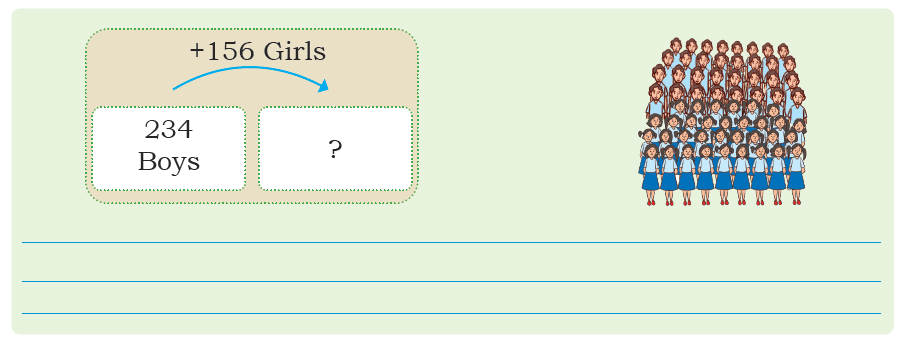
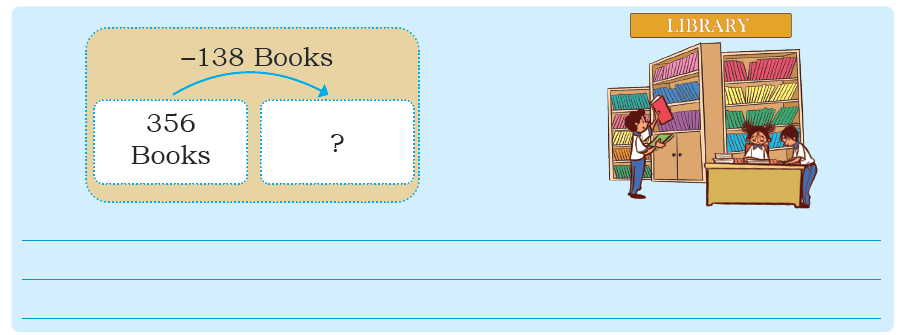
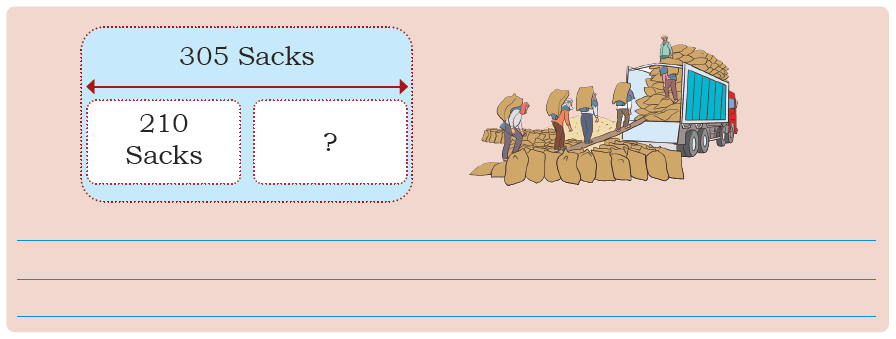
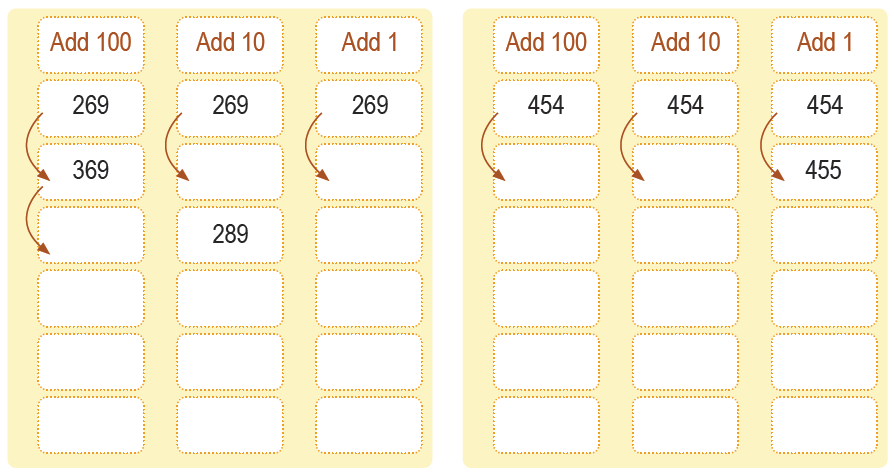
Write word problems using the numbers given in the box diagrams below and solve them. You can take help from the pictures for appropriate contexts.
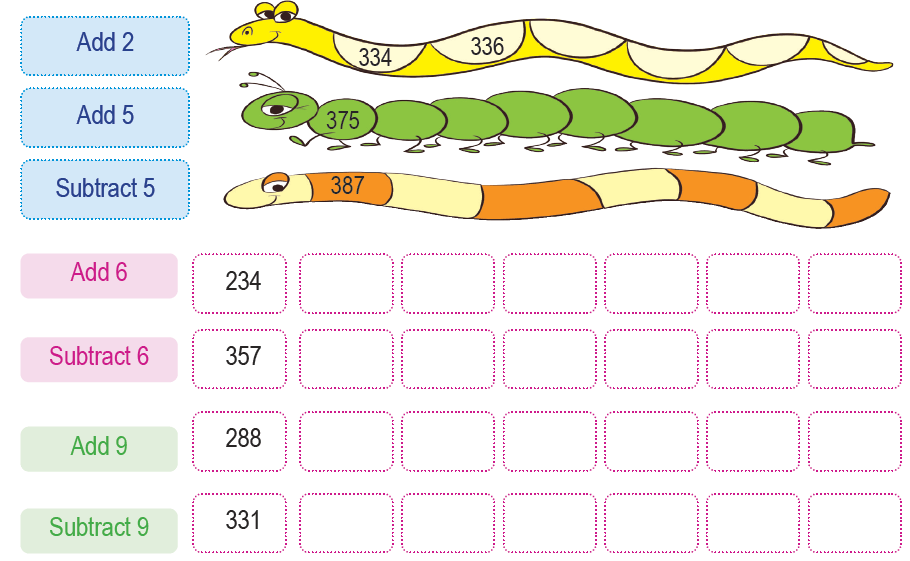
Use the grid below to solve the following questions. Colour your answers in the grid.

Do as directed.
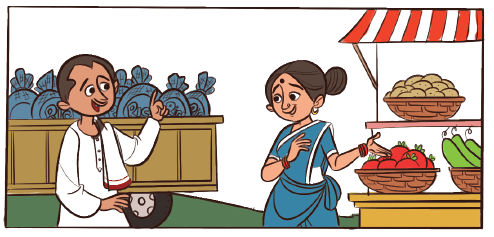
Many years ago, in the Village ‘Jadupur’, people exchanged things based on their need. Shaamu Kaka gave 5 sacks of rice to Dariya Didi. She in return gave 10 sacks of vegetables. Dariya Didi got 2 sarees from Bablu Dada by giving 5 sacks of onions.
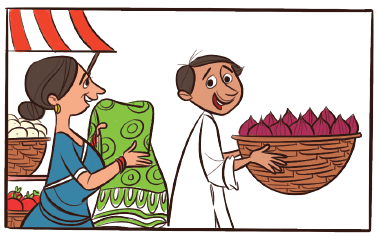
Like this, people in the village exchanged their things. Shamu Kaka got vegetables for the rice he gave. Dariya Didi gave lots of onions to Bablu Dada for the two sarees. Discuss in class why people in this village had to give different quantities while exchanging things.
These days we use money in exchange for things we need. Notes and coins come in different values which are used to buy different things.
For example, one 10-rupee note can buy one Hawa Mithai or ten toffees.

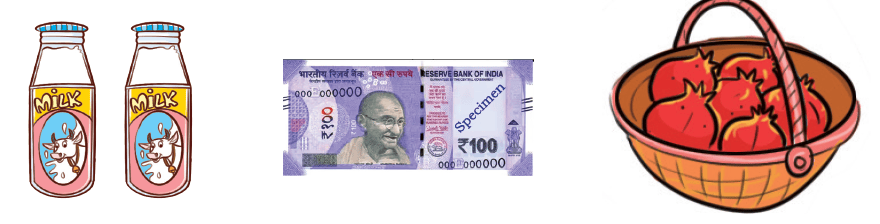
One Hawa Mithai costs more than a toffee. Salma buys two bottles of milk for ` 100. Kiran buys a b sket of pomegranates for ` 100.
Circle the one that costs more: a milk bottle or a pomegranate?
Think of two things that we can buy using the same note.
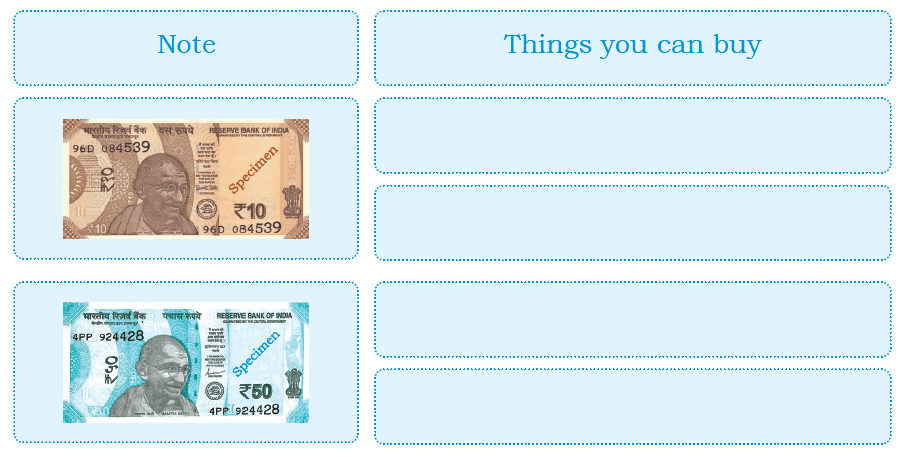
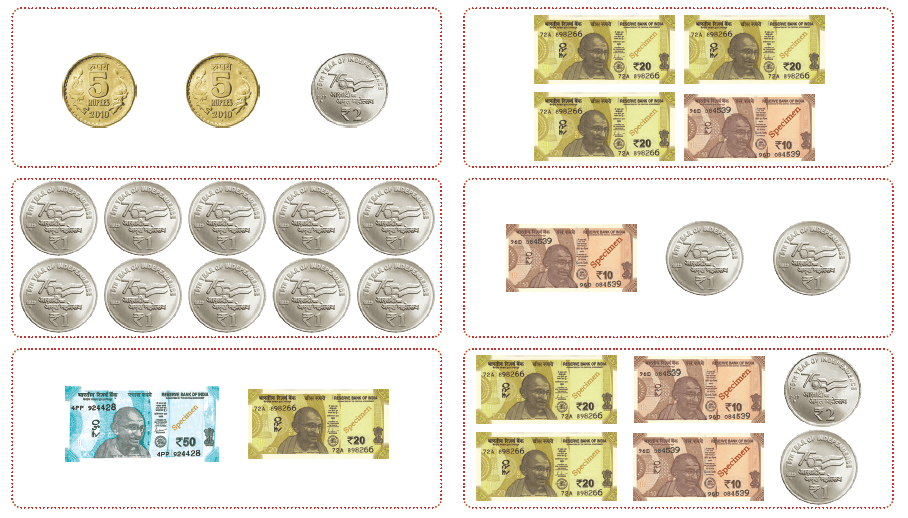
Match the notes and coins in the two columns that have the same values.
![11note]](/assets/ncert/2026/cemm112/OEBPS/Images/11note%5D.png)
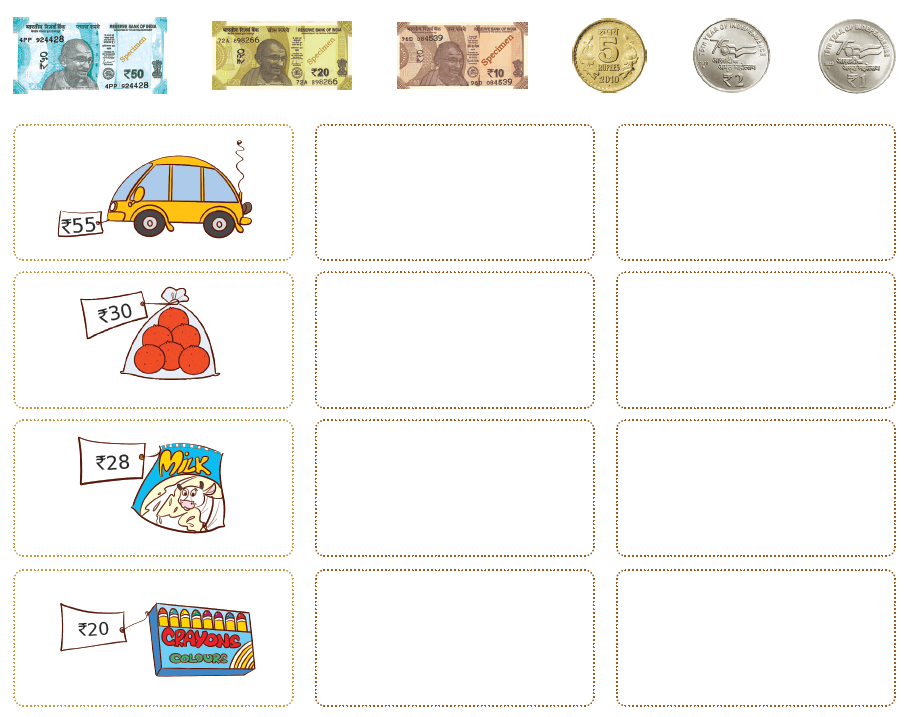
Use the following notes and coins to buy the things given below. Find at least two ways of giving the money. You may use the notes and coins more than once.
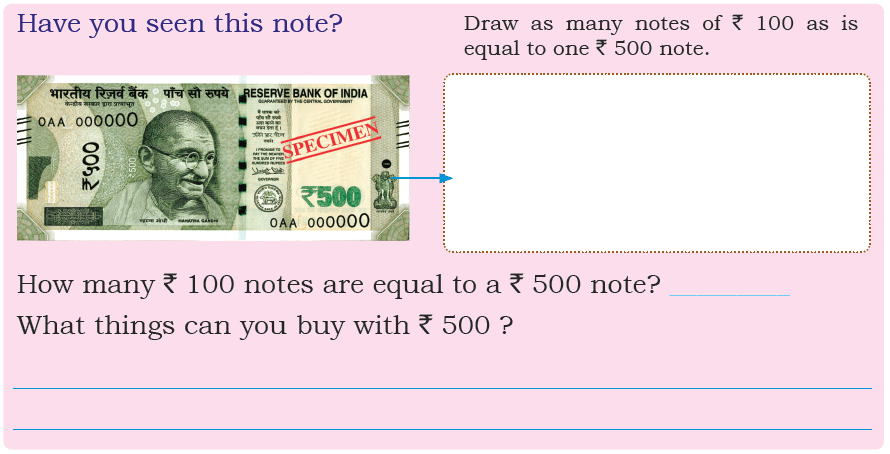
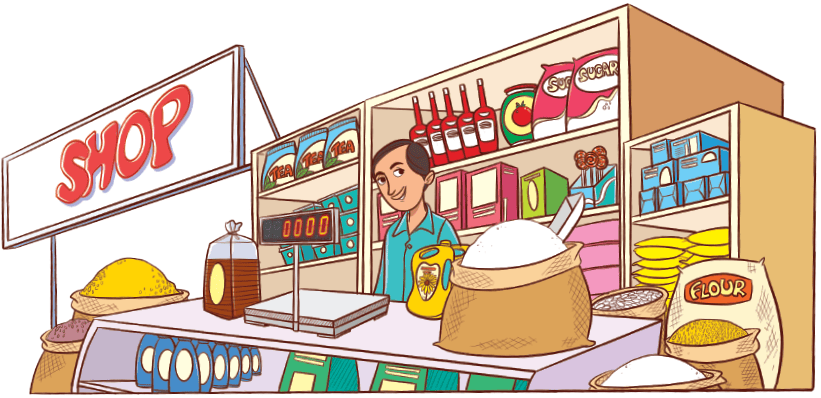
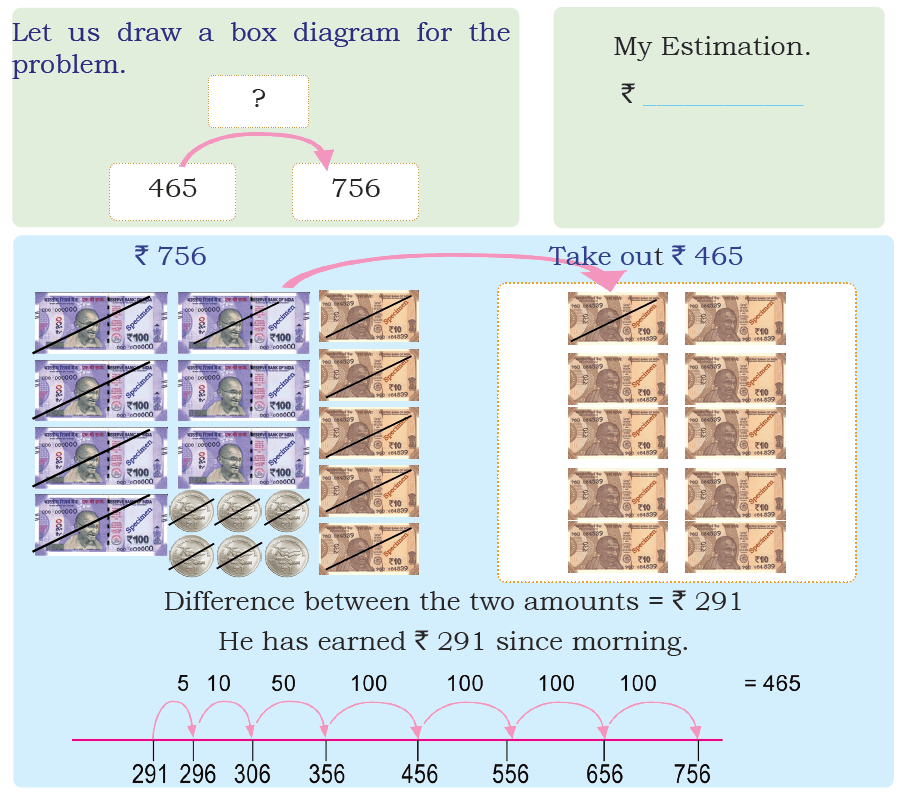
In the morning, Peter uncle has ` 465 in his money box. By afternoon, he has ` 756. How much has he earned since morning?
Today, Peter uncle sold rice for ` 640 and sugar for` 215. How much money has he earned from this sale?
Let us Do
Solve the following problems using box diagrams. Estimate the answers. Then use notes of ` 100s, ` 10s and ` 1s or a number line to solve the problems.
1. One day Peter uncle earned ` 650. The next day he earned ` 250 more. How much money had he earned by the second day?
2. Reena bought groceries for ` 209. She gave a ` 500 note to Peter uncle. How much money should Peter uncle return to Reena?
3. Shireen has ` 150 in her piggy bank. She puts `100 every week in her piggy bank. How much money does she have at the end of four weeks?
4. Peter uncle saved ` 250 in the first month, ` 125 in the second month and ` 350 in the third month. How much has he saved in these three months?
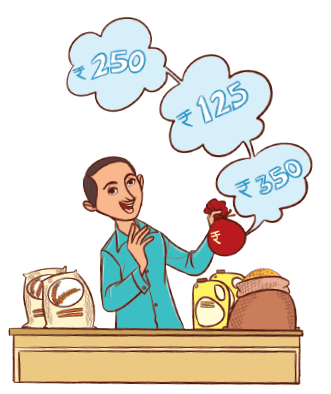
Estimate the answers to the nearest hundred. Share your thinking in the class.
Compare the given problem statements in each row, without calculating. Circle the one that is more. Share your thinking in class.
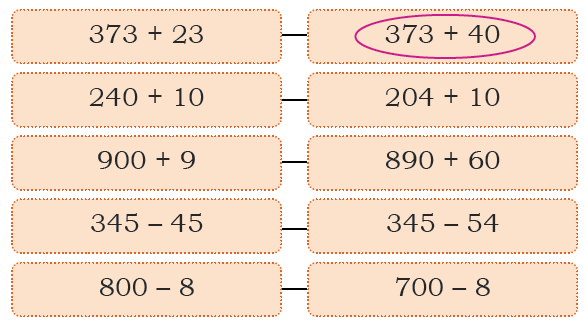
Find the pairs that are equal. Share your thinking in class.

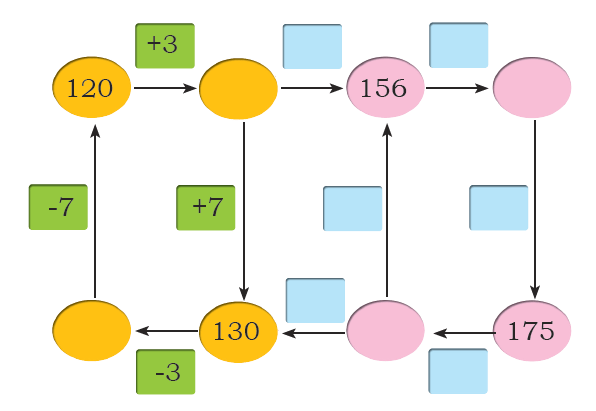
Fill in the boxes with appropriate numbers.
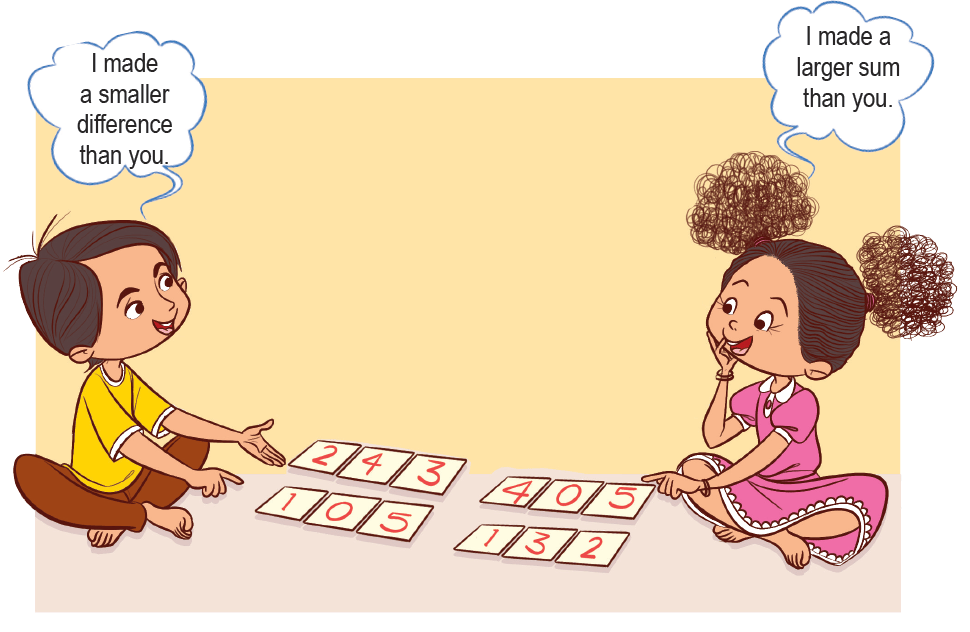
Make cards with numbers 0-5. Make two 3-digit numbers using these cards. Add the two numbers and subtract the two numbers. Rearrange the cards and try to get a bigger sum. Rearrange the cards and try to get a smaller difference.
Check with your friends who has got the biggest sum and smallest difference.
Let us Do
(a) 265 + 9 (b) 405 + 56
(c) 825 + 175 (d) 600 – 82
(e) 568 – 5 (f) 653 – 356