 PANCHATANTRA
The Panchatantra is a set of stories written in the Sanskrit language more than two thousand years ago. It was written by a well-known Sanskrit scholar, Vishnu Sharma. He wrote this collection to teach valuable lessons on morals and values to everyone, especially children, in a very friendly way. The word Pancha means five and Tantra means codes or principles.
All the stories in the Panchatantra are categorised into five groups. These stories are so popular that they have been read by children across the world for centuries. These stories have been translated into all Indian languages and many foreign languages, such as English, German, Italian, Arabic, Japanese, Spanish, and many others.
Here is one such interesting story from the Panchatantra—

Color this as you like
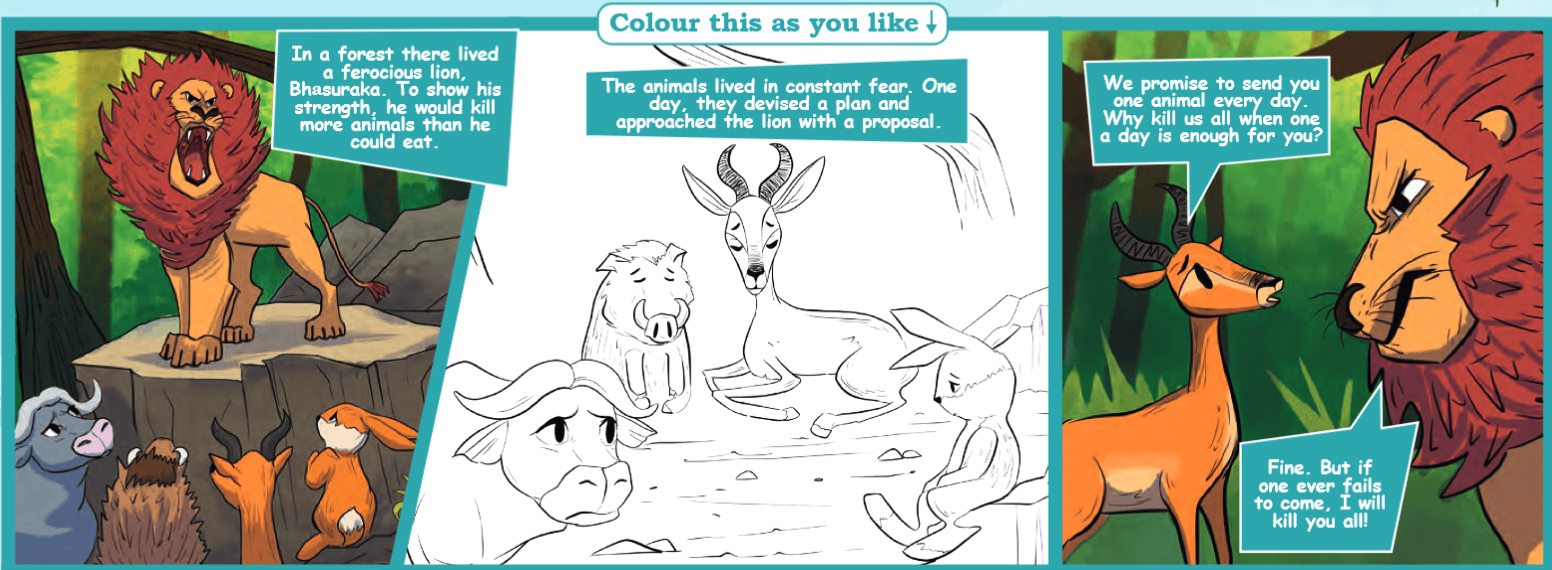
In a forest there lived a ferocious lion, Bhasuraka. To show his strength, he would kill more animals than he could eat.
The animals lived in constant fear. One day, they devised a plan and approached the lion with a proposal.
We promise to send you
one animal every day.
Why kill us all when one
a day is enough for you?
Fine. But if
one ever fails
to come, I will
kill you all!
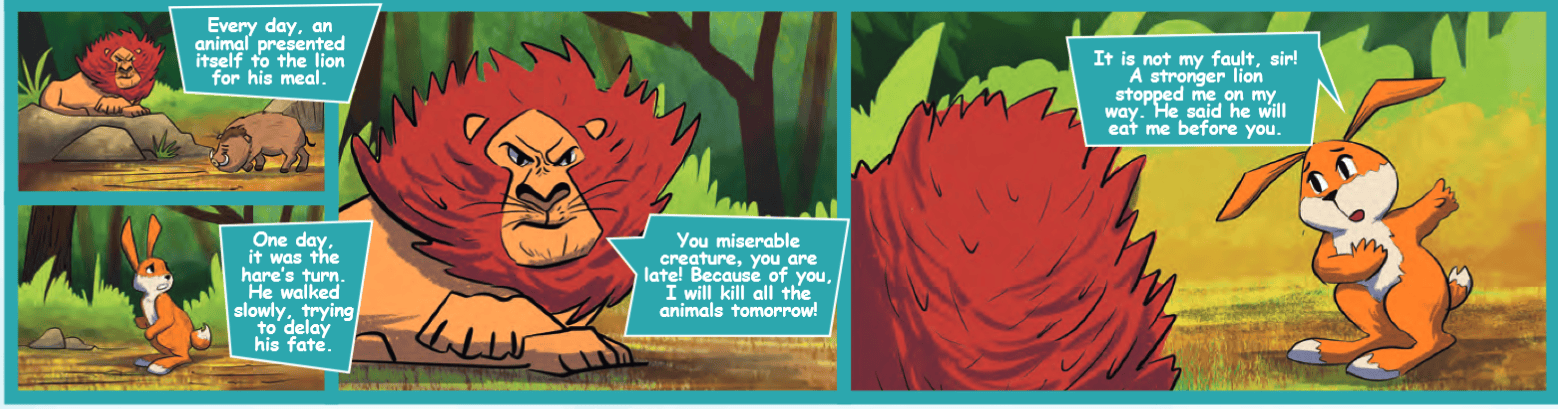
Every day, an
animal presented
it self to the lion
for his meal.
One day,
it was the
hare‛s turn.
He walked
slowly, trying
to delay
his fate.
You miserable creature, you are late! Because of you, I will kill all the animals tomorrow!
It is not my fault, sir! A stronger lion stopped me on my way. He said he will eat me before you.


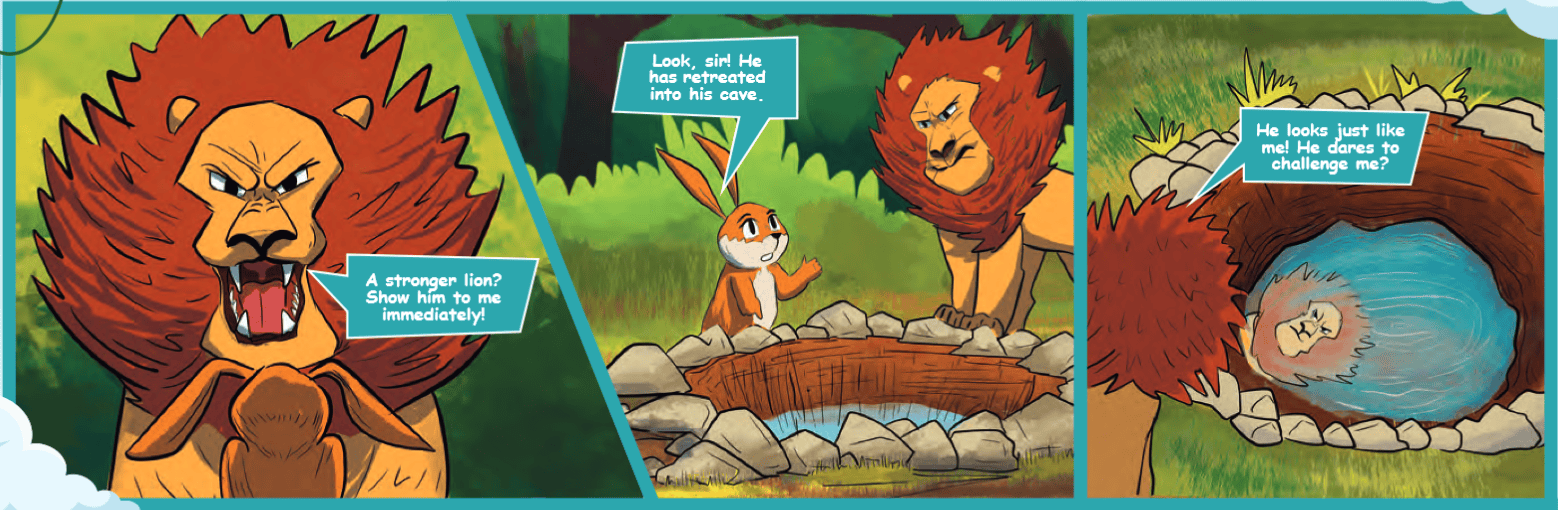
A stronger lion? Show him to me immediately!
Look, sir! He has retreated into his cave.
He looks just like me! He dares to challenge me?
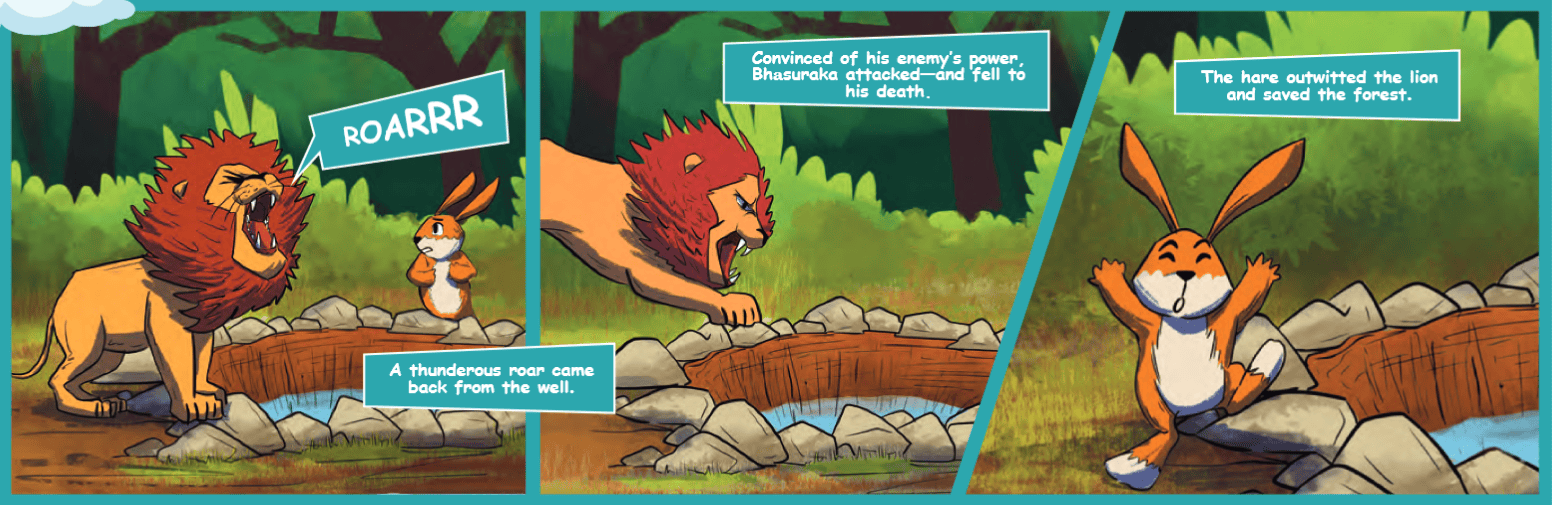
R O A R R R
A thunderous roar came
back from the well.
Convinced of his enemy‛s power, Bhasuraka attacked—and fell to his death.
The hare outwitted the lion and saved the forest.

What did you learn from this story? Good. Now, as you start learning new things in art, music, theatre, and dance you will be referring to this story for many of the activities. Is it not wonderful to see how a Panchatantra story connects all the art forms? So remember this story and have fun performing all the activities!
Whenever you see this, it means you have to recall ‘The Hare and the Lion’ story.
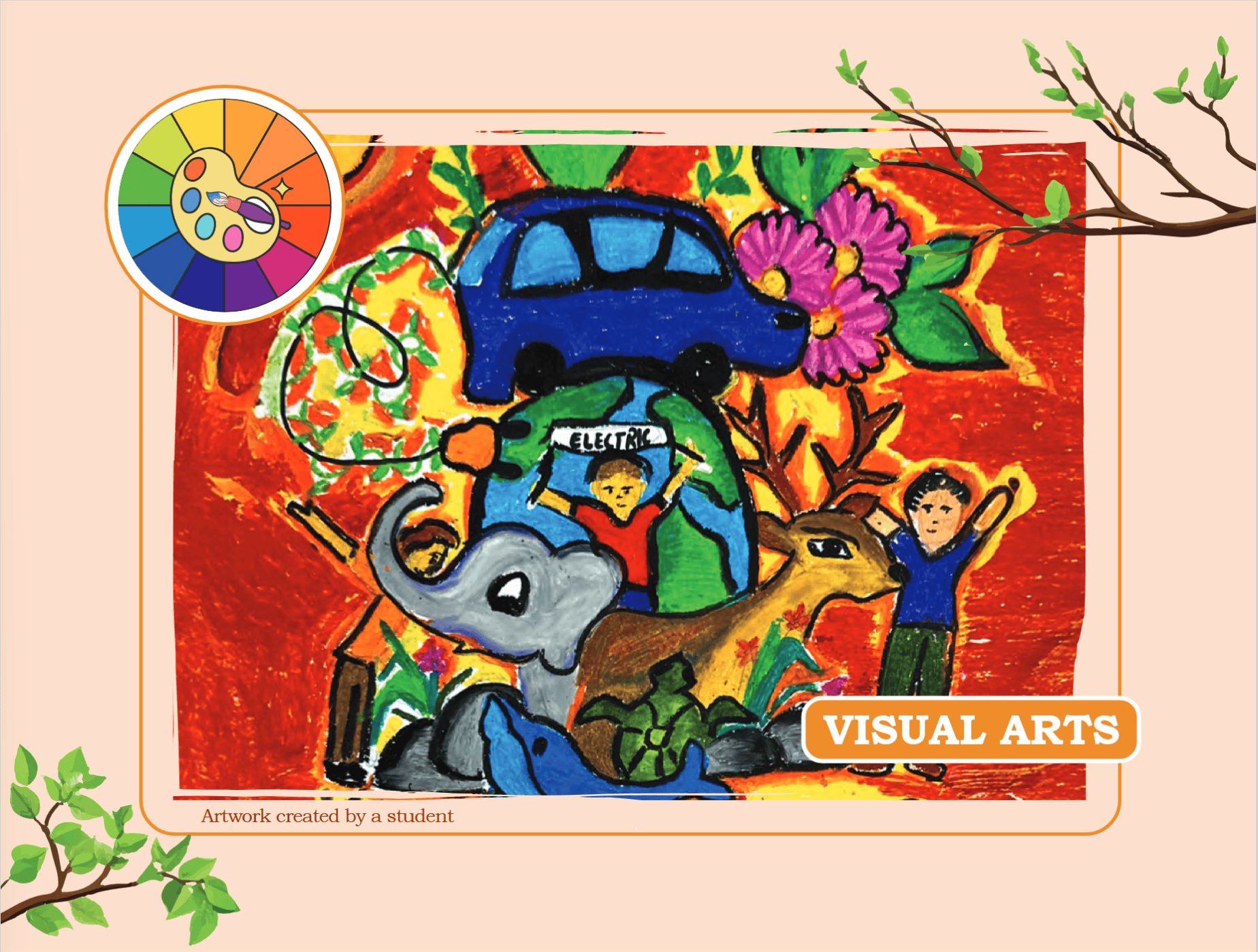
|
Dear Teacher, Classroom Requirements 1. Adequate space for students to work comfortably. 2. Sufficient lighting and ventilation. 3. Proper storage and easy access to art materials, tools, basic stationery, and audio-visual facilities. 4. A space to showcase and exhibit artwork periodically. Visual Arts Pedagogy 1. Use story telling and everyday examples while introducing concepts and processes. 2. Encourage students to freely express their original ideas, imaginations, emotions, and curiosities through their artwork. 3. Encourage keen observations of everyday life and discourage copying from other pictures or photographs. 4. Allow students to explore, investigate, experiment, collaborate, and have dialogues in the classroom. 5. Include outdoor activities and field trips to help students observe the life and culture around them. 6. Organise field trips, visits to museums, heritage monuments, local melas, and conduct art workshops for students. 7. Invite local artists and craftspeople for interactive sessions, and hands-on workshops. 8. Instill simple habits, such as cleaning up after working, putting back used materials, and handling art materials with care. 9. Encourage students to participate and make decisions in the selection of artwork for classroom display or exhibitions. Visual Arts Assessment Please refer to the section on time allocation and assessments for further details. 1. Assessments should align with the Learning Outcomes and Competencies for the Preparatory Stage. |
2. Each student should learn to build and maintain a portfolio of their artwork. This will help the teacher to track their learning and progress over time. 3. Formative Assessment should not be conducted on a separate ‘test day’, but be integrated within the classroom activities. This can be done by: • Providing qualitative feedback stating strengths and areas of improvement. • Recording students’ participation in discussions on art in both formal and informal interactions. • Assigning simple tasks during field trips to assess their observation and interests in art activities. 4. Summative Assessment should be conducted at the end of each term through project work or practical assignments. Suggested examples for assessment are provided at the end of the ‘Visual Art’ section. Competencies for the Preparatory Stage C-1.2 Discuss a variety of ideas and responses while working collaboratively in the Visual Arts. C-2.1 Creatively uses different combinations of visual elements (line, form, colour, space, texture) while depicting their everyday observations, personal experiences, and feelings. C-2.2 Compares and contrasts the visual elements, themes, and expressions of artwork shared in the classroom. C-3.1 Makes choices while working with materials, tools, and techniques used in the Visual Arts. C-3.2 Practises steps of planning, execution, and presentation while creating visual artwork individually and collaboratively. C-4.1 Recognises visual elements in nature and describes their artistic qualities. C-4.2 Demonstrates curiosity towards local art forms and culture. |
| Learning Outcomes that can be assessed across chapters | ||||
|---|---|---|---|---|
| CG | Competencies | Learning Outcomes | Teacher | Self |
| 1 | C-1.2 | Works collaboratively and exchanges ideas with peers | ||
| 2 | C-2.2 | Identifies the similarities and differences in size, colours, pattern, textures, materials and themes seen in artworks | ||
| 3 | C-3.1 | Selects and uses suitable materials and tools for drawing, colouring, printing, collage, frottage, origami, making floor designs and three-dimensional artworks | ||
| 4 | C-4.1 | Recognises and describes patterns, textures and symmetries seen in nature | ||
| 4 | C-4.2 | Asks questions and shares thoughts while looking at artwork | ||
Activities that are marked by a star symbol can be facilitated by any teacher, even in schools with limited resources.

Chapter 1
ARRANGEMENTS OF OBJECTS
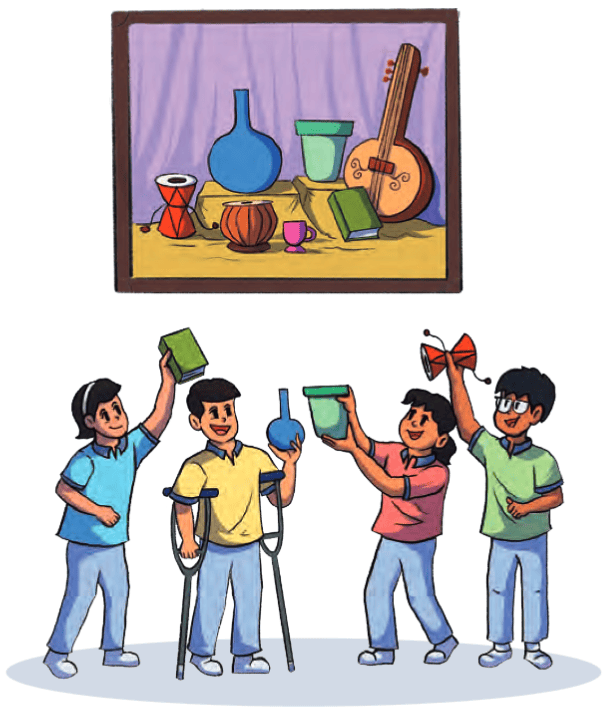
Notice how a room or shop looks better when furniture and objects are in room artistically. Adding fabrics in the background helps catch our attention. In this chapter, you will arrange a variety of objects found around you. As you draw, observe the space around the objects, and compare the various sizes, shapes, forms, and colours. Have you ever played hide-and- seek on paper? You will soon be able to create your visual hide- and-seek through drawings. Gather your materials and tools as they will also be a part of the objects that you will be drawing.
Activity 1.1
Complete the Picture
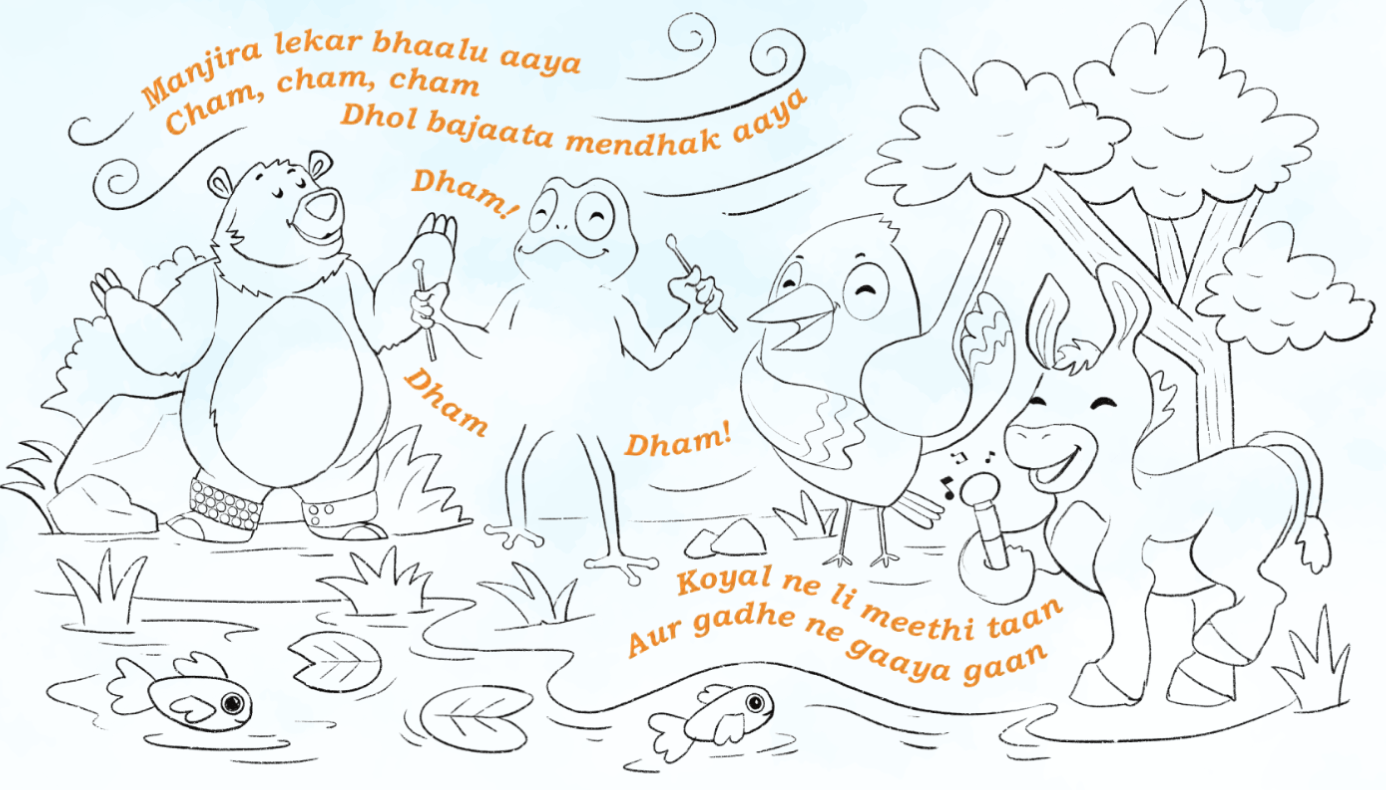
Some animals have formed a music band.
- Draw the missing musical instruments and objects.
- Colour the picture to make it interesting.
- Compose your own poem for this picture in any language.
- You can add more animals to the band.
Activity 1.2
A Picture Gallery
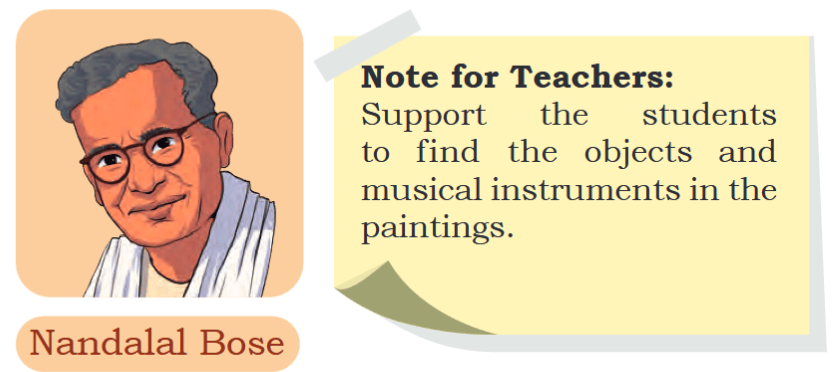
Nandalal Bose
Support the students to find the objects and musical instruments in the paintings.
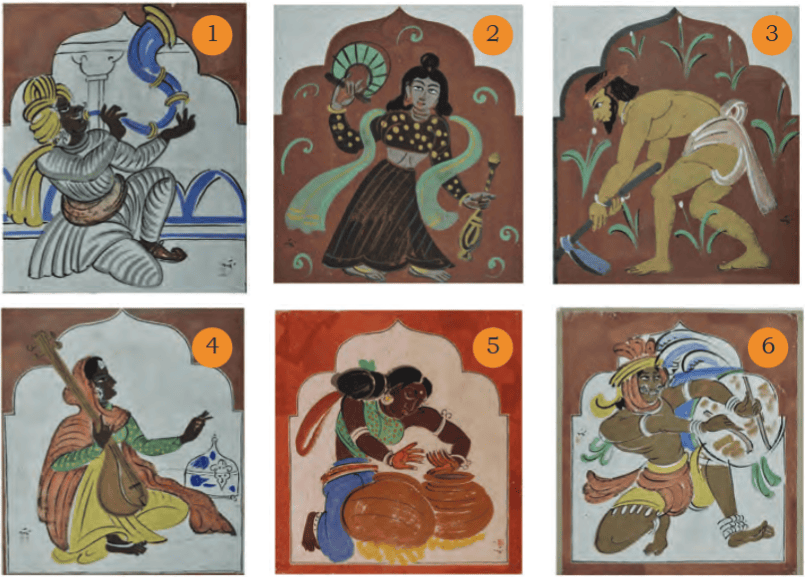
Look at the paintings made by the renowned artist Nandalal Bose. He has shown people in various occupations.
In which pictures do you see the following musical instruments? Write the picture number.
- Tanpura
- Dhak
- Ghatam
- Singa
List the other objects that you see (such as tools and ornaments) below.
Activity 1.3
Arrange and Draw Objects
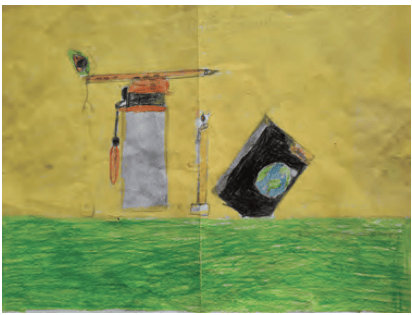
- Choose from any of the
topics below.
- Essential items required for a nature walk (refer to Chapter 4 in your textbook The World Around Us)
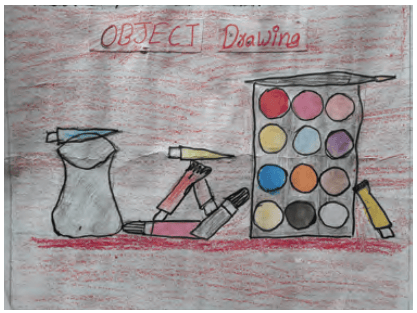
- Stationery: pencils, erasers, books, bag, scissors, glue, etc.
- Tools used in farming, carpentry, plumbing, tailoring, etc.
- Clothes and footwear
- Vessels and utensils
- Objects used for grooming: toothbrushes, toothpaste, comb, nailclippers, soaps, oil bottles, buckets, mugs, etc.
- Arrange objects in an interesting manner and draw them.
- Use most of the space on your paper to draw the objects large.
- Colour the objects first. Then, colour the space around them.
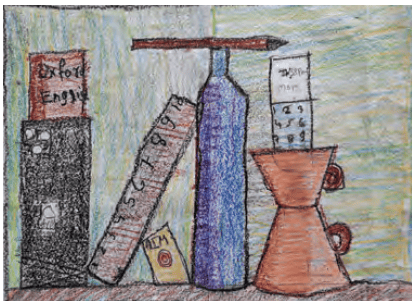
You can also arrange any three musical instruments if they are available in your school, and draw them.
Field Trip: Visit a market and observe how objects are arranged and displayed by vendors. Make more drawings there.
Your space to draw
Activity 1.4
Visual Hide-and-Seek with Objects
Let us create the game hide-and-seek with objects.
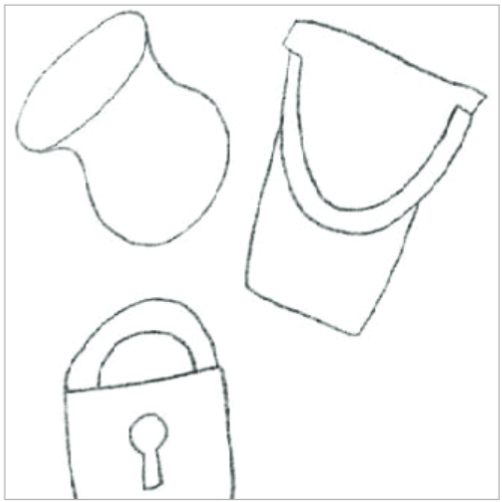
- Step 1: Draw any two or three objects on a sheet of paper. They should not overlap.
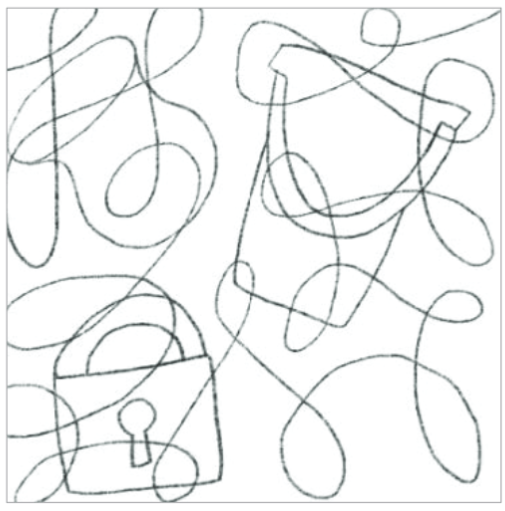
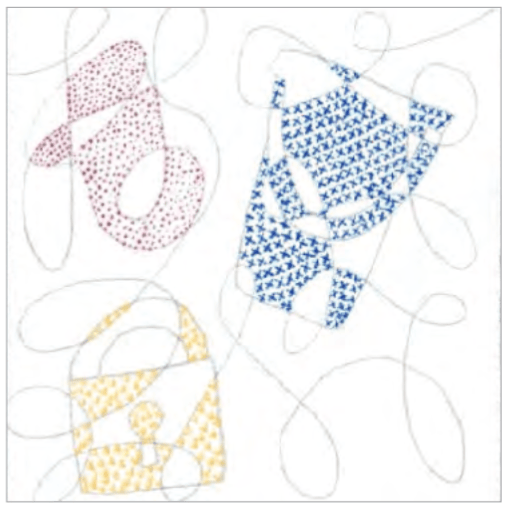
- Step 2: Draw a squiggly line that wanders through the whole page and goes over these objects. This line would divide each object into smaller shapes.
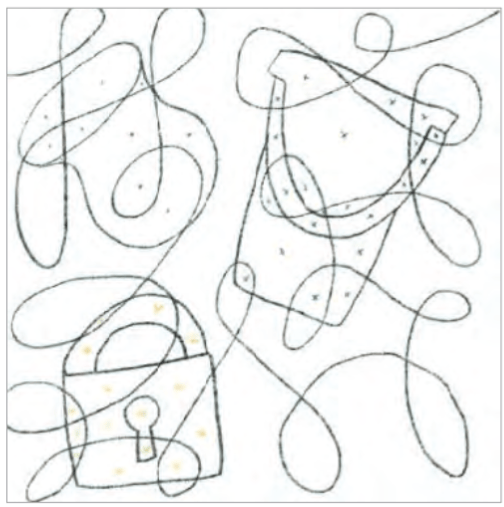
- Step 3: Choose a symbol and a colour for each object. For example, a red dot for the pot, a blue X for the bucket and a yellow + for the lock.
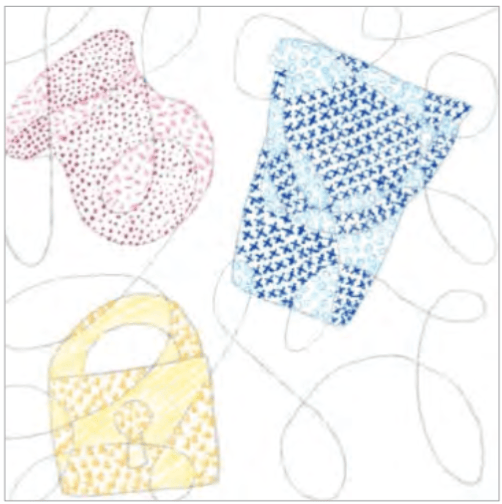
- Step 4: Mark all the shapes that divide the objects with the chosen symbols and colours. You can even choose light and dark tones of the same colour for each object.
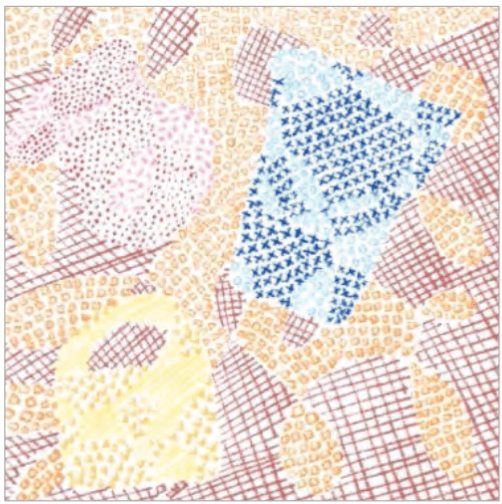
- Step 5: In each object, fill the shapes with two different patterns in the chosen colour.
- Step 6: Similarly, choose a colour for the background and fill the background with two different patterns.
Your space to draw
Can your friends find and identify the objects in your artwork?
Activity 1.5
Make a Diorama
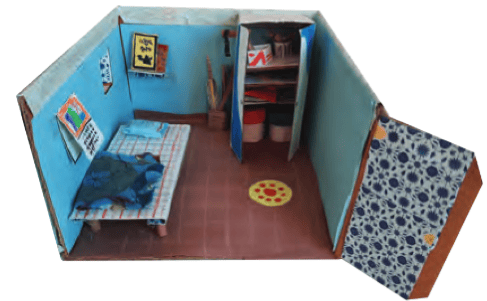
A diorama is a three-dimensional artwork that has an arrangement of objects to show a scene.
You can easily make a diorama using a discarded carton or a shoe box.
- Imagine and design a room and draw it here.
- Based on the drawing, make objects that would be placed in the room. For example, you can use empty matchboxes to make furniture, and pieces of rags to make curtains. Use your imagination to make objects of your choice.
- Arrange your room beautifully.
| ASSESSMENT - Chapter 1: Arrangement of Objects | ||||
|---|---|---|---|---|
| CG | Competencies | Learning Outcomes | Teacher | Self |
| 1 | C-1.1 | Arranges and draws different groups of objects by observing them | ||
| 2 | C-2.1 | Depicts objects in imaginative arrangements by playing with their placement, size, lines, shapes, forms, colours, and patterns | ||
| Overall participation in class | ||||
Teacher’s feedback on student’s strengths
Teacher’s feedback on areas of improvement
Any other observation