
Chapter 2
TEXTURES IN NATURE
Many stories from the Panchatantra, Hitopadesha, and Jataka tales are set in jungles. Nature is full of incredible shapes, forms, colours, patterns, and textures.
Textures can be felt through touch–rough, smooth, bumpy, soft, and everything in between.
In this chapter, you will step outside to explore the textures in your natural surroundings.
Then you will create your own Kalpavriksha or wish-fulfilling tree by learning techniques like:
- Frottage— rubbing on textured surfaces to capture their patterns.
- Collage— cutting and pasting pieces of paper, leaf, etc., on a surface.
- Leaf printing— painting the surface of a leaf and pressing it on a surface.
Activity 2.1
Imagine a Wish-fulfilling Tree
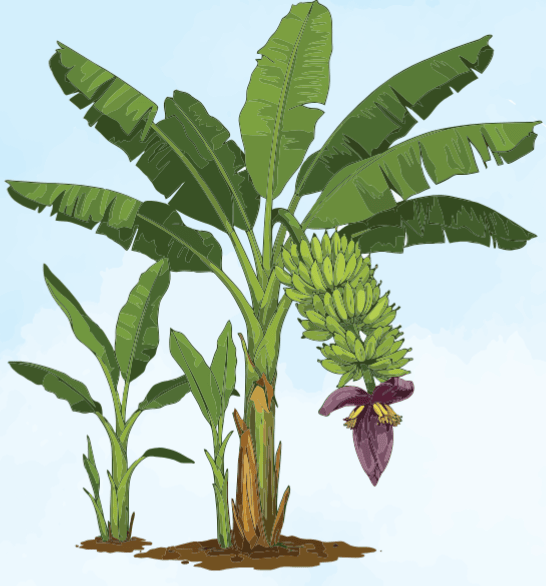
Look at the trees around you, or pictures of trees, and discuss the following:
- Their size—are they tall, short, big or small?
- Their parts—trunk, branches, leaves, flowers, fruits, thorns, roots, etc.
- What kinds of lines, shapes, colours, and textures do you see?
Imagine that you are in a magical forest, where you can make your own Kalpavriksha or wish-fulfilling tree!
Trees give us so many things—oxygen to breath, fruits, shade and so much.

- What kind of tree would you like to make?
- It can be of any size, shape, or colour.
- Sketch two to three ideas for your tree.
D0 YOU KNOW?
Ancient texts mention Kalpavriksha as a tree that grants wishes.Your space to sketch your tree
Activity 2.2
Frottage
The process of capturing textures by rubbing on surfaces is called frottage.
You can use pencils, colour pencils, or crayons for this.
Gather your materials for the activity and step outside.
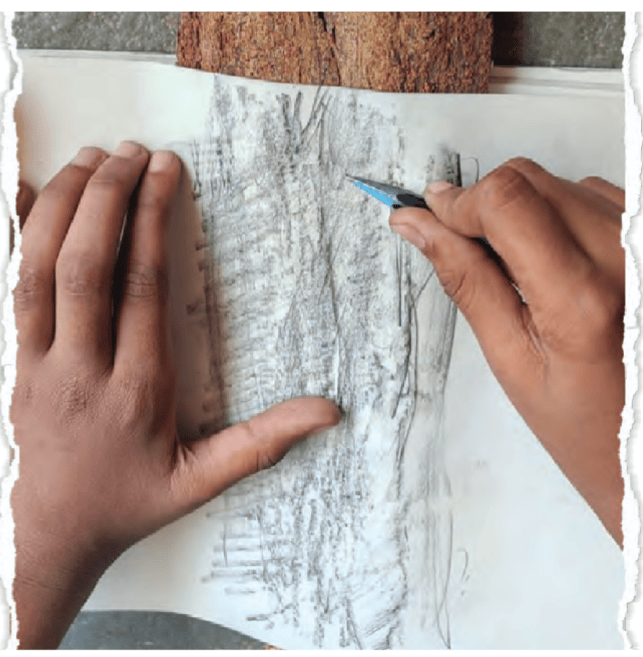
Touch and explore different textures
- Touch different surfaces, such as soil, pebbles, stones, leaves, flowers, tree barks, etc.
- Does the texture of a bark feel the same as that of a leaf?
- Observe the lines, shapes, and colours of different textures.
- Compare the kinds of line patterns each texture creates.
- Observe the lines on the leaves, shown in Chapter 4 of The World Around Us textbook.
Make your frottage by following the instructions given on the next page.
Frottage Process
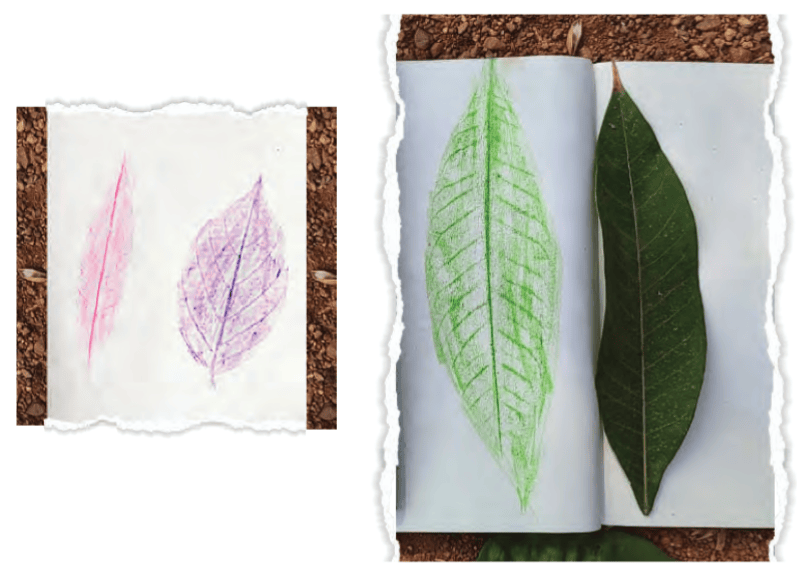
- 1. Place a sheet of paper on your chosen surface.
- 2. Hold the sheet on the surface and rub a coloured pencil or a crayon on it.
- 3. Observe the texture that is captured.
- 4. Rub it with a little more pressure to capture more details.
- 5. Place the sheet on different surfaces and repeat the steps.
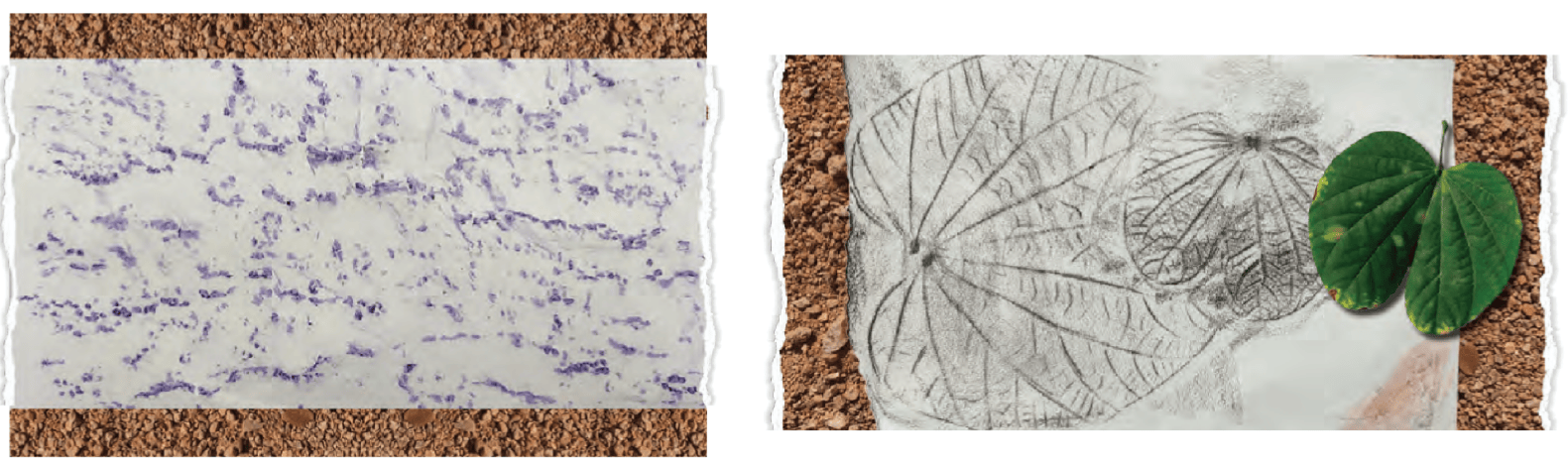
Gather all your frottage artworks for the next activity.
Activity 2.3
Collage of Trunk and Branches
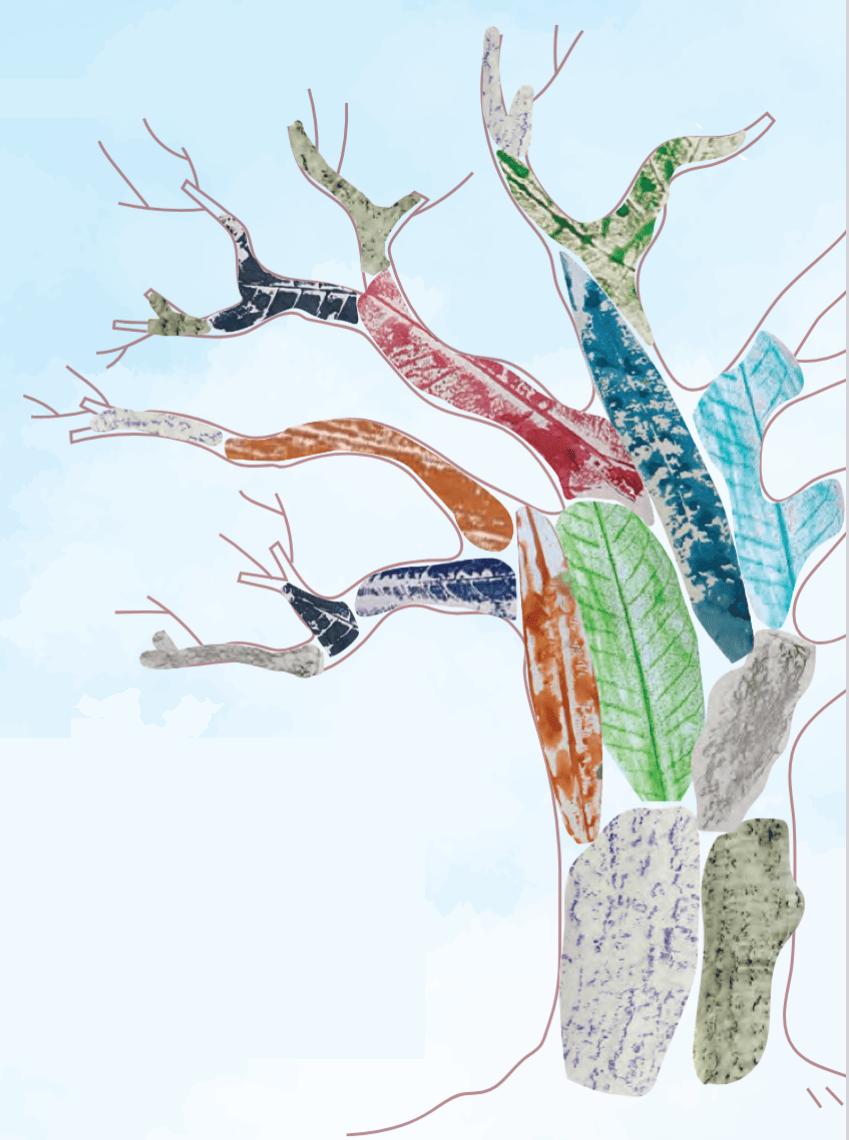
Collage is the process of pasting different materials on any surface to make an artwork.
Collage Process
- 1. Prepare a large surface by joining sheets of paper. You can use old newspapers or a large piece of waste fabric.
- 2. Create the outline of your wish-fulfilling tree by drawing its trunk and branches based on your preparatory sketches.
- 3. Gather the frottage work (you can also include materials having different textures).
- 4. Select textures from your frottage work by sharing and exchanging with your friends.
- 5. Arrange and paste the frottage work within the outlines of the trunk and branches.
Note for Teachers:
This can also be
done in small groups
of 4 to 5 students.
Activity 2.4
Print the Leaves
After completing the collage, add leaves to the branches of your tree.
Leaf-printing Process
- 1. Gather leaves of different shapes, sizes, and textures.
- 2. Mix some paint and water to create a creamy paste.
- 3. Apply the paste on the leaf with your finger, a sponge, or a brush.
- 4. Place it on the desired area and press it hard.
- 5. Lift it off the surface carefully.
- 6. Repeat this process with different leaves and colours.
- 7. Create patterns and arrangements while you print the leaves.
Complete your tree and invite your friends to make wishes.
Note for Teachers:
This can also be
done in small groups
of 4 to 5 students.
| ASSESSMENT — Chapter 2: Textures in Nature | ||||
|---|---|---|---|---|
| CG | Competencies | Learning Outcomes | Teacher | Self |
| 1 | C-1.1 | Depicts patterns and textures seen in plants | ||
| 2 | C-2.1 | Makes preparatory sketches and edits artwork before presenting the completed work | ||
| 3 | C-3.2 | Overall participation in class | ||
Teacher’s feedback on student’s strengths
Teacher’s feedback on areas of improvement
Any other observation by the teacher