
Chapter 4
PEOPLE IN ACTION
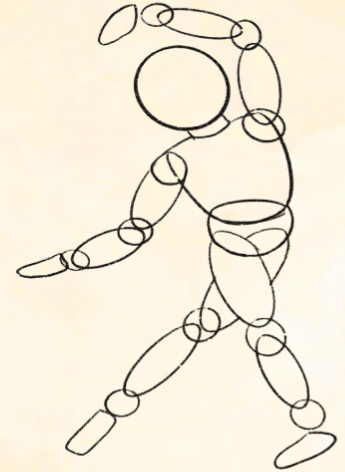
Recall a time when you were in a crowded place with people moving around in different positions and actions. Each person’s posture and movement could tell a different story.
Nandalal Bose’s paintings in Chapter 1 show a variety of postures and actions of people.
In this chapter, you will learn to use geometric shapes to sketch people in action.
Inspired by traditional Indian toys, you will craft geometric 3D forms to make a spinning doll and enjoy playing with it.
Get ready to imagine, create, and have fun!
Activity 4.1
Visual Journal
A journal is a book that you use to write down ideas and observations, or make quick sketches.
Keep a few sheets of paper ready.
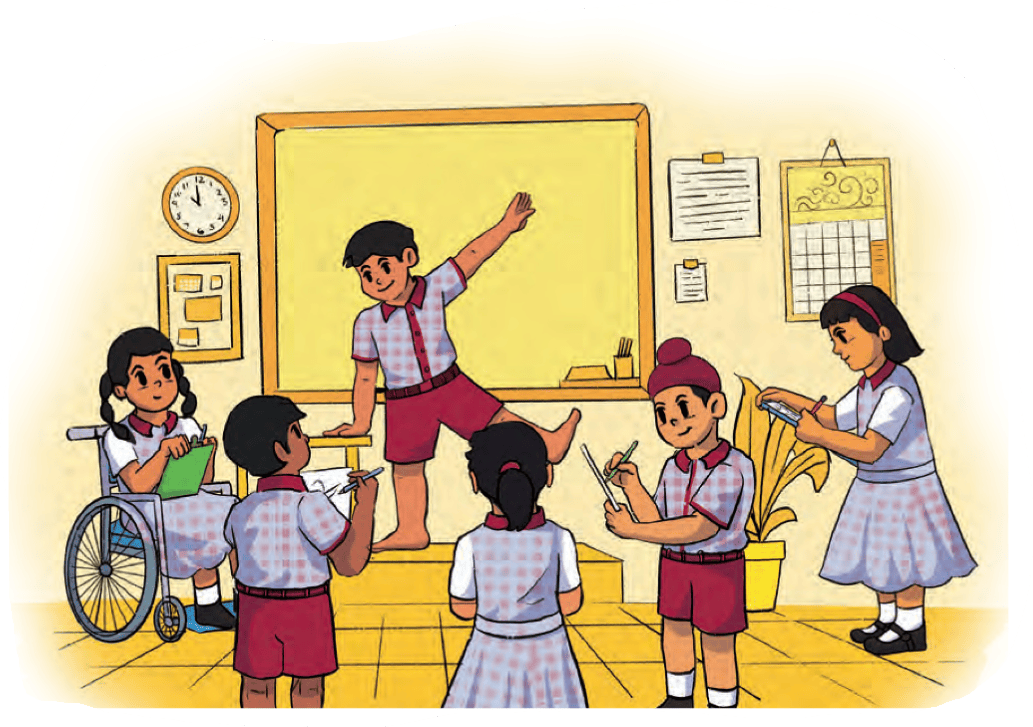
Let us play the statue game.
- Ask one friend to stand in front of the class.
- Ask them to enact everyday actions like showering, playing, eating, and so on.
- Observe how their bodies move and turn.
- When you see an interesting pose, say “statue!”
Sketch each pose on a page within one-minute.
Do not think about making these one, minute sketches perfect. It is okay if they look sketchy or incomplete.
Draw your one-minute sketches here
Activity 4.2
Drawing Body Movements
How will you draw people when they are moving?
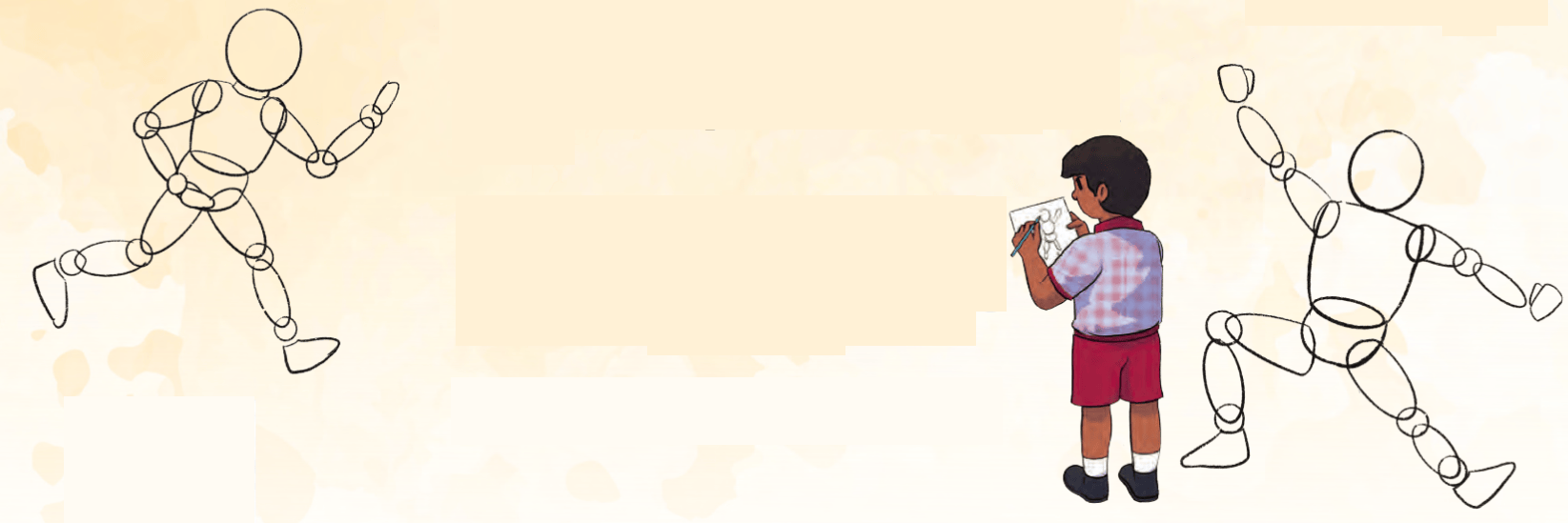
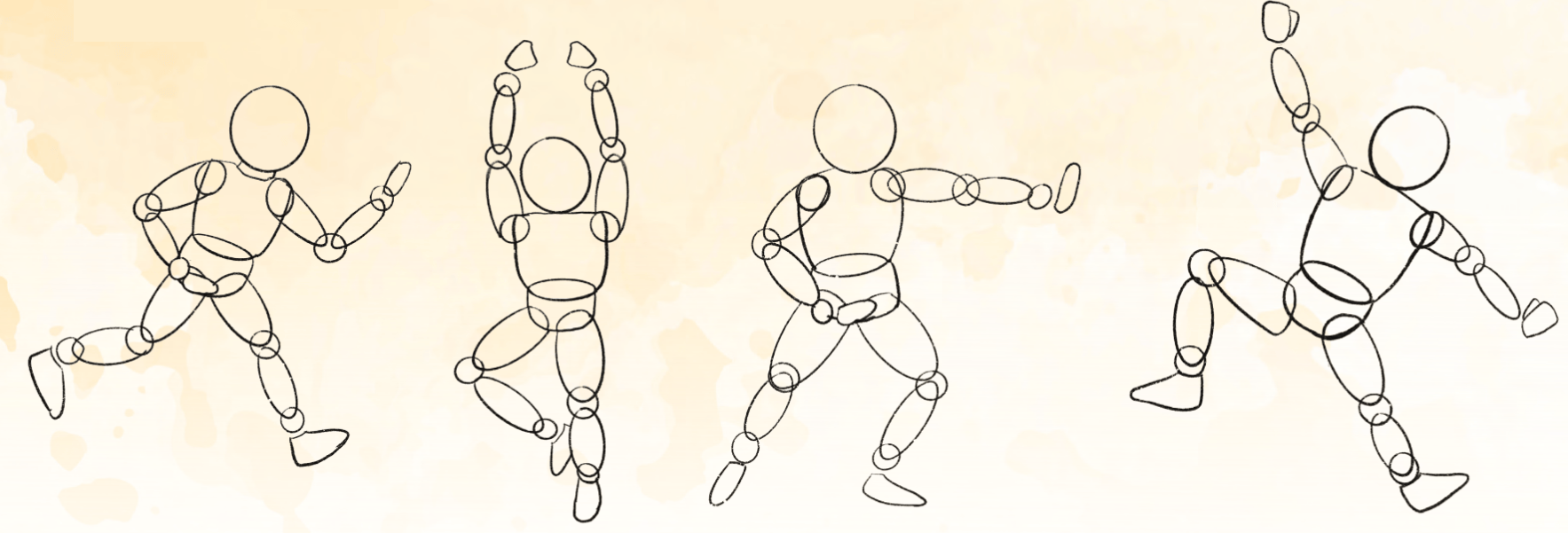
When you carefully observe the body, you will see that it is made of spherical and cylindrical forms.
Look at the pictures shown on the page. The whole body has been drawn using imperfect circles and ovals.
Observe people closely and make drawings.
- Capture their postures and movements using such figures.
- Draw positions and postures that you practise in dance.
- Try to sketch as many actions as you can.
Your place to draw the figures
Activity 4.3
Toy People
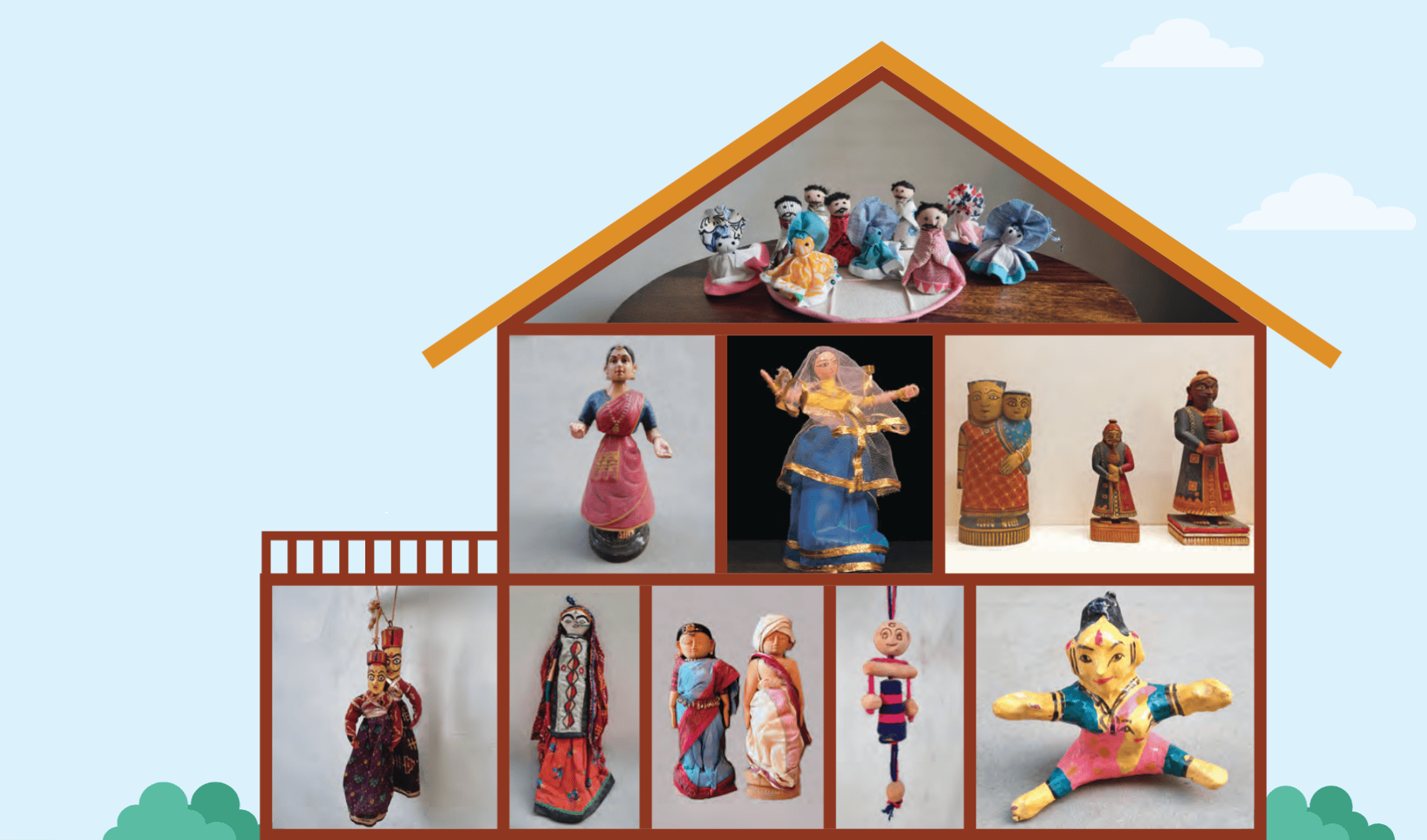
Every region in India has a unique way of making toys. Many of these are dolls made of clay, wood, cloth, jute, palm leaves, paper mache, shells, and metal.
Discuss the toys you have played with and the materials they were made of.
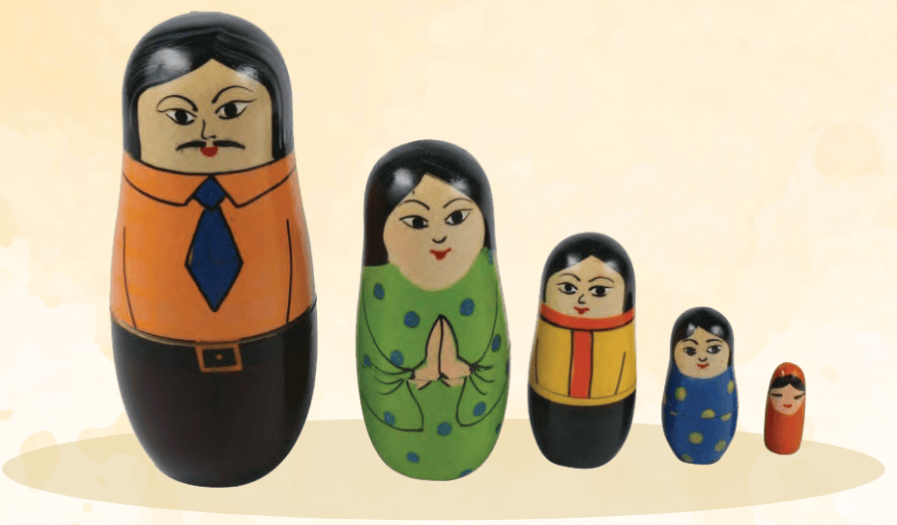
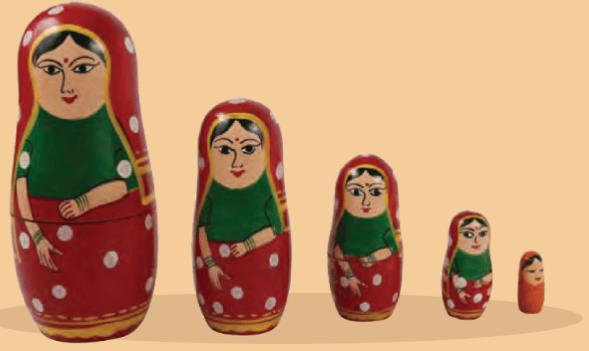
D0 YOU KNOW?
Channapatna in Karnataka is popularly known as the toy town. It has a tradition of manufacturing colourful wooden toys. Geometric forms like cylinders, spheres, cubes, and cuboids are commonly seen in their designs.
Look at the variety of dolls from different parts of India.
- Observe and discuss the materials used.
- Discuss how the characters are portrayed.
- Imagine the stories they depict.
- How would you play with them?
Activity 4.4
Spinning Paper Doll
Materials
- A thin stick or broom stick
- A5 size paper (half A4) plain/coloured
- Glue
- Pens/sketch pens
- Crayons/paints to colour (optional)
Follow the instructions to create a spinning doll that you can play with.
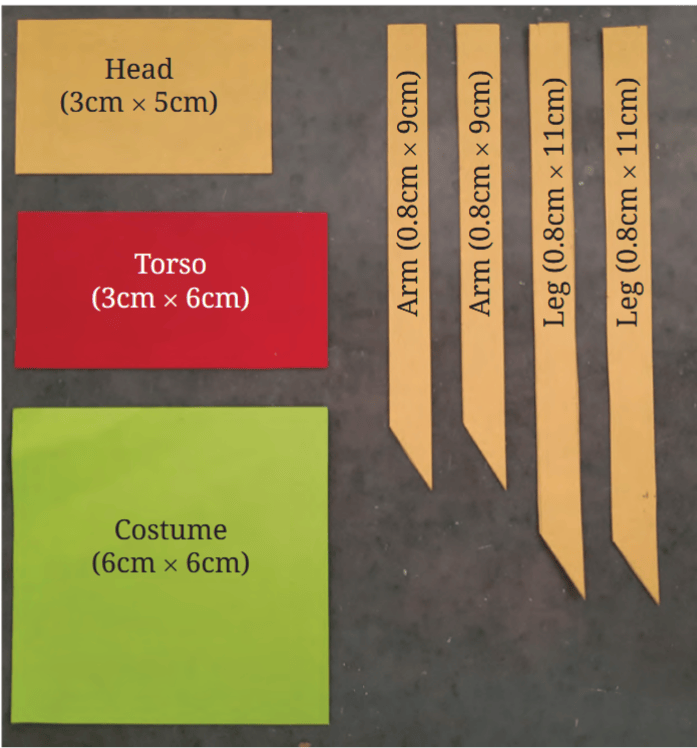
Step 1: Draw the shapes of the required size on your paper. You can make them bigger too.
Step 2: Colour the shapes if you are using a plain paper.
Step 3: Cut out the shapes. Now make the body parts from each shape.
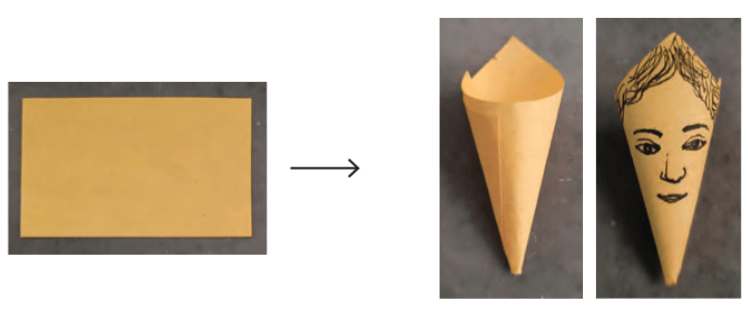
Step 4: Make the head by rolling the smaller rectangle into a cone. Stick the edge. Draw eyes, nose, mouth, and other facial features.
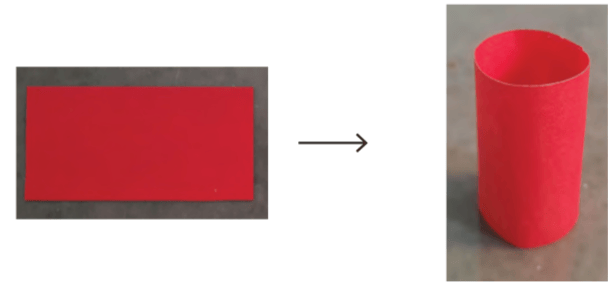
Step 5: Make the torso by rolling the bigger rectangle into a cylinder. Stick the edges.
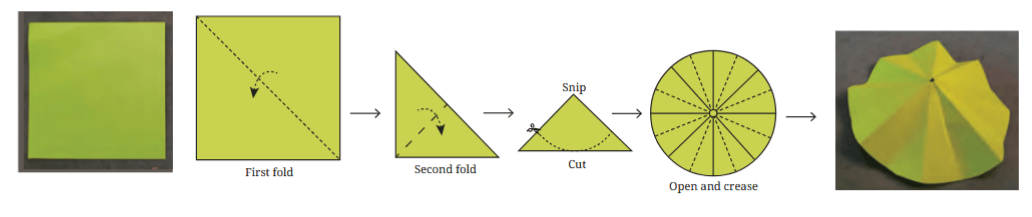
Step 6: Follow these steps to make the costume. Innovate with the costume as well as the position of the arms and legs to make each of your dolls different from others.
Step 7: Assemble the doll on a stick.
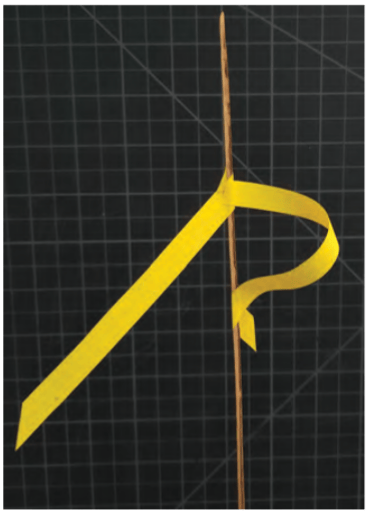
Wrap one end of each leg onto the stick and glue it.
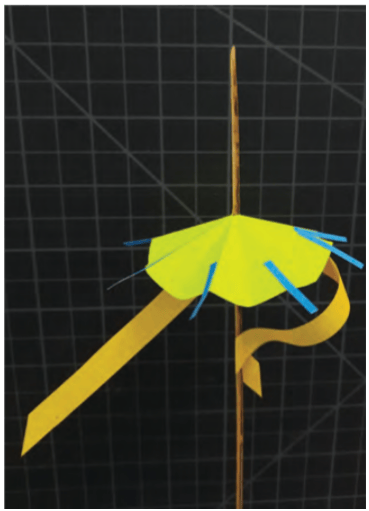
Place the costume over the legs. Decorate it.
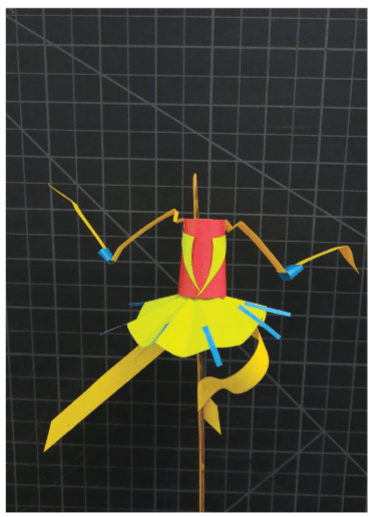
Glue the arms on the torso. Create folds at the shoulders, elbows, and wrists.
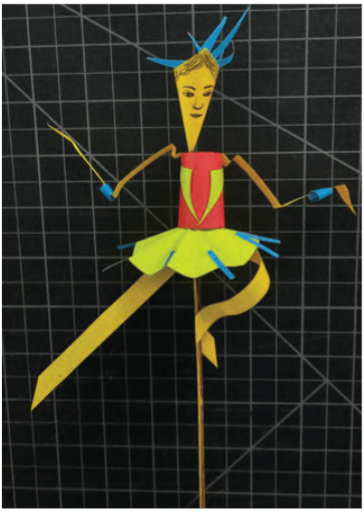
Place the head. Decorate it.
Now spin the doll and play with it!
| ASSESSMENT — Chapter 4: People in Action | ||||
|---|---|---|---|---|
| CG | Competencies | Learning Outcomes | Teacher | Self |
| 1 | C-1.1 | Uses basic shapes to depict the human body in a variety of postures and actions | ||
| 2 | C-2.1 | Crafts simple three-dimensional forms with paper (cone, cylinder, etc.) | ||
| 3 | C-3.2 | Follows the sequence of instructions to make a paper doll | ||
| Overall participation in class | ||||
Teacher’s feedback on student’s strengths
Teacher’s feedback on areas of improvement
Any other observation
Summative Assessment
| Activity for assessment (example) | Criteria for assessment | |
|---|---|---|
| Individual | Create a picture using your imagination
that shows an indoor/outdoor scene which
combines any two of these:
|
|
| Group | Choose an area of your classroom to decorate
and creatively display your artwork.
|
|