
Chapter 6
IMAGINE
Imagination is a very powerful tool. If you are able to imagine with great detail, it is like having a superpower — You can come up with new ideas, tell new stories and even solve problems! Do you want to know how? Here is an interesting story related to Arjun.

Around 500 years ago, in Chitrapur, a grand play about the Mahabharata war was being performed. Villagers had gathered to see it. The play began … When it was the most exciting part where Arjuna had to enter the stage, the actor playing the role stumbled backstage. His shiny costume tore on a sharp edge. The colourful fabric was ruined. Everybody was tense and anxious. Without the costume, how could Arjuna continue?

Just then, a young boy named Arjun (yes, coincidence!), who was helping backstage, quickly came up with an idea. “We’re surrounded by nature!” he said. He closed his eyes and said, “I think we can create a new costume from leaves and bark, just like sages used to wear in the forests. I can see it clearly in my mind”.
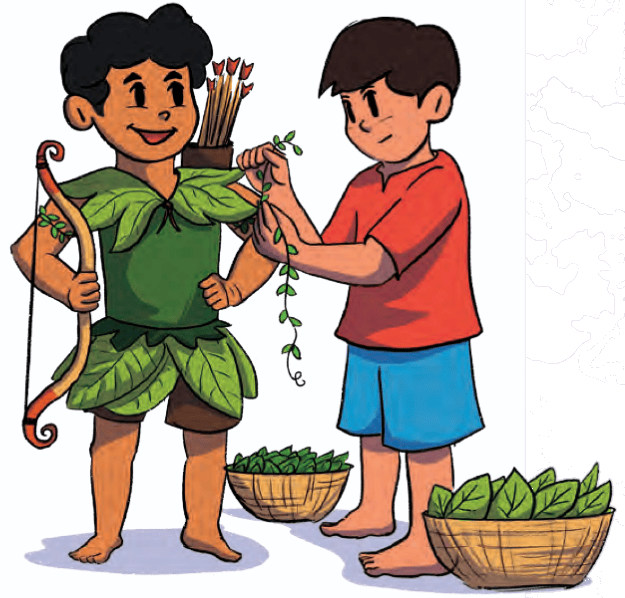
Before anyone could object, he ran and gathered large leaves, strips of bark, and vines. He tied the leaves together and made a fabric belt and armlets from vines. He put turmeric powder and ash for war paint, and the new costume was ready!
The actor went onstage in his improvised outfit. People clapped in awe. They felt it was a good idea to show Arjuna’s strength through nature. The play went very well, and the torn costume was forgotten. Young Arjun became a hero for his quick imagination and problem-solving.
SCENE 2
Individual Skills in Group
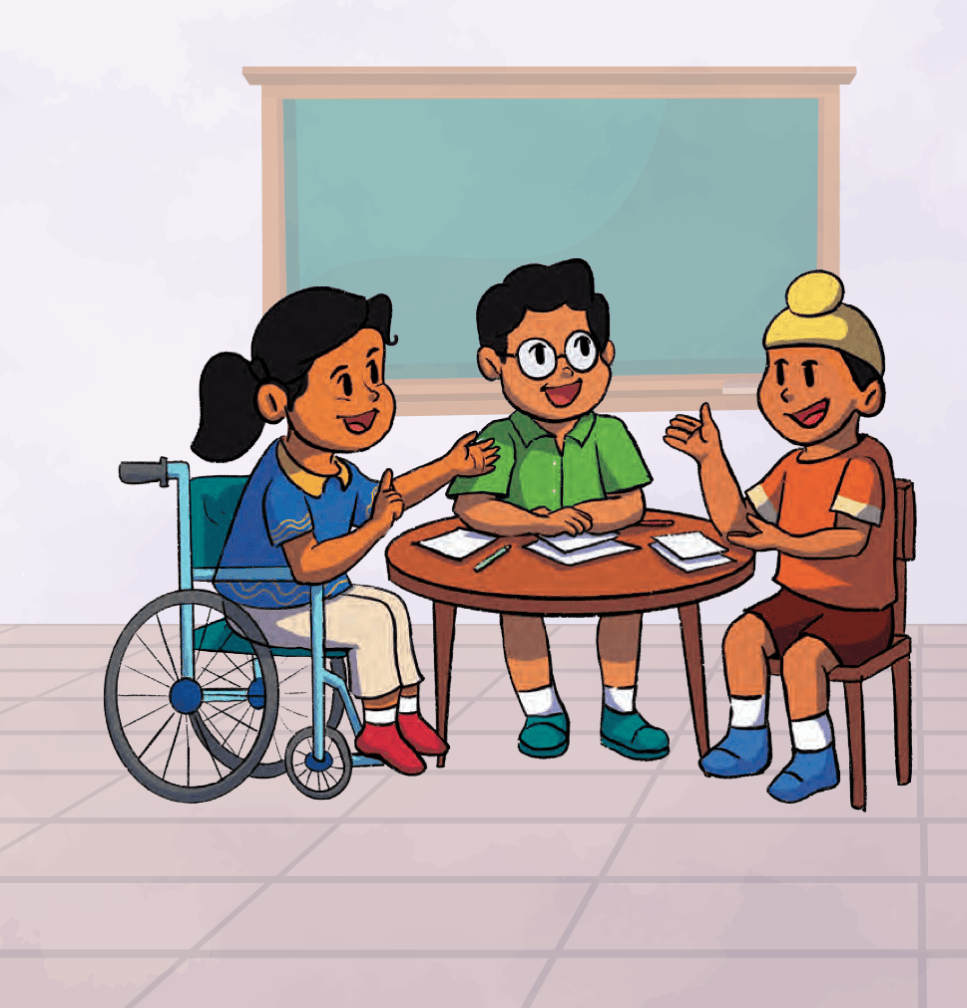
 You saw how Arjun
became a hero. There
are two things we can
learn — good imagination
helps and having unique
skills in a team can make
a difference. Though everyone is
working together in a team towards
a common goal, it is important to
see what skills every member has
and help build them. Everyone in
the team cannot do the same thing.
Each one has to contribute based
on what they are good at.
You saw how Arjun
became a hero. There
are two things we can
learn — good imagination
helps and having unique
skills in a team can make
a difference. Though everyone is
working together in a team towards
a common goal, it is important to
see what skills every member has
and help build them. Everyone in
the team cannot do the same thing.
Each one has to contribute based
on what they are good at.
Activity 6.1
Panchatantra Exercise
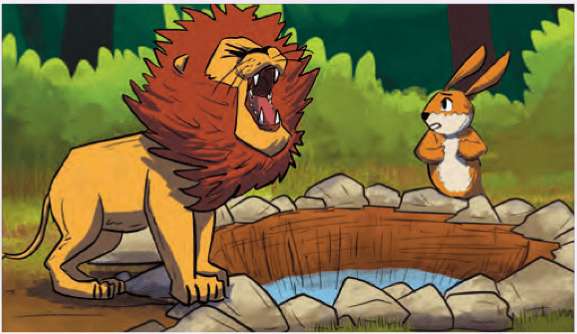
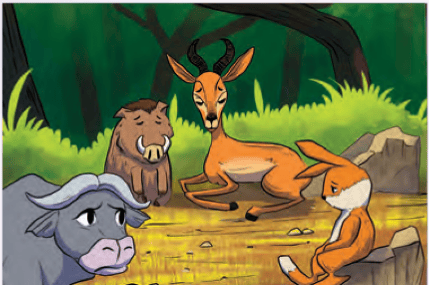
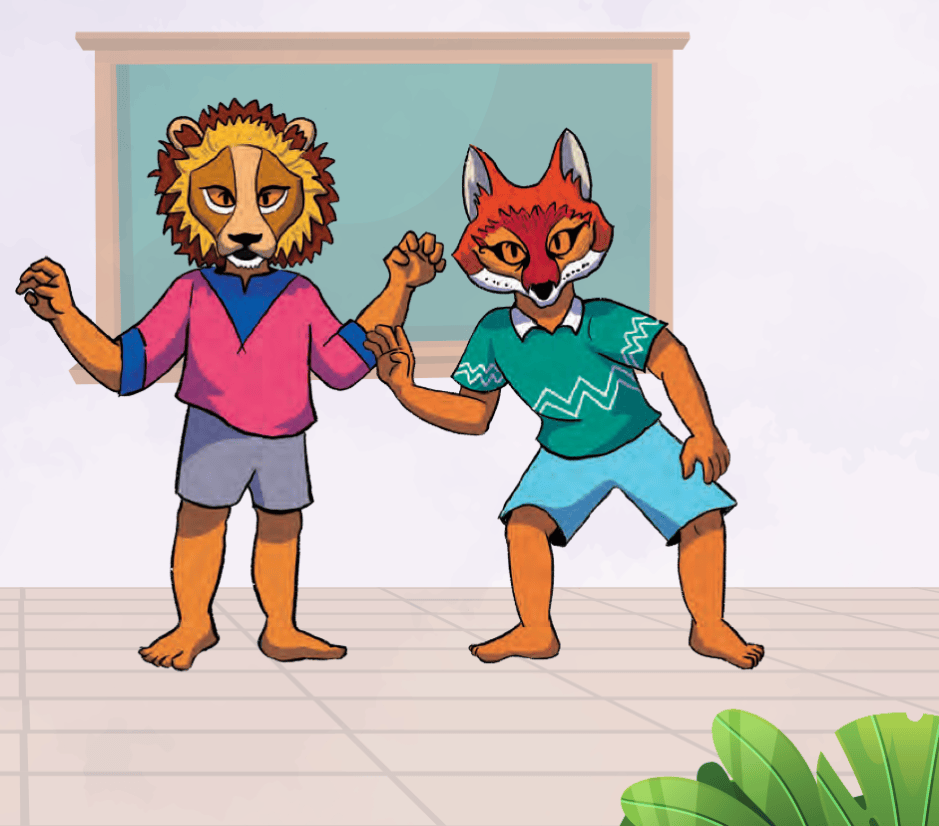
Divide yourselves into groups of five. In your group, assign one animal to each person. Every member makes a list of special qualities they have as that animal.
Now, as a team, imagine you are in the forest discussing a plan to escape the lion’s fury. Think of a new solution other than what the hare did. Discuss how the skills of each animal can be used to escape the lion.
Name of your group
New solution to the lion problem in the forest
Contribution of each team member
Activity 6.2
Object Improvisation: Group
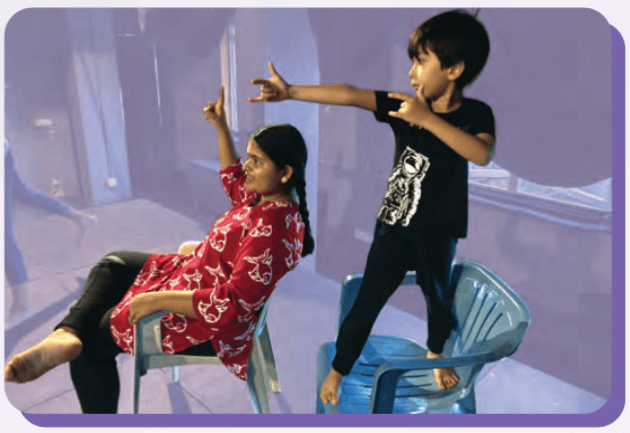
Let us play a theatre game to understand how you can work individually in a team. Remember you had done ‘object improvisation’ last year? You used objects around you to give different meanings to them—like pretending your pencil box is a treasure box or a laptop. You can play the improvisation game for one round to recall what you did last time. It will also help those who missed out on playing it.
We will now extend it to include a team. The teacher first picks an object in the classroom. Suppose she picked a water bottle. It can be used in many ways, such as:


Theatre Game – recall (Grade 3)
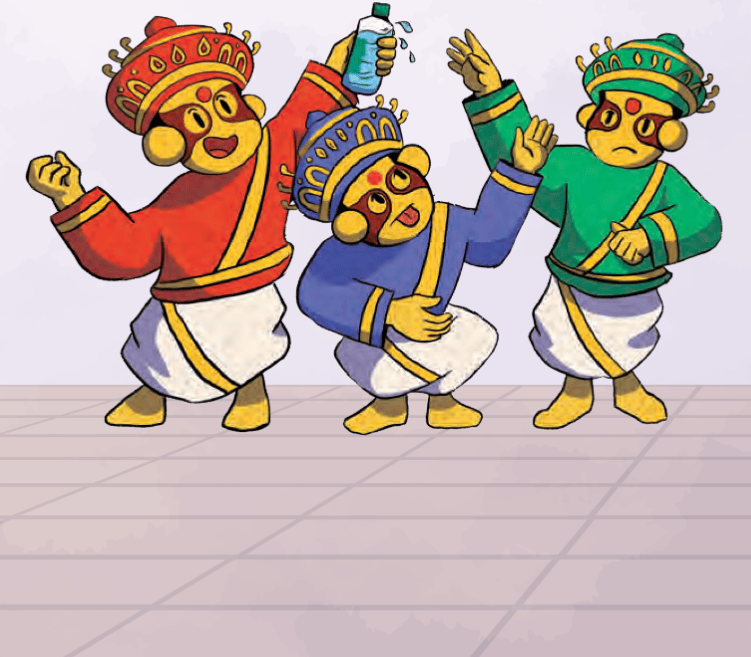
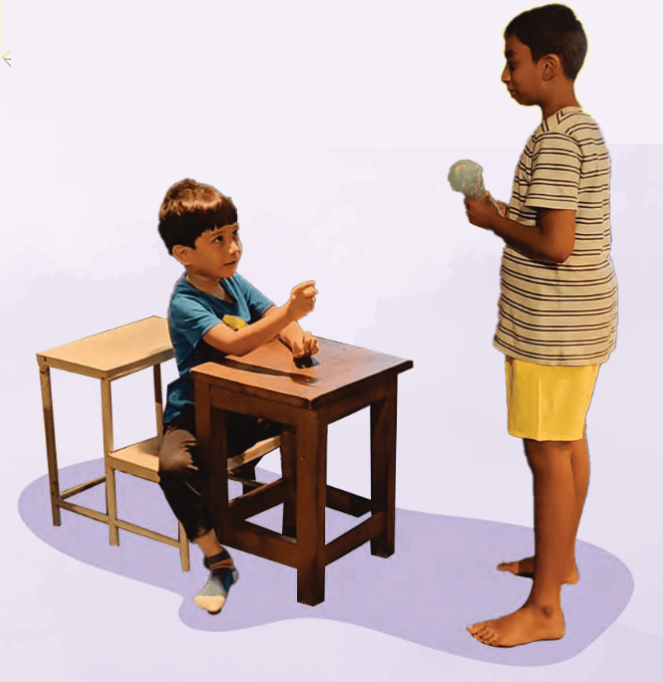
The teacher randomly gives it to one of you. Based on the child’s action, the teacher sends another child to add to the scene. Now, both of them must have a conversation about that imaginary object based on the water bottle.
After the conversation has progressed, the teacher adds another child to the scene. Now, all three have to spontaneously build the scene around the imaginary object based on the water bottle.
Note for Teachers:
Only send children to add to
the scene. The role that the
child has to play and what has
to be spoken will be decided by
the child. The teacher should
not assign specific roles to the
children. They spontaneously
decide based on the situation in
the scene.
Remember!
Key skills required: imagination and observation. You should demonstrate your actions so clearly that everyone understands. If the action shown is misunderstood, the entire scene will not make sense.
Note for Teachers:
Ensure that every student gets to
perform both roles. The first person
interprets the given object, and the
second person adds to the scene. Both
these require very different skills and
need to be developed in children.

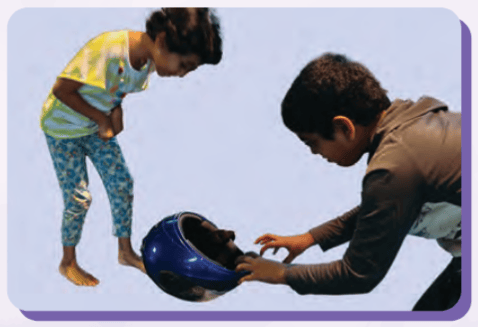
- For which object could you think of more improvisations?
- Which scene was most interesting when it was developed?
- List out three improvisations for five objects found at home.
- Which scene was the most difficult to develop? Why?
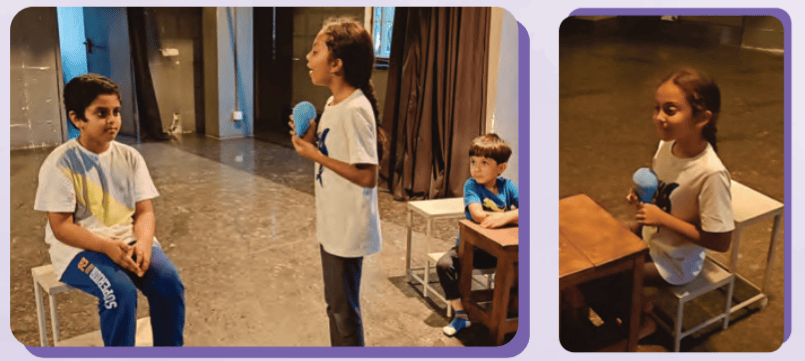
Now that you have understood how imagination is a superpower that will help you all the time, let us understand how this helps in theatre. Imagination in theatre needs to happen in two ways:
The previous activity, of building a story around an object, is the first type of imagination mentioned in the box. Remember, Arjun saved the day by creating a new costume with his imagination? That is the second type. It is called VISUALISATION.
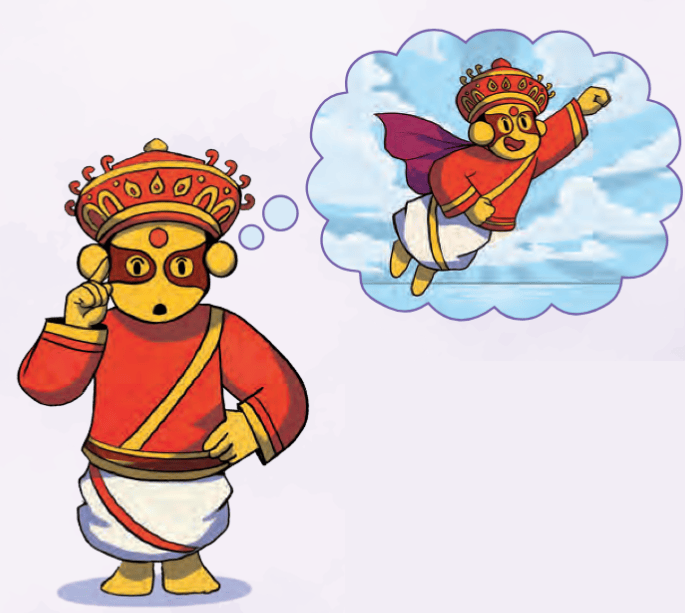
Visualisation refers to the ability of the mind to create pictures, images, or scenes without having seen them before.
For example, you might think you are a superhero. That is not visualisation. But when you see yourself flying in the sky, across the ocean and defeating enemies to save the weak, that is visualisation. If you are able to see the details of what you are wearing, what you see around you as you fly in the sky, how you talk to others—then your visualisation is very good! Now let us do a fun activity to help you build your visualisation.
Activity 6.3
Group Scene Building
The previous activity had you all building scenes based on an object. In this activity, the difference is that you get to plan, discuss, and decide what you will perform. You have to spontaneously build a story. This will give you the opportunity to visualise. After you decide on the story, you visualise the details of the scene. These are some points you will need to help you visualise.
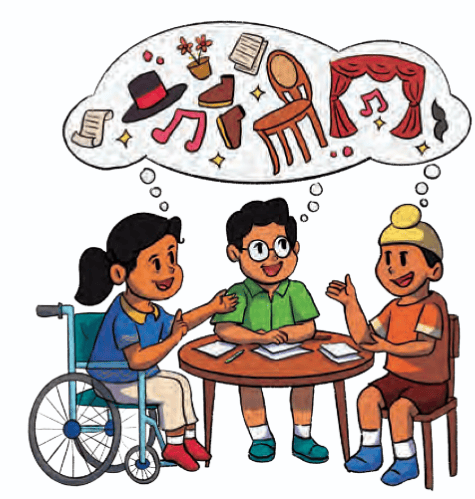
Points that will help you in visualising a scene
- What is on the stage when it starts (table and chair or actor standing with a bag, etc.)?
- When and from where the actors (students) will enter?
- Where and how they will speak to each other?
- How it will conclude, and from where will the actors exit the scene?
If your group is able to discuss and visualise this together, you are ready to perform.
Basic
The topic given by the teacher for each team is an object. The story is built and presented based on the object.
Advanced
A broad theme is given instead of an object. This gives more scope for creativity and imagination in building the story. For example, fear, anger, nature, school, and travel.
Panchatantra Exercise
A part of the Panchatantra story could be picked by a team to develop it and improvise differently (other than what has been given). The choice of animals in the scene and their roles can be changed as per the creativity and imagination of the team.
Note for Teachers:
The class will be divided into teams of
four or five. Students have to come up
with a story based on the object/theme
given to them. Each team will be given
5 minutes to plan and discuss. When
a team is performing, others have to
watch them and make notes. After the
performance, facilitate a quick feedback
from all teams before moving on to the
next group.
| Points for making notes – for the feedback discussion | Could not understand | Can be better | Very nice |
|---|---|---|---|
| Focus of the story on the given object or theme | |||
| Confidence in entry and exit of actors | |||
| Clarity about the story to be performed | |||
| Creative use of props | |||
| Participation of all team members |
- Does the story have a different impact when its central focus is on an object or theme.
- Was there a similar pattern in which the stories began and ended?
- Can stories include both themes and objects? Try it out in your free time
| ASSESSMENT — Chapter 6: Imagine | ||||
|---|---|---|---|---|
CompetenciesC-2.1: Creates and performs drama in the classroom based on everyday events, by combining various characters, roles, situations, spaces, and basic props C-2.2: Compares and contrasts themes and elements of drama, and related artistic expressions created in the classroom |
||||
| CG | Competencies | Learning Outcomes | Teacher | Self |
| 2 | 2.1 | Able to bring forth one’s skill in a group | ||
| 2.1, 2.2 | Observes the details when others are acting and visualises one’s role in it | |||
| 2.1, 2.2 | Eager to demonstrate more actions than what is asked for | |||
| 2.1 | Understands role and space in relation to object | |||
| 2.2 | Works on building the scene ‘together’ and not just one’s ideas | |||
| 2.2 | Provides feedback on others’ performances as per the given criteria | |||
| Overall participation in class | ||||
Teacher’s feedback on student’s strengths
Teacher’s feedback on areas of improvement
Any other observation