Chapter 13
SOUNDS AND INSTRUMENTS
In Grade 3, we learnt how to create rhythm patterns using claps, snaps, and stamps. Now, let us learn how else we can use our body to create percussion sounds and rhythm patterns. Then, let us explore the sounds of musical instruments.
How do we use our body language and gestures to express how we feel?
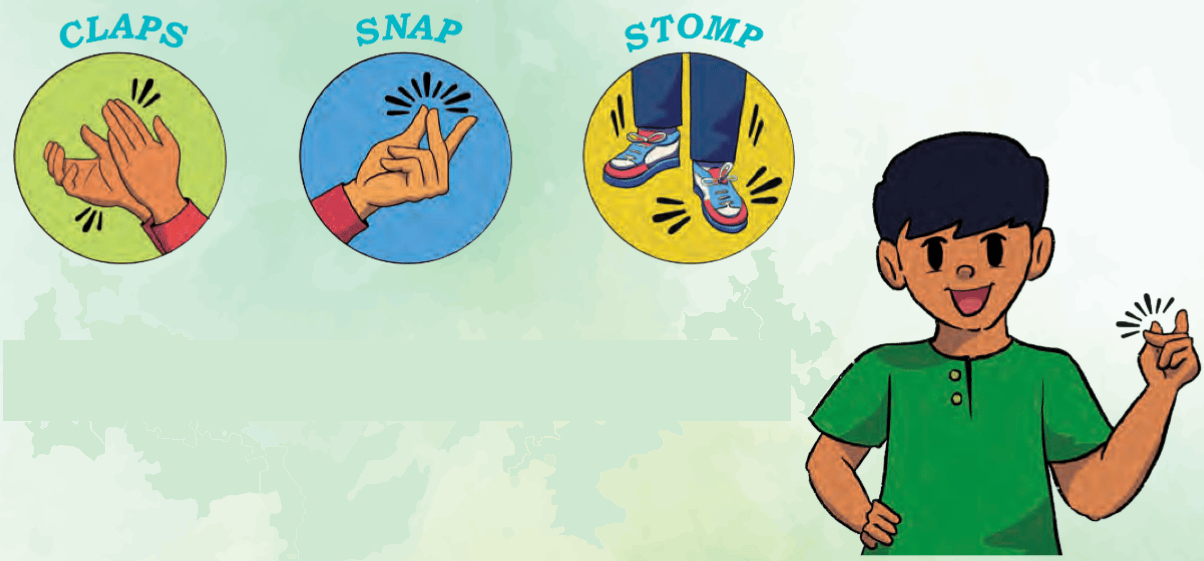
Learn this activity and then see if you can add a few more actions of your own.
Activity 13.1
If You’re Happy and You Know It
If you’re happy and you know it, clap your hands ...
If you’re happy and you know it
And you really want to show it
If you’re happy and you know it, clap your hands
If you’re happy and you know it, stomp your feet ...
If you’re happy and you know it
And you really want to show it
If you’re happy and you know it, stomp your feet
If you’re happy and you know it, shout hurray (hurray) ...
If you’re happy and you know it
And you really want to show it
If you’re happy and you know it, shout hurray (hurray)
If you’re happy and you know it, do all three (hurray) ...
If you’re happy and you know it
And you really want to show it
If you’re happy and you know it, do all three (hurray)
Note: Can you write the words for this song in your language? Work with your friends to write and then sing it together.
Jab bhi khush ho, aap bajao taali (2)
Jab bhi khush ho, ab banegi har baat
Jab bhi khush ho, aap bajao taali
Jab bhi khush ho, aap kar lo dance (2)
Jab bhi khush ho, ab banegi har baat
Jab bhi khush ho, aap kar lo
Dance, dance, dance
Jab bhi khush ho, aap bolo Hurray … (2)
Jab bhi khush ho, ab to banegi har baat
Jab bhi khush ho, aap bolo Hurray …
Ab khush ho, aap bajao taali Hurray …
Ab khush ho, aap karlo dance Hurray …
Jab bhi khush ho, ab to banegi har baat
Jab bhi khush ho, aap bolo Hurray …
Activity 13.2
Superheroes without Capes
Composer: The Thayir Sadam Project (Bindu Subramaniam, Ambi Subramaniam, Mahesh Raghvan, Akshay A)
In comic books and video games, Superheroes fly away Let’s be real, who needs a cape? Let’s get together and save the day
P, DP D, SD S, RS R, GR
P, DP D, SD S, RS R, GR
ta ka dhi mi tam ta ka dhi mi tam ta ka dhi mi tam
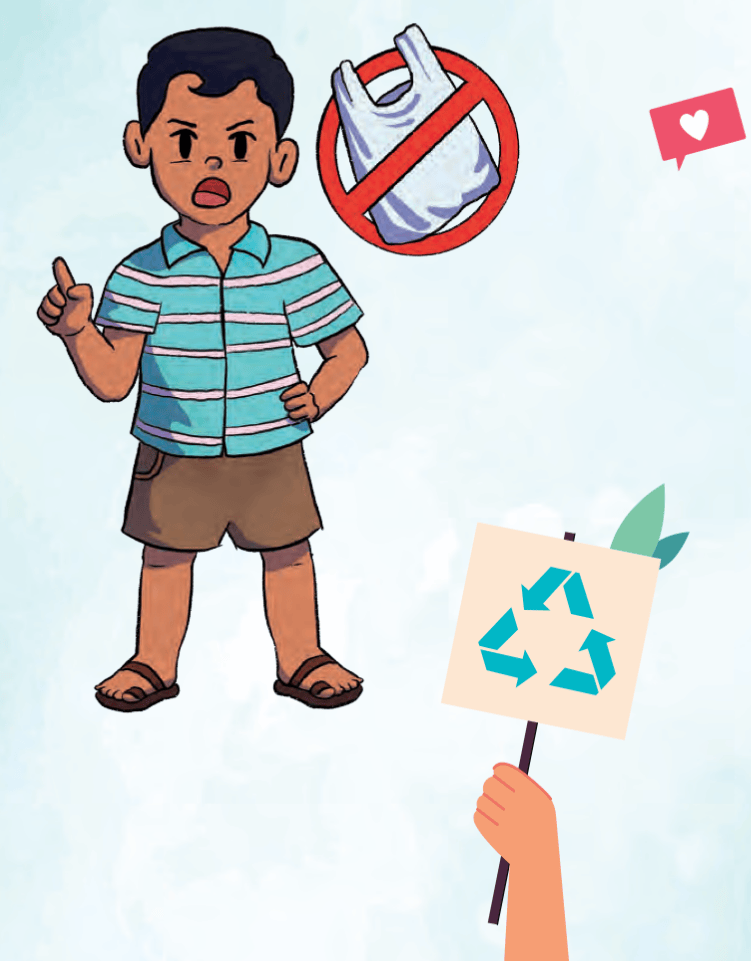
Don’t use plastic, teach some kids, Marvel at the good you did Don’t waste food, compost too, There’s so much more that you can do
P, DP D, SD S, RS R, GR
P, DP D, SD S, RS R, GR
ta ka dhi mi tam ta ka dhi mi tam ta ka dhi mi tam
Song link: https:tinyurl.com/Superheroes-without- Capes
Classification of Instruments
All sound is produced because of vibrations. When an object vibrates, it creates sound waves, which travel through air or water to reach our ears.
Musical instruments are divided into categories based on which part of it vibrates to produce sound. This is important because it helps us understand the instrument better and how it is played.
There are four basic categories of musical instruments, which are:
| Category | Vibrating part | Sanskrit name | Example |
|---|---|---|---|
| String | String | Tata vadya | Veena 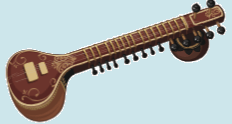 |
| Wind | Air inside a tube | Sushira vadya | Bansuri  |
| Percussion | Stretched membrane | Avanaddha vadya | Tabla 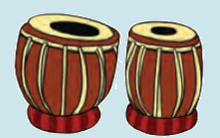 |
| Solid | Object | Ghana vadya | Manjira 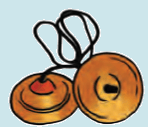 |
DO YOU KNOW?
This system of classification of musical instruments originated in India. The four categories were first mentioned in the Natya Shastra written by Bharata Muni, around 2500 years ago. All musical instruments around the world generally fall into one of these categories.Activity 13.3
What is that sound?
Musical instruments sound different because of the materials they are made of and how they are played. Can you identify the instrument by listening to the sound?
Note for Teachers:
Play sound samples of different musical
instruments and help the students identify the
sounds of common Indian musical instruments.
Activity 13.4
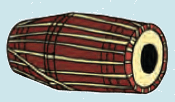
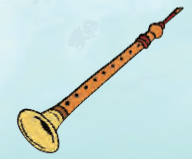
Classify the Instrument
Now that you know about the different categories of instruments, you can easily identify which category an instrument belongs to by seeing a picture.
Match the instrument and the category.
 |
String |
|
Wind |
|
Percussion |
 |
Solid |
Activity 13.5
Exploring Musical Instruments
Can you name the different musical instruments you know?
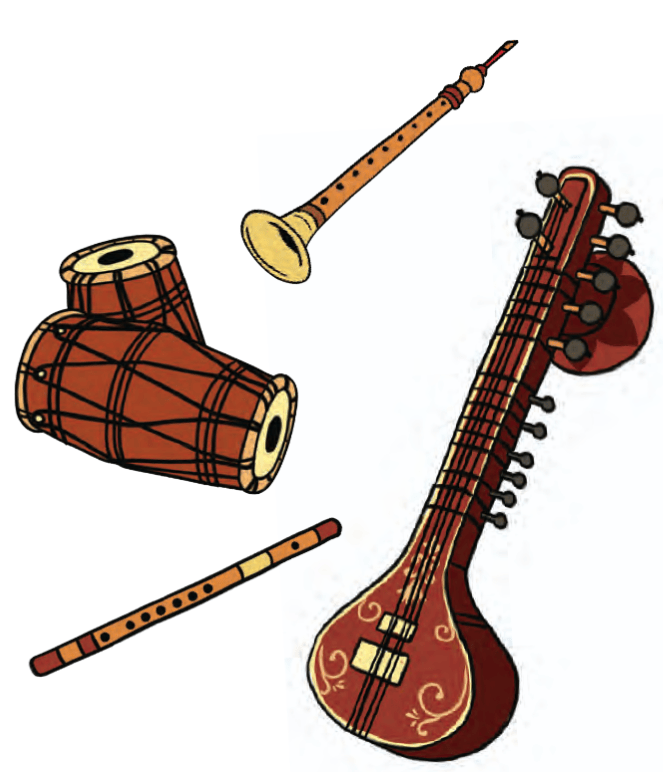
- Bring a musical instrument to the class.
- Observe its shape, size, and colour.
- Does the instrument have decorative elements like carvings or paint? Does the instrument have a label that indicates its place of origin or the name of the manufacturer?
- Gently touch and feel the instrument. Describe its parts in your own words.
- Find an audio or video recording of the instrument being played and listen carefully to its sound.
Draw a picture of the instrument
Activity 13.6
Make Your Own Instrument
Materials Required
| 2 Popsicle Sticks | 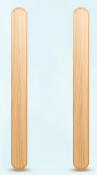 |
| 2 Rubber Bands | 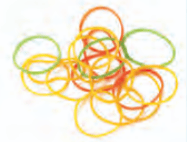 |
| 1 Long Strip of Paper |  |
| 1 Toothpick | 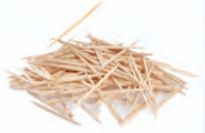 |
- Trace and cut a strip of paper in the shape of a popsicle stick.
- Place it over one popsicle stick.
- Place another popsicle stick under it and secure it using one of the elastic bands on one side.
- Once that is done, break a toothpick into half and push one half between the sticks near the secured end.
- Hold the other end of the toothpick at the open end of the sticks. Then, secure it again with the other elastic band.
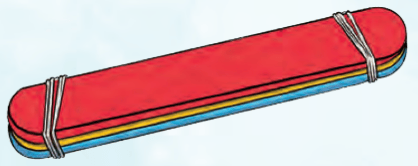
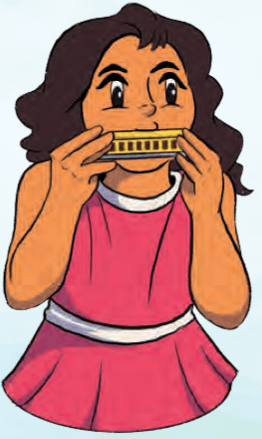
If you have made a slight gap between the two sticks, then your harmonica is ready. Hold the sticks against your mouth and blow out the air or draw in the air till you hear sounds.
| ASSESSMENT — Chapter 13: Sounds and Instruments | |||
|---|---|---|---|
| Competencies | Learning Outcomes | Teacher | Self |
| C-3.1 | Is able to make a simple musical instrument using available materials | ||
| C-3.1 | Creatively uses body percussion to embellish a song | ||
| C-4.2 | Understands the principle of instrument classification | ||
| C-3.1 | Is able to sing and accompany the song with available objects | ||
Teacher’s feedback on student’s strengths
Teacher’s feedback on areas of improvement
Any other observation
Summative Assessment
| Examples of Summative Assessment | Criteria for Summative assessment | |
|---|---|---|
| Individual |
|
|
| Group |
|
|