
Chapter 16
CREATING MY DANCE
After exploring different types of movements, let us now make steps for your feet. This will also help you make the movements done so far more dance-like.
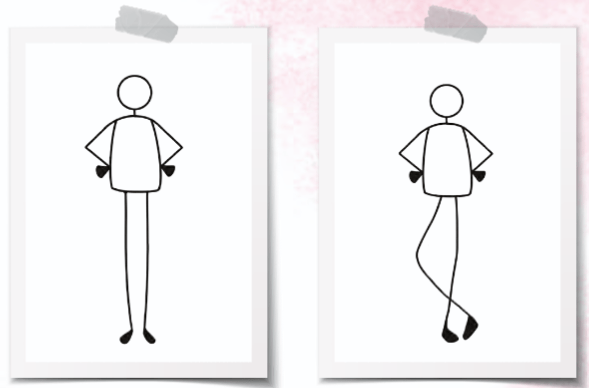
Sama — feet together, standing with complete balance
Cross toe back or front
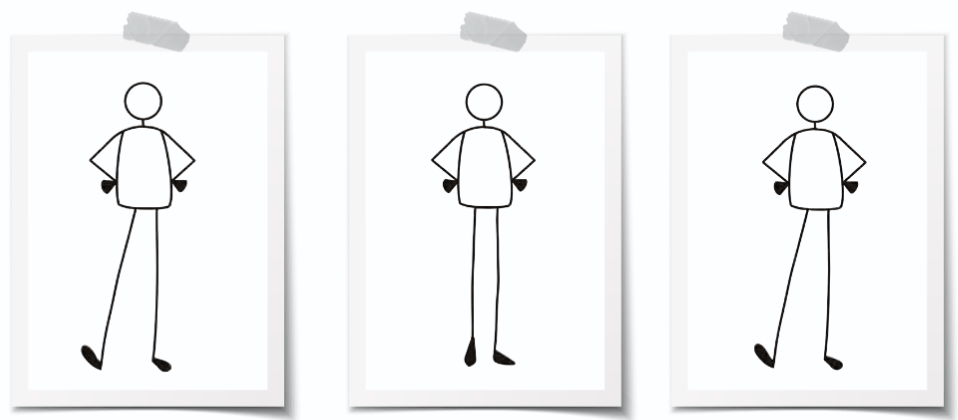
Heel front
Standing with the toe in front
Heel side
Activity 16.1
Rhythmic Steps
Try out foot movements as per the images on the previous page.
We have explored steps by stomping our left and right feet with one and two counts. Now, let us try using our feet to take two steps on the right and two steps on the left, using stomps, heel and toe movements, counting 1 for the right and 2 for the left.
| Table 1: Combination 1 | |||
|---|---|---|---|
| Right | Right | Left | Left |
| One | One | Two | Two |
| Stomp | Stomp | Stomp | Stomp |
| Heel | Stomp | Heel | Stomp |
| Toe | Stomp | Toe | Stomp |
| Cross | Stomp | Cross | Stomp |
The progression to four steps can be added later.
Table 2 provides more combinations of the steps that can be tried in the class.
| Table 2: Combination 1 | |||
|---|---|---|---|
| One (Right stomp) | Two (Right stomp) | Three (Left toe cross) | Four (Right stomp) |
| One (Left stomp) | Two (Left stomp) | Three (Right toe cross) | Four (Left stomp) |
| Combination 2 | |||
| One (Right stomp) |
Two (Left stomp) |
Three (Right heel front) |
Four (Right stomp) |
| One (Left stomp) |
Two (Right stomp) |
Three (Left heel front) |
Four (Left stomp) |
- Practise steps in the above combinations.
- Did you notice any pattern in this? We are taking a step to the right and repeating on the left. You can flip it and do left first and then right.
Note for Teachers:
Different combinations of
footsteps can be explored.
Activity 16.2
Circular Movements
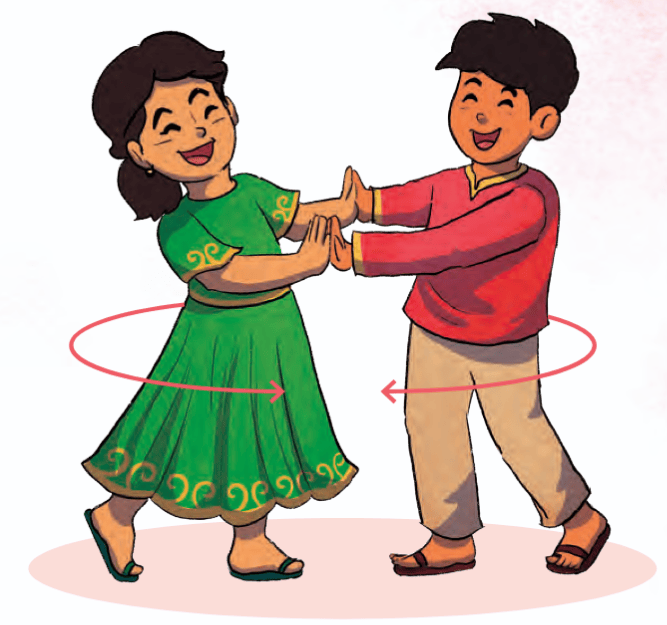
Dance is like a gentle whirl of joy. If one of you loves to spin, another can swirl and twirl until they feel like a tiny tornado. One of you may like to make soft circular movements, while you can hold hands and make circles as a group. Try the movements given below, or feel free to try your own.
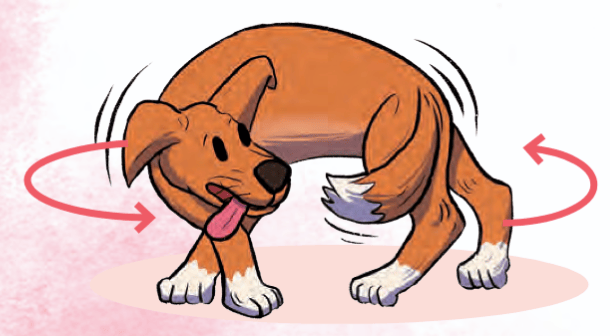
Have you seen the dog spin while trying to catch its tail? Do you think the dog is also trying to dance? Can you identify other animals that do such similar movements? Share your thoughts in class.
LEVEL 1
Let us try circular movements with feet.
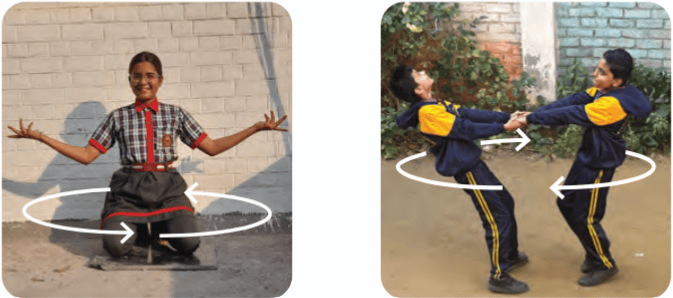
Can you spin on your knees?
Can you and your friend spin in a circle by holding hands?
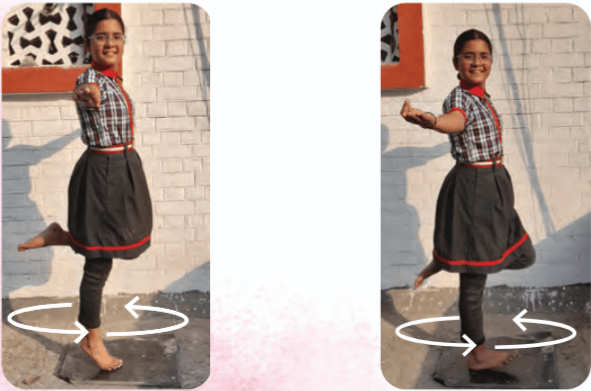
Can you spin on your toes?
Can you spin your foot flat on the ground?
LEVEL 2
Now that you have learnt to make circles with your feet, let us add hand movements to make it more enjoyable. Here you form a circle and move to the beats with different arm movements of your choice, such as the ones shown below.
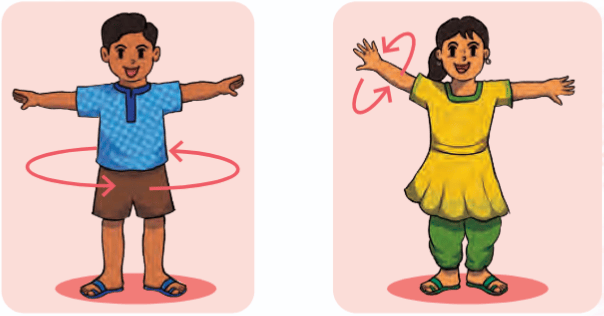
Circular movement
Swinging side to side
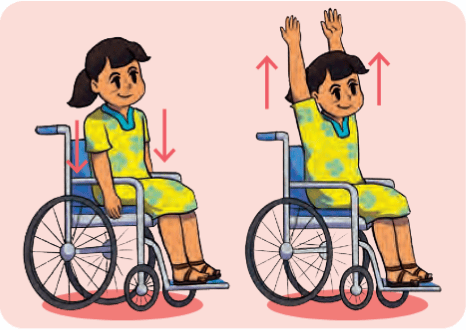
Up and down
You can spin and turn alone or in a circle or in a group. Combine the feet and hand movements in different combinations. Explore as many different varieties as you can.
LEVEL 3
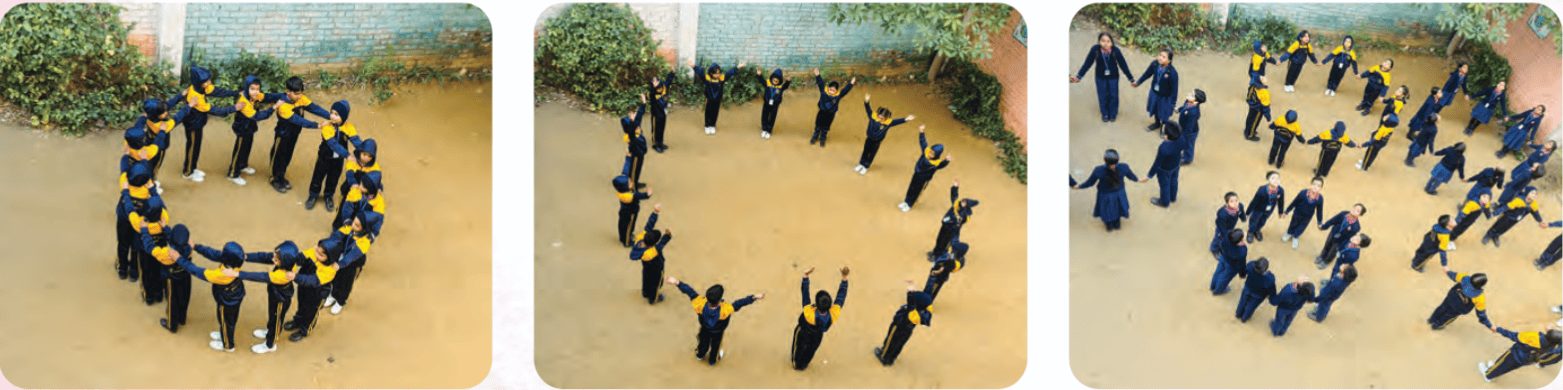
Let us try to put these circular movements in a rhythm of beats and formations.
- Count 4-beats as you make circles with your hands and feet.
- Start with a clap and make the circle for beats 2, 3, and 4.
- Stand in different formations as you did earlier and make rhythmic circles.
This is the next step in choreography — movement with formation.
Activity 16.3
Dance with Props
After trying movements with hands and legs, let us add props to multiply the fun.
Dance can be made interesting to the dancer and the audience by using colourful props made on your own. Sticks have been used in dance for many years across the world. Let us make our own sticks and dance.
Materials required:
- Pencils or a small ruler
- Coloured construction paper or cardstock
- Glue
- Colour glitter or sketch pens
- Golden lace/ribbon/coloured yarn
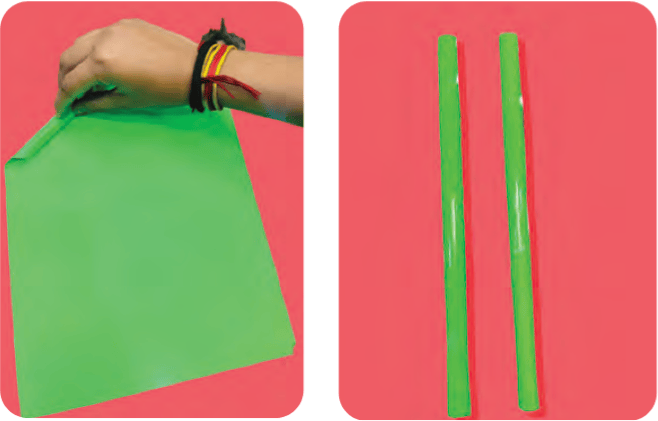
Step 1: Prepare the paper tubes
1. Roll a strip of paper tightly around a pencil to form a tube. This will be the base of your stick.
2. When you finish rolling, apply glue or tape to the edge of the paper strip. Allow the glue to dry completely before proceeding to the next step.
Step 2: Decorate the paper tubes
Paint or draw designs on the paper tube using markers or crayons. You can make stripes, polka dots, or any other fun pattern. For some sparkle, add glitter, stickers, or sequins to the tube. Wrap ribbons or colourful yarn around the tube for extra decoration.
Be creative and make the stick as colourful as you like.
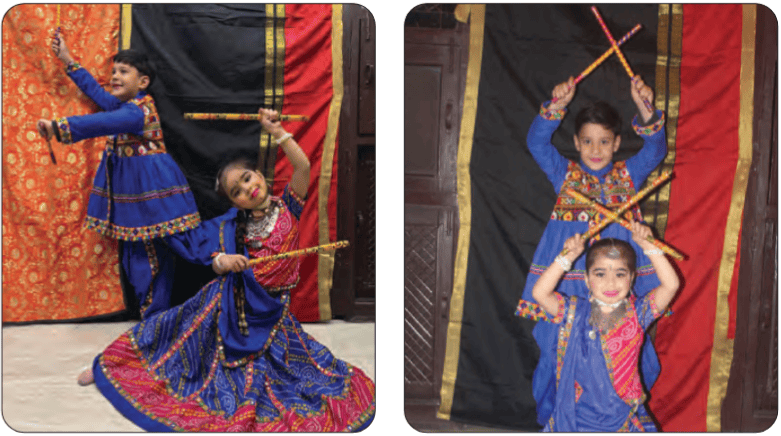
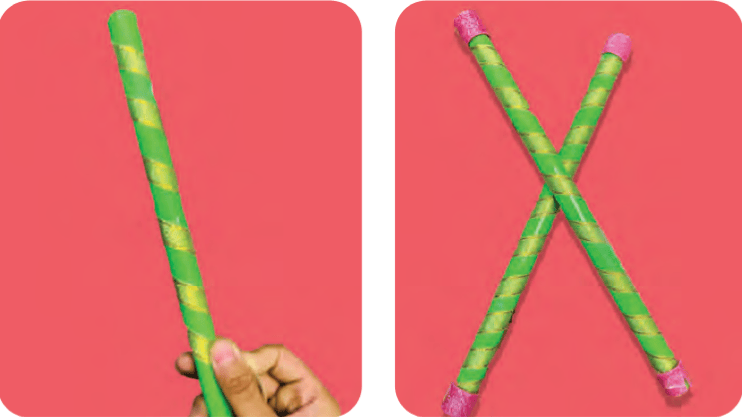
Further activity: Just as you made these sticks and danced with them, you can create more colourful props using paper and cardboard, such as pompoms, ribbons, flags, and other things.
Activity 16.4
Elements of Movement
Every movement you do has different qualities. The same movement may feel different depending on how it is done.
1. Vigorous movements are forceful.
For example, forcefully stomping on the floor, beating on a big drum, or jumping high.
2. Gentle movements are soft.
For example, tip toeing quietly when your mother is sleeping, walking on your toes, gently picking up a flower and smelling it, and sliding your feet on the ground.
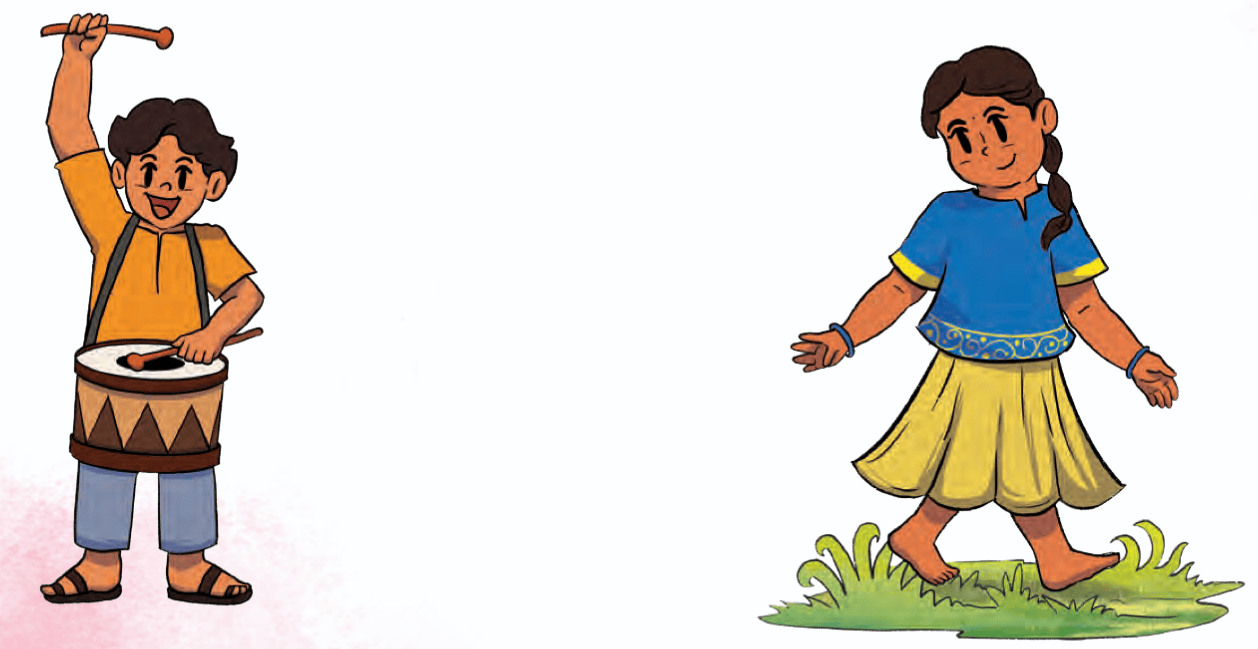
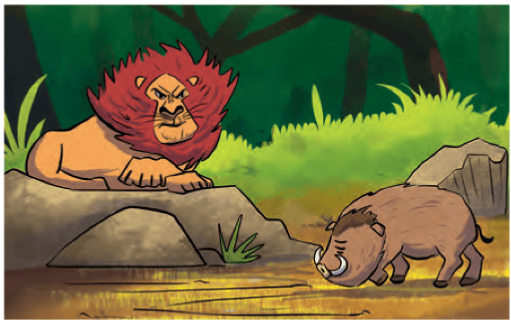
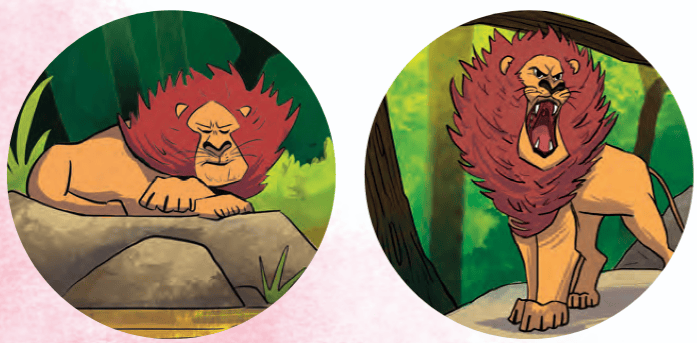
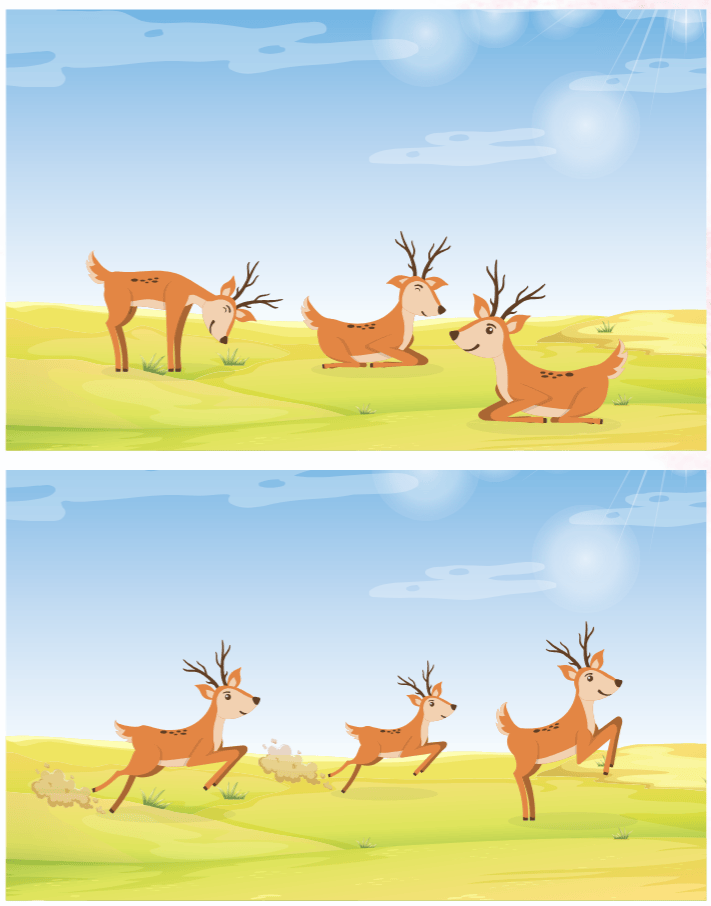
Can you identify the vigorous and gentle movements of animals?
The movements can be according to the animal’s character. The animals can change their movements according to the situation. In the table on your right, tick the suitable animal movements in different situations.
| Animals | Vigorous | Gentle |
|---|---|---|
1. A lion
chasing
a deer.

|
||
2. An elephant
caring for
her baby.

|
||
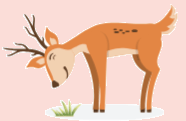
3. A deer
grazing
grass.
|
||
4. A mouse
running away
from a cat.
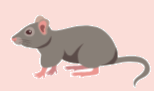
|
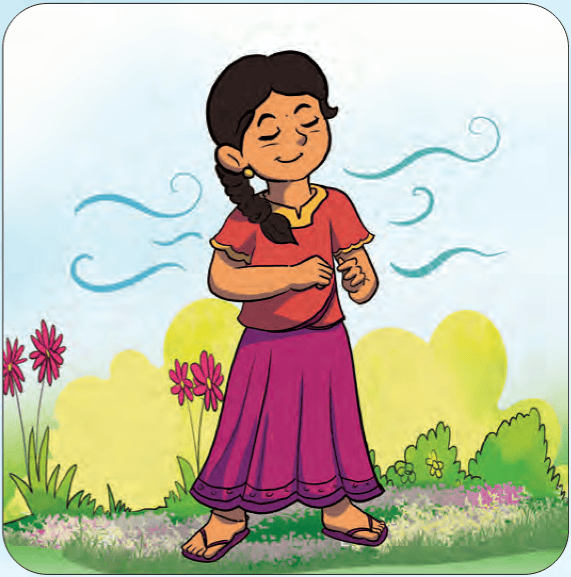
Let us look at the quality of movements in nature. Which movements around us are forceful, and which ones are gentle?
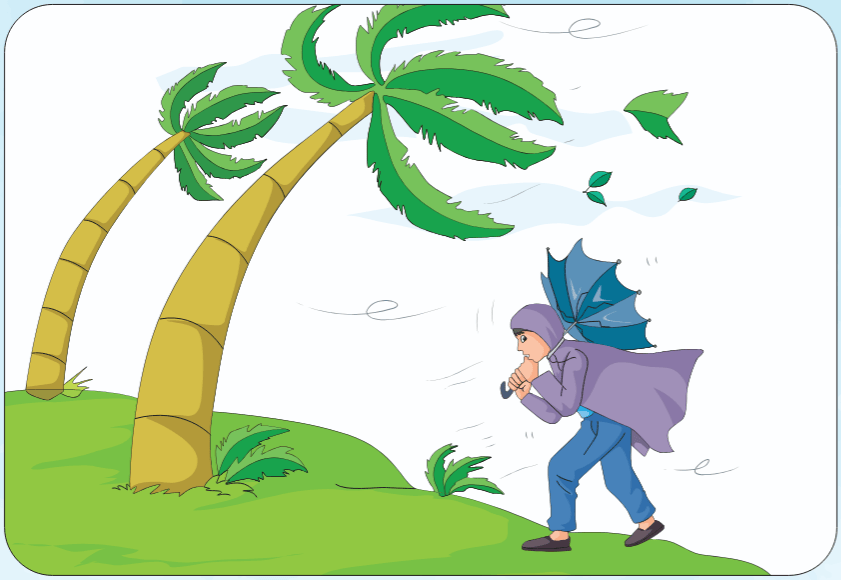
Have you ever noticed how storms rush, bending trees and swirling dust? On the other hand, a gentle breeze, and swaying flowers bring a feeling of calm and joy.
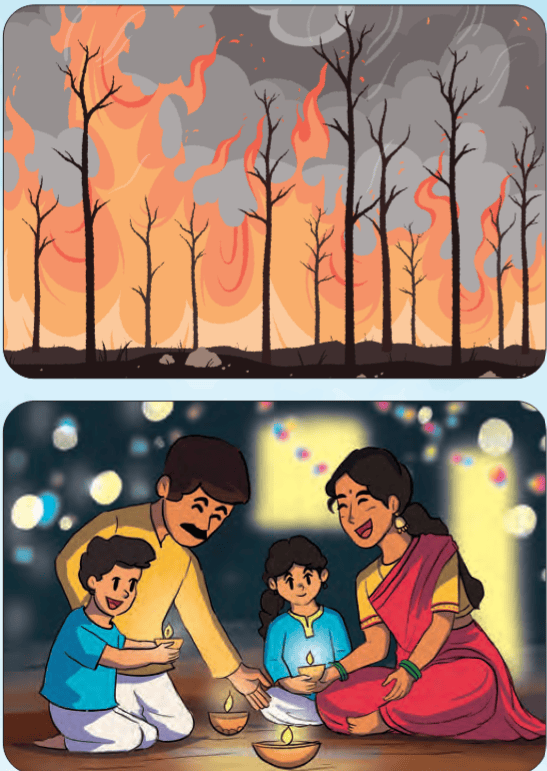
Fire can be strong, wild, and vigorous, when its flames jump high, and crackle loudly.
Fire can be calm when you light a diya, lighting up the world around us.
The sky may be vigorous during lightning and thunder, yet it feels soothing when filled with the many colours of sunrise or sunset.

Activity 16.5
Team Creativity
Form two groups. Choose any five gentle and vigorous movements, from the above animal and nature movements. Let Group 1 demonstrate gentle movements, and Group 2 demonstrate vigorous movements. The groups then switch and create different movements to show vigorous and gentle qualities.
| ASSESSMENT — Chapter 16: Creating My Dance | ||
|---|---|---|
| Competencies : CG 3 – C-3.1, C-3.2 | ||
| Learning Outcomes | Teacher | Self |
| Understands the different parts of feet that are used in dance | ||
| Able to follow the dance steps | ||
| Shows effort to learn the dance steps and movement qualities | ||
| Makes the prop with effort and imagination and uses it in dance | ||
Teacher’s feedback on student’s strengths
Teacher’s feedback on areas of improvement
Any other observation