
Chapter 2
Exploring Our Neighbourhood
On Our Way Back Home
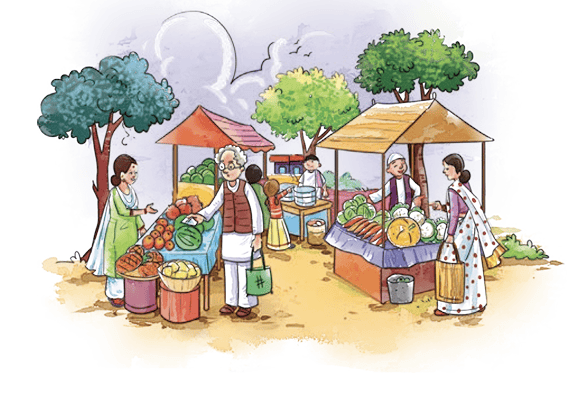
The classes got over and the school bell rang. Students talked with excitement about the wonderful books that their teachers showed them in the library. School buses and e-rickshaws were waiting at the gate.
Navya saw her grandfather standing outside the school gate. She ran up to him, “Dada ji, let us take the market route today!”
They walked to the bus stop, where some people were already waiting for the bus.
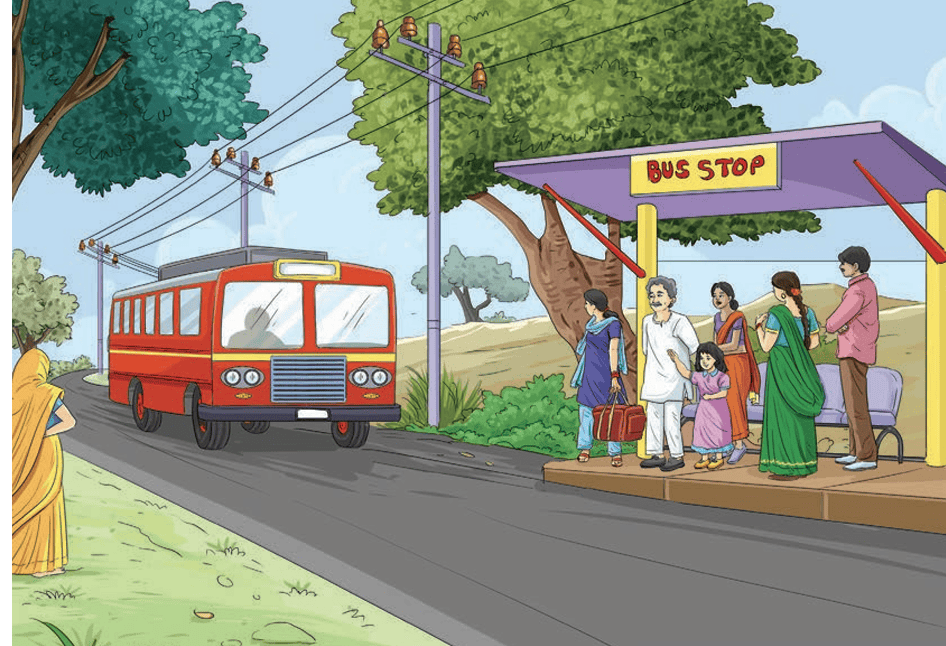
A bus stopped, the doors opened and everyone boarded the bus one by one. Navya found a seat by the window and watched the people outside.
As the bus passed a red postbox on the corner, Navya pointed to it and said, “Look, a postbox, Dada ji!”
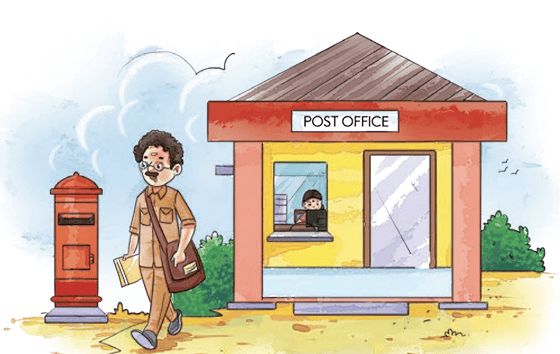
Dada ji said,
“Yes, Navya. You
could write a letter
and post it here”.
He continued,
“When I was
young, I used to
write letters to my
brother, who was
studying in a different city. I used to drop letters into the postbox. Then, the postman would take them to the post office. The post office would sort letters according to regions and send them to their destinations. Post offices offer a variety of other services too”.

1. Write a letter to a friend and post it.
2. Teacher can take students on a field trip to a post office, to explore various activities that take place there.
Note to the Teacher
Encourage students to write letters to each other in pairs or cyclically in groups of threes, so that all students both send and receive letters. The idea is that the students experience letter writing, and the joy of sending and receiving letters. Explain to the students about the importance of togetherness and communication.
1. Have you or your family members ever sent, or received a letter or a parcel?
2. How does the post office help people stay connected with each other?
Do you know?
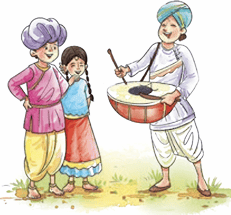
Long ago, people communicated
using drumbeats and carvings on
rocks.
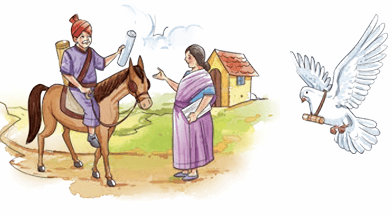
Later, people started
sending letters carried by
messengers and pigeons.
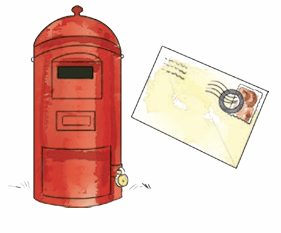
Much later, the postal service came
into being. It was used to send letters,
parcels and important documents to
others.
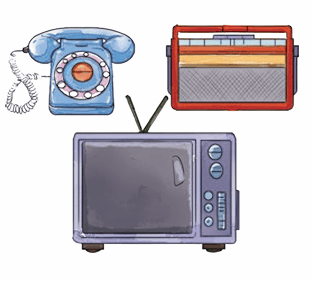
With time, new inventions like the
telephone, radio and television
made it easier to communicate,
and share information
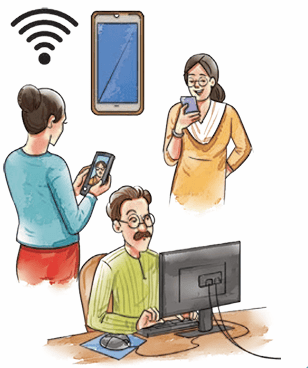
Today, we have mobile phones,
and computers that use internet.
The internet helps us connect with
anyone and anywhere, in seconds!
“Did you not have mobile phones?” Navya asked. Dada ji laughed, “No Navya. Earlier, we used to write letters. Sometimes, it would take weeks to get a
reply”. “That is a really long time!” Navya exclaimed. Dada ji replied, “Yes, with mobile phones and emails, communication is much faster. However, sometimes I miss the joy of writing and receiving a handwritten letter.”

Interview with Elder
1. Discuss with the elders in your neighbourhood andfind out how they communicated with each other when they were of your age. Compare their answers to how you and your friends communicate today; and fill in the table below:
| Category | Communication in earlier times | Communication in present time |
|---|---|---|
| Type of communication | Letter, telegram | Internet, social media, text message |
| Speed of communication | ||
| Frequency of communication | ||
| Language of communication | ||
| Challenges faced |
Over time, the ways in which people communicate
have evolved. While letters were common in the
past, today messages and video calls make
communication much faster. Technology has made
it easier for us to stay connected with everyone.

1. Letters took a long time to reach other
persons. How do you think it affected
communication between people in the
past?
2. How is it different from the way people communicate now?
3. Today quick messages make sharing the news easier,
but sometimes wrong information spreads very quickly
too. How can we ensure the news we share is true?
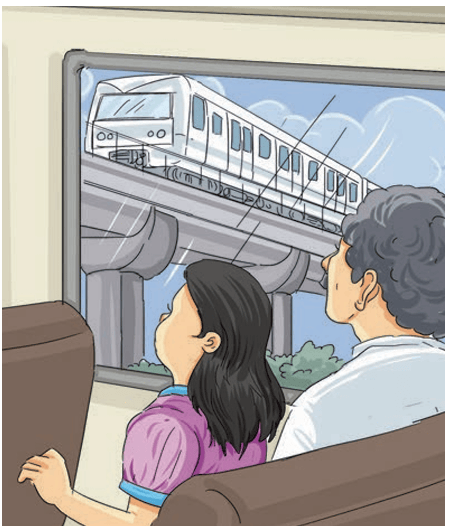
The bus took a turn and
Navya saw a metro train
passing by. “Look at that!
The train is moving so
fast”, she exclaimed.
“Navya, the metro trains
travel very fast. Also, there
are high roads known
as flyovers. They help
vehicles move above the
busy roads and crossings.
So, they save the time of
travellers”.
“Some flyovers are built for metros, and others are for buses and cars”, explained Dada ji.
Dada ji continued, “These modern facilities and services, such as flyovers and metros have made life easier for us. However, many animals, birds and trees that used to be here are no longer around because of all these changes”.
Navya replied, “I wonder if we can have such developments even while keeping our environment safe and secure”.
Dada ji said, “Yes, that can happen by creating a balance. If we plant trees, we can keep our environment secure”.
1. Which mode of transportation do you use the most?
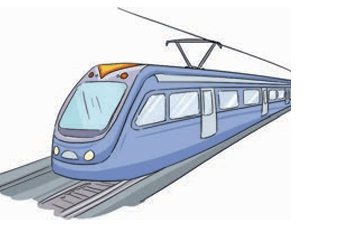
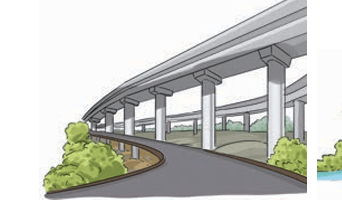
2. Can you identify the structures in the pictures, and explain how they have made travel faster and connectivity better?
 ........................ |
 ........................ ........................ |
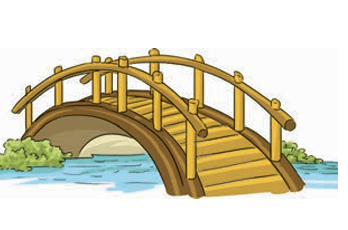 ........................ ........................ |
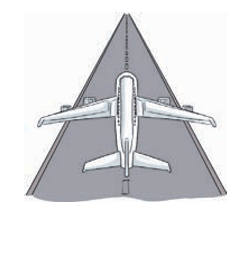 .................... .................... |
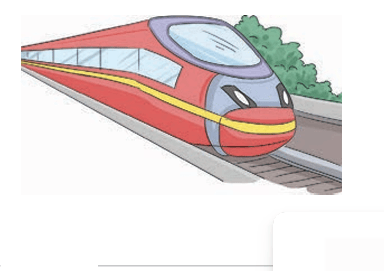 ...................... ...................... |
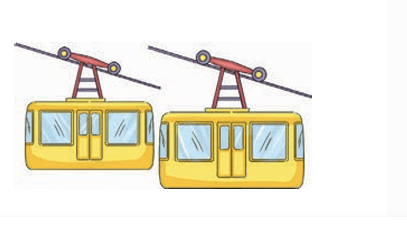 ....................... ....................... |

How did your parents and grandparents go to school or other places, when they were of your age? Is it different from how you travel today? Note it down below.
| You | Parents | Grandparents |
After some time, a few people got down at a bus stop which was near a hospital. Navya noticed a banner outside the hospital that said ‘Eye Check-up Camp’. Many people were going to that hospital.
“What is this? Why are so many people coming here?”, she asked, her eyes got wide with wonder.
Dada ji replied, “Navya, this is a hospital. People come here when they are unwell. I brought your grandmother here for her eye operation a few years ago. The doctors helped her see better, and it made a huge difference to her life. This hospital is such an important part of our community. Today, it is organising an eye check-up camp”
List the people who works at a hospital or a health centre;
and write down their role in the following table. One example
has been given in the table.
| People | Role in the Hospital/Health Centre |
| Doctor | Treats patients and prescribes medicines. |
| Nurse | |
Savings for the Future
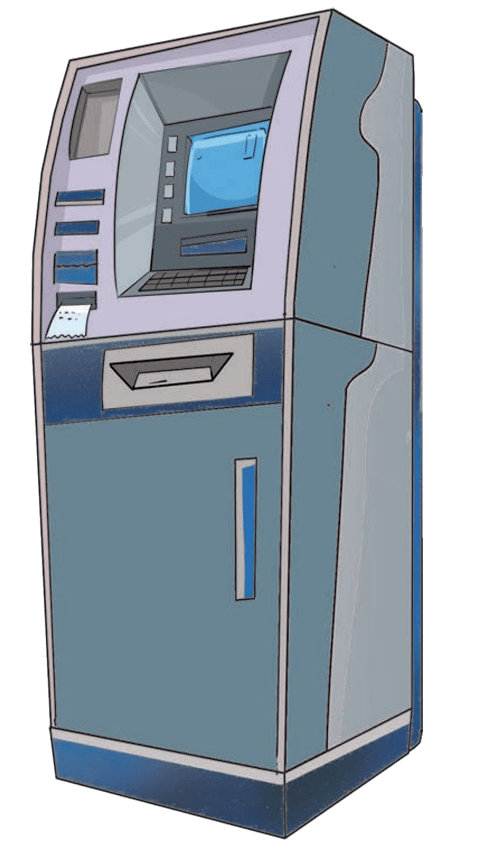
The bus stopped at the bus stop near their house. Dada ji and Navya stepped out of the bus. On the way home, they walked to a bank that had an ATM.
“What is this machine, Dada ji?”, Navya asked curiously. “This is an ATM, short for Automated Teller Machine”, Dada ji explained. “It helps us take out money anytime we need it.”
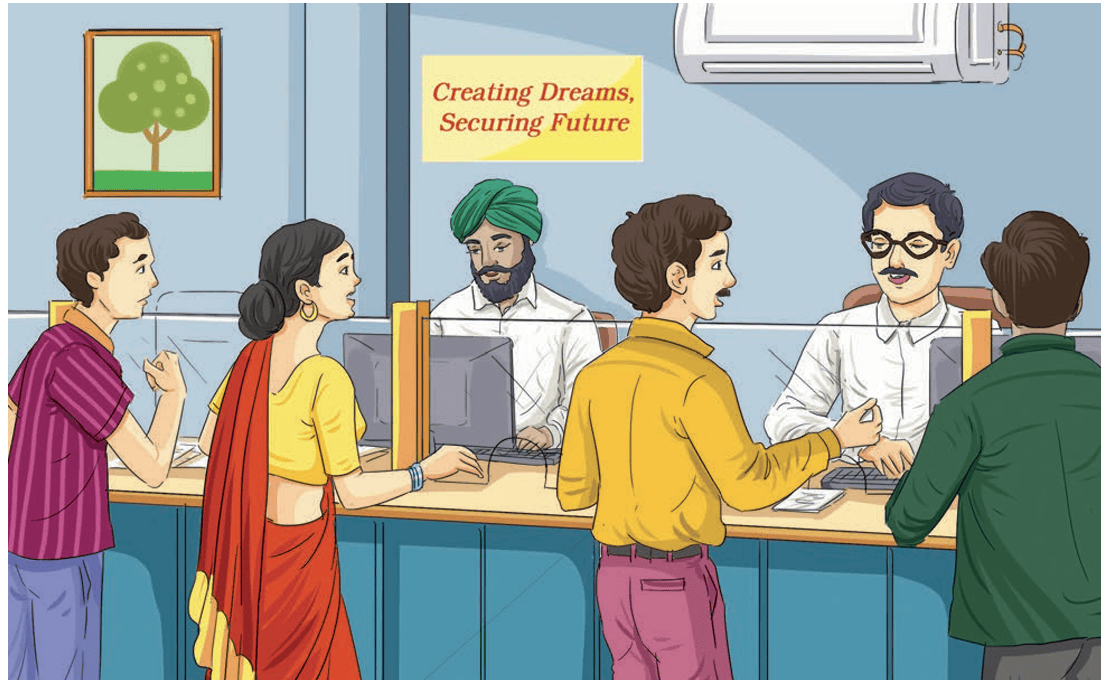
Navya asked, “But why do we keep our money in
the bank, Dada ji?”.
“Banks are a special
place where money is kept
safe. They also help us
save money for our future
needs”, Dada ji replied.
“When I was of your age,
we did not have ATMs. We
had to visit the bank and
wait in long queues. Also,
we used Money Orders to
send money through the
post office.”
“But now, we can use
mobile phones to send
money online within
seconds! Mama (maternal
uncle) sent money to my
mother to buy gifts for us,
this Raksha Bandhan”,
Navya said excitedly.
“Yes, technology has made things so much easier”, agreed Dada ji.
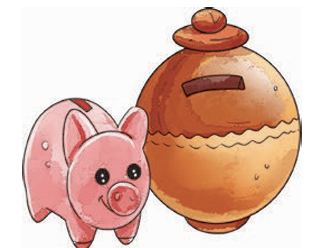
1. If you get pocket money, do you save it? If yes, where do you put your savings?
2. Why do you think it is important to save money?
3. What are some things you could do to save more money?
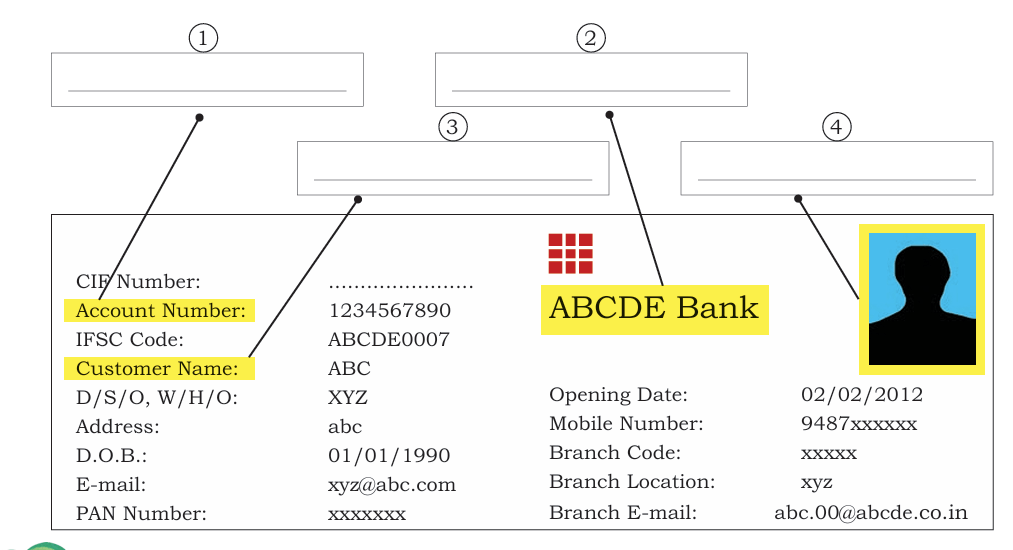
4. Request one of your family members to show you their bank passbook. Note the important elements given on the first page of the passbook.

1. Visit a bank in your locality or find out from your elders
about how it works. After that, answer the following
questions:
(a) Other than saving money, what else do people use banks for?
(b) What is an ATM and how does it help people?
2. Take an Indian currency note. Look at it closely and answer the following questions:
(a) What is the value of the note?
_____________
(b) How many languages do you see on the note? ____________
(c) What pictures or symbols are there on the note? __________
Arrange for a field visit to a bank. Prepare students by discussing what they might see and learn during the visit. Encourage students to ask questions and observe the processes used in managing money.
Do you know?
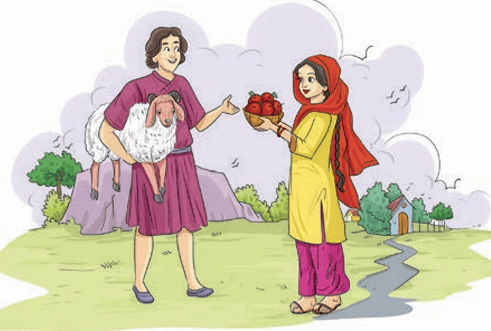
Long ago, people
used barter system to
exchange goods and
services. For example, a
farmer could exchange
wheat for milk from a
shepherd. However,
finding the right trade
partner and the right
exchange value was not
always easy. To simplify exchanges, money was invented.
Looking Around the Neighbourhood
As soon as they reached home, Navya ran to her brother and shared her experiences with him.
Public places help people by providing services related to health, safety, cleanliness or the environment. These may include places like hospitals, banks, post offices, police stations, public libraries, bus stations, etc.
Navya brought a pencil and paper, and sat down to draw her neighbourhood.
On the basis of the rising sun, she identified the east direction. Based on this, she drew places in other directions around her house.
The places towards the east appears on the right side of the paper. Also, the places to the north are shown at the top side of the paper, while the places in the south are indicated at the bottom of the paper. The places in the west are shown on the left side.
On a map, the representation of directions is
as follows — North is shown upwards, South is
downward, East is on the right, and West is on the left.
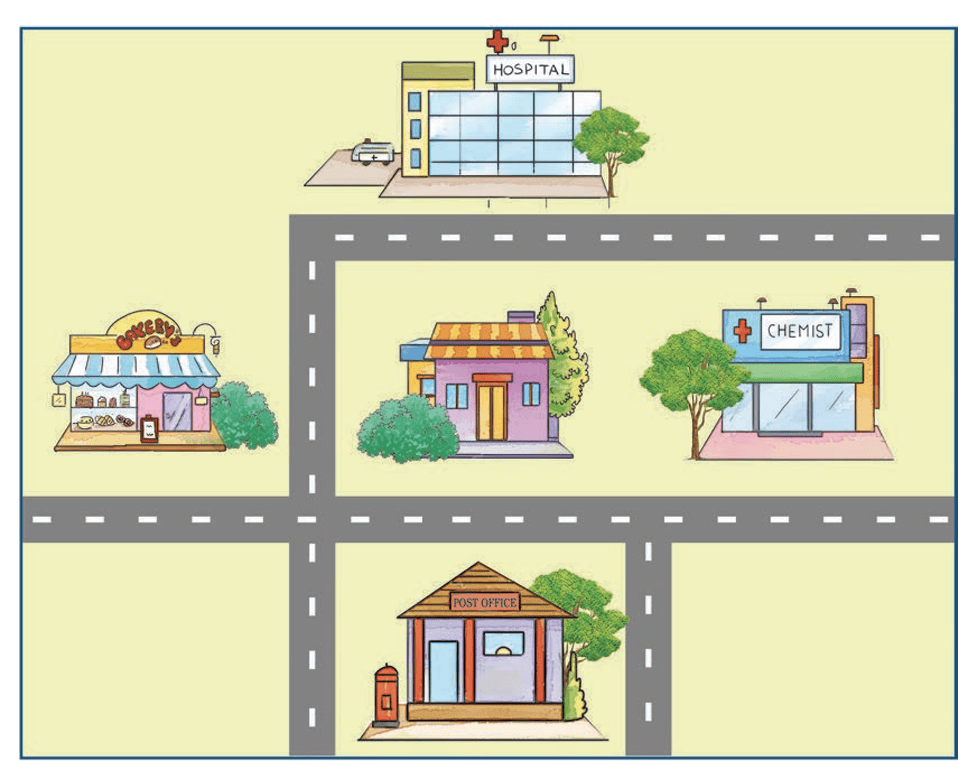
1. Look at the picture above, and write down the places located in the North, East, West, and South of Navya’s home.
| Direction | Place |
| North | |
| East | |
| West | |
| South |
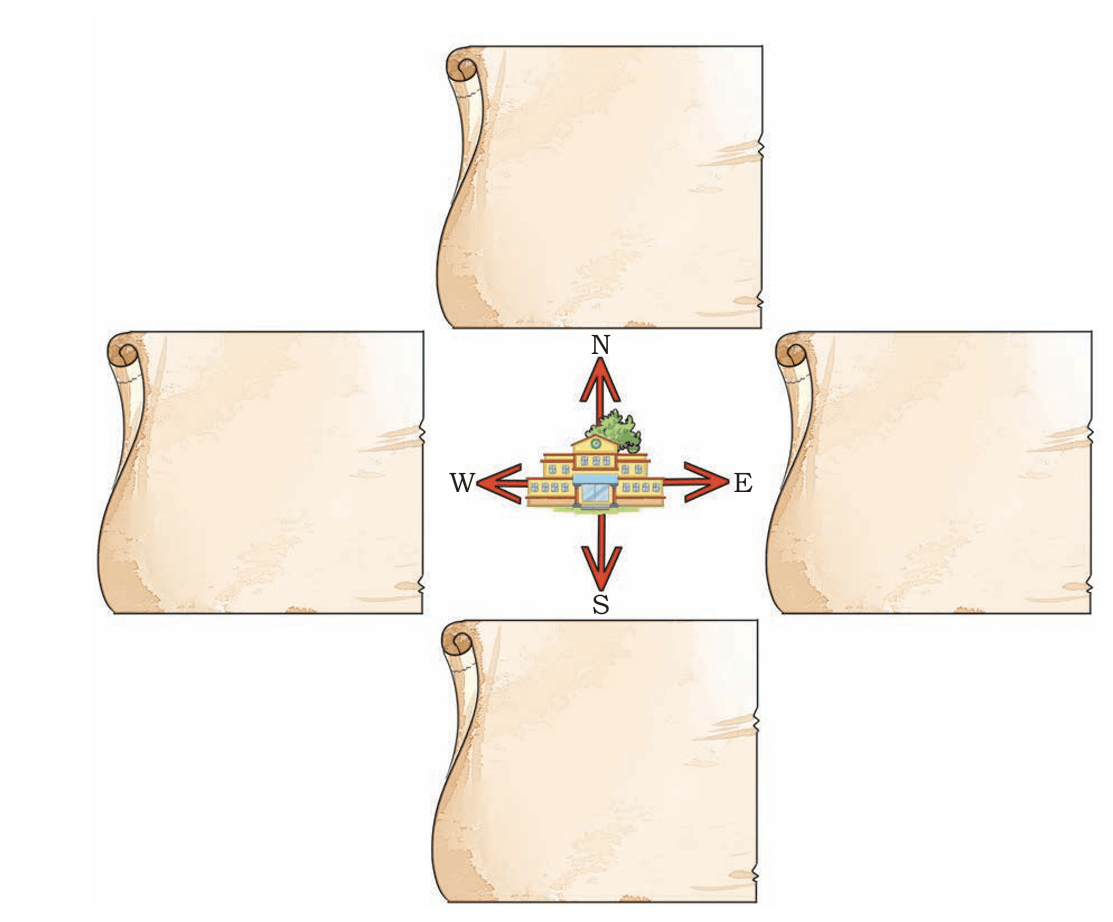
2. Look at the picture on the next page, and imagine your school at the centre. Name the buildings or areas near your school and write the direction they are situated in the given spaces.
3. Imagine you are giving directions to a friend to visit your favourite place near your school. How would you explain it using directions (left, right, forward, backward, etc.) and landmarks?
Place: _______
Instruction: _______
Encourage students to identify landmarks that help in recognising a place easily. Give examples of landmarks.

Draw a map showing the route from your school to the public library or any such place near your school. Identify landmarks like parks, shops, hospitals, bus stops, etc. on the map.

1. Imagine you have ` 100 to utilise in a month. Your task is to plan how to spend and save wisely. Think about your expenses for stationery, snacks, toys, etc. Decide how much you will save in your piggy bank and how much you will use for your expenses. After making this plan, think about how saving money could help you in the future.
Use the table below to create your budget:
| Category | Planned amount | Why did you choose this amount? |
| Savings | ||
| Expenditure |
2. Imagine that your group is in charge of making your neighbourhood better. Discuss what new services or facilities you would add or improve. Present how these changes would help everyone in the community.
3. As a class, take help of the elders around you to list people in your neighbourhood who helped the community during COVID-19. These could include doctors, nurses, garbage collectors, shopkeepers, teachers and others. Discuss how they made the community safer and why it is important to thank them.
4. Can you list out the people involved and vehicles used in each of these services in the boxes given below? An example has been given.
| Police Station | Hospital | Fire Station | Post Office | Library |
|---|---|---|---|---|
| Police officers | ||||
| Constables | ||||
| Patrolling jeep |