Unit 2 Life Around Us
Chapter 3: Nature Trail
This unit highlights the connection between nature and culture, showing how traditional practices are associated with different aspects of nature. From studying plants and animals to discovering tribal art, and medicinal plants, students will engage in meaningful experiences that promote conservation and sustainable living. Interactive activities, including festivals and games, will help students recognise the harmony in nature and their role in protecting it.
Note to the Teacher
Chapter 3
Chapter 4:
•Growing up with Nature’ portrays how

Teacher to Facilitate
• Teacher and students will
chapter 3 -Nature Trail
Have you ever seen a banyan tree with its hanging roots touching the ground?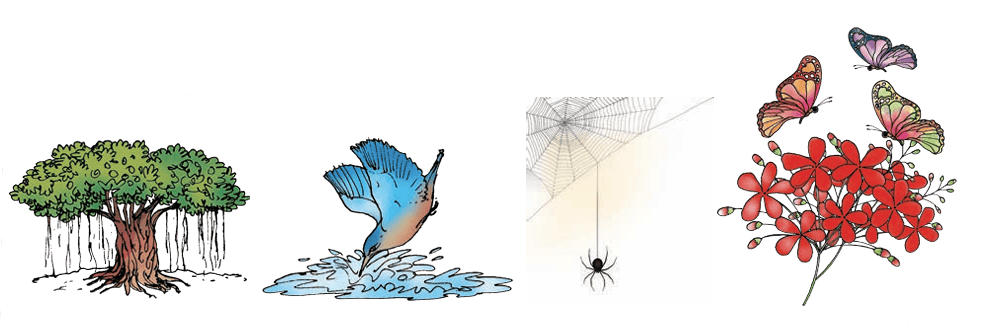
The Adventure Begins
Encourage students to locate Madhya Pradesh on the Map of India.
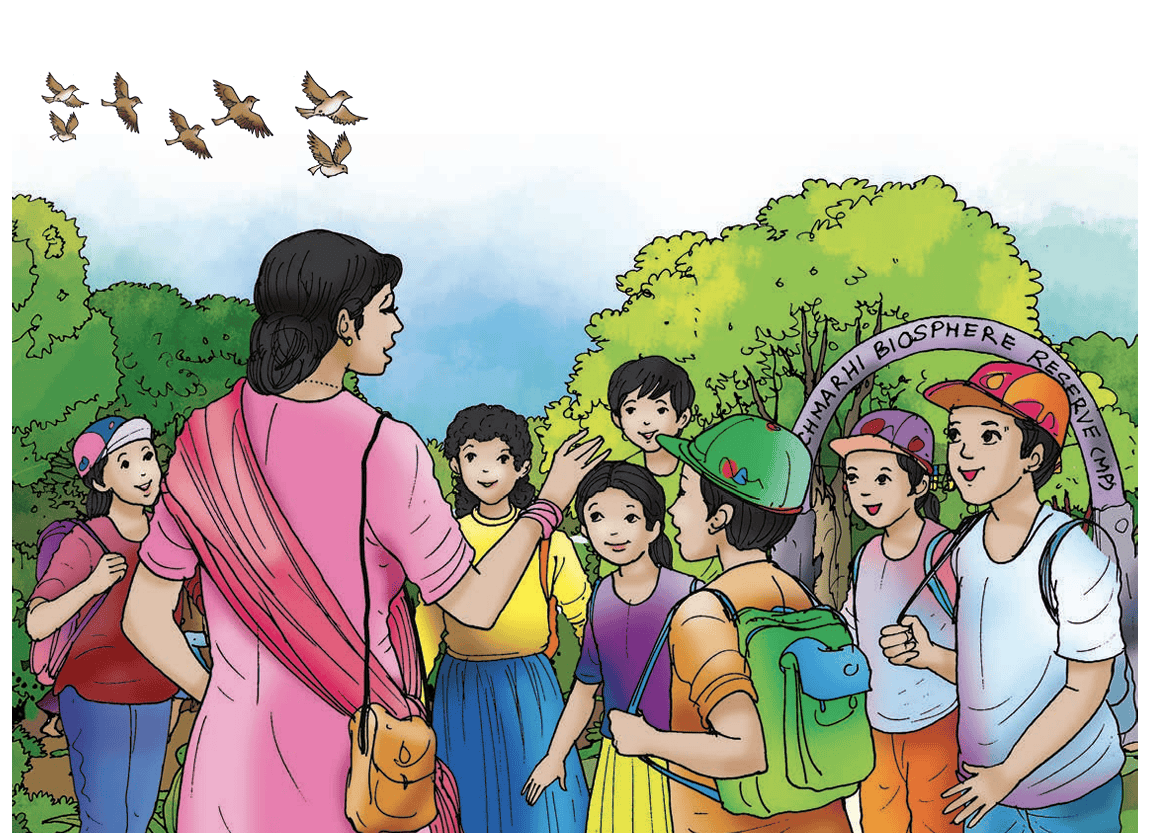
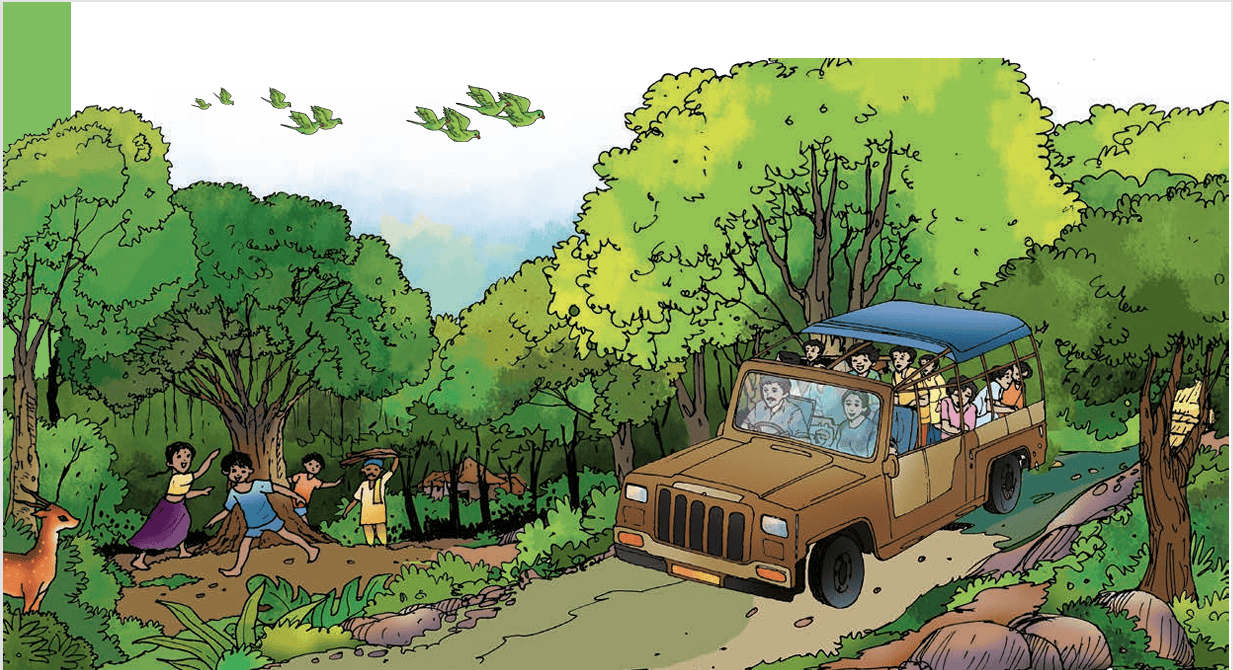
As they reached the forest entrance, the students got excited to see a lot of tall trees and chirping birds.
Abha : Welcome to Pachmarhi!
Teacher : This is Abha Didi, a nature scientist who studies plants and animals. She will guide us in exploring the forest.
Students: Abha Didi, will we see monkeys, deer, snakes, eagles and tigers on the way?
Abha : That is what we have to find out! We must also make sure that we do not harm the
plants and animals in the forest.

1. Can you think of rules that should be followed while you are in a zoo or a forest?
For example,(a) We should not feed birds.
(b) ………………………………
(c) ………………………………
(d) ………………………………
Now, look at the safety rules given below and match them with your list. Have you missed out any of the rules given?
Safety Rules
DOs and DON’Ts
1. Please be careful in a new place.
2. Please do not tease animals.
3. Please do not feed animals.
4. Please do not damage trees, and flowers.
5. Please do not bring pets, firearms, or any kind of weapons.
6. Please do not bring polythene bags.
7. Please do not damage public utilities.
8. Please do not throw any garbage in the forest.

Why are these rules important to be followed?
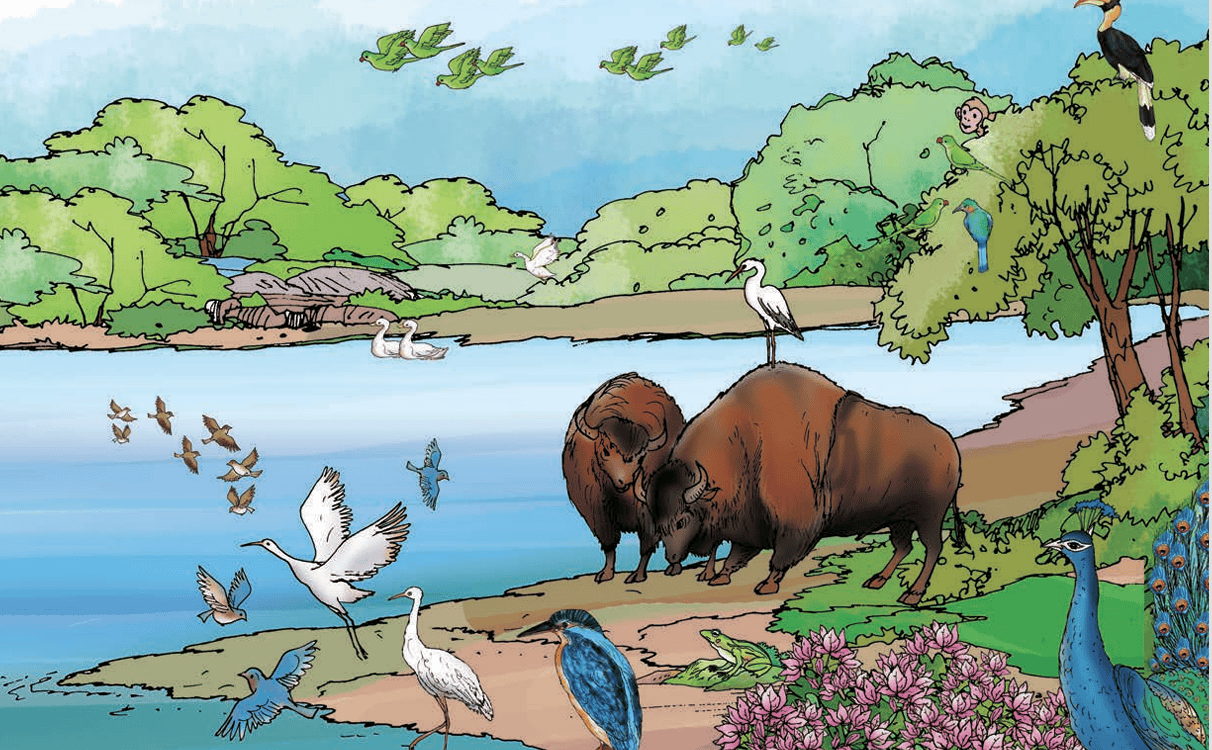
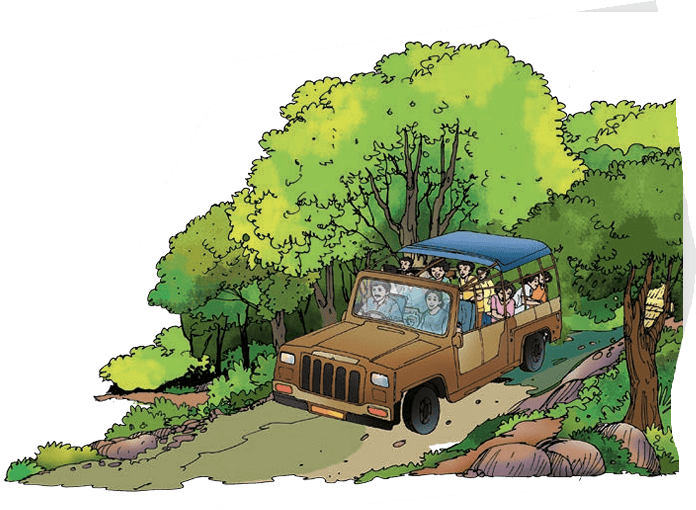
The students hopped onto the jeeps. As they entered the forest, they saw a variety of plants and animals.
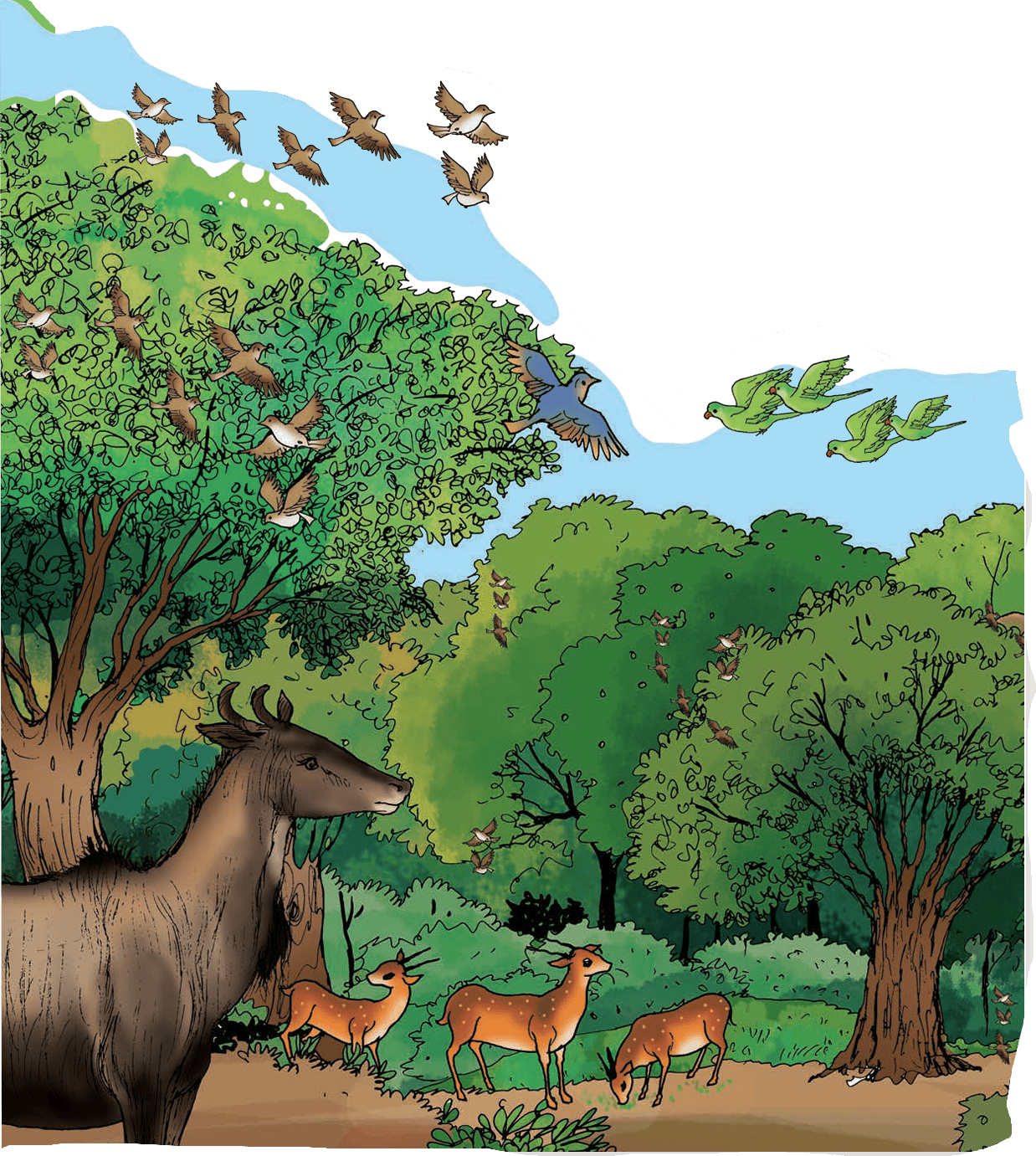

Animals in the Forest
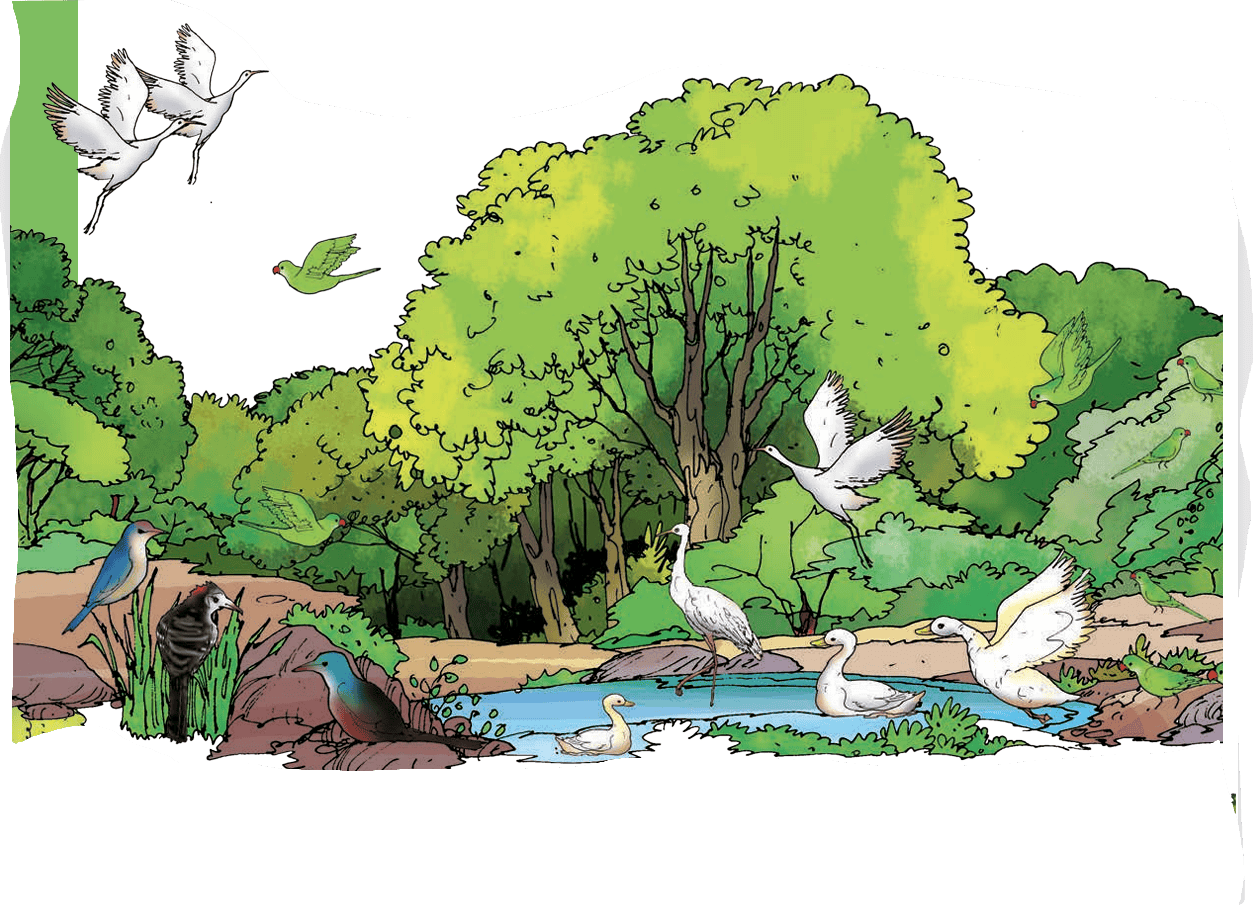
• Look closely at the picture and identify the animals. You may take help from your teacher.
• Divide them into two categories:
1. Animals on land:
————————————
2. Birds in the sky:
—————————————
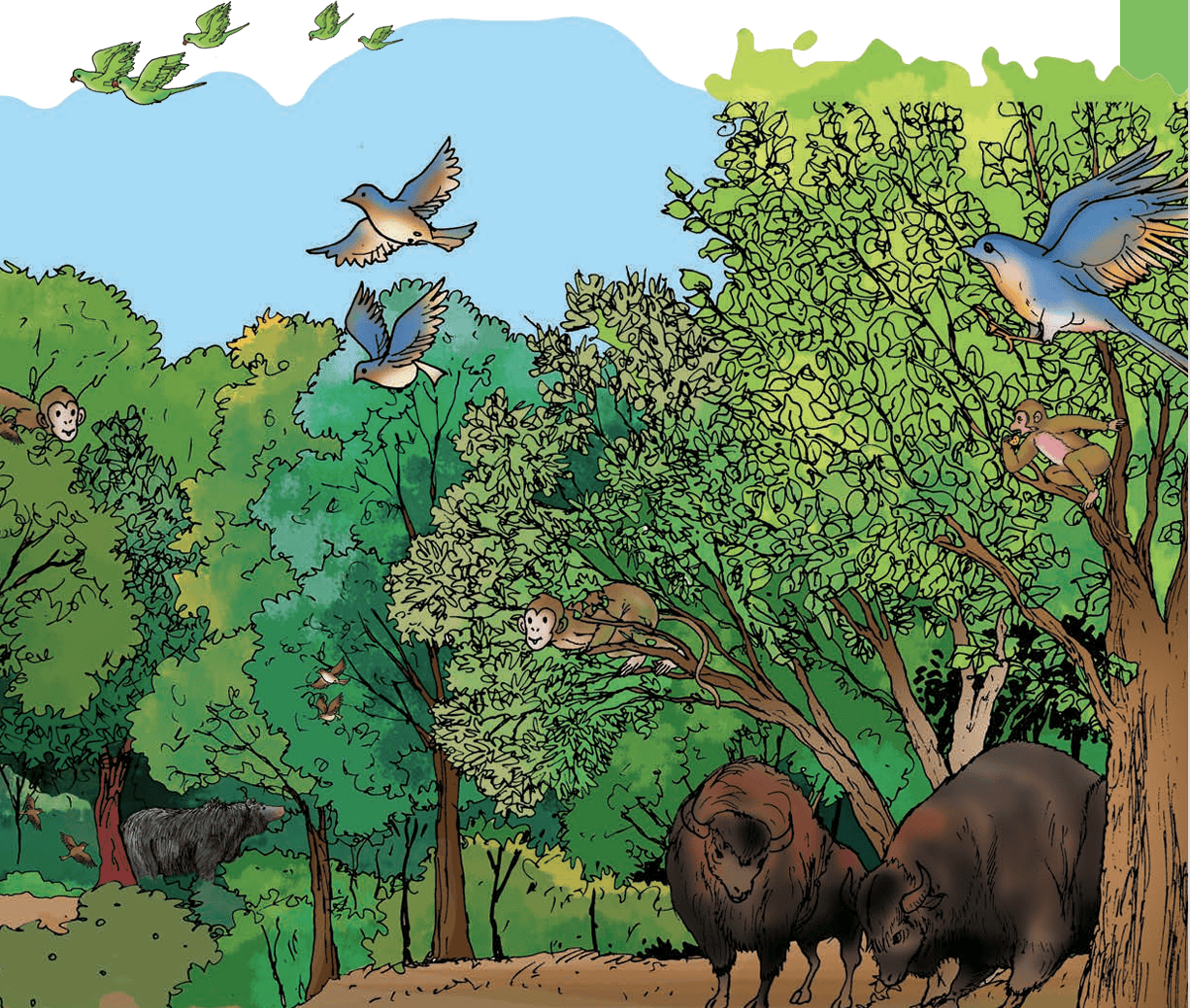

Name some animals including the birds that you have seen. Write any one feature of each of them.
| Name of the animal | Feature |
| Elephant | Long trunk to take food and water |
| Sparrow | Short and strong beak to crack seeds |
Indian Giant Squirrel is a big, red-coloured squirrel found in Pachmarhi and some other places.
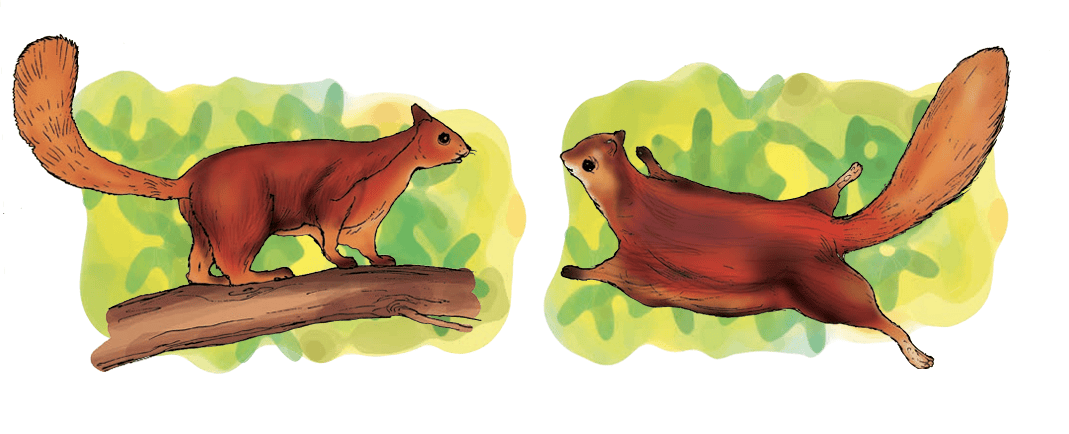
Compare its features with the squirrels you see in your area.
__________
__________
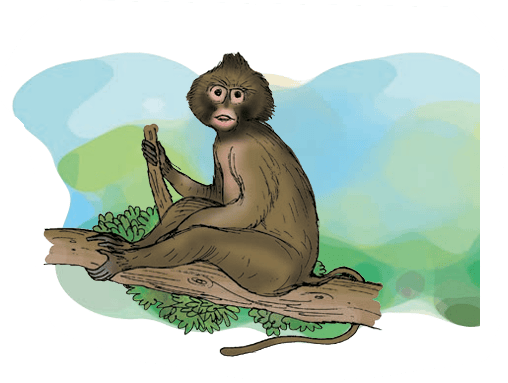
Do you know?
The Spectacled Monkey is the state animal of Tripura. The white patches around its eyes make it look like it is wearing spectacles.
The next stop for the jeeps was near a pond where students were excited to see more animals.
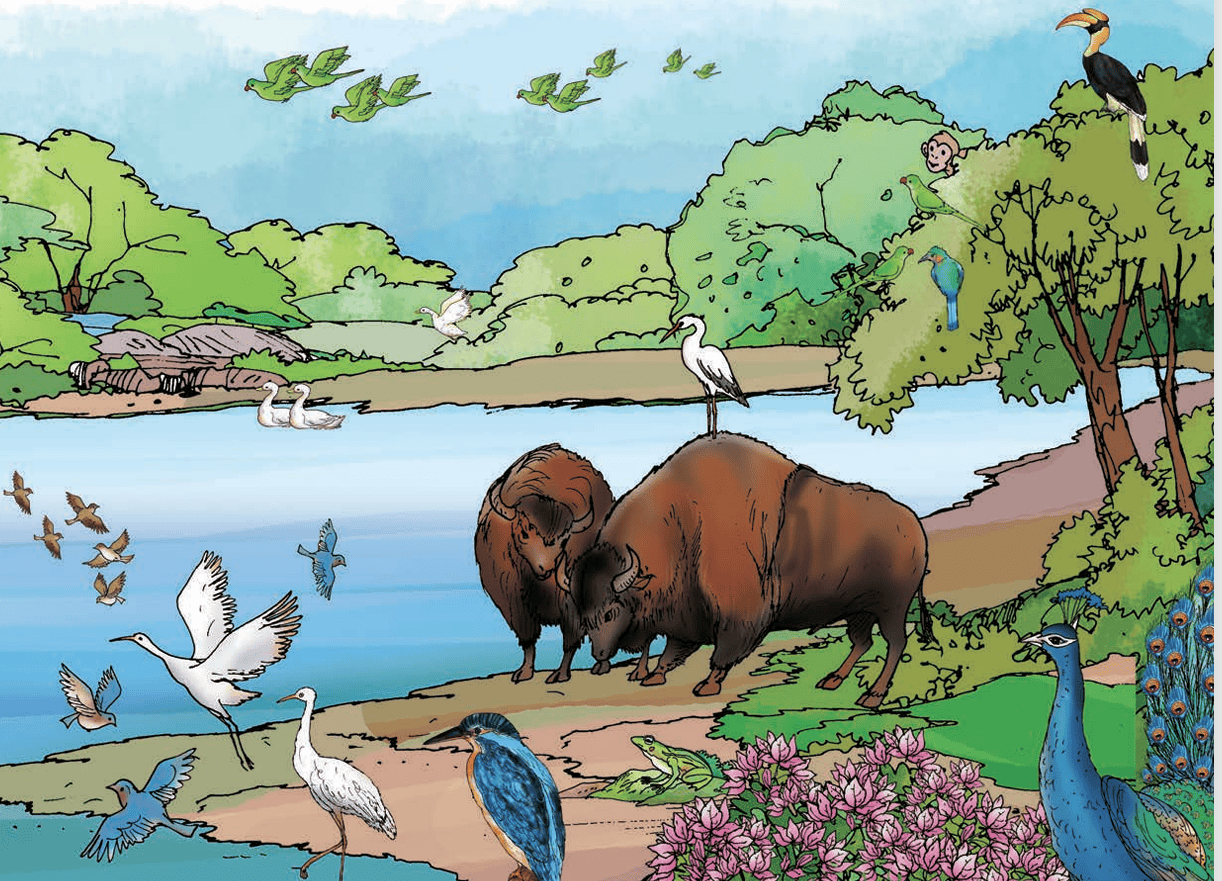
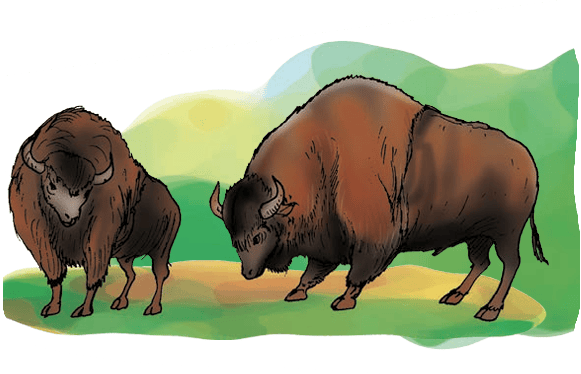
Look at the bisons! They look like buffaloes, but
they are stronger with shorter horns.
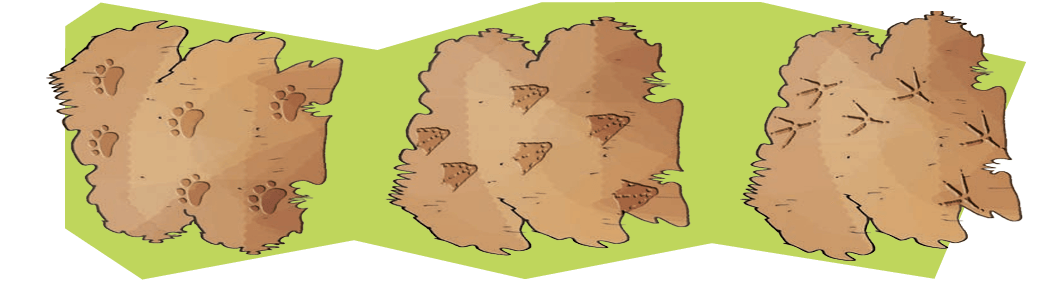
Arya : I wonder which other animals come here
to drink water. Look at these footprints in
the mud. Which animal might had left
these marks?
Sarthak : Hmm… maybe a deer or a tiger? Or, a rabbit? I see one rabbit munching
on grass over there!
Discuss with students the difference between animals which look
similar, like pigeon and dove, crocodile and alligator, and others

1. Look at the footprints and guess the name of the animals that you think must have come to the pond to drink water.
 ................
.............
..........
2. Observe and draw the footprint of any animal in the space given here.
Sarthak wanted to know about a bird. It had a
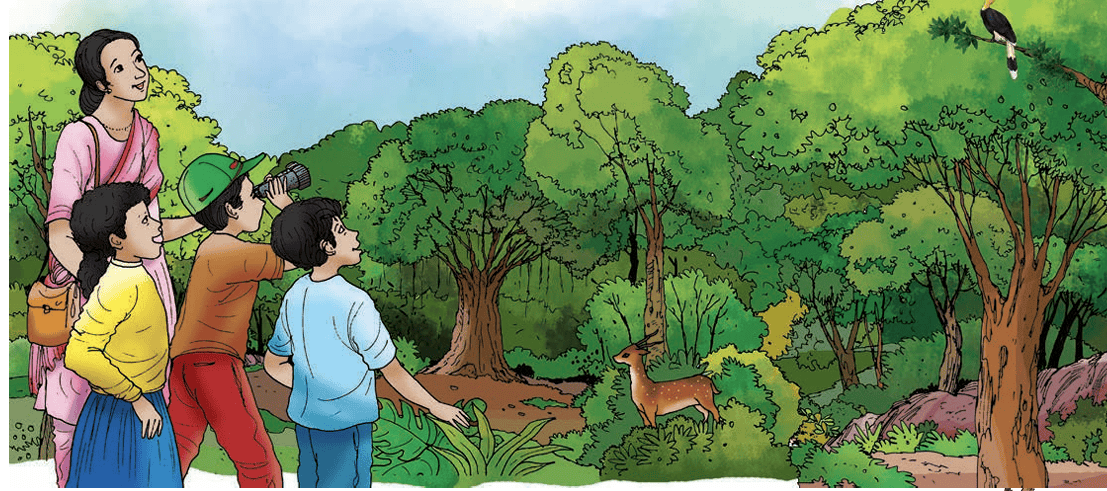
Abha : That is a hornbill. It has a headgear growing out of its forehead like a horn, hence it is called hornbill. Some birds, like peacock, are colourful; while others like owls have sharp eyesight that helps them to see at night.
Name the birds shown below.
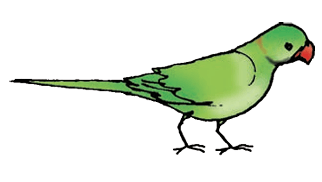 .............
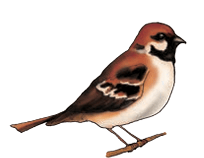 .............
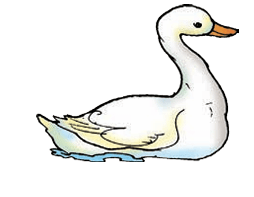 ...........
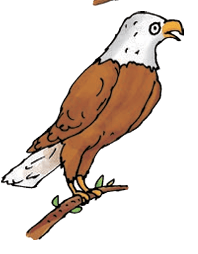 ............
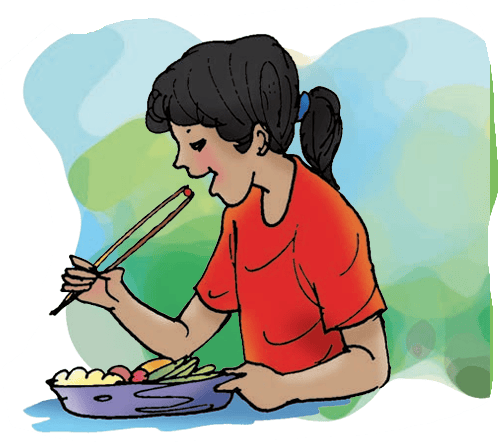
Take different food items like grains, berries, fruits, nuts, etc., in a plate. Try to pick these food items using a spoon, a toothpick or a pair of sticks. Fill the table below with appropriate tool(s) for picking each of these food items.
| Food item | Appropriate tool(s) |
| Grains | |
| Berries | |
| Nuts | |
| Pieces of fruits |
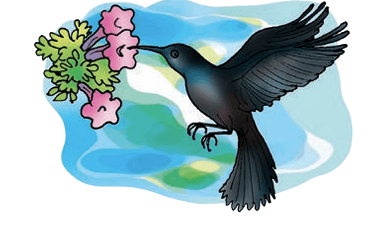
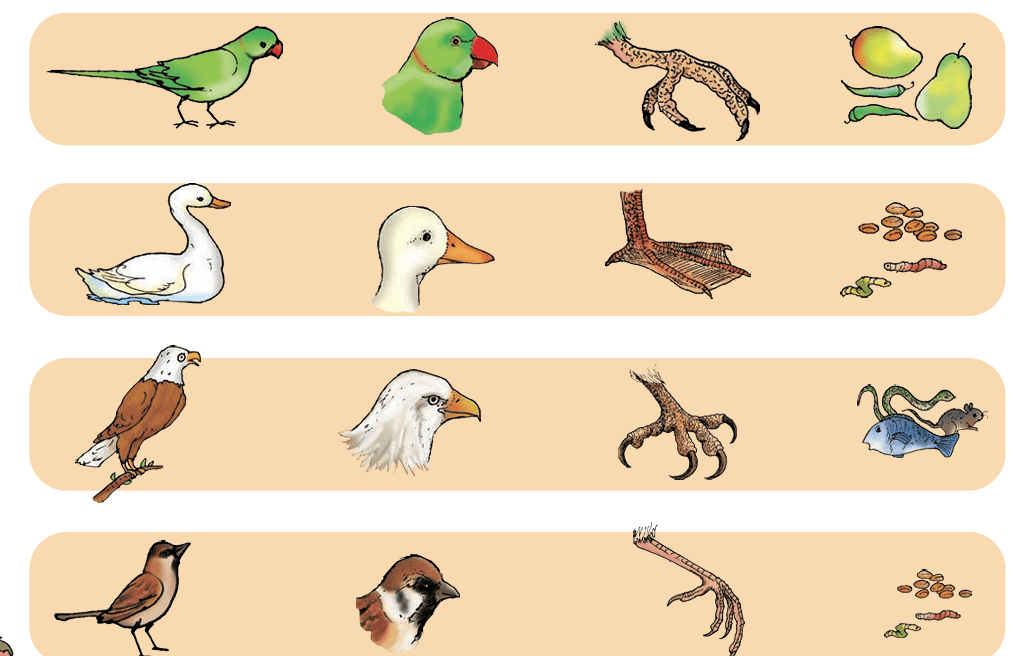
It is interesting to know that birds have beaks and claws which help them in eating and other activities. An eagle has a sharp, curved beak and sharp claws to catch its prey; while a sunbird has a long beak to drink nectar from flowers. We can guess the eating habits of a bird by observing its beak and claws.
Note to the Teacher
You can use locally available food items and tools to relate the shapes of different types of beaks of the birds, for example tongs or pliers resemble beak of sparrow.
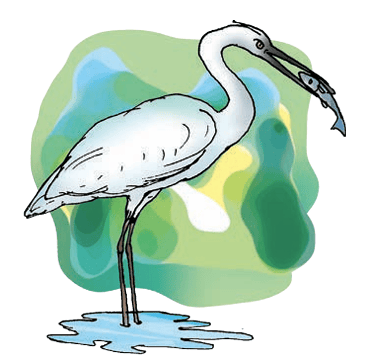
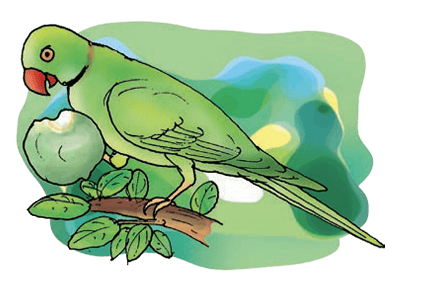
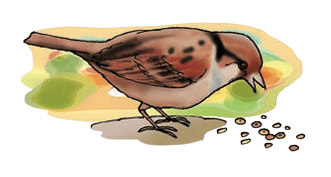
Different birds have different beaks, claws, and
varying food habits

1. Bird Diary
(a) Go near a tree.
(b) Close your eyes and listen to the sounds of different birds.
(c) Now open your eyes and focus on one bird at a time.
(d) Observe how it moves, what it eats, and where it sits.
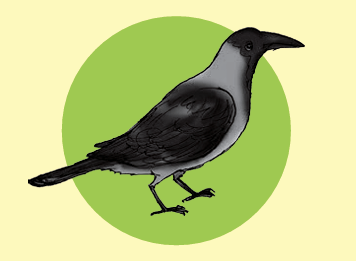
(e) Write your observations in a Bird Diary! For each bird, note the following:
Name ................. Date.................
My Bird Diary
Interesting Facts
_________
_____________
Appearance
Head colour:__________
Back colour: ___________
Wing colours:_______
Beak shape:____________
Throat colour:_____________
Colour of legs:___________
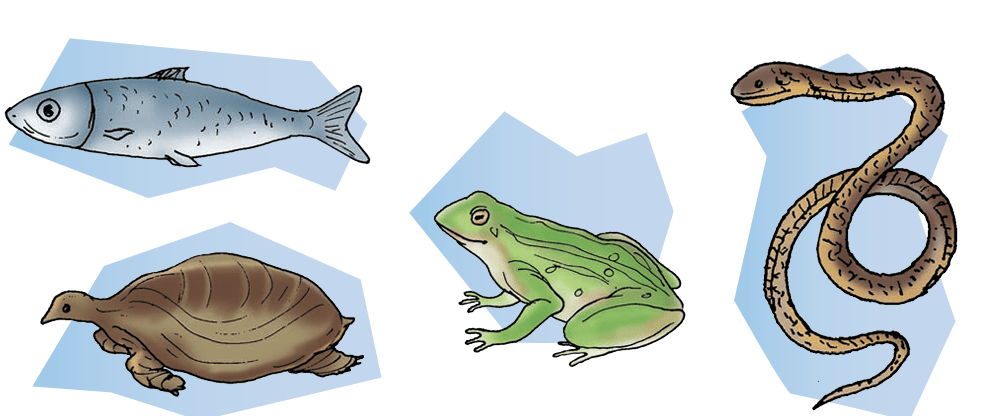
2. List the animals which live in and around water bodies. Fill in the table given below
| Name of the animal | Movements |
| Fish | Swims |
| Crab | Walks |
| Frog | Jumps |
| Turtle | |
| Crocodile | |
| Snakes | |
Animals which live in water have special features to help them survive. Fish have fins to swim. The gharial, a type of crocodile, has a long, narrow, and pointed snout to catch fish. Turtles have strong shells to keep them safe and webbed feet to help them swim easily. Frogs can live both on land and in water.
Tiny Animals
A grasshopper suddenly hopped out from the grass. Everyone was amused.
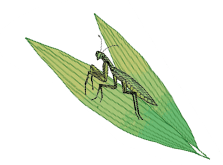
Arya : This is an insect. It has three pairs of legs, one pair of antennae to sense its surroundings. Insects also sometimes have two pairs of wings, as in the case of flies, grasshoppers, etc.
Abha : Like the grasshopper, you will find many insects in the forest such as ants, beetles, bees, flies, praying mantises, butterflies, etc.
1. What are the insects that you find at your home and in your surroundings?
——————————
2. Name the insects shown below.
—————————
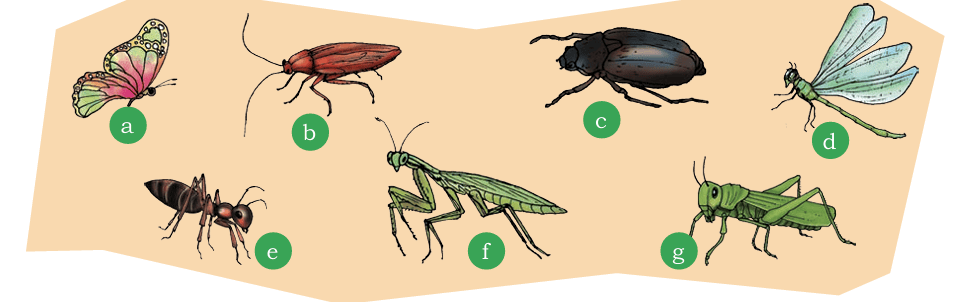
(a)————— (b)————— (c)————— (d)————— (e)————— (f )————— (g )—————
 There is a wonderful diversity of animals in the
forest, each one having its unique features.
There is a wonderful diversity of animals in the
forest, each one having its unique features.

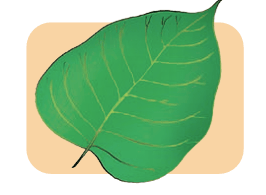
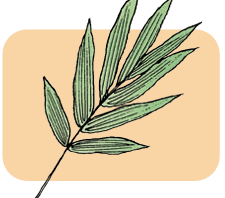
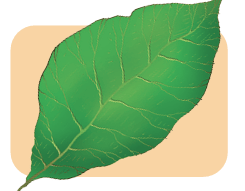
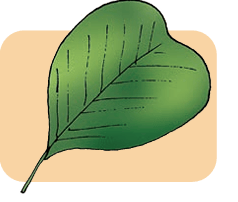
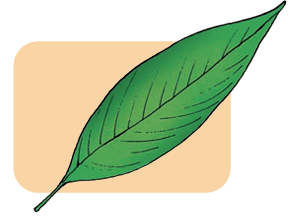
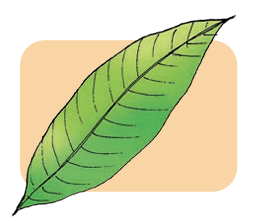
1. During the visit to the nature trail, students collected leaves from different plants. Help them identify the plants based on the pictures of the leaves given below.
 (a)................ (a)................ |
 (b)......... (b)......... |
 (c)............ (c)............ |
 (d)............. (d)............. |
 (e)........ (e)........ |
 (f)......... (f)......... |
(g)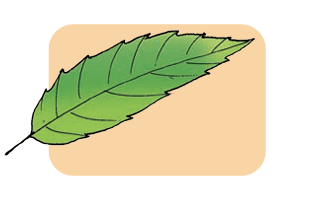 ........ ........ |
2. Observe the leaves of different plants in your neighbourhood and fill the table.
| Draw and name the leaf | Colour | Shape | Texture | Any other observation |
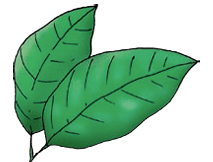 Lemon Lemon |
Green | Oval | Smooth | Strong smell |
| |
||||
Apart from different colours, textures, and shapes, did you observe that the leaves also have different types of lines on them? These lines are called veins. The images given below show two different types of arrangement of veins.


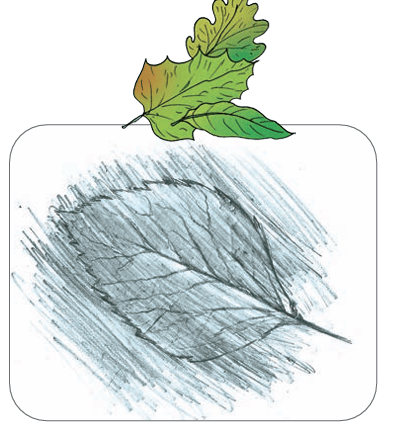
Leaf Autograph
Place a leaf on a notebook with the rough, vein-side facing up. Cover it with a plain sheet of paper. Rub a crayon over the paper, and watch the leaf’s shape appear like magic! Try this with different leaves and see how each one has its own unique pattern. Name the plant or tree to which the leaf belongs.
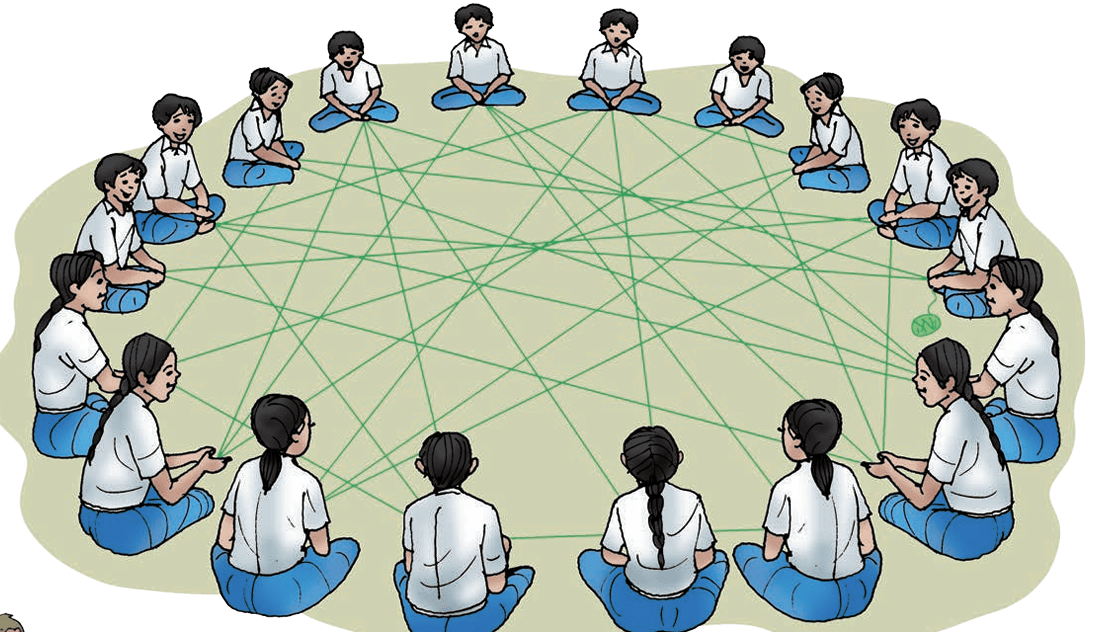
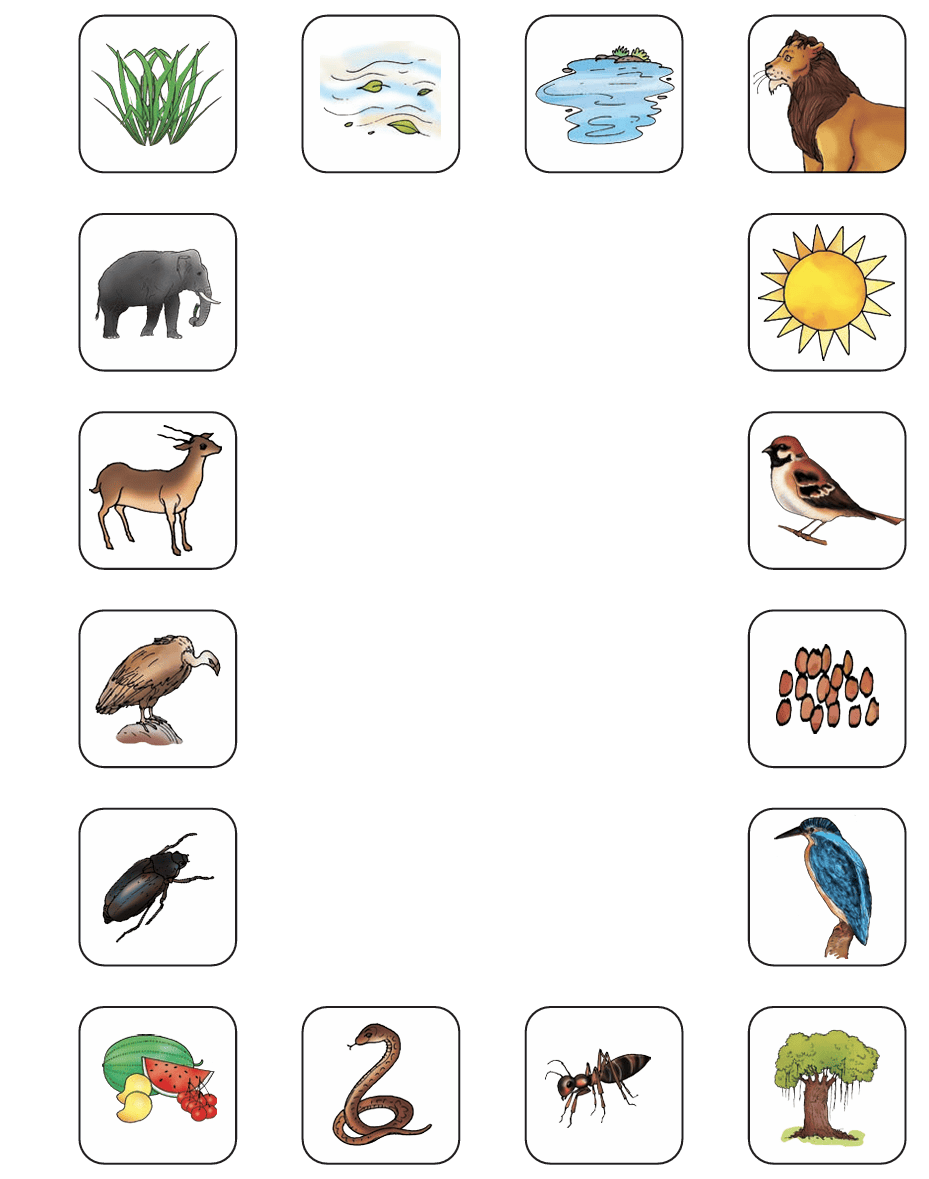
Let us Play the Game ‘Web of Life’
Have you ever wondered how all living beings are connected? Let us find out by playing a game! You just have to imagine you are a part of nature — maybe a tree, a bird, or even the Sun.
Note to the Teacher
Help the students understand and discuss the role they play in the game, and help them find the connections and interdependence with each other in nature.
How to play?
- 1. Each player gets a card with the name of a plant, animal, or natural element.
- 2. One player starts by holding a ball of yarn and think about their connection to other player with similar cards.
- 3. For example, a tree provides food for a bird or a river supports a fish, the yarn is passed to that player while the first player still holds onto its thread.
- 4. The web keeps growing as more connections are made.
- 5. Now, what if one part of the web disappears? Try removing a player, like a missing deer for a tiger or
- plants for animals.
- 6. Watch how the web weakens or collapses. It shows how everything in nature is connected!

- 1. Which animal would you love to be? What special abilities would it give you?
- 2. How do you think different plants and animals are dependent on each other?
- 3. What is the role of a nature scientist?
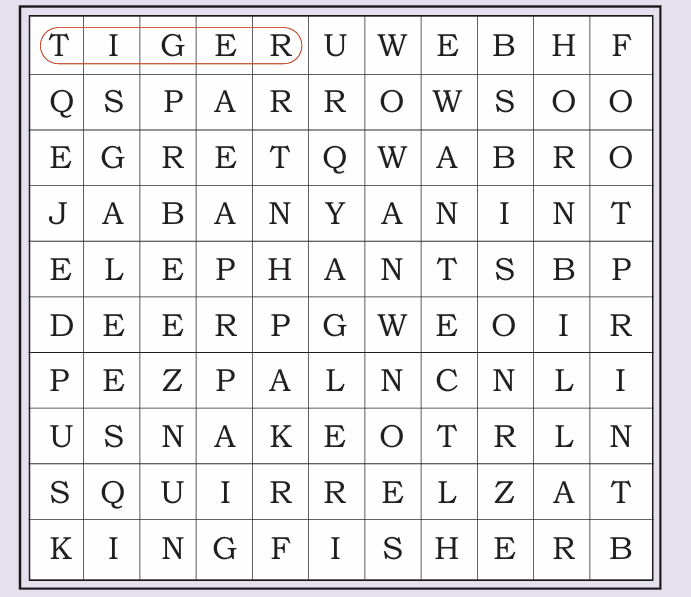
- 4. Solve the puzzle.
- Find the treasures of the forest.
- 5. Take on the challenge
- Plan a nature walk with your family or friends in a nearby park. To prepare yourself as a guide, identify few plants and animals, and study their features and interesting facts
- which you can explain during the walk.
- 6.Do an activity
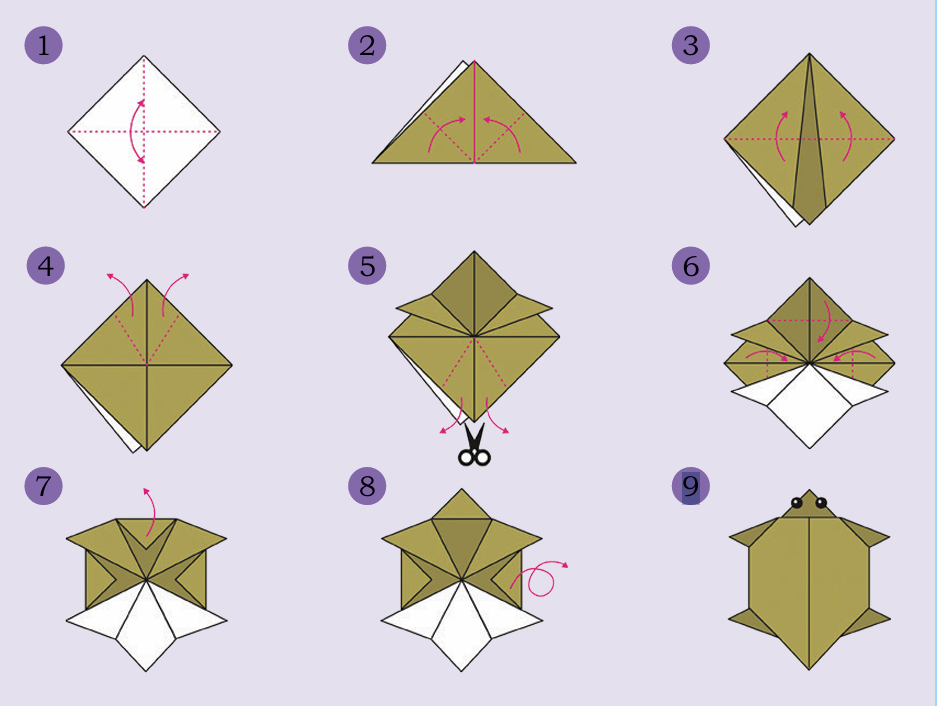
Role-play: Create a scene of a forest in your classroom where students can perform roles of plants and animals, and of visitors. While enacting the play, focus on our role to protect animals and plants. - 7. Let us make a paper turtle! Try using an old newspaper or used paper.
- 8. Find out
Write the name of your state animal, bird, and plant.