chapter-8
How Things are
Made
We learnt in Grade 3 that things around us are made of different materials. Are you curious to know how these things are made? As an example, let us learn with Pihu how paper is made.
It was a Sunday and Pihu was busy painting in her drawing book. Her mother was reading a newspaper. When Pihu looked up, she noticed a picture of trees on the front page of the newspaper.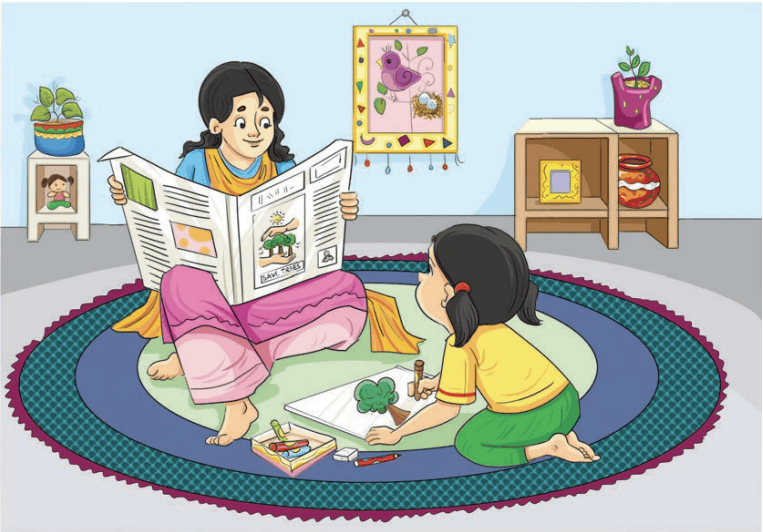
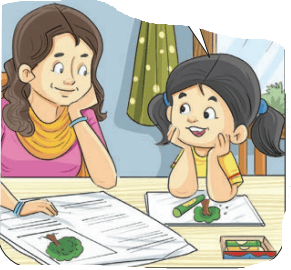 Maa! This picture says that if we recycle paper, we can save trees. How are trees and paper related to each other? |
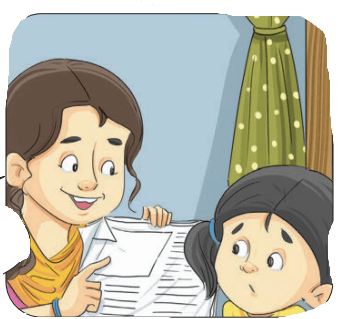 Paper is made from trees, Pihu. |
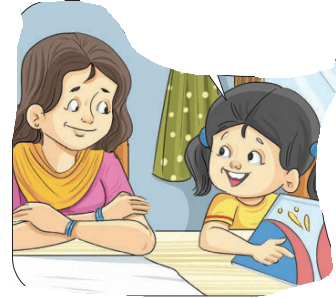 Does that
mean my drawing
book is also made
from trees? Does that
mean my drawing
book is also made
from trees? |
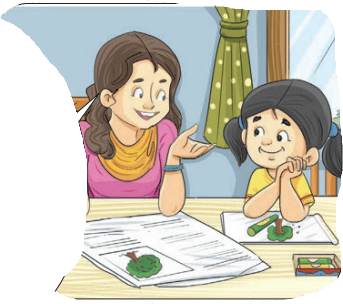 Yes, Pihu.
Your drawing
book, this
newspaper, paper
napkins and even the
chart papers you use
for school projects,
are all made
from trees. Yes, Pihu.
Your drawing
book, this
newspaper, paper
napkins and even the
chart papers you use
for school projects,
are all made
from trees. |
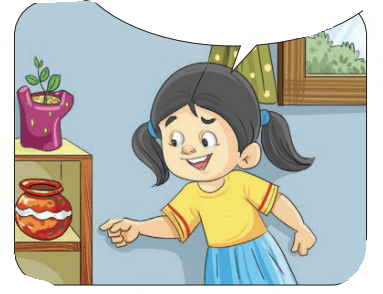 Maa, touch
this! The surface of this
pot looks like it is made
from paper. However, it
feels rough unlike my
drawing book Maa, touch
this! The surface of this
pot looks like it is made
from paper. However, it
feels rough unlike my
drawing book |
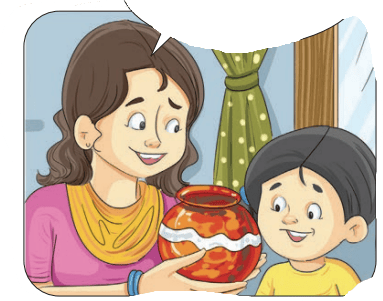 Yes, Pihu.
That is because, it is
made from recycled
paper Yes, Pihu.
That is because, it is
made from recycled
paper |
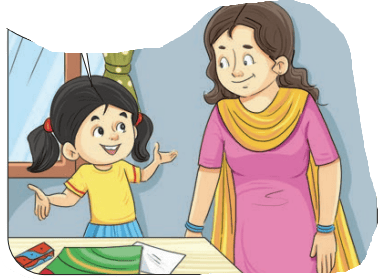 Maa, can
we make such
paper? Maa, can
we make such
paper? |
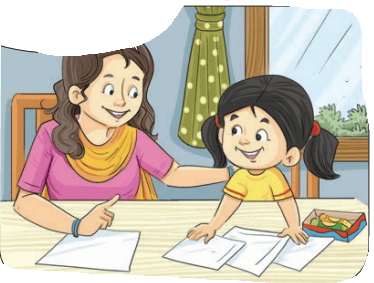 Yes, Pihu.
Why not? Let us try Yes, Pihu.
Why not? Let us try |

Make Recycled Paper
1. Collect materials: Old newspapers, some fenugreek seeds (methi) and water.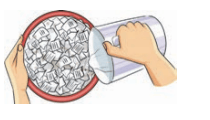
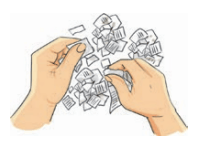
2. Prepare the paper pulp: Tear the newspapers into small pieces and soak them in water. Put a small quantity of fenugreek seeds in the water and leave it overnight. The fenugreek seeds are used as a binding material.
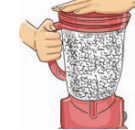
3. Using a grinder, blend or mash the soaked paper and fenugreek seeds, to create a wet mixture. Soaked paper can also be mashed using hands or any other available tool.
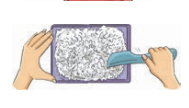
4. Roll out: Spread the paste on a flat base and roll it out into thin sheets.
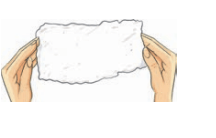
5. Leave the rolled sheets of paper to dry. Your recycled paper is ready!

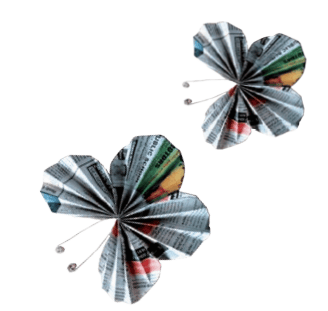
Colour and design the paper you have made.
Natural Colour Experiment
Cut the recycled paper into pieces of same size. Colour them using natural ingredients mentioned in the table below. You can use any other natural ingredients as well. Make sure that the quantity of ingredients used is the same for colouring each piece of paper. Write down your observations in the table below.
| Natural ingredient used | Paste a sample of your paper here | Colour and brightness (dull/bright) |
|---|---|---|
| Turmeric | Yellow, dull | |
| Spinach | ||
| Beetroot | ||
| Henna |
Paper can be painted with natural and artificial dyes. Natural dyes are made from different parts of a plant like the leaf, flower, root, seed, stem, etc. Thus, the produced natural dyes are safe to use. These are also used to colour various materials such as clothes and pots.
A Special Gift
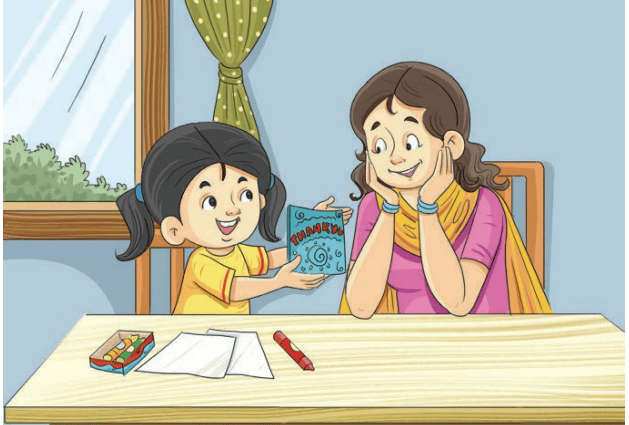
Pihu gifted her mother a beautiful greeting card.
Pihu: Maa, thank you for teaching me how to recycle paper to make greeting cards.
Maa: Oh Pihu, this is lovely! It is a special gift for me.

Make a greeting card, a paper mask or any such item made of recycled paper.
Note to the Teacher
Guide the students to use paper pieces of the same size, and to use the same quantity of natural ingredients. Also, guide students to make colours using natural ingredients and encourage them to think creatively about different uses of paper.
So much effort is involved in making paper!
Now, you know how to make recycled paper. The paper we see in books looks different from the recycled paper as it is made from wood pulp. A large number of trees are cut for this purpose.
The steps for preparing this paper are similar to the steps of making recycled paper. Making paper requires many trees, and a lot of water and energy. It is important to use paper and other materials responsibly (use only when needed).
In earlier times, people used different materials instead of paper. They used cloth, leaves and wooden boards to write. People in India also used palm leaves called talapatra.
Environment-friendly material like banana fibre can be used to make paper! These alternatives save trees and protect our environment.

- 1. Do you think that we waste paper?
- 2. How can we reduce wastage of paper?
Teachers can take students on a field trip to a nearby paper mill if available.

Different Types of Paper and their Uses
Observe the different types of paper that we use in our daily life, such as writing paper, newspaper, art paper, cardboard and tissue paper. Paste small pieces of different types of paper in the space given below and write their uses.
| Types of paper | Uses |
|---|---|
| Paste here | |
| Paste here | |
| Paste here | |
| Paste here |
We use different types of paper for different purposes. For example, tissue paper is used for cleaning as it is very thin, soft and absorbs water. Cardboard is thick and hard, and so it is used to make boxes for packing various objects.
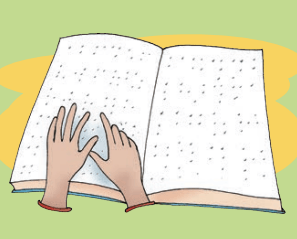 Do you know?
The Braille system helps visually challenged people to read and write by feeling the different patterns of tiny bumps on the Braille paper. The patterns represent different numbers, alphabets, and punctuation.
Making Responsible Choices
In our daily life we can follow a 5-step plan to reduce waste. They are called the 5Rs of waste management.The 5Rs are:
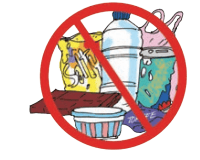
Refuse: Saying ‘no’ to using things that generate waste. For example, refusing single-use paper cups.
Reduce: Using things carefully so that we can reduce the waste we generate. For example, using both sides of paper for making notes.
Reuse: Using something multiple times before discarding it. For example, using a gift bag again for another occasion instead of throwing it away.The teachers can guide students to bring used paper or small pieces of paper for the activity.
Repurpose: Using something in a new and innovative way. For example, creating toys or decorative items using old newspapers.
Recycle: Recycling is a process which involves steps that can turn a thing into something new. For example, old newspapers can be recycled to create handmade paper.
Let us explore these 5Rs a little more.

Discuss the following situations with your classmates and write down which of the 5Rs it belongs to:
| Example | 5Rs of Waste Management |
|---|---|
| A family brings their own cloth bags to the grocery store instead of using plastic ones. | Reuse |
| Maya does not use a plastic straw to drink coconut water. | |
| Rohan uses blank pages of his old notebooks to avoid wastage of paper. | |
| Sara gives her old books to younger students for their use. | |
| Kabir paints an old bottle to use as a flower vase. | |
| Priya cuts old clothes to make a fun bag for carrying her books | |
| A shopkeeper turns old newspapers into paper envelopes. |
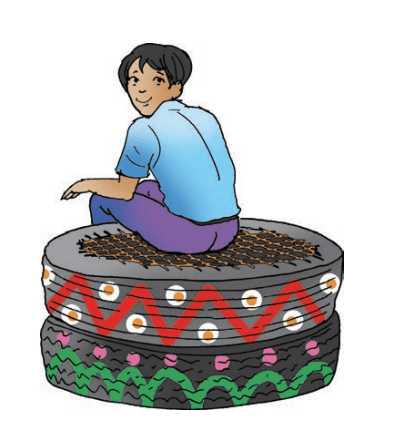
By making these small changes in our lives, we can help our environment, save our resources and reduce pollution caused by waste products.
Let Us Get Creative with Paper
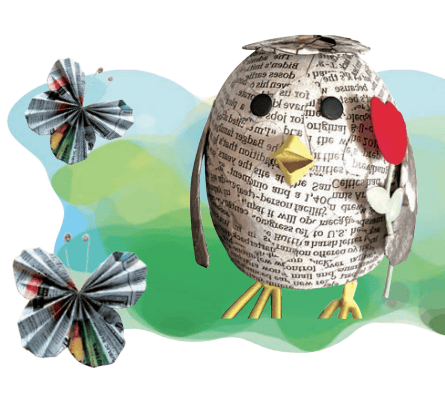
One can make many things with used paper. Here are some creative ideas to make toys and decorations using old newspapers.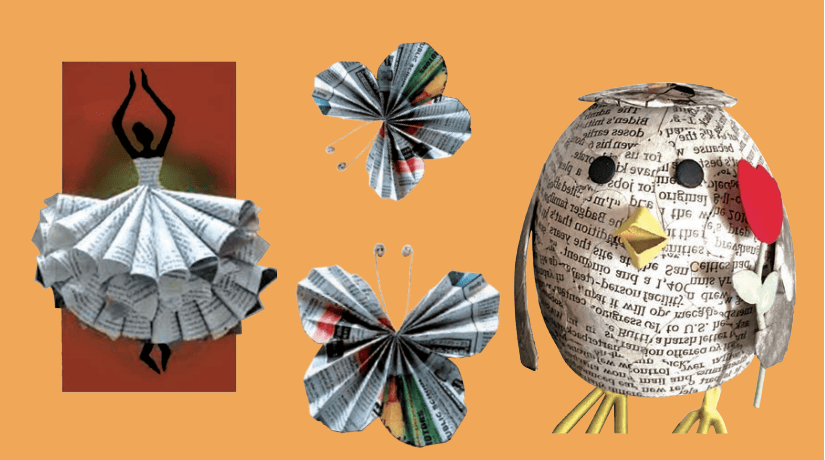

- 1. What are some objects that you can make using paper pulp? Ask your teachers and elders for more ideas.
- 2. Write down one step you can take for each of the 5Rs in the boxes given below.
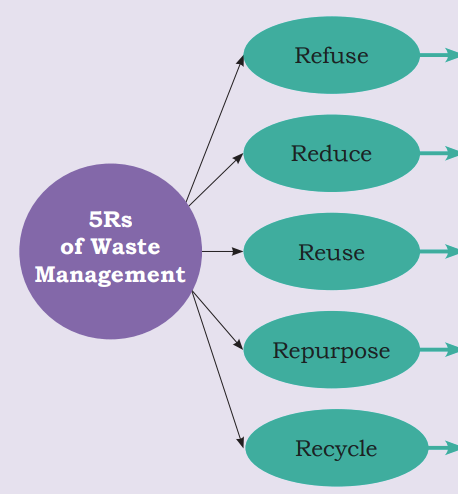 |
...................... |
| ...................... | |
| ...................... | |
| ...................... | |
| ...................... |
3. Discuss the changes you can bring in your daily life by using 5Rs rule to avoid wastage of paper. Complete the table with your ideas for creating these changes.
...........
| Refuse | ........... |
| Reduce | ........... |
| Reuse | |
| Repurpose | ........... |
| Recycle |