
chapter-10
Our Sky
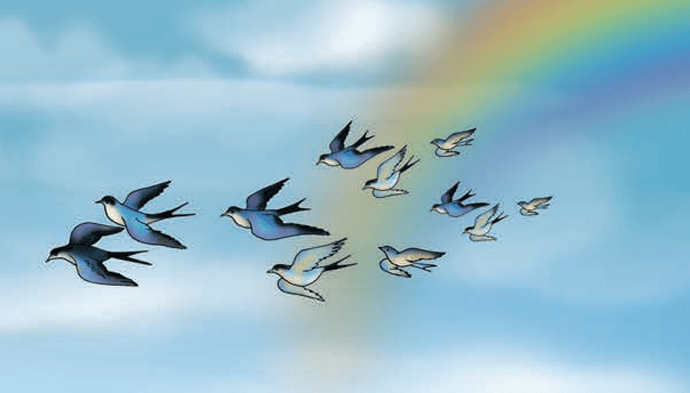
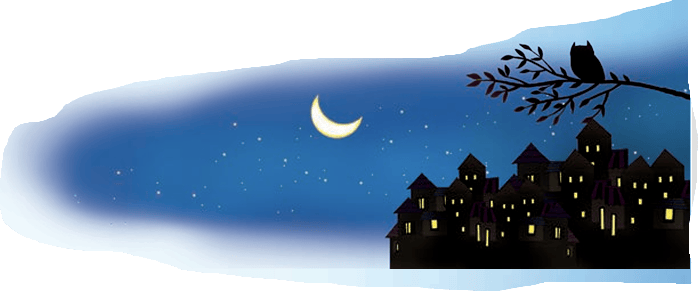
Have you ever looked up at the sky? It appears different at various times of the day. The colour of the sky changes in the morning, afternoon and at night. The Sun’s colour also appears to change. Even, the size and the shape of the Moon seem to change over time. The activities of birds, animals, trees and humans also vary during the course of the day.
Pictures of the Sky

Draw a picture of the sky as it appears in the morning, afternoon and at night, in the spaces given below.
| Morning Sky | Afternoon Sky | Night Sky |
|---|---|---|
 Write down what you observe in the sky during the
morning, afternoon and at night, in the table given below.
A few boxes are filled for you. You may expand your table
by adding new points.
Write down what you observe in the sky during the
morning, afternoon and at night, in the table given below.
A few boxes are filled for you. You may expand your table
by adding new points.
| Morning Sky | Afternoon Sky | Night Sky |
|---|---|---|
| Orange colour of the sky | ||
| Sunlight is strong | Moon and stars | |
| Orange Sun | ||
- Share your observations with your classmates and compare them.
- Have you observed any change in the activities, and the behaviour of animals and plants at different times of a day? Discuss these changes with your friends and make a list.
Can you guess the brightest object in the sky? It is the Sun! In fact, it is so bright that the other stars cannot be seen when it is present in the sky. The Sun gives us light and heat.
In the sky, the Sun is the most visible object. The Sun appears to rise in the morning. Then, it seems to move up till it comes overhead. Slowly, it appears to move downwards on the other side of the sky till it disappears. We all enjoy this visible journey of the Sun in the sky.

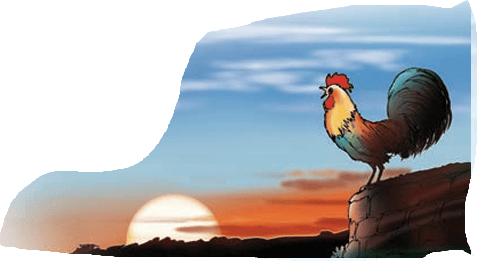
Have you observed the changes during sunrise and sunset?
When the Sun rises:
- 1. How does the sky look?
- 2. What do the birds and animals do?
- 3.What changes do we find at home?
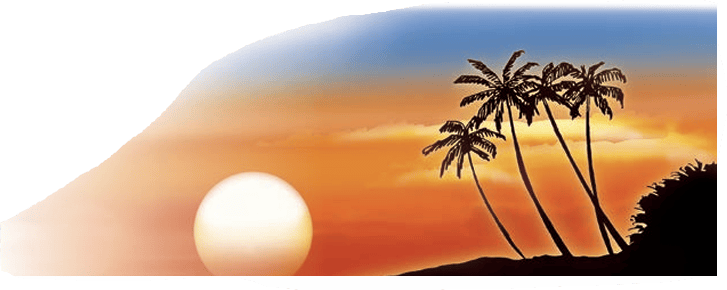
 When the Sun sets:
- 1. How does the sky look?
- 2. What do the birds and animals do?
- 3.What changes do we find at home?
Note to the Teacher
Encourage students to observe and share various changes in the activities, and the behaviour of plants and animals, including humans at different times of the day.The Shadows
Have you ever noticed your shadow moving along with you? If you run, the shadow seems to be running with you. If you make different poses, the shape of the shadow changes. Let us explore some interesting things about the shadows.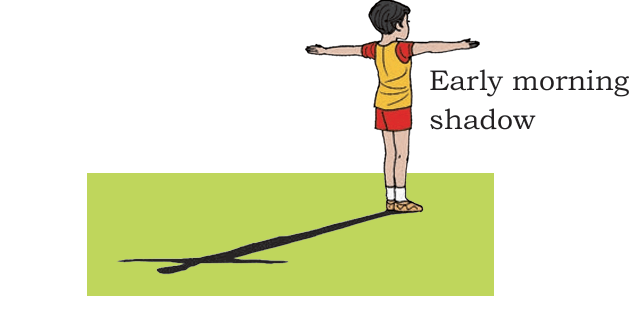 |
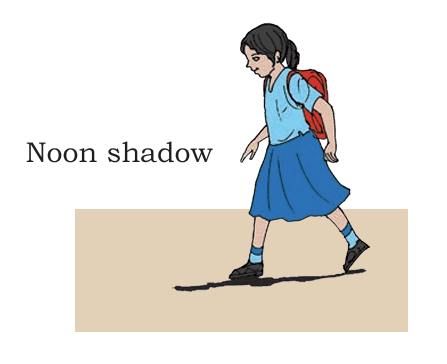 |
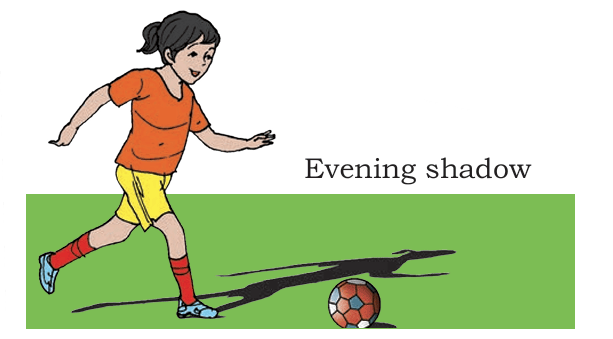 |
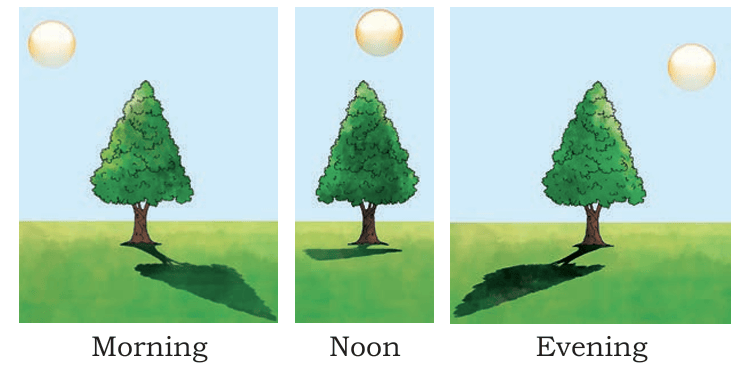
In the pictures above, what are the differences in the shadows? Shadows at morning are long, noon shadows are short and shadows at evening are long again. However, the evening shadows appear in the opposite direction of morning shadows.
| How does my shadow change? |  |
Does this happen to all the objects? |
| I wonder why these changes occur? | Are shadows formed only in the sunlight? |

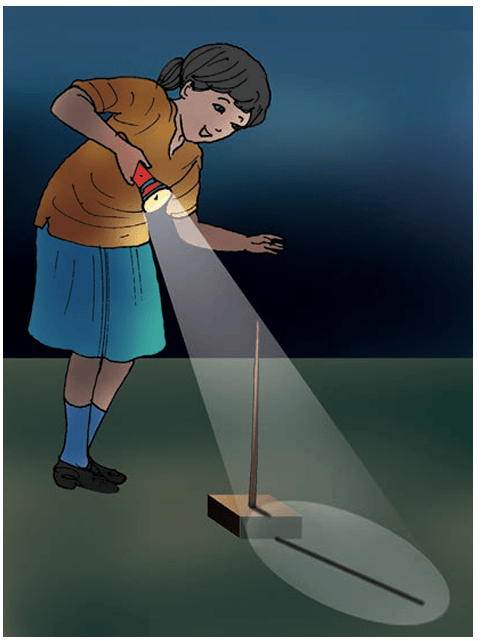 Let us try something interesting.
- 1. Take a torch and a stick. Close the doors and windows to make the room dark.
- 2. Hold the stick in one place and turn on the torch. Shine the torchlight on the stick.
- 3.Observe the changes in the
shadow of the stick, in the
following situations:
(a) Move the stick back and forth.
(b) Change the direction of the torch.
Think and answer the following questions.
- If we change the distance of the source of light from the stick (an object), how will the shadow change?
- If we change the direction of the torch (source of light), how will the shadow change?
If the object is close to the source of light, the shadow is bigger. If the direction of the source of light changes, the direction of the shadow also changes. We observe that shadows in the morning and evening form in different directions. Why does this happen?

Draw the position of the Sun and corresponding shadows in the images given below.
 Morning Morning |
| Noon |
| Evening |
The Sun appears to move from the East to overhead till noon and then, gradually moves towards the West in the afternoon. The direction of the shadow also changes because of the movement of the Sun.
Shadow formation by the Sun
Do you know?
We can find out the time by looking at the shadows. Ancient people observed this phenomenon and came up with a device to tell time. It is called a sundial.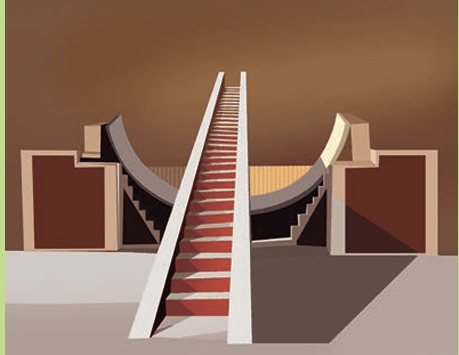 Raja Jai Singh of Jaipur
built
Jantar Mantar in
Jaipur, Ujjain,
Delhi,
Varanasi and Mathura. It
has a sundial called Samrat
Yantra which can tell time
accurately based on the
shadow.
Raja Jai Singh of Jaipur
built
Jantar Mantar in
Jaipur, Ujjain,
Delhi,
Varanasi and Mathura. It
has a sundial called Samrat
Yantra which can tell time
accurately based on the
shadow.
Play with Shadows
It is fun to make different shapes with shadows. Try it with your friends!
Note to the Teacher
Encourage students to make cut-outs and perform shadow puppetry.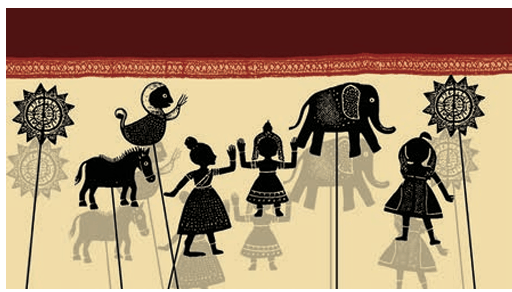
Shadow puppetry has been practiced in India for a long time.
Night Sky
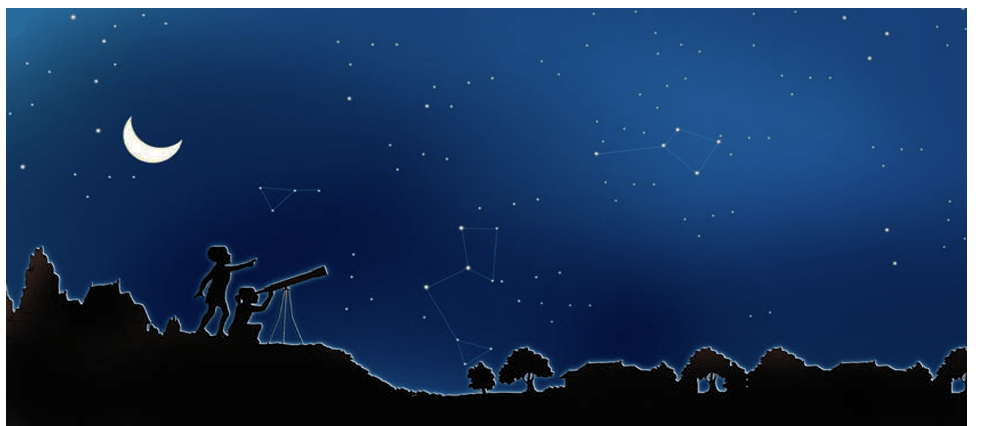
After sunset, the sky dazzles with thousands of twinkling stars. We observe various patterns of stars in the night sky. Draw any pattern you have observed, in the box below:
Share the drawing with your friends and discuss the common patterns of stars.
Note to the Teacher
The patterns observed by students may not match with the usually identified patterns, such as Saptarshi (Seven Sages). The intention is to encourage sky watchingThe Moon appears to be the biggest object in the night sky. It has always fascinated humans with its beauty and mystery.
Observe the Moon in the sky and draw the shapes of the Moon you have observed on different nights.

Discuss with your friends:
- Is there a pattern to the way the shape of the Moon changes?
- Are there days when the Moon is not visible in the sky?
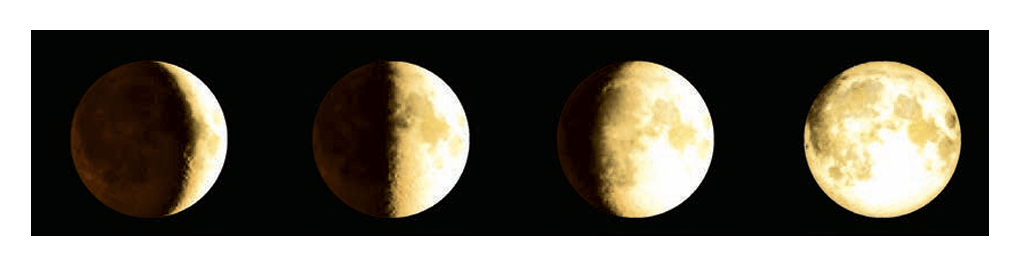
it looks like it has been cut down the middle. There are also nights when the Moon is not visible at all. This is known as Amavasya or the new Moon, which happens periodically. Therefore, people from ancient cultures used the shape of the Moon to keep count of the days. This gave rise to the earliest calendars.
We celebrate many festivals based on the appearance of the Moon. Diwali is celebrated on the day when there is no Moon in the sky. Rakshabandhan, Guru Poornima and Buddha Poornima are celebrated when the full round Moon is visible in the sky. Eid is celebrated on the day when the Moon is visible on the first night after a New Moon.
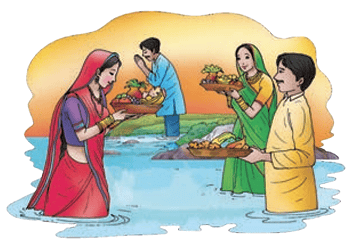 Chhath Puja Chhath Puja |
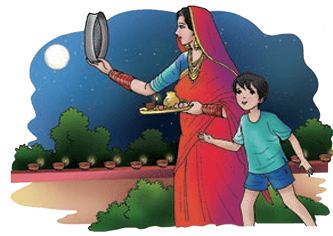 Karva Chauth Karva Chauth |
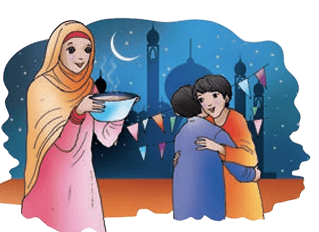 Eid Eid |
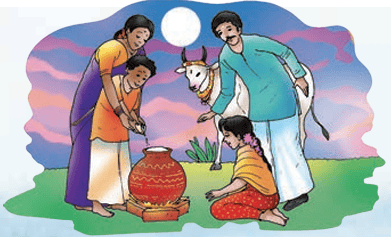 Pongal Pongal |
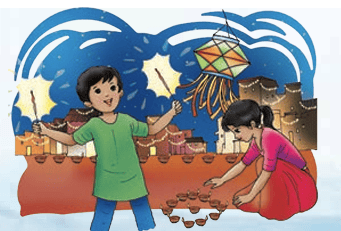 Diwali Diwali |

 Do you celebrate any festivals in your
family or community related to the Sun or
the Moon? What do you call them in your
language?
Do you celebrate any festivals in your
family or community related to the Sun or
the Moon? What do you call them in your
language?—————————————
—————————————
—————————————
India’s Chandrayaan Mission
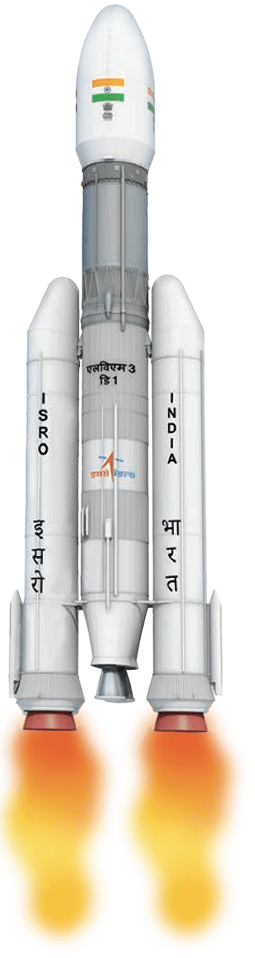
You learnt about the Chandrayaan mission in your English and Hindi textbooks of Grade 3. On 23 August 2023, India’s Vikram Lander successfully landed on the Moon and collected data about the Moon’s surface.
1. Give two differences between:
- (a) Day and night
- (b) Sky in the morning and in the evening
- (c) Our activities during the day and at night
- (d) Activities of animals during the day and at
- night.
A teacher said that the Sun appears to move from East to West during the day. Meera is curious about this statement and has some questions for her teacher. List at least two questions that she can ask.
3. Figure it out
Suppose you stand at the same spot during the morning and the afternoon. In the morning, your shadow points in one direction, while in the afternoon it points in another. Why? Would the length of your shadow be the same at both times?
4. Get creative with words
(a) Write your own poem inspired by the beauty of the sky. (b) Complete the riddle below and answer it —
Only one colour, but not one size
Appears with light, looks very nice
————————
—————————
What is it?
——————————