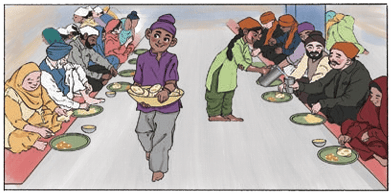
Jaspreet and Gulnaz are organising a langar (a community lunch) in their neighbourhood Gurudwara. They expect around one thousand (1000) people to be fed on that day. Fifty-five people volunteer to serve during this event. Jaspreet and Gulnaz receive many donations.
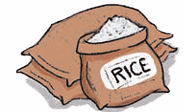
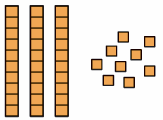
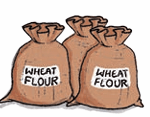
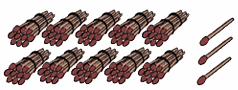
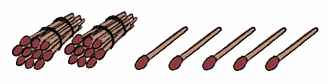
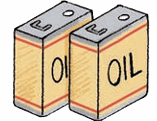
The donations are shown in the table below. Write the number in each case.
Donations
Quantity
Number
4 Ones + 7 Tens
100 - 7
Note for Teachers: Support children in revising the different representations for 2- and 3-digit numbers through such tasks.
Donations
Quantity
Number
Twelve
10+10+10+10+10
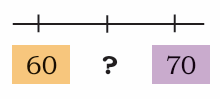
60 ? 70
Ten more than three hundred twelve
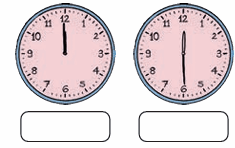
Jaspreet and Gulnaz record the number of people who come for the
community lunch at different times.
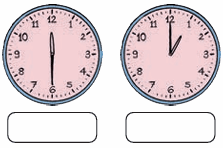
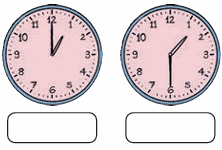
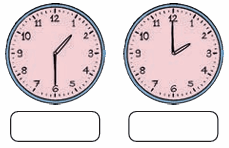
Write the time and draw the number of people who had food at different
time slots using HTO blocks as shown below.
52 people
145 people
325 people
508 people
The time slot when the most number of people came for lunch is
__________.
The time slot when the least number of people came for lunch is
__________.
Let Us Do
1. (a) Make 3-digit numbers using the digits 3 and 7. Write the
numbers in the boxes given below. Circle the smallest and cross
out the largest.
333
___
___
___
___
___
___
___
(b) Make six 3-digit numbers using the digits 3, 5, 0, 8 such that
all numbers are less than 550. You can repeat the digits.
___
___
___
___
___
___
(c) Mark the numbers you made in 1(b) on the number line.
200 250 300 350 400 450 500 550 600
2. Fill in the blanks with appropriate numbers.
a)
b)
c)
d)
e)
As we have learnt in Grade 3, the Indian system of writing numbers,
which we have been learning and practising in school to write and add
and subtract numbers, was discovered in India around 2000 years
ago, and is now used around the world. This system was designed so
that we can write all numbers, no matter how large they are, using
just the ten symbols 0, 1, 2, 3, 4, 5, 6, 7, 8, and 9.
Till now, we have learnt how to write all numbers from 1 to 999. Now
let us explore how to write numbers one thousand and larger in the
Indian number system!
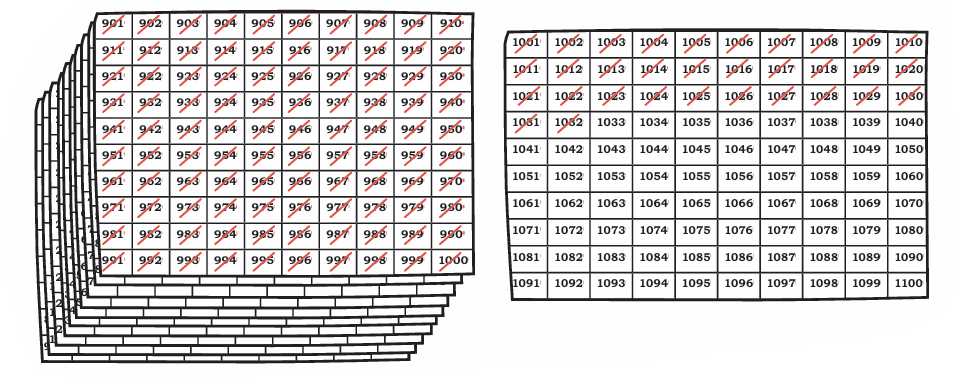
You remember that Gulnaz and Jaspreet had kept track of the people
who came for the community lunch.
Let us see how they did it.
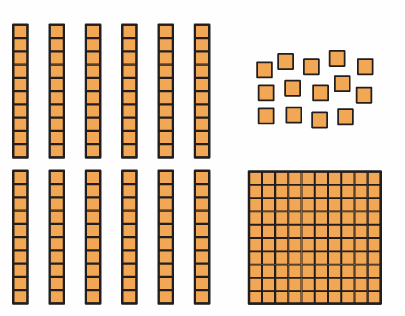
How many people came for the community lunch? ________
Fill in the blanks with appropriate numbers.
Note for Teachers: Let children notice how numbers beyond 1000 are written. Lead them to read these numbers and write the numbers.
3. Identify the range of numbers most suitable for the following
situations. Share your thoughts.
Number of children in your village
Only 1
Number of books in your classroom
Number of teachers in your school
2 to 5
Number of fingers in your classroom
Number of tables in your classroom
10 to 50
Number of leaves in a tree
Number of books in your library
50 to 100
Number of letters on this page
Number of leaves in a plant
100 to 200
Number of children in your school
Number of pages in your math textbook
200 to 500
Number of girls in your school
Number of ants in an anthill
500 to 1000
Number of steps to reach school
More than 1000
Identify things around you that are more than 1000 in number.
_______________________________
_______________________________
_______________________________
1000s AROUND US
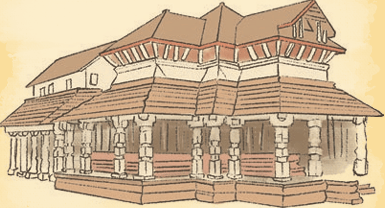
The Thousand Pillars Temple, or Saavira Kambada Basadi, is the most
famous among the 18 Jain temples in Moodubidiri town, Karnataka.
Built in the 1500s by the local ruler Devaraya Wadiyar, each of its
thousand pillars is decorated with unique rock carvings.
Did you know?
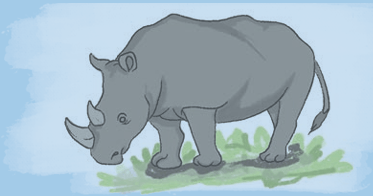
The Indian rhinoceros is found in the foothills of the Himalayas in Northeast India. Floods and medicinal value of their horns have led to a reduction in their population. In the early 1900s, their population was driven to near extinction with as little as 200 rhinoceroses. But with recent conservation measures, there are now around 4000 (four thousand) rhinoceroses.
My country
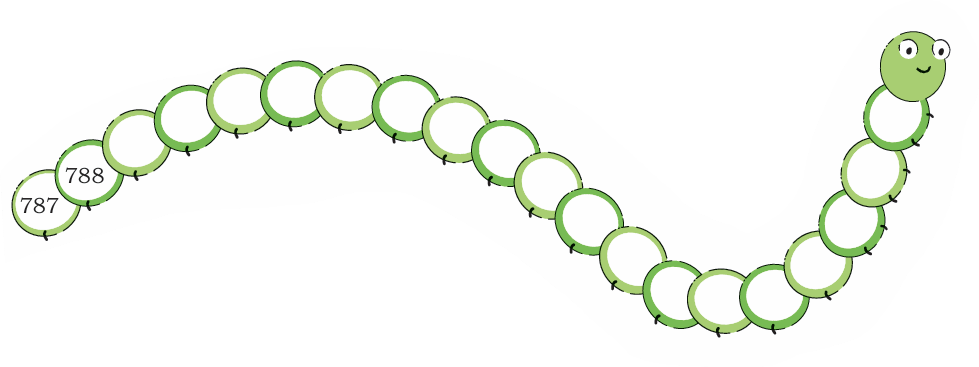
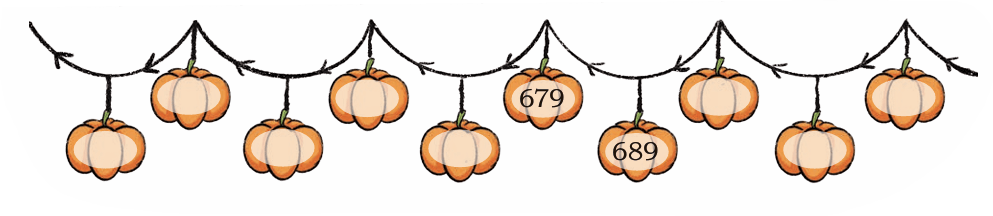
India is a country with a rich cultural heritage. It has 788 districts. These districts are divided into about six lakh villages, each with its own unique traditions and practices. India has over 7500 kilometres (Seven thousand five hundred) of coastline on three sides. Our country’s history goes back over 5000 years (Five thousand), and we celebrate more than 1000 festivals.
One Thousand (1000)
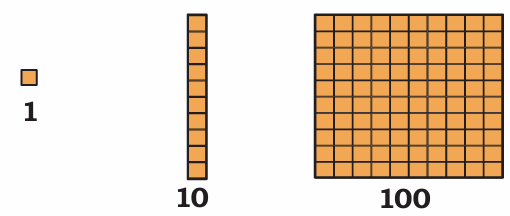
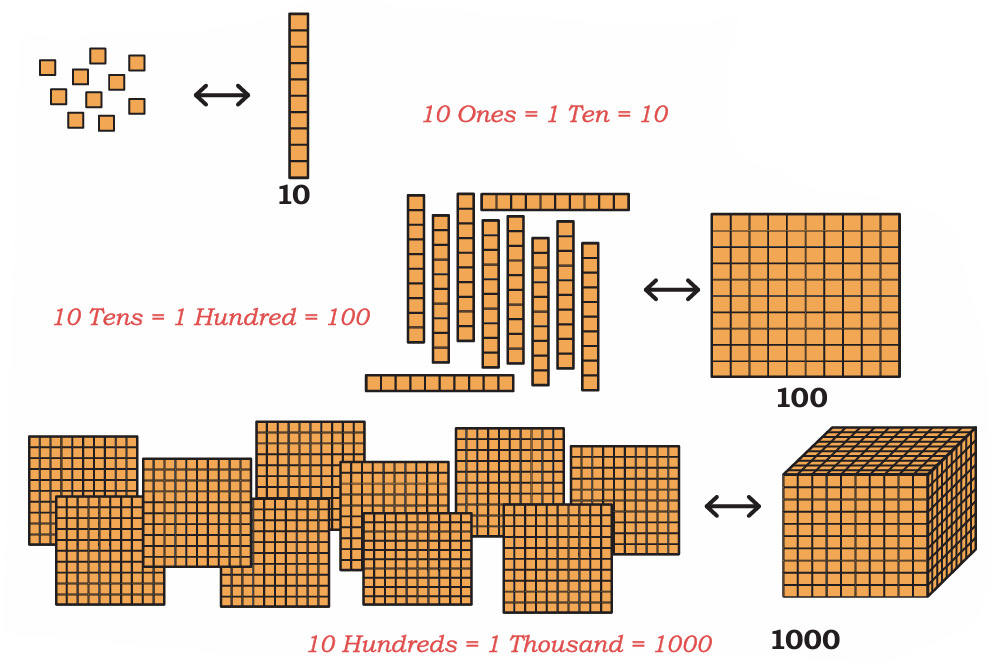
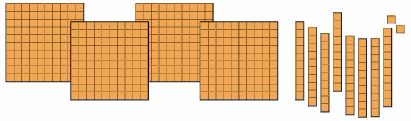
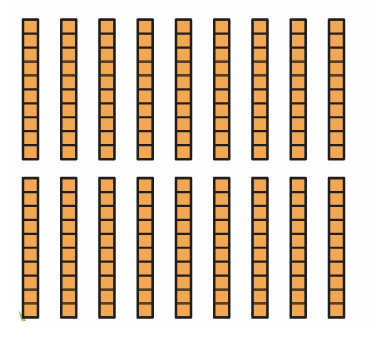
You have seen how to visualise one (1), ten (10) and one hundred (100)
using Dienes Blocks.
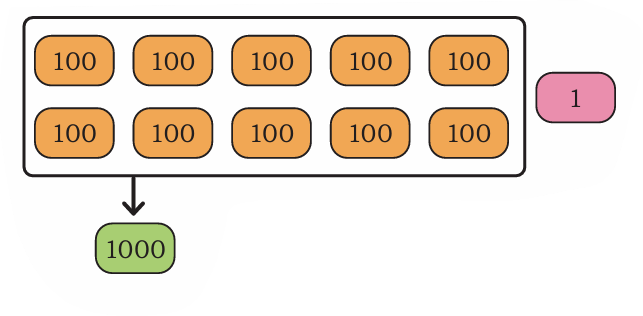
Let us now learn about one thousand (1000) using Dienes Blocks.
Counting is easy when we group in Tens
Note for Teachers: Give learners the experience of grouping and regrouping in 1s, 10s, and 100s. The following pages have some examples of tasks to engage learners.
Zoltán Pál Dienes was a Hungarian mathematician and educator who developed Dienes blocks. These blocks represent different numerical values, and help students understand the idea of the Indian base-10 place value system of writing numbers and carrying out arithmetic operations on them.
Let Us Break Up One-Thousand
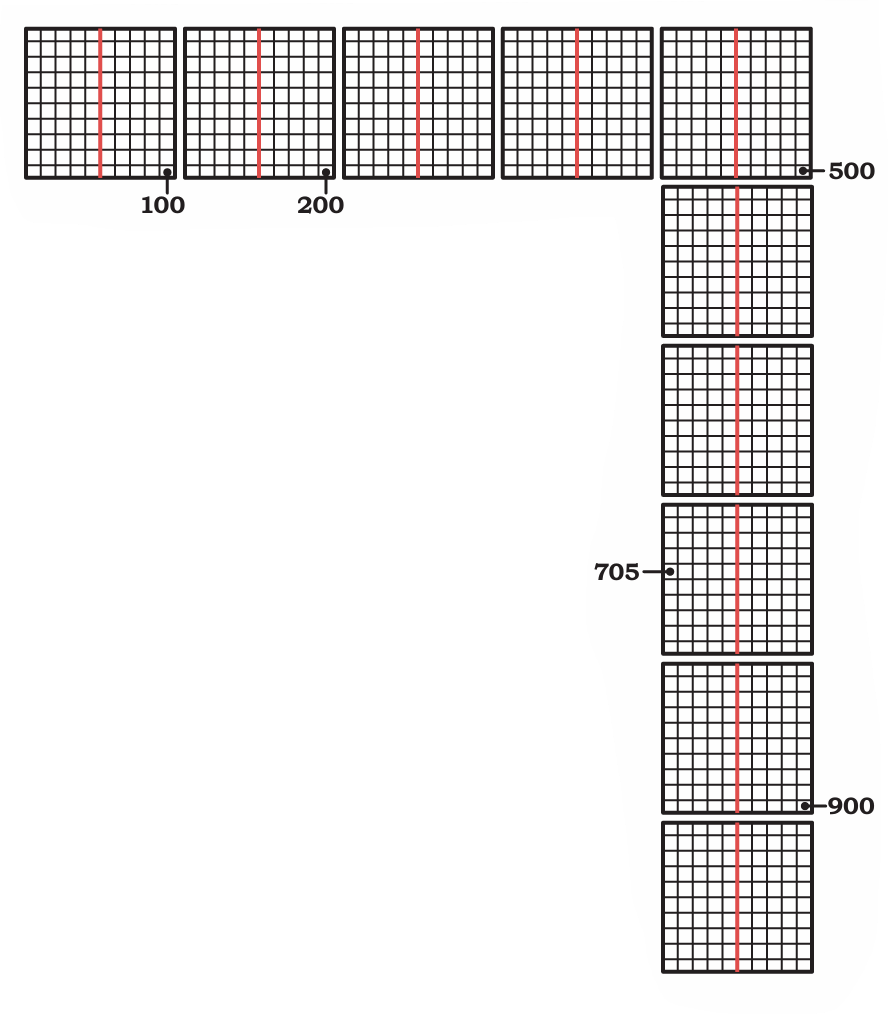
a) We are at 900. How much more to make 1000? ____
900 + ____ = 1000
b) Mark 800. How much more to make 1000? ____
800 + ___ = 1000
c) Mark 850. How much more to 1000? ___
850 + ____ = 1000
d) Mark 760. How much more to 1000? ____
760 + _____ = 1000
e) Mark 400. How much less is 400 than 1000? ____
1000 – ____ = 400
f) Complete the addition facts leading to 1000.
Grouping and Regrouping
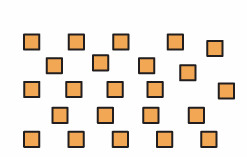
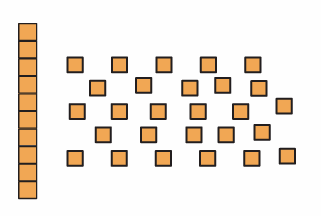
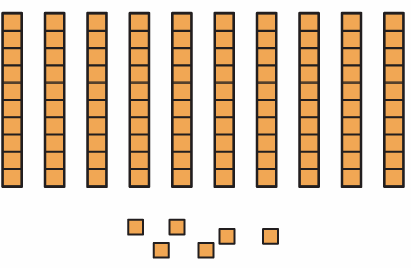
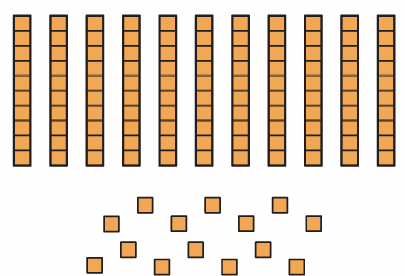
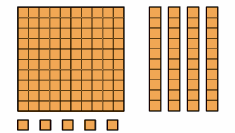
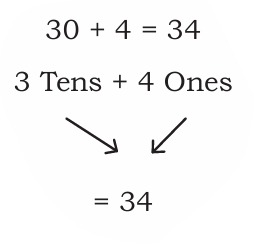
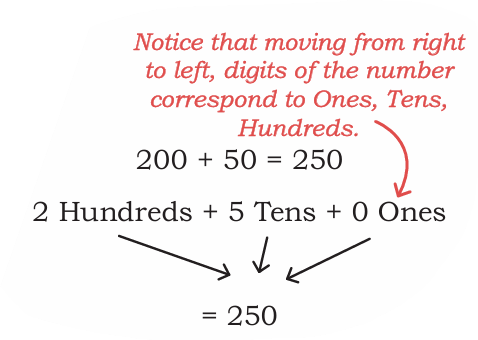
Look at the pictures below. Circle as many groups of 10 Ones or 10
Tens as possible. Write the final number against the following pictures.
3 Tens + 4 Ones = 34
2 Hundreds + 5 Tens + 0 Ones = 250
___ + ___ = ___
___ Tens + ___ Ones = ___
___ + ___ = ___
___ Hundreds + ___ Tens +
___Ones = ___
Circle groups of ten 1s, 10s, and 100s as many times as required in
each of the following pictures. Fill in the empty boxes.
a)
14 Ones
1 Ten + 4 Ones = 14
Tens
Ones
1
4
14
b)
23 Ones
____ Tens + ____ Ones =
______
Tens
Ones
c)
1 Ten and 27 Ones
____ Tens + ____ Ones =
______
Tens
Ones
d)
10 Tens and 6 Ones
1 Hundred + 0 Tens + 6 Ones = 106
Hundreds
Tens
Ones
1
0
6
106
e)
11 Tens and 14 Ones
___Hundred + ___ Tens + ___ Ones = ___
Hundreds
Tens
Ones
f)
1 Hundred, 12 Tens and 14 Ones
___Hundreds + ___ Tens + ___ Ones = ___
Hundreds
Tens
Ones
Let Us Solve
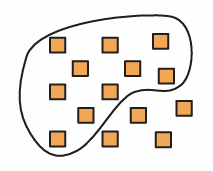
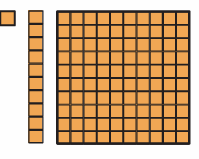
Identify and write the numbers for each of the following in your
notebook. Draw pictures like these, if needed.
a) 45 Ones
b) 39 Ones
c) 35 Tens
d) 86 Tens
e) 10 Tens and 1 Ones
f) 15 Tens and 23 Ones
g) 34 Tens and 12 Ones
h) 19 Tens and 10 Ones
i) 2 Hundreds, 13 Tens and 7 Ones
Numbers Beyond 1000 (One Thousand)
Thousands
Hundreds
Tens
Ones
1
0
0
0
1000
Dienes Blocks
TokensWe will use tokens in place of Dienes blocks for larger numbers.
Thousands(Th)
Hundreds(H)
Tens(T)
Ones(O)
1
0
0
1
1001
One thousand one
1 Thousand + 0 Hundred + 0 Tens + 1 Ones = 1001
Look at the table below and fill in the blanks.
Tokens
Expanded Form
Th
H
T
O
Number
Number Name
1000 + 1
1001
1002
1003
1
0
0
5
1000 + 100
1100
One Thousand One Hundred
1038
3000 + 0 + 10 + 9
1. Write the numbers in a sequence—forward and backward as indicated.
a)
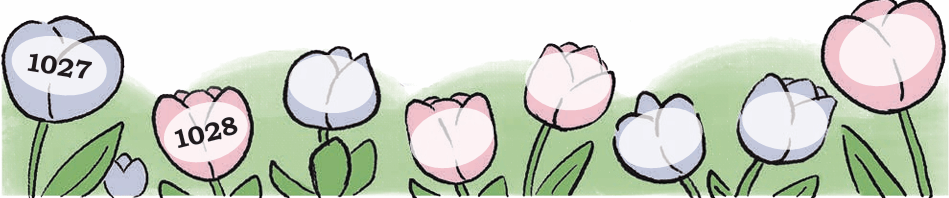
1027
1028
__
__
__
__
__
__
b)
__
2008
2009
__
__
__
__
__
c)
__
__
__
__
__
__
4092
4893
d)
__
__
__
__
__
__
8002
8003
Let Us Play
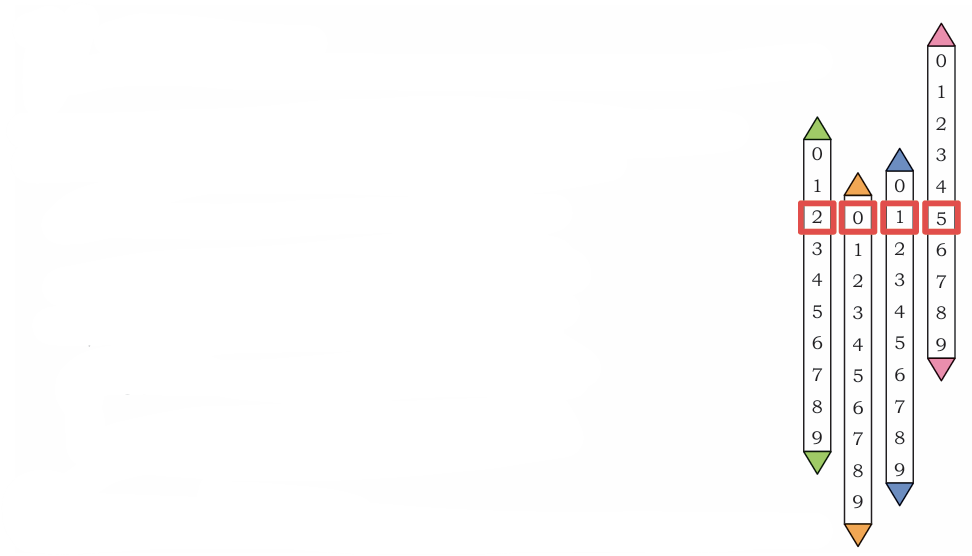
Make the place value slider. Children can take turns to increase or decrease the number as told.
a) 1895—increase the number by 1
b) 2785—increase the number by 10
c) 3369—decrease the number by 2
d) 5648—decrease the number by 10
e) 6487—increase the number by 20
Let Us Think
1. Ram wrote 7 Thousand 0 Hundreds 2 Tens 4 Ones as 724.
Is this correct?______
Write the correct number ______
2. Richa wrote 5 Thousand 6 Hundreds 0 Tens 3 Ones as 563.
Is this correct?______
Write the correct number_______
Number Line
1. Which of these numbers lie between 2226 and 3226? Circle the correct answers.
3316 3236 2236 2216 3126 3216
2. Do as instructed.
a) 1001 and 1038 are marked on the number line. Try to mark 1043, 1069, and 1084 on the same number line.
1000 1010 1020 1030 1040 1050 1060 1070 1080 1090 1100
b) Mark the following numbers on the number line below.
2025, 2080, 2175, 2245, 2295, 2310, 2390, 2430, 2460
2000 2100 2200 2300 2400 2500
c) Mark the following numbers on the number line below.
5512, 5548, 5590, 5636, 5673, 5695
5500 5525 5550 5575 5600 5625 5650 5675 5700 5725
d) Mark the following numbers on the number line below.
8679, 8990, 8923, 8763
8500 ______ ______ ______ ______ 9000
Let Us Play
Use the arrow cards (given at the end of the book) to make different numbers. Take turns giving a number for the grade to make using the arrow cards. Read aloud the number and express them in expanded form and in words.
3452 is made up of the cards 3000, 400, 50 and 2.
The expanded form of 3452 is 3000 + 400 + 50 + 2.
In words, 3452 is three thousand four hundred fifty two.
What cards are used to make 4085? Write it in expanded form and
in words.
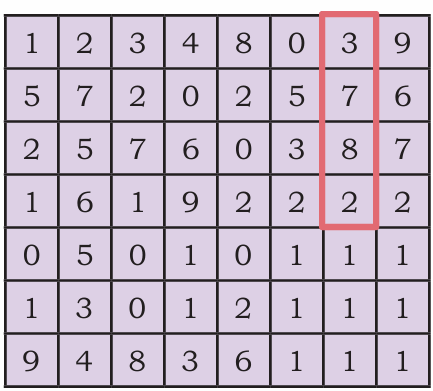
Find Me! Read aloud the numbers and locate them in the grid.
1. The number 3782.
2. Two thousand five hundred and seventy six.
3. A 4-digit number with all digits the same.
4. The smallest 4-digit number in this table.
5. The largest 4-digit number in this table.
6. A number more than 5000 and less than 5200.
7. A number between 5600 and 6300.
8. A 4-digit number all of whose digits can be found on a die.
1
2
3
4
8
0
3
9
5
7
2
0
2
5
7
6
2
5
7
6
0
3
8
7
1
6
1
9
2
2
2
2
0
5
0
1
0
1
1
1
1
3
0
1
0
1
1
1
9
4
8
3
6
1
1
1
Note for Teachers: Ensure that children use the appropriate cards and that the arrows of each card overlap. They should not pick up individual digits, but appropriate Thousands, Hundreds, Tens and Ones. Teacher to point out the place-holder use of ‘0’ in writing numbers in the Indian place value system.
Let Us Solve
1. Use tokens of 1s, 10s, 100s, 1000s to identify the numbers and write them in the table.
a) 6 Tens and 22 Ones
b) 4 Tens and 12 Ones
c) 3 Hundreds, 14 Tens, and 8 Ones
d) 12 Hundreds, 18 Tens, and 2 Ones
e) 1 Thousand, 5 Hundreds, 10 Tens, and 17 Ones
TH
H
T
O
Number
a
0
0
8
2
82
b
c
d
e
2A. Circle the number that is bigger.
30 or 300
6000 or 600
6000 or 3000
2B. Circle the number that is smaller.
2 Ones or 2 Hundreds
5 Tens or 2 Thousands
7 Tens or 4 Hundreds
Note for Teachers: (1) Draw attention of children to the use of only ten digits 0–9 for writing all numbers, however large. Also, draw their attention to the order in which we read and write—first Thousand, then Hundred, then Tens, and finally Ones.
(2A&2B). This exercise is to check that students understand the importance of units. 2 Hundreds is always more than 2 Tens or 2 Hundreds is more than 9 Tens.
COMPARING NUMBERS
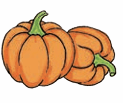
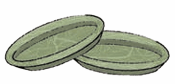
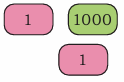
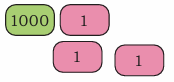
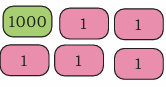
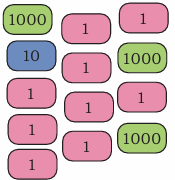
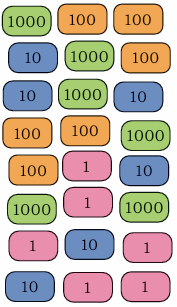
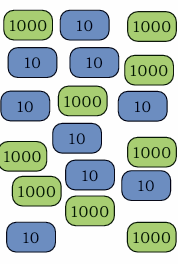
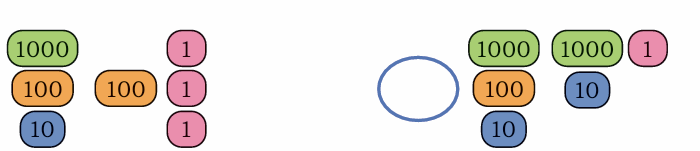
Jaspreet and Gulnaz help to keep a record of the number of plates
used in the Gurudwara every month. Use the signs < and > to find the month when a larger number of plates were used.
February: 1213 March: 2121
September: ______ October: ______
November: ______ December: ______
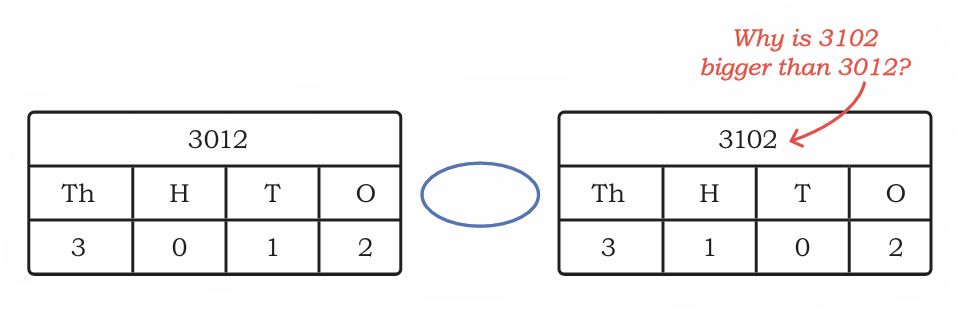
Compare the numbers using the signs < and >.
3012
TH
H
T
O
3
0
1
2
3102
TH
H
T
O
3
1
0
2
Describe how you decided which number is the bigger one. Which
position (Th, H, T, O) helped you to decide this?
Let Us Do
1. Compare the following pairs of numbers using < and >. Make a Th, H, T, O table, if necessary. Share your thoughts with the class.
a) 2190
_____
2910
c)
1009
_____
9001
b) 7087
_____
7088
d)
982
_____
1024
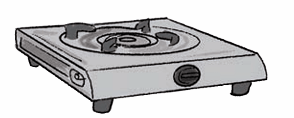
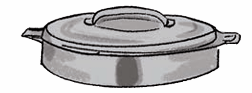
2. Order the prices of the following objects from smallest to biggest increasing order).
₹ 1986
₹1099
₹1899
______
<
______
<
______
3. The following women international cricketers have played 200 ODIs (One-Day International Matches). Listed below are their scores. Arrange the runs scored by them in increasing order (from lowest to highest).
Debbie Hockley
4064
Suzie Bates
5114
Karen Rolton
4814
Mithali Raj
7805
Charlotte
6002
4. Arrange the following mountain ranges in decreasing order of height from highest to lowest).
Mountain Range
Height (in meters)
Kangchenjunga
8586
Mullayanagiri
1930
Chaukhamba I
7138
Bailadila Range
1276
Nanda Devi
7816
K2
8611
Kalsubai
1646
5. Use the signs <, =, > to compare the following.
a) 2 Tens + 4 Thousands + 3 Hundreds
2043
b) 2 Tens + 4 Thousands + 3 Hundreds
4320
c) 2 Thousands + 9 Hundreds + 9 Tens + 9 Ones
3000
d) 15 Ones + 9 Tens + 3 Hundreds
1593
e) 5000 + 30 + 4
5034
f) 5000 + 300 + 4
5340
6. Fill the blanks with digits 0–9 such that the numbers meet the
condition.
a) 7_ _3 < 768_
b) 853_ < 8_3_
c) _2_1 < 5_2_
CHALLENGE!
There are 99 numbers strictly between 700 and 800 excluding 700 and 800. How many numbers are there strictly between 7000 and 8000?
Circle the correct answer:
900 999 1000
Let Us Explore
1. Make as many four-digit numbers as possible using the digits 2, 3, 4, 7 without repetition. There are 24 different numbers possible. Find as many as you can and arrange the numbers in decreasing order in your notebook.
2. Compare with your friends to find what other numbers they have
made. See if all of you together can come up with all the 24 numbers. How do you know that you have all possible such numbers?

 200 250 300 350 400 450 500 550 600
 How many people came for the community lunch? ________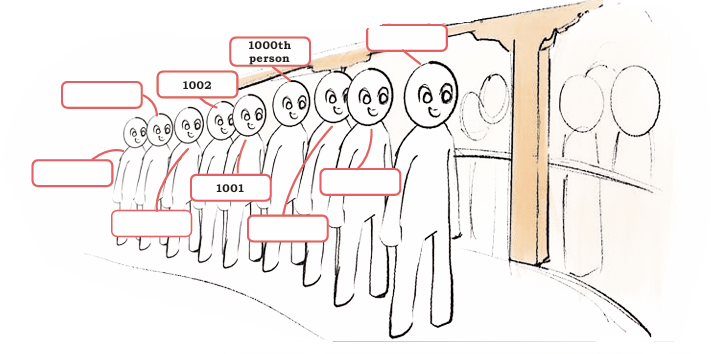
 a) We are at 900. How much more to make 1000? ____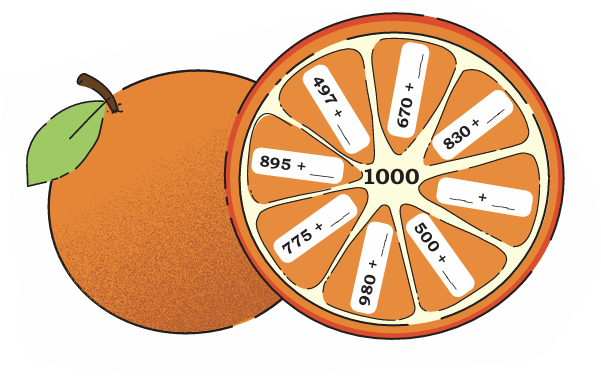
 a) 45 Ones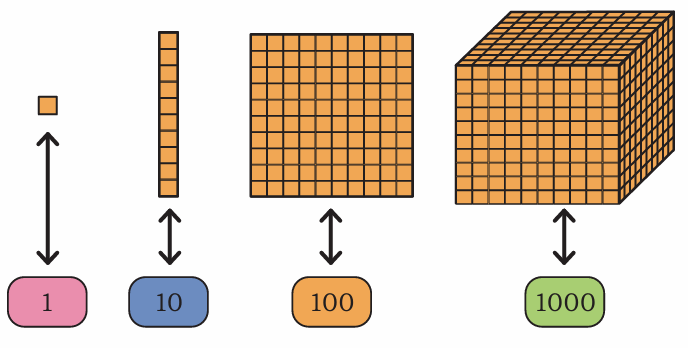



 Make the place value slider. Children can take turns to increase or decrease the number as told.
 1000 1010 1020 1030 1040 1050 1060 1070 1080 1090 1100
 2000 2100 2200 2300 2400 2500
 5500 5525 5550 5575 5600 5625 5650 5675 5700 5725
 8500 ______ ______ ______ ______ 9000





 60 ? 70




 3 Tens + 4 Ones = 34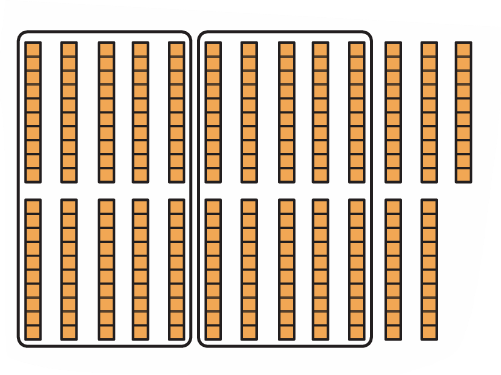
 2 Hundreds + 5 Tens + 0 Ones = 250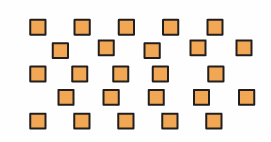

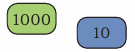

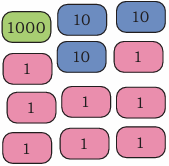
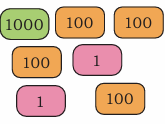
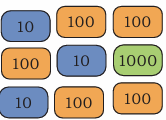
 February: 1213 March: 2121
 September: ______ October: ______
 November: ______ December: ______
 ₹ 1986
 ₹1099
₹1099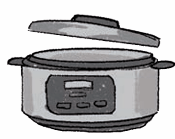 ₹1899
₹1899