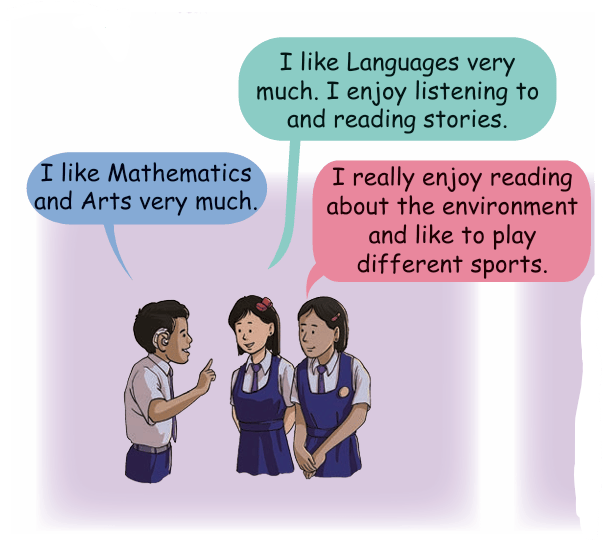
I like Languages very much. I enjoy listening to and reading stories.
I really enjoy reading about the environment and like to play different sports.
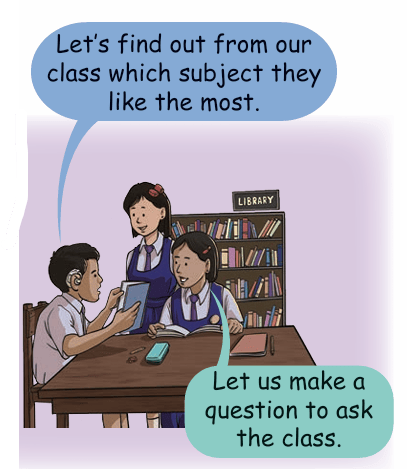
Let’s find out from our class which subject they like the most.
Let us make a question to ask the class.
Look at the questions asked by Rohan and Anjali.
Tick the question that is the most appropriate for finding the ‘most liked
subject’? Why do you think so? Discuss with your friends and teacher.
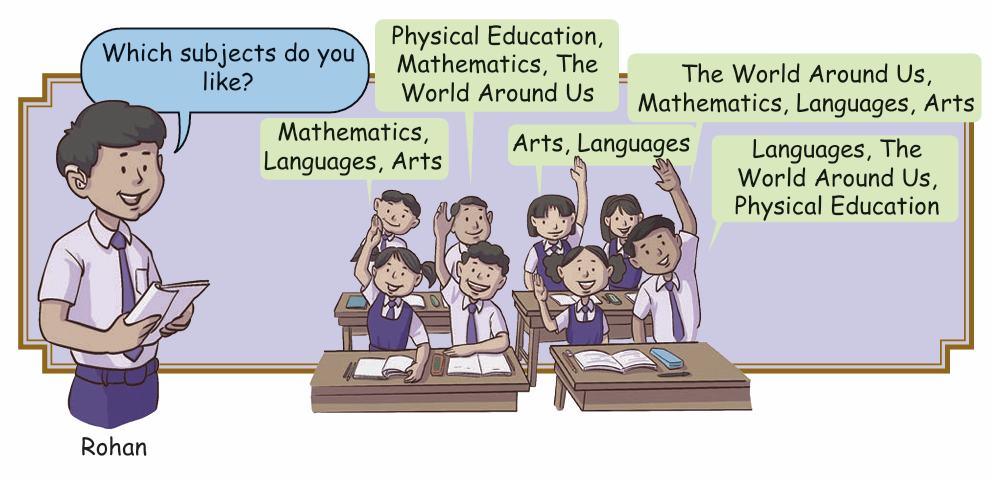
Which subjects do you like?
I like Languages very much. I enjoy listening to and reading stories.
Mathematics, Languages, Arts
Physical Education, Mathematics, The World Around Us
Arts, Languages
The World Around Us, Mathematics, Languages, Arts
Languages, The World Around Us, Physical Education
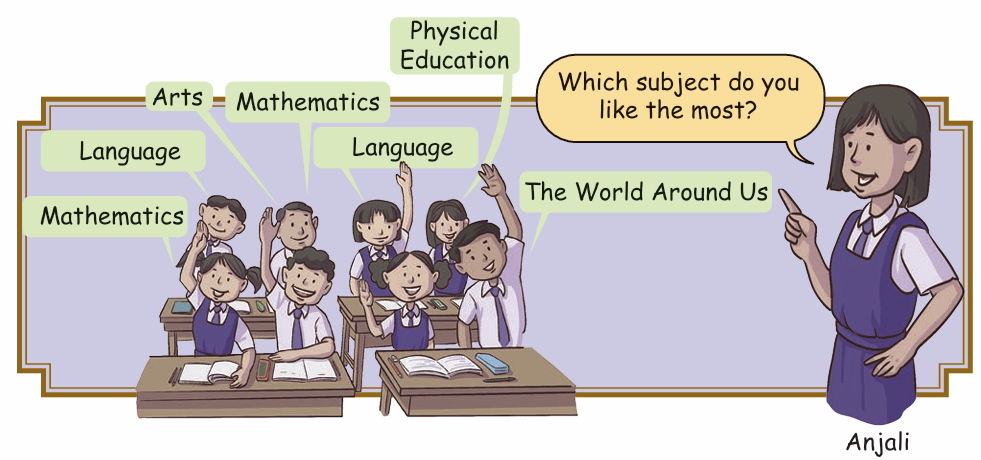
Which subjects do you like the most?
Mathematics
Languages
Arts
Mathematics
Languages
Physical Education
The World Around Us
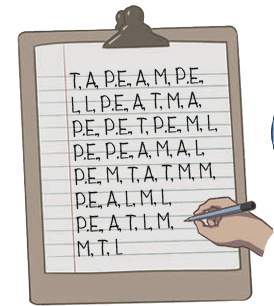
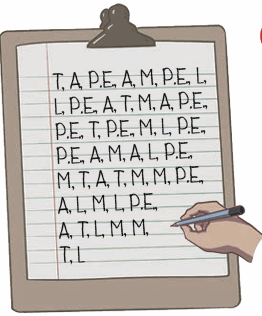
Anjali and Rohan recorded the children's answers (responses) to the above question as follows:
They wrote M for Mathematics, L for Languages, T for The World Around Us, A for Arts and P.E. for Physical Education.
I have recorded 45 children’s responses.
Yes! There are a total 45 children in our grade.
Look at the children’s responses above and answer the following questions:
● The number of children who like Mathematics the most is ________ .
● The number of children who like Language the most is ________ .
● The number of children who like The World Around Us the most is
________ .
● The number of children who like Physical Eduation the most is
________ .
● The number of children who like Arts the most is ________ .
Let’s fill the above information in this table.
Subjects
No. of Children
Mathematics (M)
_______________
Languages (L)
_______________
The World Around Us (T)
_______________
Physical Education (P.E.)
_______________
Arts (A)
_______________
Now look at the above table and answer the following questions:
● What is the most common favourite subject among the children?
________________
● What is the least common favourite subject among the children?
________________
There are the following two ways to display the information.
1)
2)
Subjects
No. of Children
Mathematics (M)
_______________
Languages (L)
_______________
The World Around Us (T)
_______________
Physical Education (P.E.)
_______________
Arts (A)
_______________
Which way of displaying information is easier to understand and why?
__________
Note for Teachers: Discuss how a question needs to be framed and what words should be used.
Colourful Golas
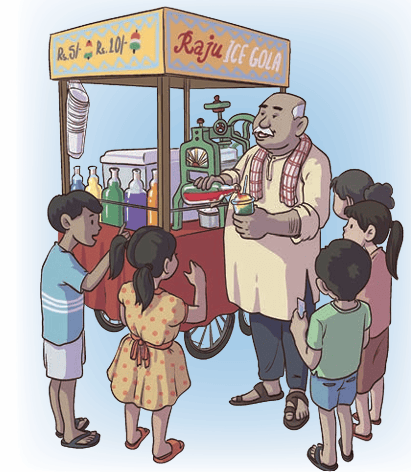
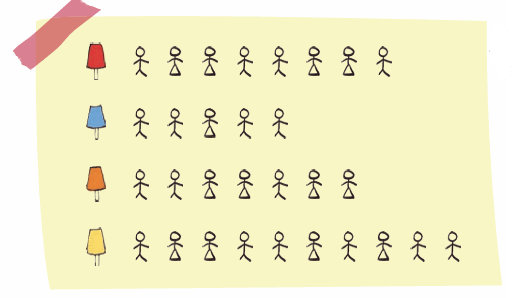
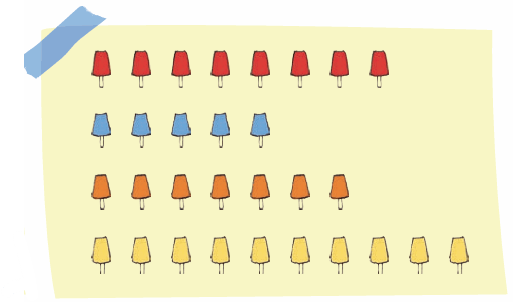
During school lunch break children rush to eat gola of their favourite colour.
Rohan and Anjali record the golas eaten by different children. They want to eat the one that is most eaten by others.
They both start recording the golas eaten by the children.
Rohan
Anjali
Look at the information given above. Colour the line drawing of the golas appropriately.
1. Which colour ice gola do the children eat:
a) the most
b) the least
How do you know?
2. Which colour gola would Anjali and Rohan have bought?
3. Which colour golas did boys eat the most?
4. Which colour golas did girls eat the most?
5. Which of the ways of representing data did you use to answer these questions and why?
Activity — Chess or Cricket
Find out from your classmates how many of them play only chess, only cricket, both or neither.
Now let us organise the above data in the table.
Nature of Games
No. of Girls
No. of Boys
Chess but not Cricket
Cricket but not Chess
Both
Neither
Answer these questions based on the data collected from your grade.
1. Who plays Chess the most? _______ (Boys/Girls)
2. Who plays Cricket the most? _______ (Boys/Girls)
3. How many children play both types of games? _______
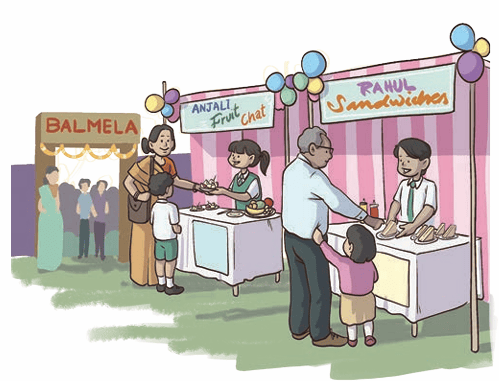
Bal Mela
Anjali and Rohan have recorded the number of people who ate fruit chaats and sandwiches in the Bal Mela over three days, using a Pictograph.
Anjali: Fruit Chaat
Days
Total Fruit Chaats
Days 1
Days 2
Days 3
Rohan: Sandwiches
Days
Total Sandwiches
Days 1
Days 2
Days 3
Let Us Do
1. Complete the table.
Items
Total Sold Item
Fruit Chaats
Sandwiches
2. On which day were the most sandwiches sold?
3. Which item had the highest sale on Day 2?
4. Complete the table given below. Circle the day that had the highest
sales.
Day
Total Sales
Day 1
Day 2
Day 3
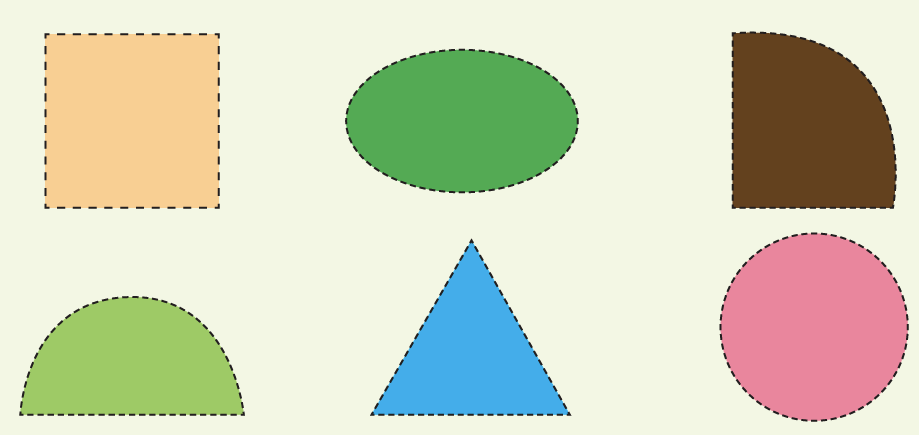
2D Shapes
Note: Use the shapes given below in Chapter 1
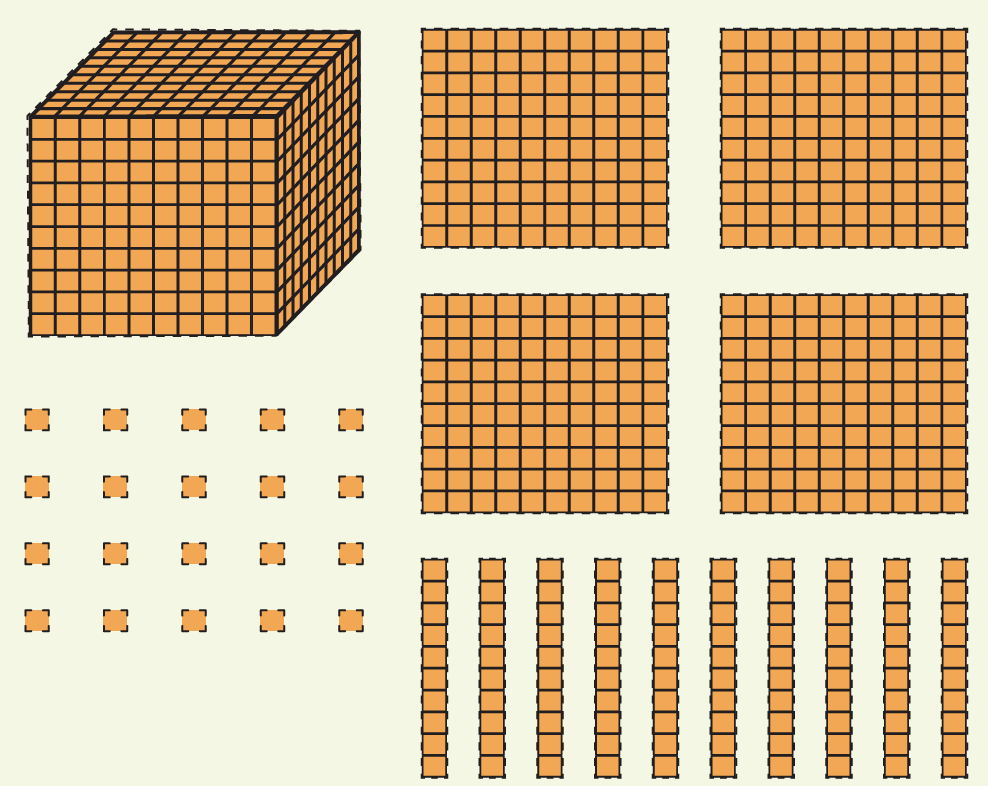
Dienes Blocks
Note: Make more Dienes blocks if needed
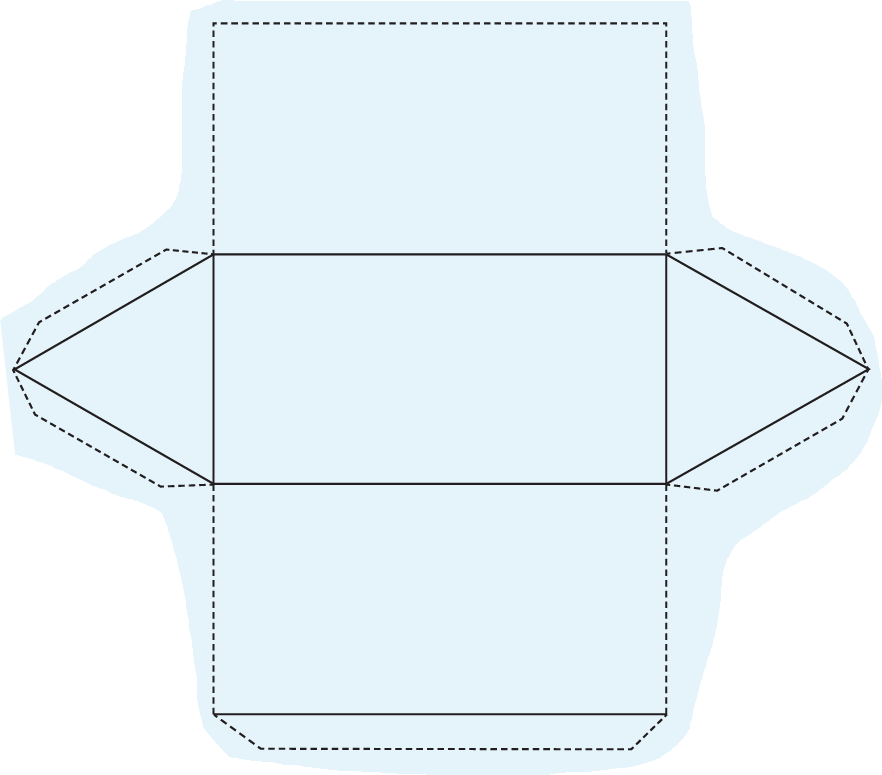
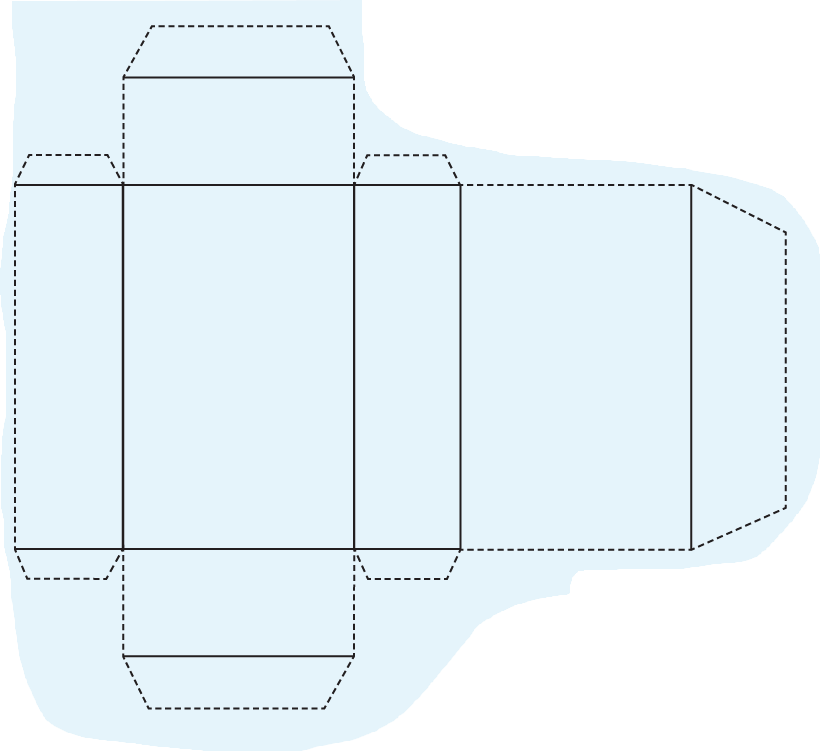
Nets of a Triangular Prism and Rectangular Prism / Cuboid
Note: Cut along the dotted lines and fold along the dark lines.
Triangular Prism
Rectangular Prism / Cuboid
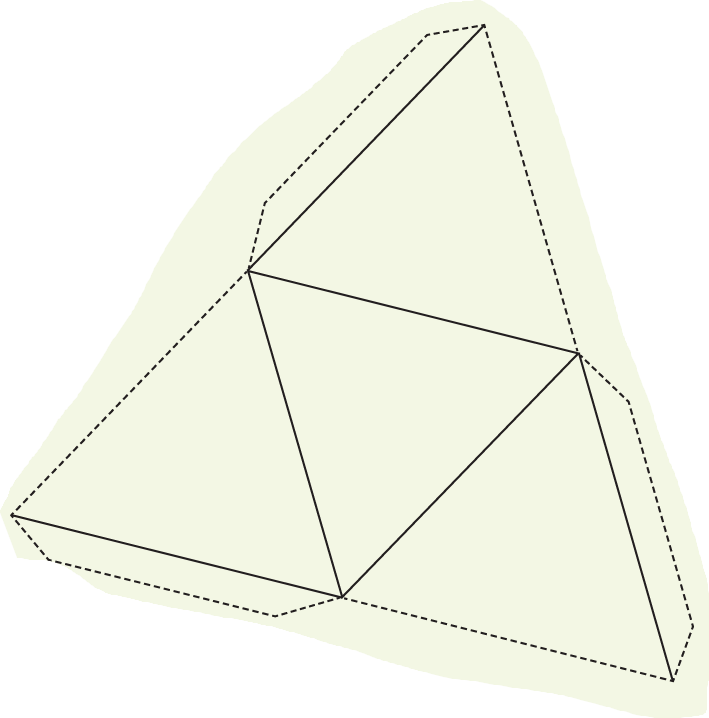
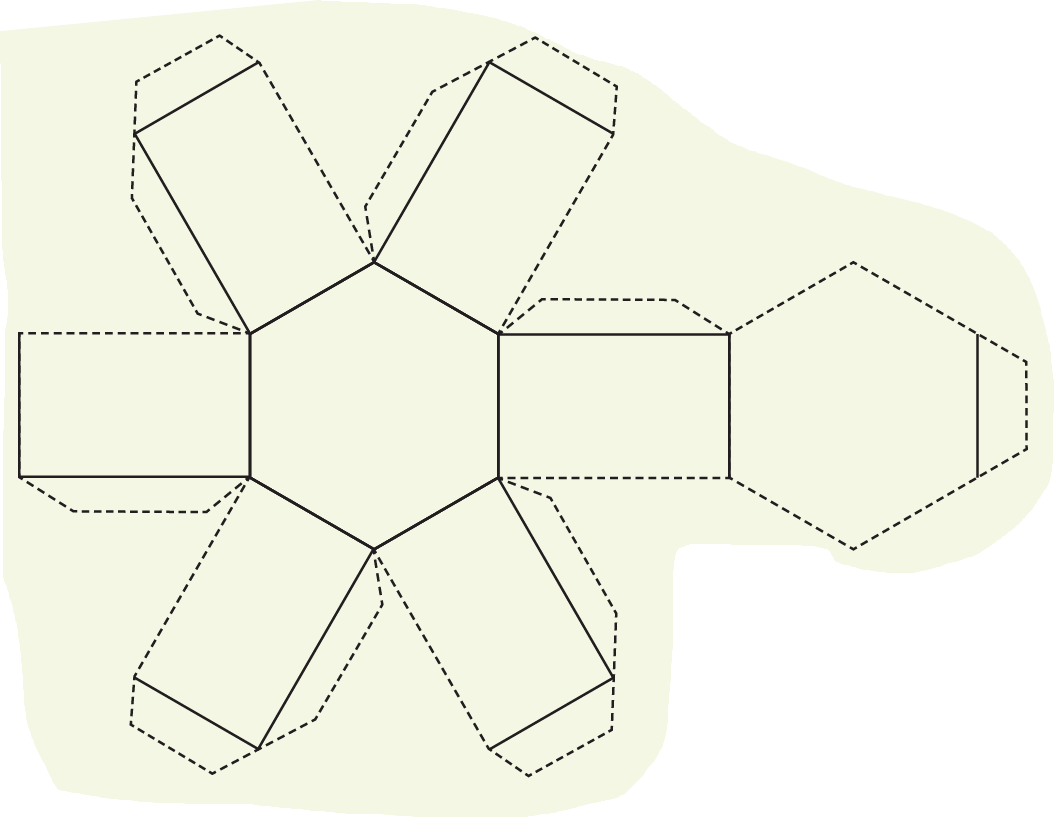
Nets of a Triangular Pyramid and Hexagonal Prism
Note: Cut along the dotted lines and fold along the dark lines.
Triangular Pyramid
Hexagonal Prism
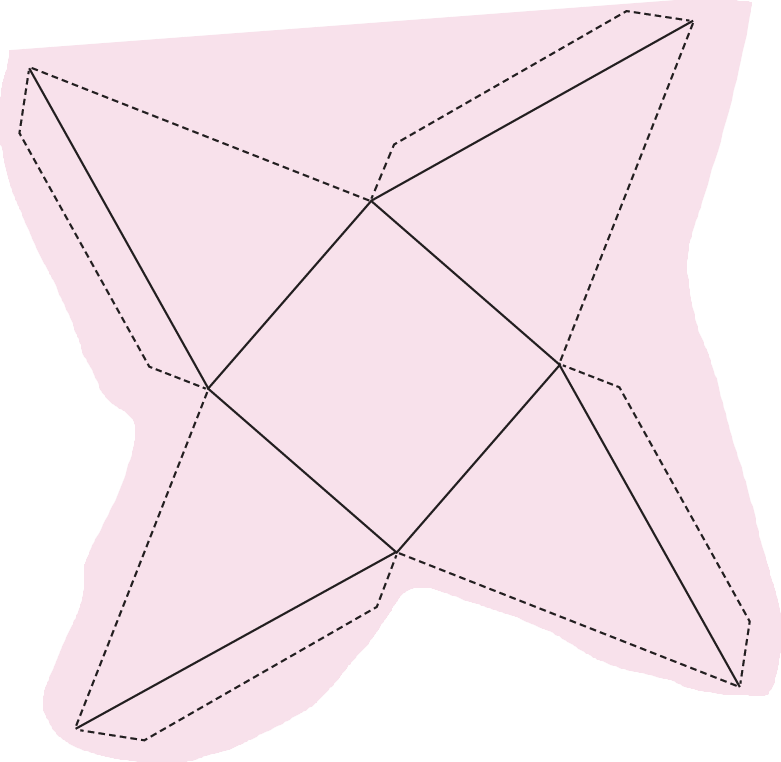
Nets of a Square Pyramid and Pentagonal Pyramid
Note: Cut along the dotted lines and fold along the dark lines.
Square Pyramid
Pentagonal Pyramid
Arrow Cards
Fraction Kit
Cm Scale
Number Tokens
Note for Teachers
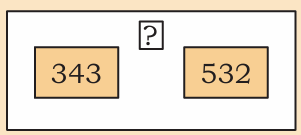
Box diagrams help students decode word problems as well as find strategies to solve them. The following examples are typical of all word problems in addition and subtraction. The operation that needs to be carried out can be decided depending on which boxes are filled in any problem. The three types of problems are combine, compare and change. Each problem can be represented using a slightly different box diagram so that one can capture the problem fully.
Example 1: Combine: Involves two different sets/collections. For example, there are 343 children in the Preparatory Stage and 532 in the Middle Stage in a school. How many total children are there in these two stages?
343 + 532 = ?
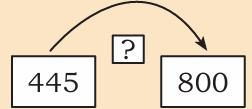
Example 2: Change: Involves change in an existing set/quantity. For example, I have 445 in my piggy bank. After three months, I ended up with 800 in the bank. How much has the amount in my bank increased in three months?
445 + ? = 800
800 – 445 = ?
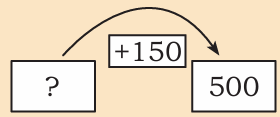
Example 3: Change: There are some potatoes in Sohan’s shop. He bought 150 kg more and now has 500 kg of fresh and old potatoes. How many kg of potatoes did he have initially?
? + 150 = 500
500 – 150 = ?
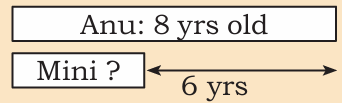
Example 4: Compare: Involves comparing two quantities. For example, Anu is 6 years older than her sister Mini. Anu is 8 years old now. How old is Mini?