
Chapter - 5
The Old Stag
Let us Read
In a lush forest lived an old stag who was known for his kindness. Each day, he warmly greeted his fellow animals and birds. Though the forest offered plenty of food, the stag preferred staying on a small hillock with tender grass.
The hillock was covered in soft, green grass, which the old stag enjoyed. Every day, he would come down to meet his friends, and all the animals and birds loved him.
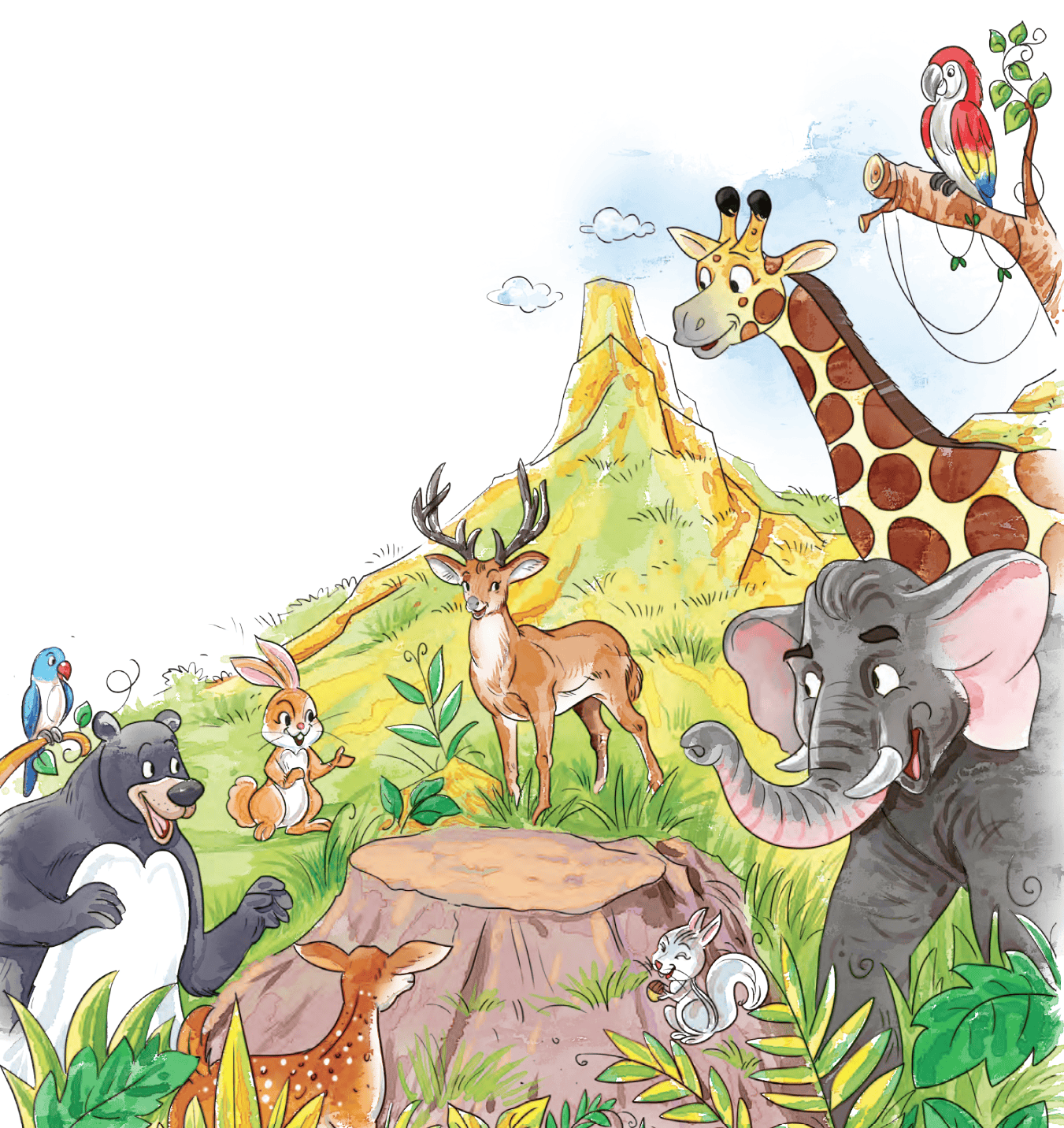
One day, the stag fell ill. He struggled to reach the hillock. The stag knew that fresh, healthy food and proper rest would help him to get well soon, so he ate the tender grass and decided to rest for a while.
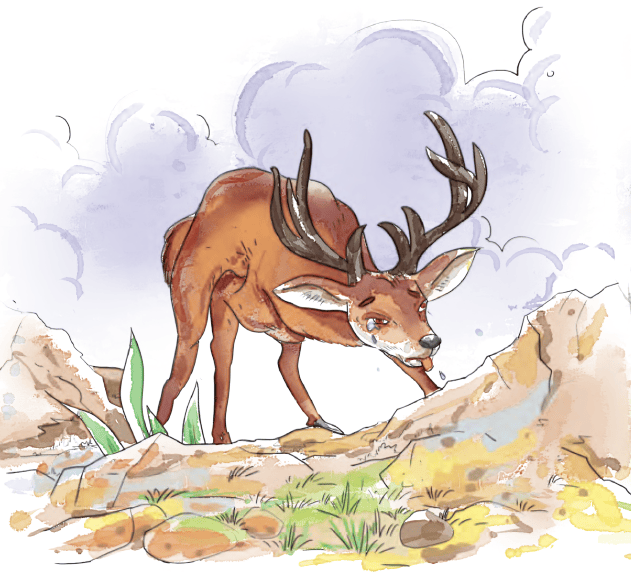
The old stag could not go down the hillock to greet his friends. His friends were worried. When they learnt that the stag was unwell, they came to check on him.
“Dear stag! How are you?” asked a deer.
“Too weak to come down and meet you all,” replied the stag.
“Get well soon, dear stag!”said the deer.
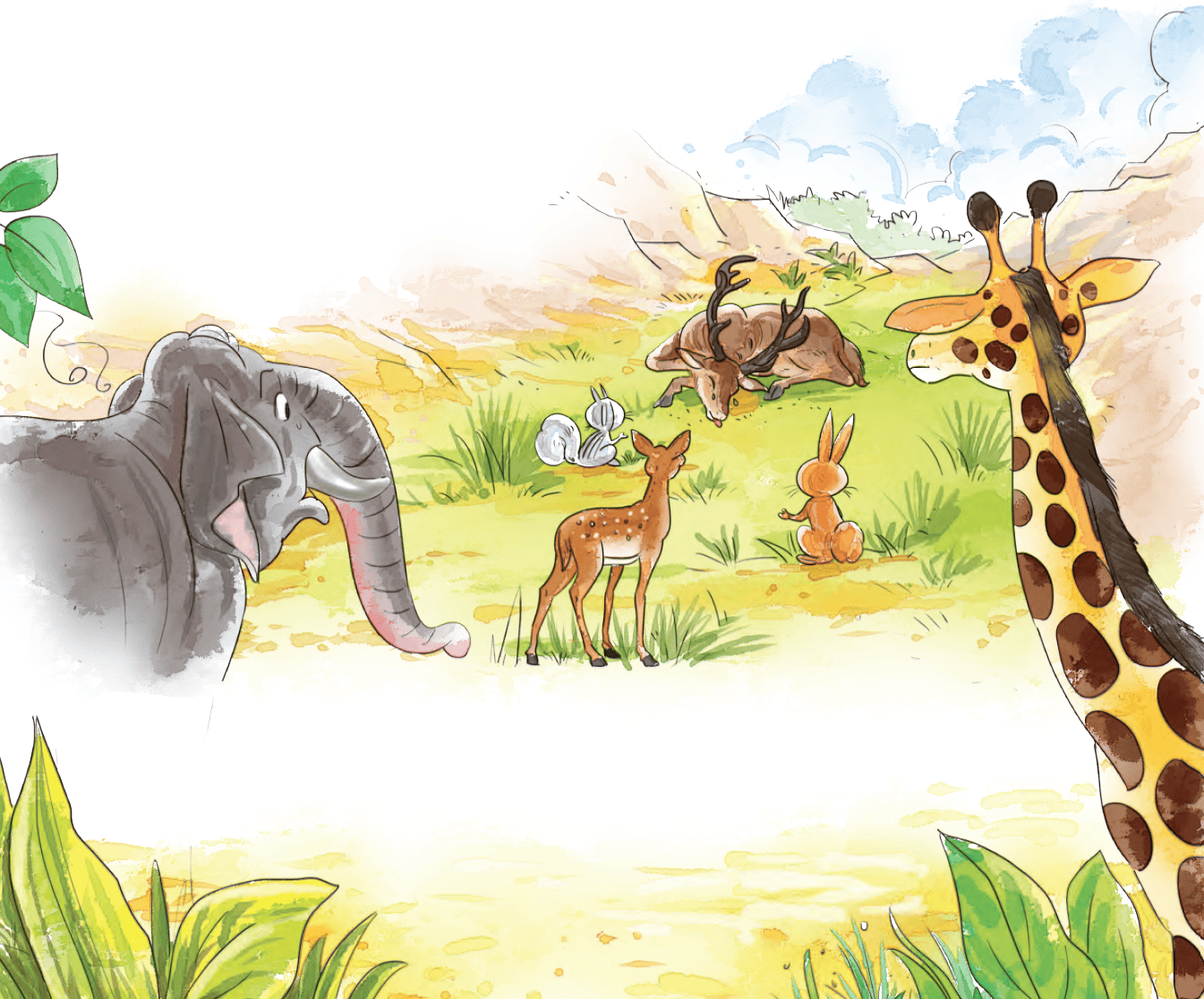
The animals wished him a speedy recovery and left. However, before they went back into the forest, the animals ate the fresh green grass growing on the hillock.
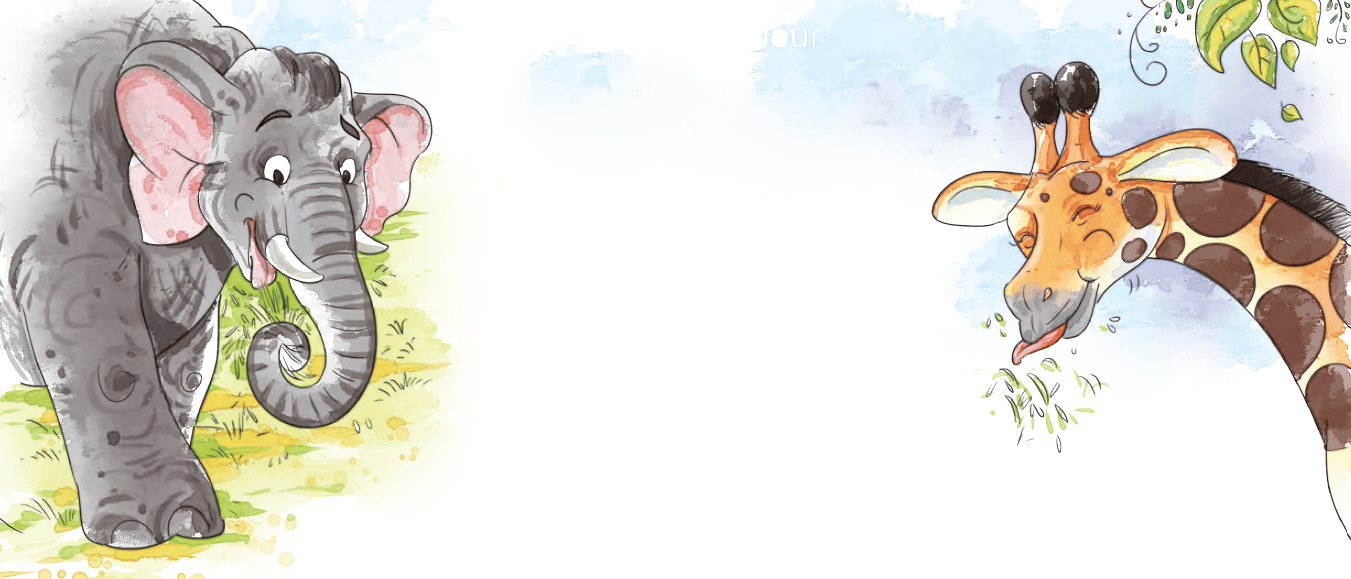
“The grass is so tender and nice,” said an elephant.
“I have never eaten such juicy green leaves,” said a giraffe.
Word soon spread about the tender green grass. Soon, all the animals who came to visit the stag feasted on the tender grass. Anyone who came to visit the stag would also eat the grass.
Soon, there was not much grass left for the old stag to eat. He started becoming weaker as days passed. His friends felt ashamed. They realised how their greed had made them forget about their friend, the old stag.
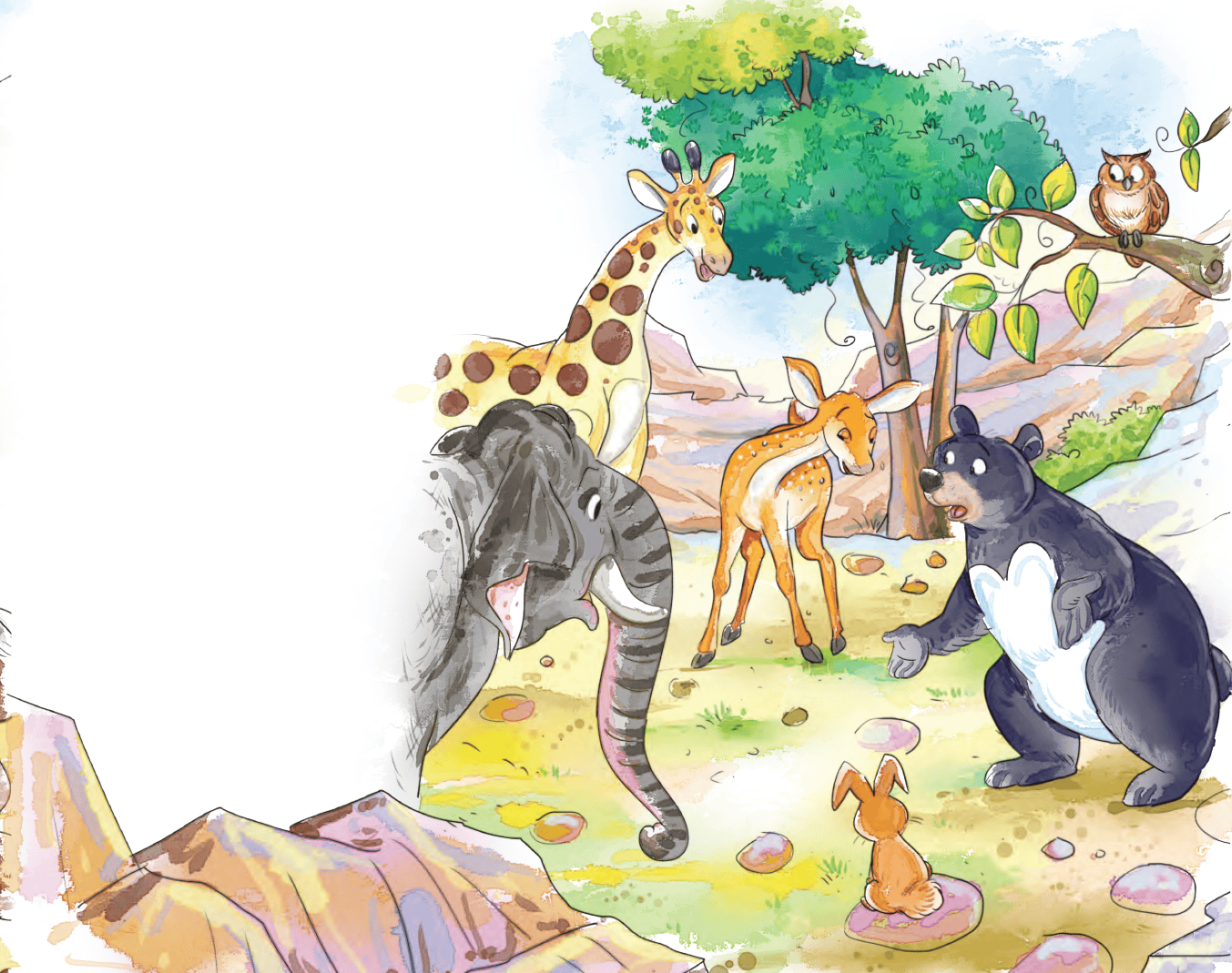
They understood that not much grass was left for the stag to eat and recover. The animals decided to find food elsewhere in the forest and not disturb the hillock. Some of them also brought fresh leaves for their friend.
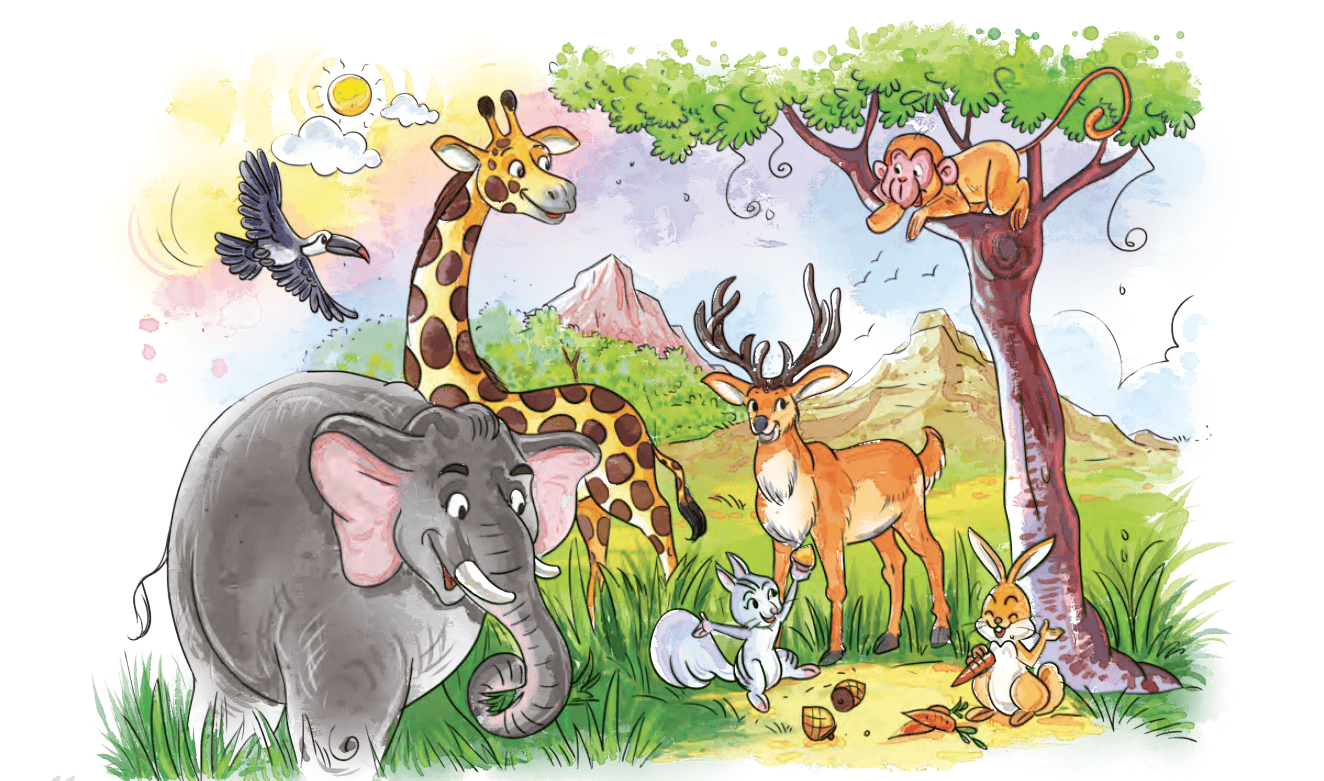
It rained well that week. The grass soon grew back, and the old stag had enough food once again. Slowly, the old stag recovered from the illness.
The animals learnt the most important lesson:
“Nature has enough for everybody. But we need to use its resources wisely.”
– Adapted from The Panchatantra
New Words
lush, stag, hillock, tender, sheltering, recovery
Let us Think
A. Answer the following.
1. Why was the old stag popular?
2. Why did the old stag not go down the hillock to meet his friends?
3. Why did the green cover of the hillock slowly vanish?
4. Did the animals realise their mistake towards the end? What did they do?
B. Think and Discuss.
1. Did the animals do the right thing in the end? Why do you think so?
2. What would happen to the green plants around us if each one of us thought only of our own needs?
Let us Learn
A. Match the words to their meaning.
1. Lush forest - cool resting place
2. Tender grass - green and dense woods/forest
3. Shaded spot - quick healing
4. Healthy food - delicate young grass
5. Speedy recovery - nourishing wholesome food
B. Look at the following words.
lush forest, friendly animals, shaded spot, tender grass, healthy food
These words are descriptive words that give us more details about scenes, people and objects. These words are used to make writing more interesting.
Draw the image that comes to your mind when you read the following.
|
Lush forest |
- |
|
tender grass |
- |
|
healthy food |
- |
C. Read the following sentence.
Each day, he warmly greeted his fellow animals and birds.
The word ‘warmly’ is an adverb. Here, ‘warmly’ tells the way or the manner of the stag’s greeting.
Let’s take a look at some more examples:
• The old stag slowly recovered.
• The rabbit quickly ate the carrots.
The adverbs in the above sentences describe:
• how the old stag recovered.
• how the rabbit ate the carrots.
Encircle the adverbs that describe how something is done.
|
soon |
badly |
lately |
cheerfully |
|
quietly |
early |
carefully |
highly |
|
fast |
regularly |
nearby |
loudly |
Now work with your partner and write a sentence for each encircled adverb.
Note to the Teacher
• Draw the attention of the learners to the fact that all the words given in the table are adverbs.
• Emphasise the “how” or “description” aspect of the adverbs of manner.
• Encourage the learners to create as many sentences as they can.
Let us Write
A. Complete the story by writing dialogues in the speech blurbs.
The Monkeys’ Fast
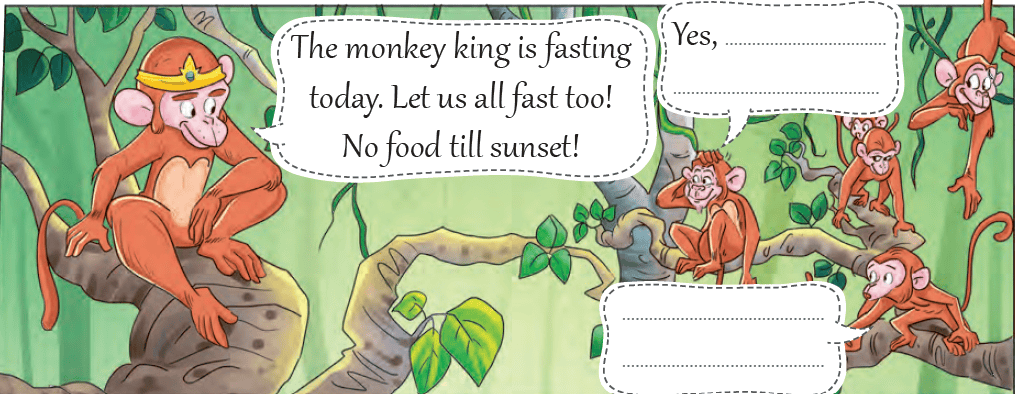
The monkey king is fasting today. Let us all fast too! No food till sunset!
Yes, ................
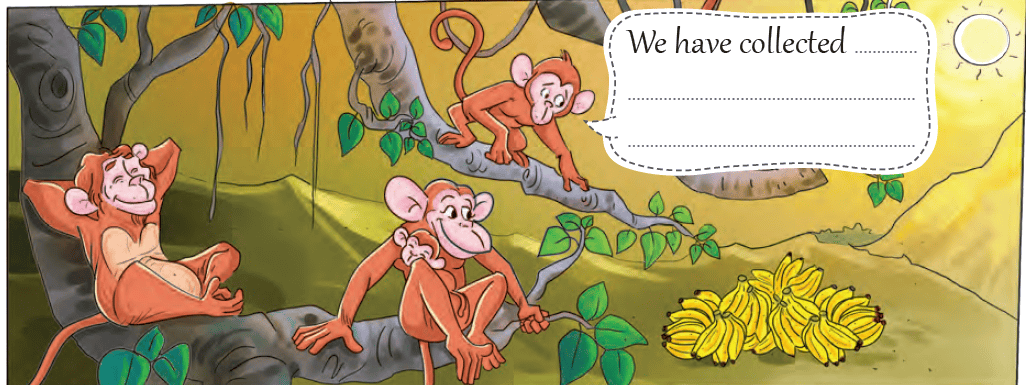
We have collected ..............
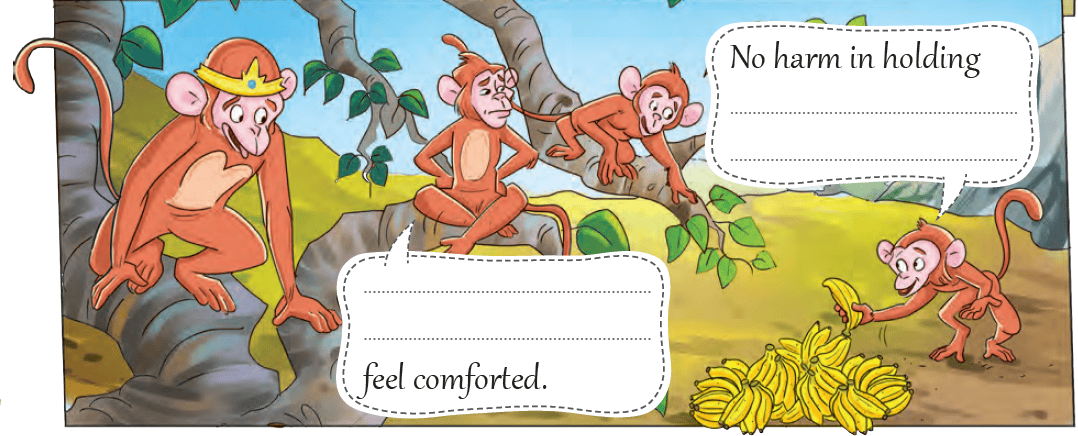
No harm in holding........
...........feel comforted.
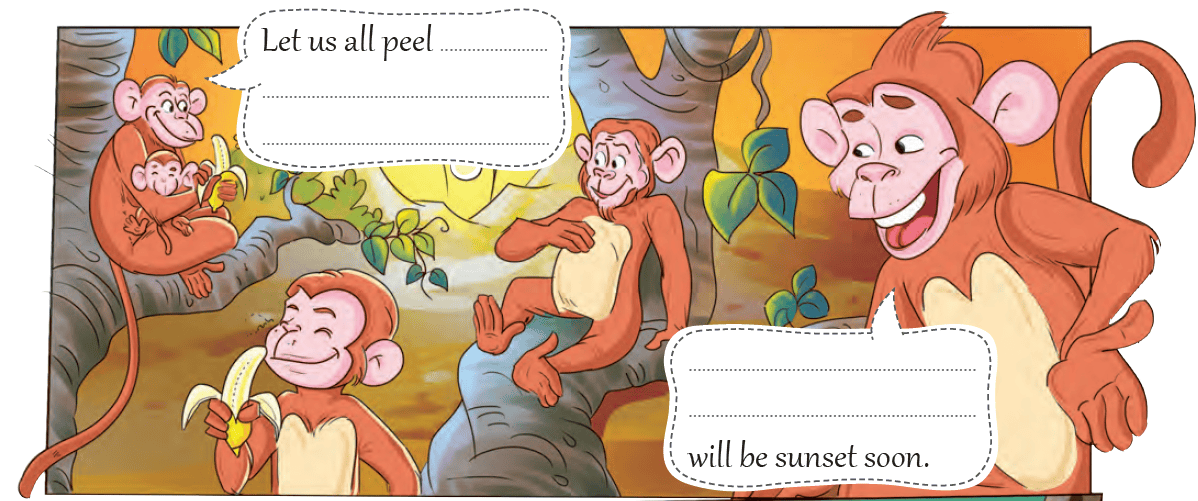
Let us all peel ..........
......will be sunset soon.
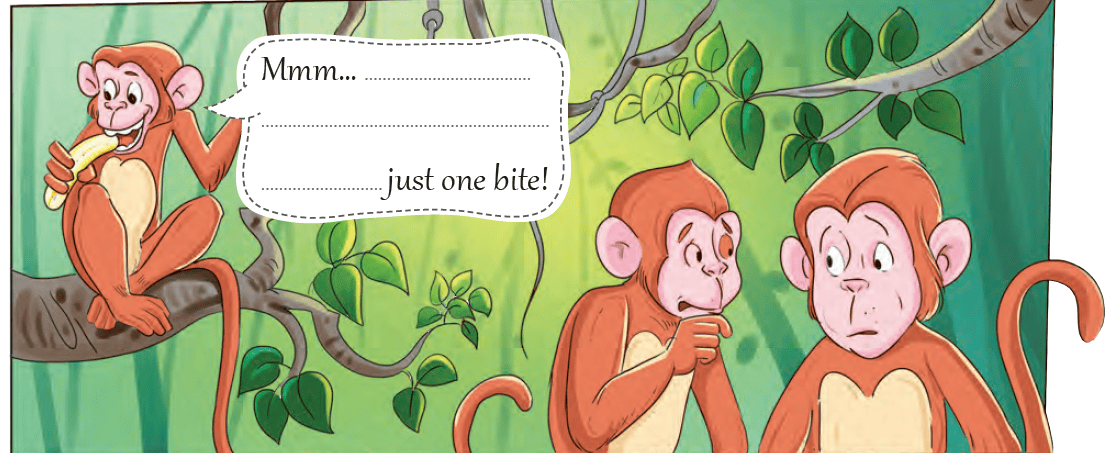
Mmm… ................. just one bite!
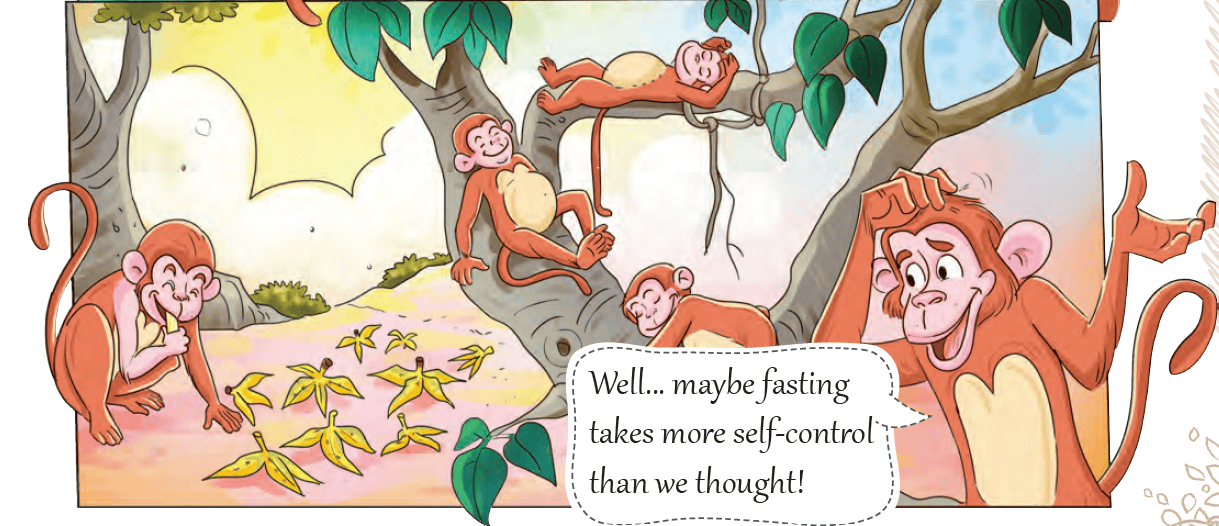
Well... maybe fasting takes more self-control than we thought!
Note to the Teacher
• Encourage the learners to observe the pictures for a while.
• Ask them to describe the pictures in their own words.
• Let the learners discuss the placement of the dialogues in pairs.
B. Write about your best friend and complete the paragraph.
My best friend’s name is .......... . ........... is a ........... . ............ is ............ years old. .......... studies in class .............. . There are ........................... members in ........... family. ..................... hobbies are .............. .............. wants to be a ................... . When we are together, we ............................ . .......... is my best friend because .........
Note to the Teacher
• Help students revise the concept of personal pronouns.
• Guide students to use correct pronouns while filling in the blanks.
• You may provide a help box if the learners require it.
• You may provide more paragraphs on different topics in this format.
Let us Speak
Look at this picture.
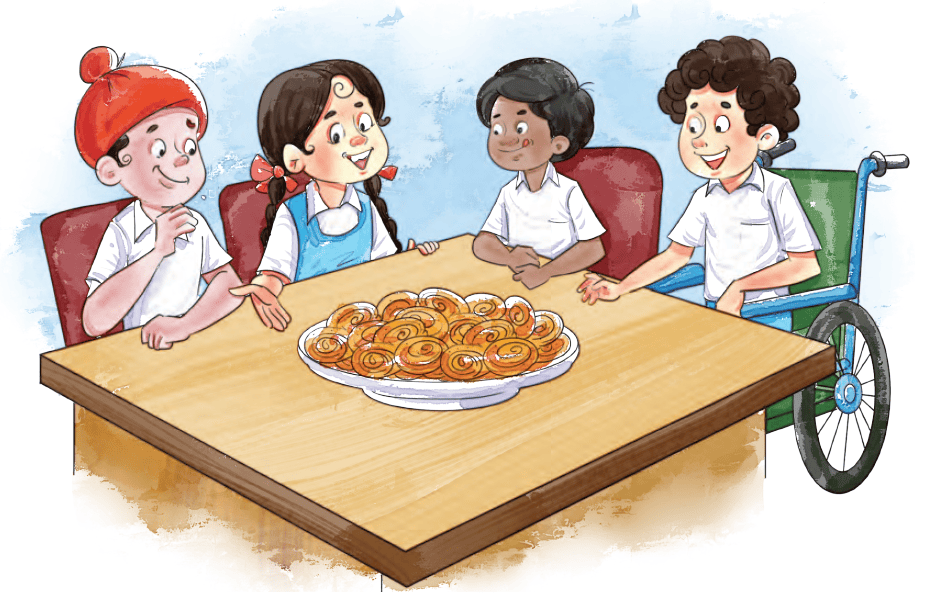
Imagine a large bowl of delicious jalebis is in your classroom. You and your friends start enjoying the sweets, one by one. Everyone loves the jalebis so much that you keep reaching for more. Now, think about what might happen next.
Discuss the following in the class:
1. How would you feel if the jalebis were almost finished, but some friends hadn't had enough yet?
2. What will happen to the bowl of jelebis after some time?
3. Why is it important to share when we have something that everyone enjoys?
4. How can we make sure there are enough jalebis for everyone to enjoy?
Let us Do
Create a Thank You Card from the Old Stag.
|
Instructions: ● Imagine you are the old stag, grateful to the friends who helped you while you were sick. Prepare a thank you card to show your appreciation. These hints shall help you: ● Front of the Card: Draw a picture of the stag surrounded by his friends in the forest. ● Inside the Card: Write a kind thank you message to his friends, expressing how their help made him feel better. 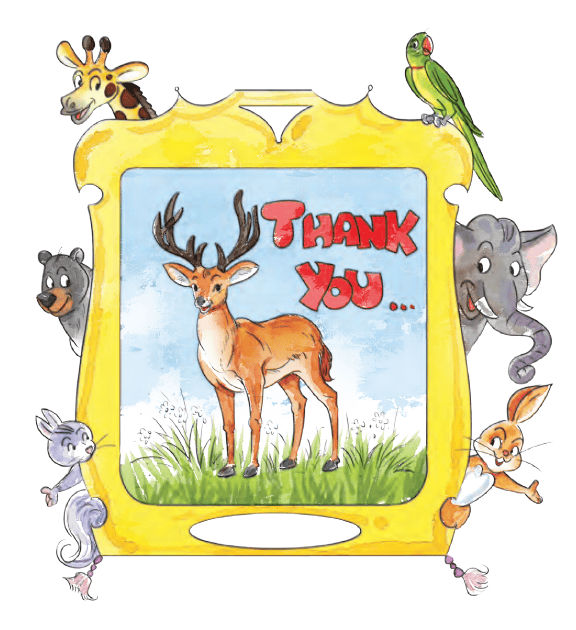
|
|
Dear Friends, |
................. |