
Chapter - 9
Hekko
Let us Read
‘Hek’ means to challenge
and ‘ko’ means tiger.
Therefore, the word
“Hekko” means
“Challenging the tiger.”
There is a folk story in
Nagaland which talks about
“Aami” (The Man) and
“Aakho” (The Tiger).
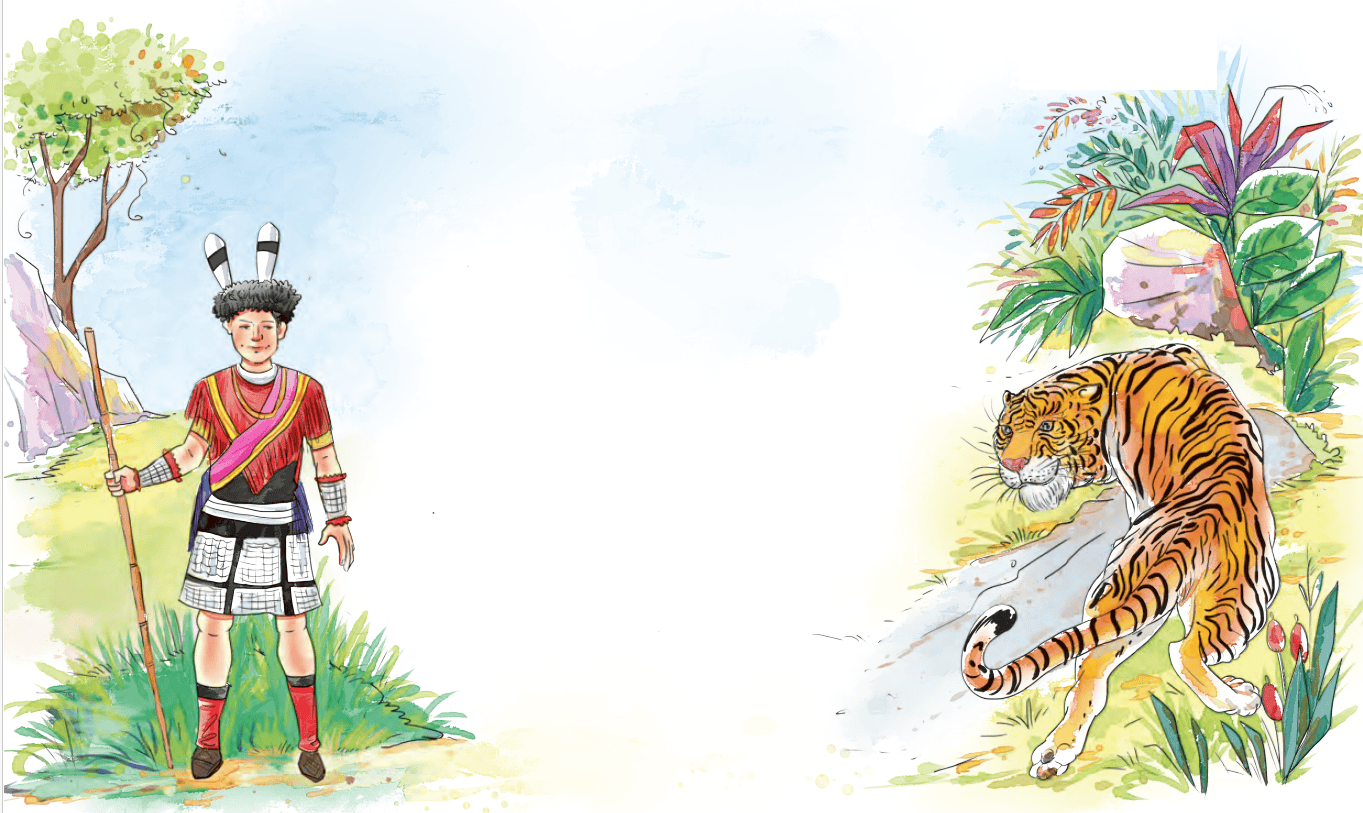
Story: Once upon a time, humans and
animals lived together. They had
a disagreement about their
superiority. The humans
challenged Aakho and the
challenge came to be known
as Hekko.
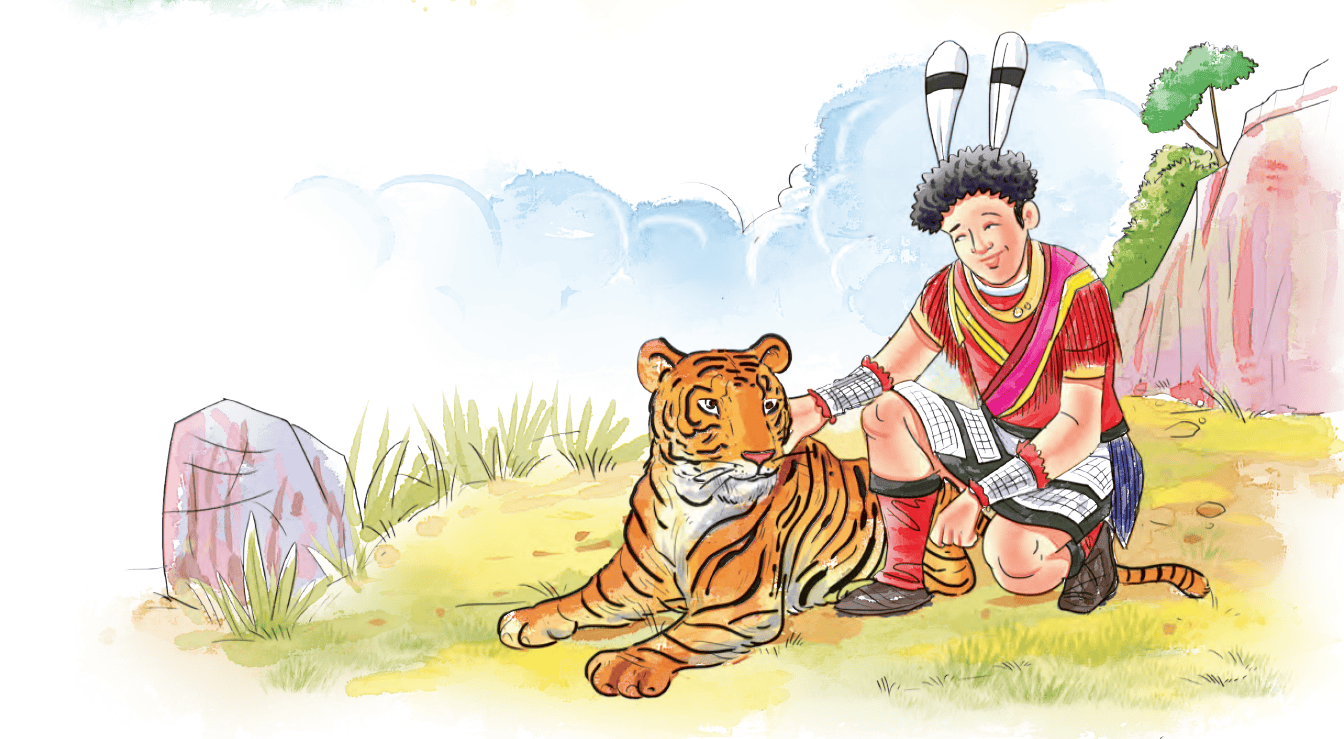
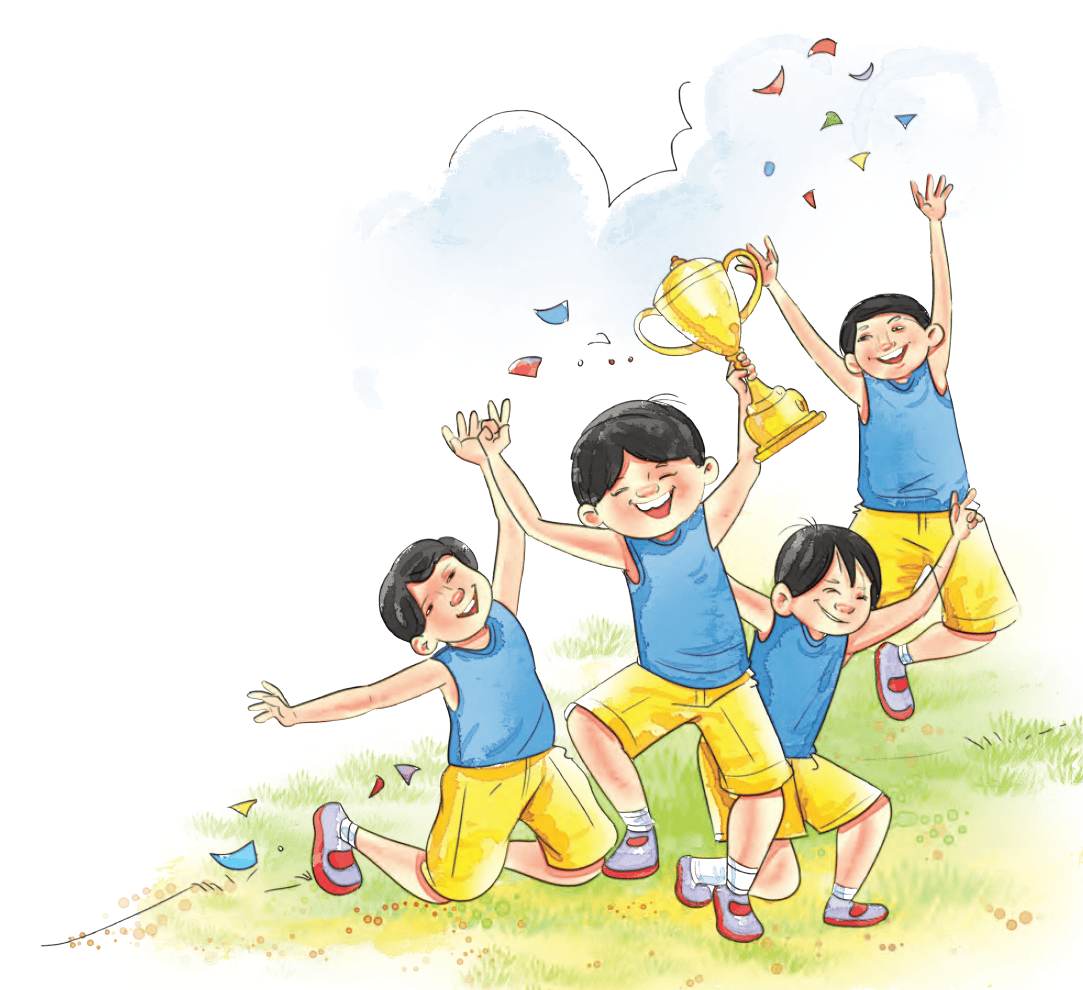
The people in the Mokokchung district of Nagaland play a game named Hekko, which is a well-known sport today.
Presently, it is played as a team game between two teams: Aakho and Aami. The strongest people in the village are identified through this game.
There are 11 players in each team. The toss before the game decides which team will be called Aami and which will be called Aakho.
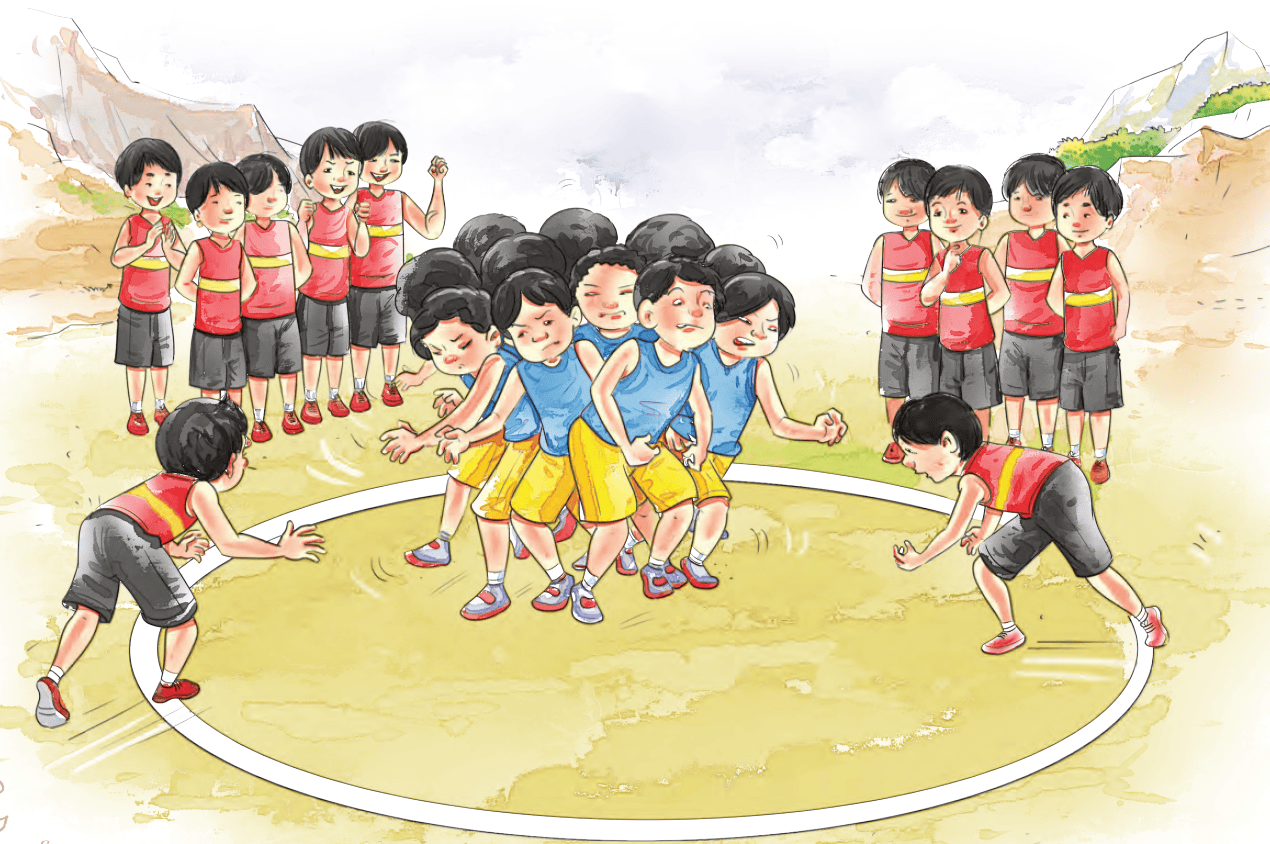
To play, a circle is first drawn, and the Aami team has to stay within the circle by making a human chain, while the Aakho team stays outside the circle.
At first, two members of the Aakho team enter the circle and try to push the Aami players outside the circle. When an Aami player is pushed out of the circle, he is out and cannot enter again.
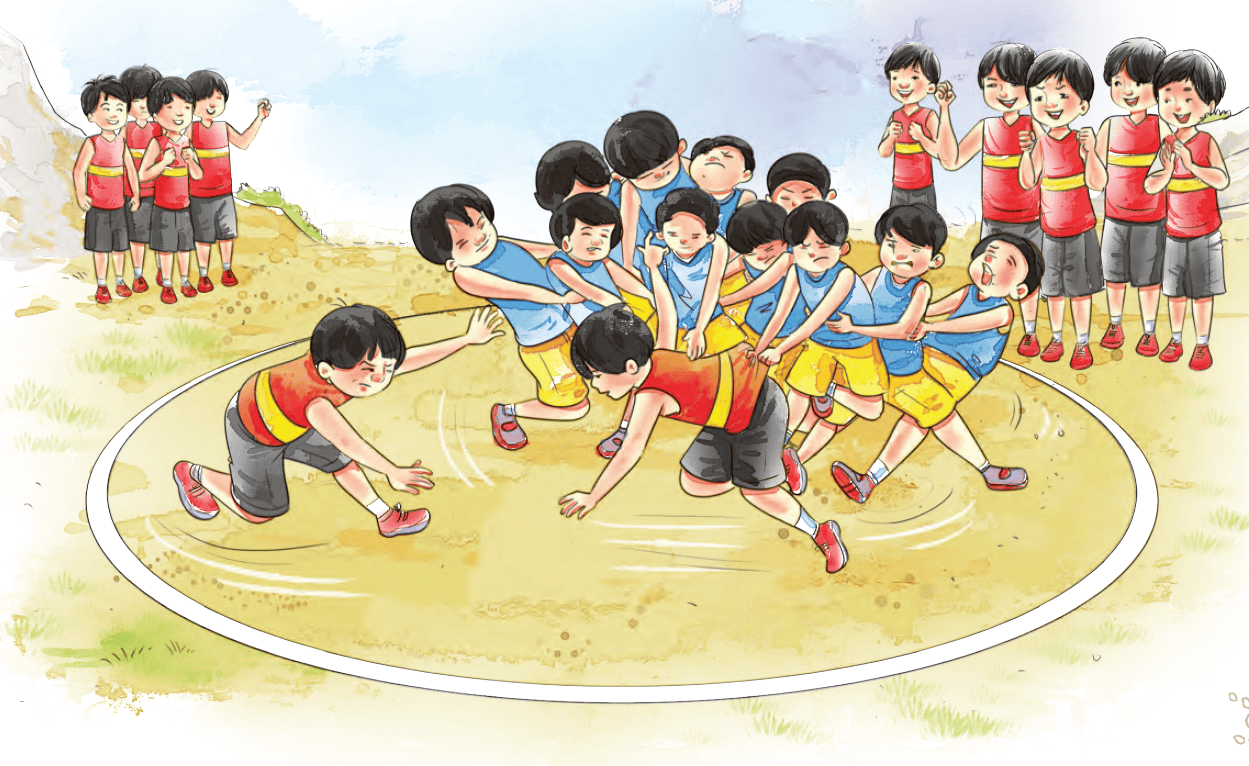
The Aami team also tries to catch the players of the Aakho team by surrounding them. When an Aakho player is caught, he is not released until he says “Joko” (surrender). When one player gets caught and surrenders, another player from the Aakho team enters the circle. Whenever a team gets a player of the opposite team out, it gains points.
The game of Hekko gets over when one of the following three things happens:
• All the members of the Aakho team get caught.
• All the members of the Aami team are pushed out of the circle.
• The time runs out. The team with the maximum points wins the game.
The fastest player of the Aami Team is awarded the title of “Khozuba” and the strongest player of the Aakho team is awarded the title of “Khotiba”.
New Words
declared, superiority, disagreement, surrender
Note to the Teacher
Explain the word ‘decide’ by relating it with the term ‘decision’.
Let us Think
A. Answer the following.
1. What does the word ‘Hekko’ mean?
2. What are the two teams in the game called?
3. How many players are there in each team?
4. What do the players in the Aami team do inside the circle?
5. Why do you think the Aakho team (Tiger) must say “Joko” when they are caught?
B. Think and discuss.
1. If you were playing the game Hekko, would you prefer to be in the Aami or Aakho team? Why?
2. If you could add a new rule to the game, what would it be? What would be the benefit of the new rule?
Let us Learn
A. Choose the correct option to complete the sentence.
1. their/there
………....…… (their/there) is a beautiful park in my neighbourhood.
They completed ………....…… (there/their) work very fast.
2. two/too
………....…… of my friends participated in the poster-making competition.
I was ………....…… tired after playing.
3. through/threw
The bowler ………....…… the ball towards the batsman.
I can see the clouds ………....…… my window pane.
4. caught/cot
My mother ………....…… me eating an icecream at night.
I sleep on a ………....…… when I am at my grandmother’s village.
5. right/write
While crossing the road, look to your ……….……, then left, then right again and then cross the road.
………....…… in a neat and legible handwriting.
Note to the Teacher
Draw learners’ attention to:
• similarity in how the words sound
• difference in spelling
• difference in meaning
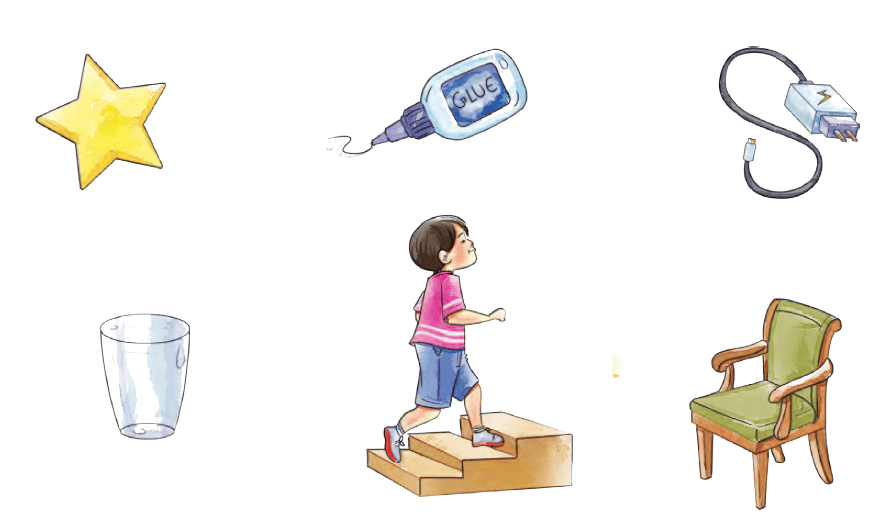
B. Look at the pictures and write their names. One has been done for you.
|
st |
ch |
gl |
|
stairs |
- |
- |
|
- |
- |
- |
|
- |
- |
- |
C. Match the animals with their sound.
I - II
1. Tiger - coos
2. Horse - trumpets
3. Elephant - roars
4. Dove - neighs
5. Goat - whoops
6. Monkey - bleats
D. Read the following sentences. Notice the underlined words.
Once upon a time, humans and animals lived together. Aakho declared that the tigers had the first right on all the things. The humans challenged Aakho.
• The underlined words tell us that the events happened some time ago or in the past.
• In past simple tense, you can add -ed to verbs to get this form.
E. Fill in the blanks using -ed.
Last week, we ............ (visit) the park for a while. There were many children in the park. They were playing different games. My mother ............ (point) at the children playing kabbadi. On our way home, my sister ............ (jump) in a puddle and muddied everyone's clothes. I ............ (enjoy) my visit to the park.
My sister ............ (want) to go to the pond but I ............ (decide) to stay and watch the game of kabbadi. I ............ (watch) the game for a while and then ............ (join) my mother and sister. There were many fishes in the pond. I ............ (spot) a goldfish and my sister ............ (notice) two tadpoles in the pond.
Let us Listen
Listen to the description of some traditional games of India. Identify each game and write its name in the space given below.
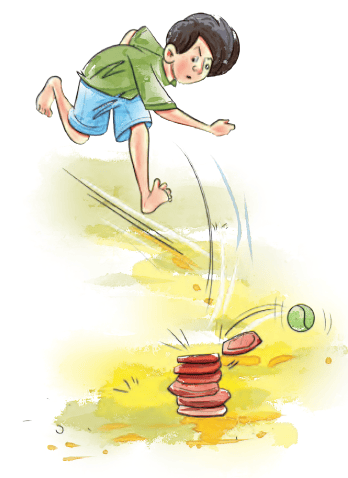
1. In this game, we stack seven stones on top of each other. The first team throws a ball to knock them down. After the stones are knocked down, the members of the first team hurriedly rearrange the stack while the opponent team catches the ball to quickly hit the members of the first team before the stones are restacked. If you are hit by the ball, you are out. Can you guess the name of the game?
...........
2. In this game, there are two teams. One player from the first team crosses into the second team’s side while chanting the name of the game continuously without taking a breath! The goal is to tag as many players as possible and return to their side before being caught. If the player is caught, the other team scores. Can you guess the name of this game?
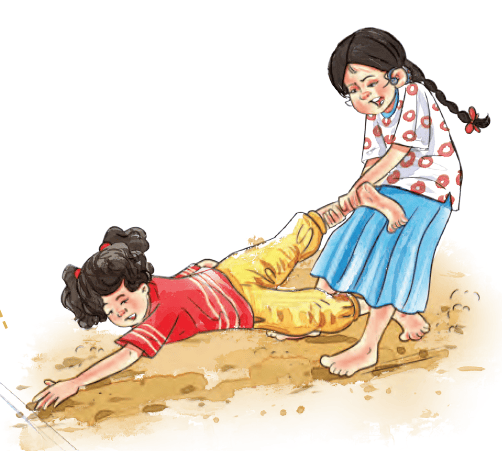
...........
3. This game is played with two wooden sticks—a short one and a longer one. The goal is to hit the shorter stick and make it jump in the air, then strike it again to send it flying. Players measure how far the shorter stick travels to score points.
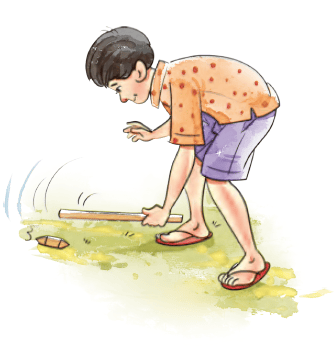
...........
4. In this game, two children form an arch with their arms while others walk under it, singing a song. When the song ends, the arch drops, and the player caught joins in. It’s a fun and rhythmic game played in many parts of India.
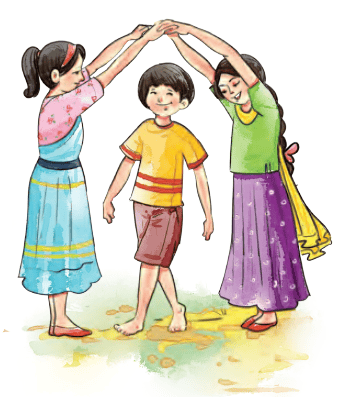
...........
5. In this game, children use a small round shaped glass object, aiming to knock out other glass round objects placed in a circle. Players flick the glass object with their fingers, trying to hit the target objects and win them. This is a popular outdoor game played in many parts of India.
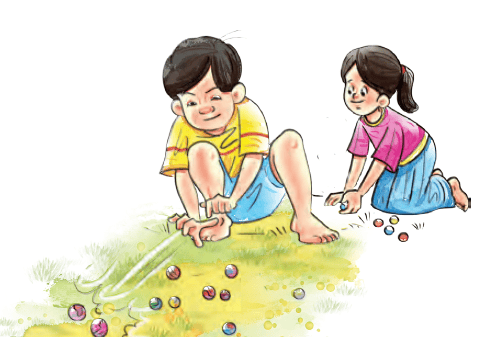
...........
Let us Speak
A. Look at the pictures and identify the games being played.
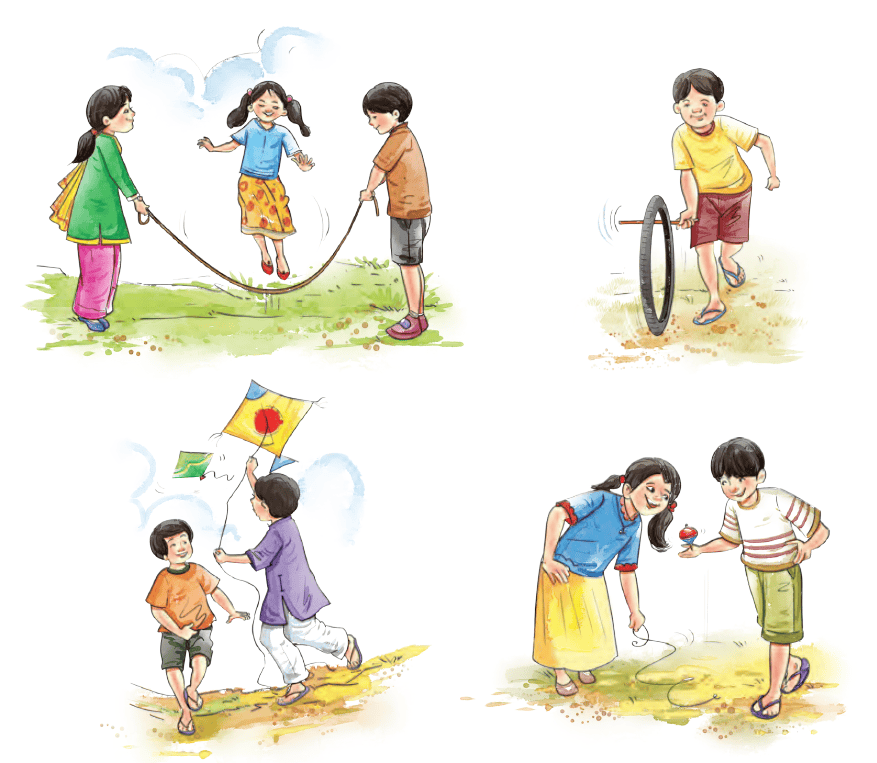
• Have you played any of these games before?
• Discuss with your partner about the games you recognise.
• Which one is your favourite? Why do you enjoy playing it?
Note to the Teacher
The above mentioned games involve a lot of physical and mental strength. For example: “skipping” is associated with “jumping”, which can build our bone density! Discuss what other physical and mental benefits can be achieved by the games mentioned above.
Let us Write
A. You read how the people of Nagaland made the game of Hekko. Use the space given below to write about a new game that you would like to play.
Game: ................
Time: ..... Number of players: .......
Material needed: .....................
Rules:
.......................................
.......................................
.......................................
.......................................
Foul:
.......................................
.......................................
.......................................
.......................................
Let us Explore
Nagaland is a land of festivals. Hornbill is one of the festivals to promote the culture of the state. Find out more about it.
ANSWERS
1) Six errors in the Traffic Scene
• Zebra’s tail on cat
• Aeroplane flying upside down
• Bananas hanging on banyan tree
• Man walking with headphones and antennae on it
• All traffic signals are working at the same time
• Zig-zag zebra crossing
2) Eight differences between the two pictures
• One bird is missing
• Balloon colour is different
• Number of flowers in the left corner
• Number of conical trees on the right
• Missing stone on the foot of the tree
• A cloud missing in the sky
• A stripe of boy’s T-shirt missing
• Boy’s socks missing
3)
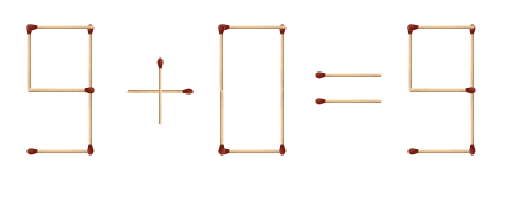
4) Riddles
• Teeth
• Candle
• Coconut