
Chapter 8
TIME, TEAM, TECHNIQUE
Now, we start work on preparing for your performance. So far, you have performed in class based on different lessons, concepts and shared feedback.
Now, in order to perform for a bigger audience, by putting together everything you have learnt, requires proper planning and process.
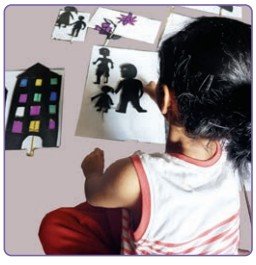
Step 1: Storyboard and Script
After trying many options of combining situations to make a story, you now have to decide on one story that you can enact at the end of this year. Discuss in class and decide on a story that:
- Seems interesting to everyone in class. If you don’t think it is enjoyable, you cannot expect your audience to enjoy.
- Should be short and simple. Duration of the play could be 5–8 minutes. Props and costumes to be easy to handle.
- Make it a creative process. Try including a song you learnt in music class or have a dance that suits the story to handle.
- Involves everyone. Some can act, some can work on the story or with the props.
A few years back, an interesting incident happened in a school. Let me tell you the story. Later, you may tell me what you learnt from it.
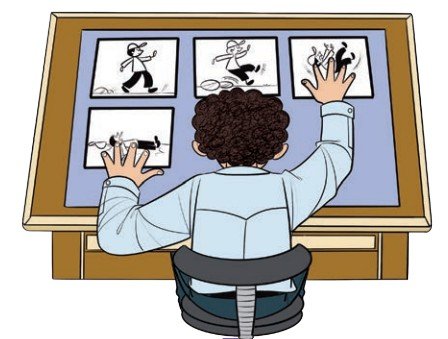
Once, in Class 5B, a group of students decided to put up a grand play called The Jungle Adventure. It had everything—talking trees, dancing monkeys and a detective squirrel. They were all very excited. So excited that everyone wanted a role on stage.

“I’ll be the lion!”, said Aditya. “I’ll be the river!”, shouted Meera, practising her watery dance. “I’ll be the narrator and also the parrot, and maybe the waterfall!”, added Nisha, clearly trying to break some kind of world record. After a week of fun rehearsals, they were ready, or so they thought.
Three days before the big show, their
teacher asked, “Who’s doing the lights, music and
setting up the stage? What about your costumes?”.
There was a sudden silence.
They had forgotten all about backstage work!
“Who will play the music when the squirrel finds
the treasure?”
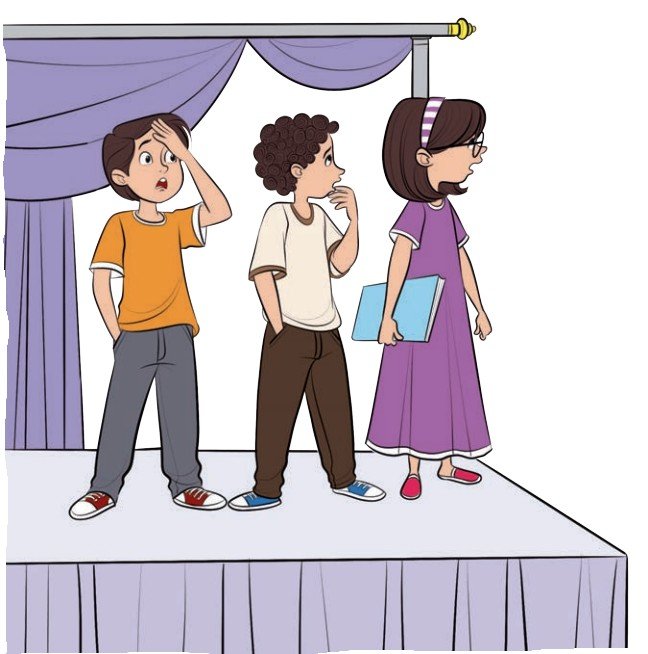
“How can we change the jungle tree without anyone behind the curtain?”, someone whispered.
They looked at each other. Everyone had an acting role. No one wanted to give it up.
After a long discussion and
argument, they decided to ask Class 5A for help.
At first, 5A teased them a bit, “Oh! the ‘famous actors’ forgot they needed a team?”. But they agreed to help.
They learnt all the requirements and their timing. They became the real heroes of the show—pulling curtains,
playing jungle sounds, managing props and even fixing
the monkey tail that kept falling off. On show day, The Jungle Adventure was a hit! The crowd clapped, laughed, and cheered. But this time, everyone clapped for the backstage crew too.
From that day on, the actors of Class 5B never forgot:
“A play on stage shines only because of the stars behind the curtain.”
So what do we learn? Planning in all areas of work is important.
Step 2: Planning
Let us first list all the tasks that need to be done to present a play
Compare your list with others’ lists and see if you missed anything. On the basis of the kind of work in each area, divide responsibilities among your friends. The number of students in each team is based on the amount of work. For example, if there are many props required for each scene, more members will be needed in that team, you can have four or five members. If you have very simple and basic make-up that the actors can do at home, you can just have one or two members for help, and so on.
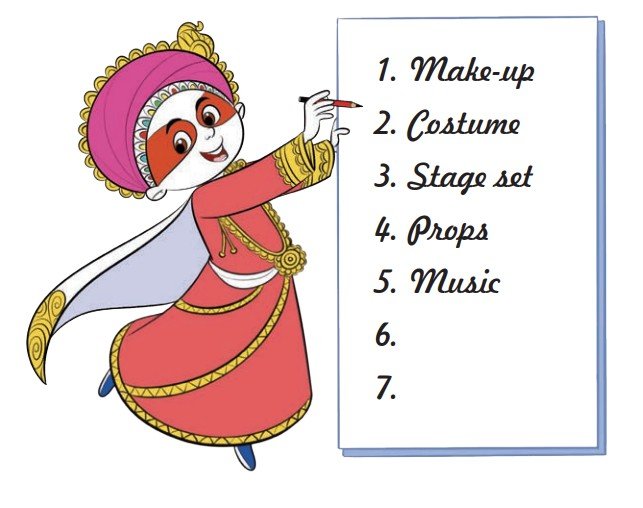
Here is a list for your reference:
| S.No. | Team | Name | image |
|---|---|---|---|
| 1. | Story and script |
|
 |
| 2. | Stage set |
|
 |
| 3. | Props |
|
 |
| 4. | Make-up | 1. |
 |
| 5. | Costume | 1. | |
| 6. | Music and sound effects |
 |
|
| 7. | Acting and dance |
Step 3: Timeline
This is an important part of the planning. Giving the right amount of time for planning and preparation will ensure a successful show. What happens if you get the timelines wrong?
Show date is too close: No time for rehearsals, not enough time to get costume and props, actors unprepared and forget lines.
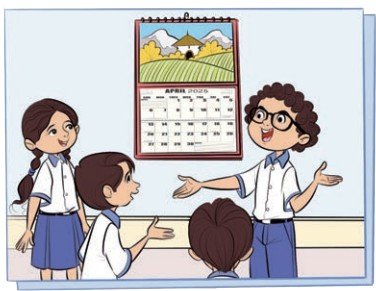
Show date is too far off: Team loses interest and enthusiasm, too many rehearsals make it boring, other things may come in between, like an actor has to travel out of town, someone falls ill, a new event in school draws all students to practice for that, etc. So, carefully plan timelines not just for the show, but for every step.
The above timeline is just an example to give you an idea of how you can plan. The number of days can vary depending on your schedules and story. But always remember to have your show at least 15–20 days from when you start planning. If the show date is already decided by your school or teacher, you have to start working on it 20 days before it.
Step 1: 3 days storyboard and script Steps 2 and 3: 2 days planning and timeline Step 4: 12 days rehearsals Step 5: 2 days final run and showThe above timeline is just an example to give you an idea of how you can plan. The number of days can vary depending on your schedules and story. But always remember to have your show at least 15–20 days from when you start planning. If the show date is already decided by your school or teacher, you have to start working on it 20 days before it.
Step 4: Rehearsals
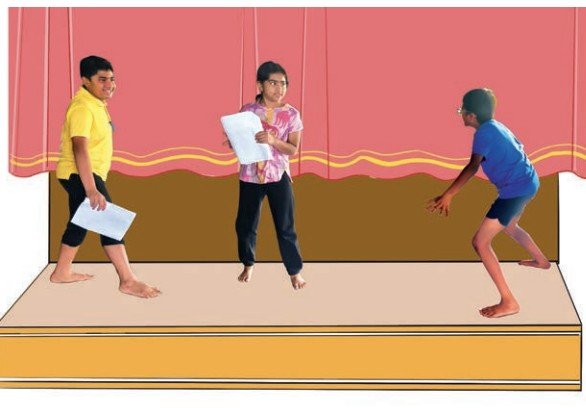
This part of the process takes maximum time and needs the most hard work to be done by the team. Rehearsals also need to follow a certain order:
- Script reading: Full team sits together, everyone takes turns to read a few lines. Repeat it many times.
- Casting: Assigning roles to actors.
- Scene blocking: Positions and movements for every scene.
- Practise with dialogue and movement: Scene by scene.
- Full play: Run-through from the beginning to the end.
It would be helpful if there is a separate timeline planned for these steps to ensure they are completed on time.
The Tech Team
This includes the set props, costume, make-up, music, and other backstage teams. When the acting team is rehearsing the lines and scenes, each of these teams are equally busy in getting their work done.

Set props: Make the required things with cardboard or borrow from others. Remember ‘object improvisation’ from Grades 3 and 4. Use your skills in improvising.
Costume: Plan the best possible costumes with available resources. You can only borrow or make things, like a crown, with cardboard. Plan in a way that requires no buying or renting.
Music: From what you have learnt in the last two years, see how you can create sound effects or even sing songs when required.
Note to Teacher: Some support and facilitation by the teacher will be required at the casting and scene blocking stages. Try encouraging the children to manage it on their own as much as possible. Intervention is recommended only when it is of utmost necessity.
Step 5: Get-set-SHOW!
Nervous? As the day of the show gets closer, everyone is getting more and more excited, and may be nervous too. It is absolutely fine. In fact, even the professional actors who have been performing for many years, still get nervous before getting on stage. Psychology says, this nervousness sometimes helps actors perform better. So, all you have to do is to continue to work hard and make sure you know your lines and movements very well.
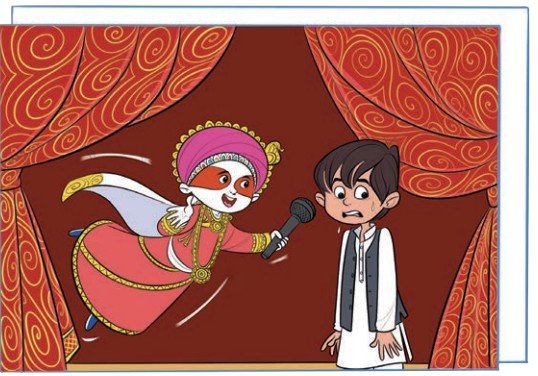
Tips to beat nervousness and stay confident for the show.
1. Rehearsals
The strongest weapon to fight nervousness is practice, and more practice. The more you are familiar with every detail of the play, the better it is. Practise whenever you find time. Sometimes with the team and sometimes on your own. This also includes the final run-through. This is a complete run of the show exactly like final show. Starting from the announcement, all aspects are included like props, costumes, sound effects, music, dance, and everything in the play.
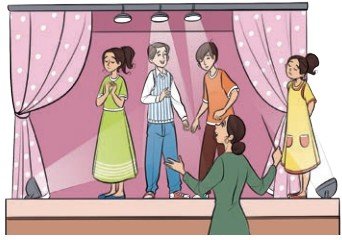
It is a trial show. This will give you an opportunity to understand what could go wrong and where you need to correct yourself as a team. You can ask a couple of your teachers to watch it, and give feedback and suggestions, before your performance in front of the actual audience.
2. Use the arts!
All art forms help in stress relief. You can pick what works for you to calm yourself down. You have been learning music, dance, theatre and visual arts.
Each one supports the other to benefit you. It has many positive qualities, like relaxation, reducing stress and tension, motivating and refreshing the mind, generating creative ideas, helping you focus, and a lot more. Let us see how we can make use of it to benefit this situation.
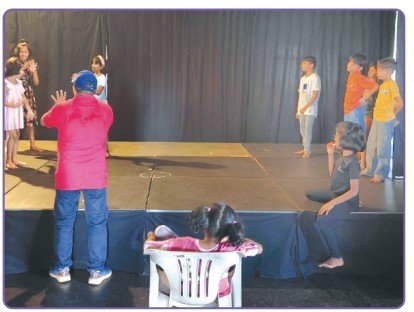

Music: Humming a happy tune or singing a funny song can calm you.
Dance: Jump, shake your hands and dance a few steps. It helps release nervousness.

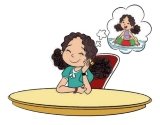
Theatre: Close your eyes and visualise your scenes with all details, you will feel more confident.
Visual Arts: Make sketches of your actions and scenes. You can use different colours to paint whatever comes to your mind.

These not only help you relax and refresh, but also help your mind to focus better. And that means, a great show.
3. Team connection
Sit in a circle, holding hands. Take slow, deep breaths. Breathe in through your nose and out through your mouth. Imagine you are a calm turtle. This helps your heart slow down and your mind to feel still. Repeat it two to three times. When you are feeling calm and focused, recite a prayer together.
This is a suggested prayer that talks about the well-being and success of working together. It is a shloka from the Upanishads.
ॐ सह नााववतुु । सह नौौ भुुनक्तुु । सह वीीर्यंं करवाावहैै । तेेजस्वि�ि नाावधीीतमस्तुुमाा विद्वि�षाावहैै । ॐ शाान्तिः शाान्तिः शाान्तिः ॥
Om Saha Naav[au]-Avatu | Saha Nau Bhunaktu | Saha Viiryam Karavaavahai |Tejasvi Naav[au]-Adhiitam-Astu Maa Vidvishaavahai | Om Shaantih Shaantih Shaantih ||
- 1: Together may we move and progress
- 2: Together may we relish and enjoy
- 3: Together may we perform with vigour (concentration and energy)
- 4: May the work done by us be filled with the brilliance leading to knowledge); May it not give rise to hostility
- 5: Om Peace, Peace, Peace
Meaning
This would create a positive team energy. Remember, your friends are with you. You are all doing this together and everyone wants it to be a success. Trust your team.
4. Things to avoid before a show
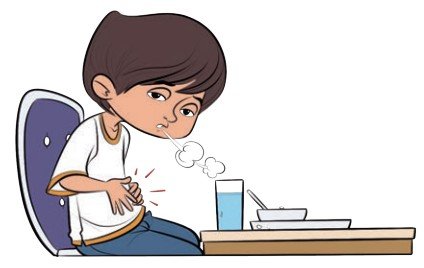
Do not eat a heavy meal
Too much food can mean an uncomfortable tummy. You could also feel heavy and sleepy. Eating junk food or drinking soda can also cause discomfort during the show. Eat light and healthy snacks instead.
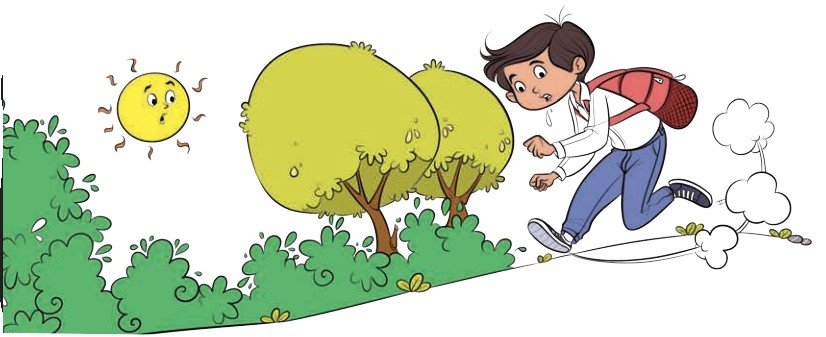
Don’t be late
Rushing makes you more nervous. Arrive early, make sure all your things are in order and give yourself enough time to focus.
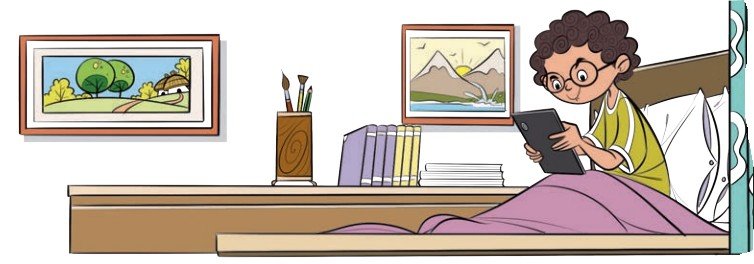
No videos or games
Screens can distract you or make you feel tired. Anything that takes your focus away is not good and you will have to deal with it throughout the show.
Sleep well the previous night
Good rest is important to keep your physical and mental energy levels high the next day. Sleeping well helps retain your focus and memory.
There is a good chance of forgetting your lines if you haven’t slept well.

If you have put in effort with all honesty, it will reflect in the final outcome. With all the preparation and hard work, the show will be a success. Around 1000 years back, Somadeva in his book of folk stories—Katha Saritsagara said:
अप्राप्यं नाम नेहास्ति धीरस्य व्यवसायिनः।
Apraapyam Naama Nehaasti Dhiirasya Vyavasaayinah
“There is nothing that cannot be attained by the one who works hard and has courage.”

- Which step was the most enjoyable? And which one was the most difficult?
- Did you and your friends stick to the plan that you made?
- What were the changes you had to make that were not in the original plan and why?
- Are both backstage work and onstage acting similar? Which one requires more hard work and effort?
Assessment
| CHAPTER 8 – TIME, TEAM AND TECHNIQUE | ||||
|---|---|---|---|---|
CompetenciesC–3.1: Makes choices while working with materials, tools and techniques used in the Dramatic Arts. C–3.2: Practises steps of planning, executing, and presenting while creating drama individually, and collaboratively. |
||||
| CG | C | Learning Outcomes | Teacher | Self |
| 2 | 3.1 | Explores possibilities to include music and dance in the story. | ||
| 3.1 | Displays clarity of thought in planning and timelines. | |||
| 3.2 | Gives importance to backstage elements. | |||
| 3.1, 3.2 | Discusses with team to arrive at an agreement for planning steps. | |||
| 3.1, 3.2 | Works on planning rehearsals with separate cast and tech team. | |||
| 3.2 | Spontaneously uses props, sound, etc., to make the scene realistic. | |||
| Overall participation in class. | ||||