
Chapter 9
VIEW AND REVIEW
As theatre artists, you may be interested in any area of work—script writing, costume designing, acting, and so on. No matter what you do, it is very important to watch plays and other live performances. Since you can now plan and perform on your own, you will have a lot to learn by watching others perform.
You can not only learn about how they have planned their technical aspects of set props, make-up, costume, music and acting, but also about different cultures, traditions, historical heroes, and a lot more!
Here is a list of some folk theatre traditions across our country. Do not miss watching some of these, when they are performed in your town or city.
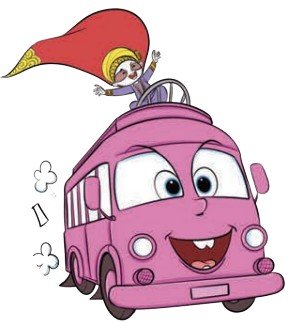
VACATION WITH VIDUSHKA!
West India
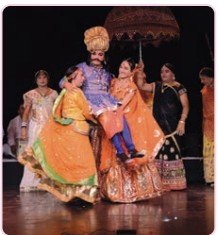
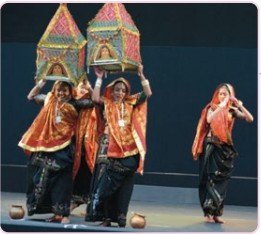
- Bhavai (Gujarat): Dramatic shows done in open-air spaces, reflects social issues.
- Tamasha (Maharashtra): Combines singing, dancing and humor. Known for Lavani.
- Garba Theatre (Gujarat): Dancebased performances during Navratri, sometimes has dramatised stories.
South India
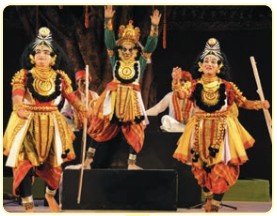
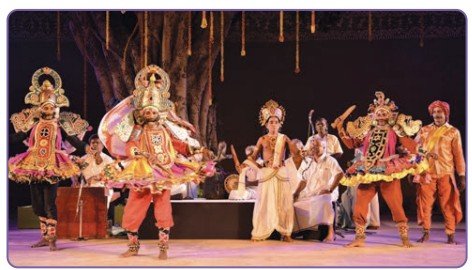
- Yakshagana (Karnataka): A mix of classical music, dialogue and dance, based on epics.
- Therukoothu (Tamil Nadu): Literally ‘street play’, it uses storytelling and dance.
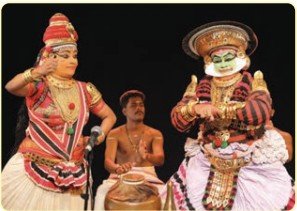
- Koodiyattam (Kerala): Ancient Sanskrit theatre form, performed traditionally in temples, with stylised acting.
Central India
- Nacha (Chhattisgarh): Focuses on dance and comic storytelling.
North India
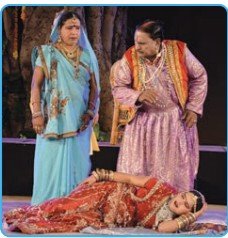
- Nautanki (Uttar Pradesh): A mix of storytelling, music and dance, performed on temporary stages.
- Swang (Haryana and Western UttarPradesh): On the basis of mimicry, dialogue, humour and singing it is performed.
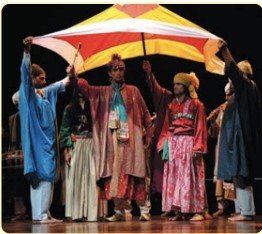
- Bhand Pather (Kashmir): Plays performed by the Bhand community, using dance, drama and mime.
East India
- Jatra (West Bengal, Odisha and Assam): Traveling theatre with dramatic plots and live music.
- Ankia Naat (Assam): Devotional one-act plays featuring dance and music.
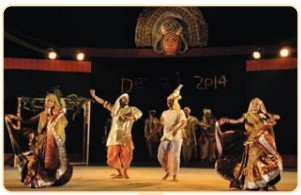
- Chhau Odisha, Jharkhand and West Bengal): Semi-classical with martial arts and stories.
- Maach (Madhya Pradesh): Musical theatre performed in festivals, with historical and religious themes.
ACTIVITY 9.1
Map the Drama
Vidushaka is on an all-India tour. Let us travel along and learn all theatre forms in India.
Match the name of the theatre form with its state and write it on the map. Hint: follow the colour code. Add more names of theatre forms that you know, from your state.
What do you do when you watch a performance? What are the thoughts you have in your mind? Are they mostly about the story and characters or do you also think about how they must have practised and prepared for it?
As students of theatre, you not only
perform, but also become better audience
for other performances.
Here are some
pointers on how to
review and share
feedback—
Watch carefully: Be
fully present during
the show. Try not
to be distracted.
Observe all details
on-stage. From small
props to costumes,
music and acting.
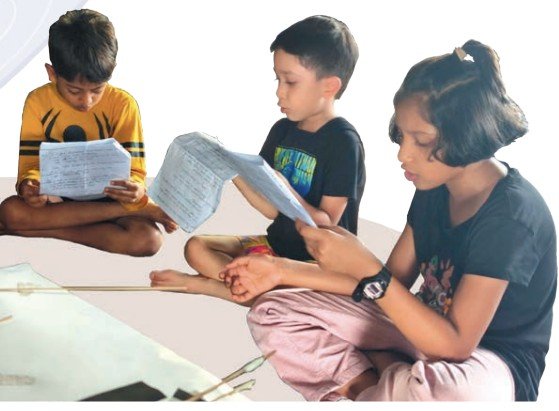
Understand the story and plot:
If you do not understand the story, the other aspects will not carry any meaning. You will also need to write a short summary.
Notice the audience reactions:
Are the others who are watching with you, reacting to the play? Laughing when there is humour, clapping when there was a good performance or completely bored during the show.
Make notes: Write what you noticed in a few words. You can elaborate on that after the show. If you do not write it down immediately, you may forget or miss it later. So, always remember to carry a note pad and a pencil.

Your opinion: Every performance has positive and negative points. Share honestly, what you feel about the performance. Each of you might have different opinions and it is fine. But be careful about how you present them. Positive points can be shared with appreciation and negative points have to be shared in a way that does not hurt the performer, but motivates them to do better next time. This interesting game will help you refine your reviewing skills.
ACTIVITY 9.2
Critics’ Corners
Form small groups of three to five members. (If the class has 30 students, you will have about 6 groups). Each group prepares a three minute presentation based on a simple situation of their choice. For example, group 1 presents a funny incident with a shopkeeper, group 2 could have a situation of a water problem in the neighbourhood, and so on.
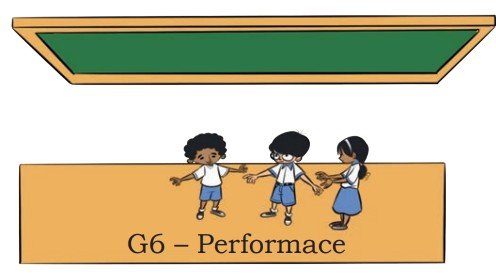
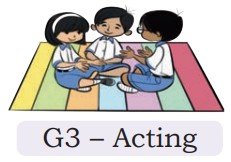
Each group takes turns to perform in front of the others. When one group performs, the other five groups sit in groups in five different places marked with specific names.
Each group focuses only on the assigned area and makes notes on it. When the performing team completes, they sit in G–1 and the other groups shift to the next group. Each group also shares their reviews with the performing team.
The outcome of this activity:
- Each group gets to focus on different areas and work on the review.
- Each group understands how their performance impacted the audience.
- Sharing provides an understanding of how to present appreciation and positively present the critical aspects.
Advanced
Do the same exercise for the live performance you watched. Though you don’t have the performance in front of you, you can make the same categories, and write your thoughts and opinions based on the notes you made during the show.
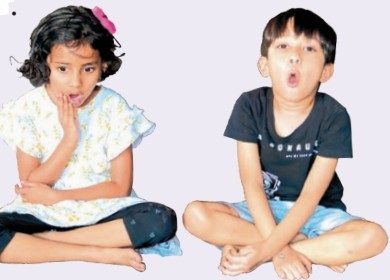
Do You Know?
The circle time activity you have been doing for all activities, is a form of review exercise. You all have been working on it all along and now you can make use of it.
Compare and Learn
Comparison is usually done between two similar things. We can compare Shimla apples with Kashmiri apples. But we cannot compare apples with oranges!
As you all have experienced performing a play by yourself and also watched a performance by another team, don’t you think these two shows can be compared? Let us first see, how similar or different both were.
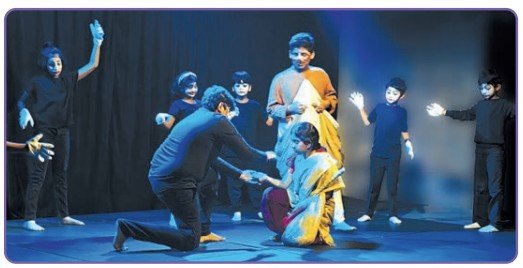
You can then write a note about what you felt and what you learnt—
| Similarities | Differences |
|---|---|
| (For example) Lot of humour | Story (based on Puranas; present day) |
| (For example) Dance | Number of actors (They – 5; We – 12) |
Assessment
| CHAPTER 9 – VIEW AND REVIEW | ||||
|---|---|---|---|---|
CompetenciesC–4.1: Recognises elements of Drama and movement in nature and describes their artistic qualities.C–4.2: Demonstrates curiosity towards local art forms and culture. |
||||
| CG | C | Learning Outcomes | Teacher | Self |
| 1 | C–1.1 | Creates artwork that depicts emotions and moods through facial expressions and body postures. | ||
| 2 | C–2.1 | Creates own images and visual stories through shadow play. | ||
| 2 | C–3.2 | Creates a storyboard by sequentially developing each scene. | ||
| Overall participation in class. | ||||
Teacher’s observations:
Other comments:
| Activity for assessment (example) | Criteria for assessment | |
|---|---|---|
| Individual | Child is asked to narrate three situations. Connect it to form a sensible story. Narrate it with actions and expressions. | Confidence, creativity Spontaneity Communication (verbal and action) |
| Group | A situation is given where a play is to be performed in four weeks. The group chalks out a clear step-by-step plan from storyboard to final show. | Organising Clarity of thought Collaboration> |
Ayyo, children!
We have already reached the end of another year! When you began three years back, you were shy and curious, thinking theatre was just funny costumes and loud voices. But now, you can express, move, speak and listen like true performers. You’ve made mistakes, but had fun, that’s what matters. Whether you become chefs, doctors or even a Vidushaka like me (very prestigious job, mind you!), remember—the world is your stage, your heart is your script.
Take a bow, little stars.
The curtain falls... but your show begins!
Let us continue in our theatrical journey everyday.
Shubham Bhuyat.