
Chapter 14
IDEAS AND INSPIRATION
शिशुर्वेत्ति पशुर्वेत्ति वेत्ति गान रसं फणि:
Shishurvetti pashurvetti, vetti gaana rasam phanihi
A child, an animal, a snake,
all can respond to and appreciate music
Have you noticed what people do when they listen to music? Sometimes we tap our feet, or we nod to the rhythm. Sometimes we may sway as per the melody, or move our fingers. These are all ways that we naturally respond to music.
Discuss:
- When do you like to listen to music?
- What is your favourite song or piece of music?
- How do you feel when you hear it?
- Find a place to stand comfortably in the class. With all the students spread out close your eyes.
- Your teacher will play a piece of music.
- Listen to it intently and let your body naturally respond to it. Do you want to move your arms? Or sway your head? Do you feel like moving your fingers, or twirling around? Remember, no one is watching you, so feel free to move around!
- Enjoy the experience of responding to music.
Once the music finishes playing, open your eyes. Do you feel any change in your body or emotions? Discuss.
Note to Teacher: For this activity, choose a piece of instrumental music of about 3 – 4 minutes in length.
Here is a story from the Panchatantra
The Monkey and the Crocodile
A clever monkey lived happily in a fruit tree by a river. One day, he saw a tired crocodile and gave him sweet fruits. They became friends. The crocodile took fruits home, and his wife, loving the taste, got jealous. “If the fruits are so yummy, the monkey’s heart must be even better!”, she said. The crocodile didn’t want to bring her the monkey’s heart, but finally agreed.
The next day, he invited the monkey for a ride across the river. In the middle, he said his wife wanted to eat the monkey’s heart. The smart monkey said, “Oh no! I left my heart in the tree. Let’s go back.”
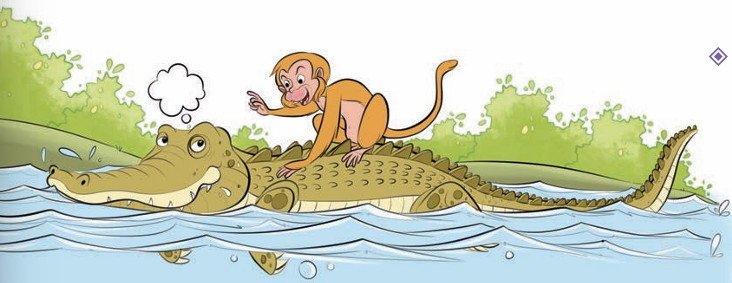
The crocodile believed him and returned. As soon as they reached the shore, the monkey jumped into the tree and said, “You tricked me! No one leaves their heart behind. I won’t trust you again!”. The crocodile swam away, and the monkey lived safely and happily.
- First, read the story and identify the various emotions — happy, sad, surprised, scared, etc.
- Now, for each part of the story, think about what kind of music you would add to the story?
- Once you have chosen all the pieces of music, present the story as a group in the class, while playing the appropriate piece of music at the particular point in the story.
One way to understand why music evokes different emotions is to listen to various kinds of music in succession, and see how they are similar and different.
Here are two songs, in two different languages. Listen and learn them.
Song: Aakash Ganga
Language: Gujarati
Aakash ganga surya chandra taara
sandhya ushara koi na na thi
Koni bhoomi koni nadhi koni sagar dhara
Bhed keval shabd aamara tamaara
Ej hasya ej rudan aasha e nirashaa
ej maanav urmi faan mitr baasha
meghdhanu andar na hoy kadi jango
sundarta kaaj vanya vivid rango
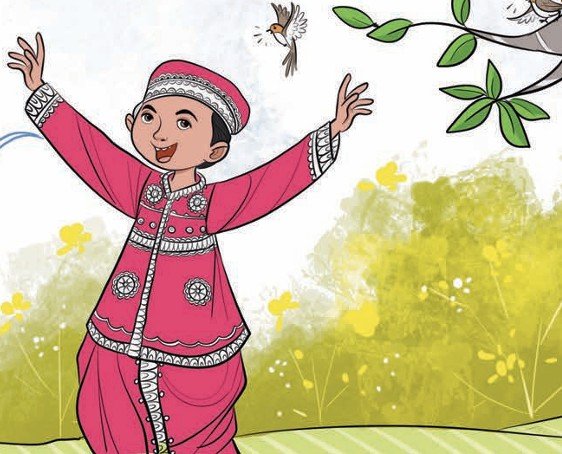
Meaning: The milky way, the sun, the moon and the stars, dusk and dawn, they belong to no one in particular. Whose earth, whose rivers, whose seas and oceans? They are only divided only by words, ours and yours.
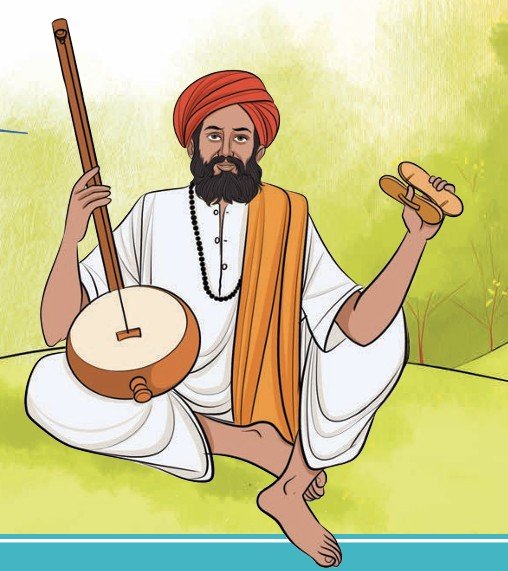
Song: Kodagana Koli Nungitta
Language: Kannada
Poet: Shishunala Sharifa
Kodagana koli nungittha
Nodavva tangi
Kodaganna koli nungitha
Aadu aaneya nungi
Gode sunnaava nungi
Aadalu banda paataradavala
maddali nungittha tangi
Gudda gaviyannu nungi
Gaviyu iruveya nungi
Govinda guruvina paada
nannane nungittha tangi
- Do you feel both the songs are similar or different?
- Which of the songs was in a faster tempo?
- Which of the songs had more percussion instruments?
- What kinds of instruments did each song have?
Now, that you have answered these questions, can you discuss what elements of the song give it a particular feeling?
Inspiring Musicians
Musicians inspire us in many different ways. Some of them had to overcome difficult circumstances to pursue their passion. Others worked extremely hard to achieve excellence.
DK Pattammal
She was an eminent Carnatic vocalist who was born in 1919. She also used music to spread the message of patriotism during India’s freedom struggle. She sang many patriotic songs in several films. She was invited to sing in All India Radio on August 15, 1947, to commemorate India’s independence.
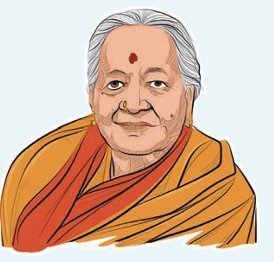
She was also the first woman to sing Ragam Thanam Pallavi, a complex form of music, on stage
Purna Das Baul
He was born in 1933 and is an eighth-generation Baul musician. The Bauls are a unique group from Bengal who believe music is the main form of spiritual expression. He has performed in over 168 countries, introducing global audiences to Baul philosophy and music.
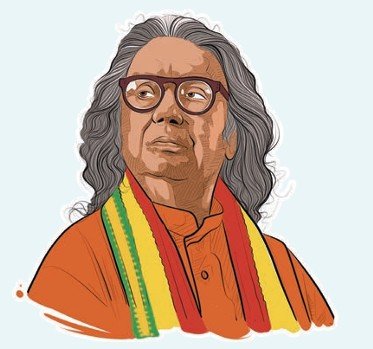
Purna Das Baul has extended his community work to include performances at children’s organisations and hospitals, using music to provide comfort and inspiration to vulnerable populations.
The stories of great musicians can guide and inspire us on our journey.
- Pick any musician of your choice.
- Find out more about their life, musical style and achievements.
- Prepare a short speech that outlines their life and contributions, and present it in class.
- Mention what about the musician inspires you.

An Inspiring Musician
Assessment
| CHAPTER 14 – IDEAS AND INSPIRATION | |||
|---|---|---|---|
| CG | Learning Outcomes | Teacher | Self |
| 4.2 | Learns about music legends of India. | ||
| 3.2 | Makes informed choices while choosing music from a set of options. | ||
| 4.2 | Uninhibitedly responds to music through movement. | ||

Teacher’s observations:
Other comments:
Summative Assessment
| Music | Examples of Summative Assessment | Criteria for Summative Assessment |
|---|---|---|
| Individual | Student is asked to choose and present
a song on a given theme. Student is asked to present a chart that showcases music in their surroundings during different times of the day. Student is asked to present a simple classical composition, along with arohana and avarohana while keeping tala. |
Ability to choose appropriately and sing
fluently in pitch and rhythm. Observation and listening skills, the ability to differentiate between sound and music, and creativity of chart presentation. Ability to sing the correct notes of the raga along with the correct tala. |
| Group | Students are asked to work in a group to choose appropriate pieces of music to embellish a given story. | Creative ideas, teamwork and enthusiasm. |