Chapter 16
DANCING WITH RHYTHM AND TEMPOS
What is Rhythm?
Rhythm is keeping a constant beat. You have now practised a steady rhythm of four beats.
Note to Teacher:The teacher can make smaller groups for this activity and ask each group to do this activity separately.
ACTIVITY 16.1
Dance with Rhythm
The teacher will give you a four-beat rhythm that you have practised earlier, and you will dance to the rhythm with the steps you know. Once the teacher stops, you need to keep moving in the same beat, keeping your rhythm with either clicks, claps or stamps. This can be repeated a few times.
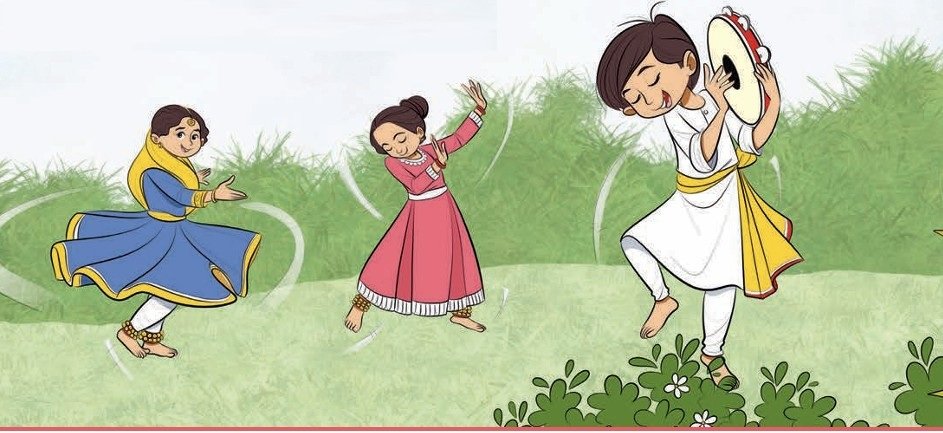
What is Tempo? Tempo is the change in speed of rhythm. The change in rhythm to faster or slower is called the change of tempo.
ACTIVITY 16.2
Dance with Tempo
Level 1: Try your everyday activities, such as walking and walking quickly, while keeping a steady beat. Keep the beat by clapping. Walk around the classroom to 8 (4+4) beats at a steady pace. Now, walk at double speed to the same 8 beats. Do you notice the difference? When you walk, the tempo is slow, but when you walk faster at double speed to the same beat count, the tempo is faster.
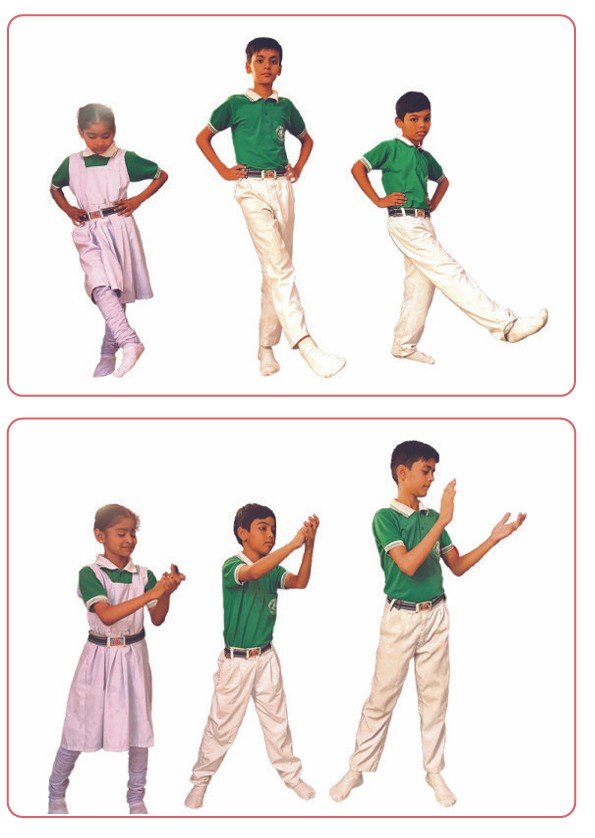
For example, compare the pace of your steps while walking versus walking quickly—both fit within 8 beats, but the movement speed changes with the tempo.
Let us add a bit of a challenge with rhythm.
Level 2: Start with the beats—repeatedly count eight beats while clapping or snapping your fingers to set the rhythm.
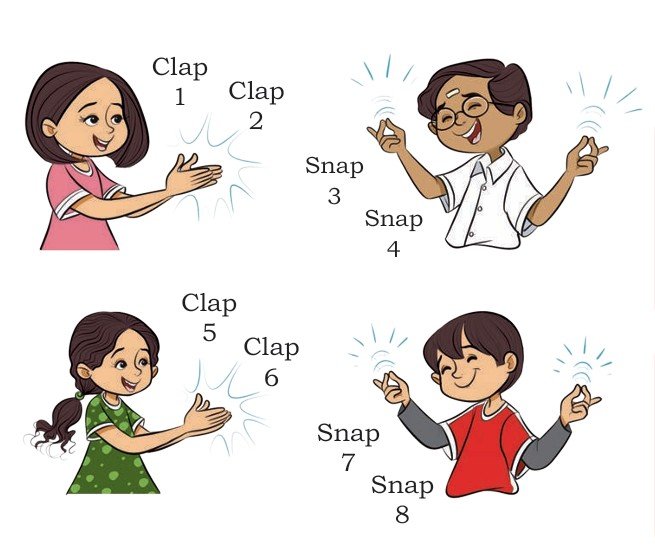
Tempo 1 – Move with the beat.
For these eight beats, use the steps learnt earlier and move around the classroom as directed by your teacher.
Example:
(1) step, (2) step, (3) heel, (4) stamp, (5) step, (6) step, (7) heel, (8) stamp
Right (R) and Left (L)
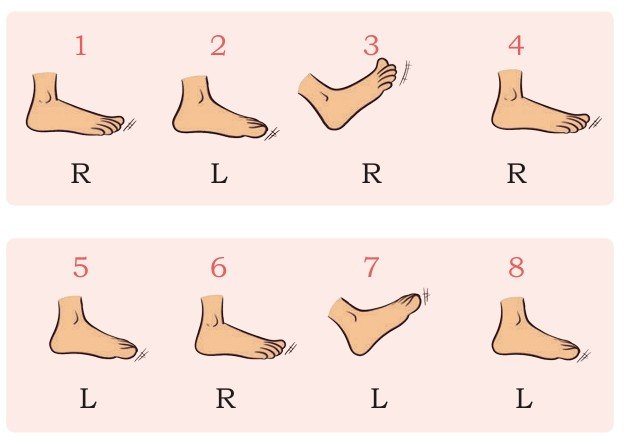
Tempo 2 – Double the beats: Instead of eight steps in eight beats, take 16 quick steps within the same eight beats. You’re now moving twice as fast—Can you feel the change in energy?
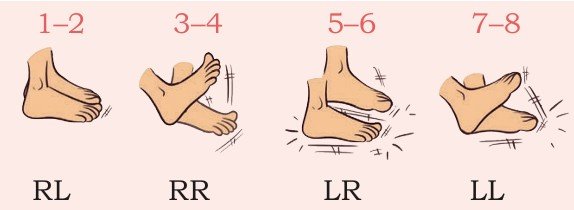
Notice how your movements feel different with each tempo. Which one do you enjoy more? Can you stay in sync to the beat? Now, let us try to put this to music. Choose a folk song from your region or music class that has four steady beats and add it to your dance with a slow tempo and a faster tempo as practised above.
ACTIVITY 16.3
Arms and Feet Together
Now, it’s time to combine two elements in one movement. Add in a foot movement with an arm movement.
For the arm movements, add a four-beat rhythm to create a sequence of movements and sing sargam you have learnt in music class to practice the arm and feet movements. Use Sa Re Ga Ma Pa Da Ni Sa as beats and move arms in two different tempos.
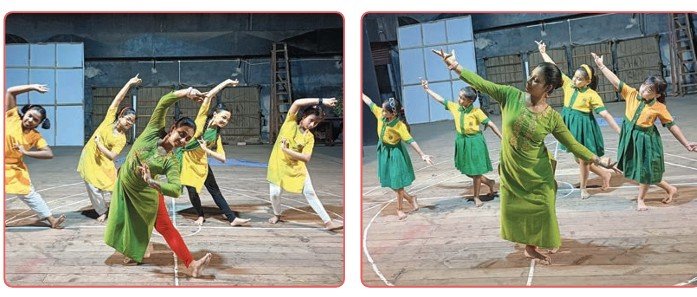
For example:
Tempo 1 – Let us choose circular arm movement, and move arms from downwards to upwards while singing Sa Re Ga Ma Pa Da Ni Sa, and move arms upwards to downwards while singing Sa Ni Da Pa Ma Ga Re Sa.
Arms starting position
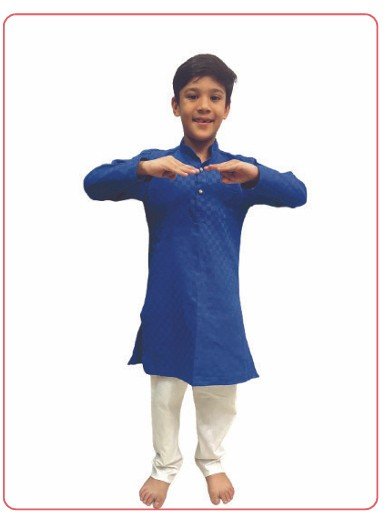
Arms taken up
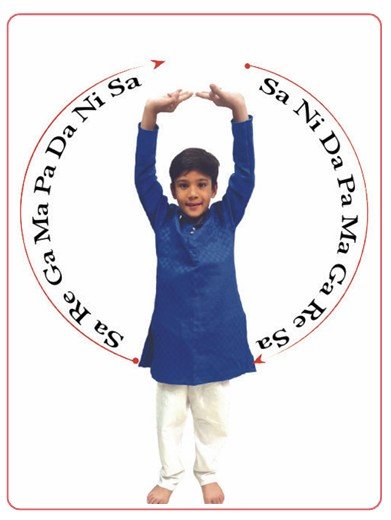
Arms brought down
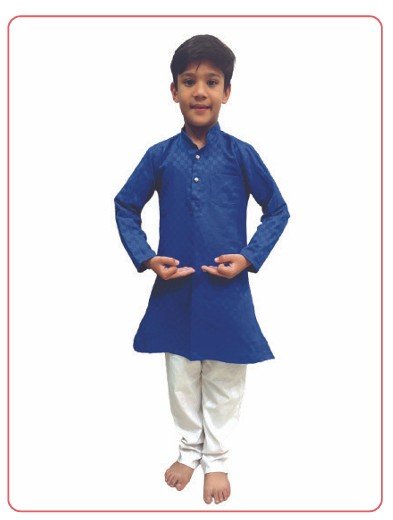
Tempo 2 – Now sing,
Sa Re Ga Ma – move arms downwards to upwards
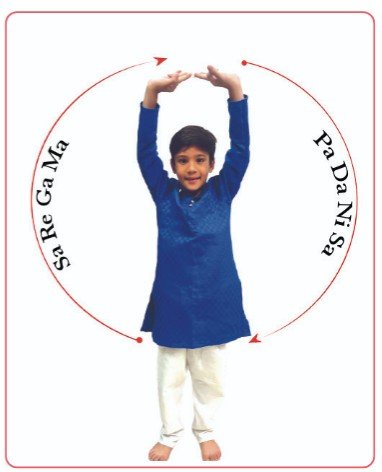 Pa Da Ni Sa – move arms upwards to downwards
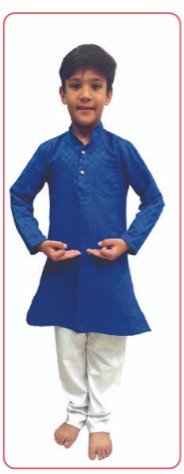 Sa Ni Da Pa – move arms downwards to upwards
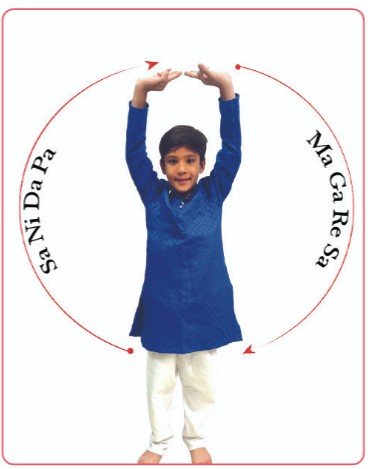 Ma Ga Re Sa – move arms upwards to downwards
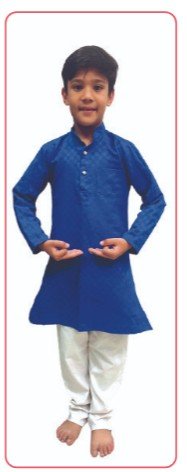
Try to sing sargam to every arm movements with varying tempos and have fun.
Jumps and Spins
Do you remember the different jumps and spins you have learnt in Grade 4? In this activity, combine learned jumps and spins with rhythm to have more fun with dance techniques.
Note to Teacher: For feet positions illustration, refer Grade 4.
ACTIVITY 16.4
Jumps to the Rhythm
Add four beats to the jump. Follow the below table for jumps. Try different combinations of jumps in four beats and have fun.
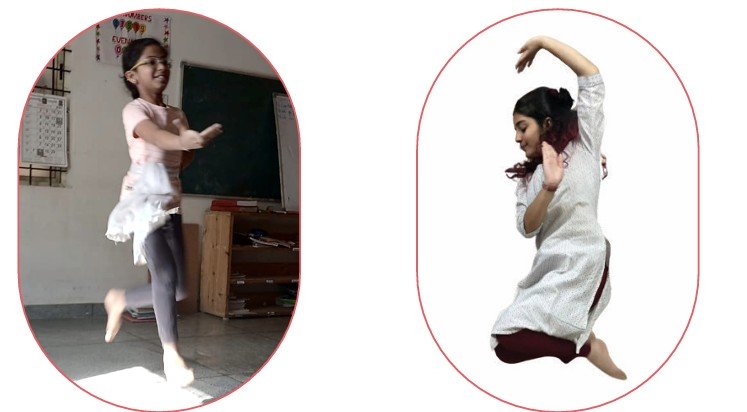
| Start from the right leg | Start from the left leg | ||||||
|---|---|---|---|---|---|---|---|
| 1. Right (jham) | 2. Right (jham) | 3. Left (jham) | 4. Right (jham) | 1. Left (jham) | 2. Left (jham) | 3. Right (jham) | 4. Left (jham) |
| Jump | Stamp | Cross | Stamp | Jump | Stamp | Cross | Stamp |
ACTIVITY 16.5
Spin to the Rhythm
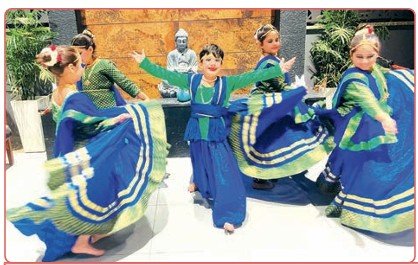
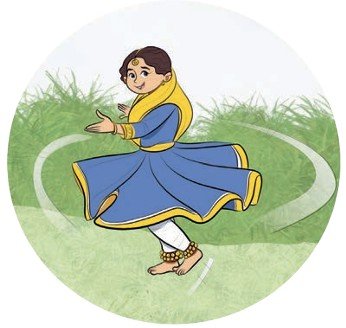
After jumps, now add spins to the four-beat rhythm.
| Start from the right leg | Start from the left leg | ||||||
|---|---|---|---|---|---|---|---|
| 1. Right (thei) | 2. Left (thei) | 3. Right (thei) | 4. Left (thei) | 1. Left (thei) | 2. Right (thei) | 3. Left (thei) | 4. Right (thei) |
| Turn with step | Step | Step | Step | Turn with step | Step | Step | Step |
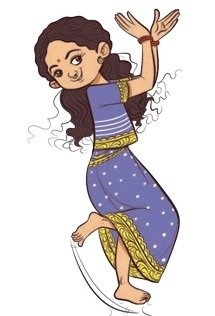
Try out different jumps and spins with four beats.
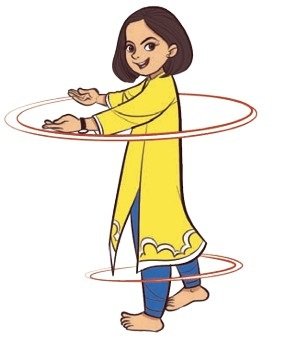
ACTIVITY 16.6
Feet Combination with Three Beats
Now, try out three-beat feet movements
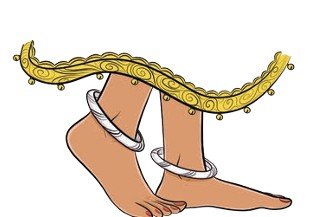
Combination 1
| Start from the right leg | Start from the left leg | ||||
|---|---|---|---|---|---|
| 1. Right (di) | 2. Left (di) | 3. Right (di) | 1. Left (di) | 2. Right (di) | 3. Left (di) |
| Cross | Stamp | Stamp | Cross | Stamp | Stamp |
Combination 2
| Start from the right leg | Start from the left leg | ||||
|---|---|---|---|---|---|
| 1. Right (di) | 2. Left (di) | 3. Right (di) | 1. Left (di) | 2. Right (di) | 3. Left (di) |
| Heel front | Stamp | Stamp | Heel front | Stamp | Stamp |
Formative Assessment
| CHAPTER 16 – DANCING WITH RHYTHM AND TEMPOS | ||||
|---|---|---|---|---|
| CG | C | Learning Outcomes | Teacher | Self |
| 1 | 1.2 | Coordinates rhythm with the arm and feet movements. | ||
| 1 | 1.2 | Understands and enthusiastically tries the various techniques taught. | ||
| 2 | 2.2 | Understands the concept and relation with rhythm and tempo. | ||
| 2 | 2.2 | Collaboratively puts together dance techniques learnt-jumps, spins and rhythmic patterns. | ||
| 2 | 2.2 | Imaginatively and consciously adds steps to the dance. | ||