Unit-1
Life Around Us
About the Unit
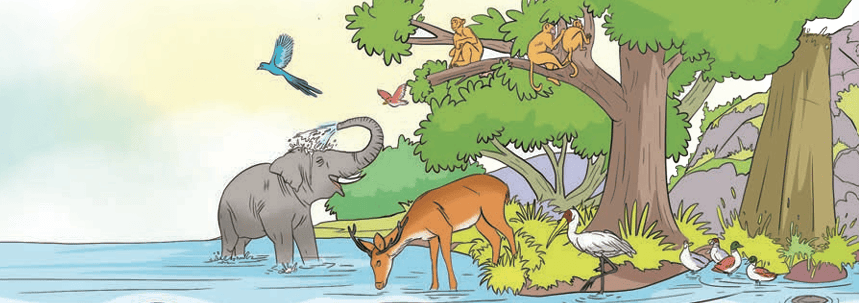
This unit at the preparatory stage highlights the crucial role of nature as a home to animals, birds and insects. Students in Grades 3 and 4 have explored soil, air and water. They also learned how life evolves in different landforms depending upon the availability of soil, air, water and sunlight.This unit in Grade 5 presents the importance of water in life and ecosystems. It also covers its various forms, movement, and role in shaping land and supporting habitats. The unit conveys water as a unique and limited essence of life — showing how it helps in sustaining the life on Earth.
It also gives examples from the lives of people, who stay close to nature. They enjoy clean treasures from nature and develop various materials available from nearby forest and surroundings. Their lifestyles and productions with locally available materials reflect how life can be happy, and creative in the lap of nature.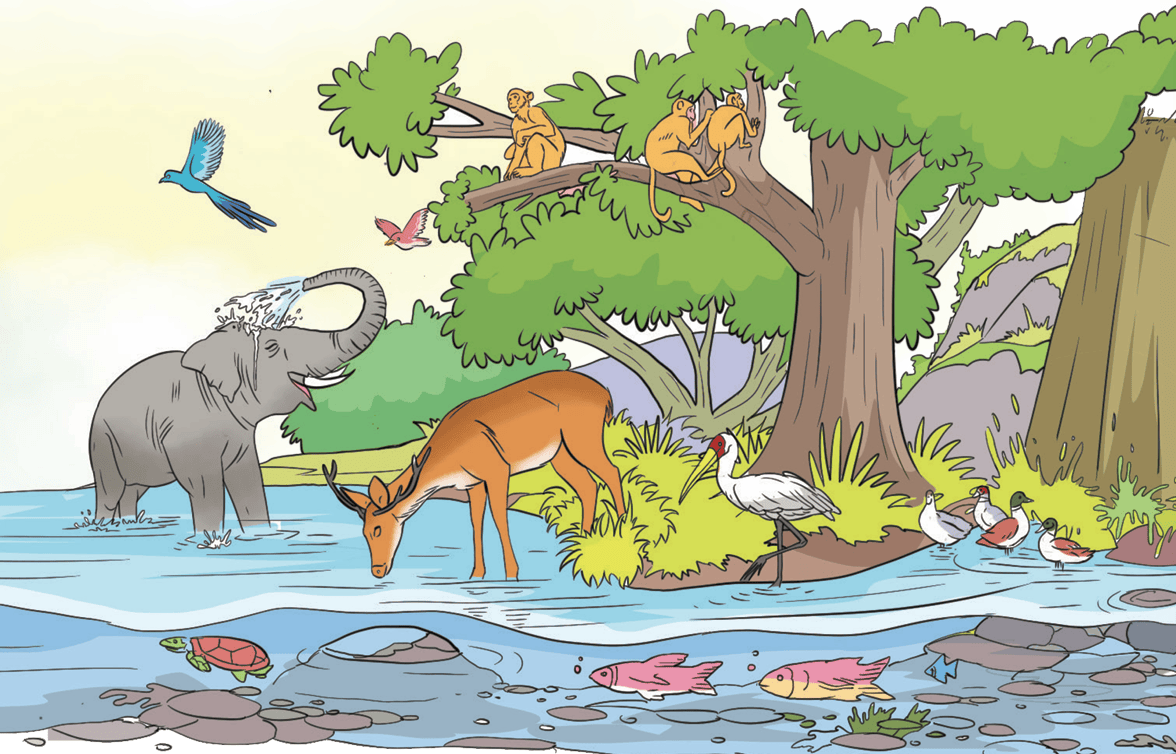
Note to the Teacher
This unit includes two chapters: Chapter 1 ‘Water — The Essence of Life’ and Chapter 2 ‘Journey of a River’. Following are the key concepts covered in these chapters.Chapter 1: Water — The Essence of Life
• ‘Water — The Essence of Life’ introduces students to its various forms and different sources (freshwater and saltwater) of water. It also highlights the importance of water in different activities in the society. This chapter introduces the continuous movement of water in different forms through the water cycle. It also explores how water shapes the land and supports life in freshwater habitats, and highlights the need to conserve water.Chapter 2: Journey of a River
• This chapter follows the story of the river Godavari from its origin to its delta. Through maps, stories and illustrations, it explores the tributaries of Godavari and aquatic life in the river. It familiarises students with the dams built on the river. Students learn how the river gets polluted. This chapter highlights the ways rivers support ecosystems, people and culture. After reading this chapter students will understand that water is a limited and shared resource which must be used wisely.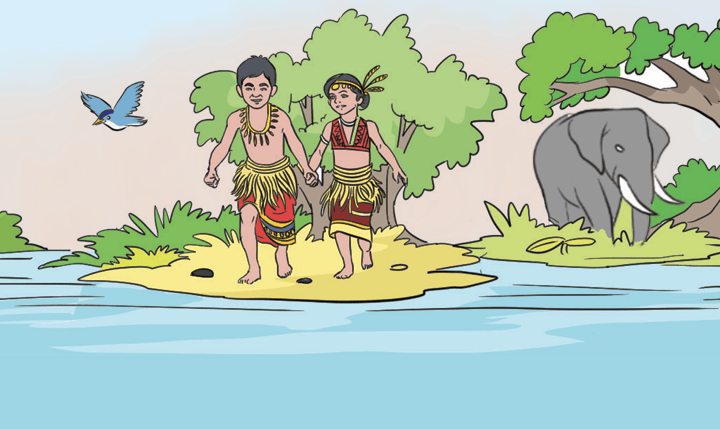
How to Facilitate
- Encourage students to think about water bodies near their homes or schools. Inspire them to explore where the water comes from and where it goes.
- The Activity 6 in Chapter 1 on mustard seed shows how rivers flow from higher to lower ground and follow the shape of the land. Use the map of India to explore which rivers flow into which seas and how landforms (like mountains) guide their direction.
- Talk about what happens to rainwater in their school or neighbourhood. Use this to start a conversation on how cities and villages plan for water.
- Help students list different ways in which water plays an important role in our life. Connect this to ideas of sharing and saving water. Let them think about how water is stored in their homes (tanks, pots, etc.) and how a dam works as a big water storing unit.
- Engage students in role-plays to critically think about both the scarcity and excess of water.
- Encourage students to discuss with their parents or grandparents about festivals, stories, or memories connected to rivers. This will help them see rivers not just as physical things, but as part of their community and culture.

Chapter-1
Water — The Essence of Life
 It is raining. Afreen rushed to the window where
Jyoti was already watching tiny raindrops slide
down the glass. “Where do you think all this water
comes from, and where does it go?” asked Afreen.
It is raining. Afreen rushed to the window where
Jyoti was already watching tiny raindrops slide
down the glass. “Where do you think all this water
comes from, and where does it go?” asked Afreen.
Come, let us follow the journey of water.
But first, let us see how much water there is on Earth.
Although most of the Earth’s surface is covered
with water, the majority of it is salty, leaving less 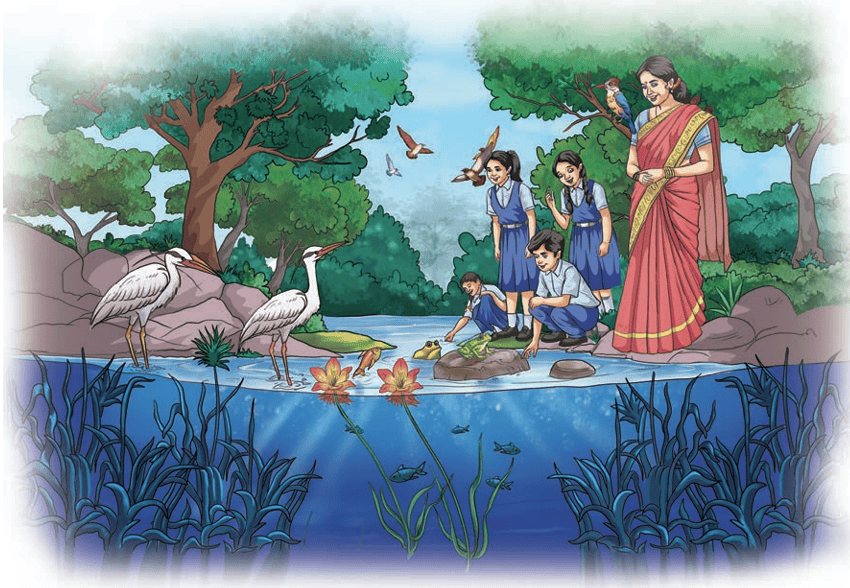 amount of freshwater. All living beings — people,
animals, birds, and plants — depend on freshwater
to survive. It is essential for drinking, growing crops,
and carrying out daily activities. Many plants and
animals also live in freshwater. Without water, life
would not be possible.
amount of freshwater. All living beings — people,
animals, birds, and plants — depend on freshwater
to survive. It is essential for drinking, growing crops,
and carrying out daily activities. Many plants and
animals also live in freshwater. Without water, life
would not be possible.
Now, imagine if all the water on earth were in this
glass, then the freshwater would only be as much
as in a teaspoon! 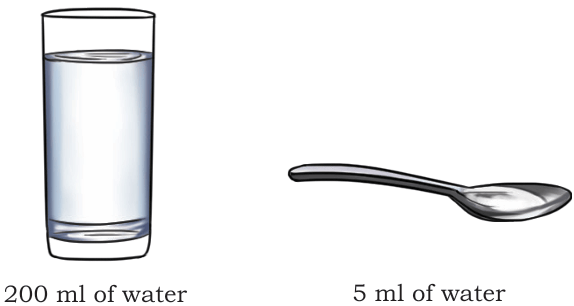
Discuss
- Do you think we can drink the water present in the oceans?
- What can ocean water be used for?
Do you know?
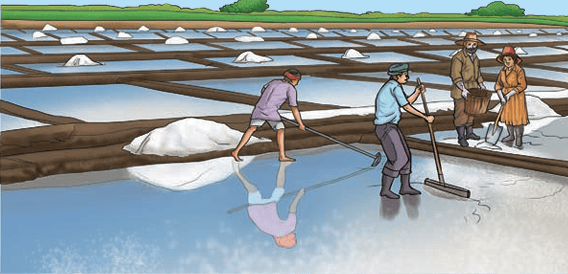
The salt pans of Gujarat are vast flatlands where seawater is dried to collect salt. It is one of the largest salt producing areas in India.
Activity 1
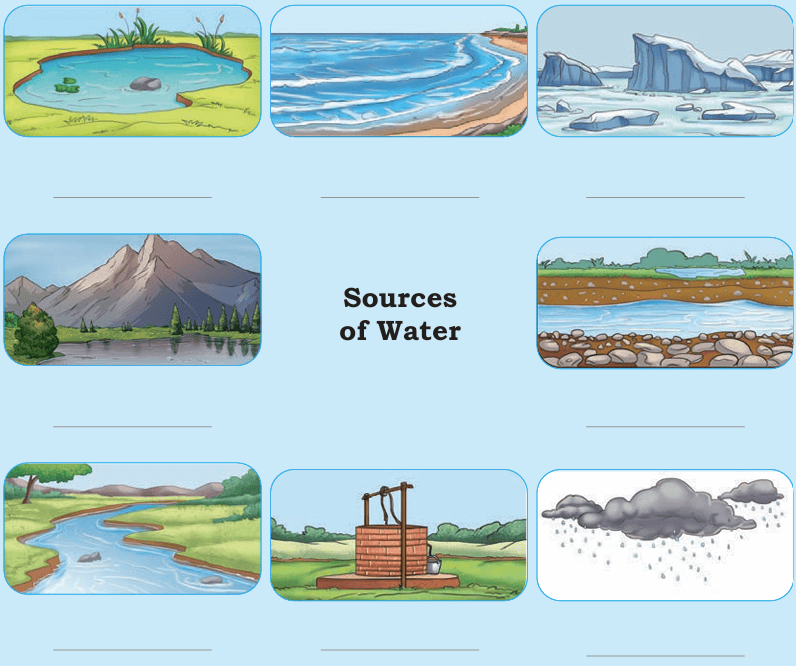
Where can we find freshwater? Identify the different freshwater sources from the images given below and write their names.
Jyoti was curious, “Is there water in the air too? And is snow a form of water?”.
Water has Different Forms
We already know the different forms of water — liquid (as in rain), solid (as in ice) and vapour (as in steam). Let us understand more about this through a simple activity!Activity 2
Take a steel glass. Put some ice cubes in it. Observe the small water droplets forming on the glass.
- Where do these water
droplets come from?
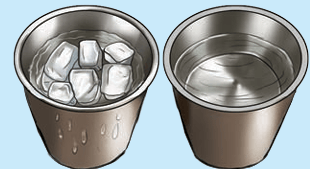
- What happens to the ice cubes after they are left in
the glass for some time?
- If we heat water, what will
happen to it?
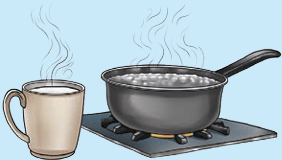
In the above activity, what forms of water do you see?
Observing Changes
| Activity | I Observe |
|---|---|
| Ice melting | |
| Water boiling | |
| Water in sunlight for three days |
Through these experiments, we found out that water can change into ice and steam, and it can also return to its liquid form.
Water Cycle
Let us understand how such changes take place in nature.Activity 3
- Take a transparent bag.
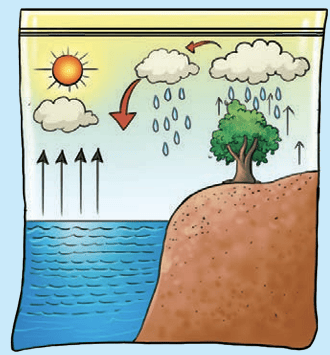
- Use a marker to draw the sun, clouds, trees and arrows on it as shown in the picture.
- Fill one-third of it with
coloured water.
Tip: You can use blue paint or food dye for this. - Seal the bag tightly to prevent any leaks.
- Place it in the sunlight.
- After a few hours, observe the changes inside the bag.
| I Observe | I Wonder | It is because of… |
|---|---|---|
| Water heats up | How does water heat up? | Sunlight |
| Water droplets formed inside the cover | ||
As you have seen in the above activity, the Sun’s heat causes the water to turn into water vapour. When the water vapour cools, it forms small droplets inside the bag. Eventually, these droplets fall back down.
Similarly in nature, heat causes water from different sources, like oceans and rivers, to become water vapour. Water vapour forms the clouds, which come down as rain, snow and hail. This water goes back into rivers, lakes and oceans.
This constant circular movement of water in nature is called the water cycle.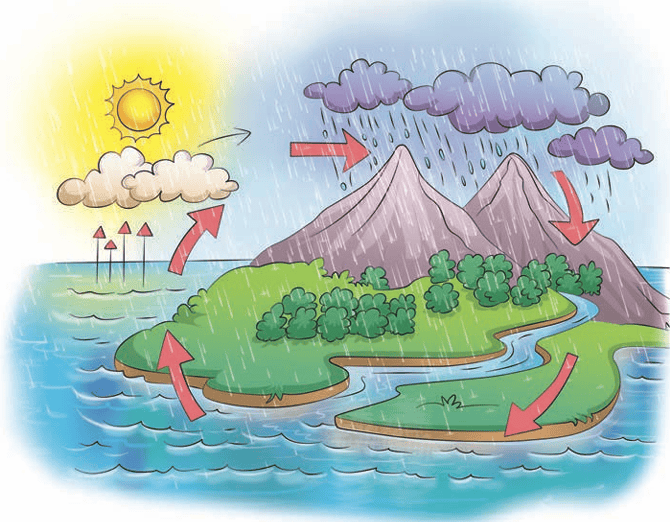
Groundwater
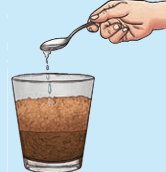
Let us find out what happens to rainwater when it comes down.Activity 4
- Take a transparent glass.
- Fill half of it with soil.
- Slowly pour water into the soil using a spoon.
- Observe what happens.
Activity 5
Tick the image that will help in groundwater recharge.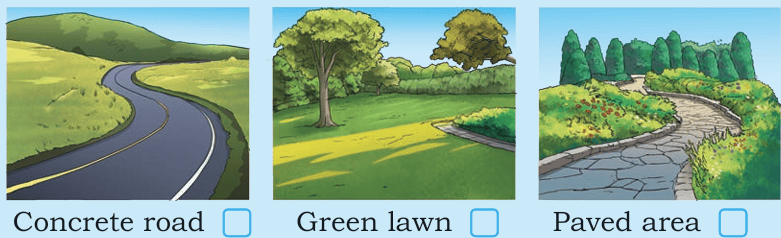
Do you know?
Open, uncovered areas allow water to seep into the ground. Soak pits, ponds, human-made lakes, and planting more trees help rainwater return underground.Surface Water
Rivers, ponds, lakes, etc., are the natural sources of freshwater in addition to groundwater.Do you ever wonder how river flows?
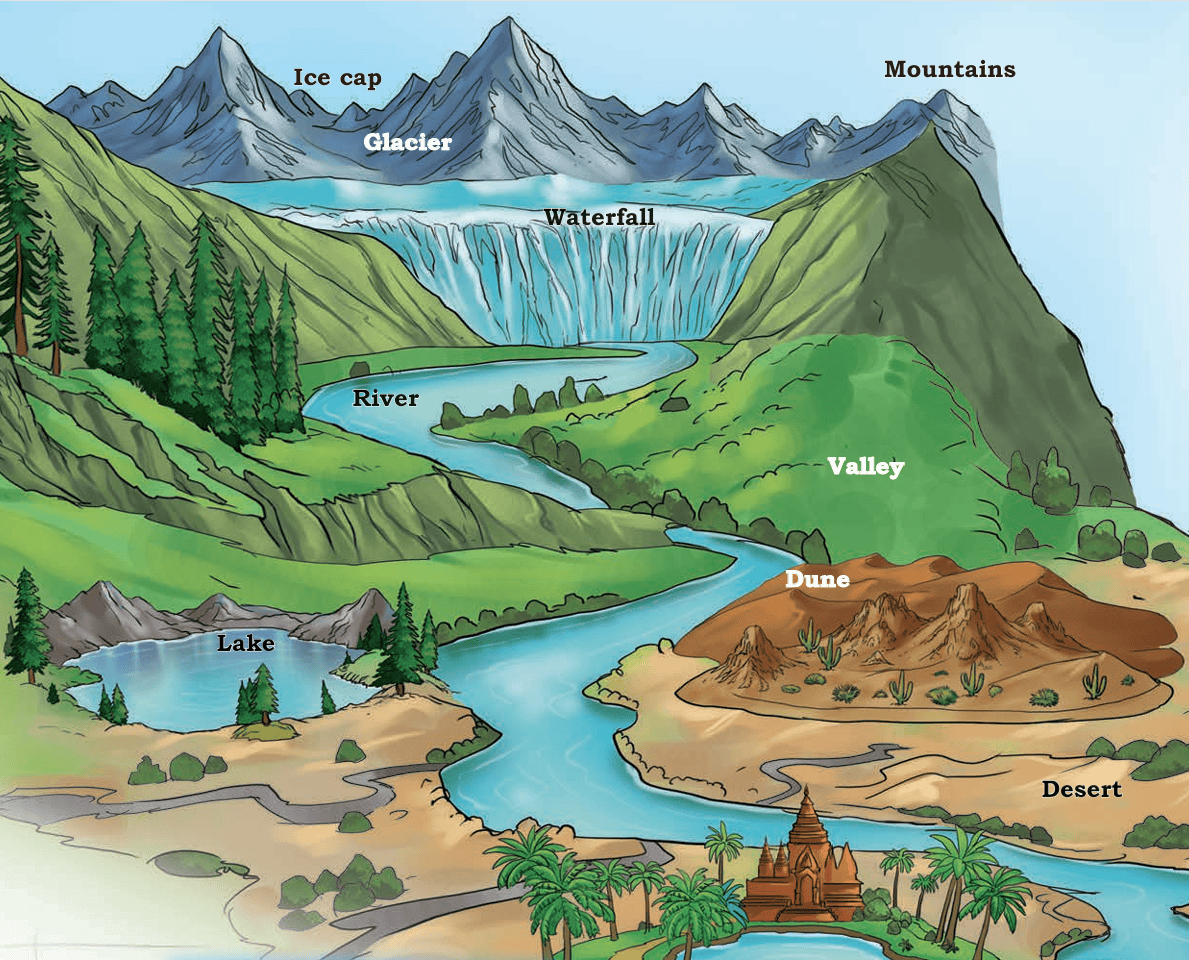
A river often begins its journey from up in the mountains and flows down across the land. Let us understand this through an activity.Activity 4
Material Required: An old newspaper and a cup of mustard seeds or any other small seeds.
Procedure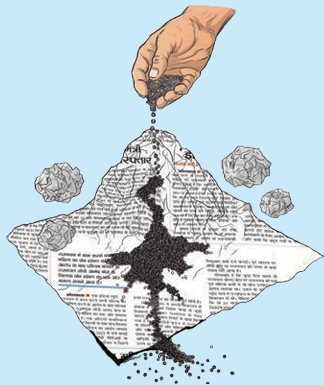
- Take a sheet from a newspaper and crumple it to create folds.
- Take another sheet and place it over the crumpled paper.
- Press it down so that the slopes are gentle.
- Now, slowly pour the mustard seeds from the cup on to the highest point of the slope.
- Observe the movement of the seeds.
- What did you observe about the mustard seeds?
- Are they moving in a straight line, or do they spread out in different directions?
- Are they collecting in some areas? Do they gather like water gathers in lakes, rivers and so on?
Water flows, stops or curves according to the shape of the land formations in its path. The flow of water can also change the shape of land.
Discuss
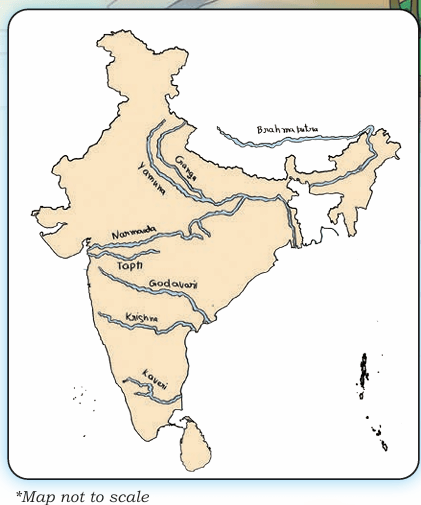
On the basis of Activity 6 with mustard seeds, discuss how some rivers flow towards the Arabian Sea while some flow towards the Bay of Bengal.Do you know?
The Luni river, originating in the Aravalli Range in Rajasthan,
is the only major Indian river that does not drain into a
sea. Instead, it ends up in the marshy lands of the Rann of
Kutch in Gujarat.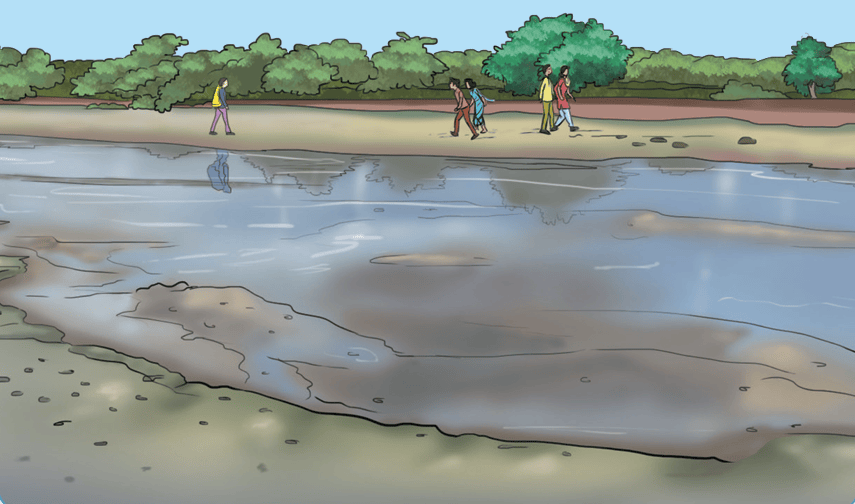
Our Lifeline — Rivers in India
This map of India shows some of the major rivers of our country.
Activity 7
Follow the Flow!
In the map, you can see the rivers flowing in different
directions. Some flow into the Bay of Bengal and some
into the Arabian Sea.
Observe and fill in the table.
| Name of the River | Moves towards the Bay of Bengal | Moves towards the Arabian Sea |
|---|---|---|
| Godavari | ||
| Narmada | ||
| Ganga | ||
Note to the Teacher
The teacher can guide the students to observe and trace the flow of the rivers towards the Bay of Bengal or the Arabian Sea on the map.Life in Water
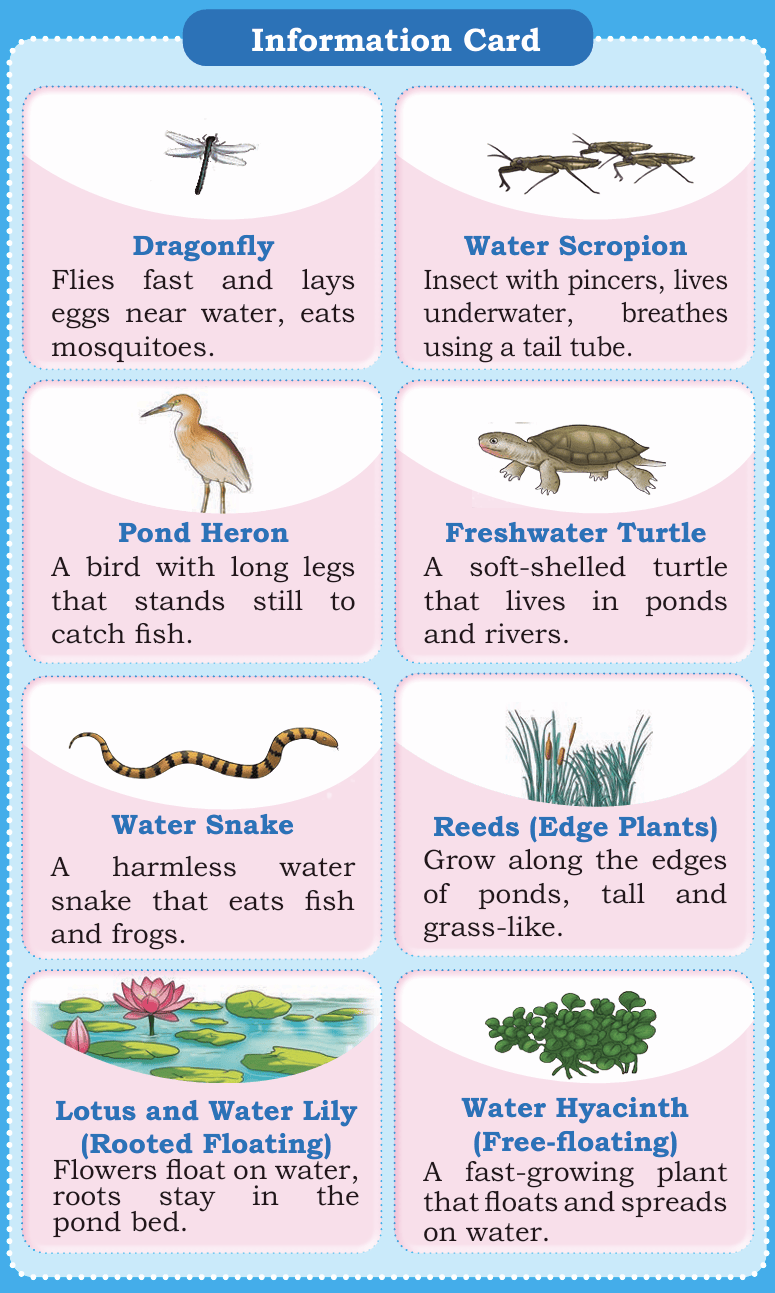
Afreen noticed that the rain had filled up the pond near the school ground. She called out to Jyoti, “Come and look!”. They could see tiny fish swimming and a small frog sitting on a lotus leaf.It is wonderful to see the variety of plants and animals living in water! How are they different from those living on land?
Complete the following table discussing with peers about the characteristics of animals on land and animals in water.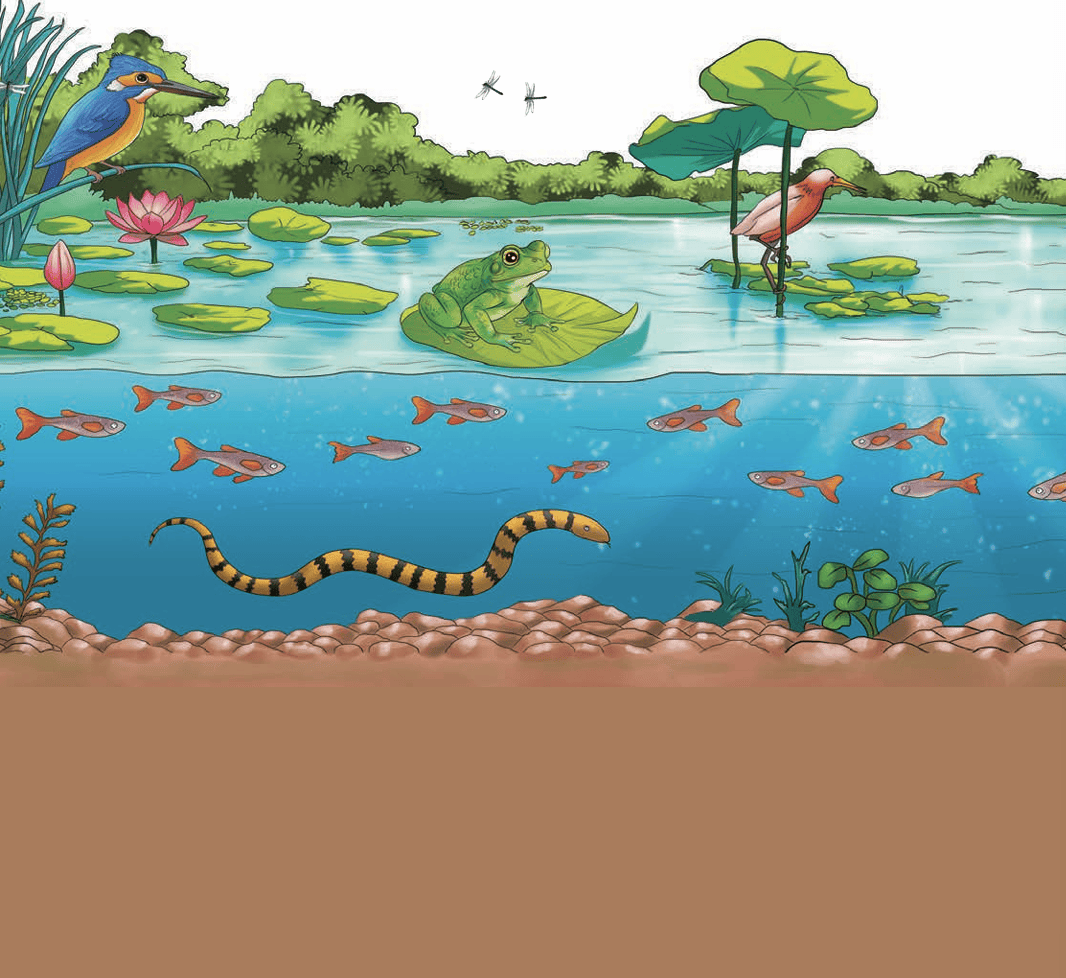
| Animals on Land | Animals in Water |
|---|---|
| Cannot breathe in water. | Have fins to swim. |
Activity 8
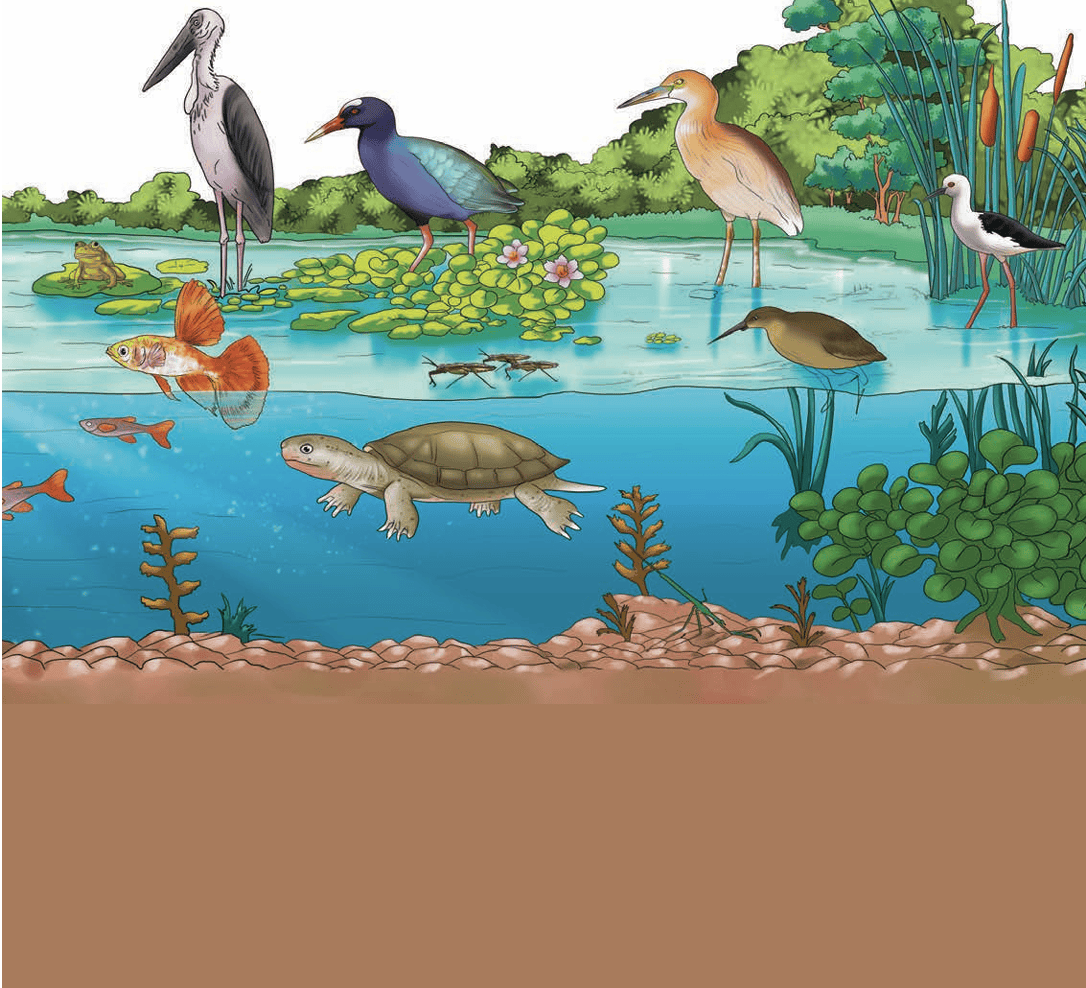
Visit a local water body like a pond, lake or an aquarium with your teacher or parents, and observe life in and around the water body.
- Based on your observations, complete the following table.
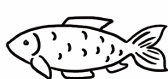
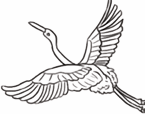
| Name of the Bird or Animal | Mouth or Beaks | Movement through Legs, Feet, Fins | Rough Diagram |
|---|---|---|---|
| Fish | Round mouth facing upwards | Fins |
|
| Pond heron | Long and pointed | Thin legs |
|
Note to the Teacher
Ensure that students are accompanied by adults, take all safety precautions and guide them not to touch or disturb any plants, or animals during the visit.2. Draw the plants that you saw during the visit and label them with their local name.
| Types | Names | Local Name |
|---|---|---|
| Plants floating (above water) | Lily | |
| Plants under water | ||
|
Plants whose roots are in the water bed, but are seen above the water |
Activity 9
- Take a piece of paper and put a drop of water on it. Observe.
- Colour the paper with a wax crayon. Now, put a drop of water on it. Do you observe any change?
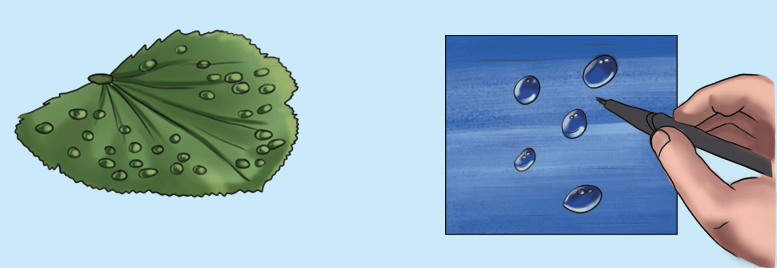 Write your observation.
The waxy coating on leaves make them waterproof and keeps too much water from getting inside the plant. This helps the plant stay healthy and not get damaged.
Activity 10
- Distribute slips of paper to students. Each student writes what they choose to be (for example, small fish, big fish, frog, bird, human, crocodile, otter, etc.)
- Ask the students to think about what they eat, and who eats them.
- Use a string to connect the students who depend on each other for food.
- Discuss what would happen if one animal disappears (for example, what if all the fish are gone?).
Types of Plants in Water
Through this activity, we discovered the rich variety of plants and animals that live in freshwater habitats. These living beings have special features — like floating leaves, fins, or long roots — that help them survive and grow in water. This reminds us how essential freshwater is for supporting life on Earth.In this chapter, we learned that water exists in different forms — ice, water, and vapour. We saw how water keeps moving through the water cycle; changing its form as it travels through the air, land, and sky. We also explored how aquatic plants and animals live in and around water, and depend on water for their survival.
Let Us reflect
- Match the following: (i) Ocean water (ii) Snow (iii) Steam (iv) Rainwater (a) Solid form of water (b) Vapour form of water (c) Not fit for drinking (d) Freshwater
- Why do you think most of the water on Earth cannot be used for drinking or farming?
- Large number of living beings live near water bodies. Why?
- What would happen if it did not rain in your region for two years?
- What do you think happens to rainwater in a forest compared to a city?
- Can you design a house or school that conserves water wisely? What would it include?
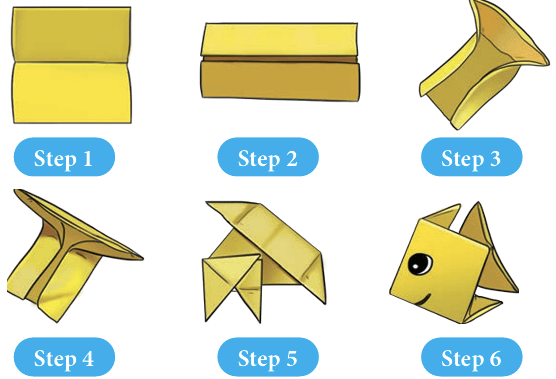
- Let us make a fish by folding a piece of paper.