
Chapter-2
Journey of a River
Where I Begin, Where I Flow
I have no feet, but I travel far,
Through fields and forests, under moon and star.
I quench your thirst and help plants grow,
From mountain to sea, I quietly flow.
Yes! I am a river.
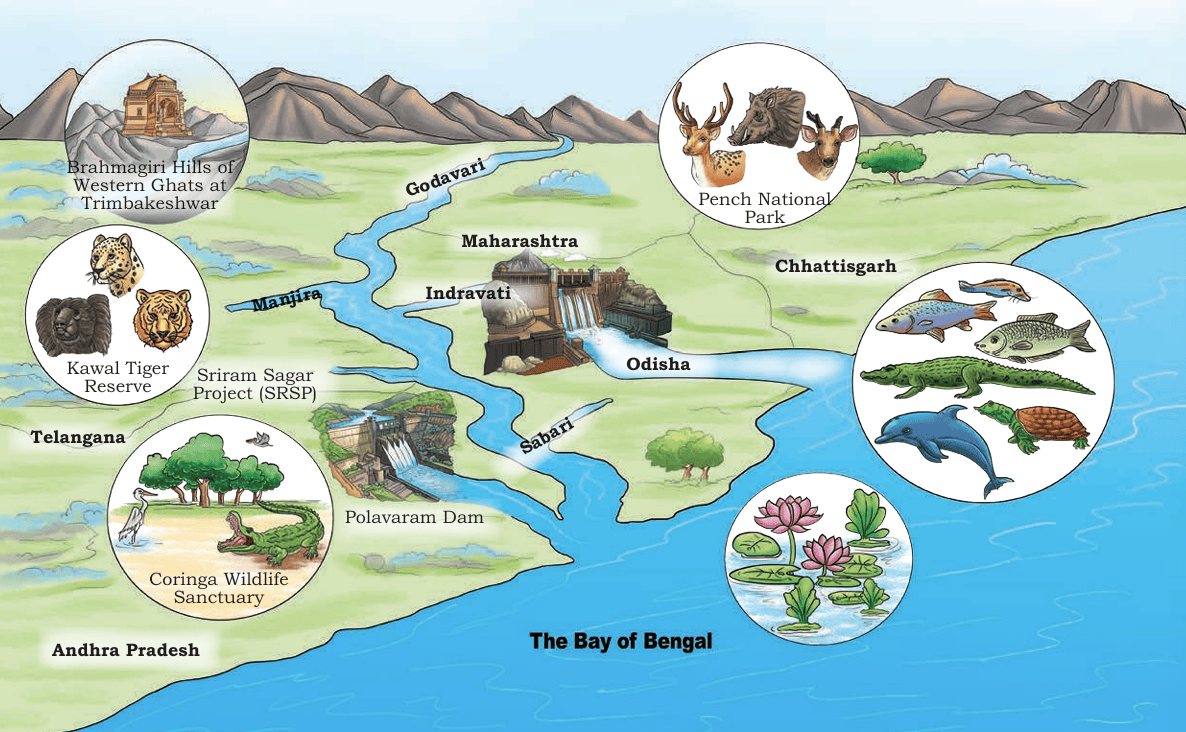
I am Godavari. My journey begins high up in the Western Ghats at Trimbakeshwar in Maharashtra.
Although I start out as a stream, as I move across the land, rainwater and other streams join me, making me wider and stronger. The small streams joining are my tributaries.
I travel 1,465 kilometres before joining the Bay of Bengal. I am the second longest river in India after river Ganga.
Look at the image given below and answer the following.
- Name the states that Godavari flows through.
- Name a dam and a wildlife sanctuary along the length of Godavari.
- Which other small rivers join Godavari in its journey?
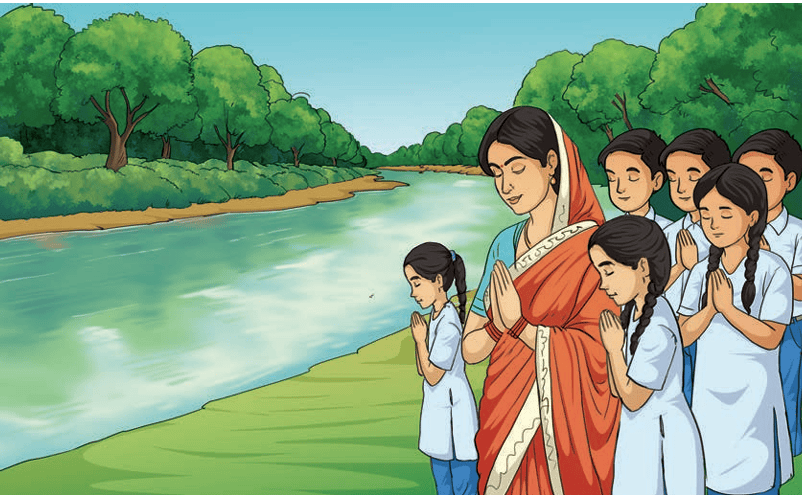
There are fascinating stories about me, many from the Ramayana and the Puranas. I am called Dakshina Ganga because I flow through southern India and am regarded as sacred. In places like Nashik, near where I begin, people come from all around to take a dip in my holy waters, especially during events like the Godavari Pushkaram.
The Life I Hold
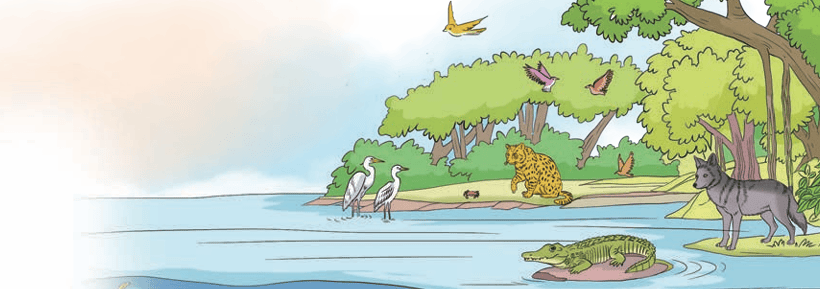
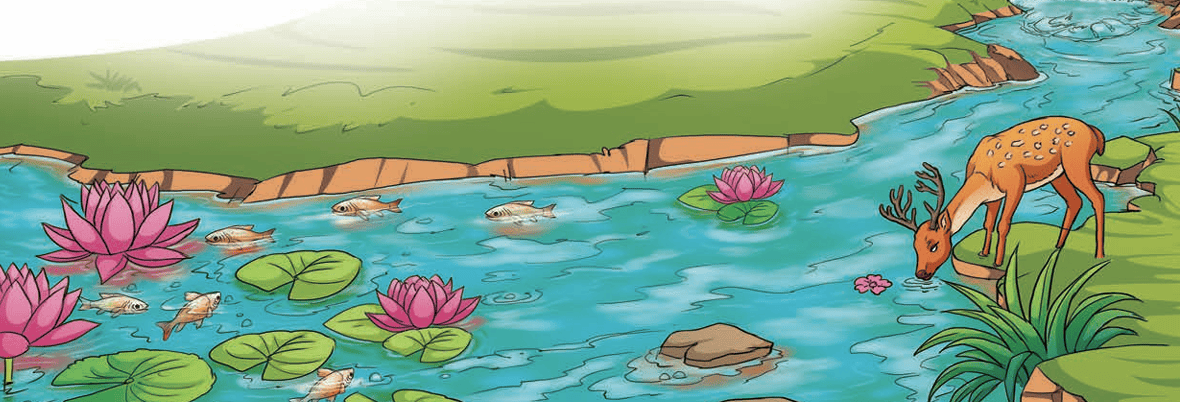
I flow all year round which makes me a perennial river. Some rivers flow only when they receive water in the rainy season, which makes them seasonal rivers.I pass through rich forests full of wildlife, including the tiger, barking deer, the Indian golden gecko and the famed red sandalwood trees. You have learnt in the last chapter that freshwater sources like me are home to many plants and animals.
When I reach the sea, I spread out into many small streams that form a delta. My freshwater meets the salty sea there. This place is called the Coringa Mangrove Forests, where my journey ends.The Many Ways I Support Lives
Since ancient times, people have always built their homes near rivers or water bodies. Can you guess why?Do you know the many ways I support people every single day? I provide water to people in the many towns and villages around me.
The water for all houses, schools and fields comes from me. I not only help people drink, cook and wash, but also help them to grow food, and make things in their factories. I also support many livelihoods.
My water is carried in pipes and canals, and shared by many.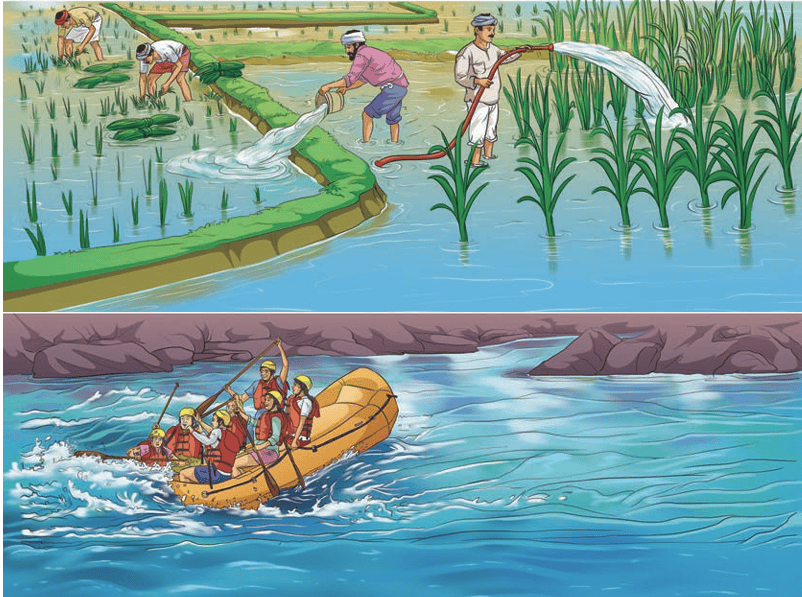
- List three ways in which people are dependent
on the river Godavari.
- In which occupations are people engaged near
the river Godavari?
- Which crops do you see growing near the
Godavari?
- Which crops grow in your region? Where does
the water for irrigation come from?
Activity 1
Make a poster in your classroom showing all the ways rivers help people. Include drawings of homes, farms, boats, fishermen and more.
Dams — Storing My Water, Changing My Flow
Did you know that there are more than 900 dams that store my water so people can use it even during dry seasons, to drink, grow crops and make electricity.But have you ever wondered what happens to me when a dam is built? What happens to the forests, animals and the people living near me?
A dam is like a giant wall that blocks my flow and stores water in a large water body called a reservoir. While this stored water helps many people, it also floods land that was once home to animals and people. Many have to leave their homes and shift elsewhere when dams are built.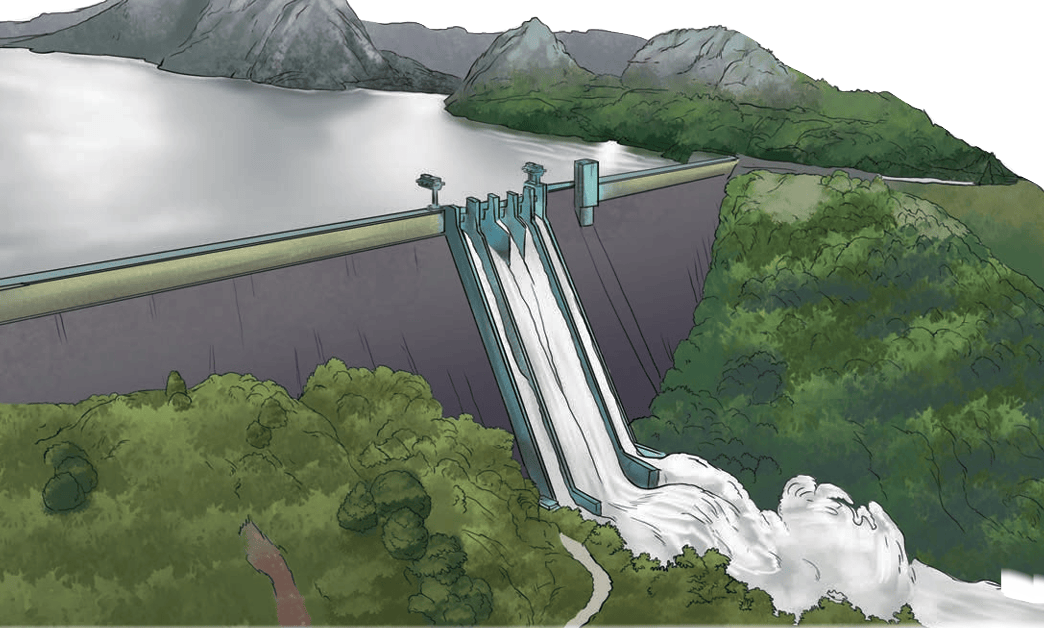
When you open a tap, it is hard to imagine the journey that water has taken and the many sacrifices that were made so you could have it. That is why, it is so important to use water wisely and never waste it!
Write
What problems can arise after a dam is built. How can they be solved?