Unit-2
Health and Well-being
About the Unit
This unit at the preparatory stage familiarises students with different types of food, importance of balanced food, healthcare, and maintaining good health with regular exercise and rest. Students also learn how traditional agricultural, and cultural practices supported health and well-being in sync with changes in seasons.This unit in Grade 5 helps students explore how everyday choices support personal and collective well-being. Students learn how to take care of food and explore various traditional Indian methods of food preservation. They learn about the role of good microbes and cultural practices that help keep the food safe.
This unit also encourages students to take care of their home and surroundings for better health. They learn how to make their school a greener, cleaner and more caring place through actions like waste management, water conservation, and practising kindness.
Note to the Teacher
This unit consists of two chapters. Chapter 3 ‘ The Mystery of Food’ and Chapter 4 ‘Our School — A Happy Place’.Chapter 3: The Mystery of Food
• ‘The Mystery of Food’ follows detective Disha as she explores how food spoils due to microbes and why certain foods last longer. It covers the science behind food preservation, various preservation methods and their cultural significance. It also touches on the role of good microbes, the importance of proper food storage, and consumption in promoting health, and hygiene.Chapter 4: Our School — A Happy Place
• ‘Our School — A Happy Place’ introduces the idea of green school — a space that is clean, safe and caring for students, teachers, and the environment. Students are encouraged to reflect on improving their school through waste management, water conservation and tree plantation, while learning the importance of kindness, respect and positive behaviour in creating a pleasant school environment
How to Facilitate
- Encourage active observation and experimentation. Help students record their findings in a ‘Food Detective’ or ‘School Explorer’ notebook.
- Guide students in sharing personal stories or small-group discussions based on their family’s food habits, or preservation techniques.
- Encourage students to explore and share any local or cultural traditions related to food preservation.
- Use real objects and school areas (like the kitchen, garden or corridors) as learning spaces.
- Arrange for students to interact with elders, kitchen staff, recyclers or local vendors to learn about food preservation, waste management, and community practices.
- Motivate students to think critically about their food habits, the role of microbes in health, and how these concepts relate to environmental sustainability.

Chapter-3
The Mystery of Food
Food Spoilage
The Forgotten Tiffin Box!
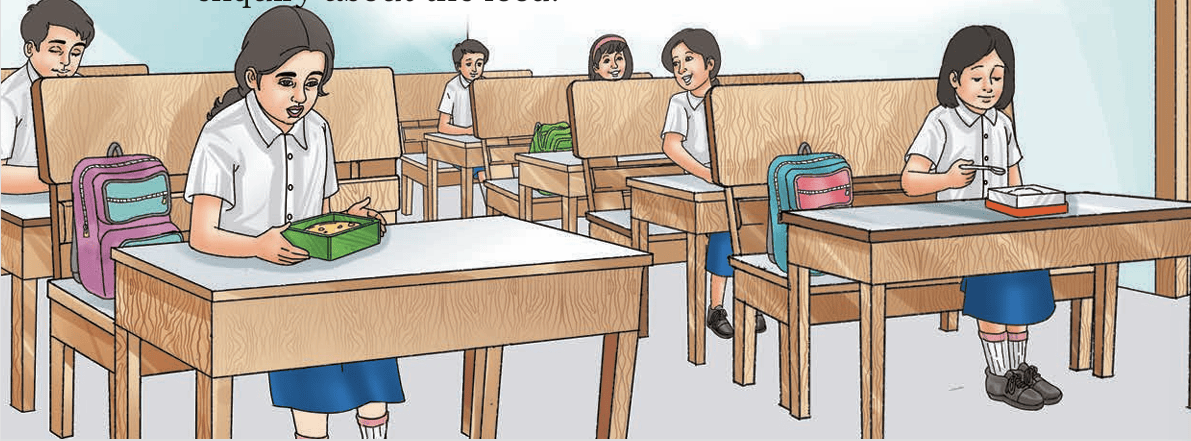
It was a sunny Monday morning. Disha was a curious girl, always eager to explore things around her. She found the lunch box she had forgotten in school last Friday. There was one of her favourite foods uttapam left in it three days ago, she remembered. When she opened the box, a foul smell came out of it. Her yummy uttapam had some coloured patches. What happened to my uttapam, she wondered! This was a mystery for Disha.Disha was eager to find out what had caused it — detective Disha was now ready to solve the mysteries of the world around her. Food is an important part of our world. Disha started her enquiry about the food.
Mystery #1: What made my uttapam spoil?
As soon as she reached home, Disha ran to her Anna (elder brother in Tamil) Aditya, who was in Grade 8.“Anna, what are these coloured patches on the food? It does not smell good!”, Disha asked.
He looked and smiled, “That’s mould, Disha. These tiny living things are called microbes, which grew on your food and changed it.”
Disha enquired, “Microbes? Are they like little lice?”.
“Even smaller!”, said Anna. “So tiny, you need an
instrument called a microscope to see them; they are
everywhere, all around us. They grow on different
things and make changes to them. Some microbes
help us in making curd and digesting our food. 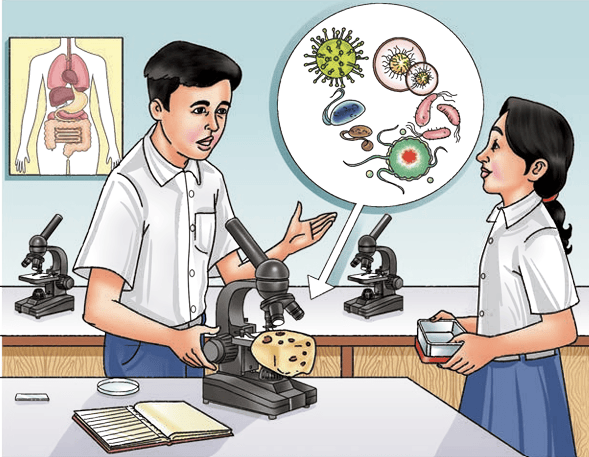 They
also change
the taste and
smell of the
uttapam, and
other food
items.
We
can see this
mould as it
is made up
of a colony of
thousands of
microbes.”
They
also change
the taste and
smell of the
uttapam, and
other food
items.
We
can see this
mould as it
is made up
of a colony of
thousands of
microbes.”
Disha’s eyes lit up with curiosity. She quickly noted it down in her notebook—
Finding #1
Microbes: Found in soil, water, the air around us; in plants, animals, and inside us!Think
Have you ever had an upset stomach? Do you know what could have caused it? What could happen if spoiled food is eaten by mistake? If yes, what did you do to get well? Share your experiences with the class.Mystery #2: Why do some foods spoil faster?
That afternoon, Disha noticed a slice of bread that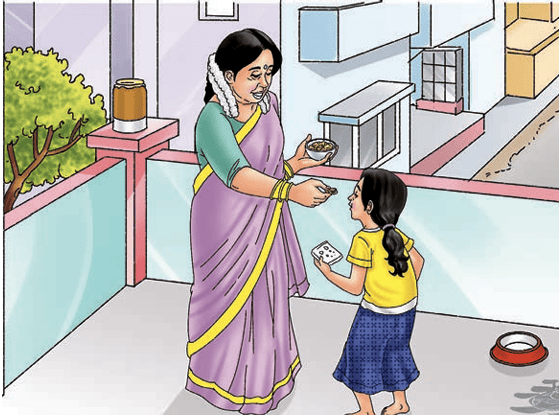 she had left on the
balcony for a cat,
that did not come
for two days. It had
coloured patches on
it, but the pickles her
Paati (grandmother
in Tamil) had made
two
months ago
were still delicious
as it was covered
with oil!
she had left on the
balcony for a cat,
that did not come
for two days. It had
coloured patches on
it, but the pickles her
Paati (grandmother
in Tamil) had made
two
months ago
were still delicious
as it was covered
with oil! “Strange!”, whispered Disha. “Why does some food spoil fast, and some last for a long time?”
Write
Why do you think food gets spoiled?She went back to her Anna and asked, “What do these microbes need to grow?”.
Anna replied, “Microbes need moisture, air and the right temperature to grow. If we remove any one of these, we can stop them in their tracks. All life needs water and air to survive”.
Finding #2
We need to keep air and water away from the microbes.Food Preservation
Mystery #3: How do we save our food from spoilage?
Detective Disha decided to look for answers at homeLet us observe
Drying and Dehydration
She saw her Amma (mother) and Appa (father) drying chillies on a mat under the Sun on the balcony. “Why are you drying these, Amma?”, she asked. “To make chilli powder. This should last us for the entire year!”, Amma answered. She saw her Amma (mother) and Appa (father) drying chillies on a mat under the Sun on the balcony. “Why are you drying these, Amma?”, she asked. “To make chilli powder. This should last us for the entire year!”, Amma answered.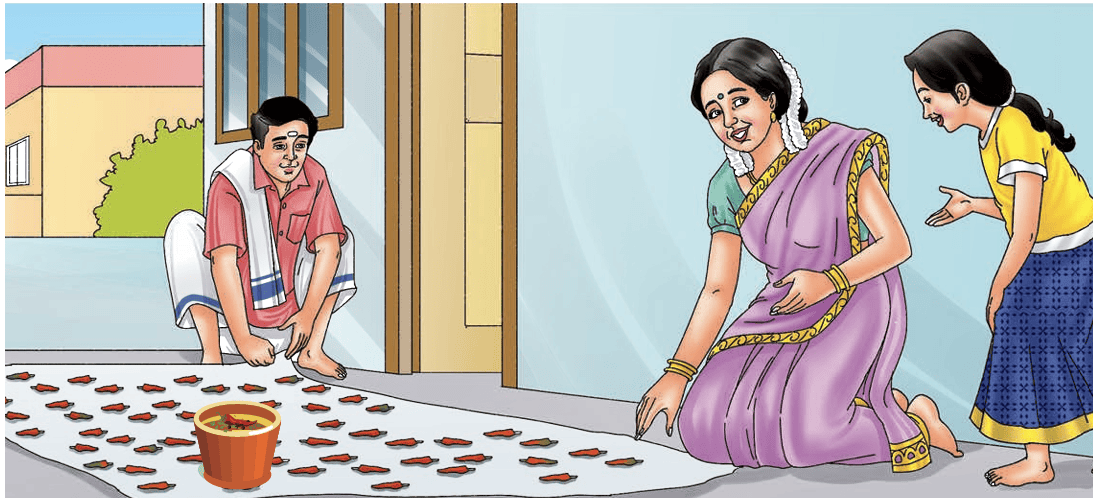
Finding #3
Drying in the Sun removes the moisture from the chillies. Without moisture, microbes cannot grow!Write
 What other things are dried so that they remain unspoilt
throughout the year?
What other things are dried so that they remain unspoilt
throughout the year?Activity 1
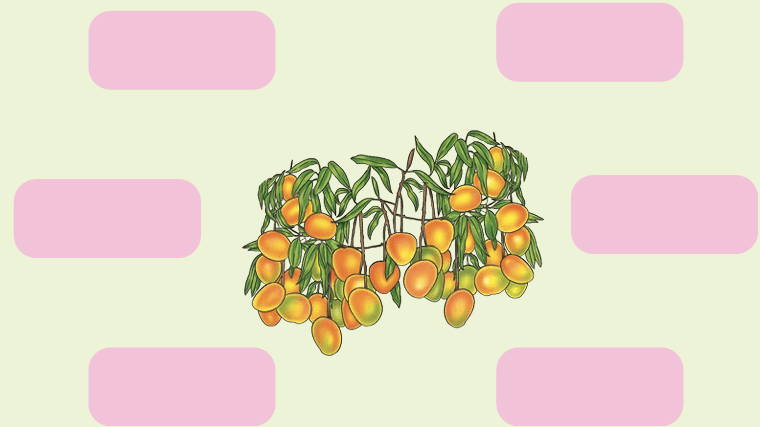
Activity 2
- Take a tomato and cut it into slices.
- Put the slices of tomatoes on a tray and place it on the window where the sunlight comes through.
- What changes did you observe in the fruit?
Can you think of a way to preserve items like tomato?
Let us observe
Pickling and Oiling
In the kitchen, her Paati was pouring mustard oil into a jar of pickled green mangoes. “But why is oil added to the pickle?”, Disha asked eagerly.“Oil stops air from getting in”, Paati explained. “That keeps the pickles safe!”
Finding #4
Oil keeps out air and stops the growth of microbes.Discuss
What would happen to this pickle if no oil had been added?Let us observe
Refrigeration and Freezing
The next morning, Disha opened the fridge. Milk, vegetables, butter and a cake were stored inside.“Fridges make the temperature too cold for microbes to grow”, Appa explained.
Finding #5
Cold temperature slows down microbes.Discuss
We use clay pots (matkas) to keep water cool.
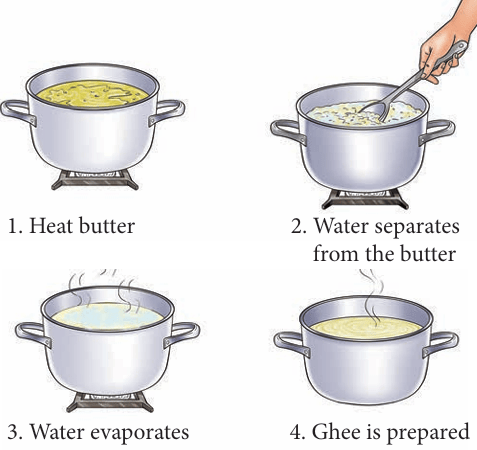 Why does butter need refrigeration and ghee does
not?
Hint: Find out how butter and ghee are made at
home.
Why does butter need refrigeration and ghee does
not?
Hint: Find out how butter and ghee are made at
home.There are many ways to preserve food. Disha’s grandfather told her that people used salt, sugar, and spices like pepper to keep food from spoiling. We still use these methods today.
Activity 3
Finding #6
There are many ways in which food is being preserved.Do you know?
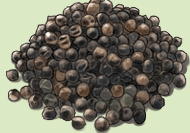 ‘Black pepper’ is a common spice in our
 homes. In the past, black pepper had become so popular as a spice that Vasco da Gama crossed oceans to collect it from India.
Anna told Disha that in food factories food is preserved in air tight cans and packaging to keep microbes away from the food.
Do you know?
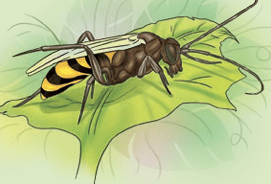 Insects preserved food long before
humans did. Solitary wasps,
particularly
hunting
wasps,
preserve food for their larvae.
Insects preserved food long before
humans did. Solitary wasps,
particularly
hunting
wasps,
preserve food for their larvae. 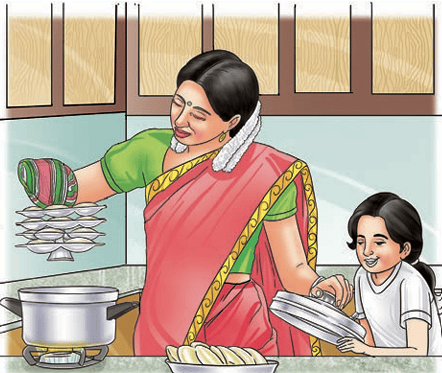
How are Idlis made?
Disha watched her mother make idlis at home. Can you find out how idlis are made? Is there something that makes the idli batter fluffy? Do you know what it is?Finding #7
Microbes in the air help make idli batter rise.Indigestion and Home Remedies
Aditya Anna has an upset stomach after eating food in a fair.Think
Did you ever have an upset stomach, vomiting or indigestion? Did you use any home remedies? Write about the home remedy given to you.Have your parents given you curd or some product like buttermilk made from it, for an upset stomach. There are small microbes in curd that join the good microbes in your stomach to help in digestion. If the problem is severe, you may have to consult a doctor and take medicines.
Finding #8
Sometimes, bad eating habits can also lead to indigestion.Disha’s notebook was now full of her findings.
My Food, My Pride
During her investigations, Disha learned that there are many traditional practices related to food being passed on from one generation to another in the family.She made her detective case diary on ‘My Food, My Pride’. Let us look at some new entries in Disha’s diary and help her complete some of them.
A Visit to the Vegetable Market
Thatha (grandfather) goes to the vegetable market daily. He buys fresh fruits and vegetables. It was fun to be in the vegetable market with him. Disha observed how he carefully examined the fruits or vegetables at the market before he bought them.Activity 4
Write one thing that you learnt from your shopping trip and write it as a Finding #9, the way Disha would write.
The Joy of Eating Seasonal Fruits!
It was raining. Appa bought lychees on his way home. Disha exclaimed with delight, “Yummy lychees, after almost a year!”.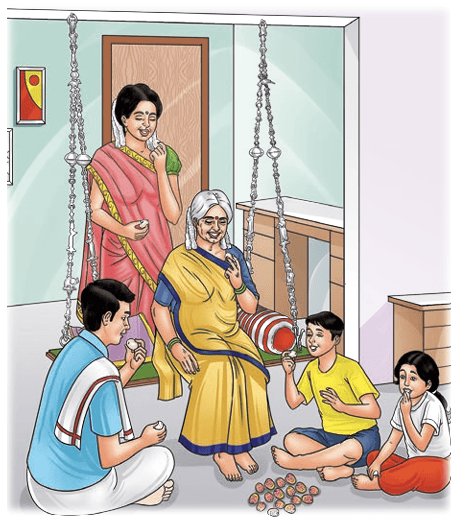 Appa said,
“Lychee is a seasonal fruit
so we need to wait for it!”.
Disha could see the joy
on everyone’s face as they
peeled and shared the
delicious fruits with each
other.
Appa said,
“Lychee is a seasonal fruit
so we need to wait for it!”.
Disha could see the joy
on everyone’s face as they
peeled and shared the
delicious fruits with each
other.
Appa added, “But nothing to beat our local mangoes, they are so fresh because they did not have to travel far to reach us!”.
Finding #9
Fruits taste best when they are eaten in their season. Waiting for them increases the joy.Write
Name three seasonal fruits or vegetables of your region. For example, amla in winter and jamun in summer.Chew Right!
Investigation: What happens to food inside your mouth?
Detective Disha was not done solving mysteries yet. “What happens to food after we eat it?”, she wondered. She looked in the mirror, opened her mouth wide and said, “Aaaaah!”.Activity 5
Teeth and Chewing
Anna said, “We have different teeth — incisors to cut, canines to tear, premolars to crush and molars to grind”.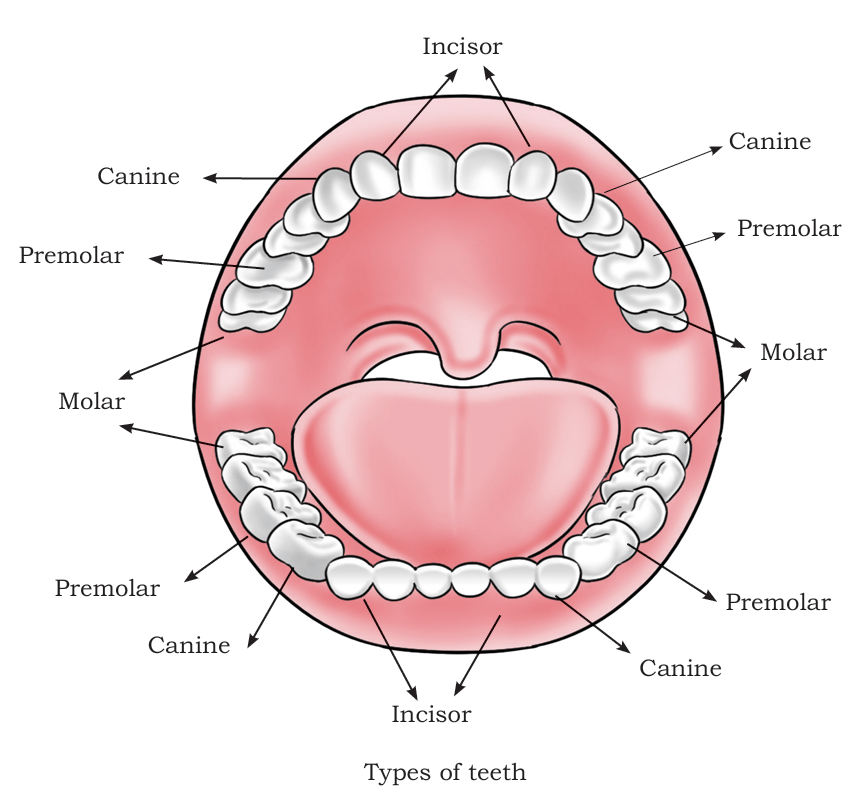 Disha wondered whether more saliva come out
when you chew the food for long.
Disha wondered whether more saliva come out
when you chew the food for long. “And chewing properly releases saliva which helps digest the food”, he added.
Finding #10
Chewing food properly breaks down the food and releases saliva which helps in digestion.Finding #11
Different types of teeth have different uses.Oral Hygiene
Disha was having a toothache. She visited the dentist with her parents. The doctor found a cavity — a hole in the tooth and treated it. “Rinse your mouth after eating. Brush your teeth regularly”, the dentist advised. “Eat fewer sweets.”Finding #12
Oral hygiene is important. For a dental check-up or if any of your teeth are aching, you may need to see a dentist.The Danger of Choking
“Do not gulp down your food!”, warned Amma at dinner. “Chew your food properly!”Finding #13
I must eat my food slowly to avoid choking on it. Our Wondrous World 52Note to the Teacher
The teacher needs to make sure to bring learner’s attention towards taking smaller mouthfuls and chewing them properly before swallowing. Also, advise them to avoid talking or laughing with food in their mouth.Write
How can you avoid choking?Food in Our body
Final Discovery
Some microbes spoil our food while some help us to make food items. They also help us digest food. Finally, the food mystery was solved. Eat right, preserve and store right, and also chew well and thank the good microbes. Mystery solved! Detective Disha closed her notebook with a smile.Let us reflect
- Why do some food items last for weeks and others spoil in just a few days?
- You are going on a field trip for two days. List five food items you will carry. How will you keep them from getting spoiled?
- What if food cannot be preserved? Imagine a world without food preservation and discuss the consequences.
- Match the following.
Which method is used to preserve the following food
items (A) to make the final product (B).
Item (A) Methods of Preservation Product (B) Roti Dehydration Khakhra Papad Dried in sun Dried papads Mango Aam papad Lemon Lemon pickle Butter Ghee Juice Canned juice Chillies Chilli powder Fish Dried fish