Chapter-6
Some Unique Places
Green School
Shanti’s parents seemed busier planning their summer vacation. “Are we doing something different this year?”, she asked. “Maybe we could go to more places rather than staying in one place? I really want to see more of our country now that I am growing up.”Appa (father) and Amma (mother) smiled, “Shanti, your wish might just come true. We have big plans this time! A trip to a few different places starting from the southernmost tip of India!”.
“From Kanyakumari?”, Shanti asked.
“No, Shanti!”, Appa said to her surprise.
Find out
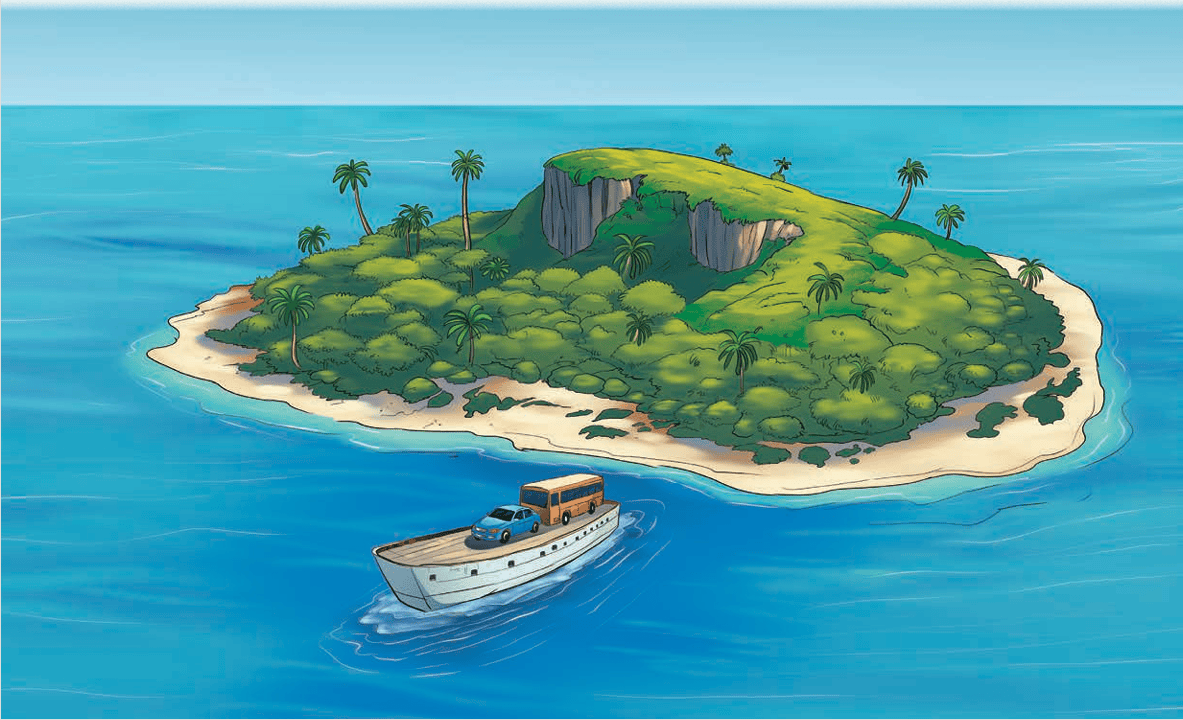
Look at the map for the southernmost point of India.Shanti found out from the map that Indira Point is the southernmost tip of India. It is a long chain of islands known as the Andaman and Nicobar Islands.
Do you know?
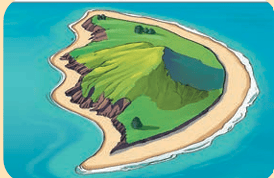 An island is a land surrounded
by water on all sides. There are
over a thousand islands in the
seas around India that are part
of the country.
An island is a land surrounded
by water on all sides. There are
over a thousand islands in the
seas around India that are part
of the country. Find out
- In which sea are the Andaman and Nicobar Islands located?
- Name the other islands you know.
Islands of India
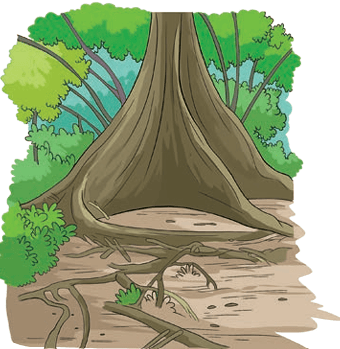
They started from Vijaya Puram, the capital city of the Andaman and Nicobar Islands. Rani, their local guide, took them through the forest.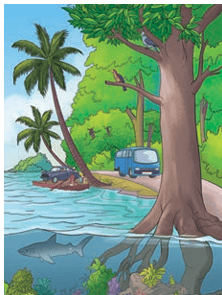 “Many of the trees are unique and
found only in these islands”, Rani
said. Shanti was curious about the
big roots growing out of the bottom
of the tree and spreading out wide,
supporting the tree.
“Many of the trees are unique and
found only in these islands”, Rani
said. Shanti was curious about the
big roots growing out of the bottom
of the tree and spreading out wide,
supporting the tree.
Activity 1
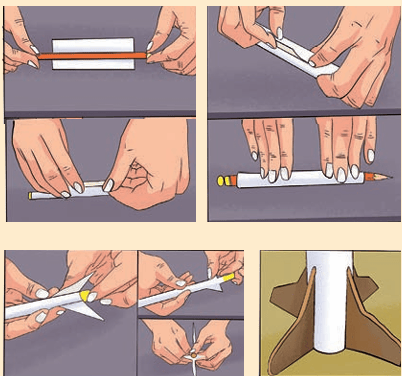 thin tube. Glue the edges
so it does not open.
Then, make it stand
it up on a flat surface.
Does it stay up?
thin tube. Glue the edges
so it does not open.
Then, make it stand
it up on a flat surface.
Does it stay up?
Now, cut 3 – 4 small triangles from thick paper. Stick the triangles evenly around the bottom of the roll. Rest the paper on a flat surface again. Does it stay upright now?
The base supports the roll like the roots support the tree to stand upright.Nature often has the best designs.
“The forests here are home to many animals, colourful birds, butterflies and insects that are unique. Birds like the Andaman wood pigeon and the Andaman hornbill are only found here. That makes these forests very special and important for us to protect”, Rani said.
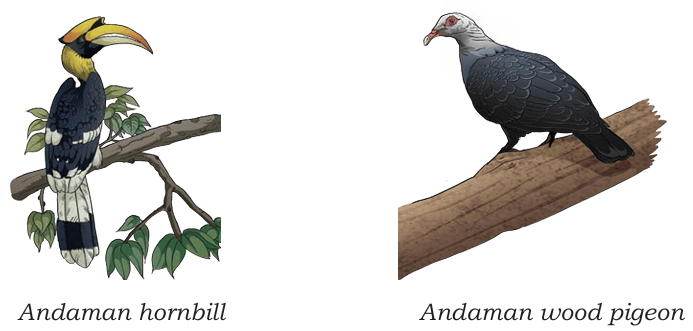
Why do you think some birds and animals are found
only on these islands?
Next, they went to catch a ferry to one of the nearby islands.
Safety Measures
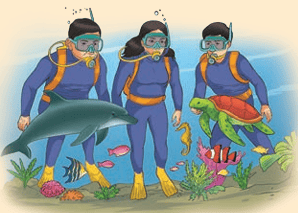 Before getting on the ferry, they
were given safety instructions.
Everyone must wear a life
jacket even if you know how
to swim. Life jackets keep you
afloat if you fall into the water.
Before getting on the ferry, they
were given safety instructions.
Everyone must wear a life
jacket even if you know how
to swim. Life jackets keep you
afloat if you fall into the water.Write
- Draw or write about your favourite fish or other sea animal.

- List at least three living things found in the sea.
Discuss
- Why do you think life under the sea is just as important as life in the forests?
- How do you think the coral reef helps the fish and other sea creatures?
Before they left the island, they heard about North Sentinel Island. “Here people live like the ancient hunter-gatherers,” Rani told us. “They do not want visitors, so no one is allowed to go there”, said Rani. In 2004, a tsunami hit the region but they survived, possibly by noticing signs in nature like changes in the wind, sea and behaviour of animal. Their deep connection with nature might have helped them stay safe
Discuss
How do you think their knowledge might have helped the people of North Sentinel Island stay safe?Note to the Teacher
The teacher will explain corals though pictures as colourful living beings seen in the sea.Before this trip, Shanti had only seen islands on television. Now, after visiting the Andaman and Nicobar Islands, she had learned so much. Islands are full of wonders, and they need our care and respect.
Amma said that they would be going from Vijaya Puram by ship to Kolkata and from there to the Sundarbans.
“Sundarbans is a different kind of forest”, said Amma. “Something you have never seen.” she added This made Shanti so curious that she could not wait to get there.
Sundarbans: Home of the Mangroves
After a short stop in Kolkata, they reached the Sundarbans, the largest mangrove forest in the world. This forest is seen where the river Ganga meets the sea, and the land is muddy and salty. Special trees called mangroves grow in this wet and salty land.Write
- What do you see in the mangrove forest? List three things that live there.
- What do you think makes this place different from other
forests?
“Those are the roots of the mangroves which help
them breathe in the muddy salt water”, he answered.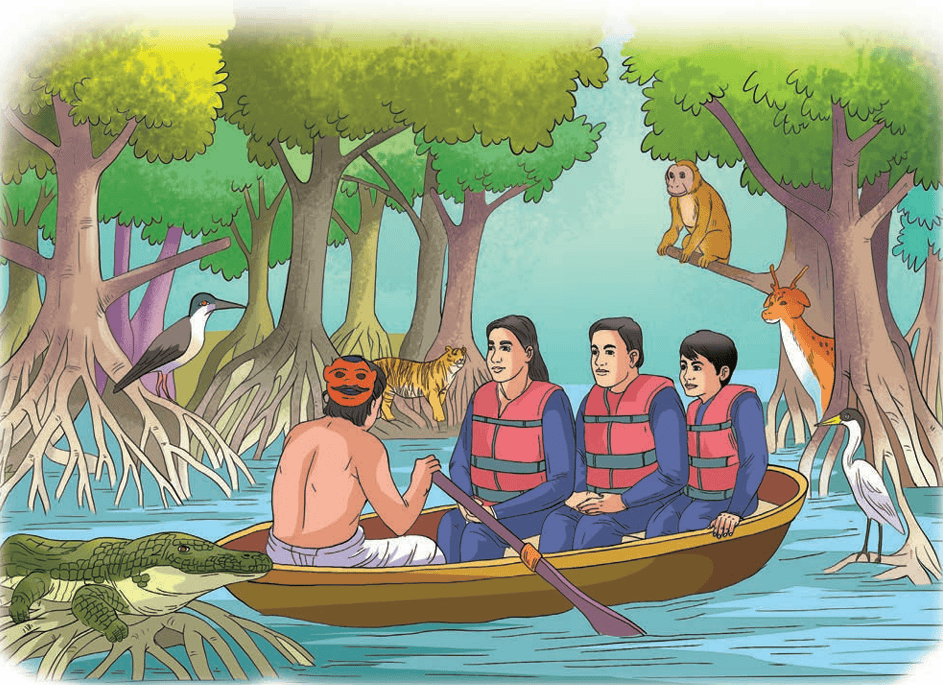
Write
In what ways do people in Sunderbans depend on the mangrove forests?The Sundarbans felt like a world where land, water and wildlife all live together. Mangroves like the Sundarbans are very important to us.
Discuss
Why do you think it is important to take care of places like the Sundarbans?Find out
Look around yourself. Do you see any living thing that has something special to help it live there? What is it?“Why would someone wear a mask on the back of their head?”, Shanti asked curiously.
Appa told, “I heard that it has something to do with how tigers attack their prey from behind. Tigers may get confused by the masks”.Northeast India: Green Hills and Great Traditions
After leaving the Sundarbans, Shanti and her family began their journey towards the Northeast of India.“Did you know that the seven states called the ‘Seven Sisters’, along with the state of Sikkim, makes up what we call the Northeast India?”, Appa asked. “Oh, yes! I remember this from class”, Shanti replied excitedly.
Can you name the seven Northeastern states?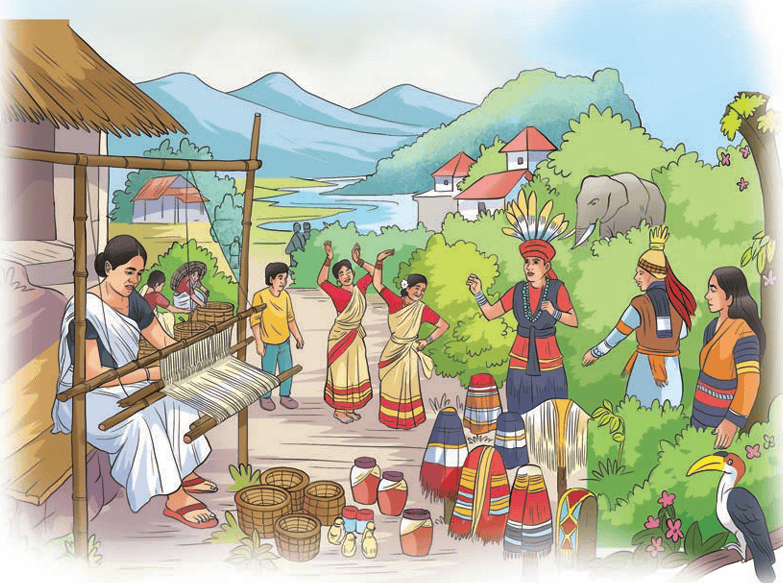
Write
- Look at the picture. Can you spot three things being
sold in the market?
- Can you identify the festival from the above picture?
- Why do you think the houses are built on bamboo
structures?
- What animals can you see in the picture?
- What does this picture tell you about the people who live
with nature in the Northeast of India?
Do you know?
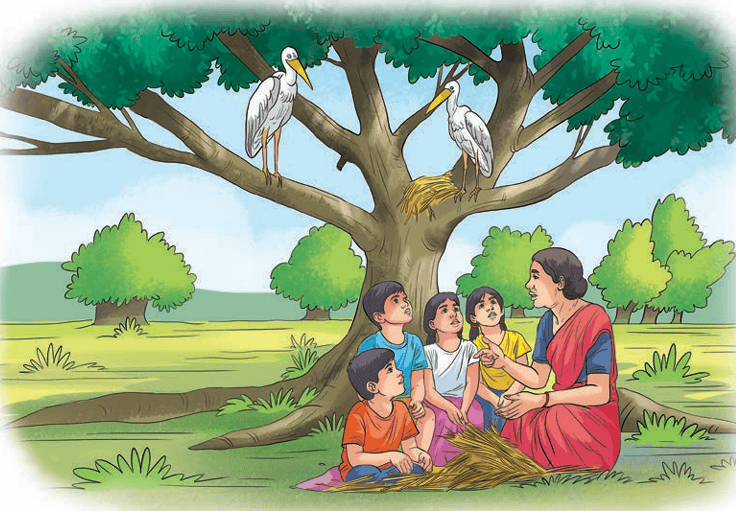 “What are they doing?”, Shanti asked.
“They are helping protect the Hargila bird, the Greater Adjutant Stork”, said Amma. “The women are teaching the children to help protect their nests.”
Shanti joined the group and learned how the Hargila birds have been growing in number with everyone’s help.Discuss
In small groups, choose an animal or bird near you that needs protection. What can you do to help? Create a protection plan and share it with the class.Activity 2
Create a small bird’s nest using the materials. What makes a good nest? What does the nest need to keep the eggs safe?
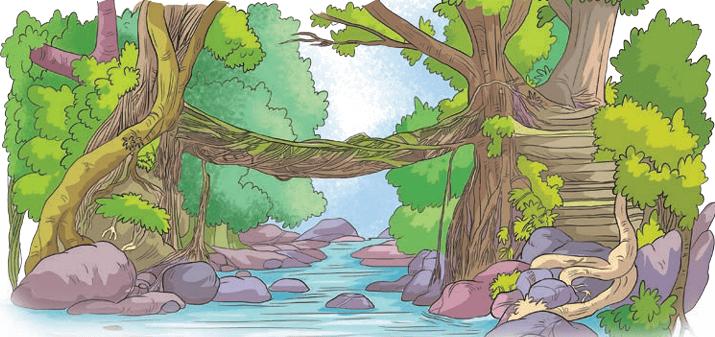 “Those are the living root bridges. The roots of these
trees across the streams became strong enough to
walk on. We just have to look after them now”, said
Chandan.
“Those are the living root bridges. The roots of these
trees across the streams became strong enough to
walk on. We just have to look after them now”, said
Chandan.Activity 3
As they explored the islands and the Northeast, they saw many amazing plants and animals. “Appa, what makes these places so special?”, Shanti asked.
Appa smiled and said, “Many of the plants and animals found here are not found anywhere else in the world! That’s what makes this one of nature’s special places — a kind of nature’s hotspot. Now, I’ll take you to another hotspot in our country”.
“Do you remember reading about the Indian Giant Squirrel in Grade 4? It lives in the other place we are going next”.Western Ghats
Appa said, “We are now heading to another mountain range, the Western Ghats, a long chain of forested hills known for its rich plant and animal life”.Write
- Look at the map, locate the Western Ghats and name the six states it passes through.
- What animals can you spot in the forest?
- What are the people doing in the picture given below?
- Why do you think forts were built on hilltops instead of flat land?
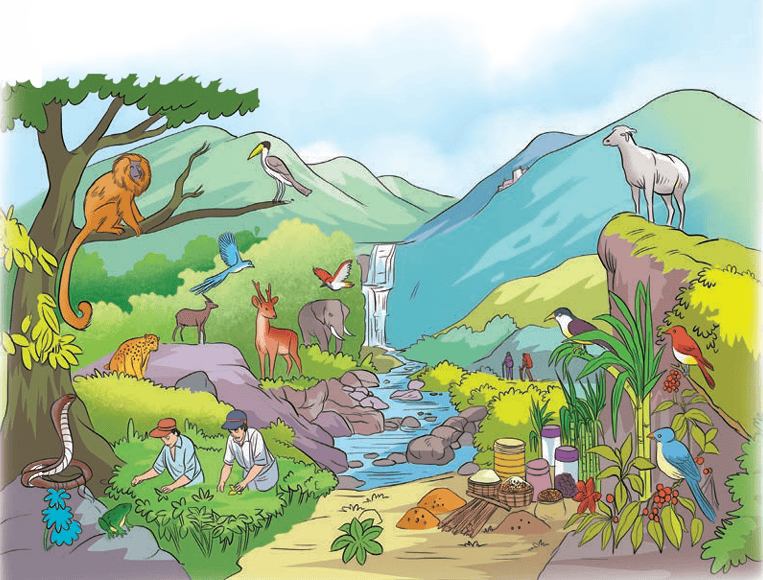 “The lion-tailed macaques are only found here”,
Appa told. Like in the islands, some animals and
birds are found only in this region.
“The lion-tailed macaques are only found here”,
Appa told. Like in the islands, some animals and
birds are found only in this region.
“Do you know that several rivers of India begin from these hills?”, said Appa.
Write
Give the names of three rivers that start from the Western Ghats.These hills have many plants that are used in traditional medicine. Many of these plants grow only in this region. Many tribal communities and other forest-dwelling people have lived here for generations. They depend on the forest and its plants for food, medicine and their livelihood.
 Just then, Shanti saw a group of
students with notebooks and cameras
under a tree. “What are they doing?”,
she asked.
Just then, Shanti saw a group of
students with notebooks and cameras
under a tree. “What are they doing?”,
she asked.
“These students are part of a survey. With help from schools, farmers and experts, we found and recorded over 200 types of mangoes in the Western Ghats! Now, we are also looking at jackfruit and jamun”, explained Satish, a researcher who was guiding the students.
Shanti was amazed.
“Can I do something like this for the trees and fruits in my place too?”, she wondered.Activity 4
Appa said, “Let me also tell you about the Silent
Valley National Park. It is a wonderful rainforest
in Kerala, home to many rare plants and animals.  Unlike other rainforests, which receive a lot of rain
and are usually buzzing with the sound of cicada
insects; this rainforest was silent giving the valley
its name”.
Unlike other rainforests, which receive a lot of rain
and are usually buzzing with the sound of cicada
insects; this rainforest was silent giving the valley
its name”.
Appa continued, “Long ago, a dam was planned here, which would have flooded this special forest. But people from all over — villagers, students, scientists — joined together in the ‘Save Silent Valley Movement’. Their love for nature helped stop the dam. Today, the Silent Valley remains a protected forest, showing how people can save forests when they care enough to act together”.
Our hills are full of life, stories and surprises. From tiny herbs to great rivers, and from rare animals to the people — everything is connected. We need to understand and protect these places, and their connections.Do you know?
Write
List three protected areas in the Western Ghats.Shanti and her family had stayed in the Andaman Islands and now they were heading to Kanyakumari, the southernmost point of the Indian mainland, where three seas meet.
From coral reefs in the sea to root bridges in the hills and the spice-filled forests of the ghats, every place has something special to teach us. Each region is home to its own wildlife, trees, people and wonders of nature. People live differently in various regions, but everywhere, they depend on nature and care for it in their own way.
Their journey showed us how rich, beautiful and connected our country truly is. If we want these wonders to stay for the future, we must all do our part by learning, respecting and protecting the land we call home.Let us reflect
- What surprised you the most about the places visited in this journey across India? Why?
- Which place would you like to visit the most and what would you do there?
- How is your region similar or different from one of the places in the story?
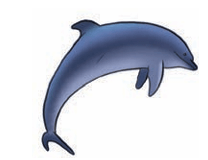
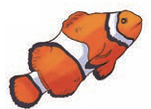
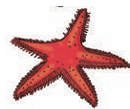
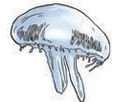
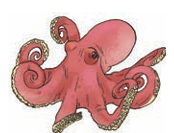
- Match the following aquatic animals with their features.
- What is special about mangroves?
- How do people in different regions live in harmony with the nature?
- Make a collage by pasting pictures depicting vibrant India.
|
Smart mammals that breathe air and live in groups. |

|
With hard shells, return to the beach where they were born to lay eggs. |

|
Tiny sea animals that form colourful reefs and homes for fish. |

|
Fish that swims upright, face looks like that of a horse. |
|
Lives safely among stinging sea anemones. |
|
Has no brain but can regrow its arms, if lost. |
|
Has a soft, transparent body and stings with its tentacles. |
|
Has eight arms and can change its colour to hide. |