
Chapter-10
Earth — Our Shared Home
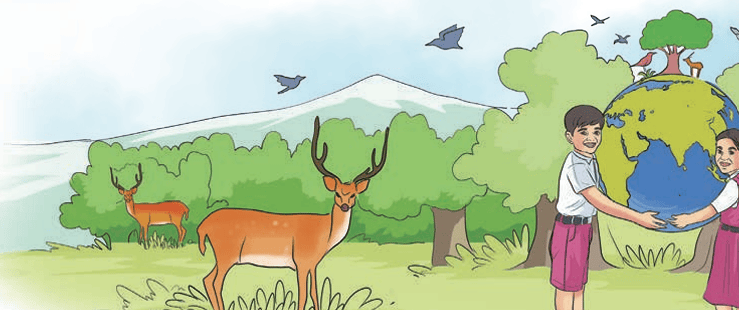
The Blue Planet
“After seeing the Earth from outside the first thought that came to mind was that, the Earth looks completely one, no border is visible from outside. It seems that no border exists, no state exists, no countries exist. We all are part of humanity and the Earth is our one home, and all of us are in it.” These were the inspiring words shared by Group Captain Shubhanshu Shukla, the first Indian to reach the International Space Station, during his conversation with the then Prime Minister of India.Do you know?
Wing Commander Rakesh Sharma, the Indian astronaut, was the first Indian to see the Earth from space. When asked how India looked from above, he replied, “Saare Jahaan Se Achcha” (the best in the entire world).
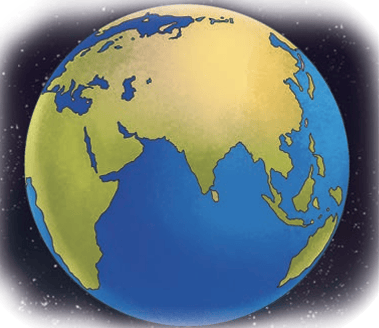
From high up in space, the Earth looks tiny and we would not be able to see smaller details like our city or village. We only see the broad shapes of land masses and the sea on our blue planet.
Activity 1
 We all live in this planet and each of us has
an address.
Fill up your address below.
We all live in this planet and each of us has
an address.
Fill up your address below.- My address
Name:
House number/building name:
Street name:
Village/Town/City:
District:
State/Union Territory:
Country:
Planet:
- Use a globe and find out:
a.Are all the oceans on Earth connected with each other?
b. Where is India on the globe?
Do you know?
When we look at the Earth from far above, we do not see borders or lines between countries. Nature has no boundaries — so air, water, clouds, and even seeds and animals move freely across the world.
 People around the
world are also connected
in many ways. Just as
people across India share
mangoes, rivers, and
festivals, people across
the world are also linked
by the things we share.
The clothes we wear, the food we eat, and the toys we
play with may have come from different parts of the
world. Ideas, food, music, stories, and inventions are
also shared.
People around the
world are also connected
in many ways. Just as
people across India share
mangoes, rivers, and
festivals, people across
the world are also linked
by the things we share.
The clothes we wear, the food we eat, and the toys we
play with may have come from different parts of the
world. Ideas, food, music, stories, and inventions are
also shared.
We will explore this through some stories.
Story 1: The Travelling Birds!
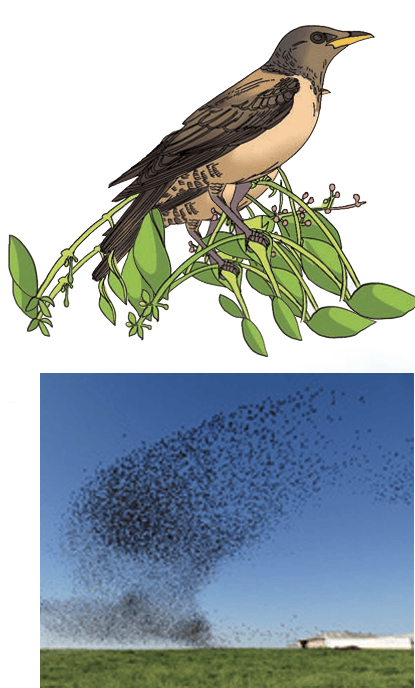
Have you seen pink and black birds flying in big groups? Those are rosy starlings! Every winter, they fly thousands of kilometres from the southern part of Russia, Mongolia and nearby countries to India. These birds enjoy the warm weather in India and feed on locusts and grasshoppers, thus, helping farmers by eating the pests on the crops. Is it not amazing that such a small bird can travel so far and be so helpful? Ayurveda, one of the oldest forms of medicine, was developed in India over 3,000 years ago. When animals move freely and safely across the world, it shows how deeply nature is connected across the globe.
Write
- Does the rosy starling visit your area? What is it called
locally?
- What does this story tell us about nature?
Activity 2
- Make a poster of 5 birds that visit your place in winter. Try to find out where they come from.
- Using a string, trace the journey on a globe showing the paths rosy starlings take (Russia/Mongolia → India).
- Imagine you are a bird travelling the world. Write a
short postcard or note about what you see and what
helps you on your journey (wind, ocean currents,
warm weather). Share it with your classmates.

Write
What does it mean when we say ‘nature has no boundaries’?Story 2: Yoga — India’s Gift to the World!
Since ancient times, people in India have practised yoga to keep their bodies healthy and their minds peaceful. It was a way to live in harmony with oneself and nature. Did you know that yoga has been practised in India for more than 3,000 years?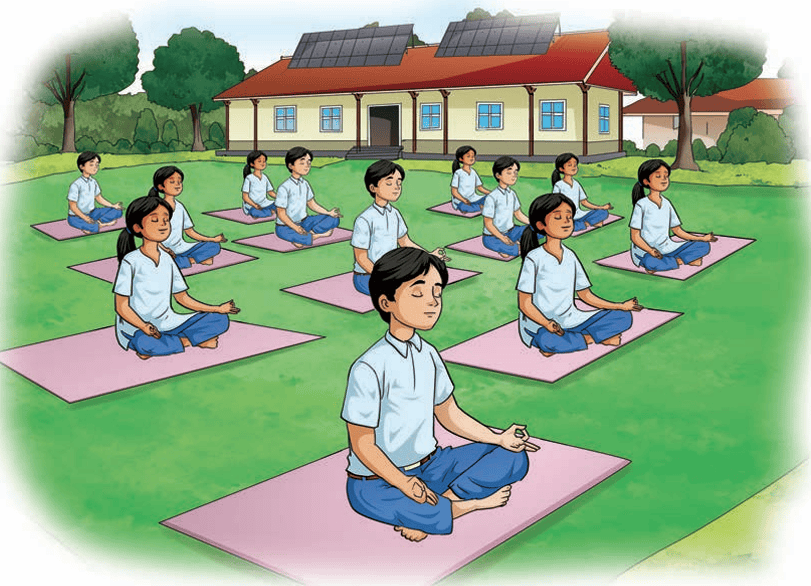
As time went on, travellers, scholars and teachers from India shared yoga with the world. Slowly, people in other countries began to learn and practise it too. Today, yoga is practised in almost every country.
Do you know?
Is it not amazing that a practice that began in India is now loved all over the world?
Discuss
Why do you think yoga became popular in so many countries?Write
Can you name a yoga pose you have tried or seen? What do you think it helps with?Story 3: Chilli — A Spice that Changed our Lives!
Long ago, chilli plants were found only in South America, far away from India. However, 400 to 500 years ago, travellers from Portugal brought chillies with them from South America to India. The chillies found new soil, a new climate and entered Indian kitchens. And guess what? People in India loved it so much that today we cannot imagine our food without chillies! Before the arrival of chilli, we used black pepper to spice up our food.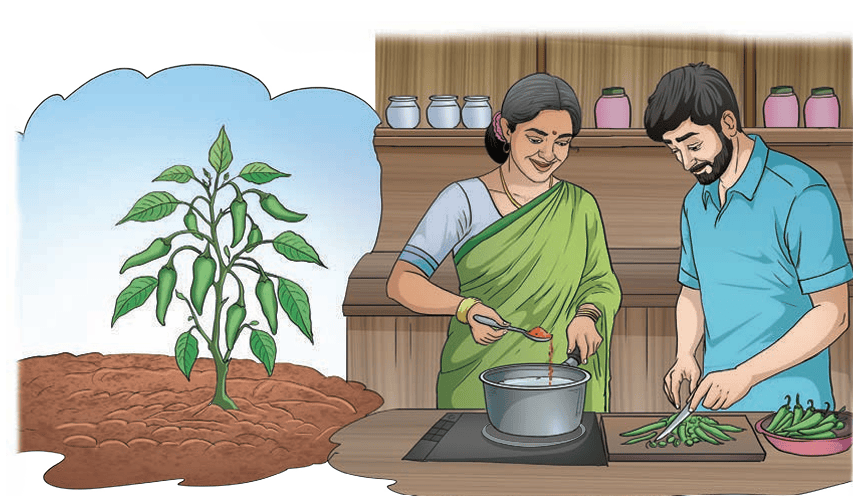 Interestingly, the journey of the chilli is a great
example of how plants are brought from far away
lands, and become part of new cultures and cuisines.
Interestingly, the journey of the chilli is a great
example of how plants are brought from far away
lands, and become part of new cultures and cuisines.Write
- What would happen if chillies disappeared from our kitchens for a week?
- Ask your parents and write down the name of any recipe in which they have used black pepper and not red chillies.
Activity 3
- Using a coloured string, trace the journey of chillies from South America to India on the globe.
- Potatoes, tomatoes, peanuts, cashews, and many other foods have similar stories. They all travelled a long way to reach India and now we enjoy these every day in our food. Find out and write the story of any one of them.
Story 4: The Sweet Story of Sugar!
Just as chillies travelled to India, sugar travelled from India to other parts of the world.Long ago, people across the world did not know
about sugar. They used honey and other naturally sweet things to add sweetness to their food. It was in India that the method of making jaggery from
sugarcane juice was first discovered. Over time, we
found a way to make jaggery into sugar.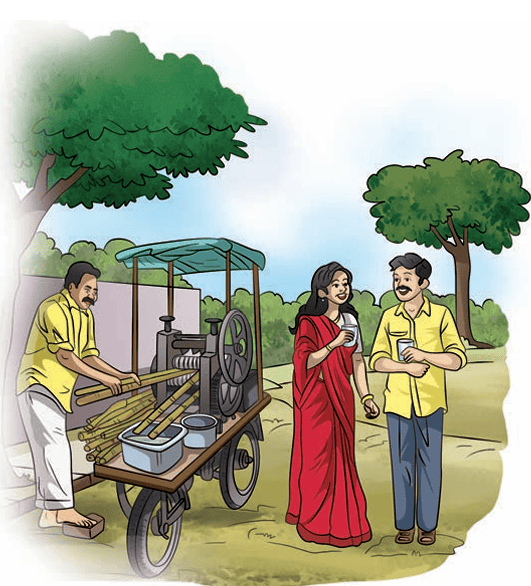
This knowledge and technique spread to other parts of the world through trade and travel.
Did you know that even rice, mangoes and bananas from India found their way to other lands? Today, people from all over the world enjoy these gifts, but their journey began right here in India.
Our meals are like world travellers, carrying stories and flavours from all around the globe. This shows us how deeply we are all connected.Discuss
- If you could choose one Indian food to share with the world, what would it be?
- What kind of new food items do you think will travel in the future?
Story 5: The Mexican Marigold Moves into India!
Did you know that the marigold flower is from Mexico? In Mexican culture, marigolds are special flowers used during festivals. From there, the marigold travelled across the world and to India, where it found a new home. Perhaps it was the bright orange and yellow colours that we loved so much as it reminded us of our sense of warmth, celebration, and spirituality. Today, marigolds are seen everywhere in India — in temples, homes, weddings, and festivals like Diwali.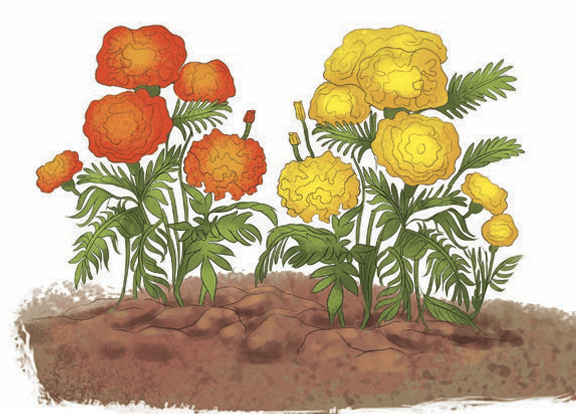 Is it not amazing how a flower from a land far
away became such a big part of our celebrations?
Is it not amazing how a flower from a land far
away became such a big part of our celebrations? Write
- Why do you think both Indian and Mexican cultures use marigolds during their festivals?
- Why do you think people in different countries include flowers in their celebrations?
Story 6: The Cows that Went to Brazil!
Long ago, Portuguese traders took some Indian cows to Brazil. These cows were strong, gave good milk, and did not mind the weather in Brazil.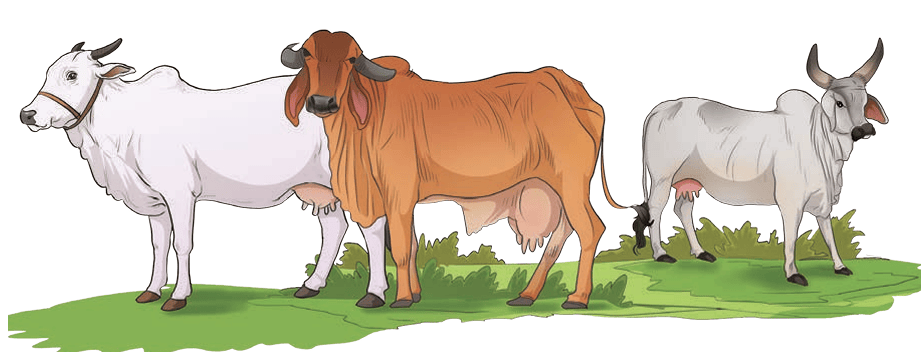 Over time, these cows grew in number. Today,
more than three-fourths of Brazil’s milk comes from
three Indian cow breeds — Gir, Kankrej and Ongole.
Over time, these cows grew in number. Today,
more than three-fourths of Brazil’s milk comes from
three Indian cow breeds — Gir, Kankrej and Ongole.
They became so important in Brazil that their pictures are found even on stamps and coins!
Write
What does this story tell us about animals moving from one place to another?Activity 4
- With help of your teacher or an elder find out the names of at least 5 different breeds of cows.
- Make a list of a few things in your house or school that
may have come from another part of the world. Find out
where they originally came from.
Items Names Origin from Clothing Jeans America Food Sports Musical instruments Tree
Web of Life
These stories are not just about birds, plants or objects, they are stories of people, journeys, sharing, and the blending of cultures. We may speak different languages or play different games, but we all learn from and inspire one another.Whether it is a bird flying across continents, a seed growing in a new land or a practice like yoga reaching every corner of the globe, it all reminds us of one big truth — we are all connected!
Our Earth is more than just land and water. It is a living web of life where people, animals, plants and ideas travel, mix, and grow together.
By learning, sharing and caring for each other, and our planet we become part of that connection.Activity 5
- Interview a grandparent or neighbour: Ask them
about a food items song, or custom that was not
there in their
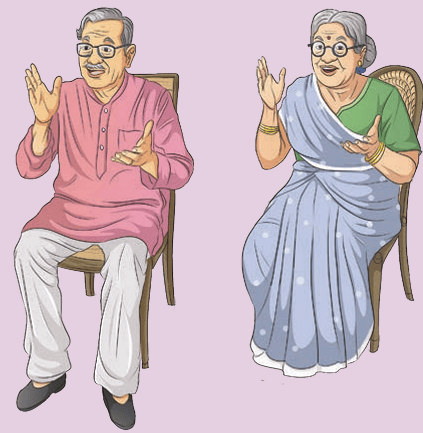 childhood but is
common today.
Find out where did
it come from?
childhood but is
common today.
Find out where did
it come from?
- From the stories you have read: List different things that came to India from other countries and those that travelled from India to the world. Then, using two different coloured strings, trace their journeys on a map.
One Earth, One Family!
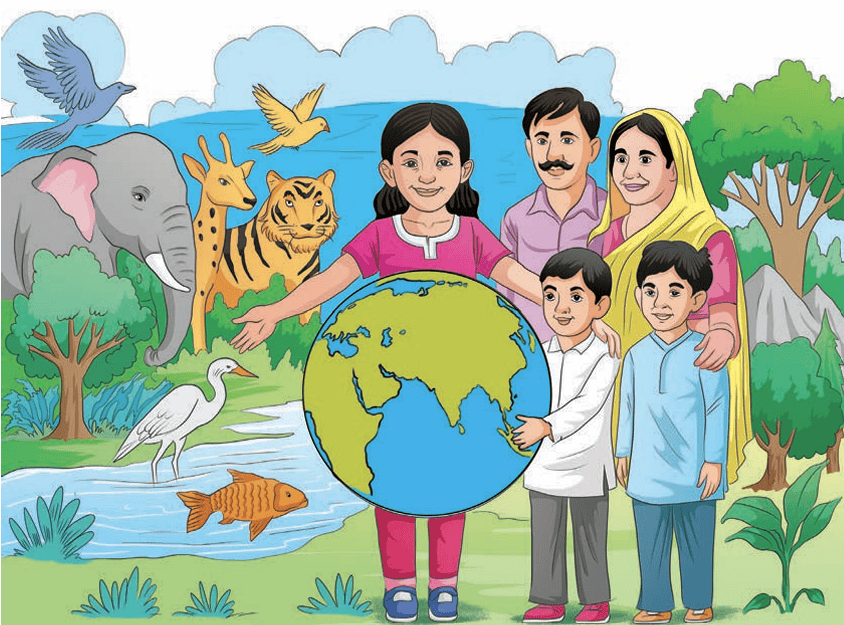
There is a beautiful saying from ancient India— ‘Vasudhaiva Kutumbakam’, meaning ‘the world is one family.’All people, animals, trees, rivers, and even the air and sky belong to this family. We live together, depend on each other, and share the same home — our Earth.
When we see the world as one family, we learn to live with respect, care, and love for one another, and for the Earth that supports us all. That is what ‘Vasudhaiva Kutumbakam’ teaches us.
Earth is truly special. It is the only planet we know that has life! For thousands of years, it has supported people, animals, and plants.
Earth needs care too. When we care for the Earth, we are caring for each other because we are all part of the same family.
Earth is not just our home. It is a gift we must protect, for ourselves, for others, and for the future.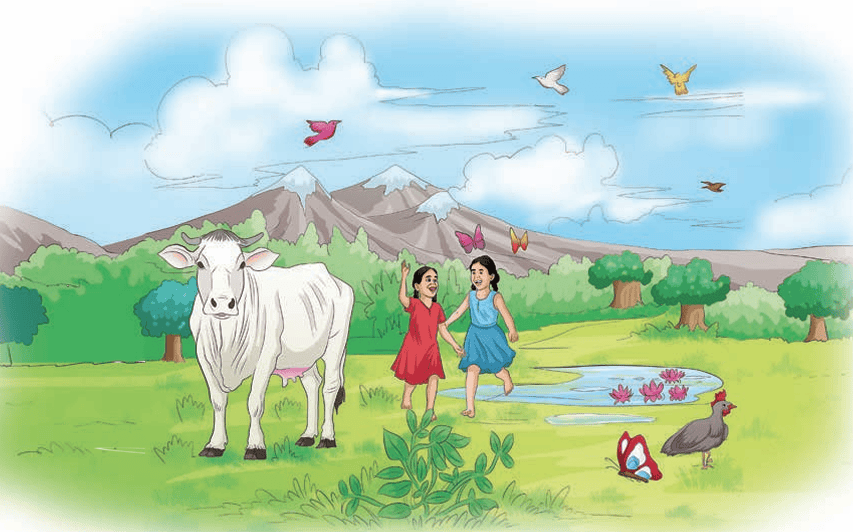
Do you know?
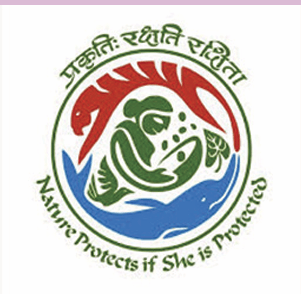 Forest and Climate Change
(MoEFCC) logo represents the
balance between nature and human
life. It reminds us that humans and
nature are connected and must live
in harmony. The logo tells us that
caring for the environment means
caring for ourselves too.
Forest and Climate Change
(MoEFCC) logo represents the
balance between nature and human
life. It reminds us that humans and
nature are connected and must live
in harmony. The logo tells us that
caring for the environment means
caring for ourselves too.
Write
- What does ‘Vasudhaiva Kutumbakam’ teach us?
- Write the meaning of ‘Vasudhaiva Kutumbakam’ in your own words.
- How can we live like one big family, even when we are different?
Let us reflect
- Pick one of the ideas. Write a short story about how this idea might have travelled from one place to another long ago. Think about how it helped people change their lives or the way they think.
- Write one way you can care for the Earth.
- Identify of an item that can travel from India to other parts of the world and write about it.
Seasons’ Journal
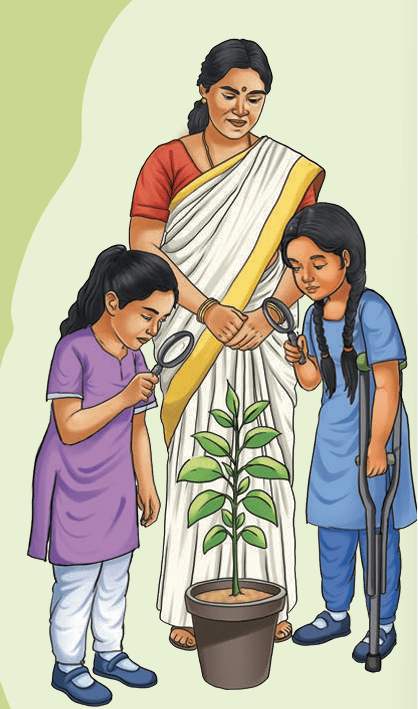 This is your very own journal that
will help you explore the world like
a little detective! Whether you live
in a village, town, city, or near a
forest or coast, you can observe
nature everywhere. Look closely at
your surroundings: your backyard,
school ground, village fields or a
nearby park.
This is your very own journal that
will help you explore the world like
a little detective! Whether you live
in a village, town, city, or near a
forest or coast, you can observe
nature everywhere. Look closely at
your surroundings: your backyard,
school ground, village fields or a
nearby park.
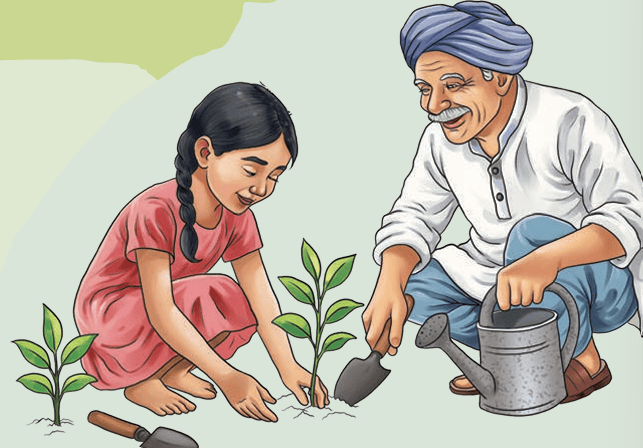
Make four entries during the year, once every term. For each entry, observe the same place and record what you see in the following five themes. You do not have to write long sentences, just simple notes, drawings or even paste something you found.
It is your journal. Make it colourful, fun and full of curiosity!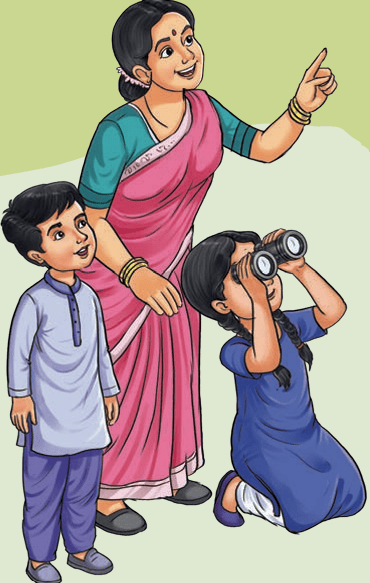
| Theme | What I Observed |
|---|---|
|
🌿 Plant Life |
You may observe the plants and trees or choose a single tree. Does it flower or fruit? When? Does it shed leaves? Is the colour changing? What birds, bees or butterflies does it attract? Do people collect its flowers, fruits or leaves? Any new plant growth, dry leaves or wilting? |
|
🐦 Birds and Animals |
What animals, birds, or insects do you see around you? What were they doing? (e.g., flying, building nests, feeding, resting). Did you see any nests or baby birds or animals? Were there lots of insects around? Any animals you don’t usually see? Were they in groups? |
|
☀️ Air, Heat and Light |
What is the weather like? (Sunny, rainy, cloudy, foggy). What is the temperature? How does the air feel? (Hot, cool, fresh, humid). What time did the sun rise or set? What colours do you see in the sky? |
|
💧 Water and Water Bodies |
Was the water clean, muddy, flowing or still? Did the water level rise or go down? Did it rain recently? Were there puddles? Was there enough water at home or school? Is there any sign of water drying up? |
|
🧑🤝🧑 Human Activities |
What are people wearing? (Woollens, cotton, raincoats). Are people spending more time indoors or outdoors? Special seasonal food was made, fruits eaten or vegetables cooked? Are they celebrating festivals? Is there any crop being planted or harvested? |
The World Around Me: April – June
| Theme | What I Observed |
|---|---|
|
🌿 Plant Life |
|
|
🐦 Birds and Animals |
|
|
☀️ Air, Heat and Light |
|
|
💧 Water and Water Bodies |
|
|
🧑🤝🧑 Human Activities |
The World Around Me: July – September
| Theme | What I Observed |
|---|---|
|
🌱 Plant Life |
|
|
🐦 Birds and Animals |
|
|
☀️ Air, Heat and Light |
|
|
💧 Water and Water Bodies |
|
|
🧑🤝🧑 Human Activities |
The World Around Me: October – December
| Theme | What I Observed |
|---|---|
|
🌿 Plant Life |
|
|
🐦 Birds and Animals |
|
|
☀️ Air, Heat and Light |
|
|
💧 Water and Water Bodies |
|
|
🧍 Human Activities |
The World Around Me: January – March
| Theme | What I Observed |
|---|---|
|
🌿 Plant Life |
|
|
🐦 Birds and Animals |
|
|
☀️ Air, Heat and Light |
|
|
💧 Water and Water Bodies |
|
|
🧍 Human Activities |