UNIT 2

Our Games
This unit explores the link between physical activity and personal development, focusing on improving fitness, building mental toughness, fostering teamwork, and understanding the importance of safety guidelines. Students will build motivation, courage, and self-discipline as they take on physical challenges, monitor their growth, and stay dedicated to personal improvement. Additionally, they will learn how to identify and report bullying, mental health issues, and inappropriate behaviour to support a safe and respectful community.
Chapter 5
Local and Traditional Games
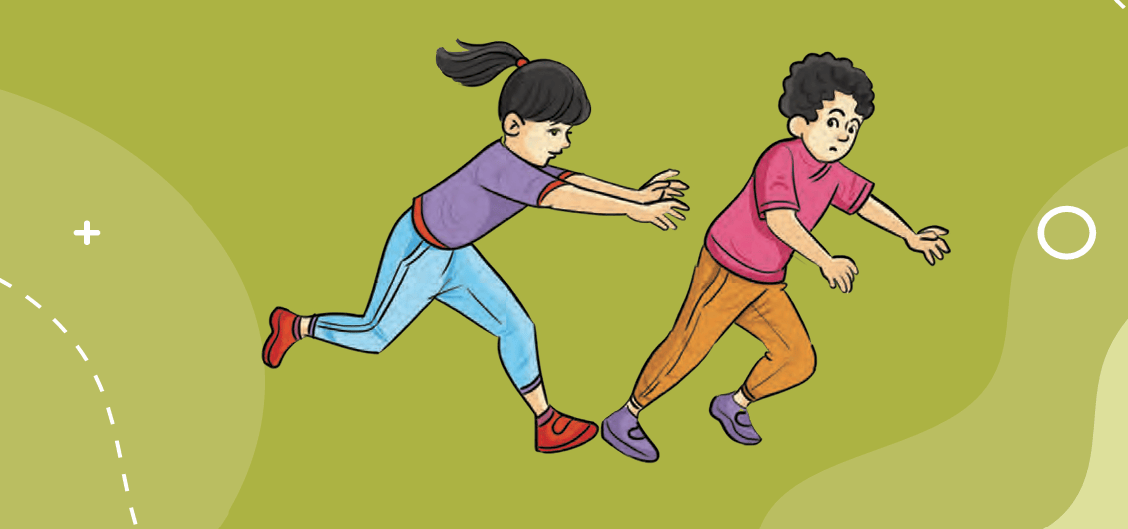
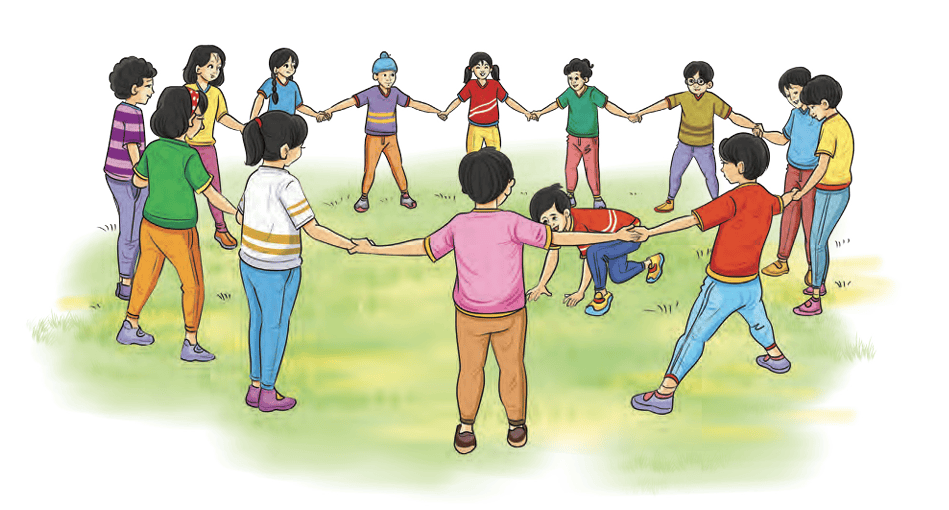
We all play many games with our neighbourhood friends. Every region in our country has some games that are specific to that region. In this chapter, we will learn to play and enjoy some games that are played in different regions across the country. While playing these games and enjoying together, we will learn to treat each other with kindness and become better human beings in the process.
DID YOU KNOW?
Traditional games not only provide holistic development but connects the players with their heritage as well.
OG 1
Nadan Panthu Kali
How to play
- . Form two teams of 7–8 students each.
- . Mark the ground 20 metres in width and 30 metres in length, with a line in the centre.
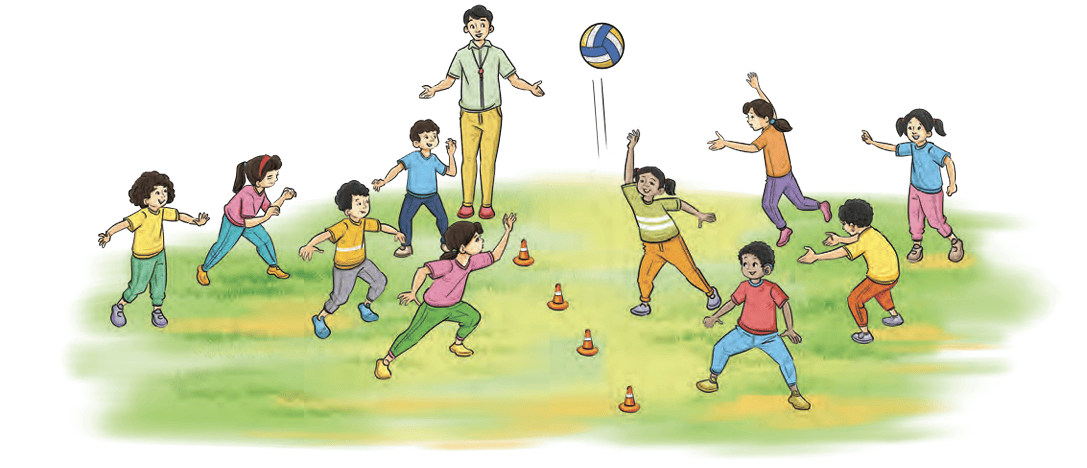
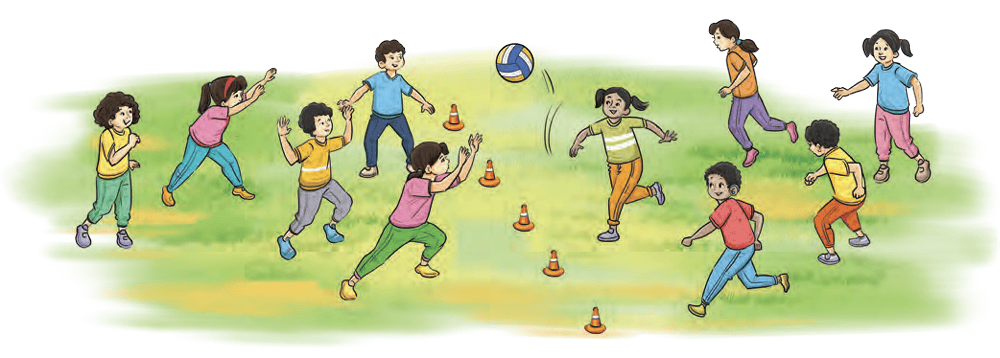
- . One team will try to throw the ball into the area of the other team as per instructions given below:
- – ‘Otta’ is to toss the ball and hit it with the same hand.
- – ‘Petta’ is to toss the ball and hit it with the other hand.
- – ‘Pidiyan’ is to toss the ball and hit it while the other hand is at the back.
- . The other team will return the ball while kicking it beyond the finish line of the opponent team. If the first team catches the ball, they will get one point.
- . If the other team kicks the ball outside the finish line of the opponent, they will receive a point.
- . The team that scores ten points first will be the winner.
PURPOSE
To develop hand-eye, leg-eye coordination and range for kicking.
VARIATION
- .Vary the size of the field and the size of the ball.
- .Vary the number of students.
Circle Time
Discuss how you would have motivated your team members when losing points. Identify one good thing about your opponents that you would also like to practise.
OG 2
Attakalam
How to play
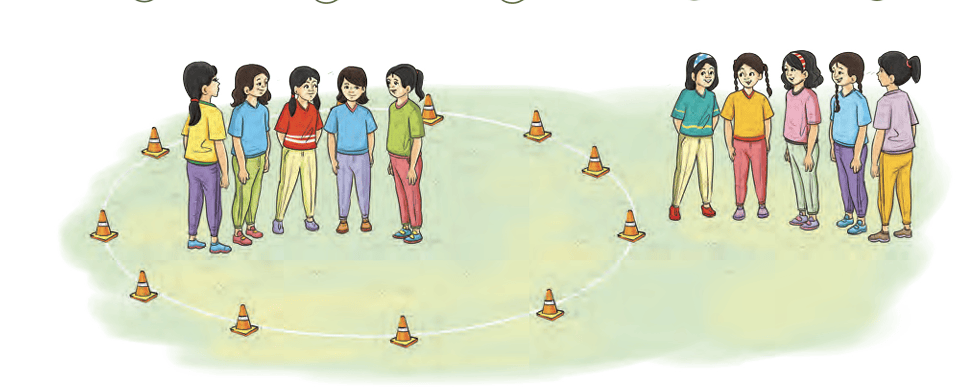
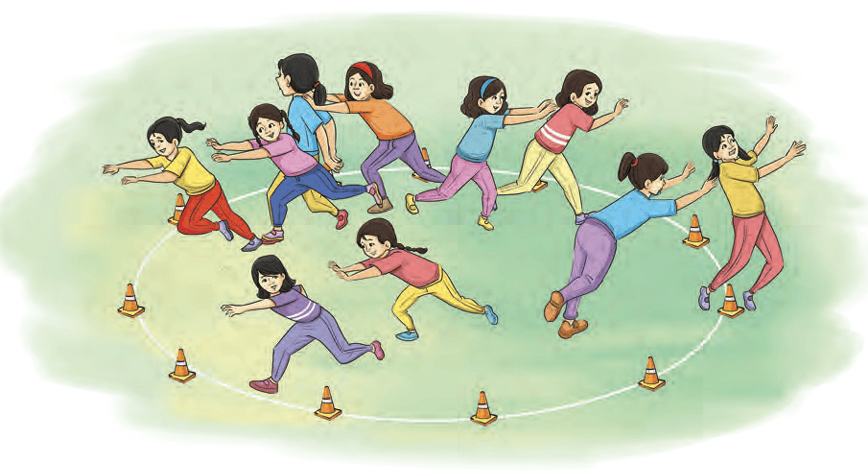
- . Mark a big circle.
- . Form two teams of seven students each.
- . One team will stand inside the circle, and the other will stand outside.
- . Members from the outside team will go inside the circle and try to push the students outside the circle, while the team inside the circle will resist.
- . Whichever team’s student pushes the student of the opponent team outside the circle within 30 seconds will get one point for one student, and the student will be out of the game.
- . If a student fails to push within 30 seconds, the opponent will get a point.
- . The team that gets the maximum points at the end or has the maximum students in the game will win
DID YOU KNOW?
While pushing someone or any object leg strength is equally required with the arm strength.
PURPOSE
To develop strength and teamwork.
VARIATION
- .Vary the size of the circle.
- .Vary the rules regarding pushing according to the student.
Circle Time
Share if you get tired or didn’t like something while playing the game. Discuss shapes of the ground other than circles that you can form for playing the game.

OG 3
Jodi Baki
How to play
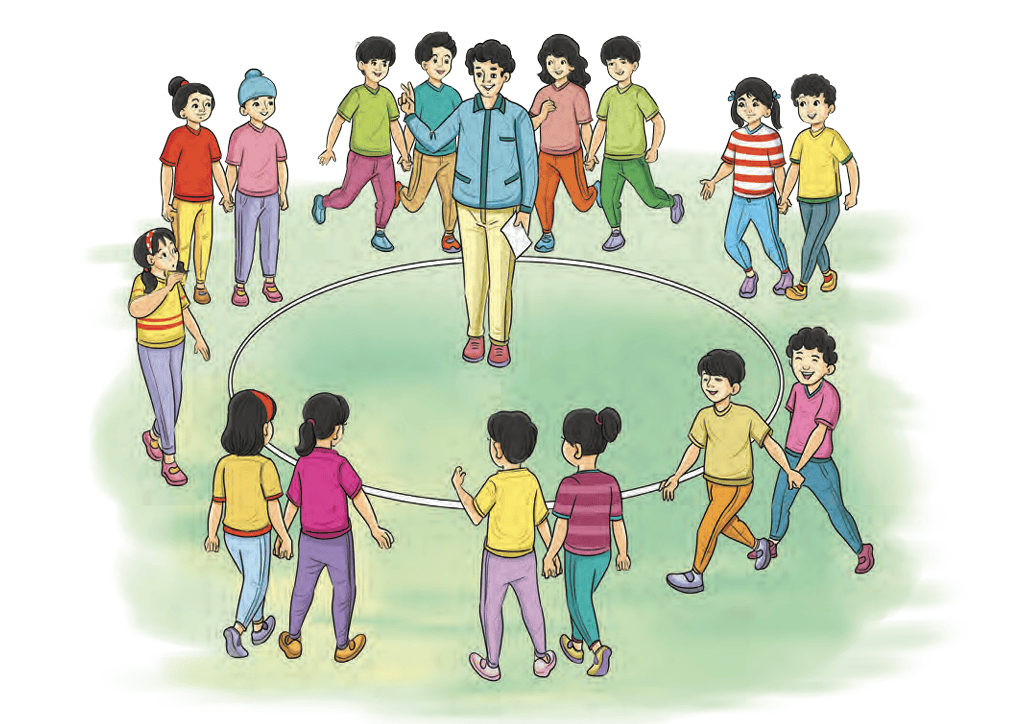
- . Mark a circle with a radius of a 7 metres.
- . Select one game leader who stands inside the circle to announce the number.
- . All other students run slowly in a clockwise or anticlockwise direction around the circle.
- . The game leader randomly announces a number between 1 to 9. For example, if the leader calls “3”, the students must immediately form groups of 3 by holding hands.
- . If there are extra students who cannot form a full group, they are out. For example, if there are 20 students and the number 3 is called, then 6 groups of 3 can be made (18 students), and 2 students will be eliminated.
- . The game continues with a new number for the remaining students.
- . This continues until only a few students are left (for example, 2–3 students who win).
- . The students remaining till the last who can successfully form groups in the final round win the game.
Note for the teacher
Monitor movement to ensure safety while running in the circle. If a student is left out, encourage positive reinforcement, reminding them that it is part of the game and they can participate in the discussion.
PURPOSE
To promote teamwork and quick decision making skills.
VARIATION
- .Announce numbers faster to increase difficulty.
- .Instead of being out, remaining students do a fun activity (for example,10 jumping jacks).
- .Students move in different directions after every round.
Circle Time
How did it feel to be left out? What can we learn from that? How does this game relate to real life (teamwork, quick thinking, inclusion, etc.)?
OG 4
Nakal Kho
How to play
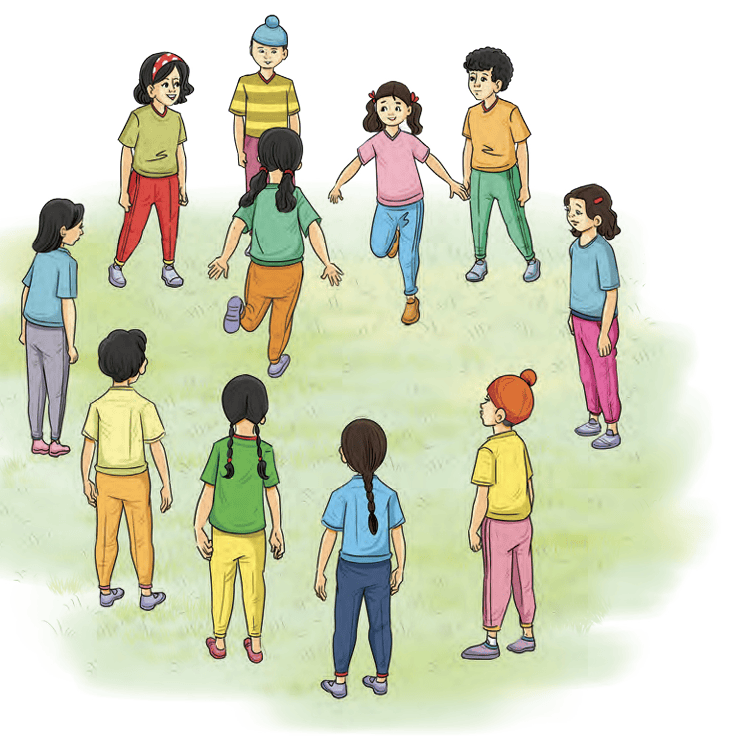
- . Form a large circle.
- . The students standing inside the circle will act as defenders.
- . One student is chosen as the attacker who will start the chase.
- . The attacker selects any one defender to chase.
- . The defender runs in any direction within the circle to escape.
- . While running, the defender can do any action (for example, jump, spin, crawl, clap, hop, etc.).
- . The attacker must imitate the same action while chasing.
- . If the defender gets tired or wants to switch, they can run to any other defender, stand in front of them, and say “Kho!”
- . The new defender now starts running and defending themselves, continuing the game.
- . The attacker must switch their chase to the new defender and continue imitating.
- . If the attacker successfully tags the defender, the tagged student becomes the new attacker.
- . The previous attacker joins the circle as a defender.
- . The game keeps going until all students get a turn as attackers or until a set time is completed.
- .There is no single winner, but students can try to stay as a defender the longest or make creative actions that challenge the attacker!
Notes for the teacher
Teachers should focus on improving observation and imitation skills.
PURPOSE
To develop lower body strength and teamwork.
VARIATION
- . Rotate attackers every 2 minutes.
- . Try a square or zig-zag boundary for variety.
- .Defenders must do at least 3 different actions before saying “Kho”.
Circle Time
Discuss different non-verbal cues that occur during the game. Discuss how these cues were important to catch the defender.
OG 5
Mai Bhi Maindhak
How to play
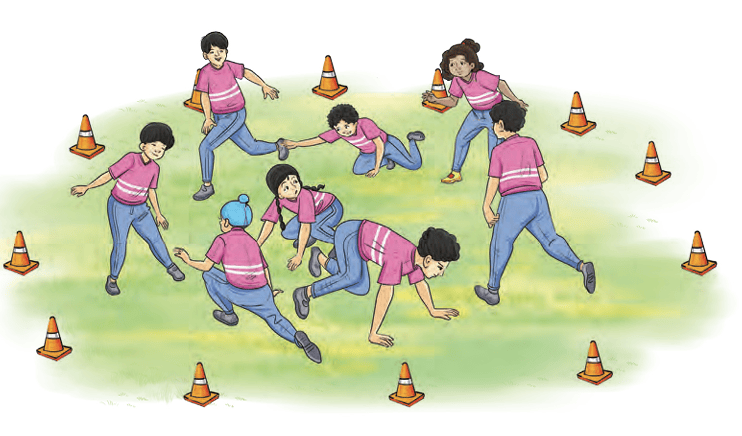
- . Choose one student as the attacker (frog).
- . The remaining students are defenders.
- . Mark a circle inside which students can move freely.
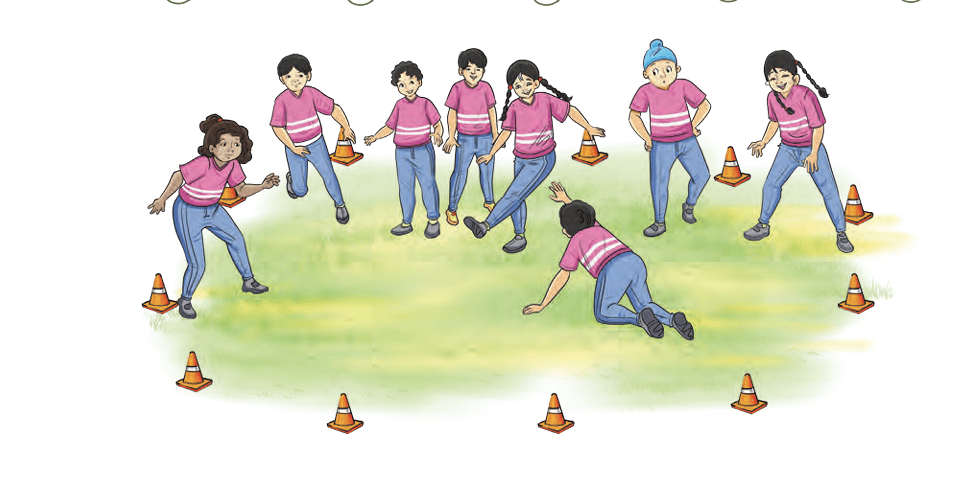
- . The attacker squats in a frog-like position (knees bent, hands touching the ground if possible).
- . They move by hopping or shuffling while staying close to the ground.
- . The attacker swings or extends one leg to try and tag a defender.
- . The defenders run, jump, or dodge to avoid getting touched by the attacker.
- . If a defender gets touched by the attacker’s leg, they also become a frog (attacker).
- . Now, both frogs work together to tag the remaining defenders.
- . As more defenders get tagged, they also become frogs, making it harder for the remaining defenders.
- . The game goes on until only one defender is left.
- . The last remaining defender who avoids getting tagged is the winner.
Note for the teacher
Ensure safe play – No kicking, only gentle leg touches to tag.
PURPOSE
To improve balance, coordination, agility, and quick reflexes.
VARIATION
- . Begin with two or three attackers instead of one.
- . Frogs can only move by hopping, making it harder but funnier!
Circle Time
What strategies did you use to avoid getting tagged?
OG 6
Damru Relay
How to play
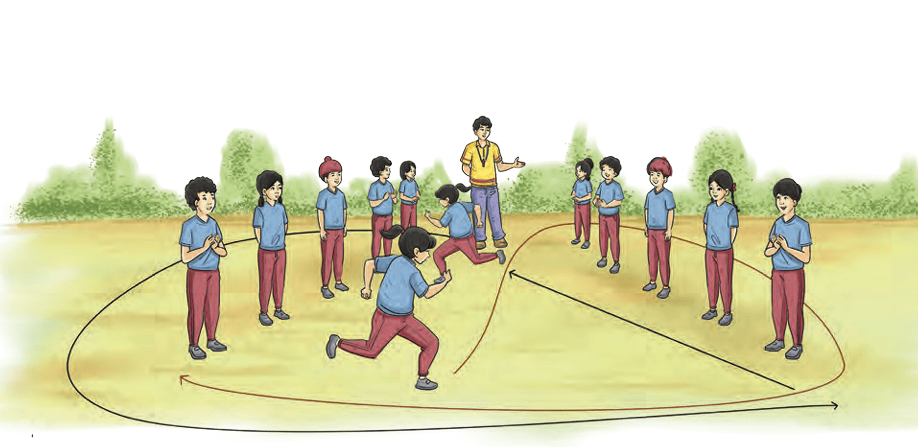
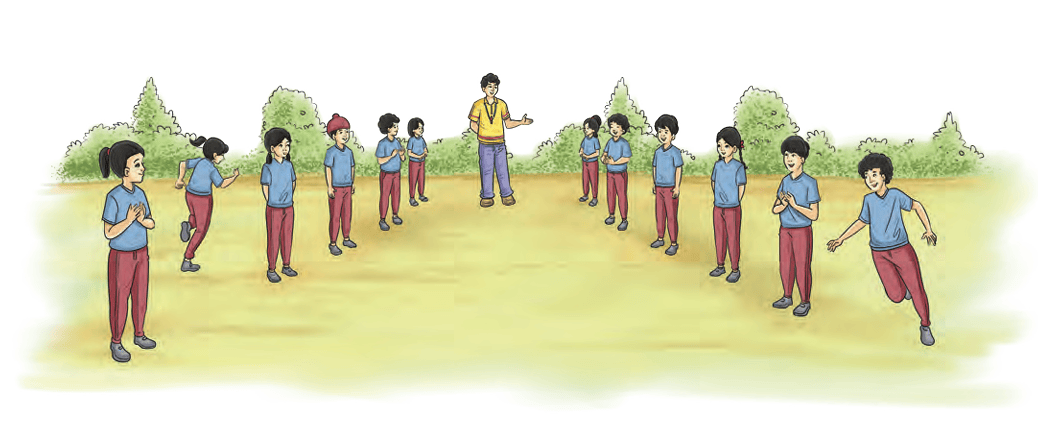
- . Form two teams with equal number of students in each.
- . Each team stands in a straight line facing the other team.
- . On the teacher’s signal, the first student from each team starts running towards their team’s opposite line and will run and complete a circle before coming back to their starting position.
- . As soon as the first student reaches their starting point, the next student starts running.
- . This process continues until every student in both the teams has completed their run.
- . The team whose last student finishes first is the winner.
DID YOU KNOW?
Covering distance in different directions in a given time is known as agility.
Note for the teacher
Ensure a clear running path to avoid collisions.
PURPOSE
To run efficiently and start quickly.
VARIATION
- . Students must run backwards instead of forward!
- . Place cones or hurdles to make the run more challenging.
Circle Time
How important was timing in this game?
OG 7
Aahwan Kabaddi
How to play
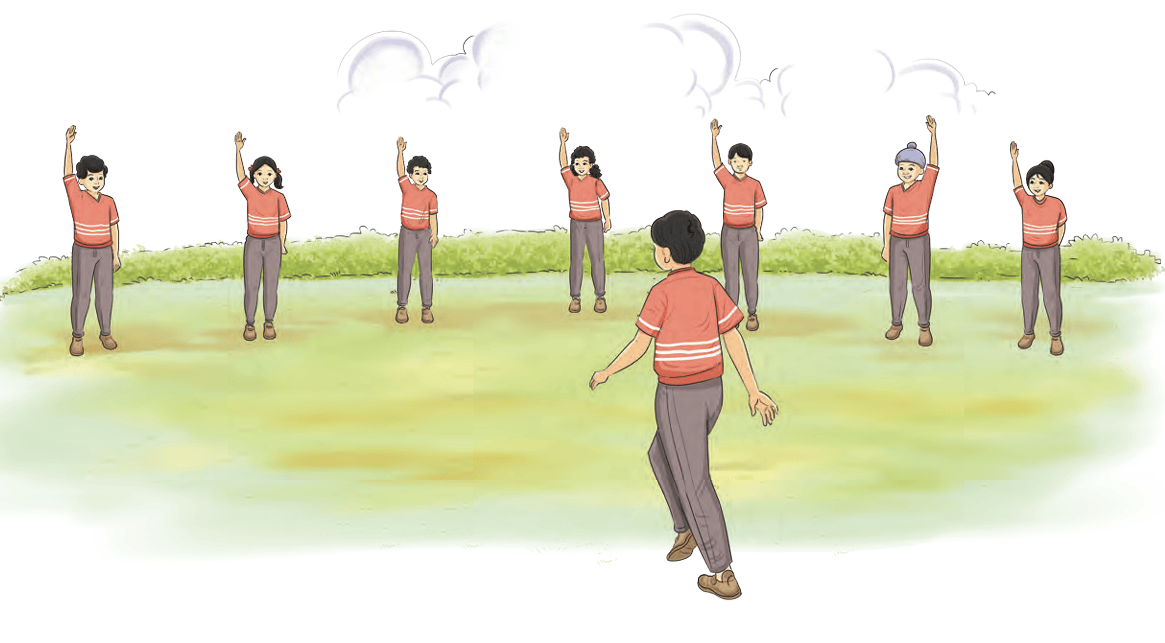
- . Divide students into two teams and have them face each other at a distance of 15–20 metres.
- . The defenders stand with both arms extended, with one hand at head level and one hand at waist level and palms facing each other (for the attacker to clap).
- . The attackers will take turns attempting to clap the defenders’ palms and return safely.
- . The teacher gives a signal, and one attacker from Team A moves towards Team B’s defenders.
- . The attacker must continuously chant “Kabaddi- Kabaddi” without taking a breath.
- . The attacker must clap the extended palm of any defender.
- . The moment they clap, they turn and sprint back to their team’s line.
- . Once clapped, the defenders immediately chase the attacker.
- . If they successfully tag the attacker before they reach their line, the defender’s team scores 1 point.
- . If the attacker reaches safely, the attacker’s team gets 1 point.
- . After each round, the next student from the opposing team takes the role of the attacker.
- . The game continues until all students avail their turn as attackers.
- . The team with the most points at the end wins!
PURPOSE
To improve agility, reaction time, strategic thinking, and breath control, while promoting teamwork and excitement.
VARIATION
- . To increase the degree of difficulty the distance can be varied as well as position of arms can be changed.
Circle Time
Discuss how you will help your teammates control their feelings when you lose or how you can avoid over-celebrating your victory.
OG 8
Bhukha Sher
How to play
- . As per the number of participants, circles of 2 feet in diameter are drawn, so that each circle contains 7–8 students.
- . These circles are 3–4 feet apart from one another.
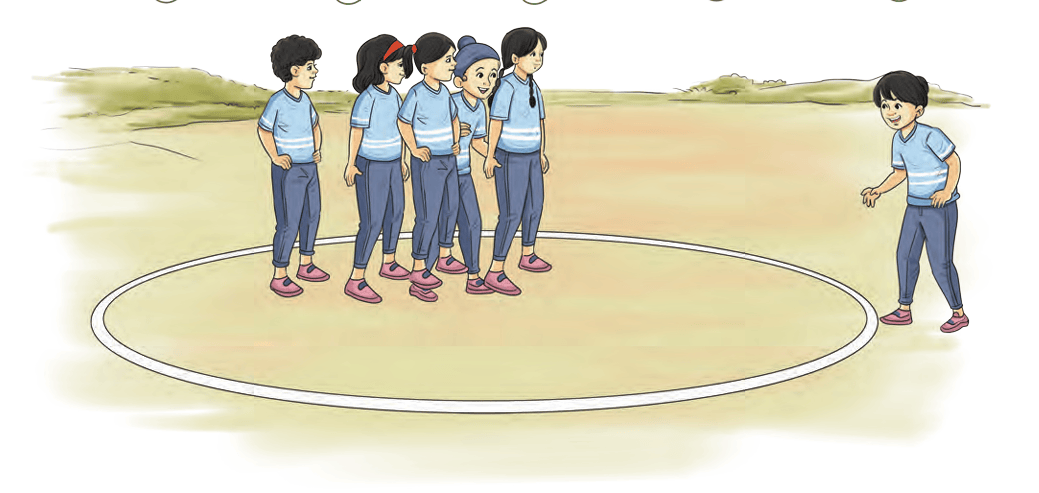
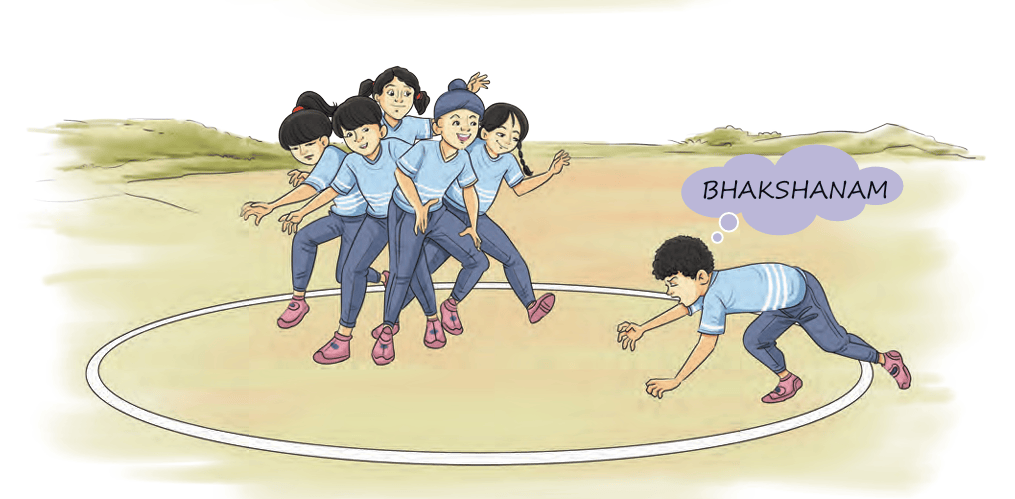
- . One student outside the circle is the hungry lion (denner).
Others stand inside their circles, which are safe areas. - . The game begins with the denner getting down on their four limbs and roaring like a lion while roaming in the field.
- . When the denner takes the name of a wild animal, it is a cue for all the students to come out of their circles and start chasing the lion and try to tap its back.
- . The student who successfully taps the lion’s back will be called ‘Veer’.
- . At the same time the denner finds all the ‘animals’ vulnerable, and suddenly roars, “Bhakshanam” (I want to eat).
- . The students must then all run back to their safe zones in their respective circles.
- . If the ‘hungry lion’ catches anyone, that student becomes the next denner for the game to continue.
PURPOSE
To develop core strength and anticipation
VARIATION
- . The word Bhakshanam can be replaced by yours or any other local language, with a word that means ‘I want to eat’.
Circle Time
Discuss how it feels when the denner announces Bhakshanam. Discuss the food chain in a jungle.
OG 9
Ghar Pehchano
How to play
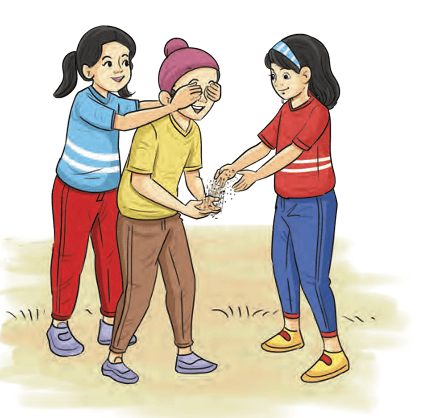
- . The students gather and stand in a large field. There is no fixed number of student.
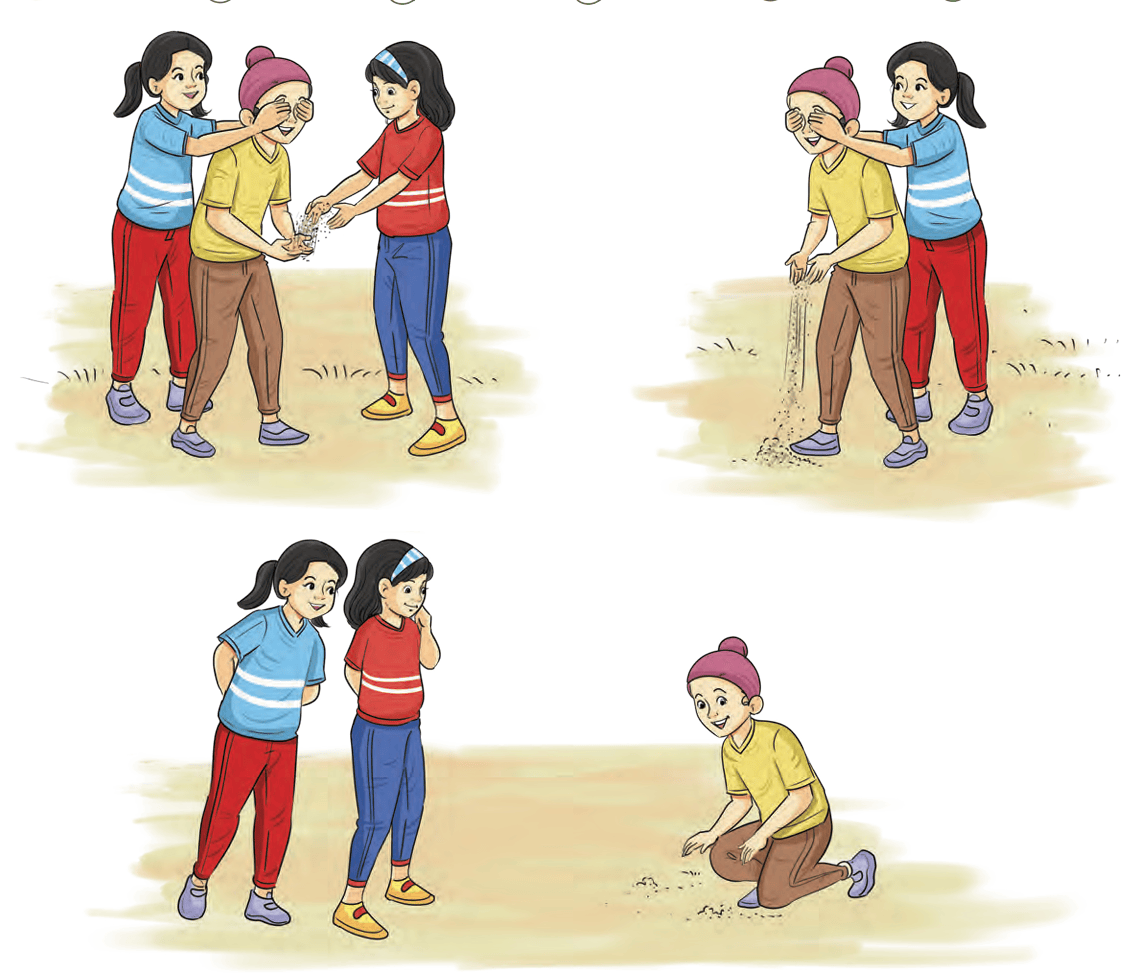
- . In this, a student is made to stand in the middle of the field, and keep both palms joined so that it forms an open vessel.
- . One student from the field comes and puts soil in their hand.
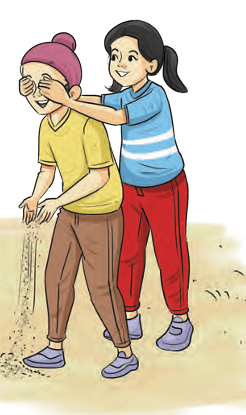
- . Another student covers both eyes of the student holding the soil with both hands and asks them to walk forward.
- . While moving them across the field diagonally, left-right, forward-backwards, they are asked to put down the soil in their hand anywhere suddenly.
- . Then, moving them diagonally in the same way, with closed eyes, they are brought to the designated place where they were made to stand before the game starts.
- . At this point, their eyes are uncovered, and then they are asked to find the place where they had dropped the soil.
- .For this, they are given a fixed time which ranges from 5 to 15 seconds.
- .The other students will try and hide the soil.
- . If the student is unable to find the soil, then they will perform five sit-ups.
PURPOSE
Development of anticipation, perception, spatial sense and feel of patriotism for our beloved soil.
VARIATION
- . Sit-ups can be replaced with modified push-ups or squats.
Circle Time
Discuss how understanding directions helped you to find the soil.
OG 10
Daicholu
How to play
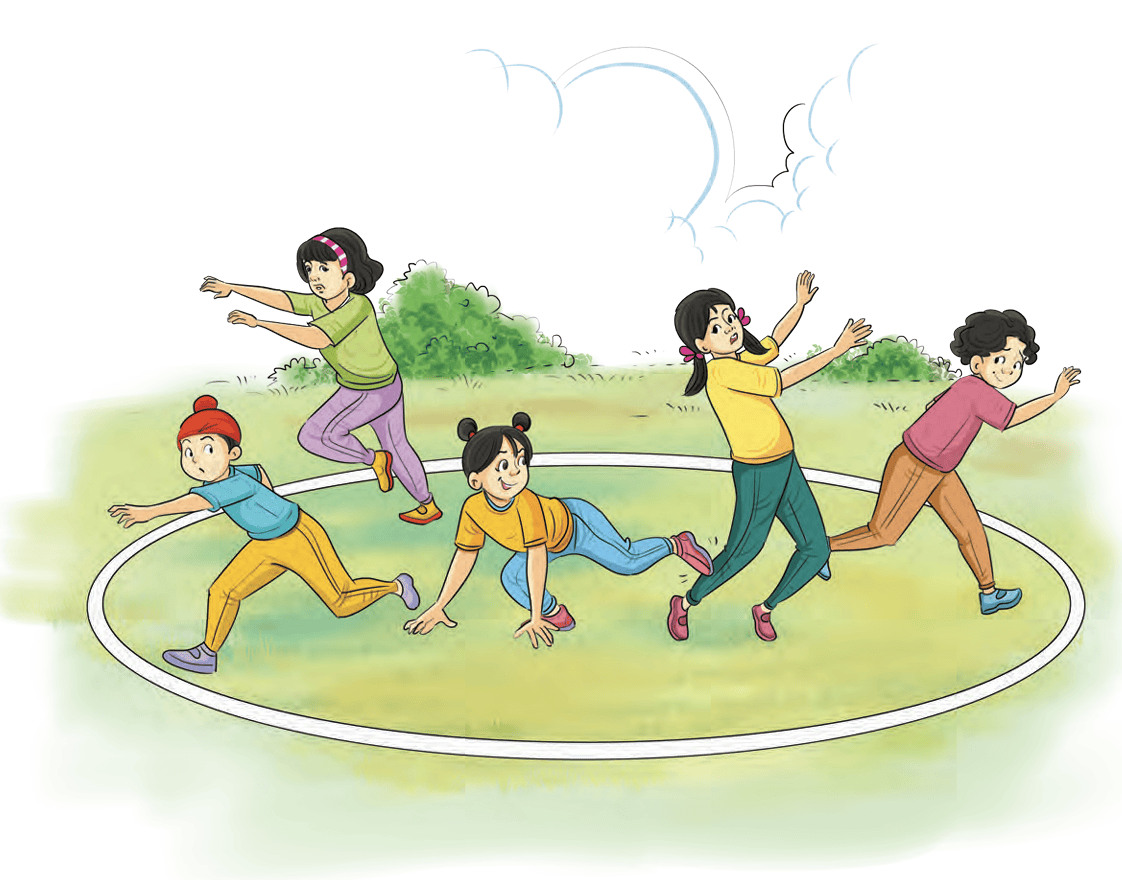
- . Make a circular path based on the number of students.
- . All the students have to stay inside this circular path.
- . One of these students is made the chaser.
- . This student also stays inside the same circular path.
- . The chaser keeps crawling inside the circumference, and while crawling, touches other students with their feet.
- . When this chasing student touches any student, they are considered out, and that student is taken out of the circle.
- . If any student takes their foot out of the circular perimeter to escape from the chasing student, then they are disqualified.
- . Whichever student the chaser touches first with their foot, becomes the chaser in the next round.
DID YOU KNOW?
Core muscles are located in your abdominal, lower back, hips and pelvis. They help you in stand tall, stay balance, twist, bend, move smoothly and protective spine. There are approximately 29 core muscles.
PURPOSE
To develop core strength.
VARIATION
- . Number of chaser can be increased.
- . Insted of crawl, postion can be varied.
Circle Time
Discuss how the instinct to remove legs affected the strategy of the game.
OG 11
Chikka-Chikka
How to play
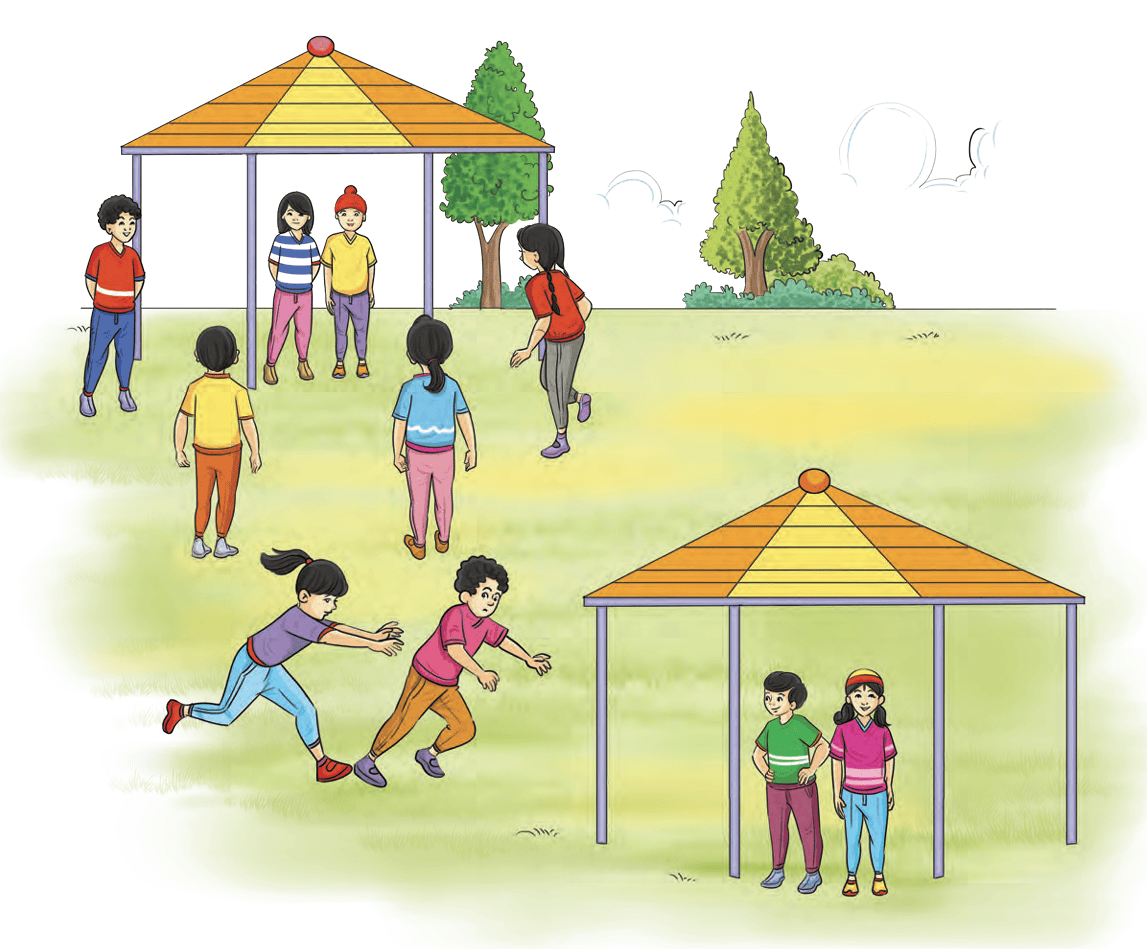
- . There are two teams in this game. Each team has five students.
- . There are three houses built on the ground.
- . All the students of one team stand in one house while all the students of the other team surround that house from all sides.
- . Now the student standing inside the house has to change their house while avoiding the student standing outside the house.
- . But if the student standing outside touches them while running, they are out.
Explore
How many escape exits are there in a house which can be used in case of emergency exit? Explore any five houses including your own and close proximity.
Note for the teacher
Ensure the safety of the student.
PURPOSE
To develop spatial sense and agility.
VARIATION
- . The number of students may vary
- . The rules may be modified to make it more difficult or easier.
- . The number of houses may vary.
Circle Time
Discuss strategies used to dodge the students outside the house to change the house.
OG 12
Gocho Paari
How to play
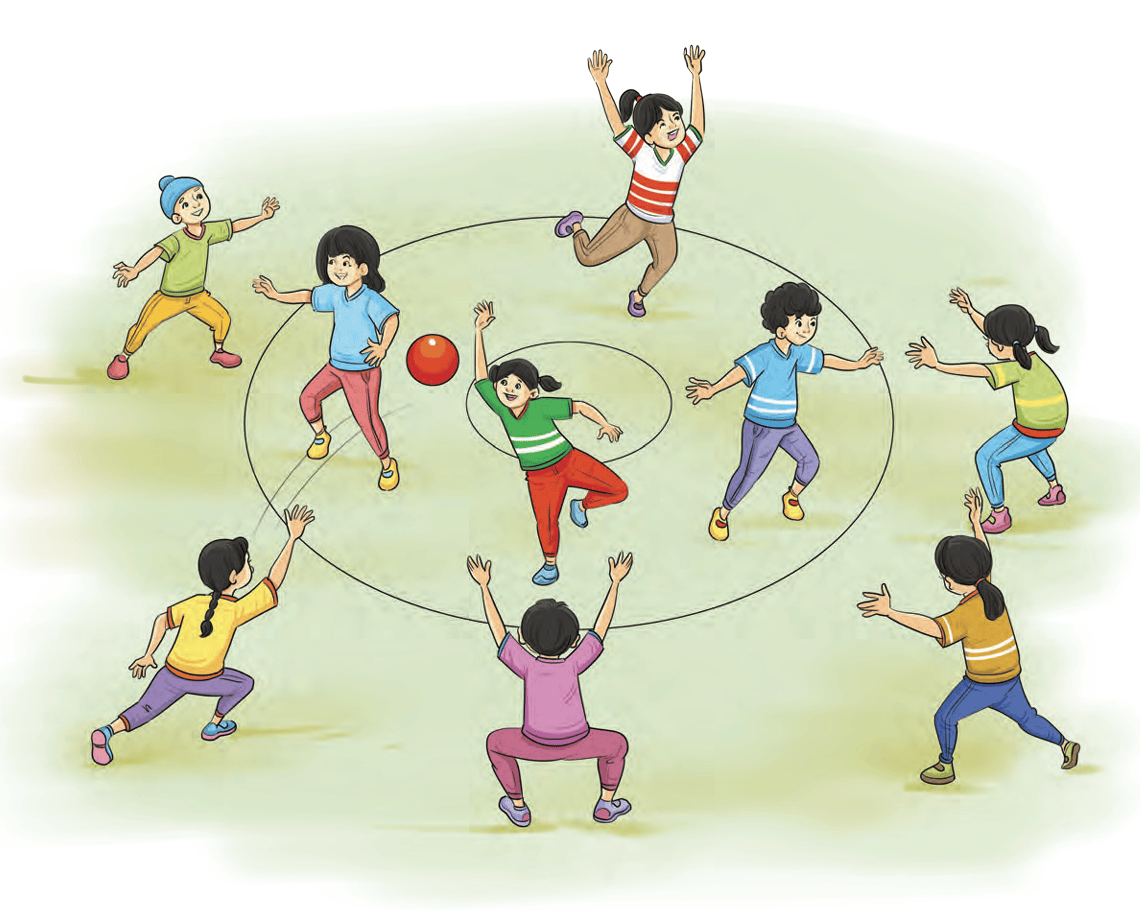
- . Form two circles the smaller one will be drawn in the centre with a larger outer circle.
- . Seven to eight students will be in the bigger circle, scattered all around it.
- . One thrower, standing at a distance from the circle, will try to throw the ball into the inner circle.
- . The students within the circle will fold one leg and grip that with their hand and try to stop the ball from entering the circle with the grounded leg.
- . If the ball enters into the circle, the thrower will then enter the circle and the last person who attempted to stop the ball will the new thrower.
- . Everyone should get an opportunity on rotational basis.
DID YOU KNOW?
Eating healthy foods like lentils and pulses can make you stronger and healthier.
PURPOSE
To develop eye-hand coordination and spatial sense.
VARIATION
- . Multiple balls can be used.
- . Play with legs only.
Circle Time
Discuss how you can get into different positions that make it easier to hit the ball or share theposition that you f ind most comfortable while hitting.
Guided self-assessment for Students
The purpose of this exercise is to help parents and guardians to track their child’s growth regarding the social and emotional development through Physical Education, and how these social and emotional qualities are transformed from ground to the daily life of the child. Focusing on individual progress rather than competition.
Instructions
Read the statements and tick the number which is most suitable for you.
Enjoyability (Motivation to play): My ward
1 |
2 |
3 |
4 |
5 |
|---|---|---|---|---|
| Takes part actively, displaying energy and enjoyment during play. | Shows high energy and motivation to engage in both familiar and new activities. | Takes initiative to start games, encourages peers to join, and enjoys trying different roles. | Demonstrates leadership by guiding others, explaining rules, and ensuring fair play. | Innovates new ways to play, modifies rules to make games more engaging, and encourages teamwork. |
Helping Others & Kindness: My ward
1 |
2 |
3 |
4 |
5 |
|---|---|---|---|---|
| Regularly offers help without being asked. | Engages in helping others with a genuine sense of empathy. | Enjoys helping and feels happy to be kind. | Cares for others and helps whenever needed. | Sets a positive example by treating everyone with respect and fairness. |
Feel Safe with Others: My ward
| 1 |
2 |
3 |
4 |
5 |
|---|---|---|---|---|
| Feels happy and secure while engaging in social activities with others. | Comfortably shares thoughts in discussions and cooperates with others. | Builds positive relationships, shows empathy, and supports others in social settings. | Takes initiative to include others, ensuring everyone feels valued and accepted. | Demonstrates strong social confidence, fostering a welcoming and inclusive environment for all. |
Active Lifestyle: My ward
| 1 |
2 |
3 |
4 |
5 |
|---|---|---|---|---|
| Comfortably performs physical activities with coordination and control. | Maintains enthusiasm and actively engages in physical activities. | Performs physical activities with speed, balance, and confidence. | Loves challenges, pushes personal limits, and enjoys movement based tasks. | Excels in physical challenges, inspires others, and enjoys staying active. |
Responsibilities: My ward
| 1 |
2 |
3 |
4 |
5 |
|---|---|---|---|---|
| Takes initiative in handling schoolwork and daily duties without frequent reminders. | Takes responsibility for personal and shared duties regularly. | Plans tasks well and finishes them on time. | Balances different duties with ease and takes ownership of tasks. | Takes initiative in supporting others to develop strong habits of discipline and responsibility. |