UNIT 3

Yoga
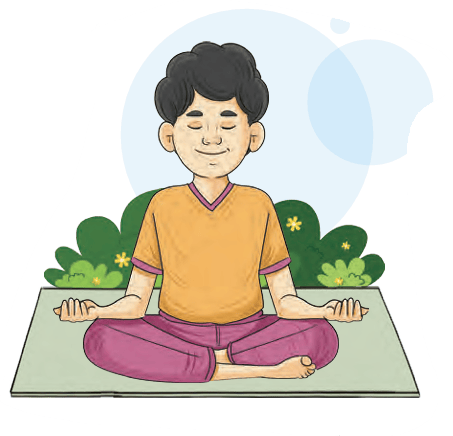
Yoga is a wonderful way to keep our body healthy and mind peaceful. When we practise yoga asanas every day, our body becomes strong, f lexible and active. These asanas also encourage blood flow to all parts of the body, so our organs stay healthy and work well. The practise of pranayama and dhyana regulates the mind. By following Yamas, Niyamas and Pratyahara, we learn sadvidya — the moral knowledge that helps us live a good and disciplined life.
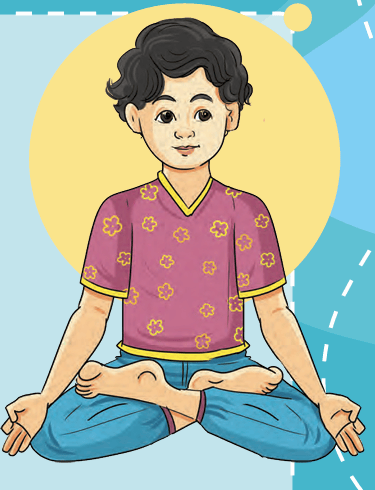
Over the past two years, we have been exploring the beauty of yoga — what it means and how it helps in our daily life. This year, under Yoga for Daily Life, we will learn about the different paths of yoga. Through Ashtanga Yoga, we will know the values of Asteya and Swadhyaya. We will also understand Pratyahara by relating it to the qualities of a good student.
As a part of our Yoga Sadhana, we will practise Preparatory practises to warm up the body, few more asanas to build strength and flexibility, pranayamas to calm the mind, mudras to improve focus, Bindu Trataka as a cleansing practise (Kriya), and Krida Yoga to learn group coordination. Let’s continue our daily journey of learning and practising yoga.
Chapter 6
Yoga for Daily Life
The joyful journey of yoga
It was the beginning of summer, and something exciting was planned at school—a 10-day Yoga Summer Camp! Many children joined in, full of joy and curiosity.
Every morning
began with bright
smiles. The students
102
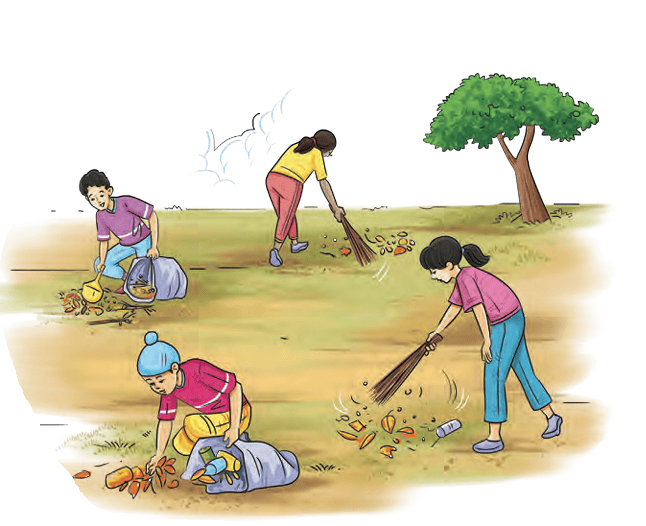
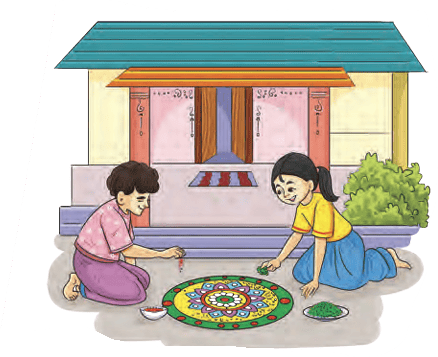
woke up early, cleaned the verandah, and
decorated it with beautiful
rangolis. They practised
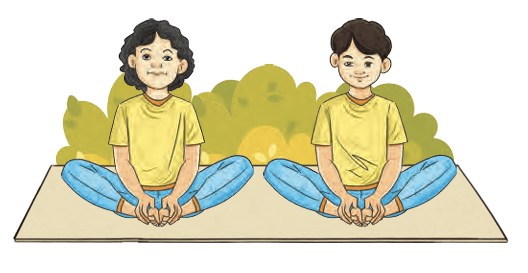 asanas and pranayama, played with pets, fed
them, did gardening, made flower garlands,
lit lamps, and sang prayers together. The
atmosphere was festive, with laughter and joy all
around.
asanas and pranayama, played with pets, fed
them, did gardening, made flower garlands,
lit lamps, and sang prayers together. The
atmosphere was festive, with laughter and joy all
around.
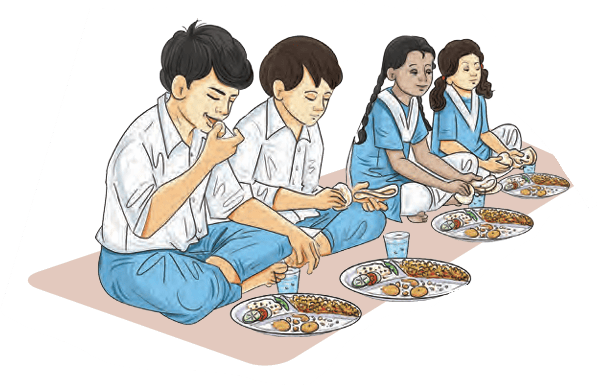
At mealtimes, they sat in groups, prayed, and enjoyed nutritious home-cooked food. They learned to eat mindfully, appreciate the taste, flavours, and never waste food. The children also practised cleanliness, cared for their belongings, and helped clean their rooms and play areas.
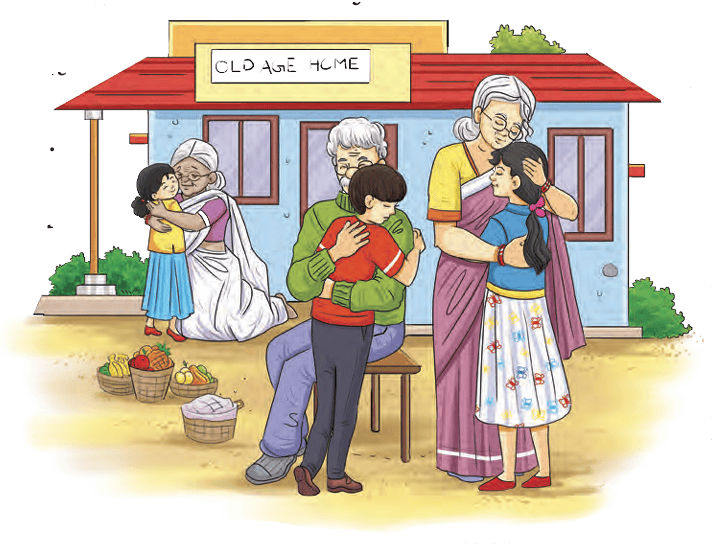
In the afternoons, they helped in the kitchen and visited an old-age home, where they offered fruits, sang songs, danced, and brought smiles to the faces of the grandparents. They experienced the joy of giving and caring for others. A visit to the Goshala was also part of their journey to build a connection with nature and animals.
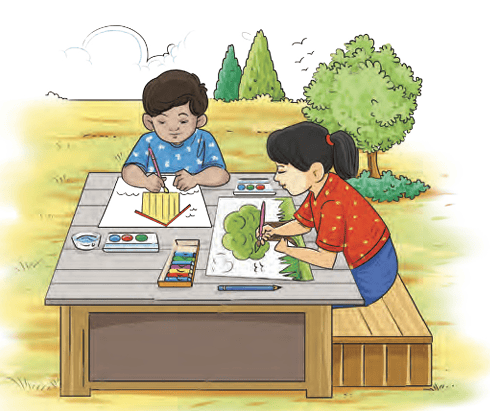
In the evenings, they enjoyed cycling, swimming, colouring, painting, and playing in the park. They listened to stories, sang bhajans, and practised meditation, before drifting into peaceful sleep.
On the final day of
the camp, all the children gathered under a
big, shady tree. The air was filled with joy and
chatter as they reflected on their 10-day journey.
Together, they listed all the activities they had
enjoyed—playing, colouring, storytelling, singing,
dancing, eating nutritious food, doing asanas and
pranayama, keeping things clean, helping others,
showing gratitude, being polite, feeding animals,
and more. The list grew longer and longer, and with
every memory shared, laughter and claps echoed
around. The children were excited.
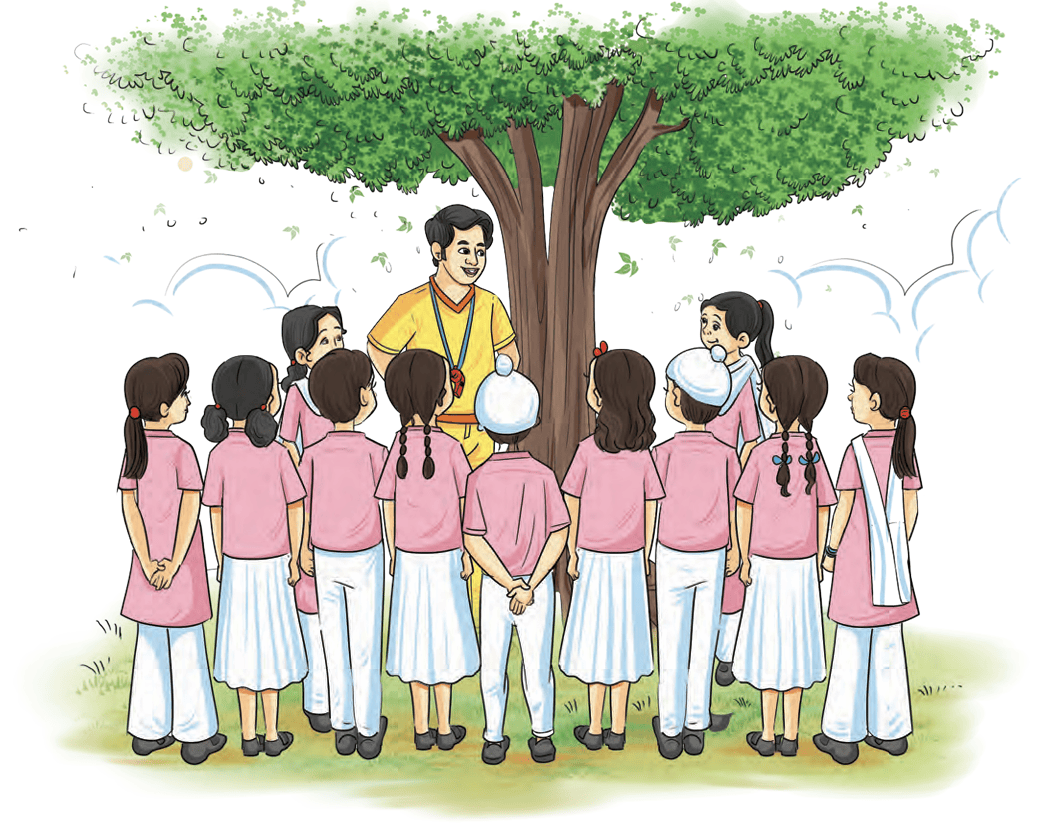
Then, one of the mentors asked, “Now tell me, what is yoga?”.
“It’s asanas!”, one child said.
“Eating good food!”, said another.
“Helping others! Praying! Taking care of pets!” Everyone shouted different answers.
The mentor smiled and said, “Yes, all that ... and more. When we do anything with joy in our hearts and calmness in our minds, it becomes yoga. Every action done with awareness, happiness, and dedication is yoga.”
With smiles on their faces, the children folded their hands in Namaskara Mudra and chanted together:
Om Sarve bhavantu sukhinah
Sarve santu niraamyah
।
Sarve bhadrani pashyantu
ma kashchit duhkha bhag bhavet
।
Om Shanti Shanti Shantih”
Think and Answer
- What does yoga mean to you after reading this story? Do you see it only as a form of exercise or something more meaningful? Explain.
- List the activities you usually do from morning to night?
- How do you connect any of your activities to yoga?
- Think of a recent moment when you showed kindness or helped someone. What exactly did you do and how did it feel?
- Which part of the yoga camp did you enjoy the most and why?
All the activities done in the camp can be connected to different paths or streams of yoga. Each path helps us grow in different ways. We can choose the path which we like the most. In this class, let’s learn about three important paths of yoga: Karma Yoga (the path of action), Gyana Yoga (the path of knowledge), and Bhakti Yoga (the path of devotion).
Paths of Yoga
From simple acts to Karma Yoga
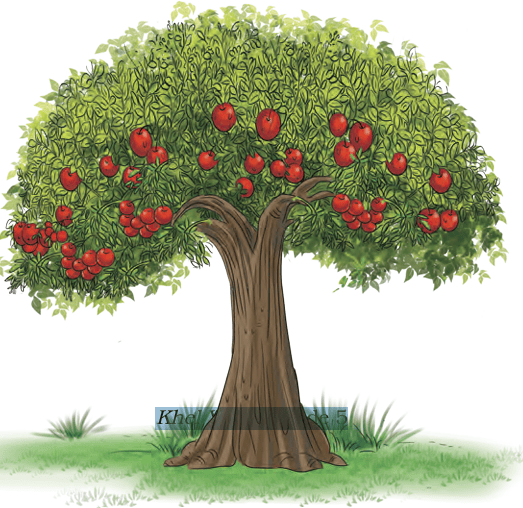
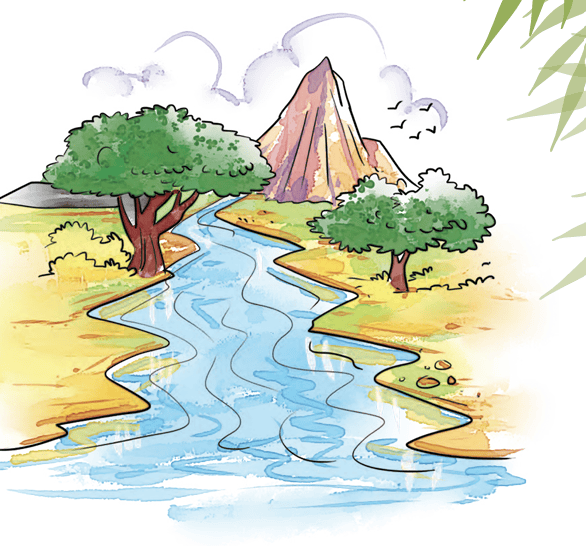
Trees give us cool shade, tasty fruits, pretty flowers, and fresh air to breathe. 106 106 Khel Yoga| Grade 5 Rivers give us clean water to drink, bathe, and grow food. The Sun shines brightly, giving us light and warmth every day.
Rivers give us clean water to drink, bathe, and grow food. The Sun shines brightly, giving us light and warmth every day.
The Earth holds us gently, letting plants grow and giving space for us to live.
They all give us so much, without asking for anything in return.
In the same way, there are many people in our lives from the time of our birth such as our mother, father, grandparents, teachers, neighbours and friends, who care for us and help us without expecting anything back.
Now Think for a Moment
Have you ever helped someone without being asked? Have you shared your lunch with a friend who forgot theirs? Have you picked up waste at school even if it wasn’t yours? Do you take care of your things — your books, your clothes, your bed all by yourself?
All these small acts are not just good habits. They are part of something special called Karma Yoga – the yoga of action. When we help others and give anything to a needy person, it brings us joy and deep satisfaction.
This is the true spirit of Karma Yoga — doing selfless actions with love.
What is Karma?
The word Karma means action or duty. Karma yoga means doing our work with honesty, love, and effort without expecting rewards.
Activity
- Share a story of someone you know (a parent, teacher or helper) whom you think of as a Karma yogi.
- On your birthday, visit an orphanage and share sweets.
- Help someone in need, such as helping a blind person cross the road, assisting an older person, or being kind to a friend or family member.
Karma yogi Jadav Molai Payeng
When Jadav Molai Payeng was 16, a massive flood hit his home island, Majuli, in Assam. After the flood, he saw something unfortunate— hundreds of snakes had died on a hot, empty sandbar because there were no trees to give them shade.
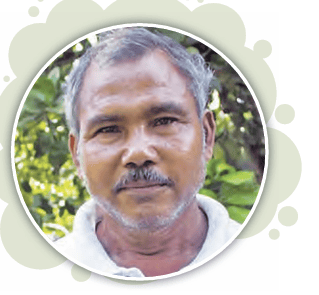
He thought, “If there were trees here, the snakes might have lived.” He decided to do something to help. The village elders gave him some cotton tree seeds and bamboo plants, and Jadav began planting them on the barren land.
Day by day, year after year, Jadav kept planting trees. Now, more than 40 years later, he has created a huge forest called Molai Forest, which is home to elephants, tigers, rhinos, deer, and many birds. Jadav didn’t stop when it was hard. He worked with love and care, not for money or fame, but to protect nature. Today, he is called ‘The Forest Man of India’ for his great work, and his forest has become a safe home for many animals.
The Missile Man of India who worked hard to develop India’s first indigenous Satellite Launch Vehicle.
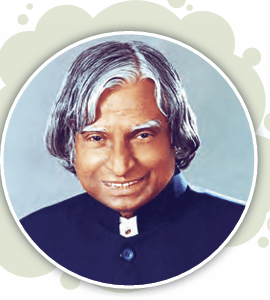
The Bird Man of India who spent his life saving birds
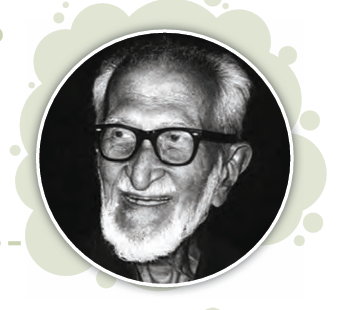
An environmentalist who is known for planting many banyan trees.
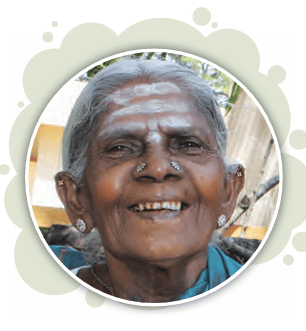
A social worker who raised many orphans.
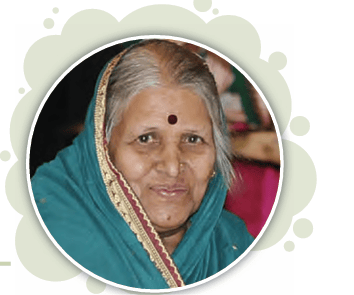
Can you identify these Karma Yogis?
These people did not work for any fame or appreciation. They simply followed their duty with the intention of serving the society.
Jnana Yoga
Gaurang and the Mystery Box of Jnana Yoga
The day before, Gaurang had attended a special lecture by a wise person along with his grandparents at a community centre. Although he couldn’t remember every detail, a few big questions stayed in his eager mind.
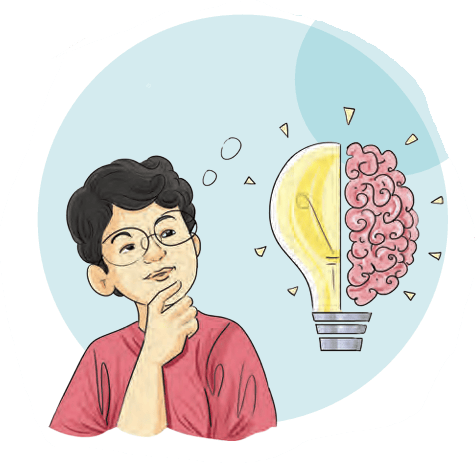
The next morning, still feeling those questions buzzing in his head, the curious boy decided to go for a walk. He tried to recollect all those questions. As he walked through the garden, surrounded by green leaves and colourful flowers, a question popped into his head, “What makes me really happy?”
He stopped to think, “Is it playing with friends? Helping others? Or singing my favourite song?”
Walking across a small bridge, he asked himself, “Why do I sometimes feel angry or sad?”
Then, another question came to him, “What’s something special about me?”. When he reached the pond, he saw his reflection in the water and thought, “Who am I, really? Why am I here in this world?”. He noticed some children playing and asked,“What makes everyone truly happy?” The children laughed and answered, “Toys, friends, games!” He thought about their answers for a while. That evening, the boy went up to the rooftop to experience the cool breeze. As he lay there, looking up at the stars, he wondered, “How are all people different from each other? How big is the universe? What’s beyond the stars?”
After a day full of wandering with the baggage of questions, Gaurang went to his mother and said, “Amma, I have so many questions in my mind, can you help me find the answers?” He asked a list of questions. His mother smiled and said, “The answers you are looking for are kept in a special mystery box called Gyana Yoga.”
She explained, “Every time you read, observe, ask questions, experiment, or listen carefully, you f ind a little key. Each key helps you open a part of the mystery box and discover an answer inside. But remember, you need dedication, patience, and a lot of curiosity to keep unlocking more and more!”
The boy listened carefully and felt excited. He said to himself, “I am going to be a Mystery Box explorer, ready to collect keys one by one!”
Just like a lamp removes darkness, knowledge removes ignorance and helps us understand ourselves and the world around us. Gyana means knowledge, and yoga means a path or connection.
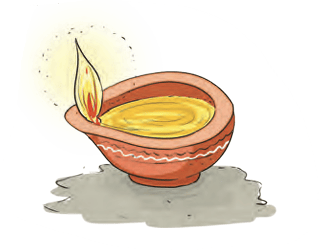
So, Gyana Yoga is about reading books, asking questions, thinking deeply, and learning from what we see, hear, and feel every day. When we use our mind to understand the truth and reflect on our actions, we are walking the path of Gyana Yoga.
Swami Chinmayananda
Swami Chinmayananda, born on 8 May 1916, in Kerala and was always curious to know more. He excelled in his studies and later worked as a journalist. He travelled to the Himalayas and met Swami Sivananda.
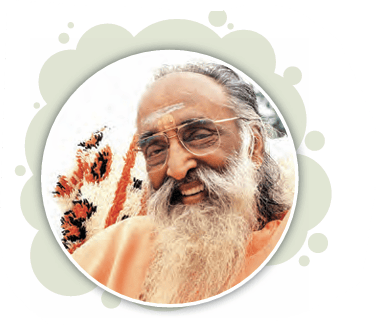
There, he discovered the path of spirituality and spent 12 years learning under Swami Tapovan. During his 40 years of travelling and teaching, Swami Chinmayananda opened numerous centres worldwide, and he also built many schools, hospitals, nursing homes and clinics. He is regarded as one of the great Gyana yogis of modern times.
Try this
- Create a collage of thoughtful questions and work together to explore and find their answers.
- Read books like Malgudi Days by R.K. Narayan, Grandma’s Bag of Stories by Sudha Murthy, Panchatantra, autobiographies of famous personalities, etc.
- Share in class what you liked or learned from these books. Was there any character, idea, or message that inspired you to follow it in your own life?
- What questions spark your curiosity? How do you find the answers? Keep your curiosity alive, explore what you love and keep learning!
- Collect proverbs and other wise sayings. Discuss their meaning with your parents, teachers and friends.
Can you identify these Gyana yogis?
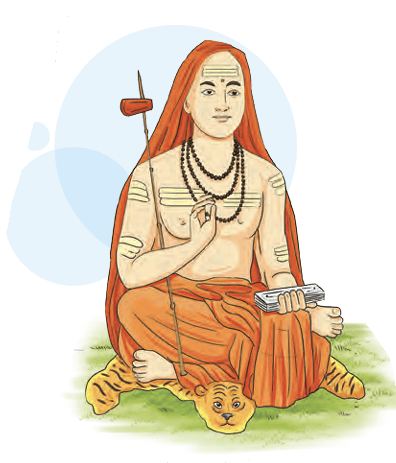
A great Vedic scholar, philosopher and teacher of Advaita Vedanta.
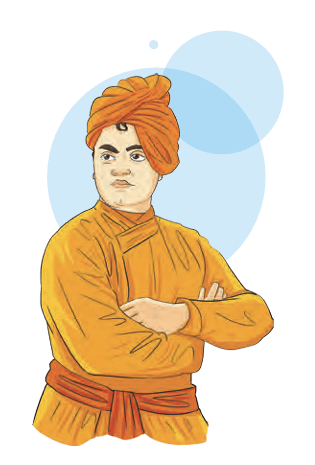
Youth icon, who took yoga and Vedanta to the Western world. He taught people to be brave, strong, and practiced universal brotherhood.
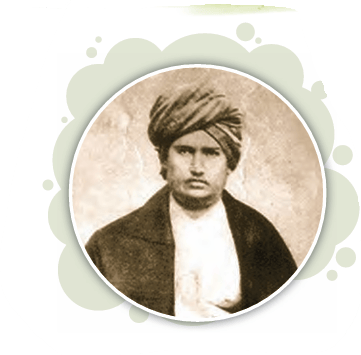
Founder of Arya Samaj, also known as ‘makers of Modern India’.
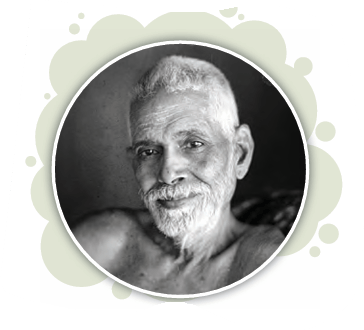
Maharishi from Tiruvannamalai, Tamil Nadu who guided people to meditate for true knowledge.
Each of them dedicated their lives to the search of knowledge. They were very curious in seeking it.
Bhakti Yoga
The story of Padmapada
A long time ago, in the southern part of Bharat, there lived a boy named Sanandana. After finishing his studies, he wanted to learn more about philosophy. So, he travelled all the way to Kashi, looking for a teacher.
In Kashi, he met the great Guru Adi Shankaracharya. Sanandana bowed down and requested him to accept him as his student. Shankaracharya agreed.
Sanandana had great bhakti and respect towards his Guru. He listened carefully to everything the Guru taught and learned very quickly, faster than other students. Some of the other students felt jealous, thinking, “Why does the Guru like him so much?”
One day, Shankaracharya wanted to show the m how special Sanandana really was. He called out to him loudly from across the river. Sanandana was washing Guru’s clothes on the other side of the river.
The moment Sanandana heard his Guru’s voice, he forgot about everything else. He didn’t even think about the big river in between! He just ran towards his Guru.
Amazingly, as he stepped onto the water, beautiful lotuses appeared under his feet, one after another! as if gently supporting him. Without even knowing it, he ran across the river.
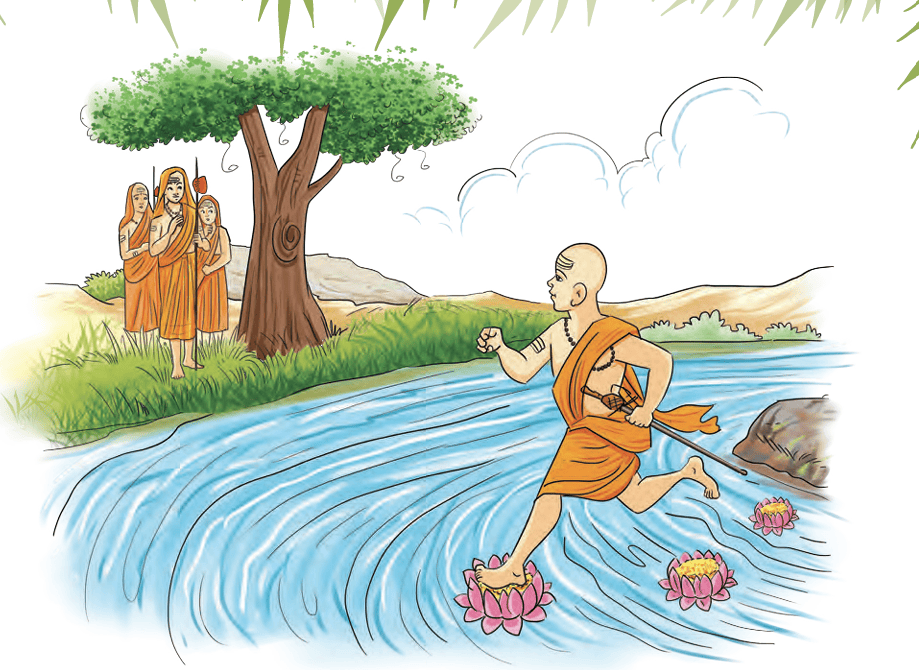
Everyone watched in surprise. They understood that it was Sanandana’s pure bhakti and trust in his Guru that made the miracle happen.
From that day, Shankaracharya gave him the name — Padmapada, which means “the one whose feet are supported by lotuses”.
This shows that with immense bhakti, anything is possible. Bhakti Yoga means loving God with a pure heart and seeing God in everyone and everything around us, such as parents, teachers, nature, animals and all of society.
How can you practice Bhakti Yoga?
- Pray when you wake up, and before sleep.
- Take blessings from your parents, teachers, and elders every day.
- Listen to bhajans or devotional songs in your language and try singing along.
- Light a lamp and sit quietly for 2 minutes every evening with your family.
- Keep a log and note when you prayed or sang, and how it made you feel.
Can you Identify these Mahan Bhakti Yogis?
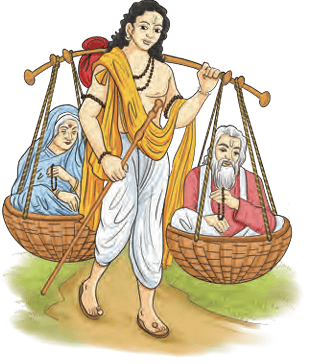
He is seen in the story of Ramayana, showing deep love and care for his blind and aged parents.
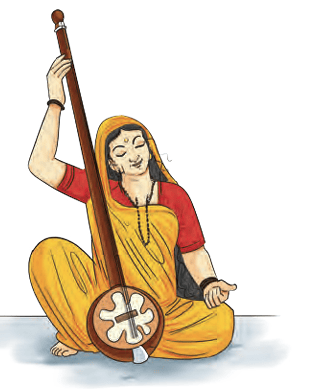
She has composed beautiful bhajans to show devotion towards Lord Krishna.
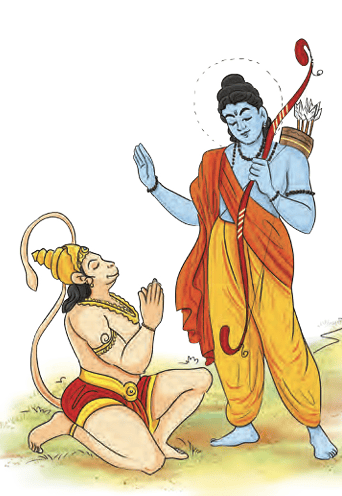
A great bhakti yogi who served Lord Rama with his immense abilities.
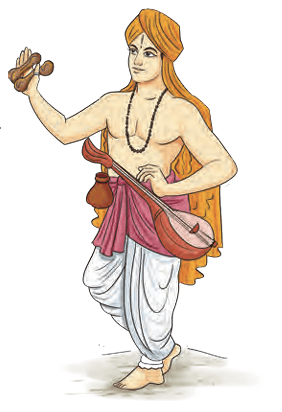
This yogi is also known as ‘Pitamaha of Carnatic music’.
These people lived with love and devotion in everything they did – through bhajans, prayer, or simple living.
Notes for the teacher
Encourage the students to collect and share bhakti-related stories from their own regions, such as those of Sant Kabir, Tulsidas, Akkamahadevi, Ramakrishna Paramahamsa, and others.
Ashtanga Yoga
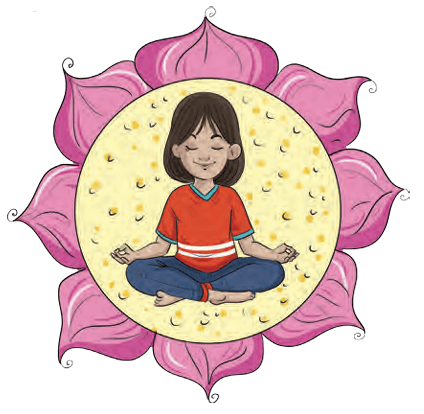
(Social Disciplines)
(Personal Disciplines)
(Postures)
(Mastery Over Prana)
(Mastery Over Senses)
(One Pointed Awareness)
(Contemplation)
(Blissful Experience)
The Yoga Sutras written by Patanjali over 2000 years ago serve as a basic text for yoga. Patanjali mentions Ashtanga yoga in this book. As you all know, the eight limbs of Ashtanga Yoga are Yama, Niyama, Asana, Pranayama, Pratyahara, Dharana, Dhyana, and Samadhi.
In this class, we shall continue learning more about each limb.
Yama
Yama is the first limb of Ashtanga Yoga. It refers to moral disciplines that we should follow in our interaction with the society we live in.
Ahimsa
Love all living beings Satya Being Asteya Share whatever truthful and and pray for their well being.
Satya
Being Asteya truthful and honest.
Asteya
Share whatever you have and avoid taking things from others which do not belong to you.
Brahmacharya
Keeping our mind, body, and thoughts focused on good things and living with discipline.
Aparigraha
Avoid having more things than necessary.
In earlier classes, we learnt about Ahimsa and Satya. This year, we shall learn about Asteya.
Asteya
Asteya means non-stealing, not just in actions but also in words and thoughts. It teaches us not to take anything that isn’t ours, including credit for someone else’s work.
Let us understand more about Asteya with the help of following story.
Kavya makes up her mind
In Kavya’s class, there was a girl named Adya. One day, Adya came to school wearing a pretty butterfly hair clip. Kavya liked it very much.
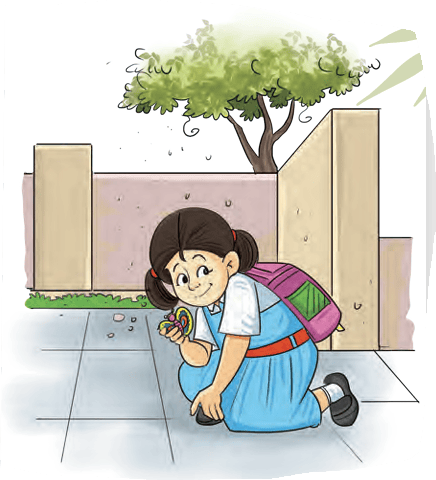
As Adya was leaving the class in the evening, the clip accidentally fell from her hair. She didn’t notice it.
Kavya saw the clip on the floor and picked it up. At first, she wanted to give it back to Adya. But then, she changed her mind and quietly put it into her bag.
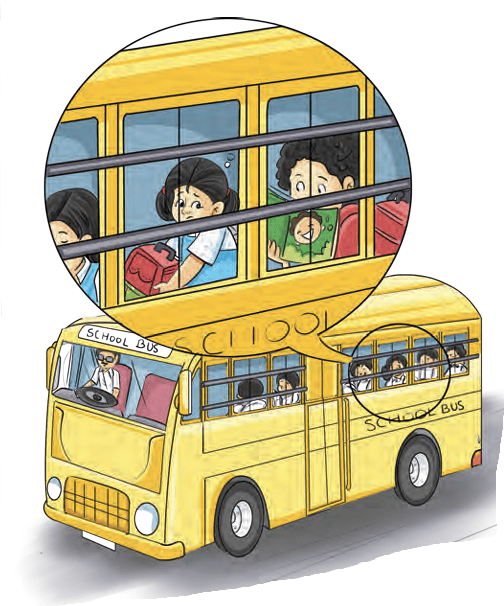
On the bus ride home, she felt uneasy. “I should return it … but I like it so much,” she thought. “I have stolen her clip, that is wrong … No, I did not steal it, she dropped it … I could have told her … it is not my duty to tell her …
I should have left it where it was … then somebody else would have taken it.
I will return the clip now and ask the name of the shop where she bought it … What if I do not find the shop…
Adya is so careless. This will teach her a lesson. She will be careful in future.
If I return the clip now, she will think I am a thief, she will ask why I did not return it at that time …
God loves me. That is why he made her drop the clip. Why should I try to give away something that God has given me?”
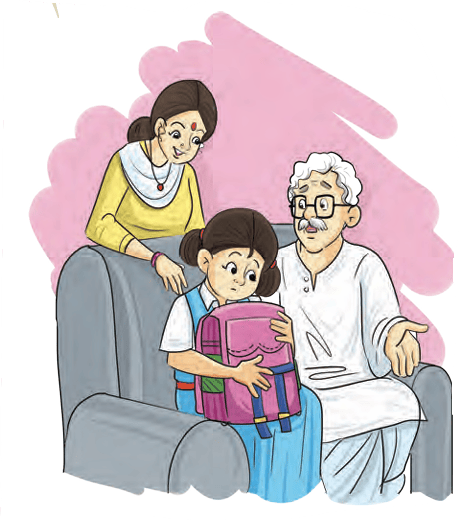
Kavya reached home but was very quiet. Her mother asked if something was wrong, but Kavya said she was fine. Later, her grandfather also asked if the teacher had scolded her. Kavya said no and tried to smile and act cheerful.
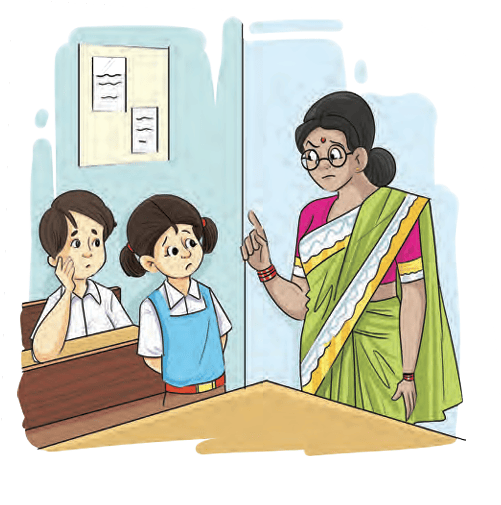
The next day, Adya told the teacher she had lost her hair clip at school. The teacher asked the whole class, but no one spoke, not even Kavya. Kavya felt uneasy inside. The teacher told Adya to be more careful next time. Kavya felt a little better, but not truly happy. The clip was still in her bag.
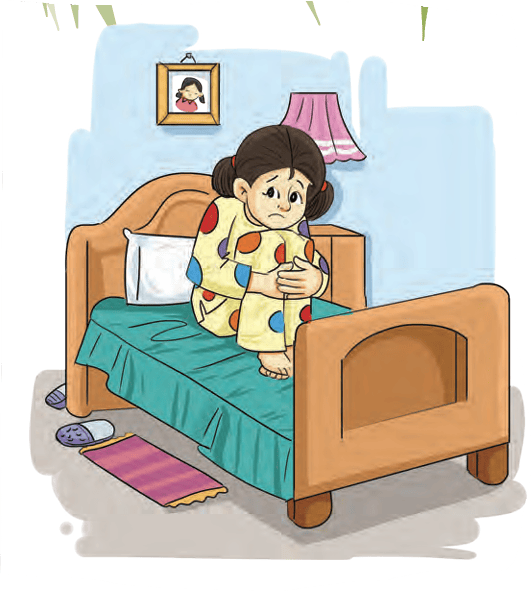
At home, she tries to be normal, but again, a chain of thoughts begins to trouble her, “Where shall I put the clip? If I wear it at home, mother will ask, and if I wear it to school, Adya will see it … If nobody sees it, still God will see it”. She felt uneasy again. Her mind said, “a good person does not steal”. She decided to speak the truth. The clip travelled with her to school once more.
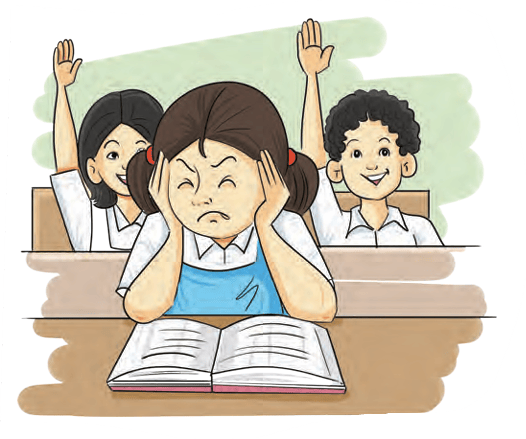
Kavya kept thinking about how to return the clip. She feared the teacher might punish her or the class might call her a thief. She thought of quietly giving it back, but worried Adya might still tell the teacher. So, she left the clip in her bag again and told herself the matter was over.
The next day, Kavya couldn’t focus in class. The guilt was too much. She stood up immediately without delay and said, “Ma’am, I made a terrible mistake the other day. I saw Adya dropping her hair clip. I picked up the clip, which was wrong. I kept the clip for many days, which was wrong. I did not speak in the class, even when you asked; that was wrong. You may punish me for all the wrong things I have done.” Then Kavya started crying. She pulled the clip from her bag and gave it back to Adya.
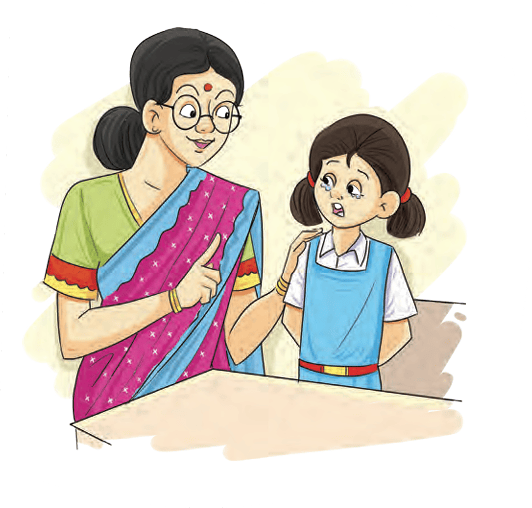
The teacher gently put her arm around Kavya and said, “You won’t be punished. The guilt you felt was enough.” Kavya smiled, “I feel light now, like a big burden is gone.” The teacher replied, “That’s your reward for speaking the truth.”
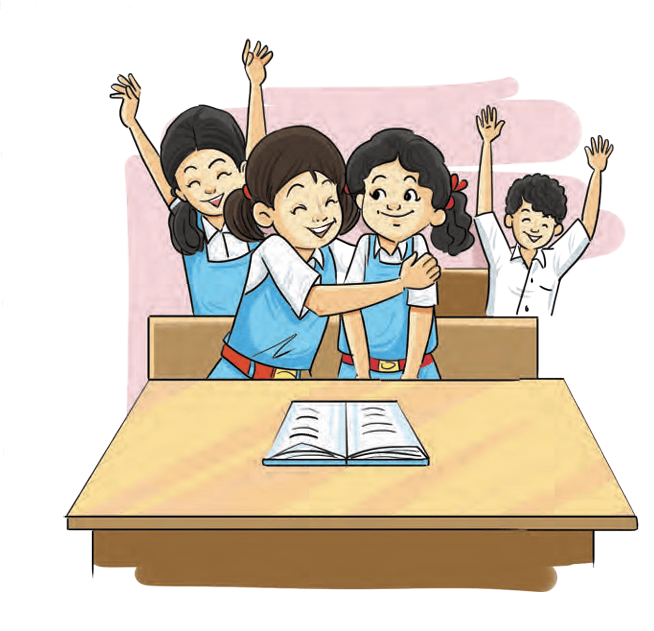
Adya offered Kavya to keep the clip for herself, and she would buy another for her. A wave of relief travelled through the class. All of them smiled and clapped.
Think and Answer
- How can we resist temptations in situations like the one Kavya faced?
- Have you ever lost something that was important to you? How did it feel?
- What could Kavya have done differently to avoid picking the hair clip in the first place?
Activity
Read the following situation:
- Sunil shared his pencil a few times with a friend at school. But, the friend didn’t return the pencil. This happened again and again.
- How do you think Sunil might have reacted?
- Have you ever taken something that did not belong to you without asking? How did you feel afterwards?
- One of your friends gave you a good idea for a science project. Will you take all the credit for it, or will you thank your friend and share the appreciation?
Niyama
It means self-discipline for personal development. It is the second limb of Ashtanga yoga.
Shaucha
Purity or cleanliness of both body and mind.
Santosha
Satisfaction or contentment. Finding satisfaction and happiness in whatever we have.
Satya
Self discipline and dedication.
Swadhyaya
Study daily and read good, inspiring books.
Ishvarapranidhana
Dedicate your good deeds to God.
We have studied about Shaucha and Santhosa in our previous classes. In this class, we will try to understand the concept of Swadhyaya.
Swadhyaya
Swadhyaya means self-exploration or self-discovery facilitated by reading good books and seeking guidance from wise persons.
Activity
- Know Yourself: Understanding yourself by observing your own actions.
- What good habits do I have?
- How can I improve?
- Learning from the lives of inspiring people
- What are the values or qualities that you admire in them?
- What challenges did they face, and how did they deal with them?
- Which one quality of them would you like to adopt in your life and why?
For a week, maintain a diary to record your daily routine. This will help you understand how you spend your time and what habits you follow.
You can write about—
| Day 1 | Day 2 | Day 3 | Day 4 | Day 5 | Day 6 | Day 7 | |
|---|---|---|---|---|---|---|---|
| What time did I wake up? | |||||||
| Did I chant ‘Om’ today? | |||||||
| Did I practice asana and pranayama today? | |||||||
| Did I avoid watching gadgets today? | |||||||
| How long did I study? | |||||||
| How long did I play? | |||||||
| Did I eat fruit today? | |||||||
| Did I help anyone today? | |||||||
| Did I get angry with someone today? | |||||||
| Did I trouble someone? | |||||||
| At what time did I go to bed? |
At the end of the week, self-introspect with the following questions:
Choose a book or read about someone who inspires you — someone you consider your role model.
Make a list of the qualities you identified in them.
After reading, discuss the following in your class:
Pratyahara
We shall learn about Pratyahara, the fifth limb of Ashtanga Yoga.
Carefully read each scenario and identify the most appropriate quality from the options given below.
Options: Alertness, light and healthy eating, consistent effort, deep focus, avoiding distractions
Example 1
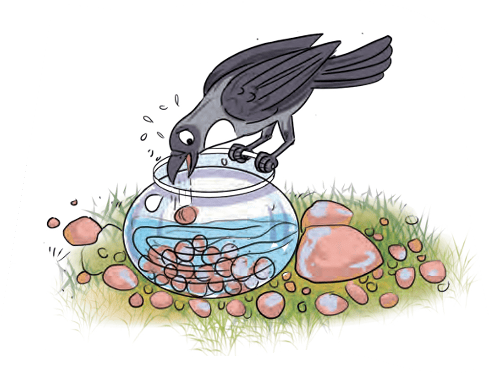
- A thirsty crow finds a pot with very little water in it. It drops pebbles one by one until the water rises. Finally, it drinks the water and quenches its thirst.
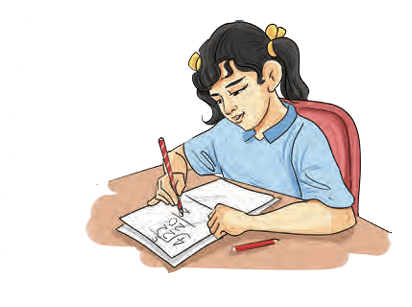
- Maya struggled with maths but didn’t give up. She took help and practised daily. She did well in her exams due to her dedication.
Example 2
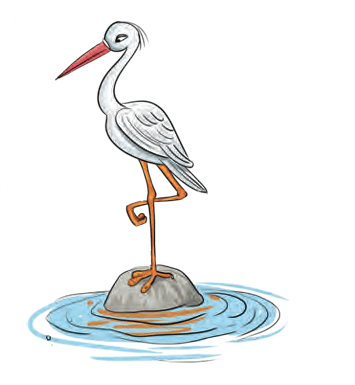
- A heron stands still on one leg in the water. It allows smaller fish to swim by and waits calmly for a big one to catch.
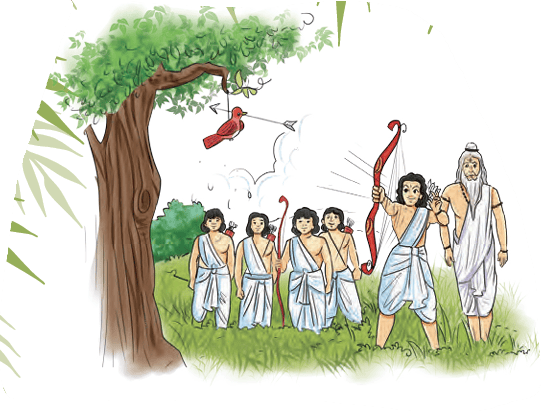
- When asked what he saw, Arjuna said he saw only the bird’s eye, not the tree or anything else. He hit the target with perfect aim.
Example 3
- Even while it rests, the dog is always aware of its surroundings. The moment it hears a sound, it opens its eyes and observes carefully.
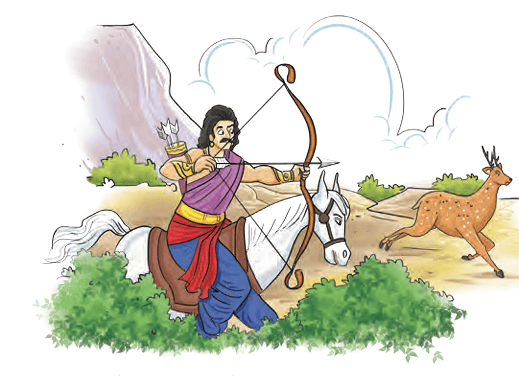
- King Dasharatha, the father of Lord Rama, was known as a mighty warrior and skilled archer. He could hunt using the sound of movement alone — a technique called shabdavedhi vidya.

Example 4
- One student feels dull and sleepy after eating junk food. Another feels energetic and active after eating fruits and healthy food.
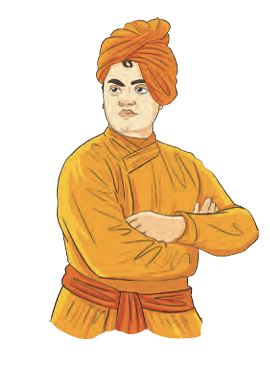
- Swami Vivekananda ate only what was needed — simple, light meals. This discipline kept his body healthy and mind clear. He was also known for his exceptional memory and ability to retain any information efficiently.

Example 5
- Raju wakes up early and attends yoga class regularly. He stays healthy and energetic. He fixes a regular time to study and avoids distractions. Ramu wakes up late, misses his yoga routine, and often falls sick. He is distracted and struggles to complete homework on time.
- In ancient times, children lived in gurukuls with their teachers, learning both academic subjects, discipline and values. Even Lord Rama and Lord Krishna spent their early years there, away from palace comforts. Today, students can still benefit by following a routine, eating simple food, and living a balanced life to stay focused and learn better.
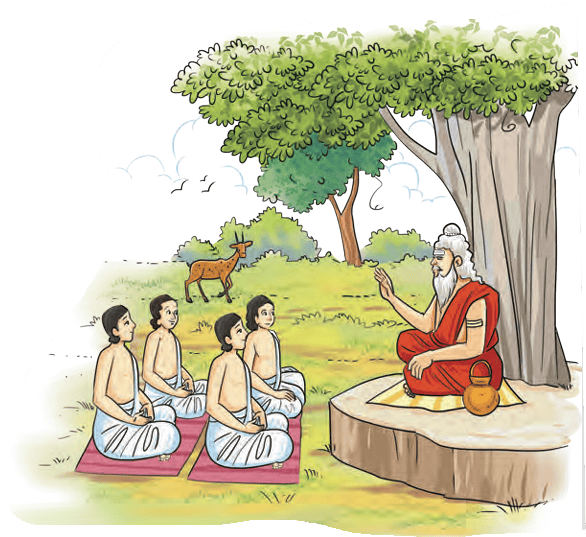
Shloka to remember:
क ााका चेेष् टाा, बकाो ध्याानंं, श्वाानं निनंद्राा तथैैव चे । अल्पहाारीी, गृृहात्याागृी निवद्यााथैी पंचे लक्षणंं ।।
Kak chesta bako dhyanam, swananidra tathaiwa cha । Alpahari grihatyagi vidyarthi pancha lakshnam ।।
This shloka describes the five essential qualities a student must cultivate to achieve their goals.
They are Kak cheshta (crow’s effort), Bako Dhyanam (heron’s focus), Shwana Nidra (dog’s alertness), Alpahari (simple eating), Grihatyagi (avoiding distractions).
Pratyahara
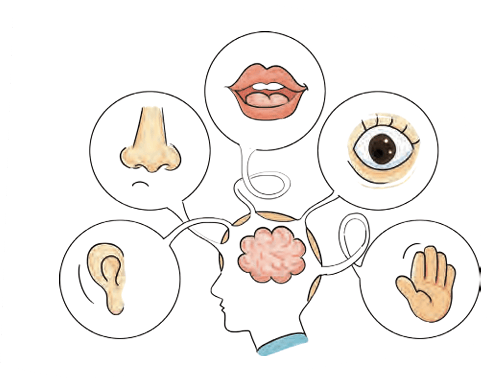
All these qualities — effort, focus, alertness, discipline, and wise choices — are supported by the practice of Pratyahara, which means to control our senses and direct them with purpose (aim).
Chapter 7
Yoga Sadhana
Preparatory Practices
As a part of Yoga Sadhana, let us begin with some loosening exercises. These preparatory practices help to warm up the body before performing asanas.
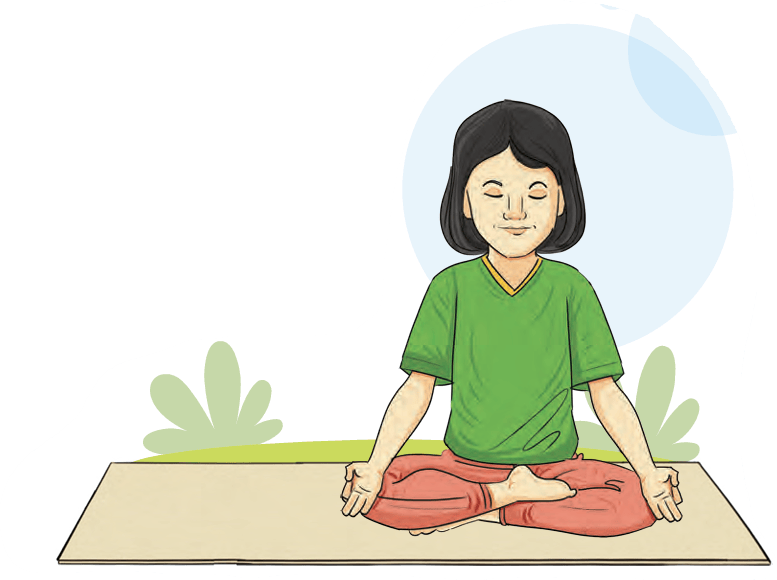
Note: These preparatory practices are designed to enhance the students' flexibility and strength, improving their performance during yoga asana classes. They are not a part of traditional yoga practices. Some loosening exercises may be similar to those found in physical education, though they may have different names. They are repeated here because their objectives in yoga differ from those in physical education.
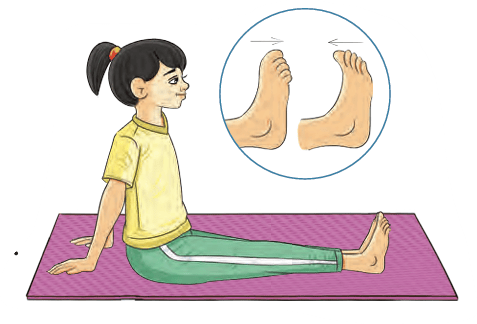
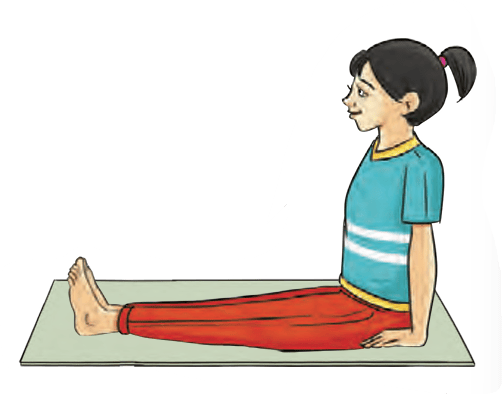
1. Padanguli Naman (Toe bending)
Steps
| Step 1: | Sit comfortably with your legs extended and feet together. Place the hands slightly behind the buttocks to support the back. |
| Step 2: | Keep the back straight. |
| Step 3: | Become aware of the toes and slowly move them back and forth. Repeat 10 times. |
| Step 4: | Now, and relax the ankles. |
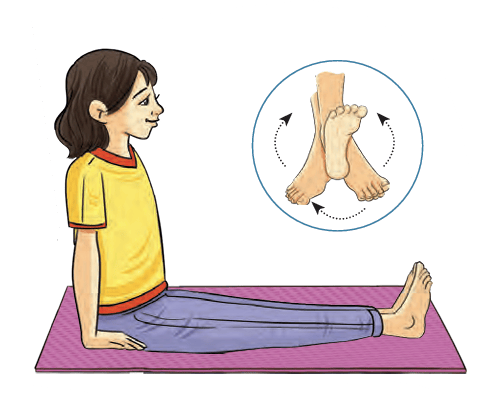
2. Gulpha Chakra Chalana and Gulpha Naman (Ankle rotation and ankle bending)
Steps
| Step 1: | Sit comfortably with your legs extended and the feet together. Place the hands slightly behind the buttocks to support the back. Keep the back straight. |
| Step 2: | Slowly rotate the right ankle clockwise and then anticlockwise, about 10 times each. Relax for a while, then repeat the exercise with the left ankle. |
| Step 3: | While keeping the legs extended, move both ankles up and down for a few rounds. Feel the stretch as you bend the feet forward and backwards. Repeat 10 times. |
3. Ardha Titali Sthiti (Half butterfly)
Steps
| Step 1: | Sit comfortably with your legs extended and feet together. |
| Step 2: | Bend your right knee and place your right foot on top of your left thigh, as shown in the picture. |
| Step 3: | Place the right hand on the right knee and hold the right foot with the left hand. While inhaling, gently lift the right knee towards the chest. Exhale and slowly push the right knee downward so that it touches the floor. |
Practice this half butterfly movement for 10 rounds. Repeat the same with the left leg.
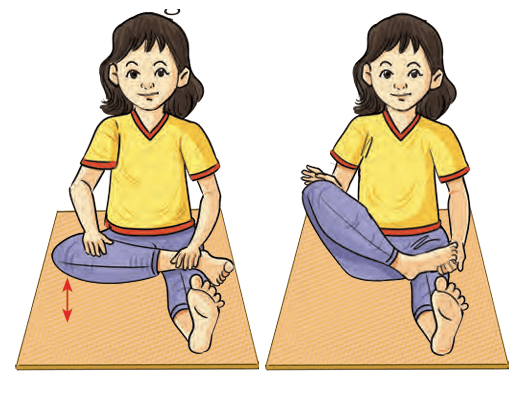
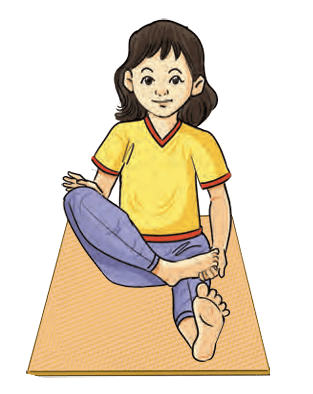
4. Shroni Chakra Chalana (Hip rotation)
Steps
| Step 1: | Sit comfortably with your legs extended and feet together. |
| Step 2: | Bend the right knee and place the right foot on the left thigh as shown in the picture. |
| Step 3: | Place the right hand on the right knee and hold the right foot with the left hand for balance. Now shift the weight of your body towards the left buttock and gently begin rotating the right hip joint. |
Practice 10 clockwise rotations followed by 10 anticlockwise rotations with focus on the movement at the hip joint. Repeat the same steps with the left leg.
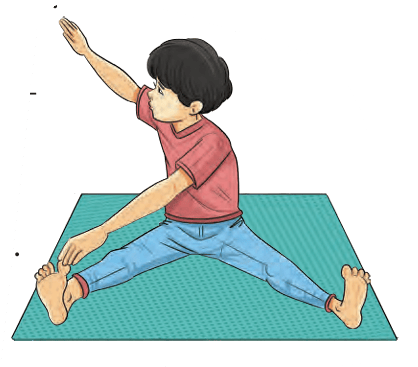
5. Gatyatmak Meru Vakra Sthiti (Dynamic spinal twist)
Steps
| Step 1: | Sit with your legs stretched wide apart, as shown in the picture. |
| Step 2: | Extend your arms straight out at the shoulder level. |
| Step 3: | Exhale and twist the trunk to the right, bringing the left hand to touch the right foot while swinging the right arm behind you. Turn your head to look over the right shoulder. |
| Step 4: | Inhale and return to the centre. |
| Step :5 | Exhale and repeat the movement on the other side — bring your right hand to the left foot, swing your left arm back, and turn your head to look over the left shoulder. Continue alternating sides for 10 rounds. |
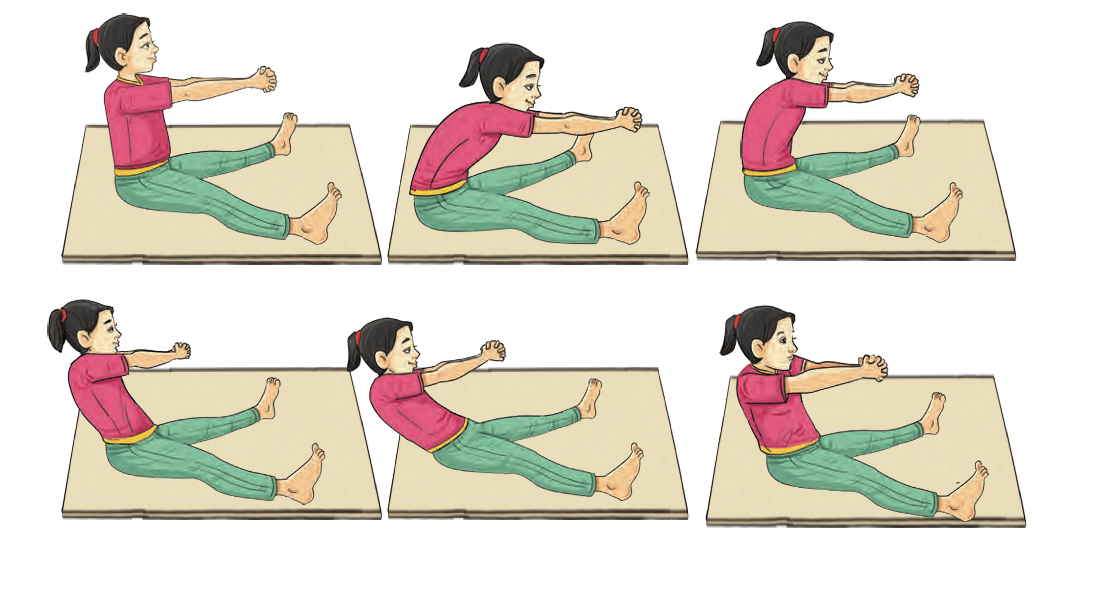
6. Chakki Chalana (Churning the mill)
Steps
| Step 1: | Sit with your legs stretched wide apart, as shown in the picture. |
| Step 2: | Interlock the fingers and stretch the arms straight out at shoulder height in front of the body. |
| Step 3: | Begin rotating the hands and upper body in a large circular motion, moving clockwise. |
| Step 4: | While bending forward, exhale and attempt to touch the toes with the hands. While bending backwards, inhale and keep the elbows straight. |
Practice for 10 rounds in the clockwise direction. Then repeat for 10 rounds in the anti-clockwise direction. Feel the stretch in the hands, legs, lower back and abdomen.
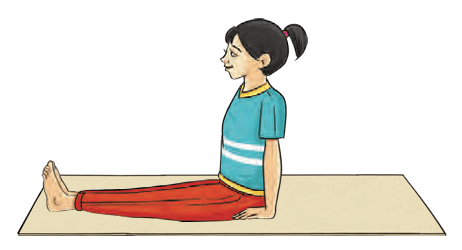
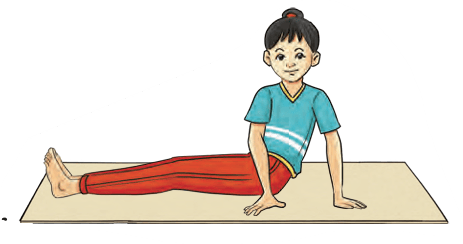
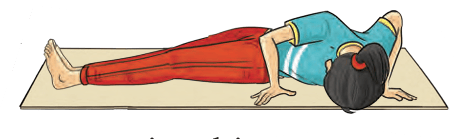
7. Bhu Namana (Spinal twist)
Steps
| Step 1: | Sit straight with your legs extended in front and hands by the side of the body. |
| Step 2: | Exhale, twist the trunk towards the left side and place both palms bent on the floor as shown in the picture. Legs and body are in a line. |
| Step 3: | Now bend the arms and lower the forehead so that it touches the floor between the hands. Try to keep the buttocks close to the floor and not to raise your body. |
| Step 4: | Inhale and slowly return to the centre. Repeat the same by twisting the trunk to the right side. Practice this for 10 rounds on each side. |
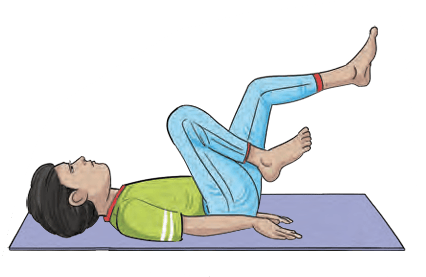
8. Pada Sanchalana (Cycling)
Steps
| Step 1: | Lie down on your back with the legs together and arms by the side of your body. |
| Step 2: | Raise both legs and make cycling movements, as if pedalling a bicycle. Perform 10 forward rotations and 10 backwards rotations. Breathe normally throughout. After completing, slowly lower the legs and relax in Shavasana. |
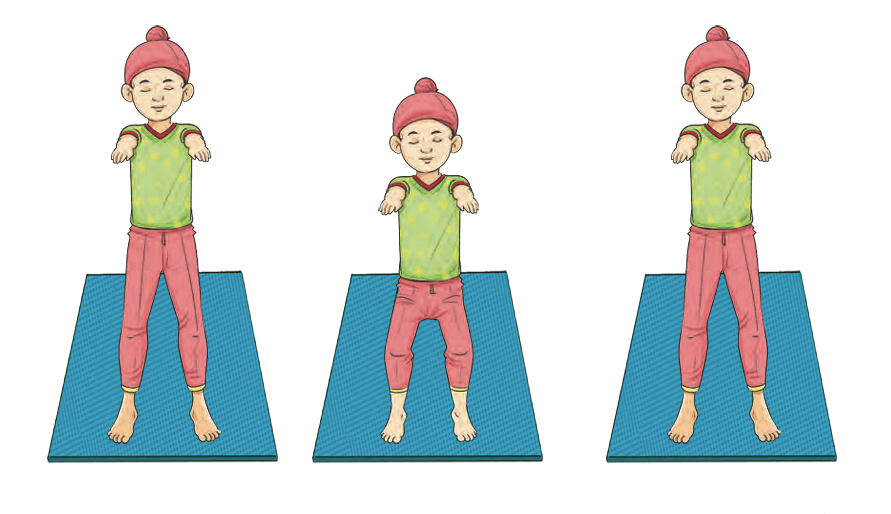
9. Jangha Shakti Vikasaka (Strengthening the thigh and calf muscles)
Steps
| Step 1: | Stand straight with your feet shoulder width apart. Extend both arms forward, keeping them parallel to the ground. |
| Step 2: | Exhale, slowly bend your knees, lowering the body until the thighs are parallel to the ground. Inhale and return to the standing position. |
Repeat this for 10 rounds.
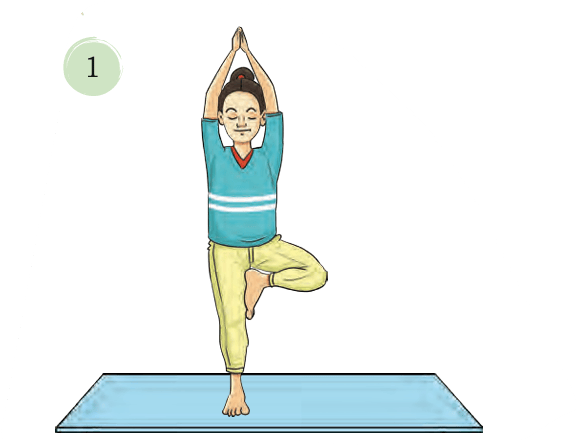
Asana
Let us first look at the asanas that we learnt in previous classes.
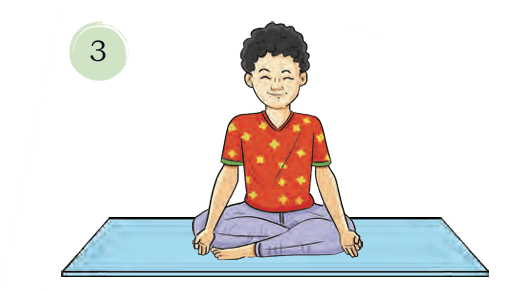
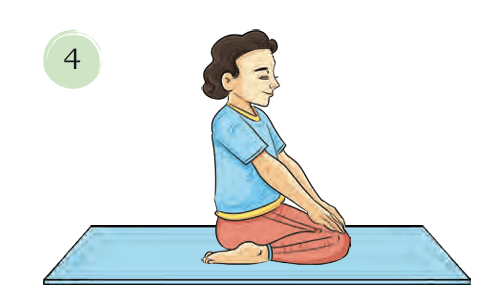
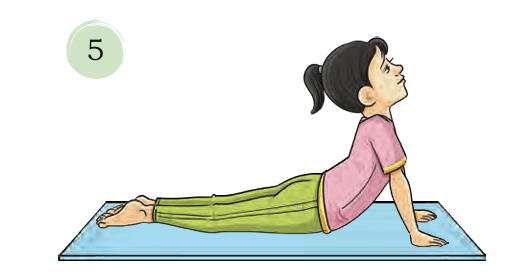
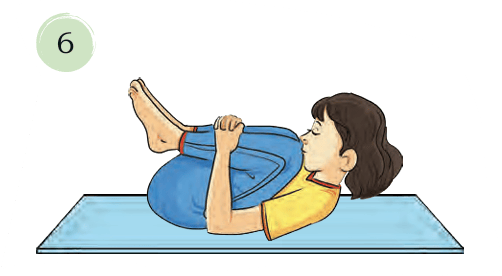
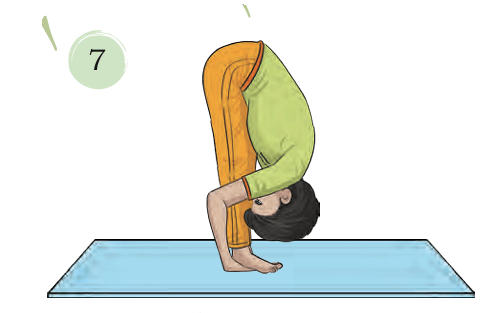
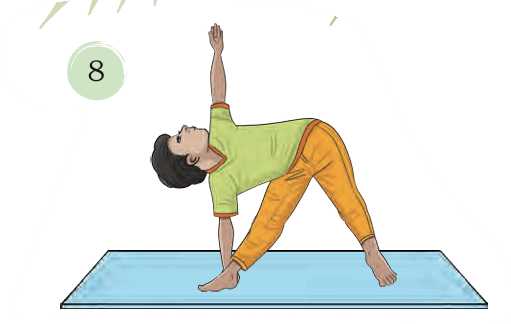
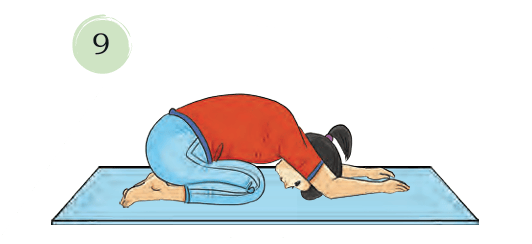
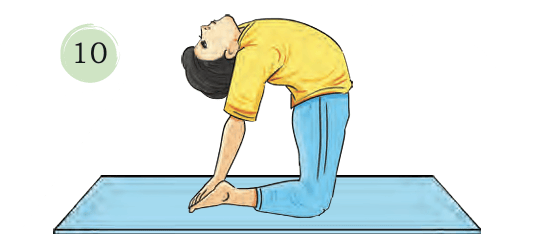
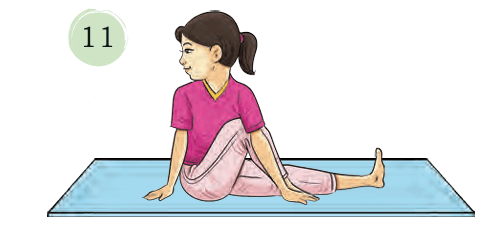
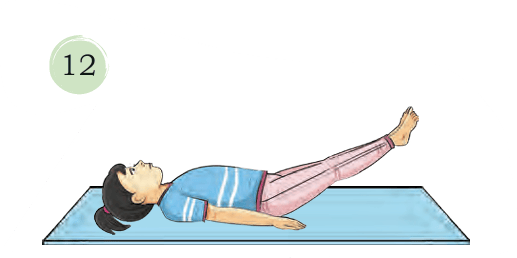
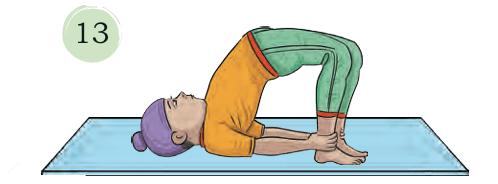
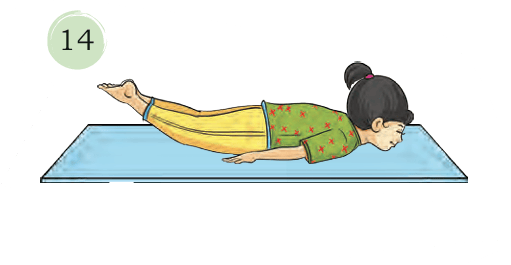
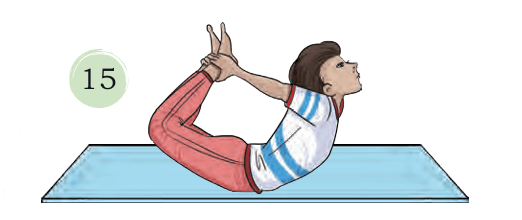
Why should we practice asanas?
क ुुर्याा�त्तदाासनंं सथैैर्या�माारोोग्र्यां छाा-लााघवमा || १९ ||
Kuryaattadaasanam sathairyamaarogyam chhaang-laaghavam ||19|| HYP
According to Hatha Pradipika, a classical Yogic text, asanas should be practised to develop a steady posture, maintain health (free from diseases), and achieve lightness of the body (flexibility of the limbs).
Benefits of practising asanas daily
- It improves physical fitness, flexibility and balance.
- It helps maintain a healthy, proper body weight.
- It enhances the quality of sleep and boosts our our immunity to fight against diseases.
- It increases self-confidence.
In Grade 5, you will learn the following yoga postures:
| Standing asanas | Hasta Uttanasana |
| Balancing asanas | Utkatasana, Virabhadrasana |
| Sitting asanas | Parvatasana, Janushirshasana, Gomukhasana, Simha Garjana asana (variation of Simhasana) |
| twiSting asanas | Trikonasana variation, Ardhamatsyendrasana |
| Supine asanas | Matsyasana |
| prone asanas | Sarpasana, Tiryaka Bhujangasana |
Standard guidelines for practising asanas, pranayama, kriya and other yogic techniques
- Always practice on an empty stomach.
- Use a clean, non-slippery mat or surface.
- Perform the asanas slowly and mindfully to avoid injuries.
- A complementary asana should be performed after each asana.
- If feeling uncomfortable or unwell, inform the teacher immediately.
- Children with specific medical conditions such as epilepsy, asthma or bronchitis, should inform the teacher before beginning practice.
Stages of asana practice
(Prarambhika Sthiti)
Performance
(Vishranti)
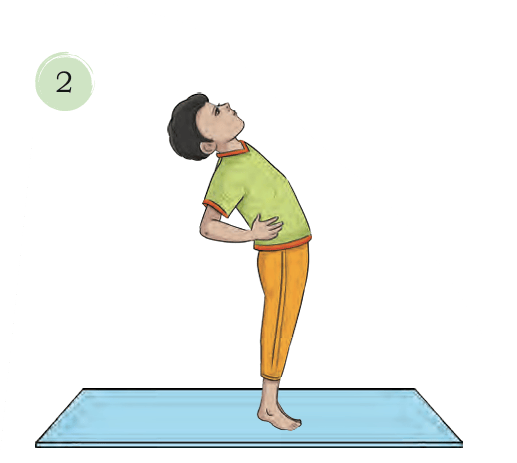
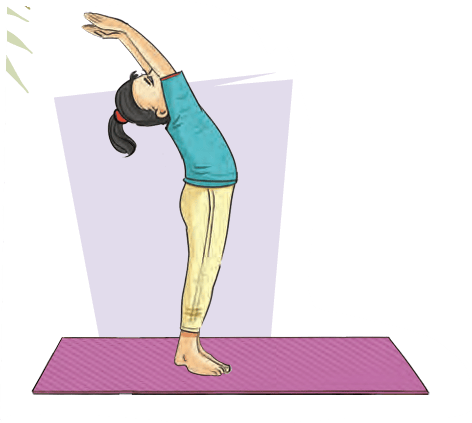
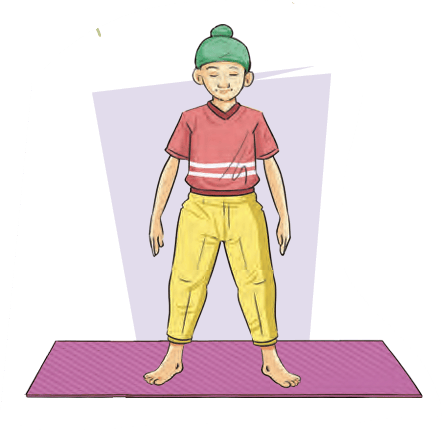
1. Hasta Uttanasana
Hasta means arms, Uttana means raised. In this posture, both arms are lifted above the head, with the biceps close to the ears and the body is gently bent backwards.
Prarambhika Sthiti: Stand with the feet slightly apart and keep the hands by the sides of the body.
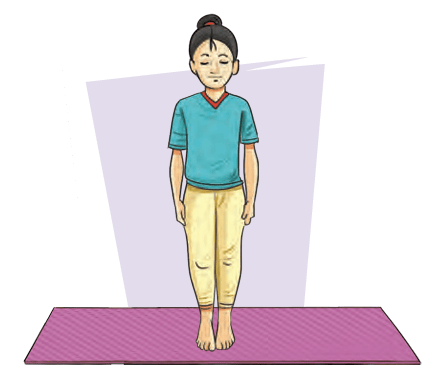
Step 1:
Inhale and stretch both arms above the head, biceps touching the ears and elbows straight.
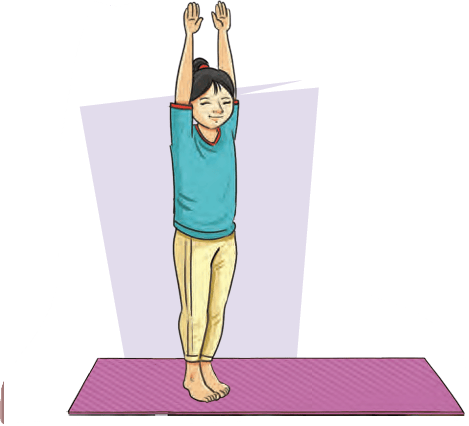
Step 2:
Gently bend the trunk and head backwards, forming a slight arch in the upper back. Hold the posture for a few seconds with normal breathing.
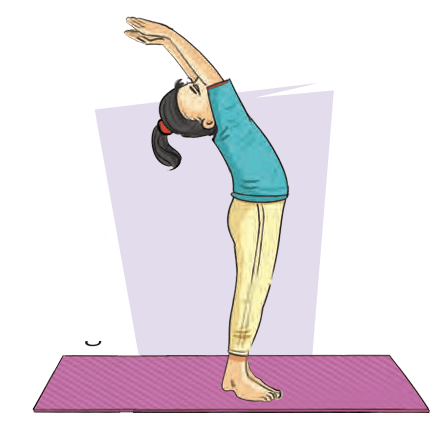
Vishranti: Straighten the back, slowly lower the arms and relax.
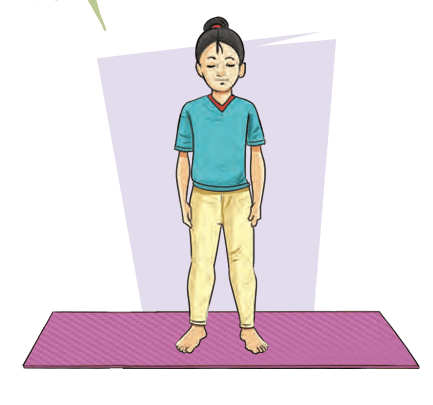
Benefits of practising this asana
- It increases flexibility in the back.
- It strengthens the back and the abdominal muscles.
- It improves lung capacity.
- Before practising this asana, it is important to perform preparatory exercises such as Jangha shakti vikasaka and gatyatmak meru vakra sthiti.
- It is also recommended that Pada Hastasana be practised as a complementary posture.
Notes for the teacher
2. Utkatasana
The word Utkata means powerful. This asana requires strength, focus and stability to hold the final posture. Hence its name is Utkatasana.
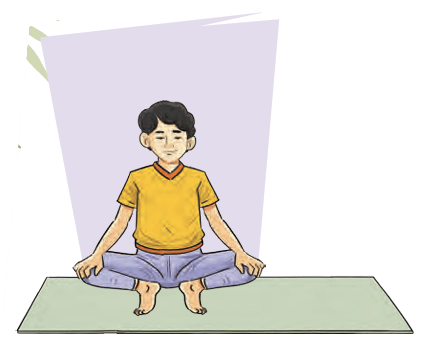
Prarambhika Sthiti: Stand straight with your feet slightly apart and hands by the sides of the body.
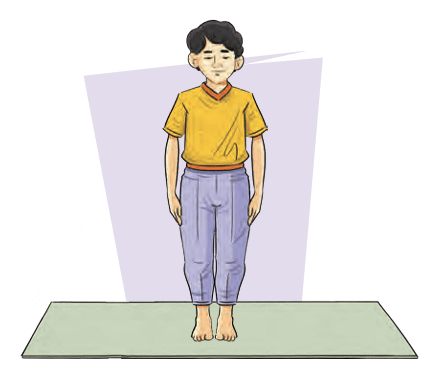
Step 1:
Exhale slowly and gently bend the knees to squat down with legs apart.
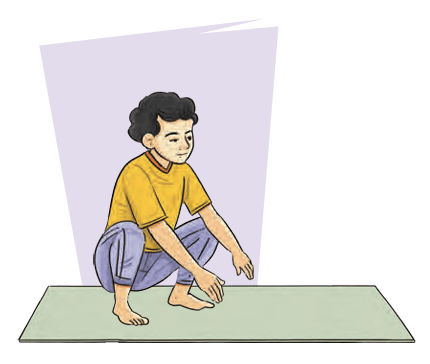
Step 2:
Now, raise the heels so that the buttocks rest on them. Place your hands on the knees, keep the back straight, and look forward. Breathe normally while balancing on the toes. Stay in this position for a few seconds.
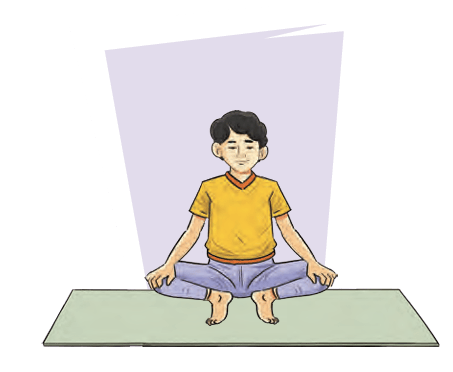
Vishranti: Inhale, straighten the knees as you come up, bring the feet closer, lower the arms and relax.
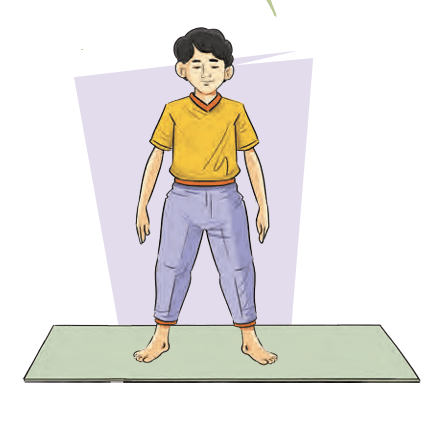
Benefits of practising this asana
- It strengthens the thigh muscles and toes.
- It improves body balance and stability.
- Before practising this asana, it is important to perform preparatory exercises such as Jangha shakti vikasaka, Pada sanchalana, Shroni chakra chalana, Ardha titali sthiti, Gulpha chakra chalana, and Gulpha naman.
Notes for the teacher
3. Virabhadrasana (Variation 1)
This pose is named after Virabhadra, a fierce warrior in Indian mythology.
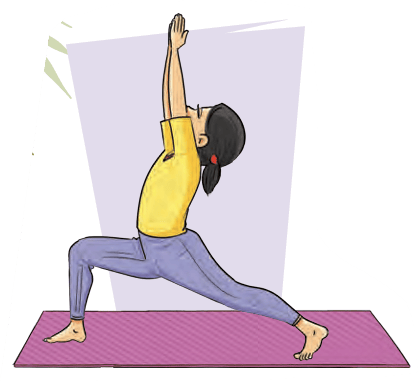
Prarambhika Sthiti: Stand straight with your feet slightly apart.
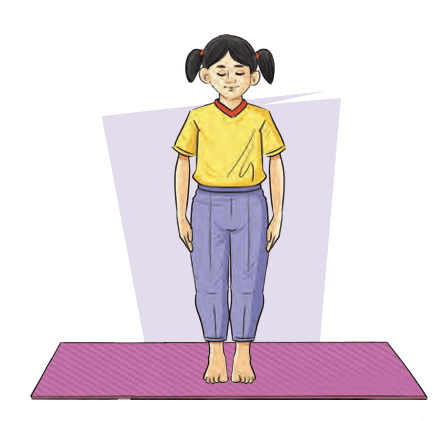
Step 1:
Inhale, spread the legs 2 to 3 feet apart. Raise both hands parallel to the ground, palms facing down.
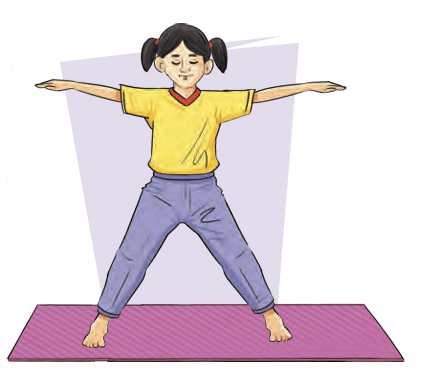
Step 2:
Exhale, turn the right foot 90° outward and the left foot 60° inward. Bend the right knee, keeping the thigh parallel to the ground and the left leg straight. Turn the head right, raise both arms, join palms above the head, and look at them. Hold the posture for a few seconds.
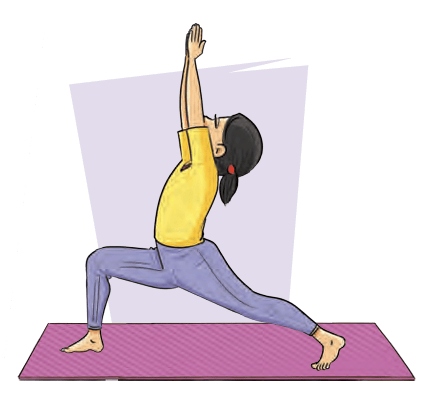
Vishranti: Inhale, slowly come back to the centre, and straighten both the knees. Exhale, drop the hands and bring the legs closer. Relax.
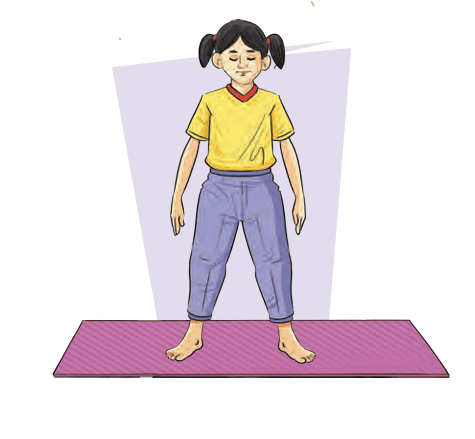
Benefits of practising this asana
- This asana strengthens the lower back, arms and legs.
- It also improves balance.
- Before practising this asana, it is important to perform preparatory exercises such as Jangha shakti vikasaka, Pada sanchalana, Shroni chakra chalana, Ardha titali sthiti, Gulpha chakra chalana, and Gulpha naman.
Notes for the teacher
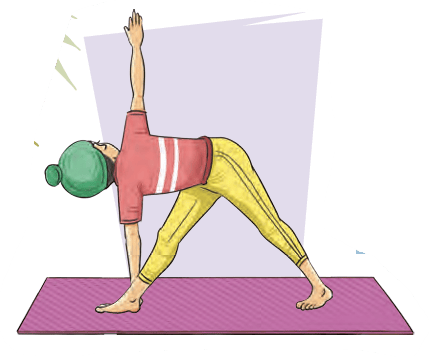
4. Trikonasana (variation)
The word Trikona means three angles. In the final posture, the trunk portion is twisted, and the body forms three angles. This asana is a variation of the Trikonasana, which you learned in Grade 4.
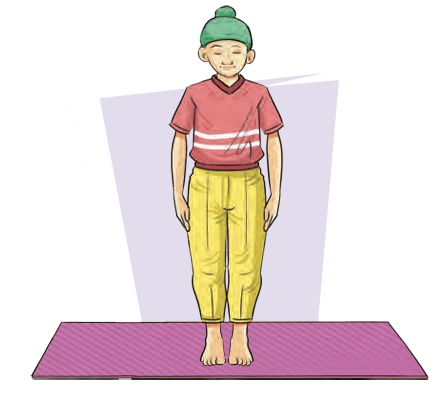
Prarambhika Sthiti: Stand straight with your feet slightly apart.
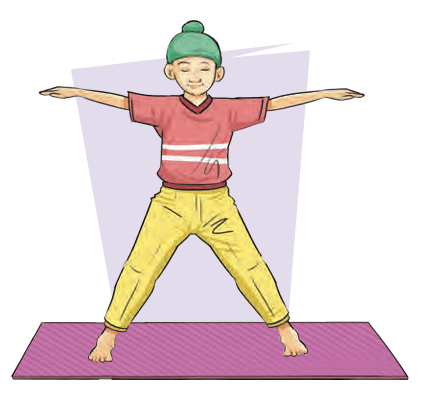
Step 1:
Inhale and spread the legs about 2 to 3 feet apart. Raise both arms parallel to the ground, palms facing down.
Step 2:
Inhale, turn the right foot 90° outward and the left foot 60° inward. Exhale, twist the abdomen to the right, bending forward. Place the left palm beside the right foot on the ground. Extend the right arm upward, in a straight line with the left arm. Turn your gaze towards the right hand.
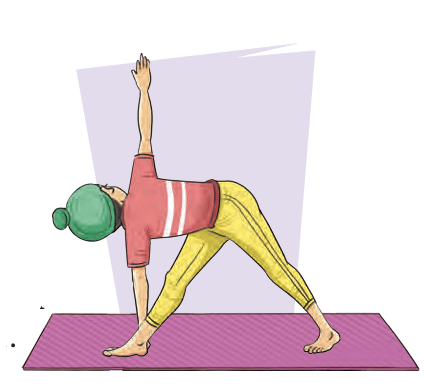
Vishranti: While exhaling, come back to the centre, lower your arms and bring the legs closer. Relax.
Repeat the same practice on the other side.
Benefits of practising this asana
- This asana strengthens the legs, abdomen, and back muscles.
- It also stimulates the digestive organs and helps relieve constipation.
- Before practising this asana, it is important to perform preparatory exercises such as Jangha shakti vikasaka, Pada sanchalana, Gatyatmak meru vakra sthiti, and Bhu namana.
Notes for the teacher
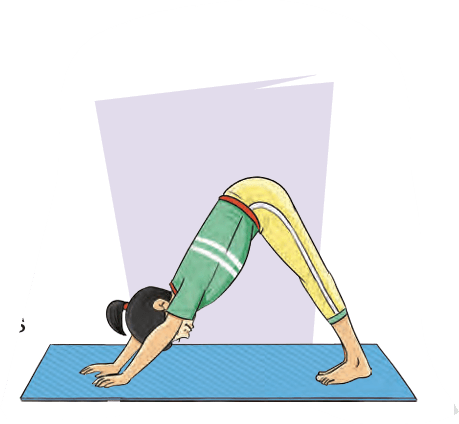
5. Parvatasana
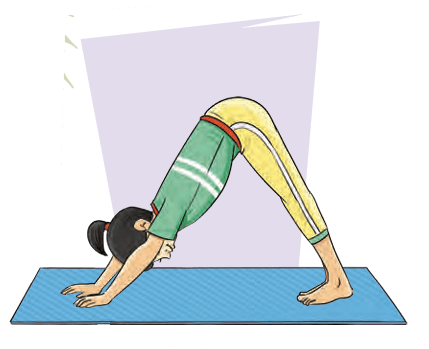
The term Parvata means mountain. In the final position, the body resembles the shape of a mountain, hence the name Parvatasana.
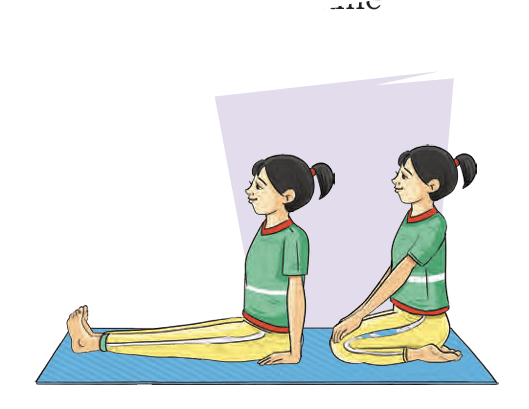
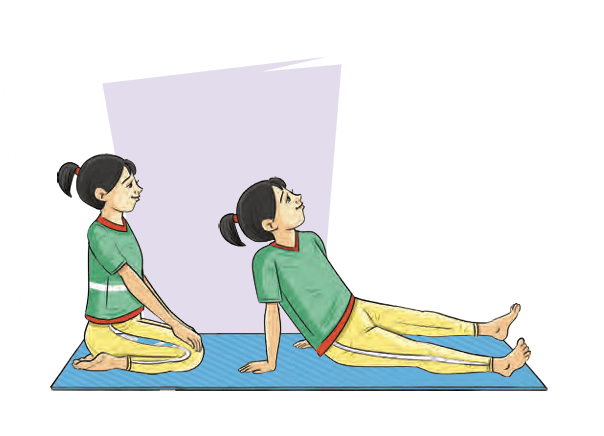
Prarambhika Sthiti: Sit in Dandasana and then come to Vajrasana.
Step 1:
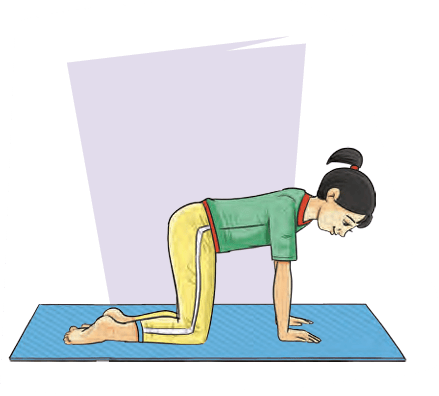
Inhale, place the hands on the floor in front while standing on your knees, assuming a tabletop position as shown in the picture.
Step 2:
Exhale and slowly lift the hips upward. Straighten the knees, fully extend the arms, and position the head between the arms. The body should resemble an inverted ‘V’ shape. Try to keep your heels on the floor. This is called the Parvatasana. Hold this f inal posture for a few seconds.
Vishranti: Come back to Vajrasana, stretch the legs forward and relax in Shithila Dandasana.
Benefits of practising this asana
- This asana improves blood circulation, especially to the spine and head.
- It also helps to manage, improve anger and calms the mind.
- Before practising this asana, it is important to perform preparatory exercises such as Jangha shakti vikasaka, Pada sanchalana, Gatyatmak meru vakra sthiti, Bhu namana and Chakki chalana. It is also recommended that Bhujangasana be practised as a complementary posture.
Notes for the teacher
6. Janu Shirshasana
The term Janu refers to the knee joint and Shira means head. The forehead touches the knee in the final posture, hence the name Janu Sirsasana.
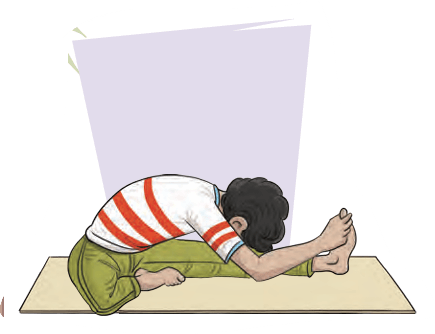
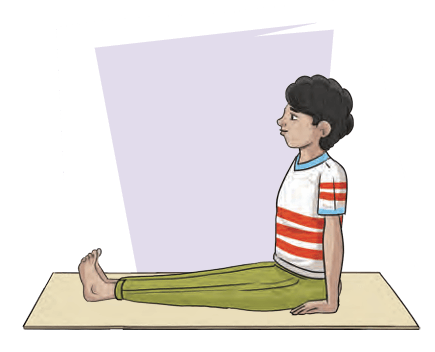
Prarambhika Sthiti: Sit comfortably on the f loor with your back straight. Stretch both legs forward, keeping the feet together.
Step 1:
Bend the right leg at the knee, placing the sole of the right foot against the inner side of the left thigh, with the right heel close to the crease of the left thigh. Inhale and slowly raise both arms overhead.
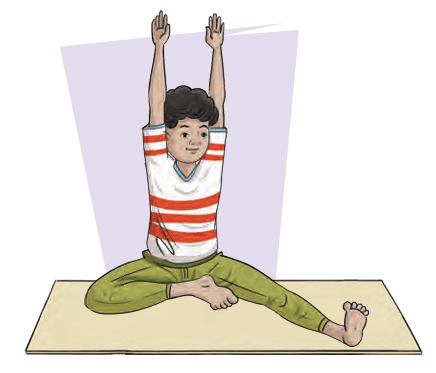
Step 2:
Exhale and bend forward from the hips, keeping the spine straight. Reach forward to hold the left foot with both hands. Aim to touch the forehead to the left knee and bring the elbows toward the ground. Maintain this posture for a few seconds, breathing normally.
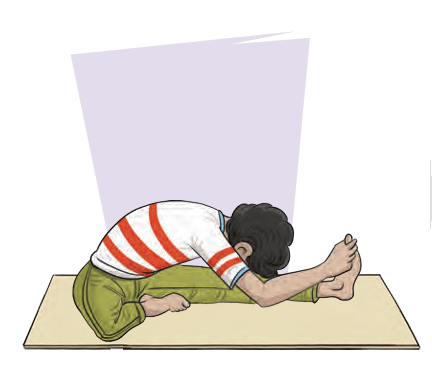
Vishranti: Stretch both legs forward and relax in Shithila Dandasana.
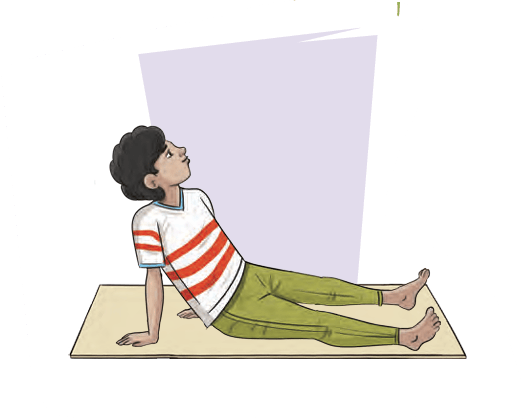
Benefits of practising this asana
- This asana stimulates the abdominal and pelvic organs and also improves digestion.
- It helps reduce fat around the abdomen area.
- Before practising this asana, it is important to perform preparatory exercises such as Gatyatmak meru vakra sthiti, Bhu namana, Chakki chalana, and Pada sanchalana.
- Practise Ustrasana as a complementary posture.
Notes for the teacher
7. Gomukhasana
Gomukha means the face of a cow. In the final posture of Gomukhasana, the knees are placed one above the other resembling the shape of a cow’s face.
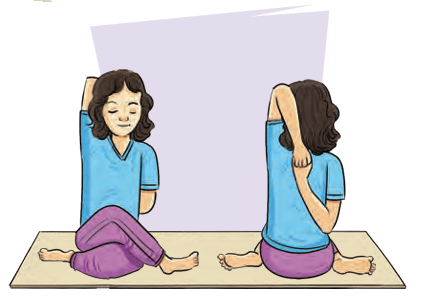
Prarambhika Sthiti: Sit comfortably on the floor with your back straight. Stretch both legs forward, keeping the feet together and hands by the side of the body.
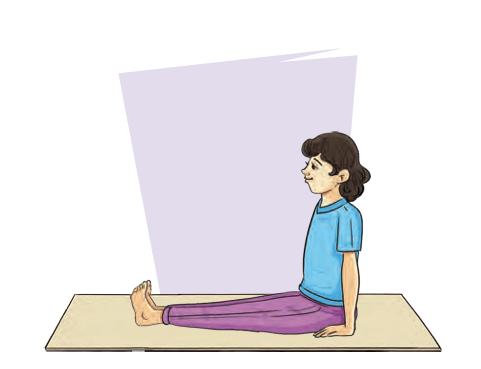
Step 1:
Bend the left knee under the right, bringing the heel near the right buttock. Then bend the right knee over the left, placing the right heel near the left buttock. Both the knees are placed one above the other.
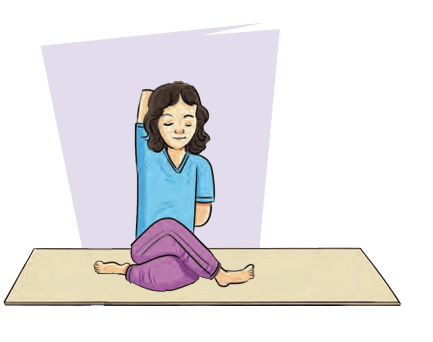
Step 2:
Fold the left elbow behind the back. Raise the right arm, bend the elbow over the shoulder, and try to interlock the fingers behind the back. Keep the raised elbow behind the head, back straight, and hold the posture for a while.
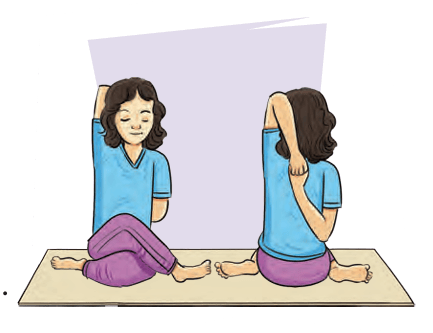
Vishranti: Release the posture and relax in Shithila Dandasana.
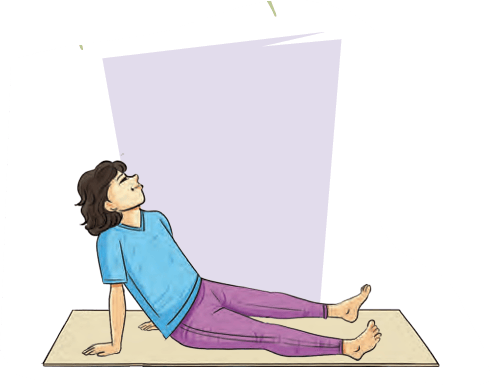
Repeat the same practice on the other side.
Benefits of practising this asana
- It helps in expanding the chest area thereby increasing lung capacity.
- It relieves leg cramps and reduces foot stiffness.
- Before practising this asana, it is important to perform preparatory exercises such as Gatyatmak meru vakra sthiti, Bhu namana, Chakki chalana, Pada sanchalana, Shroni chakra chalana, and Shoulder rotation.
Notes for the teacher
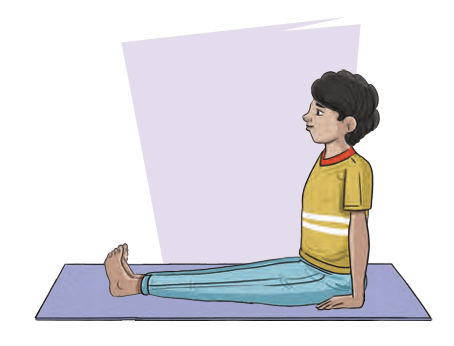
8. Ardha Matsyendrasana
This pose is named after the Hatha Yogi Rishi Matsyendranath.
Prarambhika Sthiti: Sit comfortably on the floor with your back straight. Stretch both legs forward keeping the feet together in Dandasana.
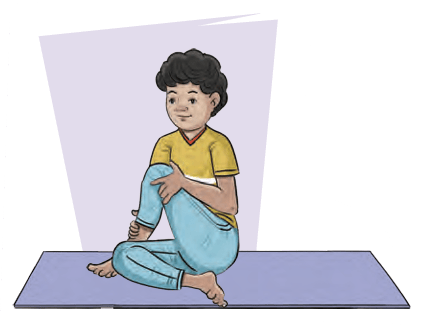
Step 1:
Fold the right knee and place the right foot under the left buttock. Then fold the left knee and place the left foot on the outside of the right knee.
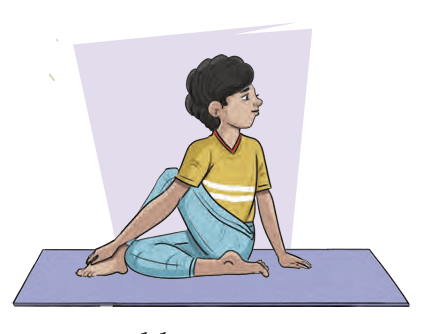
Step 2:
Bring the right arm between the chest and the left knee and hold the left ankle. Inhale and raise the left arm and place it at the back on the floor for support. Exhale and slowly twist the body to the left, turning the trunk, shoulders and head together. Look over your left shoulder. Hold this final posture with normal breathing.
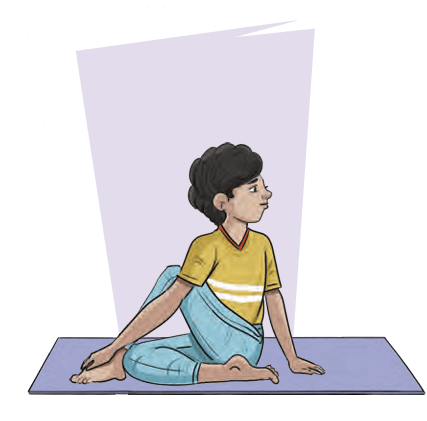
Step 3:
Inhale and slowly untwist the body and face. Exhale and return to the starting position.
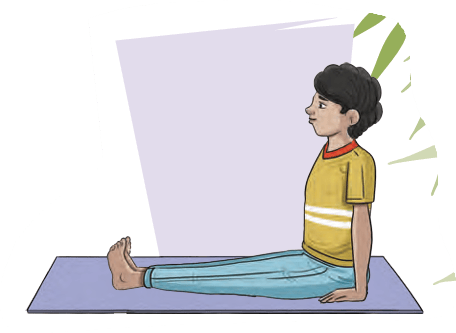
Vishranti: Relax for a while in Shithila Dandasana.
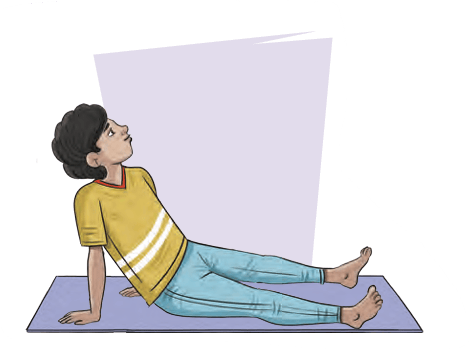
Repeat the same practice on the other side.
Benefits of practising this asana
- It improves the flexibility of the spine.
- It strengthens abdominal and back muscles.
- It enhances sleep quality and helps regulate digestion.
- Before practising this asana, it is important to perform preparatory exercises such as Gatyatmak meru vakra sthiti, Bhu namana, Chakki chalana, Pada sanchalana, and Shroni chakra chalana.
Notes for the teacher
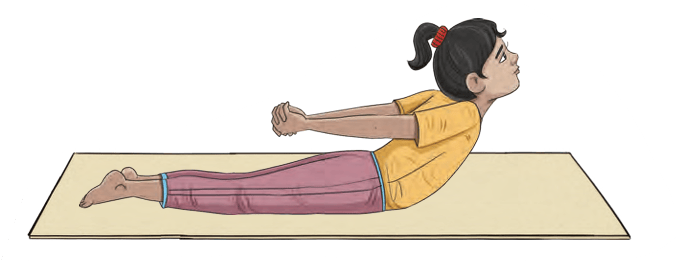
9. Sarpasana
The word Sarpa means snake, and here the body resembles a serpent in the final posture.
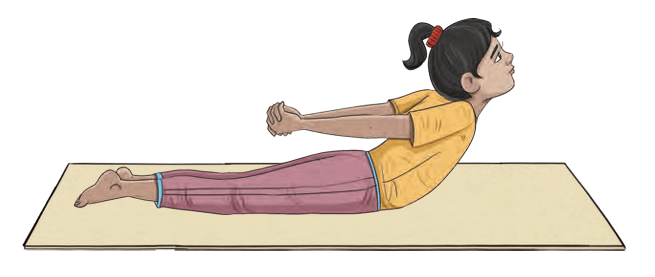
Prarambhika Sthiti: Lie flat on the abdomen. Keep the arms beside the body with the legs together and forehead down.
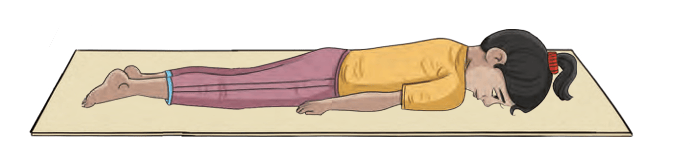
Step 1:
Bring the arms behind and interlock the f ingers, and rest the hands on the buttocks. Place the chin gently on the floor.
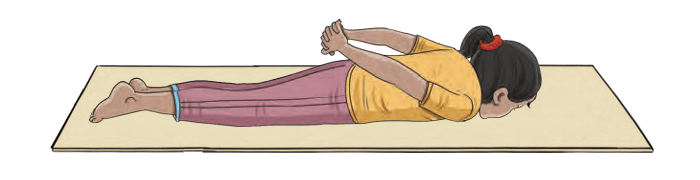
Step 2:
Inhale and lift the chest and head upwards. Stretch the arms fully to pull the shoulders back. Look forward and hold the posture for a few seconds.
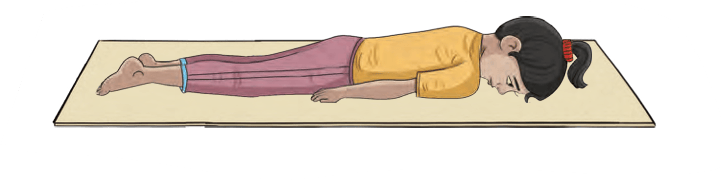
Step 3:
Exhale and slowly return to the starting position. Release the hands and place your arms by the sides of the body.
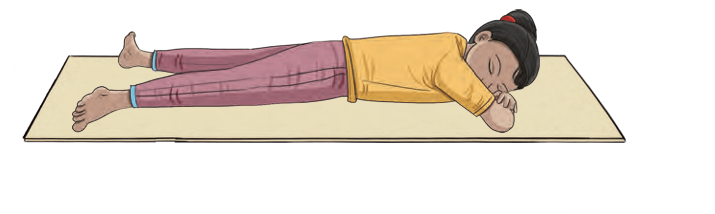
Vishranti: Relax in Makarasana.
Benefits of practising this asana
- It expands the lungs, facilitating better inhalation and exhalation.
- It helps in relieving back aches. It strengthens abdominal organs.
- Before practising this asana, it is important to perform preparatory exercises such as Gatyatmak meru vakra sthiti, Bhu namana, and Chakki chalana.
- It is recommended to practise Shashankasana as a complementary posture.
Notes for the teacher
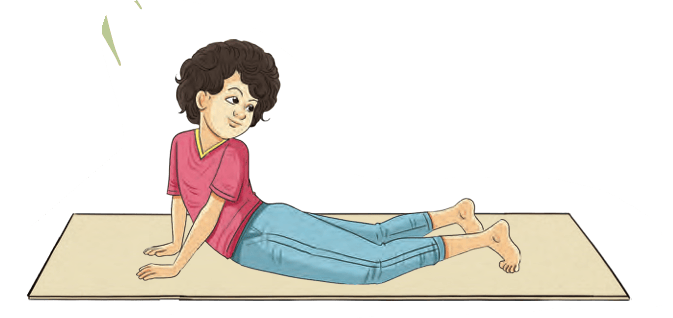
10. Tiryaka Bhujangasana
The word Tiryaka means diagonal. Here, in the final posture, the upper body is raised and twisted to one side, while lying on the stomach.
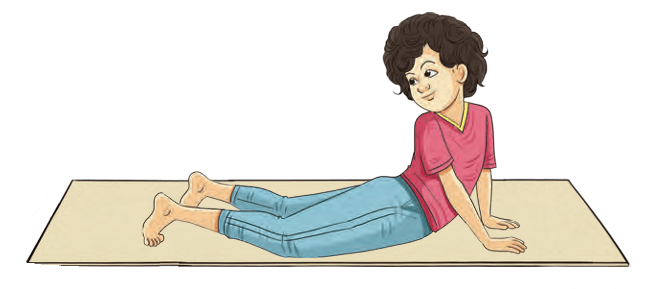
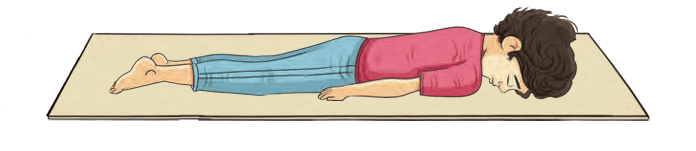
Prarambhika Sthiti: Lie flat on the abdomen. Keep the arms beside the body, legs together and forehead on the floor.
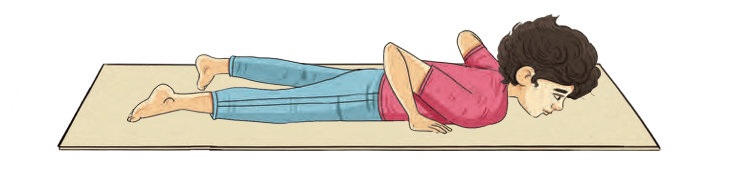
Step 1:
Place the palms on the floor beside the chest. Separate the legs by a distance of about half a metre, as shown in the picture.
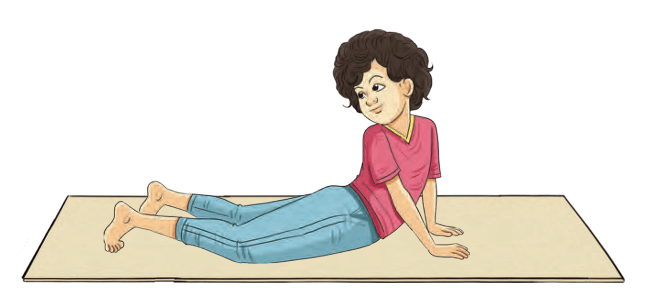
Step 2:
While inhaling, slowly raise the upper part of the trunk as much as possible and straighten the elbows. While exhaling, twist the head and upper body to the left, looking over the left shoulder toward the right heel. Hold this final posture for a few seconds with normal breathing.
Step 3:
Inhale and bring your face back to the front. Then, repeat the twist on the other side.
Vishranti: Slowly return to the centre and relax in Makarasana.
Benefits of practising this asana
- It strengthens abdominal organs.
- It helps relieve back pain.
- Before practising this asana, it is important to perform preparatory exercises such as Gatyatmak meru vakra sthiti, Bhu namana, and Chakki chalana.
- Practise Shashankasana as a complementary posture.
Notes for the teacher
11. Matsyasana
The word Matsya means fish, and here, in the final posture, the body resembles a fish.
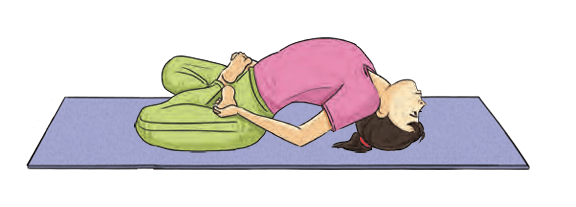
Prarambhika Sthiti: Sit down in Padmasana with your arms placed by the side of the body.
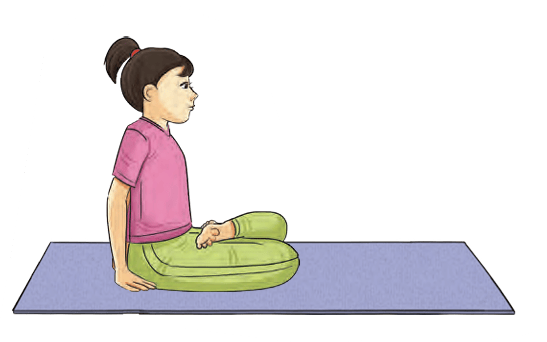
Step 1:
Slowly bend backwards, taking the support of the forearms and elbows.
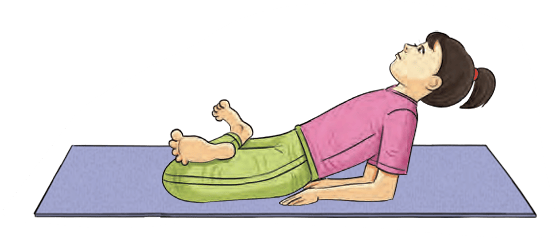
Step 2:
Gently lift the chest and place the crown of the head on the ground, as shown in the picture.
Hold the big toes with each hand and rest the elbows on the floor. Maintain this posture for a few seconds with normal breathing.
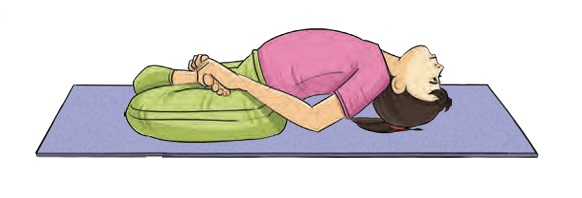
Step 3:
To release the posture, lift the chest and head up with the support of the elbows.
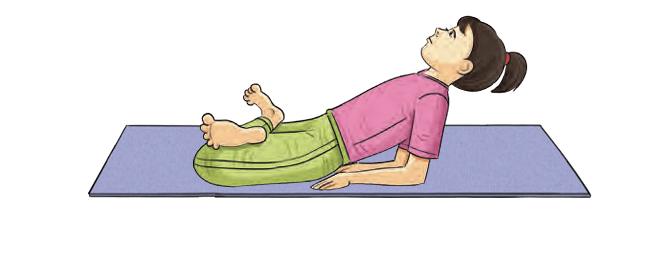
Vishranti: Release the legs and relax in Shavasana.
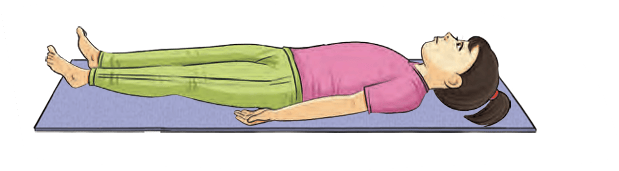
Benefits of practising this asana
- It enhances deep breathing.
- It regulates the functioning of the thyroid gland.
- Before practising this asana, it is important to perform preparatory exercises such as Gatyatmak meru vakra sthiti, Bhu namana, and Chakki chalana.
- Practise Sarvangasana as a complementary posture.
Notes for the teacher
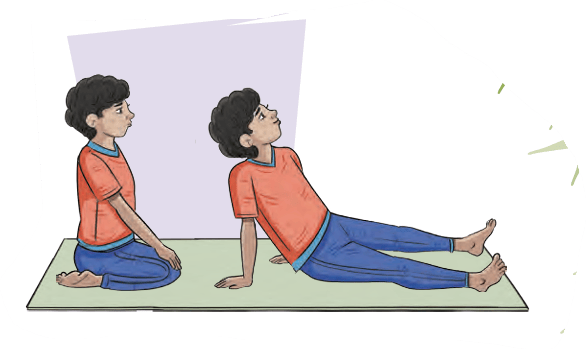
12. Simha Garjana Asana
The word Simha means Lion, Garjana means roaring. Here, in the final posture, the body resembles a lion with an open mouth and tongue stretched out.
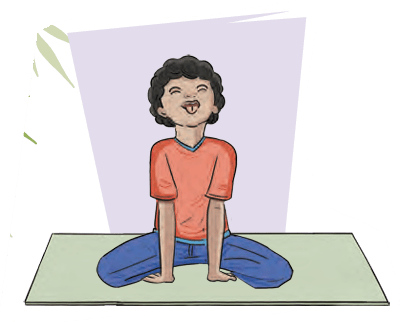
Prarambhika Sthiti: Sit in Dandasana and then slowly adopt Vajrasana.
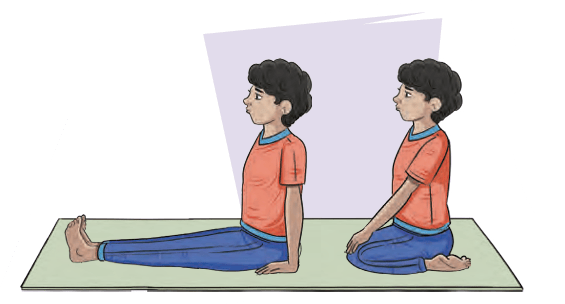
Step 1:
Keep about 2 feet of space between the knees. Lean forward and place the palms on the floor between the knees, f ingers pointing towards the body. Keep the arms straight, back arched, and support the body’s weight on the arms. Tilt the head back, keep the eyes open, and gaze at the eyebrow centre.
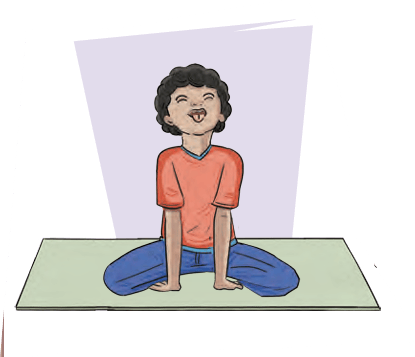
Step 2:
Breathe in slowly through the nose. Then open your mouth wide, stretch the tongue out fully, and exhale slowly while making a clear ‘aaaah’ roaring sound from the throat. Close the mouth after exhaling. Repeat this roaring sound five times.
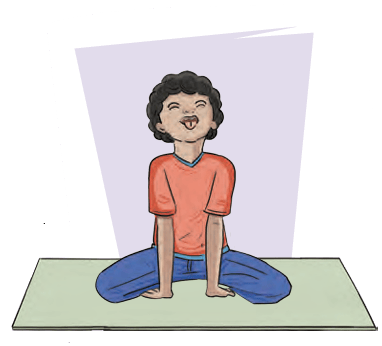
Vishranti: Come back to Vajrasana, release the legs and relax in Shithila Dandasana.
Benefits of practising this asana
- It helps in developing a strong and beautiful voice.
- It is beneficial for speech-related problems.
- Before practising this asana, it is important to perform preparatory exercises such as Jangha shakti vikasaka, Pada sanchalana, Shroni chakra chalana, Ardha titali sthiti, Gulpha chakra chalana, and Gulpha namana.
Notes for the teacher
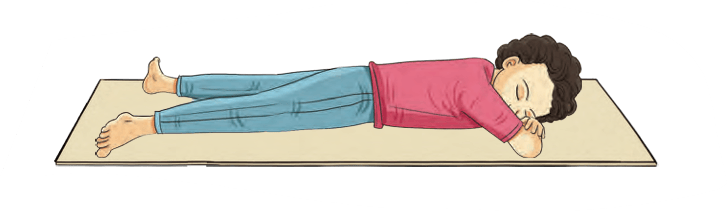
Relaxation Technique
After completing the asana session, it is important to practice relaxation. The Shavasana is commonly used for this purpose. In addition to the Shavasana, we will also learn another relaxing posture called the the Matsya Kridasana, which can be practised along with it.
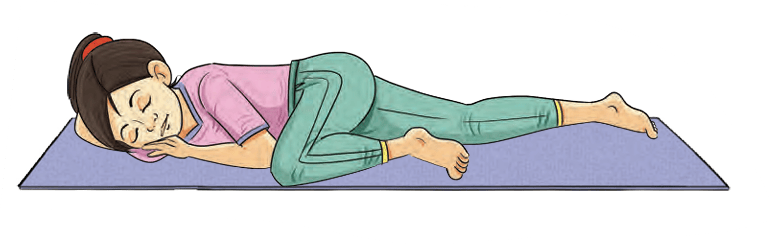
Steps
- Lie down on the stomach.
- Place the right arm under the head and rest the right cheek on it.
- Bend the left leg sideways, bringing the knee close to the ribs.
- Interlock the fingers of both hands, keeping the hands in front as shown in the picture.
- Rest the left elbow on the bent left knee.
- Keep the right leg straight and relaxed.
- Breathe normally and remain in this position, allowing the body to relax.
- After some time, change the side and repeat the steps.
Pranayama
Let us first look at the asanas learnt in the previous grades.
Straw breathing
- Sit or stand comfortably, relax the whole body.
- Inhale slowly and deeply through the nose for 4 seconds, letting the stomach expand
- Now place a straw (with a small diameter) between the lips. In the absence of a straw, keep the lips closed with a small gap in between, as if about to blow out a candle.
- Exhale slowly through the straw or through the small gap in between the lips. Repeat this process for five minutes. Focus on slow exhalation.
- Benefits of straw breathing – Calms the nervous system, reduces stress and anxiety, and increases lung capacity
Notes for the teacher
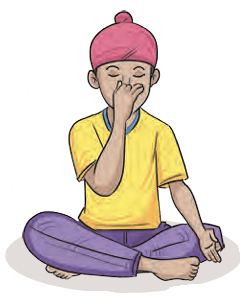
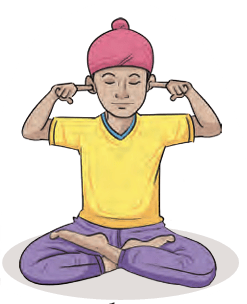
As you know, Pranayama is the fourth limb of Ashtanga Yoga. It means learning to regulate our breath.
Now, think! Why is it important to regulate our breath?
In yoga, it is said that when we slow down our breathing and take deep, calm breaths, it helps us control our mind (from too many thoughts). This makes it easier to focus and think clearly, helping us improve our concentration.
We will begin our Pranayama practice with a revision of the Anuloma Viloma Pranayama.
1.Anuloma Viloma Pranayama
Steps
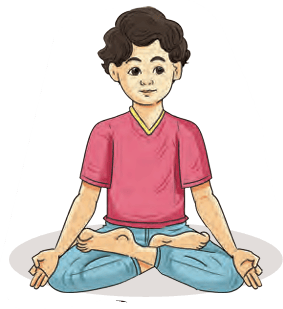
| Step 1: | Sit in Sukhasana or Padmasana with the head upright, back straight and eyes closed. |
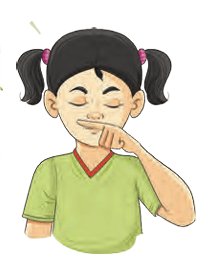
| Step 2: | Use the right hand to form Nasika Mudra, as shown in the picture, while keeping the left hand on the left thigh in Chin Mudra. |
| Step 3: | Gently close the right nostril with the right thumb and inhale slowly through the left nostril. |
| Step 4: | Close the left nostril using the ring and little fingers, then exhale through the right nostril. |
| Step :5 | Now, inhale through the right nostril, then close it and exhale through the left nostril. |

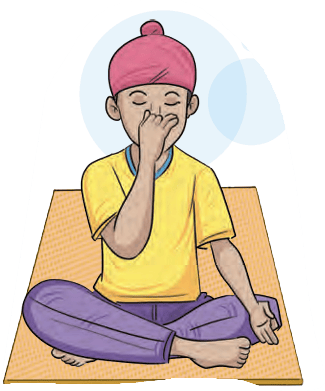
This completes one round. Repeat the process for f ive rounds.
2. Ujjayi Pranayama
Steps
| Step 1: | Sit comfortably in Padmasana with the back straight. |
| Step 2: | Place the hands on the knees in Chin Mudra. |
| Step 3: | Close the eyes and relax the entire body. |
| Step 4: | Breathe in deeply through both nostrils. |
| Step :5 | Gently constrict the throat and inhale creating a soft sound like breathing in through a thin straw. |
| Step :6 | After a full inhalation, close the right nostril using the right thumb and exhale through the left nostril, maintaining the throat constriction to produce a gentle snoring sound. |
| Step :7 | Repeat this process for 5 rounds, then relax. |

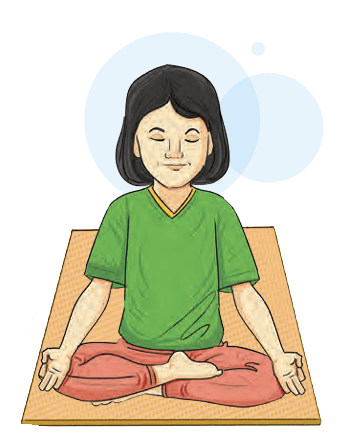
3. Sitkari Pranayama
Steps
| Step 1: | Sit comfortably in Padmasana with the back straight. |
| Step 2: | Place the hands in Chin Mudra. |
| Step 3: | Close your eyes and relax the entire body. |
| Step 4: | Gently press the teeth together and keep the lips separate. Inhale through the gaps between the teeth, creating a soft hissing sound. Notice the cool sensation in the mouth. |
| Step :5 | Close the lips and exhale slowly through the nostrils. |
| Step :6 | Repeat this process for 5 rounds, then relax. |
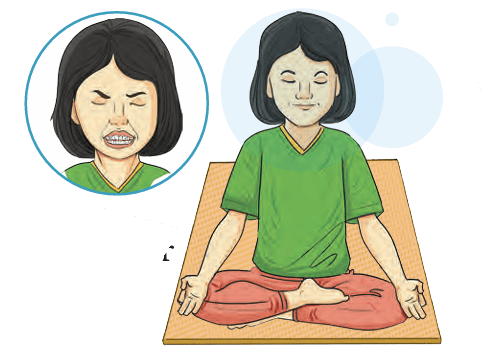
4. Sheetali Pranayama
Steps
| Step 1: | Sit comfortably in Padmasana with the back straight. |
| Step 2: | Place the hands on the knees in Chin Mudra. |
| Step 3: | Close your eyes and relax the entire body. |
| Step 4: | Roll the tongue inward to form a tube or a beak shape. |
| Step :5 | Inhale slowly through the beak feeling a cool sensation in the mouth. |
| Step :6 | Close the mouth and exhale slowly through the nostrils. |
| Step :7 | Repeat this process for 5 rounds, then relax. |
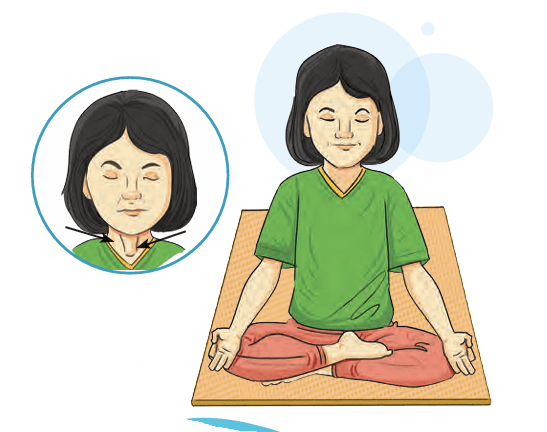
- The benefits and contraindication of the practices will be taught in higher classes. The teacher must make sure that the students are practising these techniques without any mistakes.
Notes for the teacher
In continuation to what we learnt in the previous grade, this year we will learn and practice a few more mudras together.
1. Prana Mudra
Steps
| Step 1: | Sit in Padmasana. |
| Step 2: | Place the hands on your knees. Touch the tips of the ring finger and little finger to the thumb. The index and middle finger should be pointed straight. |
| Step 3: | Keep your eyes closed and focus on your breathing. |
| Step 4: | Hold this posture for 5 minutes. |
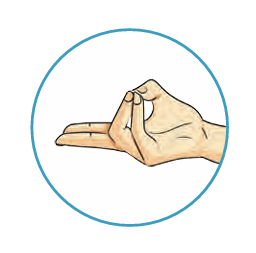
Benefits
Practicing the Prana Mudra helps energise the body and brings a sense of calmness to the mind.
Activity
Practice Prana Mudra daily for a month under the guidance of a teacher. Maintain a journal to record any observed changes in energy levels and the state of mind.
2. Apana Mudra
Steps
| Step 1: | Sit in Padmasana. |
| Step 2: | Place your hands on the knees. Touch tips of the middle and ring f inger to the thumb. The index and little finger should be straight. |
| Step 3: | Keep your eyes closed and focus on your breathing. |
| Step 4: | Hold the posture for 5 minutes. |
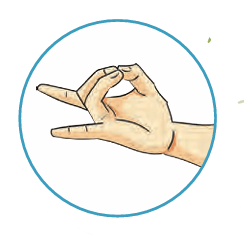
Benefits
Practising the Apana Mudra improves digestion and helps reduce problems such as constipation and abdominal pain.
Activity
Do Apana Mudra whenever you have abdominal problems like stomach pain, gas, or constipation, with the teacher’s help. Maintain a journal to note down any changes that you notice.
3. Prithvi Mudra
Steps
| Step 1: | Sit in Padmasana. |
| Step 2: | Place the hands on the knees. Touch the tip of the ring finger to the tip of the thumb. The remaining fingers are kept open. |
| Step 3: | Keep the eyes closed and focus on the breath. |
| Step 4: | Hold the posture for 5 minutes. |
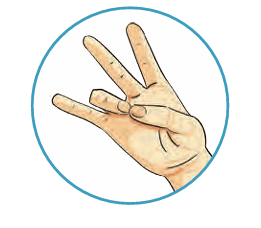
Benefits
Practising the Prithvi Mudra helps to overcome laziness and increases energy levels in the body.
Activity
Practise the Prithvi Mudra every day for 5 minutes. Maintain a journal to note any changes observed after practising.
Kriya
As a part of Kriya, which means cleansing techniques, we shall learn Bindu Trataka, a procedure to cleanse the eyes as well as a preparatory procedure for Dharana. Bindu Trataka means staring at a small dot without blinking.
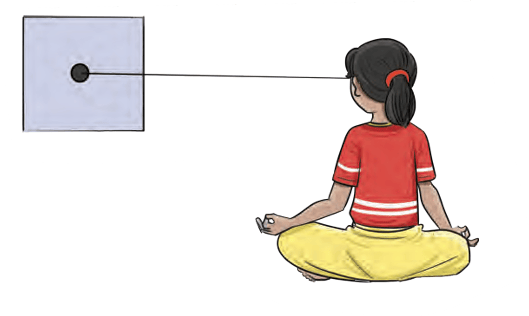
Benefits of this practice
It helps to improve focus, memory, and concentration.
Steps
Note: Remove your spectacles and wristwatch before getting started.
| Step 1: | Draw a small black dot of about 1 cm diameter at the centre of an A4-size sheet white paper. |
| Step 2: | Sit in Sukhasana and place the dot on a wall. The dot should be about 2 to 3 feet away at eye-level. Each child will have one dot to focus at. |
| Step 3: | Look at the dot without blinking for 30 seconds to 1 minute. |
| Step 4: | When the eyes feel a little watery, close them and try to visualise the dot in your mind. |
| Step 5: | After a few seconds, rub the two palms, generate sufficient heat and gently place them on the closed eyes for half a minute. Feel the warmth of the palms. This process is called palming which reduces the eye strain. |
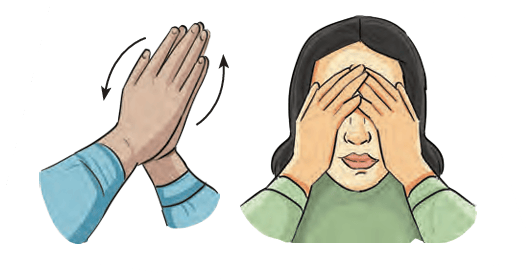
Repeat the entire procedure 2 to 3 times along with palming.
Note for the teacher
Encourage the children to practise bindu trataka at home every day in the morning.
Dhyana
After completing the Bindu Trataka, continue with Om Dhyana.
| Step 1: | Sit comfortably in Padmasana. |
| Step 2: | Place the hands on the knees in Chin Mudra. |
| Step 3: | Gently close your eyes and try to focus on the natural f low of your breath. |
| Step 4: | Inhale, and while exhaling, slowly and mindfully chant the sound ‘Om’. Feel the vibration in your body. |
| Step 5: | Repeat this process for five rounds, maintaining a calm and steady rhythm. |
| Step 6: | After the chanting, sit quietly and observe the stillness and silence. Observe the breath. |
| Step 7: | Try to remain in this silence for a few minutes. |
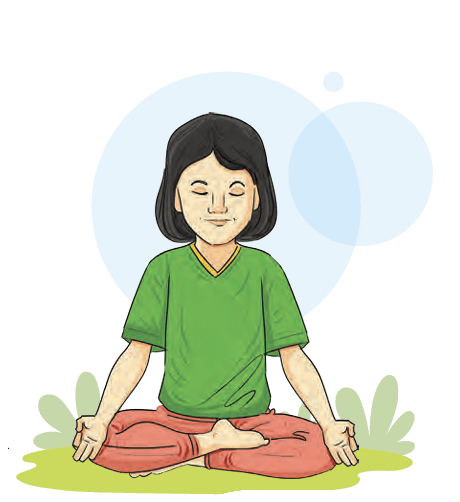
Reflection
- Were you able to feel any sensations or vibrations in your body while chanting ‘Om’?
- What was your state of mind after the chanting and during the silence?
- Did you experience a sense of peace or lightness in your body?
Share your experiences with others in the class after the practice.
Note: Krida Yoga is not traditionally a part of classical yogic practices. However, to encourage playfulness among children and to bring variety to the routine in the class, it has been included in the curriculum as a joyful and engaging activity in addition to other yogic activities.
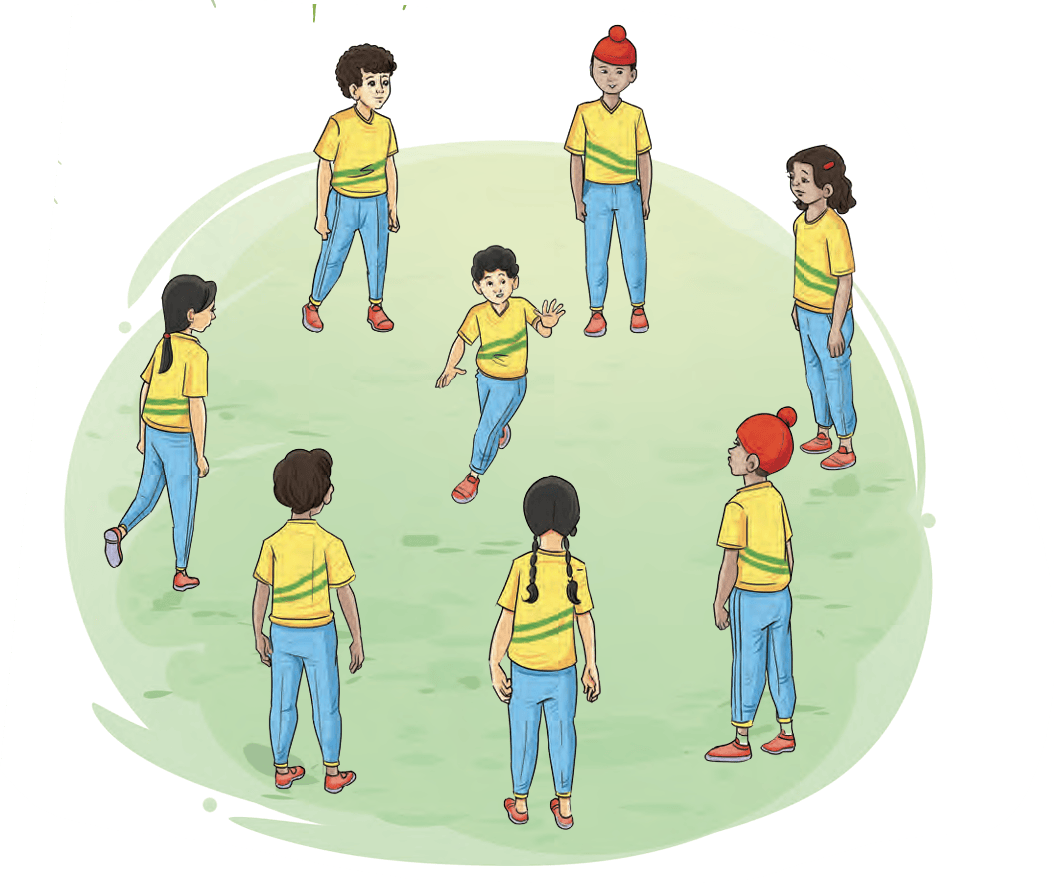
1. Self-help (Swa-sahayata)
Purpose
The following games help promote physical activity, attention and strategy.
How to play
- All participants must stand in a big circle, facing inwards.
- One player is chosen as the Chaser (X) and stands in the centre of the circle.
- Another player is chosen as the Runner.
- On a signal, the Chaser (X) begins to chase the Runner within the circle.
- The Runner tries to avoid being caught by running in any direction within the circle.
- If the Runner feels that they are about to be caught, they must quickly stop, lift their right leg by bending it at the knee, put their hand behind the bent knee, and touch their nose with the same hand.
- Once the Runner assumes this position, they are temporarily safe.
- Once the Runner releases the position (i.e., stops touching their nose and lowers their leg), the Chaser (X) can resume chasing. The Runner tries to evade capture by running in any direction within the circle.
- If the Chaser (X) touches the Runner, the Runner is considered “Out”.
- The Runner takes the place of the Chaser (X), and the game continues with a new runner.
2. Yama, Niyama, Asana
Purpose
To learn and remember the fundamental principles of yoga in a fun and interactive way
How to play
- All players must stand or sit in a circle.
- One student is chosen as the leader for the round.
- The students must respond quickly by calling out the name of a Yama, Niyama, or Asana.
- If the answer is correct, the student continues to play.
- If the answer is incorrect or has been repeated from a previous round, the player is eliminated from the circle.
- The leader keeps moving around the circle asking new questions until only one student remains, who will be the winner.
The leader points to a student and gives a prompt related to either Yama, Niyama or Asana.
For example, if the leader says “Ahimsa”, the student should respond as “Yama”, or, the leader says “standing asana”, the student should respond as “Vrikshasana”, etc.
3. Akkad, Bakkad, Akkad Bakkad
Purpose
To enhance awareness, concentration, and mental quickness through a structured verbal response using the words ‘akkad’, ‘bakkad’ and ‘akkad bakkad’ in place of specific numerals.
How to play
- The players must sit or stand in a circle.
- One player begins by saying “1”, and the next player (moving clockwise) says “2”, and so on.
- For multiples of 3, say “Akkad” instead of the number.
- For multiples of 5, say “Bakkad” instead of the number.
- For numbers that are multiples of both 3 and 5, say “akkad bakkad”.
- If a player says the wrong word or says the number instead of the correct word, they are eliminated.
- Delayed responses are also not considered.
(3 → akkad, 6 → akkad, 9 → akkad)
(5 → bakkad, 10 → bakkad, 20 → bakkad)
(15 → akkad bakkad, 30 → akkad bakkad)
Example of Number Calling Sequence is as follows:
1 → 2 → akkad → 4 → bakkad → akkad → 7 → 8 → akkad → bakkad → 11 → akkad → 13 → 14 → akkad bakkad → 16 → 17 → akkad → 19 → bakkad … (and so on).
Guided self-assessment for Students
The assessment can be done based on Teachers observation, Parents feedback, and also student self-reflection.
Yoga for Daily Life
Four Paths of Yoga:
Karma Yoga (selfless action) – Teachers Observation
| Observation | Always (4) | Often (3) | Sometimes(2) | Rarely (1) |
|---|---|---|---|---|
| Helps others even without being asked. | ||||
| Takes responsibility for personal and group duties | ||||
| Does acts of kindness (cleaning, helping, etc.) |
Self-Observation: Read each statement carefully, circle the number that best represents you.
| Activities | Always (4) | Often (3) | Sometimes(2) | Rarely (1) |
|---|---|---|---|---|
| 1. I help others even when they don’t ask for it. | ||||
| I take responsibilities for my personal duties, like keeping my books, uniform clean, homework, etc. | ||||
| I enjoy volunteering in community services like cleaning the park, participating in planting, | ||||
| I give away toys, books, or clothes to children in need. | ||||
| I show up some kindness actions like giving up my seat on a bus for an elderly person, helping a blind person on the road, sharing toys with friends, expressing gratitude for all those who help me. | ||||
| I help with household chores without being asked. | ||||
| I do my best in whatever I do whether it is school work, playing sports or helping at home. |
Jnana Yoga (the path of knowledge): Teachers Observation
| Observation | Always (4) | Often (3) | Sometimes(2) | Rarely (1) |
|---|---|---|---|---|
| Helps others even without being asked. | ||||
| Is curious to know more about self, and the world. | ||||
| Applies lessons from stories to real life |
Self-Observation: Read each statement carefully, circle the number that best represents you.
| Activities | Always (4) | Often (3) | Sometimes(2) | Rarely (1) |
|---|---|---|---|---|
| I do not hesitate to ask questions with my teacher for better understanding | ||||
| I am curious to learn more about myself. | ||||
| I enjoy exploring new things around me. | ||||
| I follow good lessons I learn from stories. | ||||
| I like to discuss values with my friends and family. |
Bhakti Yoga (the path of devotion): Teachers Observation
| Observation | Always (4) | Often (3) | Sometimes(2) | Rarely (1) |
|---|---|---|---|---|
| Participates in prayer, bhajan, or chanting | ||||
| Expresses love and respect for teachers, parents |
Self-Observation: Read each statement carefully, circle the number that best represents you.
| Activities | Always (4) | Often (3) | Sometimes(2) | Rarely (1) |
|---|---|---|---|---|
| I take blessings from my parents, teachers and elders every day. | ||||
| I offer prayer when I wake up, before having meals, and before sleeping. | ||||
| I enjoy listening to bhajans | ||||
| I like to sit quietly and observe my breath for at least 10 mins in a day. | ||||
| I trust my parents and God. |
Yoga Sadhana
- Asana —Hasta Uttanasana, Utkatasana, Virabhadrasana, arvatasana, Janushirshasana, Gomukhasana, Simha Garjana Asana, Trikonasana variation, Ardhamatsyendrasana, Matsyasana, Sarpasana, Tiryak Bhujangasana.
- Mudra and Pranayama
| Criteria | Excellent |
Good  |
Scope for
improvement |
|---|---|---|---|
| Demonstration of asanas | Performs all asanas correctly | Performs all asanas correctly but needs minor corrections | Requires repeated guidance |
| Follow instructions | Very attentive | attentive | Requires repeated guidance |
| Identification of asanas | Correctly identifies all asanas | Identifies most asanas correctly | Requires repeated guidance |
| Effort and attitude | Curious and focused | Participates with interest | Easily distracted |
| Criteria | Excellent |
Good |
Scope for
improvement |
|---|---|---|---|
| Om chanting | Rhythmic | Requires minor corrections | Requires repeated guidance |
| Identification and demonstration of Mudras | Identifies and performs | Can identify but difficult to perform | Requires repeated guidance |
| Identification and demonstration of different Pranayama | Identifies and performs | Can identify but difficult to perform | Requires repeated guidance |
Session Structure and Suggestive Annual Plan for Teachers
NCF-SE 2023 has listed Physical Education and Well-being as a separate curricular area and suggested allocating a minimum of 90 hours (which is approximately 135 periods of 40 minutes each) in the timetable.
Khel Yoga textbook for Grade 5 is designed to sufficiently develop the competencies defined in NCF-SE 2023. The book has three units and several chapters. The basic motor movement activities, games and Yoga sessions can be planned in parallel for continuous and consistent development throughout the year.
Suggestive session structure and annual plan is given below to conduct activities effectively. You may customise the plan based on your needs.
Session Structure and Suggestive Annual Plan for Teachers187 Structure of a yoga session for teachers
To begin the yoga session, recite the following prayer. This opening prayer is a special way to express gratitude to Maharishi Patanjali for his teachings that promote a healthy mind, clear speech, and a healthy body.
General instructions to begin and end a yoga session
- Sit comfortably in Sukhasana with the spine upright.
- Close your eyes, relax the facial muscles, and bring awareness to the breath.
- Place the hands in Chin Mudra and observe the natural rhythm of the breath for a few moments.
- Then, take a deep, slow breath in. As the breath is released, gently chant “Om”.
- Bring the hands to Namaskara Mudra and chant the following prayer.
- Notice any changes or sensations that arise after chanting.
- Rub your palms together softly, place them over the closed eyes, and gently open the eyes into the warmth of the hands.
Opening Prayer
Satya
ॐ सह नााववतुु ।
सह नाौ भुु नाक्तुु ।
सह वीर्यंं कर वावहै ।
तुे
जस्वि व नाावधीीतु मतुु मा स्वि वस्वि षाावहै ।
ॐ शाास्वि तु ः शाास्वि तु ः शाास्वि तु ः ॥
Om Saha Naavavatu |
Saha Nau Bhunaktu |
Saha Viryam Karavaavahai |
Tejasvi- Naavadhitamastu
Maa Vidvisaavahai |
Om Shantih Shantih Shantih |
Meaning of the prayer
May we both (Guru and Shishya) be protected. May we both be nourished. May we practice with great vigour and energy. Let our studies be fruitful and enlightening. May we not hate each other.
After the opening prayer, follow the session plan for various yogic activities. These activities include:
Yama and Niyama, Sukshma Vyayama, Shithilikarana Vyayama, asanas (postures), Pranayama, Pratyahara, relaxation, Dharana, Dhyana, and Krida Yoga.
End each yoga session with the closing prayer given below. This prayer helps students absorb the knowledge and reinforce the day’s learning in a positive and happy way.
Closing Prayer
ॐ सवे भु व�तुु सुस्वि �ना
सवे स�तुु स्वि नार ामर्यंा ः ।
सवे भुद्रा ास्वि � पश्र्यं �तुु
मा कस्वि �द्दुःु ः�भु ाग्भु वेतु् ।
ॐ शाास्वि �तु ः शाास्वि �तु ः शाास्वि �तु ः ॥
Om Sarve Bhavantu Sukhinah |
Sarve Santu Niraamayaah
Sarve Bhadraani Pashyantu
Maa Kashhcidduhkhabhagbhaavet
Om Shantih Shantih Shantih ||
Meaning of the prayer
May all be happy. May all be free from illness. May all see what is auspicious. May no one suffer. Let there be peace everywhere.
Annual Session Plan
The table given below shows the sequence of activities planned in the given 150 periods for the entire year. It is important to follow this sequence for effective development of required competencies. Type of session and activity number is given in the table for easy reference in the textbook.
Note: For a block period, club the activities of two consecutive periods. Periods of Our Games and Yoga are already clubbed wherever a block period is required.
| Annual Session Plan | ||||||
|---|---|---|---|---|---|---|
| Period | Unit | Skill | Type | Activity Name | Activity No. | Count |
| 1 | Unit 1 | Throwing and Catching | Type 3 | Hush Hush Throw | BM-1 | 1 |
| 2 | Unit 1 | Throwing and Catching | Type 2 | Count and rep | BM-2 | 2 |
| 3 | Unit 1 | Throwing and Catching | Type 3 | Count and rep | BM-2 | 3 |
| 4 | Unit 1 | Throwing and Catching | Type 2 | Hand the Ball | BM-4 | 4 |
| 5 | Unit 3 | Yoga | Yoga Practices | Yoga for daily life | YG-1 | 1 |
| 6&7 | Unit 2 | Our Games | Type 4/5 | Nadan Panthu Kali | OG-1 | 2 |
| 8 | Unit 1 | Catch | Type 3 | Hand the Ball | BM-4 | 5 |
| 9 | Unit 1 | Throw | Type 3 | Pass and Score | BM-3 | 6 |
| 10 | Unit 1 | Catch | Type 3 | Bull’s Eye | BM-6 | 7 |
| 11 | Unit 1 | Throw | Type 3 | Catch and Hit | BM-5 | 8 |
| 12 & 13 | Unit 2 | Our Games | Type 4/5 | Attakalam | OG-2 | 4 |
| 14 | Unit 3 | Yoga | Yoga Practices | Paths of Yoga | YG-2 | 3 |
| 15 | Unit 1 | Catch | Type 1 | Hand the Ball | BM-4 | 9 |
| 16 | Unit 1 | Throw | Type 2 | Catch and Hit | BM-5 | 10 |
| 17 | Unit 1 | Throw | Type 1 | Hush Hush Throw | BM-1 | 11 |
| 18 | Unit 1 | Catch | Type 1 | Catch and Hit | BM-5 | 12 |
| 19 | Unit 1 | Throw | Type 2 | Hand the Ball | BM-4 | 13 |
| 20 | Unit 1 | Throw | Type 1 | Pass and Score | BM-3 | 14 |
| 21 & 22 | Unit 3 | Yoga | Yoga Practices | Karma Yoga | BM-5 | 15 |
| 23 | Unit 1 | Throw | Type 1 | Catch and Hit | BM-5 | 15 |
| 24 & 25 | Unit 2 | Our Games | Type 4/5 | Jodi Baki | OG-3 | 6 |
| 26 | Unit 1 | Kicking | Type 3 | Friendly Goal | BM-7 | 16 |
| 27 | Unit 2 | Kicking | Type 3 | Clear the Centre | BM-8 | 17 |
| 28 | Unit 3 | Kicking | Type 3 | Wall Goal | BM-9 | 18 |
| 29 | Unit 4 | Kicking | Type 3 | Foot Cricket | BM-10 | 19 |
| 30 & 31 | Unit 2 | Our Games | Type 4/5 | Nakal Kho | OG-4 | 8 |
| 32 | Unit 3 | Yoga | Yoga Practices | Karma Yoga | YG-3 | 5 |
| 33 | Unit 1 | Kicking | Type 3 | Kick in the Square | BM-11 | 20 |
| 34 | Unit 1 | Kicking | Type 3 | Hit the Potato | BM-12 | 21 |
| 35 | Unit 1 | Kicking | Type 3 | Friendly Goal | BM-7 | 22 |
| 36 | Unit 1 | Kicking | Type 3 | Clear the Centre | BM-8 | 23 |
| 37 | Unit 1 | Kicking | Type 3 | Wall Goal | BM-9 | 24 |
| 38 | Unit 1 | Kicking | Type 3 | Foot Cricket | BM-10 | 25 |
| 39 | Unit 3 | Yoga | Yoga Practices | Jnaya Yoga and Bhakti Yoga | YG-4 | 6 |
| 40 & 41 | Unit 2 | Our Games | Type 4/5 | Mai Bhi Maindhak | OG-5 | 10 |
| 42 | Unit 1 | Kicking | Type 3 | Kick in the Square | BM-11 | 26 |
| 43 | Unit 1 | Kicking | Type 3 | Hit the Potato | BM-12 | 27 |
| 44 | Unit 1 | Kicking | Type 3 | Hush Hush Throw | BM-1 | 28 |
| 45 | Unit 1 | Kicking | Type 3 | Hit the Potato | BM-12 | 29 |
| 46 | Unit 1 | Kicking | Type 3 | Wall Goal | BM-9 | 30 |
| 47 | Unit 1 | Kicking | Type 3 | Foot Cricket | BM-10 | 31 |
| 48 | Unit 3 | Yoga | Yoga Practices | Activity | YG-5 | 7 |
| 49 & 50 | Unit 3 | Yoga | Yoga Practices | Ashtanga Yoga | YG-6 | 9 |
| 51 & 52 | Unit 2 | Our Games | Type 4/5 | Damru Relay | OG-6 | 12 |
| 53 | Unit 1 | Hitting | Type 1 | Handle with Care | BM-13 | 32 |
| 54 | Unit 1 | Hitting | Type 1 | Balloon strike | BM-14 | 32 |
| 55 | Unit 1 | Hitting | Type 3 | Handle with Care | BM-13 | 34 |
| 56 | Unit 1 | Hitting | Type 1 | Catch to Win | BM-15 | 35 |
| 57 & 58 | Unit 3 | Yoga | Yoga Practices | Asatya | YG-7 | 11 |
| 59 & 60 | Unit 3 | Yoga | Yoga Practices | Niyama | YG-8 | 13 |
| 61 & 62 | Unit 2 | Our Games | Type 4/5 | Aahwan Kabaddi | OG-7 | 14 |
| 63 | Unit 1 | Hitting | Type 2 | Hit and Cover | BM-17 | 36 |
| 64 | Unit 1 | Hitting | Type 3 | Hidden Ball | BM-18 | 37 |
| 65 | Unit 1 | Hitting | Type 1 | Balloon strike | BM-14 | 38 |
| 66 | Unit 1 | Hitting | Type 2 | Crab Wheel | BM-19 | 39 |
| 67 & 68 | Unit 2 | Our Games | Type 4/5 | Bhukha Sher | OG-8 | 16 |
| 69 | Unit 1 | Hitting | Type 3 | Hidden Ball | BM-18 | 40 |
| 70 | Unit 1 | Hitting | Type 1 | Crab Wheel | BM-19 | 41 |
| 71 | Unit 1 | Coordination | Type 2 | Catch to Win | BM-15 | 42 |
| 72 | Unit 3 | Yoga | Yoga Practices | Pratyahara | YG-9 | 14 |
| 73-81 | Half Yearly Assessment | Summative Assessment | SA-1 | 9 | ||
| 82 & 83 | Unit 3 | Yoga | Yoga Practices | Yoga Sadhna Preparatory Practice | YG-9 | 16 |
| 84 & 85 | Unit 2 | Our Games | Type 4/5 | Ghar Phenchano | OG-9 | 18 |
| 86 | Unit 2 | Coordination | Type 1 | Crab Wheel | BM-19 | 43 |
| 87 | Unit 2 | Coordination | Type 3 | Run for Fun | BM-21 | 44 |
| 88 | Unit 1 | Coordination | Type 1 | Push and Pull | BM-22 | 45 |
| 89 | Unit 1 | Coordination | Type 3 | Run and Cross the River | BM-23 | 46 |
| 90 | Unit 3 | Yoga | Yoga Practices | Asana Practice | YG-9 | 17 |
| 91 & 92 | Unit 2 | Our Games | Type 4/5 | Ghar Phenchano | OG-9 | 20 |
| 93 | Unit 1 | Coordination | Type 2 | Side Roll | BM-24 | 47 |
| 94 | Unit 1 | Personal Goals | Type 3 | Balancing on the line | BM-25 | 48 |
| 95 | Unit 1 | Personal Goals | Type 3 | Side Roll | BM-24 | 49 |
| 96 & 97 | Unit 2 | Our Games | Type 4/5 | Daicholu | OG-10 | 22 |
| 98 | Unit 1 | Coordination | Type 2 | Side Roll | BM-24 | 50 |
| 99 | Unit 1 | Coordination | Type 2 | Run for Fun | BM-21 | 51 |
| 100 | Unit 3 | Yoga | Yoga Practices | Asana Practice | YG-10 | 18 |
| 101 | Unit 1 | Personal Goals | Type 3 | Crab Wheel | BM-19 | 52 |
| 102 | Unit 1 | Personal Goals | Type 1 | Push and Pull | BM-22 | 53 |
| 103 | Unit 1 | Personal Goals | Type 3 | Push and Pull | BM-22 | 54 |
| 104 | Unit 1 | Personal Goals | Type 1 | Run and Cross the River | BM-23 | 55 |
| 105 & 106 | Unit 3 | Yoga | Yoga Practices | Krida Yoga | YG-11 | 20 |
| 107 & 108 | Unit 2 | Our Games | Type 4/5 | Gocho Paari | OG-12 | 24 |
| 109 | Unit 1 | Personal Goals | Type 1 | Run and Cross the River | BM-23 | 56 |
| 110 | Unit 1 | Personal Goals | Type 3 | Push and Pull | BM-22 | 57 |
| 111 | Unit 1 | Personal Goals | Type 1 | Crab Wheel | BM-19 | 58 |
| 112 | Unit 1 | Personal Goals | Type 3 | Corner Tennis | BM-16 | 59 |
| 113 | Unit 3 | Yoga | Yoga Practices | Relaxation Technique | YG-12 | 21 |
| 114 & 115 | Unit 2 | Our Games | Type 4/5 | Gocho Paari | OG-12 | 26 |
| 116 & 117 | Unit 2 | Our Games | Type 4/5 | Ant Pil | OG-1 | 28 |
| 118 & 119 | Unit 2 | Our Games | Type 4/5 | Nakal Kho | OG-4 | 30 |
| 120 | Unit 1 | Coordination | Type 3 | Listen Carefully | BM-20 | 60 |
| 121 | Unit 1 | Coordination | Type 3 | Push and Pull | BM-22 | 61 |
| 122 & 123 | Unit 2 | Our Games | Type 4/5 | Bhukha Sher | OG-8 | 32 |
| 124 | Unit 1 | Coordination | Type 3 | Run and Cross the River | BM-23 | 62 |
| 125 | Unit 1 | Coordination | Type 3 | Crab Wheel | BM-19 | 63 |
| 126 | Unit 3 | Yoga | Yoga Practices | Pranayama | YG-13 | 22 |
| 127 | Unit 1 | Coordination | Type 2 | Push and Pull | BM-22 | 64 |
| 128 | Unit 3 | Yoga | Yoga Practices | Hasta Mudra | YG-14 | 23 |
| 129 | Unit 1 | Coordination | Type 3 | Listen Carefully | BM-20 | 65 |
| 130 | Unit 2 | Our Games | Type 4/5 | Gocho Paari | OG-12 | 33 |
| 131 | Unit 3 | Yoga | Yoga Practices | Kriya and Dhyana | YG-15 | 24 |
| 132 | Unit 2 | Our Games | Type 4/5 | Jodi Baki | OG-3 | 34 |
| 133 | Unit 1 | Coordination | Type 1 | Run for Fun | MB-21 | 66 |
| 134 | Unit 1 | Kicking | Type 1 | Between the Door | BM-9 | 67 |
| 135 & 136 | Unit 2 | Our Games | Type 4/5 | Mai Bhi Maindhak | OG-5 | 36 |
| 137 | Unit 1 | Coordination | Type 1 | Push and Pull | BM-22 | 68 |
| 138 | Unit 1 | Kicking | Type 1 | Dribble and Pass | BM-7 | 69 |
| 139 & 140 | Unit 2 | Our Games | Type 4/5 | Chikka-Chikka | OG-11 | 38 |
| 141 & 150 | Assessment | Yearly Assessment | SA-2 | 19 | ||
| Yoga | 24 | |||||
| Our Games | 38 | |||||
| Basic Motor Movement | 69 | |||||
| Assessment | 19 | |||||
| Total | 150 | |||||