
Chapter-6
The Dairy Farm
By now, we know several multiplication facts. We have also learnt how to multiply two numbers. We will continue to explore different ways of multiplying in this chapter.
(Let Let Us Think)
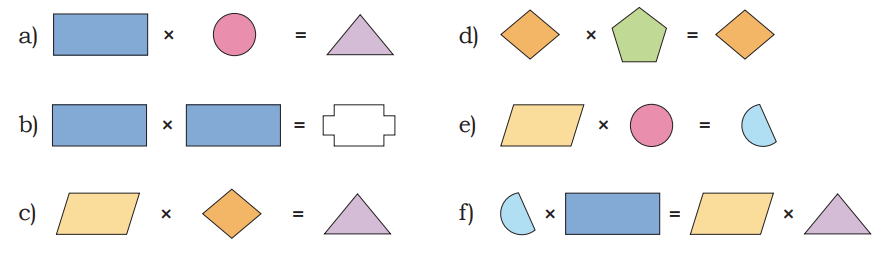
1. The given shapes stand for numbers between 1 and 24. The same shape denotes the same number across all problems. Find the numbers hiding in all the shapes.
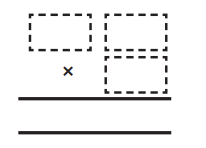
2. Place the digits 2, 5, and 3 appropriately to get a product close to 100. Share your reasoning in class.
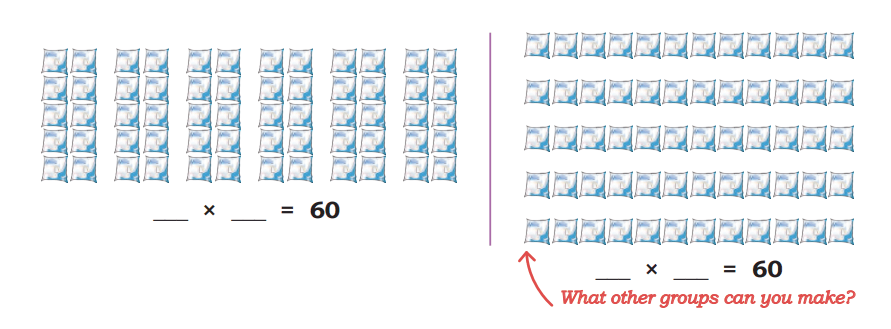
3. A dairy has packed butter milk pouches in the following manner. Find the number of pouches kept in each arrangement. One is done for you.
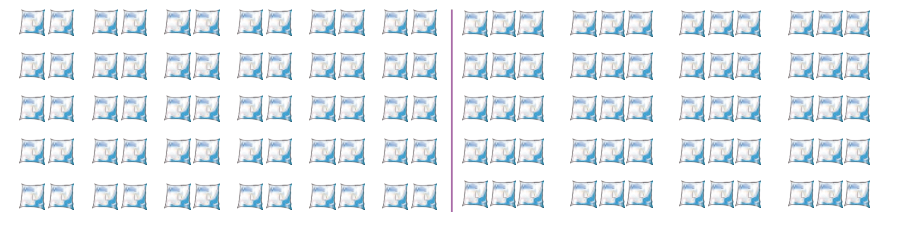 30 × 2 = 60 .... X ... = 60
4. Which number am I?
I am a two-digit number. Find me with the help of the following clues.
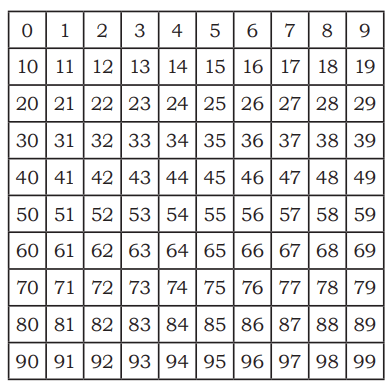
(a) I am greater than 8.
(b) I am not a multiple of 4.
(c) I am a multiple of 9.
(d) I am an odd number.
(e) I am not a multiple of 11.
(f) I am less than 50.
(g) My ones digit is even
(h) My tens digit is odd.
 Did you use all the clues to find the number? Which clues did not help you in finding the number?
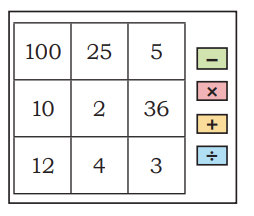
5. Make your own numbers. Choose any two numbers and one operation from the grid. Try to make all the numbers between 0 and 20. For example, 2 can be formed as 4-2. Could you make all the numbers?
Which numbers could you not make? Is it possible to make these numbers using three numbers? You can use two operations, if needed. Which numbers between 0-20 can you get in more than one way?
Order of Numbers in Multiplication
Daljeet Kaur runs a milk processing unit. She has arranged the butter packets in the following ways. Find the number of butter packets in each case. What pattern do you notice (or observe)? Discuss in class.
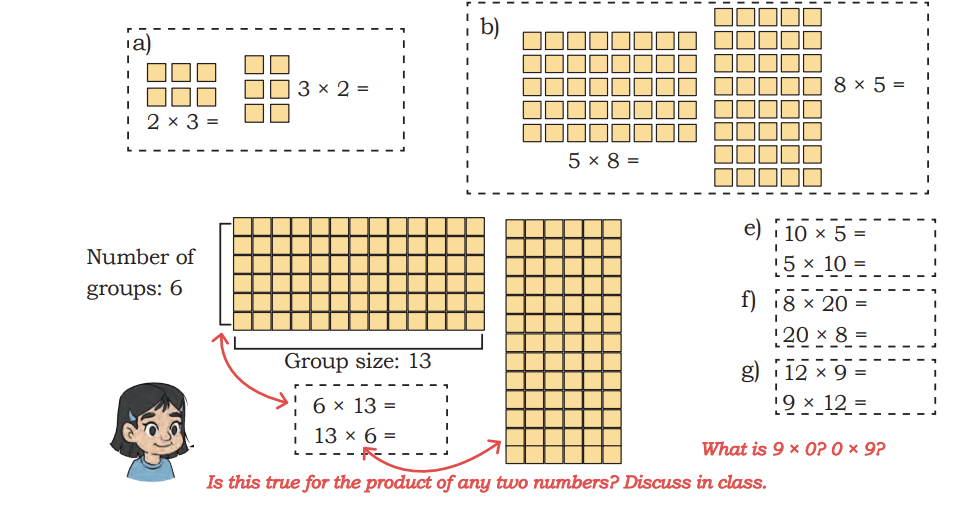
The number of groups and the group size are interchanged in each case above, but the total number of butter packets remain the same.
Patterns in Multiplication by 10s and 100s
1. Let us revise multiplication by 10s and 100s.
- a) 4 × 10 = _____
- b) 20 × 10 = _____
- c) 10 × 40 = _____
- d) 10 × 10 = 100
- e) 20 × 50 = _____
- f) 80 × 10 =_____
- g) 3 × 100 = 100 × 3 = 300
- h) 8 × 100 =_____=_____
- i) 10 × 100 =_____=_____
2. Find answers to the following questions. Fill in the table below and describe the pattern. Discuss in class.
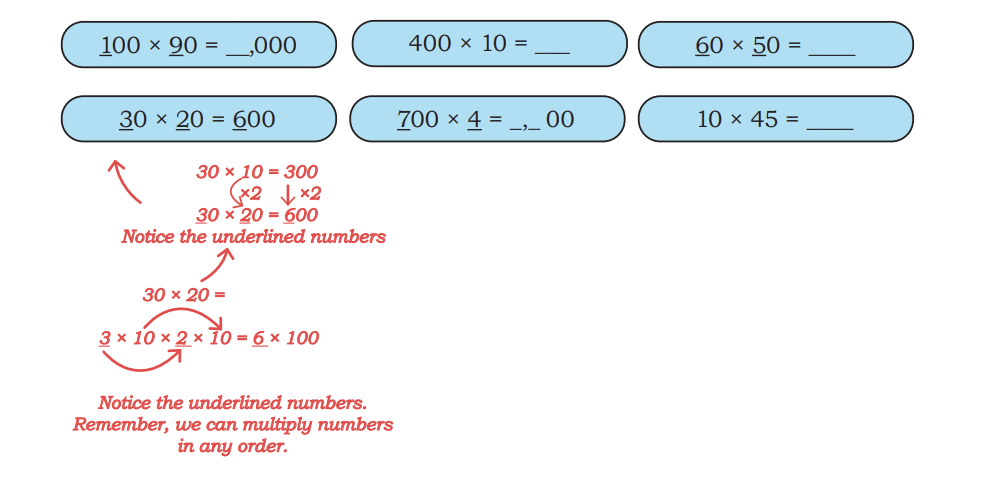 How should we write 450 in the table below?
| Problem TH | H | T | O | |
|---|---|---|---|---|
| 10 × 45 = | ||||
| 30 × 20 = | 6 | 0 | 0 | |
| 400 × 10 = | ||||
| 700 × 8 = | ||||
| 100 × 90 = | 9 | 0 | 0 | 0 |
| Problem | TH | H | T | O |
|---|---|---|---|---|
| 60 × 50 = | ||||
| 220 × 20 = | ||||
| 11 × 300 = |
| Problem | TH | H | T | O |
|---|---|---|---|---|
| 80 × 90 = = | ||||
| 10 × 63 = = | ||||
| 40 × 12 = = |
What will happen if we multiply numbers by 1,000?
2 × 1,000, = 2 thousand = 2 ,000 1,000 1,0005 × 1, 000 = 5 thousand = 5 ,000 1,000 1,000 1,000 1,000 1,000
10 × 1, 000 = 10 thousand = 1 0,000
2 0 × 1, 000 = 20 thousand = 2 0,000
Let us fill in the table and observe the patterns.
| Problem | TTH | TH | H | T | O |
|---|---|---|---|---|---|
| 2 × 1,000 = | 2 | 0 | 0 | ||
| 5 × 1,000 = | 5 | 0 | 0 | ||
| 10 × 1,000= | 1 | 0 | 0 | 0 | 0 |
| 20 × 1,000= | 2 | 0 | 0 | 0 | 0 |
| 3 × 5,000 = | |||||
| 8 × 3,000 = | |||||
| 5 × 7,000 = |
| Problem | TTH | TH | H | T | O |
|---|---|---|---|---|---|
| 20 × 100 = | |||||
| 40 × 500 = | |||||
| 60 × 300 = | |||||
| 600 × 30 = | |||||
| 80 × 900 = | |||||
| 70 × 600 = | |||||
| 5 × 7,000 = |
Many Ways to Multiply
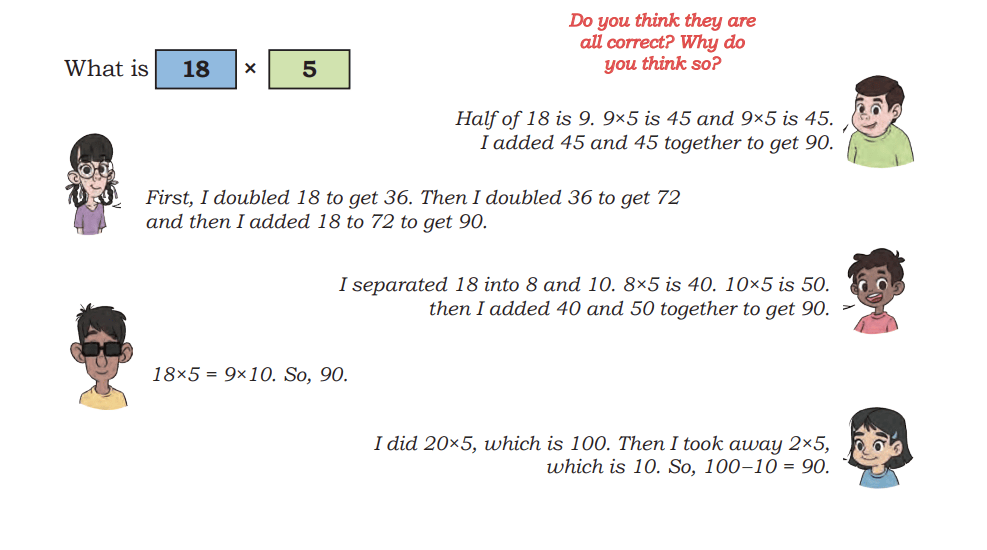
Doubling and Halving
Butter packets are arranged in the following ways. Let us find some strategies to calculate the total number of packets.
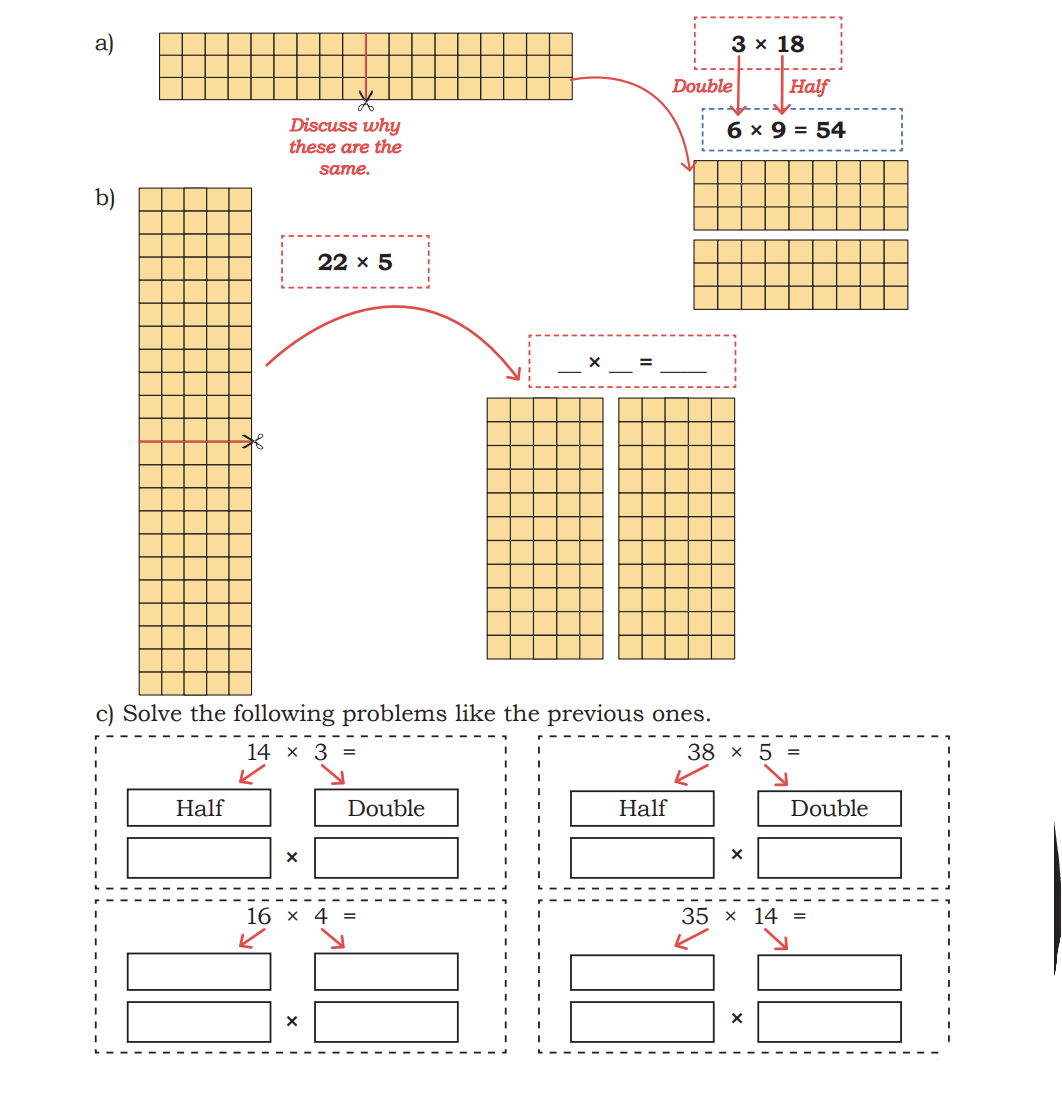
This halving and doubling strategy works well when we have to multiply with numbers like 5 and 25. Discuss why?
(d) Find the product by halving and doubling either the multiplier or the multiplicand.
- 1) 5 × 18
- 2) 50 × 28
- 3) 15 × 22
- 4) 25 × 12
- 5) 12 × 45
- 6) 16 × 45
(e) Give 5 examples of multiplication problems where halving and doubling will help in finding the product easily. Find the products as well.
Nearest Multiple
(a) 4 × 19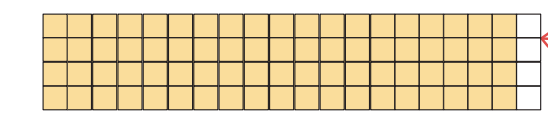
Observe the picture and find why we need to subtract 4
= 80-4
= 76
(b) 14 × 21
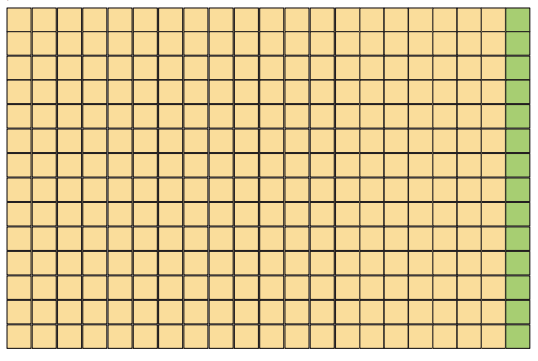
Observe the picture and find why we need to add 14.
= 280 + 14
= 294
(c) Give 5 examples of problems where you can use the nearest multiple to find the product easily. Find the products as well.
(d) Find the products of the following numbers by finding the nearest multiple.
- 1) 7 × 52
- 2) 12 × 28
- 3) 75 × 31
- 4) 99 × 15
- 5) 8 × 25
- 6) 22 × 42
Let Us Solve
Use strategies flexibly to answer the following questions. Discuss your thoughts in class.
1. A school has an auditorium with 35 rows, with 42 seats in each row. How many people can sit in this auditorium?
2. Priya jogs 4 kilometres every day. How many kilometers will she jog in 31 days?
3. A school has received 36 boxes of books with 48 books in each box. How many total books did the school receive in the boxes?
4. Priya uses 16 metres of cloth to make 4 kurtas. How much cloth would she need to make 8 kurtas?
5. Gollappa has 29 cows on his farm. Each cow produces 5 litres of milk per day. How many litres of milk do the cow produce in total, each day?
6. Maska Cow Farm has 297 cows. Each cow requires 18 kg of fodder per day. How much total fodder is needed to feed 297 cows every day?
Waste and Composting
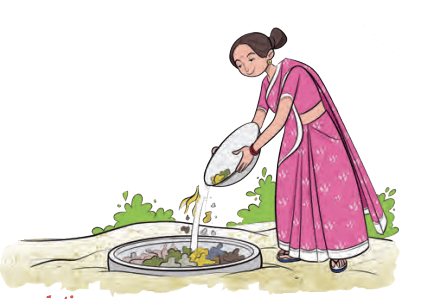
1. A family of 4 produces around 35 kg of kitchen waste in a month. How much waste will the family produce in a year?
Quantity of kitchen waste in 1 month is 35 kg.
Quantity of kitchen waste in 12 months is 12 × 35 kg.
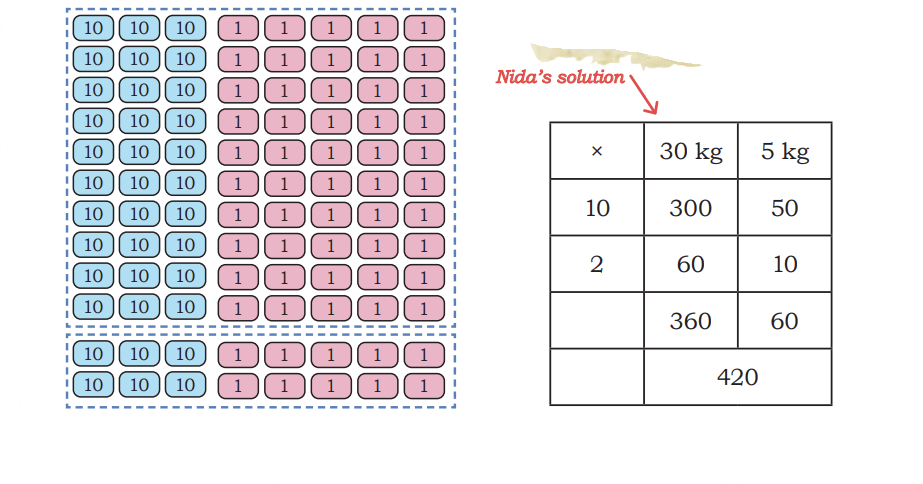
Kanti and John tried to solve it in the following ways.
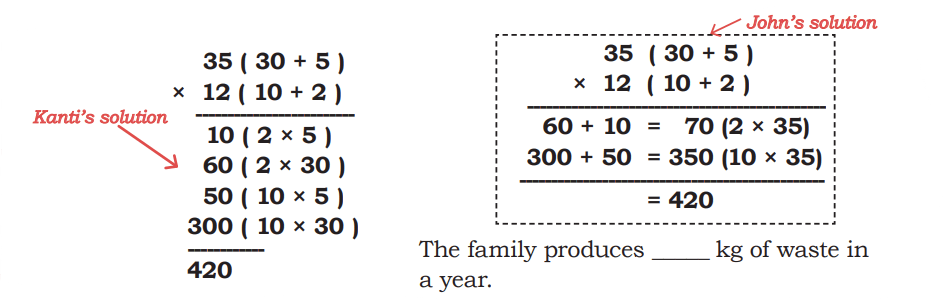
How are these solutions same or different? Discuss in class.
2. The family regularly composts the collected waste. They get around 150 kg of compost each year, which they use in their garden. 1 kg of compost is often sold in the market at ₹24. By creating their own compost, how much money have they saved in a year?
Savings on 1 kg compost is ₹24. Savings on 150 kg will be ₹24 × 150.
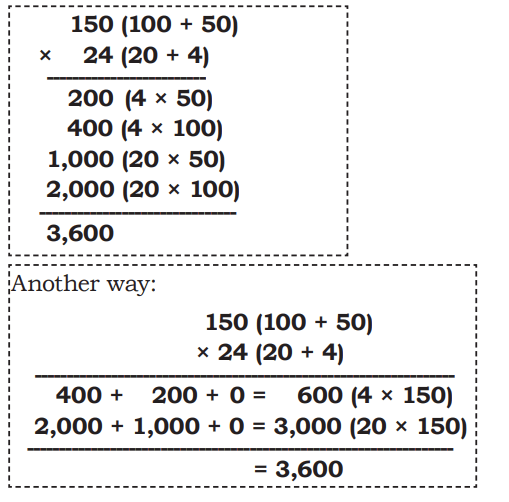
| × | 100 | 50 |
|---|---|---|
| 20 | 2,000 | 1,000 |
| 4 | 400 | 200 |
| 2,400 | 1200 | |
| 3,600 |
Let Us Multiply
(a) 32 × 8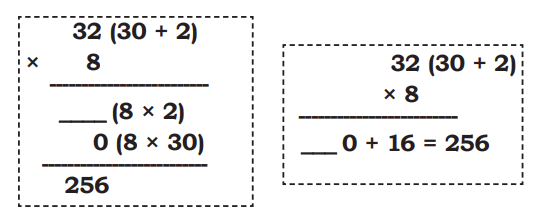
| × | 30 | 2 |
|---|---|---|
| 8 | ||
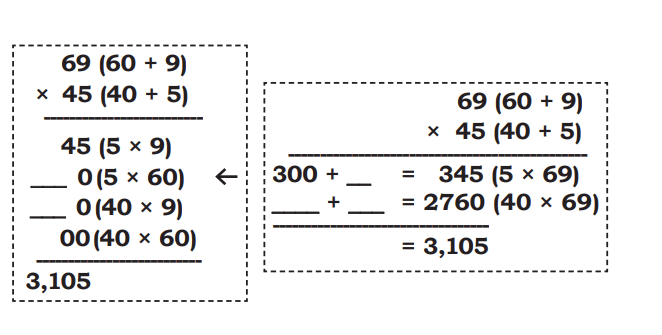
(b) 69 × 45
| × | 60 | 9 |
|---|---|---|
| 40 | ||
| 5 | ||
| 2700 | 405 | |
| 3105 | ||
Let Us Do
1. Solve the following problems like Nida did.
a) 78 × 4
| × | ||
|---|---|---|
b) 83 × 9
| × | ||
|---|---|---|
(c) 67 × 28
| × | ||
|---|---|---|
(d) 53 × 37
| × | ||
2. Solve the following problems like Kanti.
- (a) 94 × 5
- (b) 49 × 6
- (c) 37 × 53
- (d) 28 × 79
3. Solve the following problems like John.
- (a) 86 × 3
- (b) 72 × 7
- (c) 94 × 36
- (d) 66 × 22
4. Solve the following problems:
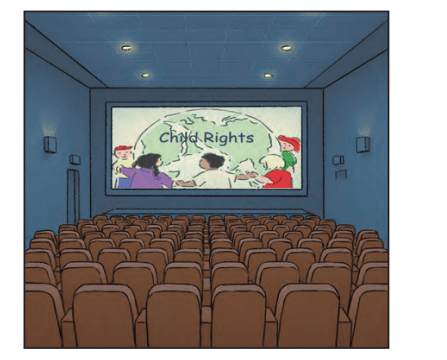
(a) A movie theater has 8 rows of seats, and each row has 12 seats. If half the seats are filled, how many people are watching the movie? If 3 more rows get filled, how many total people will be there?
(b) In a test match between India and West Indies, the Indian team hit twenty-four 4s and eighteen 6s across the two innings. How many runs were scored in 4s and 6s each? 234 runs were made by running between the wickets. If 23 runs were extras, how many runs were scored by Indian team in the two innings?
(c) Anjali buys 15 bulbs and 12 tube lights from Sudha Electricals. Each bulb costs ₹25 and each tube light costs ₹34. How much money should Anjali give to the shopkeeper?
(d) A shopkeeper sold 28 bags of rice. Each bag costs ₹350. How much money did he earn by selling rice bags?
(e) A school library has 86 shelves and each shelf has 162 books. Find the number of books in the library.
Dairy Cooperative
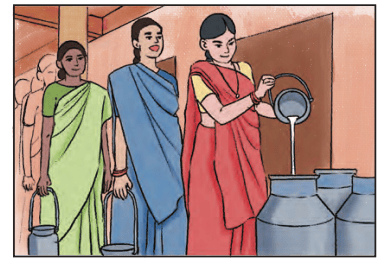
A dairy cooperative in a small town gets its milk from 268 villagers. Each villager has at least 4 milk-giving cows. What is the minimum number of cows the dairy cooperative gets its milk from?
1 villager has at least 4 milk-giving cows. 268 villagers will have at least 268 * 4 cows.
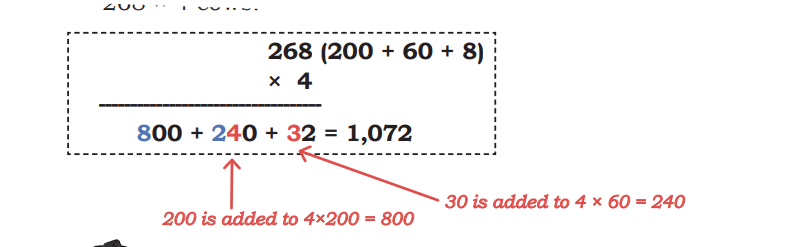
4x6 Tens = 24 Tens = 240
4 * 2 Hundreds = 8 Hundreds = 800

Mili says her father has taught her to use place values of digits to multiply large numbers.

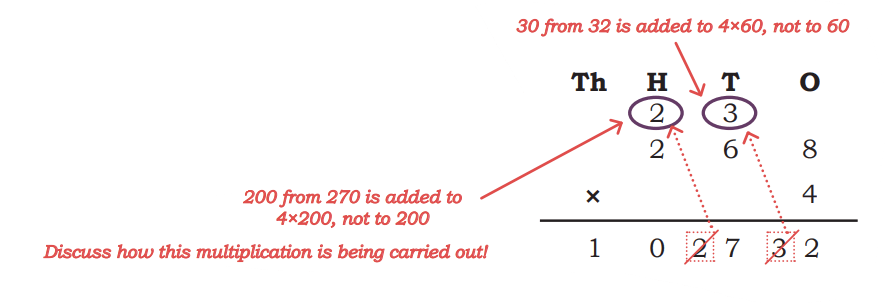
The dairy cooperative gets milk from a minimum of 1,072 cows.
2. The villagers rear various breeds of cows. Gir is an Indian cow breed from Gujarat, with a high milk-producing capacity. Among the villagers, there are 453 Gir cows. Each of these cows give 13 litres of milk each day. How many litres of milk does the dairy cooperative receive from Gir cows everyday?
One Gir cow produces 13 litres of milk. 453 Gir cows will produce, 453 × 13 litres of milk.
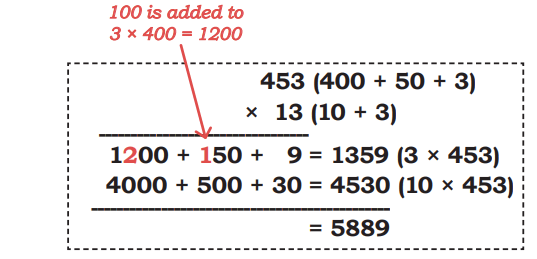
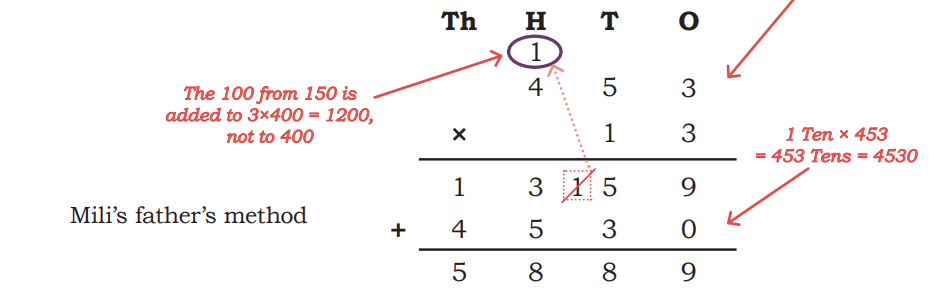
The dairy cooperative receives 5,889 litres of milk from Gir cows every day
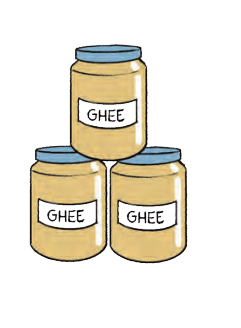
3. The dairy cooperative sells 1 kg cow ghee for ₹574. The cooperative is able to produce around 125 kg of ghee in a month. How much do they earn by selling ghee in a month?
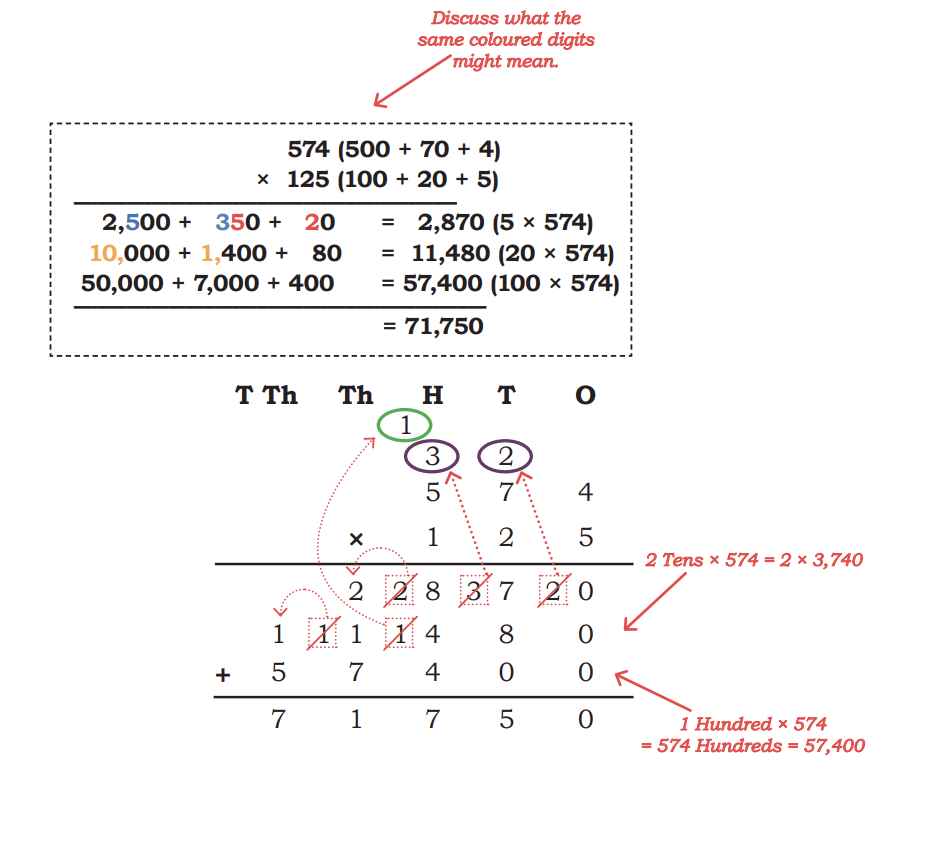
The cooperative earns 71,750 from the sale of cow ghee.
Let Us Solve
1. Solve the following problems like Nida.
- a) 548 × 6
- b) 682 × 3
- c) 324 × 18
- d) 507 × 23
- e) 190 × 65
- a) 123 × 84
- b) 368 × 32
- c) 159 × 324
- d) 239 × 401
- e) 592 × 5
- f) 101 × 22
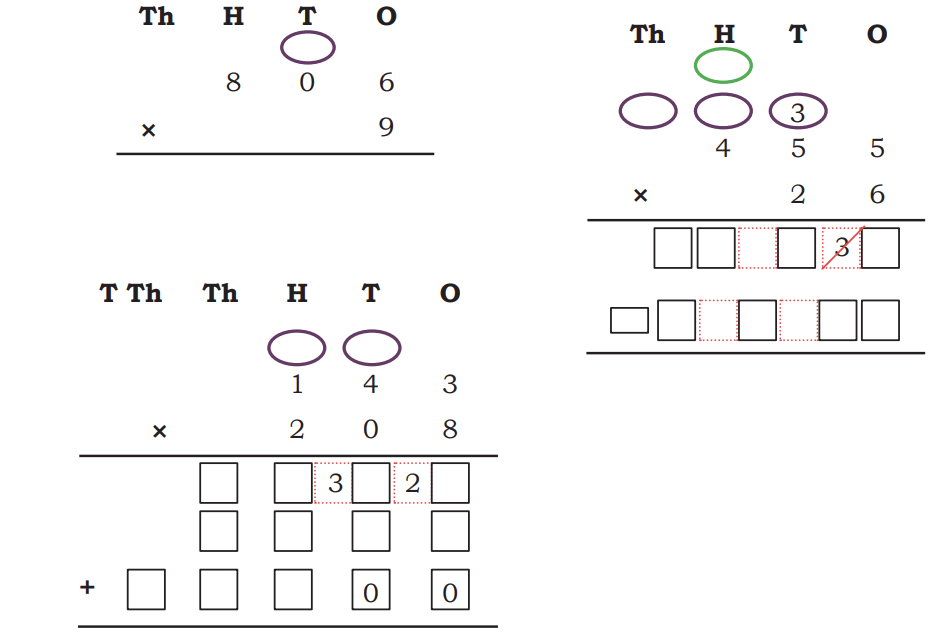
Now use Mili's father's method to solve the following questions.
- (a) 807 × 5
- (b) 143 × 28
- (c) 309 × 9
- (d) 450 × 38
- (e) 584 × 23
- (f) 302 × 13
- (g) 604 × 54
- (h) 112 × 23
- (i) 237 × 19
Check, Check!
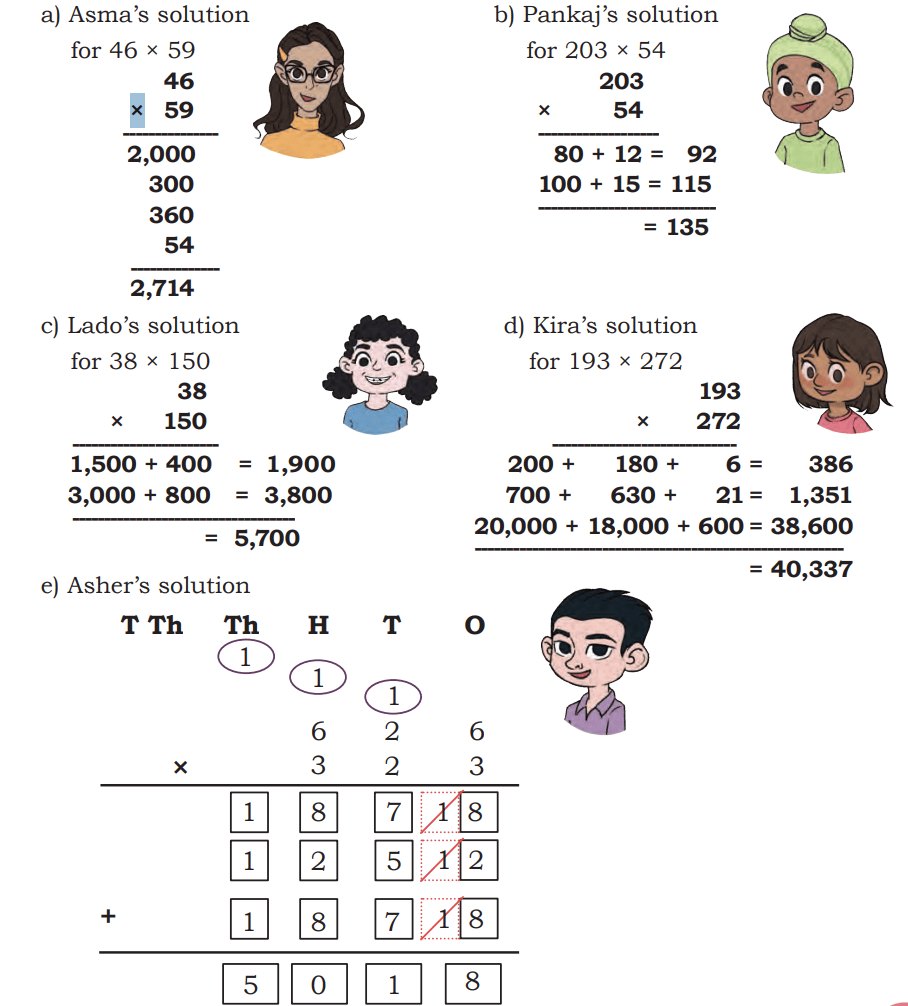
Check if the following children's solutions are correct. If correct, explain why the solution is correct. If it is incorrect, then identify the error and correct the solution.
Let Us Do
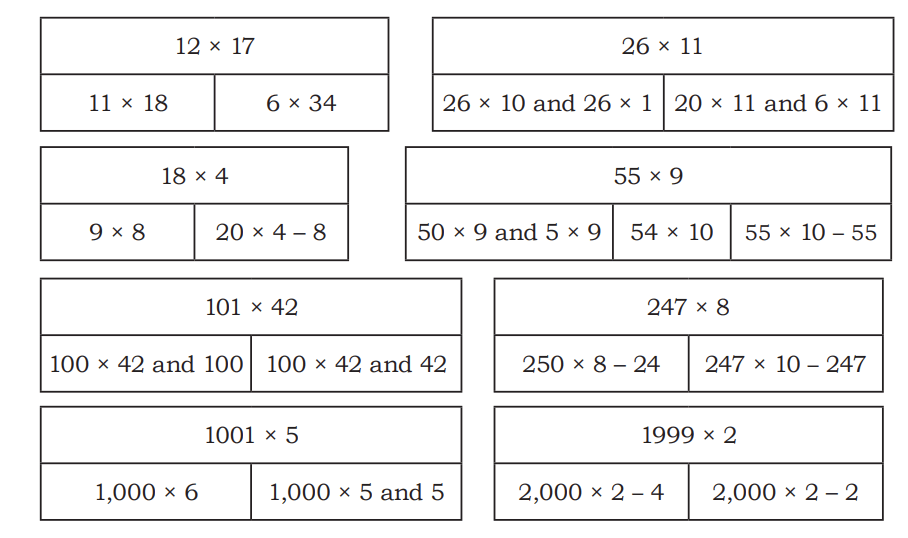
1. Identify the problems that have the same answer as the one given at the top of each box. Do not calculate.
2. Find easy ways of solving these problems.
- (a) 16 × 25
- (b) 12 × 125
- (c) 24 × 250
- (d) 36 × 25
- (e) 28 × 75
- (f) 300 × 15
- (g) 50 × 78
- (h) 199 × 63
- (i) 128 × 35
3. Write 5 other examples for which you can find easy ways of getting products.
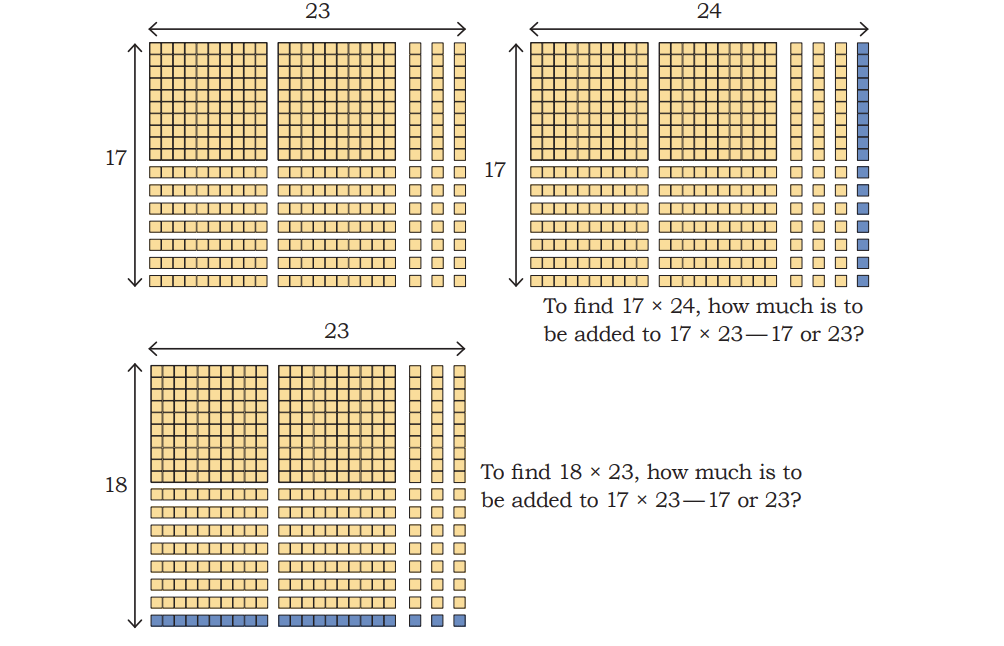
4. Find the answers to the following questions based on the given information.
- (a) 17 × 23 = 391
- (b) 17 × 24 =
- (c) 17 × 22 =
- (d) 16 × 23 =
- (e) 8 × 9 = 72
- (f) 18 × 9 =
- (g) 28 × 9 =
- (h) 108 × 9 =
- (i) 18 × 23 =
Let Us Think
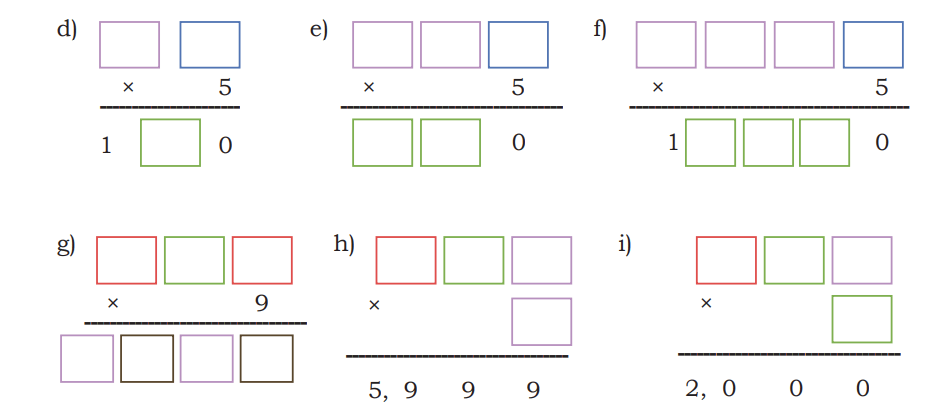
1. Find the possible values of the coloured boxes in each of the following problems. The same colour indicates the same number in a problem.
Some problems can have more than one answer.

2. Estimate the products on the left and match them to the numbers given on the right.
The dairy cooperative gets milk from a minimum of 1,072 cows.
2. The villagers rear various breeds of cows. Gir is an Indian cow breed from Gujarat, with a high milk-producing capacity. Among the villagers, there are 453 Gir cows. Each of these cows give 13 litres of milk each day. How many litres of milk does the dairy cooperative receive from Gir cows everyday?
One Gir cow produces 13 litres of milk. 453 Gir cows will produce, 453 × 13 litres of milk.
The dairy cooperative receives 5,889 litres of milk from Gir cows every day
3. The dairy cooperative sells 1 kg cow ghee for ₹574. The cooperative is able to produce around 125 kg of ghee in a month. How much do they earn by selling ghee in a month?
The cooperative earns 71,750 from the sale of cow ghee.
Let Us Solve
1. Solve the following problems like Nida.
- a) 548 × 6
- b) 682 × 3
- c) 324 × 18
- d) 507 × 23
- e) 190 × 65
- a) 123 × 84
- b) 368 × 32
- c) 159 × 324
- d) 239 × 401
- e) 592 × 5
- f) 101 × 22
Now use Mili's father's method to solve the following questions.
- (a) 807 × 5
- (b) 143 × 28
- (c) 309 × 9
- (d) 450 × 38
- (e) 584 × 23
- (f) 302 × 13
- (g) 604 × 54
- (h) 112 × 23
- (i) 237 × 19
Check, Check!
Check if the following children's solutions are correct. If correct, explain why the solution is correct. If it is incorrect, then identify the error and correct the solution.
Let Us Do
1. Identify the problems that have the same answer as the one given at the top of each box. Do not calculate.
2. Find easy ways of solving these problems.
- (a) 16 × 25
- (b) 12 × 125
- (c) 24 × 250
- (d) 36 × 25
- (e) 28 × 75
- (f) 300 × 15
- (g) 50 × 78
- (h) 199 × 63
- (i) 128 × 35
3. Write 5 other examples for which you can find easy ways of getting products.
4. Find the answers to the following questions based on the given information.
- (a) 17 × 23 = 391
- (b) 17 × 24 =
- (c) 17 × 22 =
- (d) 16 × 23 =
- (e) 8 × 9 = 72
- (f) 18 × 9 =
- (g) 28 × 9 =
- (h) 108 × 9 =
- (i) 18 × 23 =
Let Us Think
1. Find the possible values of the coloured boxes in each of the following problems. The same colour indicates the same number in a problem.
Some problems can have more than one answer.
2. Estimate the products on the left and match them to the numbers given on the right.
Discuss how you estimated.
| 25 × 31 | 2,600 |
| 132 × 19 | 12,500 |
| 101 × 11 | 300 |
| 248 × 49 | 750 |
| 12 × 25 | 1,000 |
The King’s Reward
One day, a king decided to reward three of his most talented ministers. The king called them to his court and said, “You all have served my empire with great dedication. As a reward, I give you three choices of gold.
Choose wisely!Choice 1: Take 5 gold coins and double the number of coins every day for 7 days.
Choice 2: Take 3 gold coins and triple the number of coins every day for 7 days.
Choice 3: Take 1 gold coin and multiply the number of coins by 5 every day for 7 days.
Minister 1-I will take 5 gold coins and double the number of coins every day for 7 days.
Minister 2-I will take 3 gold coins and triple the number of coins every day for 7 days.
Minister 3-I will take 1 gold coin and multiply the number of coins by 5 every day for 7 days.
The King gave 5 coins to Minister 1, 3 coins to Minister 2 and 1 coin to Minister 3.
Which of the rewards would you have chosen?
After a week, the 3 ministers were surprised at the final amount of gold coins. Guess who received the most gold coins? Calculate how much gold coins each minister received.
Multiplication Patterns
1. Notice how the multiplier, multiplicand, and products are changing in each of the following. What is the relationship of the new product with the original product? Solve a) completely, and then predict the answers for the rest.
- (a) 16 × 44 = 704
- (1) 8 × 88 = 704
- (2) 8 × 22 = 176
- (3) 16 × 22 =
- (4) 32 × 44 =
b) 12 × 32 = 384
- 1) 6 × 16 =
- 2) 24 × 16 =
- 3) 24 × 64 =
- 4) 12 × 16 =
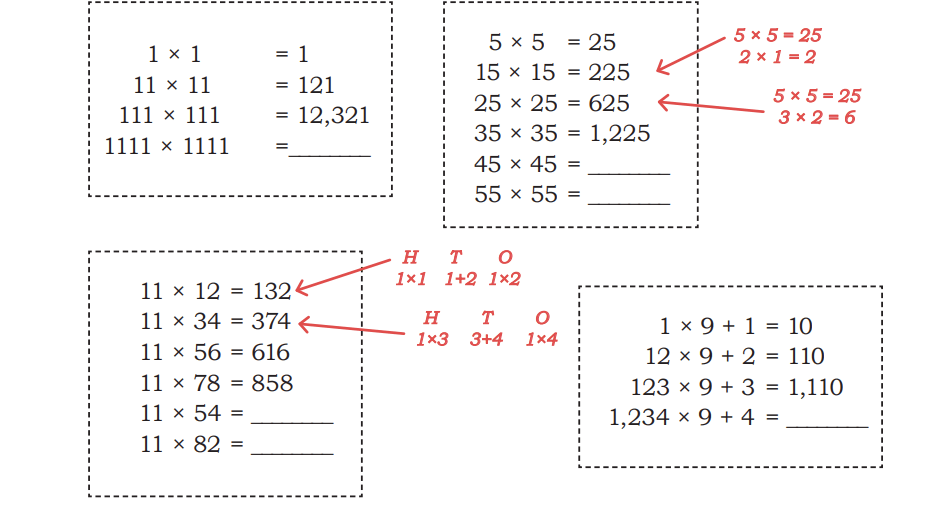
2. Observe and complete the given patterns
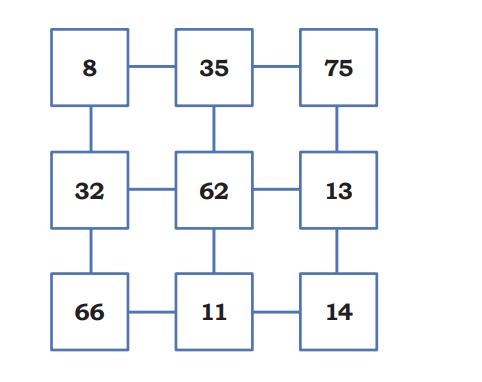
Here are some numbers. Remember number pairs from Grade 4? Any two adjacent numbers in a row or a column are number pairs. Can you identify the pair whose product is the smallest and another pair whose product is the largest? Do you need to find every product or can you find this by looking at the numbers?
Let Us Solve
1. Mala went to a book exhibition and bought 18 books. The shop was selling 3 books for 150. After buying the books, she still had 20 left. How much money did Mala have at the beginning?
2. A village sports club organises a women's football tournament. The club earned money by selling match tickets and charging fees for team participation.
They sold 57 tickets for 115 each.
They had 3 teams joining the tournament, with each team paying a participation fee of ₹1,599.
The teams paid ₹1,750 in total to rent the football ground and ₹1,129 for food and water.
(a) How much money did the club collect in total from ticket sales and team participation fees?
(b) What were the total expenses on renting the ground and food and water?
3. Ananya is watching Republic Day celebrations on the city's public ground. There are 12 rows of students sitting in front of her and 17 rows behind her. There are 18 students to her right and 22 students to her left.
(a) How many rows of students are there in total?
(b) How many students are there in Ananya's row?
(c) What is the total number of students on the ground?
4. Multiply.
- (a) 67 × 78
- (b) 34 × 56
- (c) 45 × 263
- (d) 86 × 542
- (e) 432 × 107
- (f) 310 × 120
5. If 67 × 67 = 4489 without multiplication find 67 × 68
6. If 99 × 100 = 9900, without multiplication find 99 × 99 .